Tag: killer apes’ concept of democracy

  • From aristocracy to ‘assetocracy’ – how wealth has transformed the House of Lords

    Spread the love
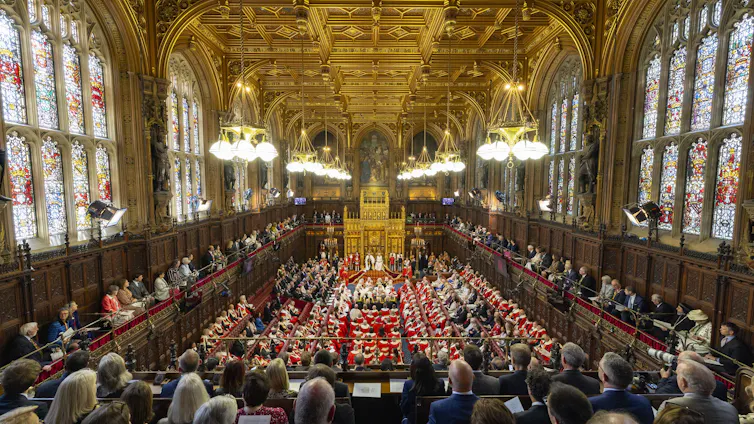
    peers in ermine in the house of lords chamber for the state opening of parliament 2026 with the king and queen.
    The State Opening of Parliament 2026. House of Lords / Roger Harris, CC BY-NC-ND

    Huw Macartney, University of Birmingham

    On April 29, 2026, the remaining hereditary peers left the House of Lords. These 92 individuals were the last vestiges of an era in which the landed aristocracy dominated the UK’s second chamber. In the recent past, as many as 800 aristocrats filled the red benches. Now though, a new financial elite appears to have taken their place.

    Gradually, the dominance of the aristocrats gave way to a more meritocratic order of life peers. In 1999, Tony Blair’s government removed most of the hereditary peers; in 2026, Keir Starmer’s government finished the job. But did removing them really make the House of Lords any less elitist?

    These were some of the issues I sought to explore with a team of graduate researchers at the University of Birmingham. We set about gathering what is, to the best of our knowledge, the largest-ever repository of the financial and political activities of the Lords. Over 18 months, we collected details of all the shareholdings, company directorships, landholdings, rental properties, education, attendance and speeches in the second chamber, as well as voting records for all Lords. These are presented in my new book, The Assetocracy.

    What we uncovered was staggering. More than 260 peers hold multiple, individual shareholdings – stakes in listed companies – worth more than £100,000 apiece. In fact, some Lords held more than 200 individual holdings, each valued in excess of £100,000. Even assuming each asset was only worth £100,000, that would put the combined value of those shareholdings alone at more than £22 million.

    Put simply, this reflects a level of wealth far beyond that of all but the richest people in Britain. In fact, 14 Lords appear in The Sunday Times Rich List of the UK’s wealthiest people, with a combined net worth of £27.8 billion.

    Moreover, half of the House are landlords with rental income. And 250 peers hold one or more paid company directorship. In short, this is an extraordinary concentration of wealth at the heart of Britain’s second chamber.

    The social profile of the Lords is equally revealing. Nearly half of peers were privately educated, compared with just 7% of the wider population. Around one third went to Oxford or Cambridge, compared with just 1% nationally. And 11% attended some of Britain’s most elite schools, where annual fees can now top £60,000.

    Our conclusion? The Lords is not merely wealthy, it is an institution steeped in economic, educational and social privilege. Yet remarkably little is known about the extent of this wealth. Disclosure requirements remain limited, leaving many of the peers’ financial interests hidden from public view.

    And that matters. Membership of the Lords can sit alongside extremely lucrative private-sector careers. Several peers, for example, declared earning between £100,000 and £300,000 a year from company directorships and advisory positions – on top of their parliamentary roles and Lords allowances (a £371 daily rate).

    Aristocrats have gone – but privilege has not

    This is the paradox at the heart of the modern House of Lords. The old aristocracy may be disappearing from the red benches, but wealth and privilege have not disappeared with it. The aristocracy has increasingly given way to what we termed an “assetocracy” – members of the new financial elite whose power rests on property, finance and accumulated asset-based wealth.

    Reforming the second chamber has previously been tied to either removing the aristocratic hereditary peers or (ostensibly) increasing the scope for non-elite appointments. This is primarily done through the House of Lords Appointments Commission and the introduction of crossbenchers, whose appointment does not depend on prime ministerial patronage or political donations.

    Yet while these efforts appeared to be producing a diverse collection of Lords through the early 2000s, the trend was reversed with the arrival of the Conservative governments of the 2010s. Since then, my research shows that the second chamber has seen a striking influx of the new “assetocratic” elite.

    Appointments of peers with shareholdings over £100,000 (by political party)

    My research also reveals a small but clear relationship between wealth and participation in the Lords. Previous accounts have shown that some political donors appear to treat a peerage as a status symbol, playing little part in the day-to-day work of the House. My findings suggest however, that the pattern extends beyond political donors. On average, the wealthiest peers tend to attend less, speak less and contribute less to the work of the House.

    One of the book’s central conclusions is that the rise of the assetocrats in the Lords coincided with a wider transformation of British society. It was a period when wealth inequality grew and asset ownership became an increasingly important source of economic advantage.

    The Lords did not create these changes, nor are its members the only or primary beneficiaries. But my research shows how peers have often sought to narrow the terms of political debate around wealth and redistribution. They have defended a system that privileges asset ownership and particular forms of wealth accumulation.

    For example, Lord Leigh of Hurley, a Conservative peer and businessman, told the House in 2025 that “we need to teach kids that so-called ‘earned income’ is paid, weekly or monthly, without any risk whatever, while ‘unearned income’ is typically generated from an investment, which involves risk to capital and, therefore, deserves greater reward”.

    The research points to three conclusions. The first may seem paradoxical, but the more I researched the Lords, the more convinced I became that – certainly on issues beyond wealth and inequality – it is a remarkable source of expertise that often improves and strengthens legislation. That is why abolishing the Lords would throw away an institution that still performs an important democratic function.

    Second, reform is nonetheless overdue. Prime ministerial patronage should be curtailed; minimum expectations for attendance and participation introduced; transparency over financial affairs should be increased; and outside employment more tightly regulated where it creates conflicts of interest.

    But there is a bigger issue. The transformation of the Lords reflects a much more profound transformation of society. Over the past five decades, the UK has become an economy in which owning property, shares and other assets is an increasingly important route to extraordinary wealth. Removing the last vestiges of the old aristocracy from the Lords will not solve the problem. The deeper challenge is confronting the structural forces that have allowed a new asset-owning elite to take its place.

    This article features references to books that have been included for editorial reasons, and may contain links to bookshop.org. If you click on one of the links and go on to buy something from bookshop.org The Conversation UK may earn a commission.

    Huw Macartney, Associate professor in Political Economy, University of Birmingham

    This article is republished from The Conversation under a Creative Commons license. Read the original article.

    Orcas discuss Donald Trump and the killer apes' concept of democracy. Front Orca warns that Trump is crashing his country's economy and that everything he does he does for the fantastically wealthy.
    Orcas discuss Donald Trump and the killer apes’ concept of democracy. Front Orca warns that Trump is crashing his country’s economy and that everything he does he does for the fantastically wealthy.

  • Big Payback: Corporations That Enjoyed Enforcement Rollback Plowed $200 Million Into Pro-Trump Super PAC

    Spread the love

    Article by Julia Conley republished from Common Dreams under Creative Commons (CC BY-NC-ND 3.0).

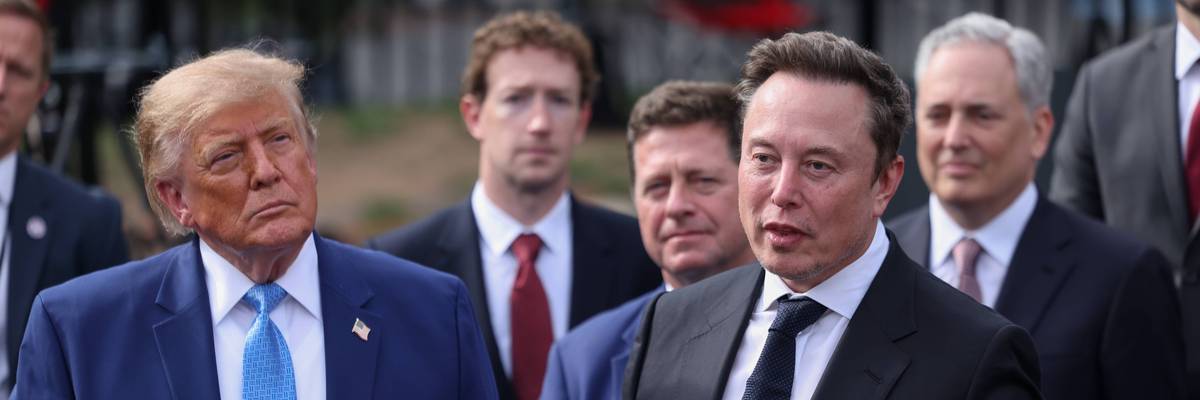
    SpaceX CEO Elon Musk speaks to reporters as US President Donald Trump looks on outside the White House on September 29, 2026 in Washington, DC.(Photo by Tierney L. Cross/Pool/For The Washington Post via Getty Images)

    “Allowing corporations to make political payments in order to make enforcement go away is hardly a model for governing that supposedly prioritizes ‘law and order,’” said one researcher.

    The Trump administration’s canceled enforcement actions against at least 205 corporations accused of wrongdoing have been cases of powerful companies “getting what they paid for,” according to a new report by government watchdog Public Citizen.

    Building on an analysis it released earlier this week regarding hundreds of canceled investigations and dismissed lawsuits against companies, many of which have ties to the administration, the group on Thursday published a follow-up report detailing just how much some of the corporations paid to have their legal troubles wiped away.

    RECOMMENDED…

    President Trump Hosts Dinner At White House Ballroom

    Report Details How Trump Has Handed Get-Out-of-Jail-Free Card to Wall Street and Big Tech

    President Donald Trump

    Swapping One Illegal Scheme for Another, Trump Says Super PAC Cash Will Now Fund Propaganda Ads

    Companies that have benefited from the cancellation of enforcement have given $210.5 million in contributions and pledges to MAGA, Inc. and other super political action committees (PACs) that worked to elect President Donald Trump and other Republicans in 2024 and are continuing to back right-wing candidates in the midterms.

    As Common Dreams reported Wednesday, SpaceX and Tesla CEO Elon Musk has benefited from at least eight canceled actions, with lawsuits filed against the former company by the Department of Justice’s Civil Rights Division and the National Labor Relations Board dismissed and an investigation into data center pollution presumably closed. Tesla has avoided three investigations that the National Highway Traffic Safety had begun and one that the Department of Labor has opened into contract compliance.

    The cancellations didn’t come for free, Public Citizen said. Musk—who also served in the administration last year and is now helping with a Pentagon project—donated $5 million to MAGA, Inc. and has pledged to spend $100 million to help elect Republicans this year.

    “Corporations and ultrawealthy executives with enormous financial interests before the federal government are pouring extraordinary sums into the president’s political operation,” said Public Citizen co-president Robert Weissman. “Once the check is cashed, the administration is pulling back enforcement actions meant to punish corporate misconduct. It’s a great deal for the corporate wrongdoers—at the expense of their victims and the American people.”

    Crypto.org is another top beneficiary of Trump’s favorable treatment of the cryptocurrency industry, Wall Street, Big Tech, and large corporations that have pledged to help push his far-right agenda in the elections.

    The Securities and Exchange Commission had been investigating allegations that the crypto platform was trading unregistered securities. The probe was abruptly closed in March 2025, after the company gave $35 million to MAGA, Inc. and $2 million to Keep America Great, another super PAC aligned with the president.

    “Once the check is cashed, the administration is pulling back enforcement actions meant to punish corporate misconduct.”

    Gemini, co-founded by Tyler and Cameron Winklevoss, had been facing a similar investigation, but it was also closed after the company gave $20 million to MAGA, Inc.—on top of $10 million each that the two founders personally donated.

    “Allowing corporations to make political payments in order to make enforcement go away is hardly a model for governing that supposedly prioritizes ‘law and order,’” wrote Rick Claypool, research director for Public Citizen, in the report. “On the contrary, it is indicative of a profoundly unjust and arbitrary mode of enforcement organized around the principles of rewarding insiders, punishing outsiders, and concentrating power in the hands of an increasingly authoritarian president.”

    He noted that while the Trump administration has demonstrated little interest in addressing corporate wrongdoing, “enforcement personnel and resources are being channeled toward punishing immigrants, activists, and perceived political opponents.”

    “Restoring the rule of law will be a challenge for the future,” wrote Claypool, “and the path forward will require a rebalance of priorities that ensures that corporations and the powerful cannot pay to protect themselves from federal enforcement that holds them accountable when they break the law.”

    Article by Julia Conley republished from Common Dreams under Creative Commons (CC BY-NC-ND 3.0).

    Mob rule?

    Orcas discuss Donald Trump and the killer apes' concept of democracy. Front Orca warns that Trump is crashing his country's economy and that everything he does he does for the fantastically wealthy.
    Orcas discuss Donald Trump and the killer apes’ concept of democracy. Front Orca warns that Trump is crashing his country’s economy and that everything he does he does for the fantastically wealthy.
    Climate science denier Donald Trump confirms that he knows nothing about democracy and that more liquid gold is being secured according to his policy of global privateering.
    Climate science denier Donald Trump confirms that he knows nothing about democracy and that more liquid gold is being secured according to his policy of global privateering.

  • Trump fumes over Nobel peace prize snub and criticizes Norway

    Spread the love

    https://www.theguardian.com/us-news/2026/oct/09/trump-nobel-peace-prize

    Trump at a campaign rally in Syracuse, New York on Friday. Photograph: Julia Demaree Nikhinson/AP

    President complains about not winning prize in year he started war with Iran and says: ‘We will not forget, Norway’

    Donald Trump complained Friday about not winning the Nobel peace prize for 2026, a year in which he started a war with Iran.

    At what was supposed to be a rally for other Republican candidates in Syracuse, New York, the US president devoted a long portion of his speech airing his grievances with the Nobel committee.

    “The United States of America, represented by me as your president, should have received the Nobel peace prize, but didn’t. And this is an indelible stain on the country of Norway, and those people that made such a disgraceful and embarrassing decision,” Trump said.

    “The Nobel peace prize has been forever discredited by a handful of radical ideologues who are anti-democracy and really enemies of civilization,” Trump went on. “We will not forget, Norway, that you didn’t give this prize.”

    Trump also recited a list of wars he claims to have settled, some of which were not wars and some that are still not settled, before adding: “I’m about to settle or win two more: Iran and Russia-Ukraine.”

    …

    https://www.theguardian.com/us-news/2026/oct/09/trump-nobel-peace-prize

    Donald Trump says that he obviously deserves a Peace prize because Obama got one and explains why he established his Bored of Peace
    Donald Trump says that he obviously deserves a Peace prize because Obama got one and explains why he established his Bored of Peace
    Orcas discuss Donald Trump and the killer apes' concept of democracy. Front Orca warns that Trump is crashing his country's economy and that everything he does he does for the fantastically wealthy.
    Orcas discuss Donald Trump and the killer apes’ concept of democracy. Front Orca warns that Trump is crashing his country’s economy and that everything he does he does for the fantastically wealthy.

  • Green Groups Fume as Trump Gives Big Oil ‘Another Free Pass to Exploit’ the Arctic

    Spread the love

    Article by Jessica Corbett republished from Common Dreams under Creative Commons (CC BY-NC-ND 3.0).

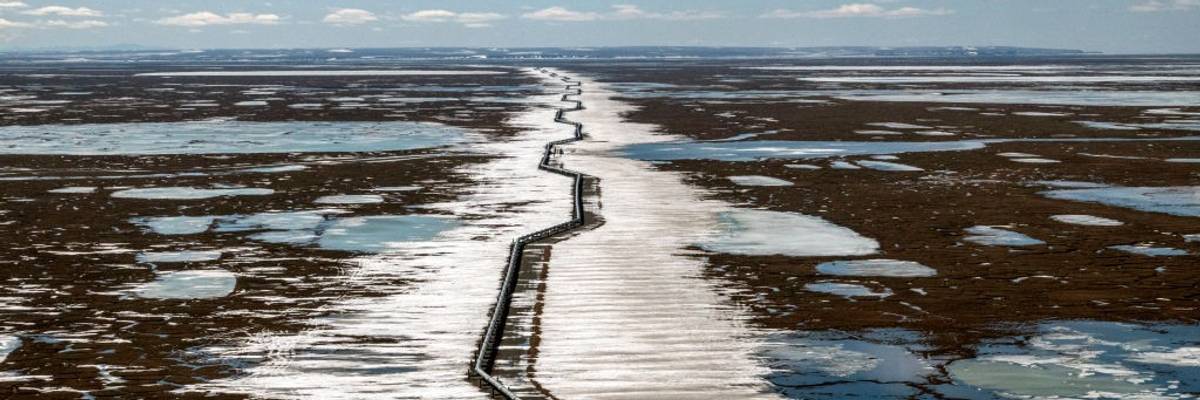
    An oil pipeline stretches across the landscape outside Prudhoe Bay in North Slope Borough, Alaska on May 25, 2019.(Photo by Bonnie Jo Mount/The Washington Post via Getty Images)

    Just over a week after a leading US Senate Democrat described President Donald Trump’s relationship with fossil fuel giants as “old-fashioned corruption, by a thuggish government and a desperate industry,” his administration on Thursday announced yet another giveaway to climate polluters who want to exploit the Arctic.

    The US Department of the Interior is moving forward with a plan to allow oil and gas companies to conduct certain wintertime activities at the National Petroleum Reserve in Alaska without reviews generally required by the National Environmental Policy Act—a landmark law long targeted by Trump’s Republican Party.

    RECOMMENDED…

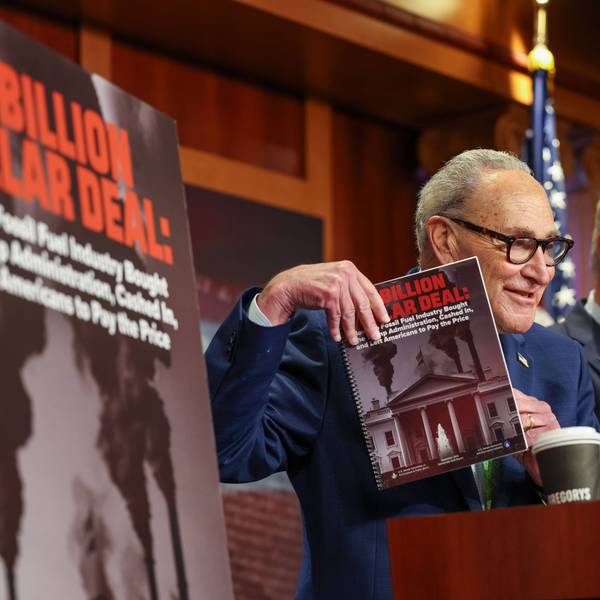
    Senators Schumer And Whitehouse Unveil Report On Fossil Fuel Industry's Connections To Trump Administration

    ‘The Billion Dollar Deal’: Senate Democrats Detail How Trump Serves Fossil Fuel Industry

    ICE agents and immigration activists face off outside Delaney Hall detention center in Newark, New Jersey

    ‘Should Concern All Americans’: Records Show ICE Has Gathered 50 Million Voter Records Ahead of Midterms

    “In issuing this categorical exclusion, this administration is seeking to fast-track large-scale oil drilling and seismic exploration without any further environmental analysis or public input,” warned Earthjustice attorney Janet Bering. “It is cutting the public out of this decision and future decisions.”

    “The administration finalized this new approach with zero public input,” Bering noted. “Combined with a similar proposal that rubber-stamps new oil production, this is a one-two punch. It’s bad policy, and it is unlawful.”

    The 60-day public comment period is ongoing for the earlier proposal she cited, which is designed to streamline decision-making for construction and operation of oil and gas production sites in the same 23-million-acre Alaska reserve.

    When the Interior Department unveiled that policy in early September, Earthjustice Attorney Erik Grafe declared that “what we’re seeing here is a concerted attack by the Trump administration to greenlight oil and gas drilling in the Western Arctic while ignoring the harm it will cause to these irreplaceable public lands and also the government’s obligation to protect these lands for wildlife and future generations.”

    “These are large-scale, industrial activities that cause permanent damage to sensitive Arctic ecosystems, nearby communities, and the climate,” Grafe stressed. “The administration’s proposal flaunts basic environmental laws meant to protect land, wildlife, and people and allow for fully informed decision-making.”

    Earthjustice is far from alone in blasting Trump’s recent attacks on the Arctic. Dan Ritzman, director of Sierra Club’s conservation campaign, condemned last month’s proposal as “another piece of the administration’s relentless effort to expand drilling across Alaska’s public lands.”

    “The Western Arctic is home to caribou, migratory birds, and countless other wildlife, and decisions about its future deserve careful scrutiny—not a permitting process designed around the demands of the oil and gas industry,” Ritzman said at the time.

    His colleague Mike Scott, Sierra Club’s national oil and gas campaign manager, was similarly critical of Thursday’s announcement.

    “The Trump administration is handing Big Oil another free pass to exploit America’s public lands, this time by gutting environmental oversight in one of the most fragile ecosystems on the planet,” said Scott. “Oil companies have already shown the risks they pose to the Western Arctic, and now this administration wants to make it even easier for them to drill without scrutiny.”

    “This isn’t about lowering energy costs or helping Alaskans,” he continued—as the president drives up fuel costs with an illegal war on Iran. “It’s about doing the fossil fuel industry’s bidding at the expense of wildlife, Alaska Native communities, and our public lands. The Trump administration is putting corporate profits ahead of people and the planet, and the Western Arctic will pay the price.”

    Trump campaigned for a second term on a pledge to serve fossil fuel interests—even telling industry executives that he’d roll back climate policies if they poured $1 billion into his campaign. Last week, US Senate Minority Leader Chuck Schumer (D-NY) and Committee on Environment and Public Works Ranking Member Sheldon Whitehouse (D-RI) released a report detailing how the president has delivered on that promise since returning to power last year.

    “The fossil fuel industry and their allies bought their way into the Trump White House with hundreds of millions of dollars in political donations, after Trump promised fossil fuel bigwigs at a Mar-a-Lago fundraiser that he’d do anything and everything they wanted, for the right price,” Whitehouse said. “Now, their minions run the government from the inside, driving up energy bills to deliver payouts to the donors that put Trump back in office.”

    Article by Jessica Corbett republished from Common Dreams under Creative Commons (CC BY-NC-ND 3.0).

    Climate science denier Donald Trump confirms that he knows nothing about democracy and that more liquid gold is being secured according to his policy of global privateering.
    Climate science denier Donald Trump confirms that he knows nothing about democracy and that more liquid gold is being secured according to his policy of global privateering.
    Orcas discuss Donald Trump and the killer apes' concept of democracy. Front Orca warns that Trump is crashing his country's economy and that everything he does he does for the fantastically wealthy.
    Orcas discuss Donald Trump and the killer apes’ concept of democracy. Front Orca warns that Trump is crashing his country’s economy and that everything he does he does for the fantastically wealthy.
    Donald Trump urges you to ignore facts and reality and be a Climate Science denier like him. He says that he makes millions and millions for destroying the planet, Burn, Baby, Burn and Flood, Baby, Flood.
    Donald Trump urges you to ignore facts and reality and be a Climate Science denier like him. He says that he makes millions and millions for destroying the planet, Burn, Baby, Burn and Flood, Baby, Flood.
  • Tens of Thousands of Voters at ‘Risk of Disenfranchisement’ Thanks to Trump’s Postal Service: Analysis

    Spread the love

    Article by Brad Reed republished from Common Dreams under Creative Commons (CC BY-NC-ND 3.0).

    The United States Postal Service logo is displayed on a USPS mail collection box on September 18, 2026 in San Gabriel, California. (Photo by Mario Tama/Getty Images)

    “In every state, a day’s delay in delivery means that if mail voters wait until the last day or two before the election to mail their ballot… they could be disenfranchised.”

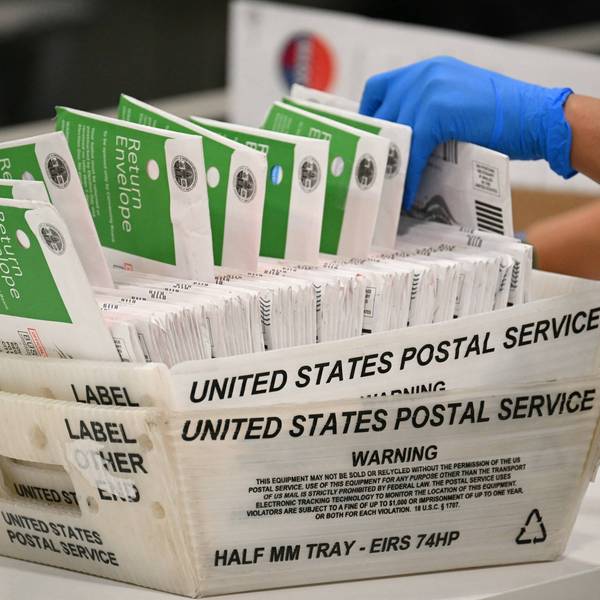
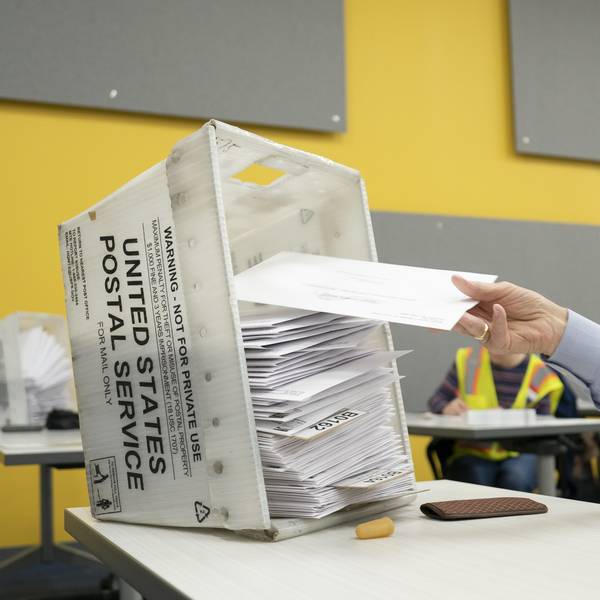
    An analysis published Friday by Democracy Docket warned that “tens of thousands” of voters across the US face “risk of disenfranchisement” thanks to actions being taken by the United States Postal Service.

    The analysis, written by veteran election reporter Jim Saksa, points to a new USPS policy known as Regional Transportation Optimization (RTO) that “will eliminate evening mail pickups from post offices more than 50 miles away from a regional processing facility, most of which are located in major urban areas.”

    RECOMMENDED…

    US-POLITICS-CALIFORNIA-VOTE

    ‘Major Win’ for Democracy as Supreme Court Rejects Trump Attack on Mail-In Voting

    North Carolina Board Of Elections Test Voting Machines Ahead Of Election

    Trump’s War on Mail-in Voting is Hitting a Brick Wall—But the Danger is Far From Over

    For people who live in these areas, ballots sent on Election Day will be postmarked and delivered at least a day later than in previous election years, thus making it ineligible to be included in final election tallies.

    “In every state, a day’s delay in delivery means that if mail voters wait until the last day or two before the election to mail their ballot,” Saksa explained, “they could be disenfranchised.”

    Saksa reported that this policy is currently active in “about 42.5% of all ZIP codes” in the continental US, and is scheduled to eventually take effect in around 70% of all ZIP codes. No additional ZIP codes are expected to be added between now and election day.

    Saksa also said that voters concerned about their ballots not being counted should deliver them in person to their local post office, where they can ask an employee to postmark it.

    President Donald Trump has tried for the last several months to use USPS to meddle with states’ mail-in voting systems.

    In March, the president signed an executive order that instructed the United States Postal Service to not deliver ballots in any states that have not given the federal government access to their voter lists.

    The US Supreme Court last month rejected Trump’s efforts to interfere with mail-in voting, allowing states to continue sending ballots to voters as they’ve done in past elections.

    Even with the Supreme Court loss, however, the president’s repeated attacks on voting by mail has had a major impact on the 2026 midterm elections.

    An NBC News poll released in September showed that just 23% of Democratic voters said they planned to vote by mail this year, a double-digit drop from 2024 when 34% of Democrats said they were voting by mail.

    In an interview with Politico published Thursday, Quentin James, founder and president of The Collective Political Action Committee, said Black voters have been expressing concerns about sending in their ballots for fear that Trump will order USPS to not deliver them.

    “I think there’s confusion,” James said. “We know that the president has spent six months talking about changing the rules regarding mail-in voting, and a lot of folks are concerned about their ballot being secure.”

    Indivisible co-founder Leah Greenberg also told Politico that her group is “absolutely hearing concern” about the mail voting process this year.

    “But more importantly,” Greenberg added, “what we’re hearing is people trying to figure out what they can do and how they can organize locally in order to protect elections.”

    Article by Brad Reed republished from Common Dreams under Creative Commons (CC BY-NC-ND 3.0).

    Orcas discuss Donald Trump and the killer apes' concept of democracy. Front Orca warns that Trump is crashing his country's economy and that everything he does he does for the fantastically wealthy.
    Orcas discuss Donald Trump and the killer apes’ concept of democracy. Front Orca warns that Trump is crashing his country’s economy and that everything he does he does for the fantastically wealthy.
    Climate science denier Donald Trump confirms that he knows nothing about democracy and that more liquid gold is being secured according to his policy of global privateering.
    Climate science denier Donald Trump confirms that he knows nothing about democracy and that more liquid gold is being secured according to his policy of global privateering.
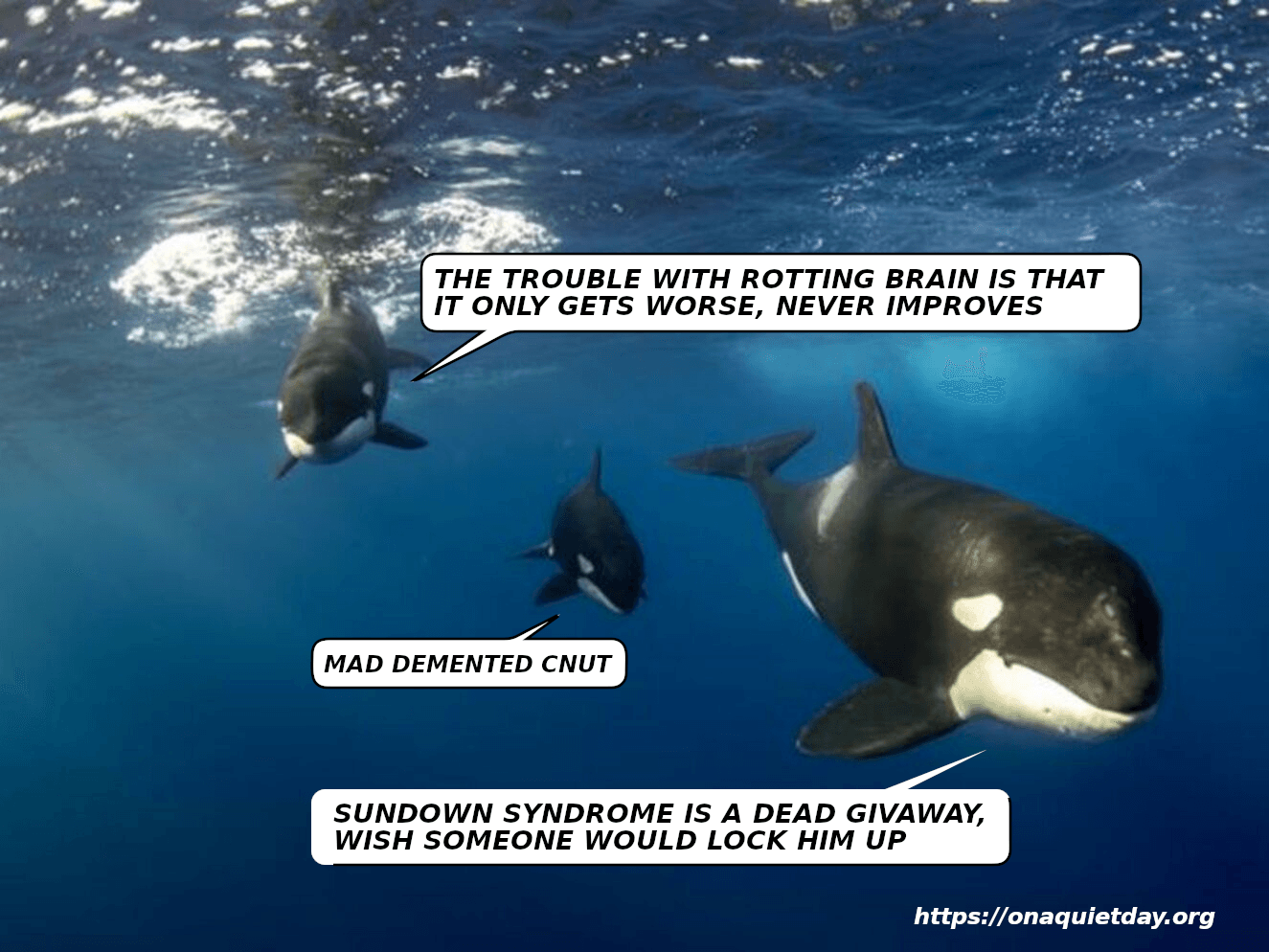
    Orcas discuss rotting brain, front Orca says Sundown Syndrome is a dead givaway and he wishes someone would Lock Him Up
    Orcas discuss rotting brain, front Orca says Sundown Syndrome is a dead givaway and he wishes someone would Lock Him Up