Tag: Neoliberalism

  • Authoritarianism, austerity, repression, and false narratives: the crisis in Ecuador

    Spread the love

    Original article by Pilar Troya Fernández republished from peoples dispatch under a Creative Commons Attribution-ShareAlike 4.0 (CC BY-SA) license.
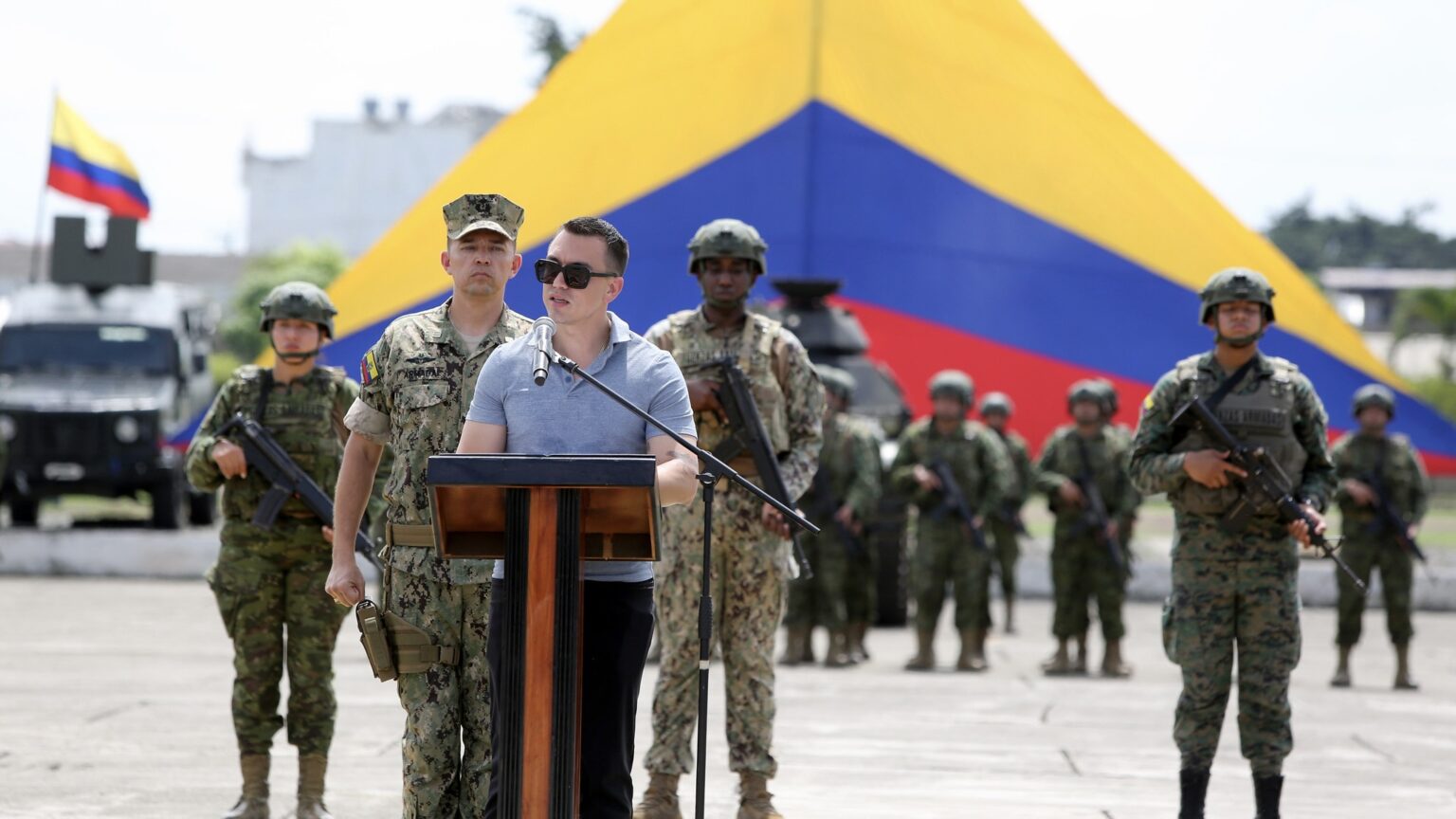
    Ecuadorian President Daniel Noboa in January 2025. Photo: Presidencia Ecuador

    Ecuadorian President Daniel Noboa has not only deepened the crisis in the country, but is also attempting to change the country’s institutions and laws through loopholes and force.

    Daniel Noboa’s government in Ecuador is characterized by the implementation of neoliberal austerity policies dictated by the IMF, the violent repression of social protests, and a series of legal reforms aimed at increasing state authoritarianism, and aligning the country with US foreign policy. All this is taking place amid an unprecedented security crisis.

    The security crisis

    During the first half of 2025, Ecuador recorded 4,619 homicides, setting a new historical record and representing a 47% increase over the same period in 2024. This figure makes the country the most violent on the continent. No one knows what the Phoenix Plan, implemented by the Noboa government since 2024, consists of, and it has not produced positive results. On the contrary, citizen insecurity has worsened. The constant states of emergency that have militarized the country have also failed to reverse the situation.

    Austerity policies

    Re-elected in April 2025, Daniel Noboa has implemented a far-right program aligned with the demands of the IMF. In June, he dismissed 5,000 civil servants and merged four ministries. In the most serious case, environmental responsibilities were transferred to the Ministry of Natural Resources and Hydrocarbons, highlighting the government’s extractivist orientation. These measures represent the path toward the minimal state advocated by neoliberalism and respond to the conditions of the latest IMF loan.

    On September 12, Noboa withdrew the subsidy on diesel, whose price rose from USD 1.80 to USD 2.80 per gallon until December. Subsequently, the price would depend on a band system tied to international market prices. This measure triggered a national transport strike on September 13, with transport workers quickly reaching an agreement with the government in exchange for subsidies, and subsequently the national strike called by the Confederation of Indigenous Nationalities of Ecuador (CONAIE) on September 18, demanding the repeal of the measure, a reduction in the VAT from 15% to 12%, no mining, respect for prior consultation, and more investment in education and health. It should be noted that public hospitals are in precarious conditions, without medicines or supplies. The media reports that patients who required dialysis treatment died because they did not receive it.

    Submission to the United States and constitutional reforms

    On June 3, the National Assembly, where the government has a majority, approved an amendment to Article 5 of the Constitution allowing foreign military bases. This amendment required the approval of the Constitutional Court and subsequently a referendum. On September 5, the Constitutional Court rejected four of the eight questions that Noboa had sent for popular consultation and referendum, including this issue.

    Authoritarian laws and the Constitutional Court as the last bastion

    In June 2025, the government managed to pass three new laws that were sent as economically urgent without actually being so: on Intelligence, National Solidarity, and Public Integrity. The progressive camp filed 23 constitutional challenges with the Constitutional Court because they violate rights related to children and adolescents, freedom of expression, intimacy, and privacy, among others. The Court provisionally suspended 16 articles of these laws, prompting a smear campaign organized by the government, which accused the Court of leaving the country defenseless against crime.

    The National Solidarity Law sought to institutionalize the concept of “internal armed conflict” that Noboa used in a decree in January 2024. This implied: free use of the military in police operations; prior pardon for security personnel for potential crimes and human rights violations; criminalization of opposition organizations by classifying them as armed groups; and treatment of areas, movable and immovable property presumed to belong to criminal groups as military targets.

    The Intelligence Law sought to intercept any communication without a court order, require information within two days without a court order, access personal data without a court order, reinstate confidential expenses (non-transparent discretionary funds), and incinerate documents rather than keep them on file.

    On September 27, the Constitutional Court definitively rejected two of the laws, the National Security Law and the Public Integrity Law, as flagrantly unconstitutional.

    The Constitutional Court is the only state body that the Noboa government does not control. The National Court of Justice and the Attorney General’s Office have supported the government by implementing lawfare against the opposition, especially Rafael Correa’s Citizen Revolution party, while failing to investigate any of the signs of corruption in the current government. These include million-dollar contracts with companies owned by Noboa’s relatives, new mining concessions that also lead to his relatives, 48 generators purchased to provide electricity, of which 30 are not compatible with the Ecuadorian system, and the scandal of the contract with Progen for the electrical system, for which USD 149 million was paid without results, leaving open the possibility that last year’s 14-hour daily blackouts will be repeated.

    Read more: Ecuador in the dark: Daniel Noboa increases power cuts to 14 hours a day

    Abuses, protests, and repression

    On September 16, in Cuenca, the country’s third largest city with 800,000 inhabitants, the largest environmental march in the country’s history took place: 100,000 people marched against the Loma Larga mining project in the Quimsacocha area, which would put water sources for agricultural and human use at risk. The project had been suspended by a local court for failing to comply with prior consultation and environmental requirements.

    On September 19, Noboa ordered the National Electoral Council, by decree, to organize a National Constituent Assembly without seeking the opinion of the Constitutional Court, which constitutes a violation of the Constitution and was interpreted as an attempted coup d’état. The Court admitted five constitutional challenges and the execution of the decree was blocked, although the CNE quickly launched the call for elections for the Constituent Assembly.

    At the time of publication of this article, the national strike called by CONAIE continued after 20 days, with support in several cities, especially from students. Roadblocks, protests, and shutdowns are spreading throughout the country, but are strongest in the Sierra, where the Indigenous movement is the main actor in the popular camp.

    Tanks and military vehicles repressed the protests in the province of Imbabura, even firing on unarmed Indigenous communities. The Minister of Government, Zaida Rovira, said that it was a humanitarian convoy “ambushed by terrorist structures”. The convoy arrived without prior warning while all internet communication was interrupted, and there is no terrorist group linked to the incident. Efraín Fuérez was killed by the military in a nearby area. A Spanish journalist reporting from the area, Lautaro Bernat, was deported.

    Read more: One dead and nearly 100 arrested amid heavy repression of protests in Ecuador

    At least 100 people have been detained and 10 are missing. On September 26, twelve detainees were sent to one of the maximum security prisons where a prison massacre had taken place the day before, killing 17 people. These massacres have been repeated even with prisons under military control since 2024. These people were falsely accused of terrorism and of having criminal records. The government has frozen the bank accounts of popular leaders and organizations without a court order, claiming without evidence that the strike is being financed by the Venezuelan drug trafficking organization, “Tren de Aragua”.

    The former president of CONAIE, Leonidas Iza, leader of the 2019 and 2022 uprisings, suffered an attempt on his life by agents of the National Intelligence Directorate on August 18, 2025. Four children from a suburb of Guayaquil were tortured and extrajudicially executed by the military in December 2024. The level of authoritarianism is such that the US State Department itself denounces it in a report that points to serious human rights violations in Ecuador between 2024 and 2025. International reports show that since 2024 there has been an increase in crimes of abuse of power in the execution of official duties, torture, forced disappearances, and extrajudicial executions.

    Noboa’s response to the Constitutional Court’s rejection of the two laws was, on September 30, to send a new urgent economic law to facilitate donations to the National Police and the Armed Forces.

    There are no negotiations with the actors on strike. Faced with demands for more democracy and state investment, the government responds with austerity, increased repression, and a communication strategy that seeks to establish the false narrative that all protesters are criminals and/or terrorists. In line with this, on October 8, the presidential guard, after attacking an Indigenous demonstration in the province of Cañar, broke the windows of the presidential motorcade’s vehicles and then claimed that it was an attempt to assassinate the president. This would be the first time that an attempt has been made to assassinate a president by throwing stones at the presidential motorcade, which is protected by the military, police, and private security, who had been warned about the protest by the mayor days earlier.

    Pilar Troya Fernández is an Ecuadorian anthropologist with a master’s degree in gender studies and a researcher at the Tricontinental Institute for Social Research. She was an advisor to the National Secretariat of Planning, an advisor to the National Secretariat of Higher Education, Science, Technology, and Innovation, and Deputy Secretary General of Higher Education in Ecuador. She currently resides in Brazil.

    This article was produced by Globetrotter.

    Original article by Pilar Troya Fernández republished from peoples dispatch under a Creative Commons Attribution-ShareAlike 4.0 (CC BY-SA) license.
  • Fighting the Neoliberal-Fascist Coup by Trump and Musk

    Spread the love

    Original article by William E. Connolly republished form Common Dreams under Creative Commons (CC BY-NC-ND 3.0).

    Federal employees rally in support of their jobs outside of the Kluczynski Federal Building on March 19, 2025 in Chicago, Illinois. The rally was organized by the National Treasury Employees Union to voice concerns about the mass firing of federal workers by the controversial Department of Government Efficiency (DOGE) which is led by billionaire businessman Elon Musk. (Photo by Scott Olson/Getty Images)

    Time is short during a fascist takeover attempt. And Trump and Musk are moving at breakneck speed. The stakes could not be higher.

    At what junctures do Elon Musk and Donald Trump, each proceeding from a distinctive starting point, forge a new and hyper-dangerous coalition? Well, the Afrikaner refugee joins an extreme version of neoliberalism to a fascist drive to state takeover, and the fascist orange man, who demands unfettered state power and loves tariffs, nonetheless caters to neoliberal drives to concentrate wealth, income, and power even more extremely at the highest reaches of society. Together, they pursue what is best called oligopolistic fascism.

    What’s more, while both may have once believed the old Friedrich Hayek story of how market deregulation secures a robust economy of steady growth, each displays active signs today of no longer believing the very ideology he pedals. Musk does so through his project of planetary escapism and his obsession with driving Inspector Generals from governmental institutions; Trump does so through his constant lies and belligerent demonization of vulnerable people who disagree with him. Indeed, each contains within himself a minor voice sliding into the major voice of the other. They both now believe that the old order that has sustained their extreme privileges can now only be protected by fascist means.

    So, let’s define our terms a bit more closely. Neoliberalism was a market theory, most prominently developed by Friedrich Hayek in the 1960s and 1970s as a series of rejoinders to a Keynesian model of growth and social welfare. Neoliberalism promised rapid and sustained economic growth, if the state would radically reduce regulation of private corporations, subsidize them whenever needed, severely limit the power of labor unions, create a court system committed to neoliberal jurisprudence, and, most importantly (and too often less noted by critics), install a national ideology of regular individuals committed to a market regime–a national ideology saturating schools, unions, churches, the government, the media, think tanks, and universities.

    In this ideology each individual and institution sees itself as first and foremost a participant and beneficiary of a privately owned market economy. Hayek himself emphasized these themes in his neoliberal social philosophy, a social philosophy that included an economic theory but extended well beyond it to include all other social and state institutions. This all found elaborate expression, for instance, in his 1970 book Rules and Order. In it he emphasizes how the Supreme Court must set rules beyond the powers of legislative revision to nurture the sinews of a neoliberal economy. And he says a neoliberal ideology “may well be something whose widespread acceptance is the indispensable condition for most of the particular things we strive for.” (Rules of Order, p. 58). He knew that minority groups who refused or could not imbibe this ideology had to be controlled by other means. A neoliberal regime along Hayek’s lines, then, is one in which the prison population grows.

    In fact the neoliberal order in the United States, supported actively by neoliberal Supreme Court justices, has pushed previously unheard of wealth concentrations to the top of the social hierarchy; supported a unitary President; increased economic insecurity for workers, the poor and mid-level professionals; encouraged hi-tech, super-rich bros to pour vast amounts of money into right wing electoral campaigns; restricted state efforts to fend off climate change and help the poor; and supported media gaslighting to deny the contributions a neoliberal economy makes to accelerating climate wreckage and periodic crises. You can take the 2008 economic meltdown, during the G. W. Bush administration, to be a notable instance of the latter.

    What about fascism? Well, fascist movements seek to secure capitalist states by new means during hard times. This was true even in the most extreme instance, when Hitler in Nazi Germany protected large private industrialists as he attacked Jews, social democrats, labor unions, homosexuals, the Romani, and communists. In Mein Kampf, the Jews were defined to be the “red thread” that tied them, social democrats and communists together in one phalanx. To attack the Jews was thus to attack these other organizations and movements too. The regime was inaccurately called “National Socialism”; a closer label would be “National Capitalism,” an economic regime of private profit in which a fascist state became the key definer and regulator of life.

    How does a distinctive aspiration to fascism proceed today? It does so by promulgating “big lies” to mobilize hatred in its base; fostering an extreme version of white, Christian nationalism; ransacking state regulatory institutions; intimidating the media, courts, unions, localities, and universities; engaging in coups; mobilizing private militia to intimidate vulnerable elements of the populace; treating immigrants of color to be inferior and “vile” people; and joining with other autocratic states to weaken democracy and promote oligarchical rule. Indeed, today Trump treats immigrants of color and their liberal supporters to be the red threads tying all his enemies together. And he never acknowledges how the very anti-climate policies he promotes accelerate the desperate marches from South to North that he castigates so fervently.

    As I previewed in a 2017 book, Aspirational Fascism, Trump has profound fascist aspirations, displayed prominently today in promulgating a battery of big lies, fostering a violent coup attempt after he lost an election, aligning with Putin in foreign policy, pardoning all those who participated in his 2021 violent coup attempt, attacking universities, insisting upon the hegemony of a unitary president who sidelines Congress, the states and (increasingly) courts, and unleashing Musk to reshape the state.

    What draws Musk and Trump so closely together now?

    Well, Musk shows signs of losing faith in the neoliberal ideology that informed his thinking hitherto, while continuing to deploy it strategically to clean out the federal government of officials—the “Deep State”—who could expose fraud and regulate corporate excesses. To take one instance, he has moved from an earlier stance of concern about accelerating climate wreckage to saying, even as he knows better, that climate change is real but moving at a very slow pace. Even after more extreme hurricanes, the Los Angeles wildfires, and other destructive events.

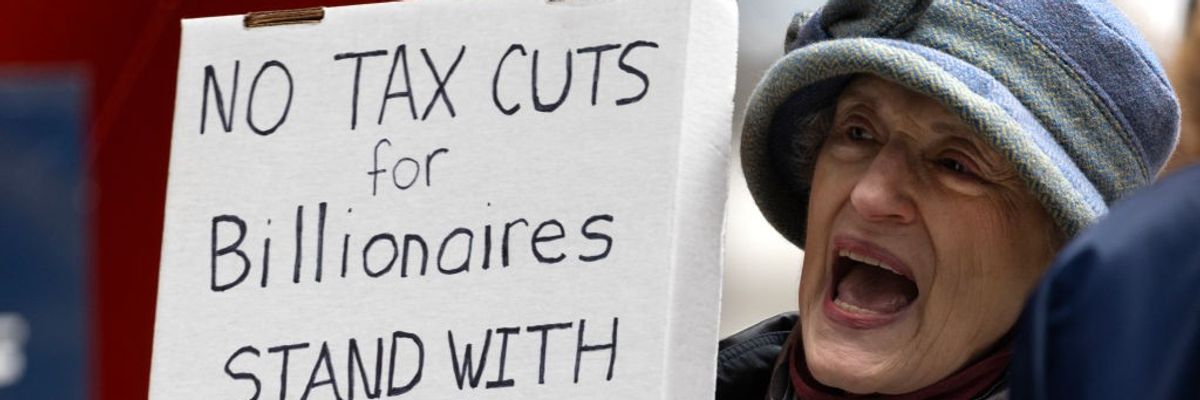
    And Trump, who knew in fact that he had lost the 2020 election, has joined belligerently the project of heaping more and more wealth on the extremely wealthy at the expense of those working and middle class white nationalists who provide a key portion of his political base. The tax cut for the rich he is pushing through Congress shows that. He may well think he will not need to cater to that portion of his base so much, after he has silenced the media, universities, unions, progressive churches, and Democratic Party. He has already silenced critical Republicans and high rolling donors.

    What about white working- and middle-class members of the Trump/Musk base? They have displayed signs not so much of believing all the Trumpian lies peddled to them as embracing the lies because of the ways they unsettle liberal elites on both coasts and activate racist impulses already there. Not too many Trump supporters believed the ugly story about Haitian immigrants eating dogs and cats. They merely loved to hear and repeat the story. That is why intense media efforts to expose Trump’s lies have not penetrated the armored base. That protective armor itself was forged during a period when the democratic left had lost touch with the needs and insecurities of those constituents, while focusing only on their ugly racist and misogynist tendencies. In fact, curtailments of racism and misogyny need to be pursued in tandem with reductions in class inequality, if either agenda is to succeed. But it remains to be seen whether Democrats can learn this lesson.

    Today, the neoliberal/fascist nexus is taking another turn. While it focuses white working class attention on violent immigrant deportations, it also plans to weaken Medicaid, Medicare, and Social Security severely, perhaps even to destroy them. Why? To give yet another huge tax break to the superrich who also finance their campaigns. Increasing numbers of the old base are now beginning to see through this scam by the scammer they used to love. It turns out the “Deep State” contains many essential services and protections, now on the block.

    The Trump/Musk team hopes to complete dismantling and then reordering the Deep State before the base catches on. Then, once the media, universities and liberal donors have been intimidated sufficiently, it will be too late to protest effectively. That is the plan.

    The urgent task today is to expose this nexus and its plan at every turn, in every possible venue, and by all democratic means necessary, from publicity to protest to electoral mobilization. For time is short during a fascist takeover attempt. And Trump and Musk are moving at breakneck speed. The stakes could not be higher, nor the urgency more acute.

    Original article by William E. Connolly republished form Common Dreams under Creative Commons (CC BY-NC-ND 3.0).

    Neo-Fascist Climate Science Denier Donald Trump says Burn, Baby, Burn.
    Neo-Fascist Climate Science Denier Donald Trump says Burn, Baby, Burn.
    Elon Musk urges you to be a Fascist like him, says that you can ignore facts and reality then.
    Elon Musk urges you to be a Fascist like him, says that you can ignore facts and reality then.