Marking the 80th anniversary of Nazi Germany’s defeat, Global South leaders are gathering in Moscow, while EU remains absent
Source: Ministry of Foreign Affairs of Russia/X
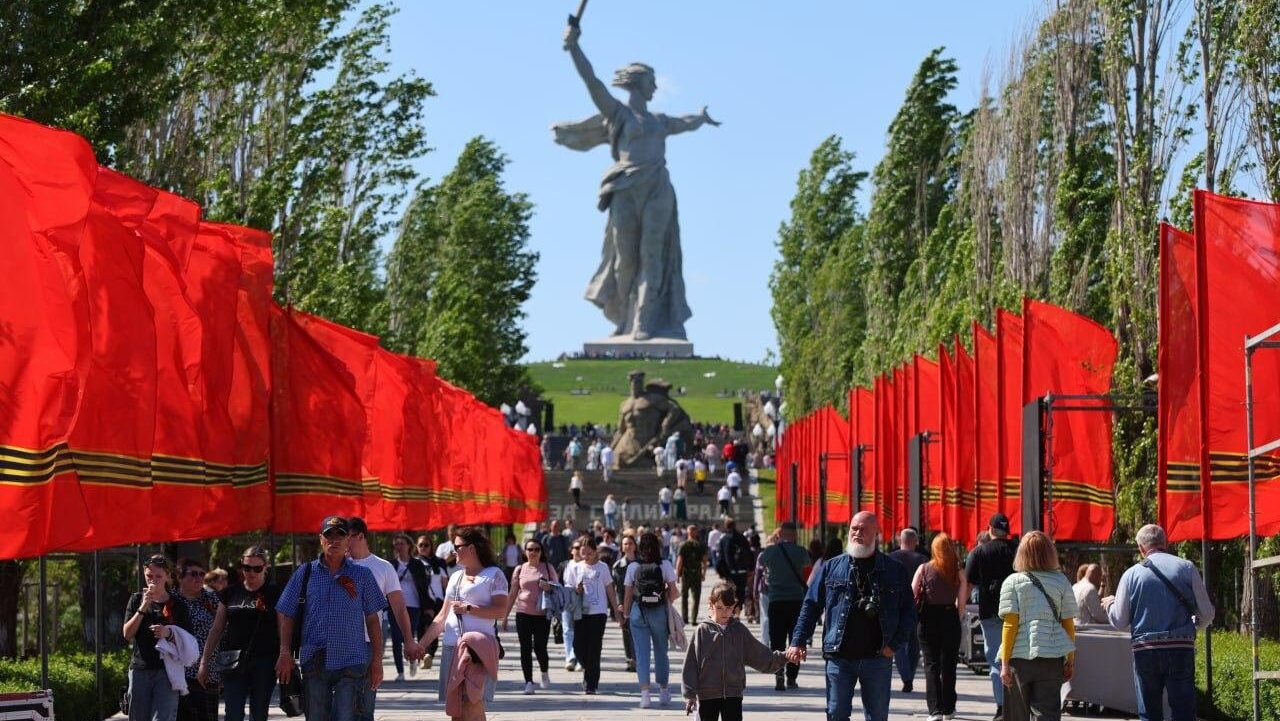
Early high-level events marking the 80th anniversary of the defeat of Nazi Germany are underway in Russia, where the traditional Victory Parade on Friday, May 9, will welcome a host of world leaders and other guests to commemorate the Red Army’s role in the liberation of Europe. According to Russian authorities, 29 countries have confirmed their leaders will attend the event, including Brazil, Burkina Faso, China, Cuba, Venezuela, and Vietnam.
Victory Day, falling on May 8 in most of Europe and on May 9 in Russia due to time zone differences, marks the official surrender of Nazi Germany in 1945. Although the date holds deep historical significance for Europe, its political leaders will be largely absent from this year’s events in Moscow. Slovakia is the only EU country to appear on the latest list of attendees, ignoring warnings from the bloc’s High Representative for Foreign Affairs, Kaja Kallas, who implied there would be ‘consequences’ for European officials participating in the event. Her threats mark the latest episode in a long-standing campaign of historical revisionism led by the EU, aimed at minimizing and obscuring the Soviet Union’s role in the liberation of Europe in World War II.
Honoring Red Army’s role in defeating Nazi Germany
In contrast to the EU, Global South leaders attending the events expressed their respect and acknowledged those who fought for liberation. At the beginning of his visit, Venezuelan President Nicolás Maduro stated simply: “It was the Red Army that liberated Europe.” Similarly, Chinese President Xi Jinping emphasized the importance of maintaining an accurate historical perspective on World War II and applying its lessons to the present, particularly when it comes to resisting Western domination.
“Eighty years ago, the forces of justice around the world, including China and the Soviet Union, united in courageous battles against their common foes and defeated the overbearing fascist powers,” Xi wrote in an article for the Russian Gazette. “Eighty years later today, however, unilateralism, hegemonism, bullying, and coercive practices are severely undermining our world.”
Despite efforts by Western governments to demonize the Red Army, many around the world still remember the USSR’s decisive role in the antifascist struggle, the immense sacrifices it made during the war, and the international solidarity it championed. “The peoples of the world have not forgotten who, in 1945, liberated them from Nazi enslavement and destruction,” stated Gennady Zyuganov, leader of the Communist Party of the Russian Federation, ahead of Victory Day.
“Celebrating the 80th anniversary of the great victory over fascism, we must remember the origins of Nazism,” he added. “Imperialism, which gave birth to that plague, is not a thing of the past. It is no coincidence that today our former allies in the anti-Hitler coalition are erasing us from the list of victorious countries.”
Left movements reclaim antifascist legacy for today’s struggles
Although communist groups across Europe circulated statements honoring the Red Army’s role in World War II, some also voiced concern about the context of this year’s central commemoration in Russia – just as much as the revisionism of core EU countries
It is in the spirit of reclaiming the resistance, that left and progressive groups across the region are organizing their own events. In Belgium, for example, activists have rallied around long-standing demands to re-establish May 8 as a public holiday. In former Yugoslav countries, actions will affirm the relevance of antifascism today, particularly in connection with solidarity for Palestine and mobilizations against genocide. All these events are not limited to remembrance: they aim to resist efforts to rewrite history in service of the Global North’s current political agenda.
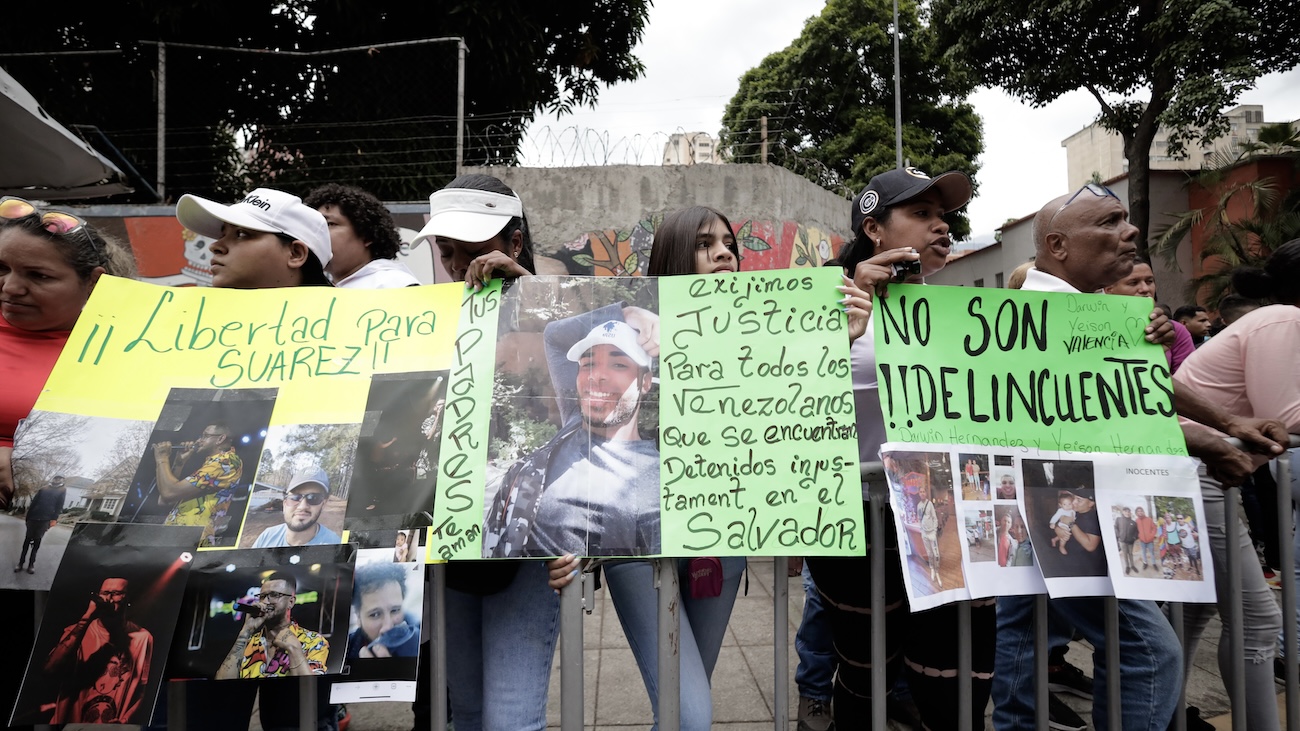
Venezuelans rally against deportations. Photo: Francisco Trias
The Venezuelan government has promised that it will “fight until it frees all its compatriots” who have been imprisoned and deported without evidence thanks to an 18th-century US law.
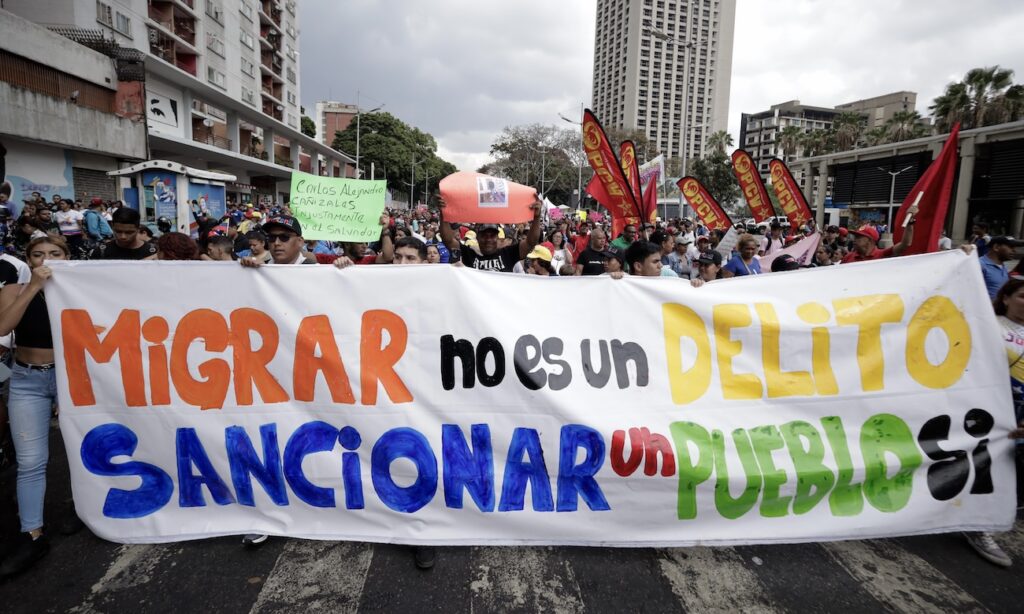
Thousands of Venezuelans rallied in Caracas on Tuesday, March 18, to protest the deportation of Venezuelan migrants from the United States to a high security prison in El Salvador. Family members of the deported migrants addressed Venezuelan officials and fellow citizens to demand the immediate return of their loved ones, with many insisting that their relatives are not criminals or members of the infamous Tren de Aragua as Donald Trump claims.
The mobilization occurred days after the deportation of over 200 migrants to El Salvador in one of the most controversial acts by the administration of Donald Trump during his two months in office. In January, shortly after Trump’s swearing in, Salvadoran President Nayib Bukele had offered up his country’s prisons to take in deported migrants or even the US’ national incarcerated population. It appears that this discussion advanced, and El Salvador, like several other countries in the region, will now provide detention centers for deported migrants, with no clarity of the criteria for who gets sent, how long they stay there, and under what jurisdiction they are. According to the US government, the Venezuelan migrants deported on Saturday all belong to the criminal group called Tren de Aragua (Aragua Train).
The Trump administration has yet to show evidence to back up its accusation.
“It is a massive violation of human rights,” says the Venezuelan government.
For its part, the Venezuelan government has condemned the US-Salvadoran decision as a violation of human rights. Jorge Rodríguez, president of Venezuela’s National Assembly, said in a press conference, “How do the Dantesque images we saw [of the deported Venezuelan migrants] differ from those of the Warsaw ghetto? How does Mr. Bukele’s barbarity when he said that he had bought slave labor differ from the memory of forced labor in the concentration camps of Auschwitz?”
In this sense, the Venezuelan government informed the families of the detainees that it would do everything possible to repatriate the migrants that were deported and now are being indefinitely held in a high security prison in El Salvador with no due process.
In addition, the Secretary of the Interior, Diosdado Cabello questioned the Trump administration’s assertion that the Venezuelans who were deported were part of the “Tren de Aragua” criminal gang. In this regard, Cabello said, “It is a lie that those [deported] to El Salvador are from the Tren de Aragua.”
Maduro accuses Bukele of exercising fascist tactics against Venezuelan migrants
For his part, Venezuelan President Nicolás Maduro publicly rebuked Bukele for the treatment Venezuelans have received in El Salvador, and accused his government of fascist practices: “Are you going to protect this cruelty, this injustice, without [the detainees having] the right to any [judicial process], of creating concentration camps and putting noble working migrants in jails without a [due] trial, without having committed crimes in El Salvador, without having any sentence issued by a court in El Salvador? Is this legal, is this fair, Nayib Bukele?”
In addition, Maduro denounced the treatment suffered by the Venezuelan deportees: “They put them in handcuffs by hands and legs without telling them where they were going, and when they arrived in El Salvador, they made them get off the plane beating them with sticks and clubs; they humiliated them, threw them on the floor, shaved their hair. Is that called justice? Is that called international law? Is that called human rights? That is called fascism, Nazism, and Venezuela is ready and willing to denounce this massive violation of human rights against the hard-working and noble migrants in the United States!”
Migration is not a crime, sanctioning a people is. Photo: Francisco Trias
An 18th-century law to imprison migrants
According to the US Executive, its decision is based on an 18th-century law (1789) called the “Alien Enemies Act,” which states that the President of the nation has the power to order the detention and expulsion of foreign citizens from countries with which the United States is at war.
The bicentennial law was passed during the administration of John Adams, during a potential war with France, to prevent espionage and sabotage by foreigners in the United States. This law was applied again in 1812 during the war between the United States and the United Kingdom, and during the two world wars, during which US authorities imprisoned tens of thousands of foreigners in concentration camps for several years.
The law permits the imprisonment and deportation of foreign nationals without proper defense or normal judicial process, expediting the process under the pretext of national security.
Trump claimed that the law could be applied today because the Tren de Aragua is “perpetrating, attempting, and threatening a predatory invasion or incursion against US territory.” However, a judge in the District of Columbia named James Boasberg stated that there was no legal justification for enforcing the law, and asked that it be stayed. However, in another unprecedented move, Trump ignored the judge and did not reverse the action, allowing for the deportation of hundreds of Venezuelans to Salvadoran territory.
ALBA Movimientos rejects the deportation and imprisonment of Venezuelan migrants
In a statement, the Social Movements of ALBA, a platform of social movements in Latin America and the Caribbean, condemned Trump and Bukele’s decision as a violation of international law and human rights, and called it a kidnapping of migrants.
“This constitutes a barbaric action, demonstrative of the fascist, racist and defiant character of the basic human rights conventions, by the government of Donald Trump, who invoking a law of 1798 (three centuries ago) attributes to himself the power to kidnap, deport and imprison people only for being Venezuelans and the presumption of belonging to the ‘Tren de Aragua’, without any evidence and the right to defense,” states the communiqué.
“One of the most serious consequences of the application of this law is the criminalization of migration and in particular of Venezuelan migration, giving rise to the possibility that any Venezuelan migrant over the age of 14 could be qualified as an ‘invader’, ‘enemy of the US’ or ‘terrorist’ member of the so-called ‘Tren de Aragua’ and immediately could be deprived of his freedom, confiscating his goods, bank accounts and any kind of belongings.”
Finally, the communiqué demands the unity of the peoples of the world to stop this type of action that could have dangerous consequences for world peace, while supporting the actions of Maduro’s government in its crusade to repatriate the detained migrants:
“These dangerous expressions of neo-fascism that the global right wing under Trump’s leadership are wanting to naturalize and intensify, besieging countries, generating migration, promoting armed groups and then using those same groups to justify policies of criminalization against migrants and to top it off there are countries that commodify this imprisonment.”
“We therefore call for an international campaign to repudiate and denounce this dangerous escalation of criminalization of migration and the Venezuelan people. We accompany and support the actions of the Venezuelan Government before international organizations to rescue the kidnapped Venezuelan citizens and to take the necessary actions within the framework of public international law to prevent this neo-Nazi policy from continuing or spreading.”
Donald Fuhrump says that Amerikkka doesn’t bother with crimes or charges anymore, not being 100% Amerikkkan and opposing his real estate intentions is enough.Elon Musk urges you to be a Fascist like him, says that you can ignore facts and reality then.
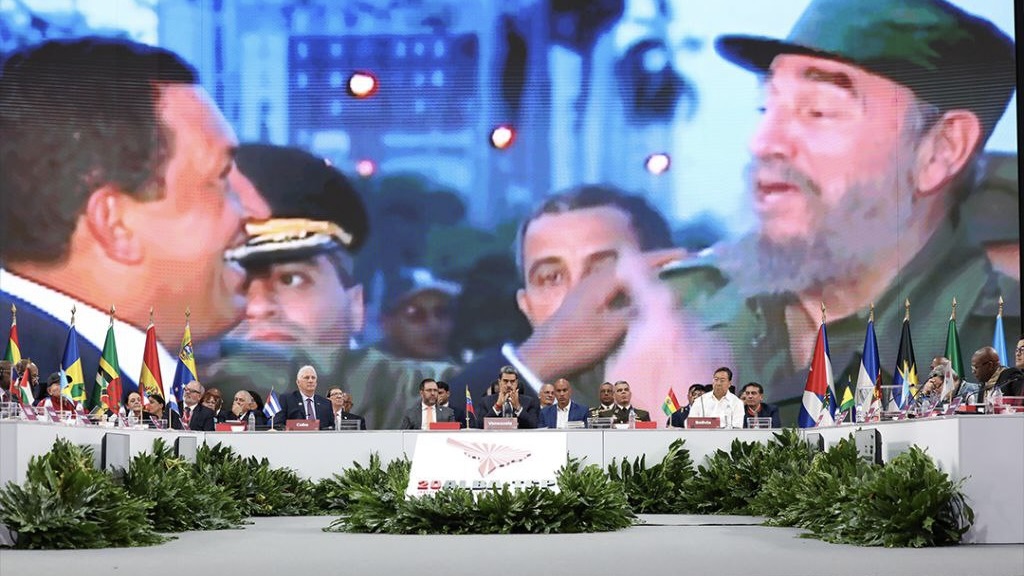
Heads of State Summit of ALBA-TCP in Caracas, Venezuela. Photo: ALBA-TCP
ALBA-TCP was founded in 2004 in an attempt to counter the US proposal of creating a “free trade zone of the Americas
December 14 marked the 20th anniversary of the creation of the Bolivarian Alliance for the Peoples of Our America-People’s-Trade Agreement (ALBA-TCP). ALBA-TCP was created in 2004 as a geopolitical alternative to the devastating advance of neoliberalism in the region.
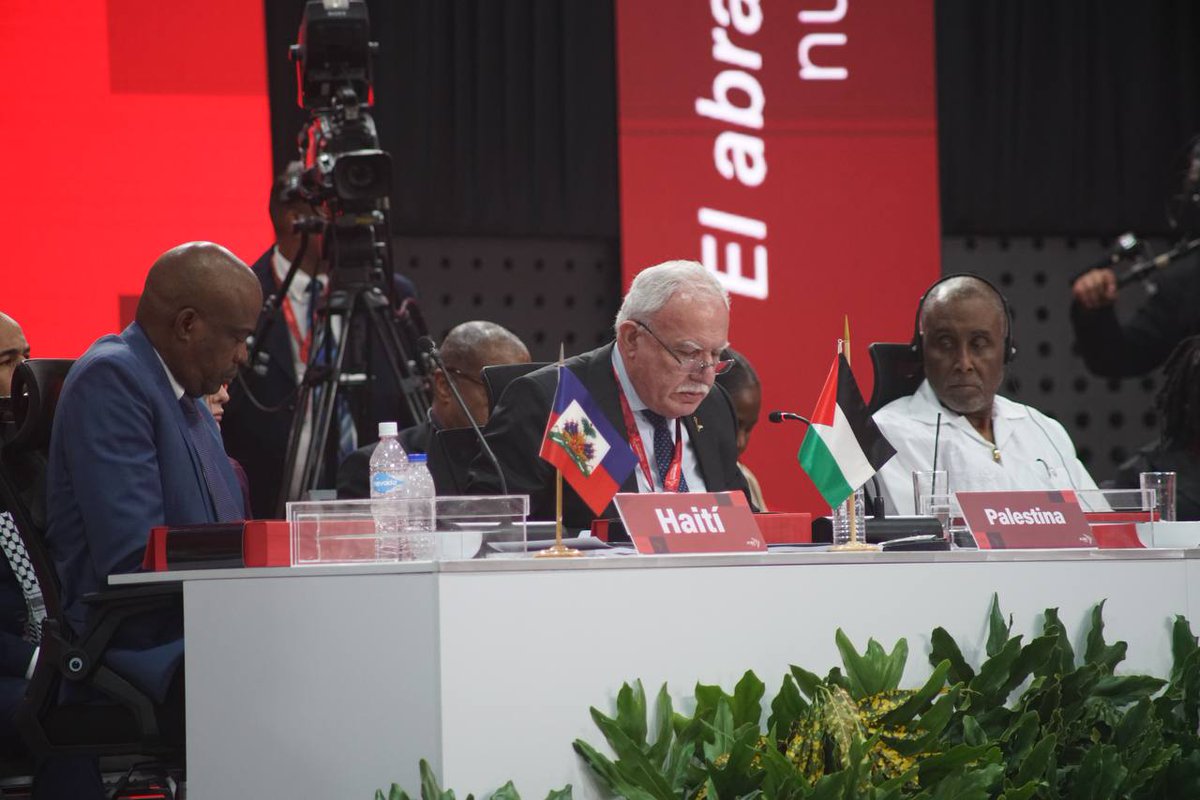
The project was founded on December 14, 2004, in Havana by Cuban President Fidel Castro and Venezuelan President Hugo Chávez. Currently, the organization has 10 member countries and four countries considered “special guests.” In 2006, Bolivia signed its membership; in 2007, Nicaragua; in 2008, Dominica; in 2009, Antigua and Barbuda and St. Vincent and the Grenadines; in 2014, St. Kitts and Nevis and Grenada; and in 2021, St. Lucia. The special invited countries are Syria, Haiti, Suriname, and now Palestine.
To commemorate the 20 years, social movements, political parties, and heads of state gathered in Caracas, Venezuela for the 24th Heads of State Summit as well as parallel meetings. The event was attended by the host, Venezuelan President Nicolás Maduro; Bolivian President Luis Arce; Cuban President Miguel Díaz-Canel; Nicaraguan President Daniel Ortega; Prime Minister of St. Vincent and the Grenadines, Ralph Gonsalves; Prime Minister of Dominica, Roosevelt Skerrit; and the Prime Minister of Antigua and Barbuda, Gaston Browne.
Independence and solidarity among countries
In their addresses during the Summit on December 14, the heads of state and invited countries stressed the importance of solidarity among countries seeking alternative ways of development and the need for unrestricted solidarity among people struggling against imperialist attacks. They also demonstrated their support for Nicolás Maduro and his victory in the last presidential elections.
Miguel Díaz-Canel said “We reiterate the strongest support for the Bolivarian revolution, led by President Nicolás Maduro…We also call for the elimination of the blockade against Cuba …We cry out for a free Puerto Rico and declare our solidarity with Haiti, our Cuban doctors are there…We reiterate our demand for a ceasefire in Gaza and condemn the attacks perpetrated by Israel against Lebanon, Syria, and Iran.”
The Bolivian President, Luis Arce, highlighted the historical importance of ALBA in its fight against economic projects promoted by the United States such as the FTAA (Free Trade Area of the Americas): “The embrace of Hugo Chávez and Fidel Castro not only marked history but also manifested the defeat of the hegemonic project of the FTAA. ALBA was born, ALBA placed the human being at the center, promoting that a better world is possible. Bolivia reaffirms, once again, its commitment to ALBA-TCP, because it is a resistance that raises its voice against the unjust and criminal blockade against Cuba…ALBA is also a firm voice against the arbitrary and unilateral measures imposed against Venezuela and Nicaragua, which affect the welfare of our peoples.”
Nicolás Maduro said, “We must win the battle of life and truth in the streets, networks, media, and walls, as well as in the conscience and spirituality of the people.” He also added the importance of the struggle of the people to be masters of their destiny without imperial impositions or impositions of any kind. In the same line of discourse, Nicaraguan President Daniel Ortega said “From Nicaragua we reaffirm our commitment to ALBA. We will continue to fight the battle.”
The Prime Minister of Dominica, Roosevelt Skerrit stated “We congratulate the electoral triumph of President Nicolas Maduro on July 28. We wish him all the best…We also want to reaffirm our solidarity with the people of Cuba, a brave people for whom we have our greatest respect and love; we will never cease to lend our voice against the United States to eliminate the blockade against Cuba.”
Ralph Gonsalves, Prime Minister of St. Vincent and the Grenadines, harshly criticized US interference in the development of the past Venezuelan elections “Perhaps [the US government] thinks it is superior,” he said in this regard. He also stressed that the creation of ALBA-TCP was a fundamental invention for the emancipation of the American people, “ALBA is the product of the geniuses of our peoples.”
Inclusion of Palestine to ALBA-TCP
At the current summit, it was announced that Palestine had been included as a “brotherly country” and was included as a “permanent guest”. According to the resolution of the Heads of State, ALBA-TCP condemns the attacks against the Palestinian population and the “illegally occupied territories” and rejects “the merciless and inhuman genocide committed by the State of Israel, the occupying power, as well as its plan of spoliation, invasion, and domination.” Likewise, they denounced the support of several governments currently collaborating with the actions of the Israeli army and called for an “immediate ceasefire…From the heart of the peoples and governments of this alliance, we declare Palestine a brother country of the ALBA-TCP, and reaffirm our commitment to the defense of the Palestinian cause, which is the defense of humanity,” reads the resolution.
In this regard, Riyad al-Malki, advisor to the President of State for International Affairs of Palestine said “History will remember those who stood on the side of justice, ALBA’s lasting solidarity with Palestine is a testimony of freedom and collective resistance.” Furthermore, Malki added “This Alliance is a living testimony of collective integration to challenge imperialism and ensure a just world. These values resonate with the Palestinian struggle, an end to the illegal occupation.”
A call for counter-hegemonic struggle
The joint document signed by all the countries highlights the historical importance of ALBA-TCP in the struggle for a more equitable world: “Twenty years after this giant step, we pay homage to the founding leaders, Hugo Chávez Frías and Fidel Castro Ruz, who adopted that December 14, 2004, in Havana, Cuba, the vision of the future embodied in the founding documents of ALBA, which have allowed us to walk united until the present, animated by the ancestral force that led our peoples to be free and that encourages us to continue integrated in this Alliance for Life.”
Similarly, it was stressed that the existence of this multilateral organization operates as a possibility to create a region that resists the impositions of the most developed countries: “Today, we want to ratify before our peoples, the counter-hegemonic, democratic, anti-imperialist and anti-fascist nature of our Alliance and renew our commitment to help and protect each other, to continue building together a future of shared goals under the founding principles of complementarity, cooperation, social justice, defense of our sovereignty and solidarity.”
In this sense, Luis Arce stressed that “In the face of the challenges of a world threatened by fascism and neo-fascism, ALBA is not an option, ALBA is a necessity that must continue with firm steps, reaffirming the founding principles of solidarity, justice, and cooperation…ALBA is not only an alliance, it is a promise for the future, a living resistance, an instrument for the most dispossessed, and a reminder that together, as peoples, we are invincible.”
Objectives and principles of ALBA-TCP
According to ALBA’s official website, the fundamental objective of the project is “to achieve integral development, ensure social equality and contribute to guaranteeing the quality of life, good living, independence, self-determination and identity of the peoples.” For this very reason, the principles of ALBA-TCP propose that political decisions be made horizontally and take into account the economic differences of its members without meaning that the importance of each of the members is underestimated.
The principles shared by the countries are “trade and investment should not be ends in themselves, but instruments to achieve sustainable development; special and differentiated treatment, according to the level of development of the various countries; economic complementarity and cooperation; cooperation and solidarity; the creation of the Social Emergency Fund; the integrative development of communications and transportation; the sustainability of development; energy integration; the promotion of investments of Latin American capital in the region; the defense of Latin American and Caribbean identity and culture; respect for intellectual property; and the agreement of multilateral positions and in negotiations with countries and blocs in other regions.”
The coup plot comes just a month and a half after President Nicolás Maduro was reelected in the presidential election, which to date, the US has refused to recognize
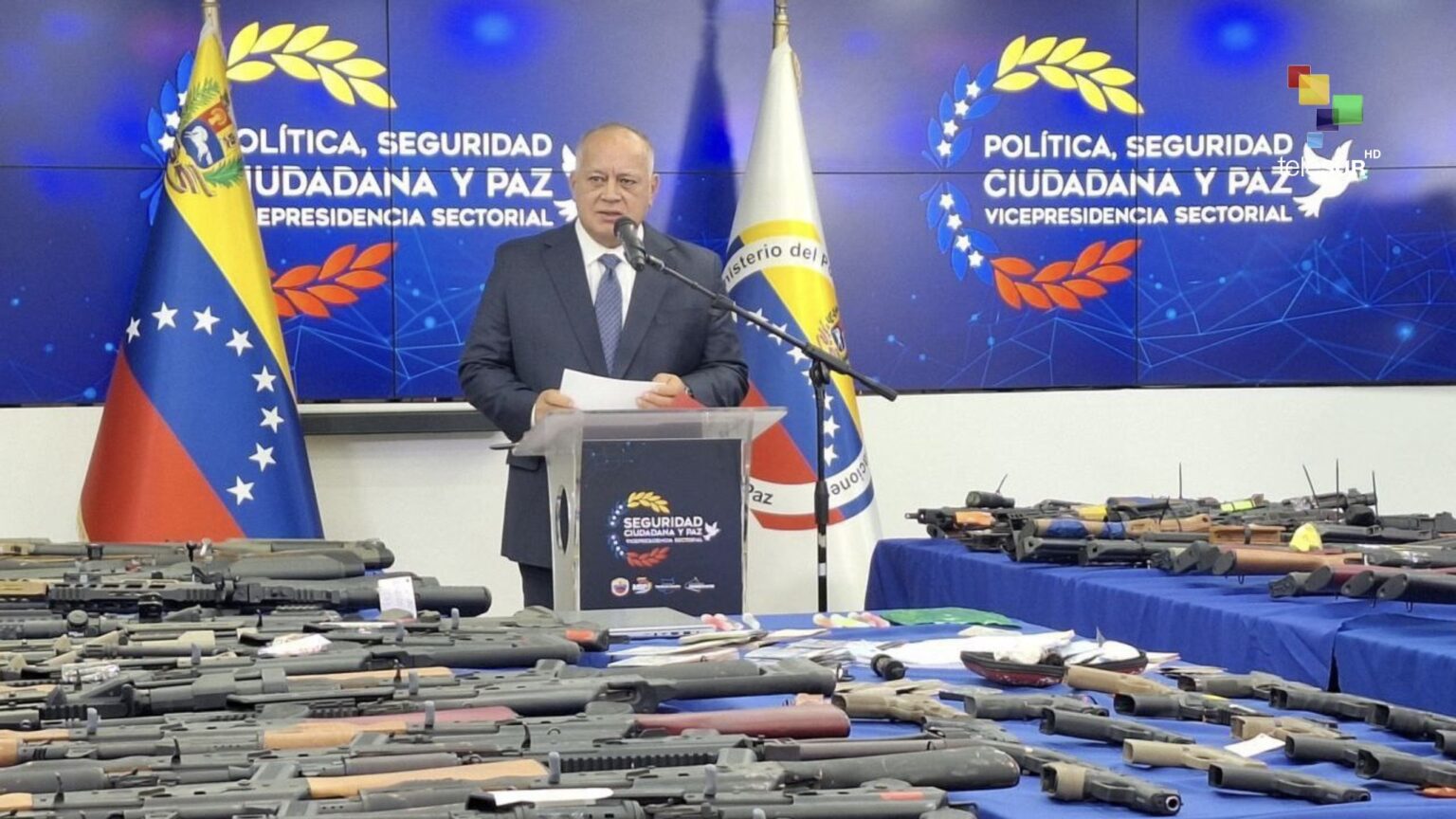
In a press conference given on September 14, Venezuelan Interior Minister Diosdado Cabello announced that authorities had dismantled an operation reportedly backed by the Central Intelligence Agency of the United States and the National Intelligence Center of Spain, which sought to assassinate President Nicolás Maduro, Vice President Delcy Rodríguez, Cabello, and other government officials. The minister announced that Venezuelan authorities had seized 400 weapons from the US and arrested 14 mercenaries who were involved in the plot. Among the arrested is Wilber Joseph Castañeda, an active US military officer and Navy Seal. Two Spanish citizens were reportedly also arrested, José María Basua and Andrés Badasbe.
#ÚltimoMinuto| Ministro de Interior @dcabellor da detalles de la operación sobre Venezuela que han sido detectados y desarticulados.
Algunos puntos claves:
✔️ Fueron decomisadas 400 armas que provenían de EEUU para asesinar al presidente Nicolás Maduro, la Vicepresidenta… pic.twitter.com/ztdATsYVDq
Officials stated that according to a document they seized from one of the detainees, the plot included attacking the Miraflores Palace and other public institutions, in addition to carrying out sabotage actions against various public services to generate chaos.
According to officials, those arrested possessed between 10-12 weapons in their homes that were set to be used in the destabilization plan. Cabello noted that many of those arrested also have links to Venezuela’s far-right opposition network.
He added that the weapons seized by authorities were brought to the country in “apparently legal” shipments and received by groups linked to the extreme right.
One of the leaders of the illegal arms trafficking network in the country, Cabello claimed, is a man who is already a fugitive from Venezuelan justice, Iván Simonovis. “Because of the capture of this weaponry here in Venezuela, they have taken actions in other countries that have included the murder of people. Simonovis knows what I am talking about,” he stated.
Venezuela has demanded that the United States government respond to the incident and “clarify the use of its agencies and the use of its territory to traffic weapons aimed at overthrowing a democratically elected government.”
Cabello declared: “The United States is behind this operation, they are delivering these weapons so that they circulate freely and reach Venezuela…They can say what they want, their agents are confessing. Castañeda is the head of the operation [of] the CIA here and they have a link with criminal groups in Venezuela.”
Regarding the Venezuelan state’s intelligence capacities, Cabello stated: “Let the world know that we are going to use all the necessary mechanisms to repel, to defeat these groups of mercenaries, of terrorists who try to undermine peace and order in Venezuela…prepare to be defeated again.”
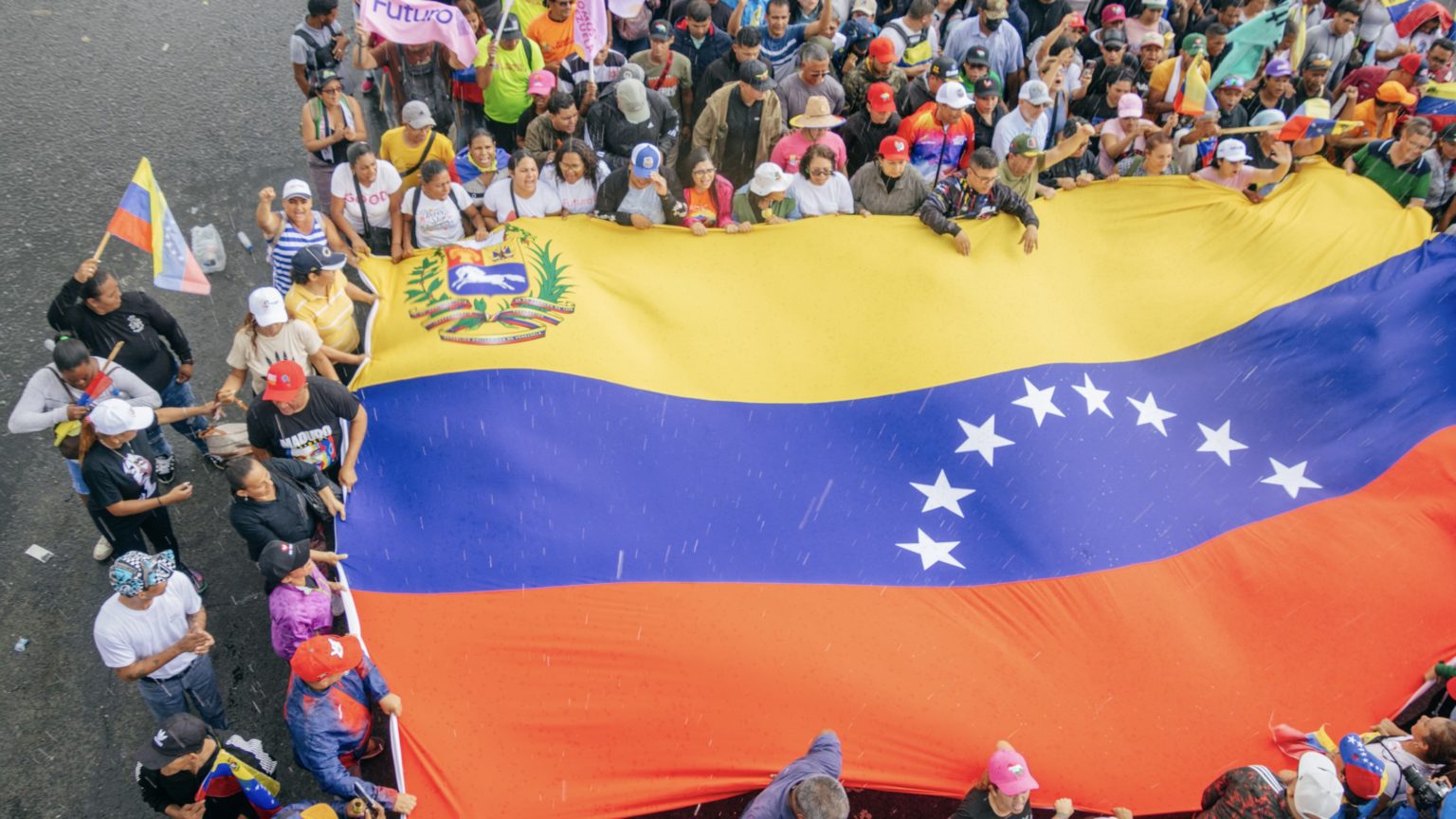
Venezuelan people marched in the rain on July 30 in defense of the electoral results. Photo: Zoe Alexandra
Social and workers’ movements across the world have launched a campaign to stand in solidarity with the Venezuelan people as they face a wave of attacks following the presidential elections.
On August 9, the ALBA Movimientos, a platform of social and political movements from across the Americas and the Caribbean, the International Peoples’ Assembly, the Simon Bolivar Institute, and the Assembly of Caribbean Peoples, launched a campaign titled: “For Democracy and Sovereignty: Hands Off Venezuela!” The campaign comes in the aftermath of Venezuela’s presidential election and a wave of seemingly coordinated attacks from right-wing political actors, mainstream media, and US and its allies.
The launch document states that, for several months, a media campaign has been created to question the legitimacy of the elections in the Caribbean country. “From the hegemonic media, with political and diplomatic strategies, it has been sought to install an idea of the illegitimacy of the recent Venezuelan electoral process,” states the communiqué.
The joint statement affirms that the campaign mentioned above against the legitimacy of the Venezuelan electoral process has been shaped from several communicational fronts: creating doubts about the technological capacity of the electoral machines, reinforcing the 930 economic sanctions against Venezuela, generating violence in the streets and illegally self-declaring González Urrutia as president of the country, among others.
The geopolitical importance of Venezuela, both for its geographic location and vast natural resources, are at the center of the current dispute, the organizations argue. “It is impossible [to understand the situation of] Venezuela without placing it in the regional and global geopolitical context: its privileged place in world oil production, its common goods placed at the service of the people, the place it occupies in the multipolar world together with the emerging countries, and of course, its leadership of a project of union and regional integration in Latin America and the Caribbean that gives continuity to the defeat of the FTAA and keeps alive the horizon of continental sovereignty far from the designs of the United States”.
In this way, the document invites progressive and revolutionary organizations to combat the media campaign imposed by the national and international opposition to Venezuela, which, according to the document, is directly aligned with the imperialist interests of the United States.
On August 9, the launch day of the campaign, the movement platforms have called on organizations across the globe to mobilize on the streets and on social media in support of Venezuela.
🇻🇪 BREAKING! The people of New York City say “HANDS OFF VENEZUELA” and “NO to US Intervention” in front of New York Times Headquarters
While The New York Times has been engaged in a misinformation campaign to encourage and justify US-led coup attempts and economic warfare… pic.twitter.com/TbMXycKvr4
South African workers speak out in support of Venezuela
The National Union of Metalworkers of South Africa (NUMSA), in a press release issued on August 8, 2024, congratulated the Venezuelan people for holding free and fair elections, as well as congratulating the re-election with more than 51% of the votes of Nicolás Maduro as president of Venezuela.
NUMSA also questions the media campaign against the legitimacy of the electoral process that could lead to a coup d’état in Venezuela. According to the communiqué, “These media houses are not neutral. Their role is to advance the interests of capital and to promote US imperialism and hegemony. It is not in the interest of Western powers to endorse the elections in Venezuela…We are deeply concerned that US propaganda is being reproduced by many media houses that have sadly been trapped into reinforcing attempts at a coup by imperialism against the will of the Venezuelan people.”
In addition, the NUSMA communiqué insists on the close relationship that the Venezuelan opposition has with the geopolitical interests of the United States, including the friendship that María Corina Machado has professed with the Zionist government of Israel; “The United States does not have a commendable history in defending the dignity of most people. Today, we can take one look at the US-backed genocide against the Palestinian people to know this. It, therefore, comes as no surprise that the right-wing opposition coup leader in Venezuela is a Zionist”.
Likewise, the NUMSA communiqué recognizes the great economic and geostrategic value of Venezuela in current international relations, which is why there are imperial powers that seek to control the political future of Venezuela at any cost so that the recognition of the elections would be a way for the people to reaffirm their sovereignty and their ability to decide their future without the interference of other countries: “the US has set its sights on the enormous mineral wealth of Venezuela and seems determined to expropriate these through the imposition of a puppet regime under the leadership of Edmundo González. Against this backdrop, all progressive forces must reaffirm their unwavering commitment to the sovereignty of Venezuela. We call on our government, media, governments, and media houses worldwide to uphold the principles of peace, democracy, and national self-determination by acknowledging the outcomes of the Venezuelan election.”
Anti-imperialist and progressive movements from across the world are gearing up for the international campaign to condemn the so-called hybrid war against Venezuela and express their support to its struggle for sovereignty and democracy.