THE top 10 per cent of Britain’s population has more wealth than the other 90 per cent combined, according to TUC analysis of official Office for National Statistics (ONS) figures released today.
The huge inequality between rich and poor has widened under 14 years of Tory rule, which saw an “explosion” in insecure work and a decline in living standards.
Under the Conservatives, real wages grew by just 0.3 per cent a year — compared with 1.5 per cent from 1997 to 2010 under Labour.
The TUC estimates that the average worker would be £117 a week better off had pay increased since 2010 at the same pace as between 1997 and 2010.
Pay growth during Conservative-led governments from 2010-2024 was worse than for any other period of government since the 1920s.
The Tories also oversaw the worst fall in living standards since records began in 1955, the TUC said.
More than 1.7 million households plan on keeping their heating off this year, survey reveals
LIVES will be lost, campaigners warned today after a survey revealed that more than 1.7 million households do not plan on turning on their heating this year.
The number of those who said they will keep the heating off in polling for Uswitch is nearly double the 972,000 who said they did not heat their homes last year.
Fifty-five per cent of those blamed the continued rise of the cost of living, while 25 per cent of those over 65 said their decision followed the loss of winter fuel payments.
Another one million households will not turn on the heating until December to keep costs down, according to the poll.
About 43 per cent of households said they will only turn the heating on if they are too cold while 31 per cent will only heat some rooms in their home.
Labour’s disdain for conducting impact assessments on the effects of its cuts and austerity reaches the ‘MSM’ – 11 months after Skwawkbox exclusively revealed it
The Telegraph has today reported that right-wing Labour Chancellor Rachel Reeves carried out ‘no impact assessment’ before ‘withdrawing winter fuel payments for 10 million pensioners, the Telegraph can reveal’.
The right-wing rag is a little late to the party. Skwawkbox revealed exclusively eleven months ago that Labour undertook no impact for any of its plans on vulnerable people, whether pensioners, the disabled, the poor, the ill or children.
WASHINGTON – Global warming, in itself, affects everyone but in a world where discrimination along lines of race and class is rampant, it falls hardest on those who are most oppressed, the poor, working-class, and non-white people here at home and around the world. Rather than solve the problem, fossil fuel interests would sooner put blinders on the eyes of those who bear the brunt of global warming’s effects and on everyone else.
On Earth Day, Apr. 22, and in the days since then, the AFL-CIO is reminding the world that on the contrary, the eyes of the working class, the poor, and minorities are wide open, and they are fighting back.
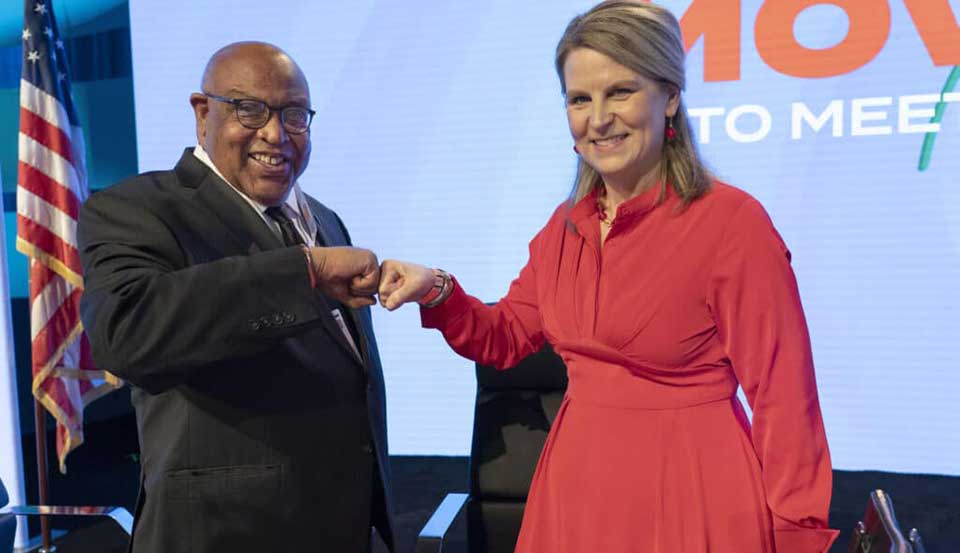
“Thinking about movements coming together in the same room today made me think of Dr. King and what he said,” remarked AFL-CIO Secretary-Treasurer Fred Redmond, the highest-ranking African-American leader in the labor movement. “During his days, a term like environmental justice didn’t really exist, but he understood how interconnected these challenges were. Structural racism, economic injustice, and underinvestment in Black and brown communities. He told us in 1967 that the cities were gasping in polluted air and enduring contaminated water. What’s equally important is that he knew the solution, how important it was to stand together in solidarity. Organized labor can be one of the most powerful interests to do away with this evil that confronts our nation that we refer to as discrimination.
“The same forces that are against [equality] are also anti-labor. We are evolving, and so many of our 60 affiliated unions are prioritizing issues that we never would have imagined years ago. Yet even as we take on as a labor movement these new issues, we are still guided by the old values that helped define the labor and civil rights movements for years.
“Just a few generations ago, this movement lifted families into the middle class, especially many black workers who had migrated from down south. It provided those newly migrated Black Southerners access to well-paying jobs and upward mobility in our economy.”
“There is a long history of important collaboration between labor and the fight for racial justice,” said Professor Carlton Waterhouse, Director of Environmental and Climate Justice at Howard University School of Law. “When I was a student and first started fighting for the rights of people in need, I was involved in the anti-apartheid efforts at Penn State University. And when we were out on the campus having built a shanty-town, there were labor representatives from local unions who came out to spend time with us, and in doing that, they planted important seeds; the idea that the fight for people is not just one fight, it’s many fights.
Fighting on multiple levels
“And the fight for people means fighting on multiple levels with multiple partners. If we’re going to see success in fighting the climate crisis, it’s only gonna happen if we’re able to see our shared need for collaboration when it’s not always so obvious. Like when labor representatives come to work with students fighting for anti-apartheid. If we’re going to be successful in the fights for racial justice and climate equity, we’re going to have to invest in one another.”
Patrice Willoughby, the Senior Vice President of Global Policy and Impact with the NAACP, highlighted a tool that can be added to the collective arsenal in this battle against global warming. Called the Justice40 Initiative, it’s a move by the Biden administration that aims to ensure that 40 percent of the benefits derived from clean energy and affordable, sustainable housing goes to the most disadvantaged communities. Specifically, this refers to communities that have endured the lion’s share of disinvestment and pollution.
“These investments are catalytically important now,” said Willoughby. “You cannot save the planet unless you uplift the needs of the people.” She added that there are also mechanisms that have to be built to ensure that the initiative is being applied fairly and constructively. “We need to actually have an accounting because many times when these funds go into states it’s up to those states to determine how those funds are used.
“It’s also a matter of equipping the communities, so we’re spending a lot of time with activists and community-based organizations. Many times people read about these things and don’t know how it can affect them, so we’re spending a lot of time in a critically important year in states whose legislatures are voting in ways that are not favorable to the people most affected by greenhouse gas and climate change. So it’s important to link the issues to the power of the ballot and the fact that people have the ability to make change on their own behalf.”
The vulnerability of people in marginalized communities to the havoc of the climate crisis is a situation that the AFL-CIO’s Fred Redmond knows well. “It’s my family’s story,” he said. “They grew up in the Mississippi delta and made that great migration in the 50s and landed in Chicago. It was tough. They worked hard and worked long hours to support their families. We were poor, but that changed when my father got a good job at an aluminum mill in Chicago, with good wages and health care, and had a chance to retire with dignity and respect. Most importantly, he had a voice on the job.
“But even then, union jobs had a legacy of discrimination and bias. Blacks had the hardest jobs and had very few opportunities for advancement. My dad was on the union grievance committee and protested job discrimination and disparate treatment and was committed to making the union more inclusive. When I took a job at the mill after high school he challenged me to have that same commitment.
“That’s my story, and that’s the story of the creation of the Black middle class and the power of holding a union card. Now equity and opportunity are baked into unions, so we recognize the need to connect those values and align our work with our partners in environmental activism. It’s the only way we’ll be able to deliver justice for our communities, and the only way we can move with the speed and urgency that we need in this climate crisis.”
“That’s the unique thing about this,” AFL-CIO President Liz Shuler agreed. “It’s the urgency of the crisis. Many of you know I grew up in Portland, Oregon. When I was a kid in the summer the temperatures were around the 70s and 80s, nobody had air conditioning. Maybe we’d get into the 90s once in a while, but that was a rare day. Fast forward to today, and things have changed. Now it’s not unusual to have temperatures in the 100s for weeks at a time.
“In 2021, one of the most heartbreaking stories I remember was about Sebastian Francisco Perez, a worker from Guatemala who came to the U.S. to support his family. Just months later on a farm in St. Paul, Oregon, the temperature hit 115 degrees. He kept going because that’s what the bosses demanded. His coworkers found him unconscious that afternoon and he died one day after his 38th birthday.
“That story gutted me. These stories are often spun as ‘this is the effect of climate, climate is to blame.’ Yes, but the climate isn’t a person. Greedy corporations are also to blame when they make you work in 115-degree heat without water breaks or shade so they can make even more profit. We are the ones out there building factories and schools when it’s 110 degrees. We are the responders who show up after a hurricane or a flood destroys a community. We’re the ones getting sick on the job, choking on polluted air and toxic water.
“The flip side of that coin is that we as workers, unions, and environmental and civil rights leaders, can bring about the change we are hungry for. We have a historic opportunity with the federal investments of the Biden administration to use clean energy to transform the economy and create good safe union jobs, but we have to get it right. And we won’t buy into this false choice that companies and right-wing politicians give us. It’s not an ‘either-or’. It’s climate and workers, economy and environment, jobs and justice.”
Ex-deputy party chair says on GB News Islamists control London as well as its mayor, prompting calls for him to lose the whip
The Conservative MP Lee Anderson has claimed that “Islamists” have “got control of London” and its mayor, Sadiq Khan.
Speaking on GB News, Anderson said of Khan, the first Muslim mayor of London: “He’s given our capital city away to his mates.
“I don’t actually believe that the Islamists have got control of our country, but what I do believe is they’ve got control of Khan, and they’ve got control of London.”
The Labour party called for Anderson to lose the Tory whip. Anneliese Dodds, the Labour chair, said: “Lee Anderson’s comments are unambiguously racist and Islamophobic. Rishi Sunak needs to immediately remove the whip. If he is too weak, then people will take their own view of the modern Conservative party.”