Europe marks International Day of Solidarity with Palestine

Spread the love

This article by  Ana Vračar republished from peoples dispatch under a Creative Commons Attribution-ShareAlike 4.0 (CC BY-SA) license.
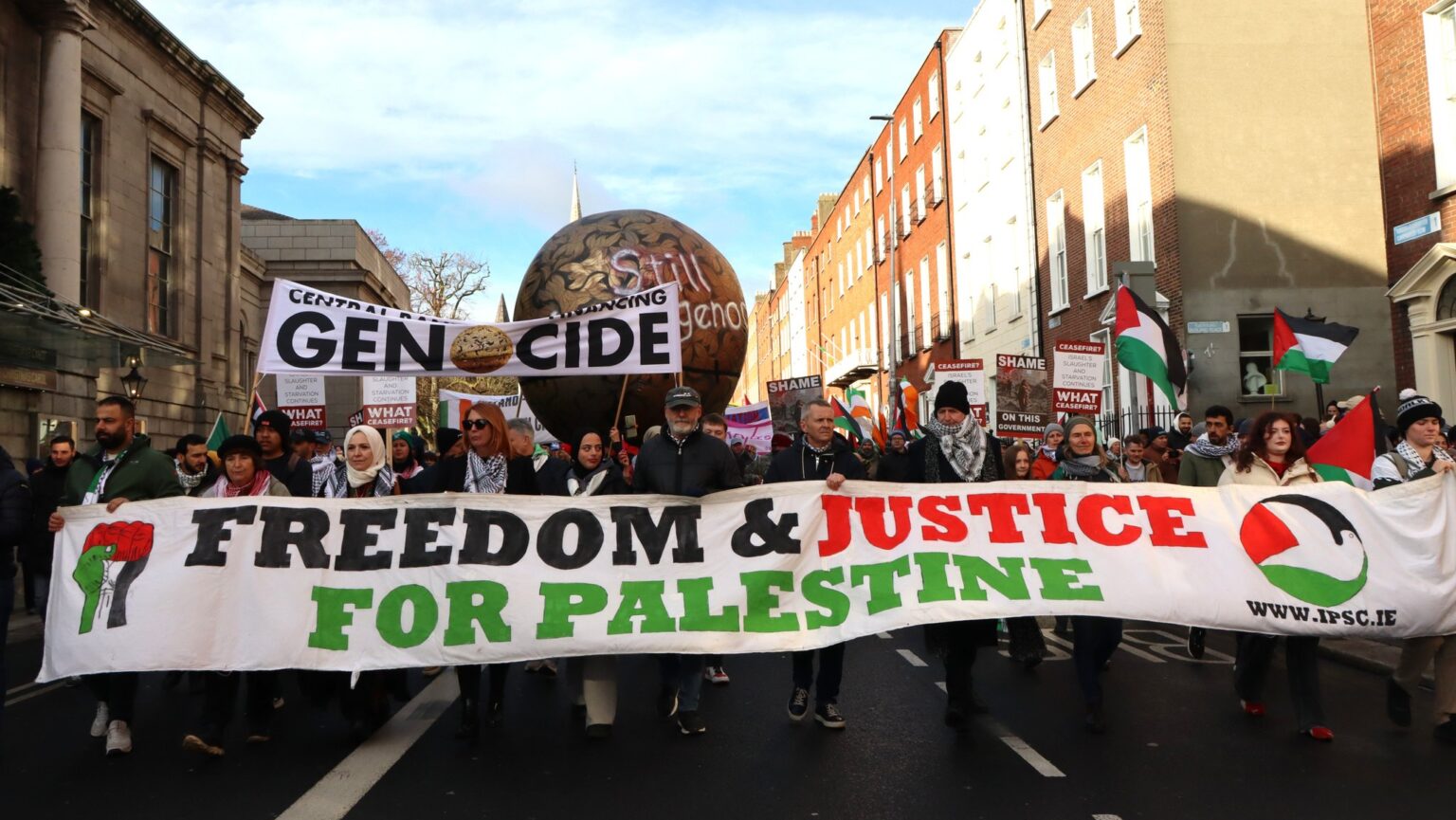
Source: Ireland-Palestine Solidarity Campaign/X

On November 29, hundreds of thousands marched across Europe in support of Palestine and against government complicity in Israel’s genocide.

The Palestine solidarity movement in Europe again brought record numbers to the streets on the UN’s International Day of Solidarity with the Palestinian People, November 29, reaffirming demands for an end to government complicity in the ongoing genocide in Gaza and the occupation of Palestine. Hundreds of thousands marched across the region, with demonstrations in London and Rome each reaching an estimated 100,000 participants.

“On this day, people around the world express their support for the inalienable rights that are currently denied to Palestinians: the right to live free from discrimination, the right to self-determination, and the right to return to their lands,” the Palestine Solidarity Campaign (PSC) wrote on social media. “Despite this Britain continues to arm Israel and refuses to implement meaningful sanctions or end its diplomatic support. It still provides parts for Israel’s F-35 fighter jets, used to bomb Palestinians in Gaza and maintains contracts with Israeli weapons manufacturers like Elbit Systems.”

Read more: Protests continue as court prepares to review Palestine Action ban

Saturday’s demonstration was the 33rd national march for Palestine in Britain. In addition to local activists, it also welcomed international guests who have stood with Palestinians since the beginning of the genocide, including Belgian MEP Marc Botenga of the Workers’ Party of Belgium (PTB-PVDA), French parliamentarian Nadège Abomangoli of France Unbowed (LFI), and Sinn Féin leader Mary Lou McDonald. While addressing the crowd in London, they emphasized the internationalist character of the mobilization and echoed demands that could be heard in their home countries around the same time.

As thousands marched in Paris and Dublin, they insisted on the need to continue organizing despite political obstruction and attacks. Irish actor Liam Cunningham, a vocal supporter of Palestine, helped lead Dublin’s demonstration. Responding to artists being de-platformed for speaking out against genocide, he said: “If anyone doesn’t want to employ me because I’ve taken a stand against injustice, against the refusal to give self-determination to a group of people who are politically, culturally on the same track that my country was on for 800 years […] they’re not going to be very good at their job, because they’ve no soul.”

Another recurring message across Europe refused the mainstream media allegation of a “ceasefire” in Gaza. “There’s no ceasefire just because it’s written on a Western media banner,” Cunningham added. “Let’s come up with another word, ‘ceasefire’ is not working.”

Read more: Italy holds third general strike in three months, against war budget and for Palestine

In Italy, the central mobilization followed a successful day of general strike organized by the grassroots union Unione Sindacale di Base (USB). The march welcomed UN Special Rapporteur Francesca Albanese and Freedom Flotilla activists Greta Thunberg and Thiago Ávila. Dockworkers and firefighters affiliated with USB, who have played key roles in earlier protests and faced reprisals for this, also formed notable protest blocs. The response of Italy’s political establishment to growing support for Palestine mirrors that of other European governments: attempting to suppress dissent and insisting that further militarization is the only path forward.
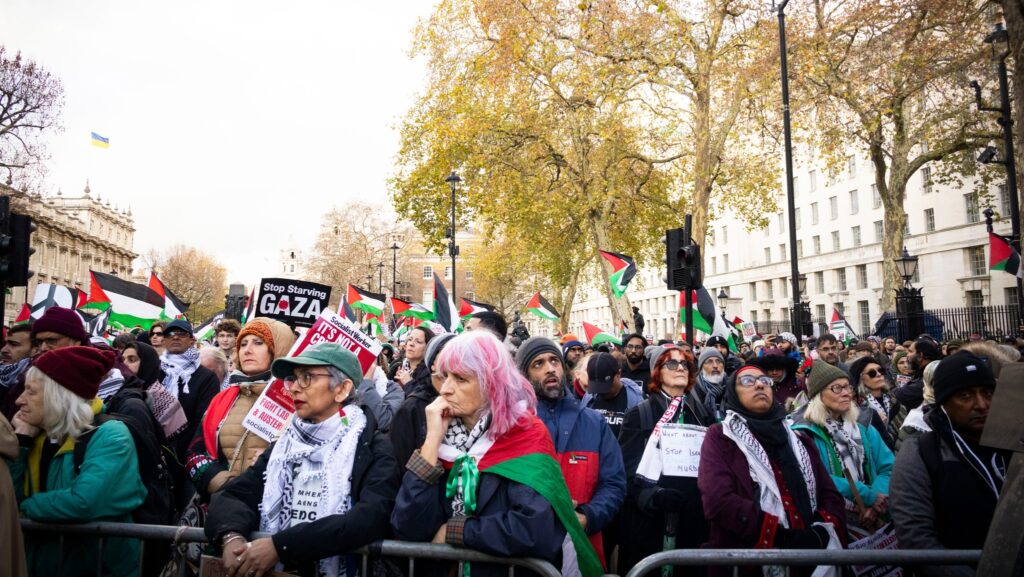
Palestine solidarity march in London, November 29, 2025. Source: Marc Botenga/Facebook

“Today we see what this path has created: a genocide, broadcast live, carried out with the complicity of Western governments; massacres in the Mediterranean; NATO wars; bombs across the world,” said Marta Collot, spokesperson for the left party Potere al Popolo, during the Rome demonstration. “But something has changed too. The September mobilizations, the three general strikes called by USB that brought everything to a halt, and our march today show that they were wrong […] Our demonstration is the message coming from Palestine, from socialist Cuba resisting, from Venezuela. It shows that an alternative path is not only necessary, but that it’s possible.”

“Today there are two Europes,” Marc Botenga emphasized in London. “There is the Europe of the establishment, the Europe of the governments that have funded this genocide, that have supported this genocide, and that are continuing to do so. And then, there’s the other Europe, there’s the Europe that we incarnate here today. That is the Europe of liberation, the Europe that says no to occupation.”

This article by  Ana Vračar republished from peoples dispatch under a Creative Commons Attribution-ShareAlike 4.0 (CC BY-SA) license.

Orcas discuss Genocide-supporting and complicit Zionists. Donald Trump, Keith Starmer, David Lammy, Rachel Reeves, Angela Rayner and Wes Streeting are acknowledged as evil genocide-complicit and supporting cnuts.
Experiencing issues with this image not appearing. I suspect because it's so critical of Zionist Keir Starmer's support of and complicity in Israel's genocides.
Genocide denier and Current UK Prime Minister Keir Starmer is quoted that he supports Zionism without qualification. He also confirms that UK air force support has been essential in Israel’s mass-murdering genocide. Includes URLs https://www.declassifieduk.org/keir-starmers-100-spy-flights-over-gaza-in-support-of-israel/ and https://youtu.be/O74hZCKKdpA
Keir Starmer objects to criticism of the IDF. He asks how could anyone object to them starving people to death, forced marches like the Nazis did, bombing Gaza's hospitals and universities, mass-murdering journalists, healthworkers and starving people queuing for food, killing and raping prisoners and murdering children. He calls for people to stop obstructing his genocide for Israel.
Keir Starmer objects to criticism of the IDF. He asks how could anyone object to them starving people to death, forced marches like the Nazis did, bombing Gaza’s hospitals and universities, mass-murdering journalists, healthworkers and starving people queuing for food, killing and raping prisoners and murdering children. He calls for people to stop obstructing his genocide for Israel.
Continue ReadingEurope marks International Day of Solidarity with Palestine

“Let’s Block Everything” protests challenge Macron’s austerity

Spread the love

Original article by Ana Vračar republished from peoples dispatch under a Creative Commons Attribution-ShareAlike 4.0 (CC BY-SA) license.

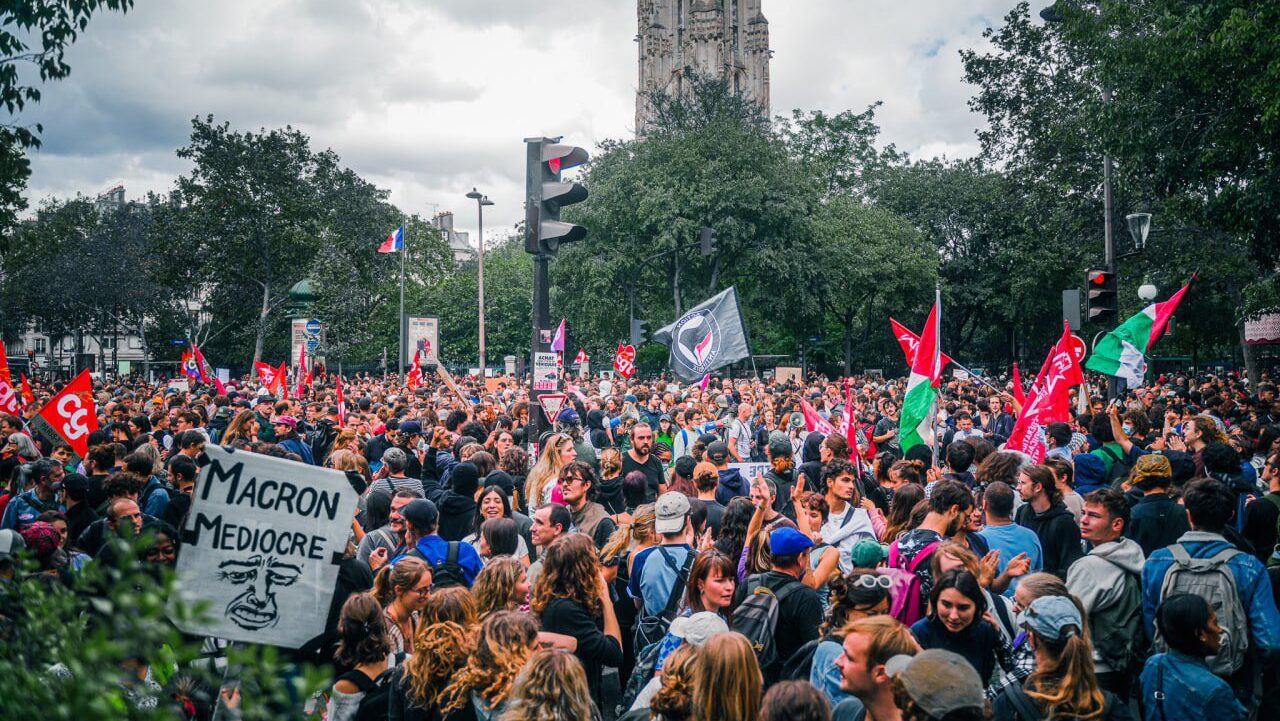
September 10 mobilization in Paris. Source: Mathilde Panot/X

Hundreds of mobilizations across France signaled public rejection of President Emmanuel Macron’s austerity path.

Hundreds of mobilizations, including picket lines and strikes, took place across France on September 10, signaling general rejection of a new wave of austerity policies advanced by the neoliberal camp. Trade unions reported significant participation in multiple sectors, including railways, education, culture, and health – where at least 100 work stoppages occurred during the day.

Grassroots networks estimate that approximately 500,000 people joined the demonstrations, held under the slogan “Let’s Block Everything” (Bloquons tout). Student collectives and Palestine solidarity groups were among those contributing to the day, among many others. Actions took place not only in major cities like Paris and Marseille but also in smaller towns such as Albi and Pau. The day was also marked by a heavy police presence and reports of violence against protesters, including the use of tear gas.

The mobilization came just days after another prime minister appointed by President Emmanuel Macron, François Bayrou, lost a confidence vote in the National Assembly. Macron quickly replaced him with former defense minister Sébastien Lecornu, a representative of the center’s right-wing faction. The appointment irked the public further. Maurizio Coppola of the Italian left party Potere al Popolo, who took part in the actions, told Peoples Dispatch: “Many saw this hasty appointment of a new prime minister as a provocation on the eve of the mobilization.”

Read more: Will another French prime minister fall over the austerity budget?

Demonstrators also saw Lecornu’s appointment as a sign that Macron continues to pursue policies repeatedly rejected by the public. In a recent speech, France Unbowed (La France Insoumise) leader Jean-Luc Mélenchon highlighted the devastating social impact of neoliberal economic policies, pointing out that thousands of children and hundreds of thousands of people in France are homeless. Poverty and inequality, he described, plague the country. The trade union group Solidaires offered similar reflections on the day of action: “After the fall of the Bayrou government, the head of state’s desire to pursue the same policy in the service of special interests can only exacerbate fiscal and social inequalities and the ecological crisis.”

“He must go”

“Macron is to blame for this situation,” Mélenchon wrote on September 10. “He and his decisions are responsible for the chaos. He makes no effort whatsoever to show that he is receiving or listening to the messages coming from the National Assembly or the country. On the contrary, he brazenly pushes ahead to show that he remains in control of his strange and absurd plans. He must go.”

Protesters marching with banner: “Against the war economy. United for bread, peace, and liberty.” Lille, September 10, 2025. Source: Aurélien Le Coq/X

France Unbowed has campaigned for Macron’s removal since the 2024 national election, when he blocked the progressive New Popular Front (Nouveau Front Populaire) from forming a cabinet despite its electoral result, instead entrusting government formation to a succession of neoliberals. The party renewed its call after Bayrou’s collapse but also threw its weight behind the ongoing grassroots struggles. Coppola noted that activists from France Unbowed were active in preparing demonstrations across communities, helping amplify and link popular demands. “Their elected representatives marched with the protesters, defending them from police violence through their institutional status,” he added.

The role of organized labor

Despite the success of the day of action, questions remain. One concerns the role of labor unions, Coppola suggests. While certain unions and confederations, notably Solidaires, joined the call for September 10, others kept more distance. Branches of the General Confederation of Labor (Confédération générale du travail, CGT) and Workers’ Force (Force Ouvrière) participated in the actions, but their leadership chose to emphasize a strike call for September 18. By doing so, these organizations echoed popular demands against austerity but did not fully align themselves with the grassroots initiative.

The ability of grassroots groups and labor unions to connect over and channel the anger that fueled the “Let’s Block Everything” protests may have an important impact on the mobilization’s long-term success. As Coppola points out, “where strikes and blockades were successful, this was only possible thanks to the presence of organized labor.” However, he also adds that some unions joined the day of action only because rank-and-file members pushed for it, highlighting how bottom-up participation remains vital across the struggle.

Another unresolved question is the feasibility of France Unbowed’s proposal to remove Macron. While such an outcome would potentially be a significant victory against austerity, it would trigger new presidential elections with uncertain results. In 2024, the far-right National Rally (Rassemblement National) secured more votes than the left-progressive alliance, making the prospect of an extreme right president a genuine risk.

Nevertheless, the message of September 10 was unmistakable and is unlikely to fade soon. “The message was clear everywhere: no to the [austerity] financial maneuver, [yes to the] strengthening of public services and workers’ rights, taxing the rich, and above all, the resignation of President Macron,” Coppola concluded.

Original article by Ana Vračar republished from peoples dispatch under a Creative Commons Attribution-ShareAlike 4.0 (CC BY-SA) license.
Continue Reading“Let’s Block Everything” protests challenge Macron’s austerity

Italian left party uncovers more cases of police infiltration in their ranks

Spread the love

Original article by Ana Vračar republished from peoples dispatch under a Creative Commons Attribution-ShareAlike 4.0 (CC BY-SA) license.
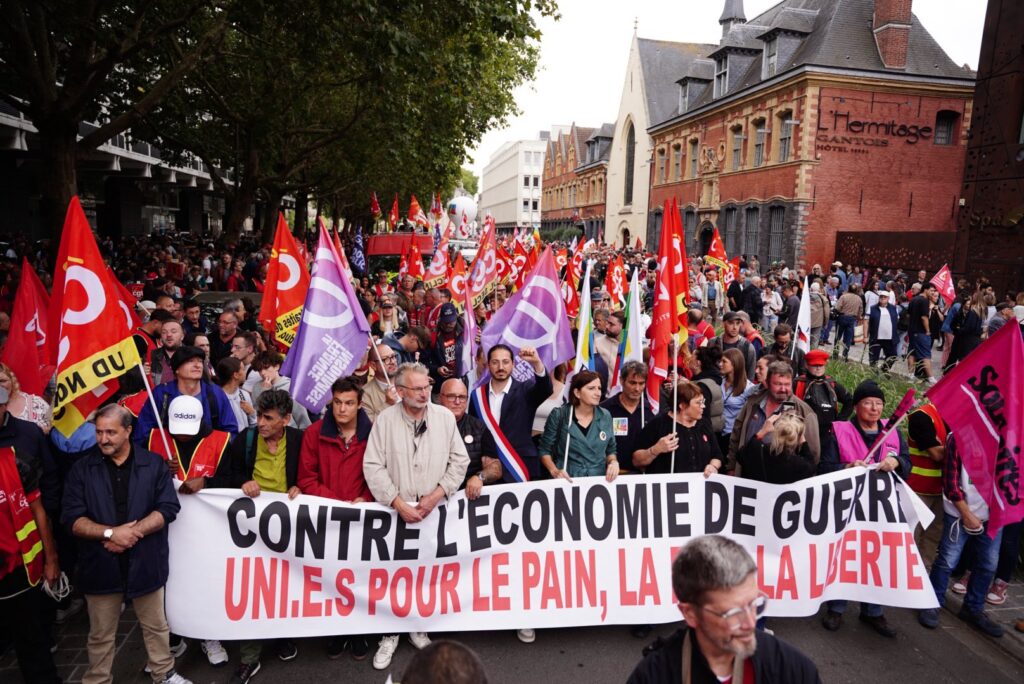
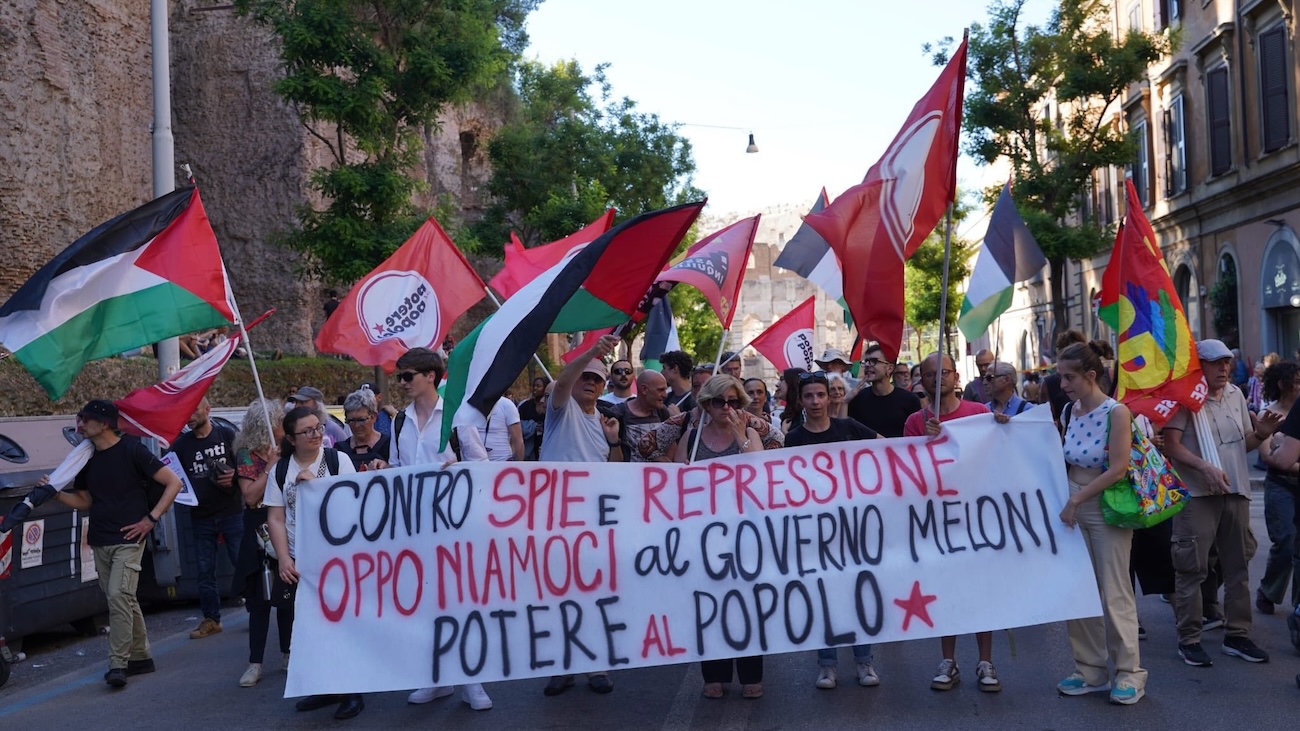
Potere al Popolo activists with banner reading: “Against spies and repression. Let’s stand up to the Meloni government”. Photo: Potere al Popolo

Following the exposure of an undercover operation in its Naples chapter, Potere al Popolo has reported additional cases of police spying in other Italian cities.

After discovering that a young police officer had infiltrated Potere al Popolo (Power to the People) in Naples at the end of May, the party, together with media outlet Fanpage, uncovered four similar cases in Milan, Bologna, and Rome. The officers approached the organization primarily through one of its youth collectives, Cambiare Rotta (Changing Course), between October and November 2024, shortly after graduating from the same police course and just before being assigned to the Central Police Directorate for Crime Prevention, an agency dedicated to investigating terrorism.

Read more: Police targets Potere al Popolo in undercover operation

During this period, the officers actively participated in demonstrations against the cost of living crisis, in solidarity with Palestine, and in anti-militarization actions. They often presented themselves as out-of-town students with few connections at local universities. Their involvement went deep: some supported election campaigns for official student bodies. At the same time, other activists noticed inconsistencies – none of the identified officers engaged in activities beyond political work, for example, an unusual pattern in youth organizing.

While the infiltration operations in Naples, Milan, and Bologna lasted about eight months, the effort in Rome was short-lived. Activists there quickly grew suspicious of the officer’s background story and the way he tried to approach the organization.

Italian left party uncovers more cases of police infiltration in their ranks
Protestors take the streets to demonstrate against rearmament and NATO. Photo: Potere al Popolo

By late June, all those identified had ceased contact with Potere al Popolo, but one officer was present at a demonstration in Bologna when news of the Naples infiltration broke publicly last month. “The moment there was a public denunciation in that demonstration in Bologna, about the Naples episode, this person disappeared from one day to the next,” said Giuliano Granato of Potere al Popolo. “We haven’t heard from him since.”

A threat to democratic rights and structures

Back in May, the party had denounced the Naples case as a disturbing sign of the government’s authoritarian drift, undermining the democratic character of Italian society and constitutional values. That warning has since prompted several parliamentary parties to demand explanations from Prime Minister Giorgia Meloni’s government – none of which have been provided. With these new revelations, alongside confirmed instances of journalists being spied on, concerns are mounting over the administration’s trajectory.

“It shows us the path of repression this government is taking through, and I quote Giorgia Meloni’s own words, ‘regime methods’,” said Anita Palermo of Potere al Popolo Rome. “We appeal to social and democratic forces, associations, and citizens to mobilize so that political activity in this country can take place in a democratic way, without fear of police infiltration.”

During a press conference on June 27, Granato added that the infiltration and surveillance of political parties, humanitarian organizations working with migrants, and journalists were indicative of the government’s own fear. The fact that they are prepared to launch such operations shows that the government is terrified of dissent, he said.

“But dissent is the salt of democracy,” Granato added, insisting that the experience of Potere al Popolo has far broader relevance. “If the state can plant an undercover officer inside a political party, it can do the same to a union or a newsroom.”

Read more: “Disarmiamoli!” brings 30,000 to Rome against NATO and war

Trade unions and social collectives have condemned the police operations as a clear attack on political and civil rights. Many interpret it as part of the Meloni government’s increasingly repressive stance toward political opposition. This comes at a moment when Potere al Popolo, alongside grassroots unions, is leading a national campaign against war, NATO, and the European Union’s rearmament agenda.

According to the Unione Sindacale di Base (USB), the attack on Potere al Popolo and its affiliated groups is emblematic of the broader political climate. “It’s a snapshot of the cultural and political values of a class that has openly aligned itself with war and rearmament,” the union said.

“And in a climate of war, the first targets are those who oppose it clearly and unequivocally, voices that must be preemptively silenced even when they act with full transparency,” the USB warned. “The ‘war system’ and all its economic and social ramifications … allows no dissent because it demands we all silently enlist in its cause. And that cause crushes democracy, packing away our freedoms in the attic.”

Original article by Ana Vračar republished from peoples dispatch under a Creative Commons Attribution-ShareAlike 4.0 (CC BY-SA) license.
Continue ReadingItalian left party uncovers more cases of police infiltration in their ranks

Italy marks 80 years since liberation with calls against genocide and militarism

Spread the love

Original article by Ana Vračar republished from peoples dispatch under a Creative Commons Attribution-ShareAlike 4.0 (CC BY-SA) license.
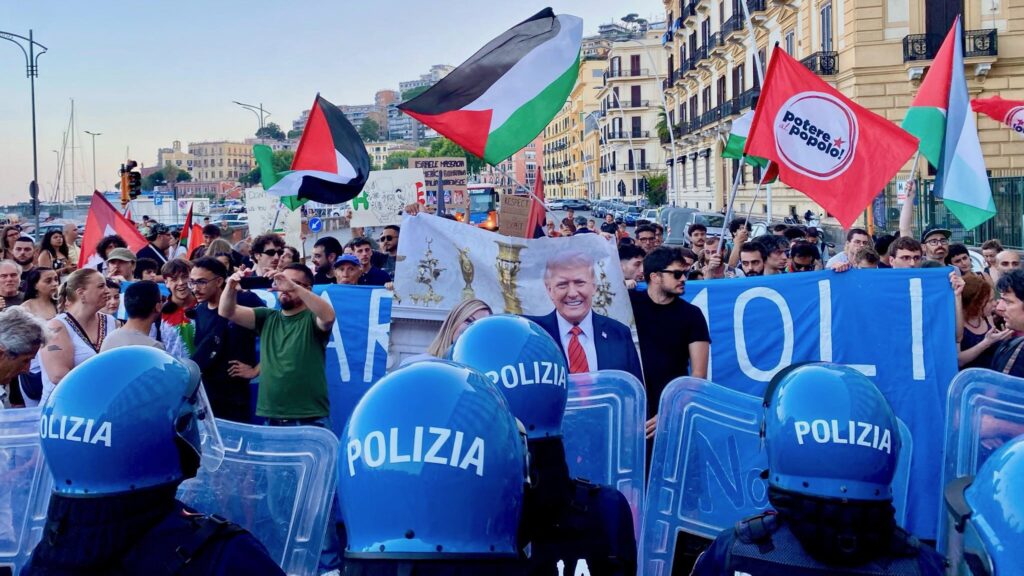
Source: Potere al Popolo Bologna e provincia/Facebook

On the 80th anniversary of liberation from Nazi-fascism, left forces in Italy mobilize against genocide, armament, and the Meloni government

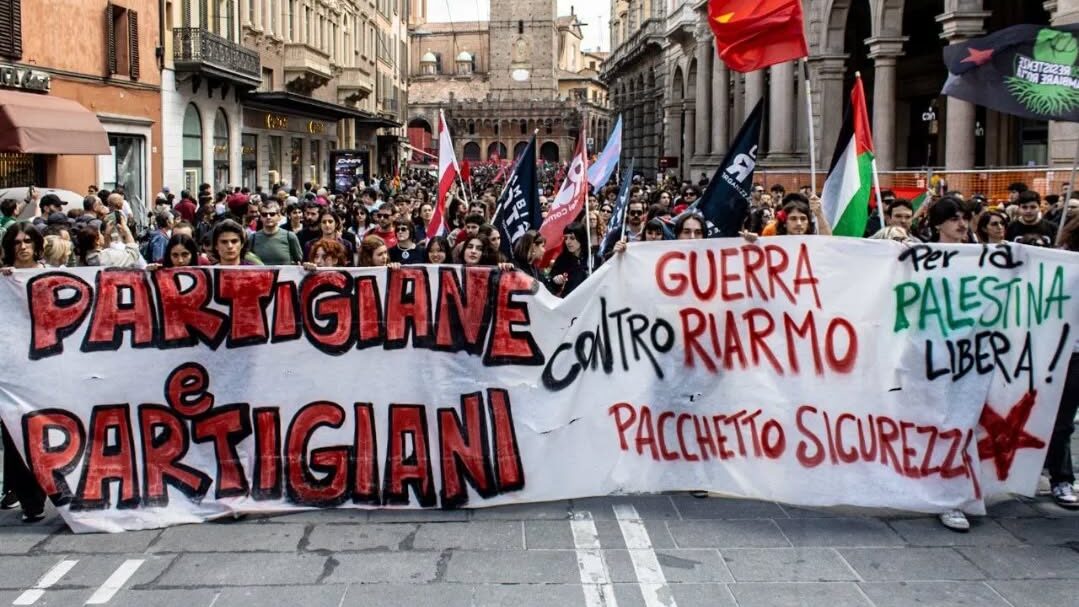
In the coming weeks, many European countries will mark the 80th anniversary of liberation from Nazi-fascist occupation. Italy is among the first, with dozens of events organized for April 25 – Liberation Day – despite ongoing attempts by the Meloni government and right-wing forces to rewrite or erase the memory of the Resistance. For most grassroots groups, this year’s events aim to locate the values that inspired partisan fighters in the 1940s into today’s context, marked by an aggressive rearmament agenda, support for Israel’s genocide in Gaza, and domestic repression of civil rights.

“Eighty years ago, our grandparents freed us from the grip of fascism. But remembering the past is not enough, especially not in the stale, institutional way the Democratic Party and center-left do,” Giuliano Granato of Potere al Popolo said during the demonstration in Naples. Along similar lines, the Unione Sindacale di Base (USB) stated that April 25 should not be reduced to a mere ritual or commemoration. “It should actualize the values and ideals of the partisan Resistance, which freed, perhaps not once and for all, this country from the barbarity of war and Nazi-fascism and provided an inescapable push toward better democratic, working, and living conditions for the people of this country,” the trade union declared in its call to action.

Against Israeli genocide

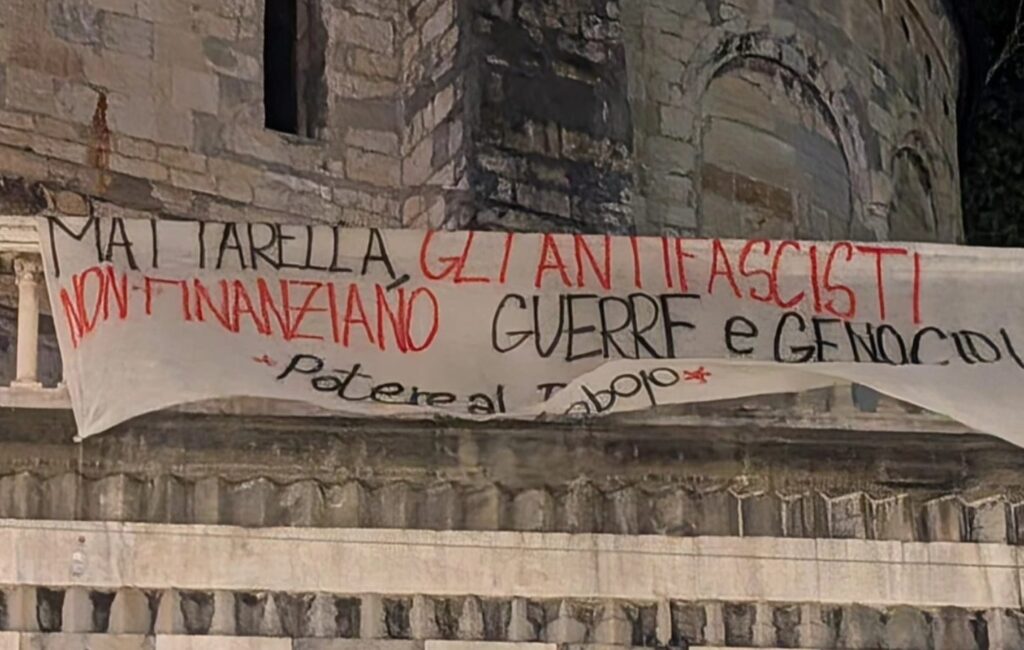
These values, according to USB, Potere al Popolo, and other left groups, must necessarily include opposition to genocide. In many cities, protesters have insisted that Italy’s ongoing ties with the Israeli occupation are unacceptable. These ties, they argue, are evidence that the political establishment has failed to grasp the true meaning and importance of the Resistance. Ahead of Liberation Day, the Genoa chapter of Potere al Popolo organized an action addressing President Sergio Mattarella, criticizing him for formally honoring the Resistance while remaining silent on the genocidal war against Palestinians and on the breakdown of democratic rights under the current government.

Potere al Popolo Genoa with banner reading: “Mattarella, antifascists don’t finance wars and genocide.” Source: Potere al Popolo Genoa/Facebook

“To do so [speak of the Resistance] after cozying up to the president of the criminal state of Israel, effectively supporting the ongoing genocide of the Palestinians, is an insult to those who, since the days of the partisan struggle, have fought against all genocide,” Potere al Popolo Genoa stated. “To honor the Resistance while equating the Soviet communists who liberated much of Europe from Nazism with the Third Reich is an insult to history and memory.”

Against armament

Equally prominent as the call to stop the genocide and sever ties with Israel is the demand to reject Europe’s new armament agenda, which will come at the cost of public services, education, healthcare, and climate justice. Giorgia Meloni’s administration and mainstream opposition parties alike have supported this agenda in different ways, endorsing increased spending on so-called defense and entertaining proposals for a joint European army. These priorities stand in stark contrast with the interests of Italy’s working class and the vision of a more just society that accompanied the antifascist Resistance.

Read more: Movement against increased military spending grows in Italy

“The rearmament plan launched by the EU represents the latest folly of a continental political class disinterested in building a present and future of peace and prosperity for the peoples of Europe,” warned USB. Similarly, Potere al Popolo called on people to rally around an alternative set of priorities: “We don’t need more money to enrich the arms industry. We need money for wages, for health care and services, for envisioning an ecological revolution and addressing the real challenge of our time, which is the climate crisis.”

Against new iterations of fascism

Meanwhile, Giorgia Meloni and her ministers are pursuing a different kind of battle, one aimed at minimizing the role of the antifascist struggle, led largely by communists, in shaping modern Italy. While the mainstream opposition tends to fixate on this behavior by the right wing, Granato warns that doing so risks missing important pieces of the puzzle.

“For us, Giorgia Meloni is simply following the path she’s always been on, one clearly tied to the rise of neo-fascism. After the defeat of Nazism, the slogan of the Italian Social Movement [neo-fascist party] was ‘neither renounce nor restore’ – and that’s exactly what Meloni is doing today. She doesn’t outright deny their fascist roots, but she also doesn’t walk around openly glorifying Benito Mussolini,” Granato told Peoples Dispatch.

The most recent attempt of the right to undermine the legacy of the Resistance came in the wake of the death of Pope Francis, when the government declared a record five days of mourning and called for “sobriety” at all public events. Many understood this to be an attempt to minimize April 25 events. Liberal and right-wing local administrations seized the opportunity to scale down and cancel rallies, while far-right media ran headlines such as April 25: Day of mourning. “Sure, they can claim they were referring to the death of the pope, but the truth is, they’ve been waiting 80 years for an excuse to print something like that, because for them, April 25 has always been a defeat,” says Granato.

Progressive forces, however, resisted, criticizing the government for using the death of a pope who – unlike the administration, called for peace and solidarity – to advance its agenda. They also refused to limit the day’s activities to commemorations, echoing the partisans’ revolutionary vision of a radically different society. “We don’t stop at the official ceremonies, not just because they’re cold and formulaic, but because we believe the fight for liberation and resistance isn’t over,” Granato explains. “Just like many partisans understood back then that toppling fascism wasn’t enough, we believe that defeating the Meloni government wouldn’t be enough either.”

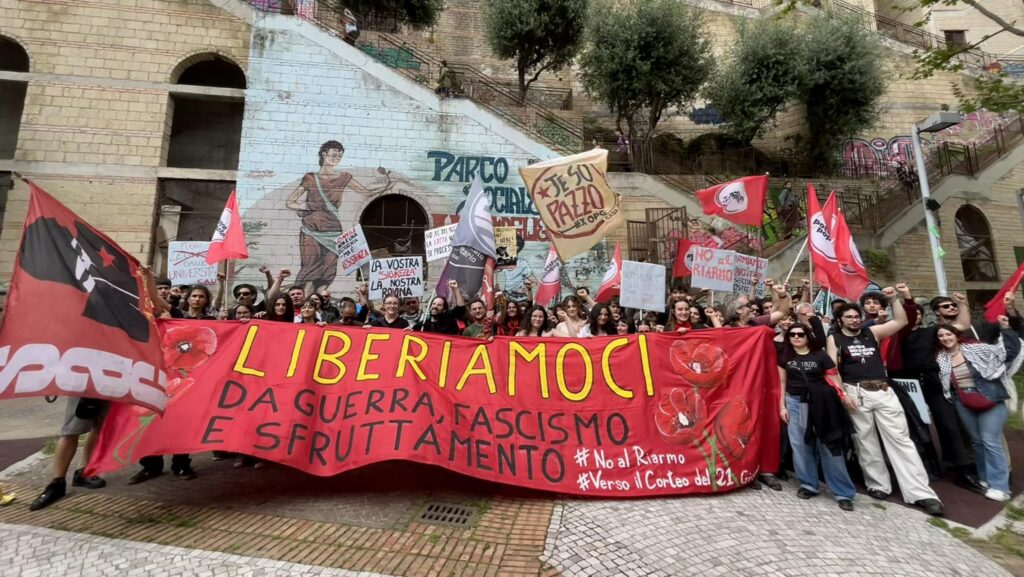
A group of protesters after the central demonstration in Naples, April 25, 2025. Source: Ex-OPG Je so’ pazzo/Facebook

Instead, Granato calls on the people to work together to free themselves from contemporary forms of danger and oppression: first and foremost genocide and militarization. “We worked to make today a day of liberation from militarism and genocide and to link it to the mobilization we are building, including a national assembly in Rome on May 24, and a mass demonstration on June 21, just days before the NATO summit in The Hague,” he adds.

“We believe militarism has always been a tool of fascism. The militarization of Europe today goes hand-in-hand with growing authoritarianism at home and worsens conditions for the working class across the continent.”

Original article by Ana Vračar republished from peoples dispatch under a Creative Commons Attribution-ShareAlike 4.0 (CC BY-SA) license.
Continue ReadingItaly marks 80 years since liberation with calls against genocide and militarism

Meloni government targets dissent with a new security bill

Spread the love

Original article by Ana Vračar republished from peoples dispatch under a Creative Commons Attribution-ShareAlike 4.0 (CC BY-SA) license.
Source: CGIL/X

A proposed security bill in the Italian parliament aims to criminalize activism and penalize acts of solidarity

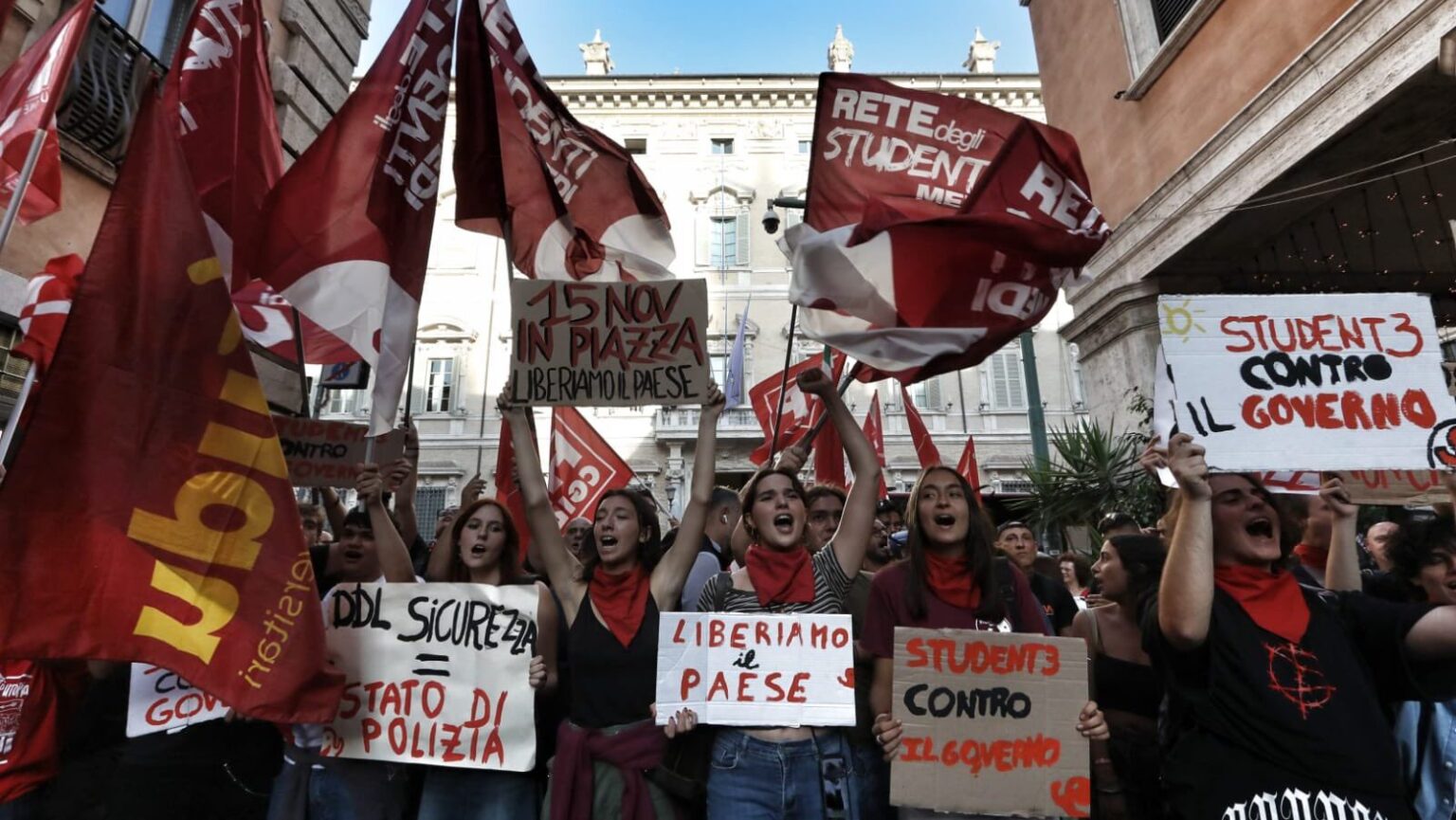
Giorgia Meloni’s government is on a rampage against popular dissent with a new bill under discussion in the Italian parliament. The proposed legislation seeks to penalize solidarity and criminalize activism, with the working class, migrants, and climate activists particularly at risk. In recent days, widespread protests have erupted, with trade unions, anti-fascist networks, and student groups all vowing to resist Meloni’s plans.

Giuliano Granato, a member of the left political party Power to the People (Potere al Popolo), criticized the bill’s framing as security legislation. He argued that it should instead be called the “Repression Bill” because “it responds to the country’s social needs only with more imprisonment and crime.”

“The government is saying that dissent and dispute are crimes in this country,” Granato added. “We believe they are the essence of democracy, and every achievement made over the decades is thanks to the struggles of the working classes.”

One of the bill’s most significant provisions is a crackdown on activists who block roads or railways during protests. Initially seen as targeting climate activists known for these tactics, the left has warned that it will also affect workers’ struggles. Granato pointed out that workers have also used such methods to protest, including during industrial action at Whirlpool factories over the last years.

Italy’s largest trade unions have echoed these concerns. The Italian General Confederation of Labor (CGIL) criticized the bill, arguing it represents an attack on trade union mobilizations aimed at protecting jobs and addressing company crises. In a joint statement with ANPI, the national anti-fascist network, the CGIL wrote: “The right wing continues to regard security only in terms of repression and punishment of social struggles.” Both organizations were at the forefront of protests held in several Italian cities on Wednesday, September 25.

Read more: Europe’s shift to the right must be countered with mass mobilization and politicization

The bill’s impact would extend beyond activists and workers, with prisoners facing harsh consequences. It proposes penalties for peaceful protests in prisons, such as sit-ins. Furthermore, limited protections currently granted to specific groups, like pregnant women or mothers of infants under one year of age, would be taken away. This would mean that babies would remain jailed with their mothers, despite only a handful of facilities being equipped to accommodate them. Legal and psychological experts have warned of the shocking impact this would have on children’s development even if capacities were expanded.

Migrants, the poor, and those showing solidarity with them are also at risk under the proposed law. Anti-eviction actions and those refusing to vacate spaces under threat of homelessness would be criminalized. Migrants without residence permits would be barred from legally obtaining SIM cards, their only connection to family and friends at home. Merchants who disobey this provision would face temporary closures.

While most describe the security bill as paving the way for a permanent police state, some groups might be looking forward to it. Approximately 300,000 police and security personnel would be granted the right to carry unofficial weapons in both private and public spaces – an idea that is likely to instill fear, rather than a sense of security, in the vast majority of the population.

Opposition to Meloni’s security bill is converging with ongoing resistance to her other policies, including the controversial differentiated autonomy reform. On Thursday, September 26, over 1 million signatures calling for a referendum against the reform were submitted by trade union and social movement leaders. These groups have vowed to remain in the streets, defending their right to protest and express dissent despite the government’s attempts to suppress them.

Original article by Ana Vračar republished from peoples dispatch under a Creative Commons Attribution-ShareAlike 4.0 (CC BY-SA) license.
Continue ReadingMeloni government targets dissent with a new security bill