A preschool age child playing with plastic building blocks, January 24, 2016
CHILD poverty hit a record high as only the top earners were better off last year, official figures revealed today.
Campaigners said youngsters were being forgotten as the statistics showed food insecurity soared by 53 per cent, 100,000 more working households fell below the poverty line and more pensioners were unable to afford basic goods such as food and heating.
The Department for Work and Pensions estimated 4.33 million children in households in relative low income – below 60 per cent of median income after housing costs — in the year to March 2023.
This is up from 4.22 million the previous year and the highest since comparable records for Britain began in 2002/03.
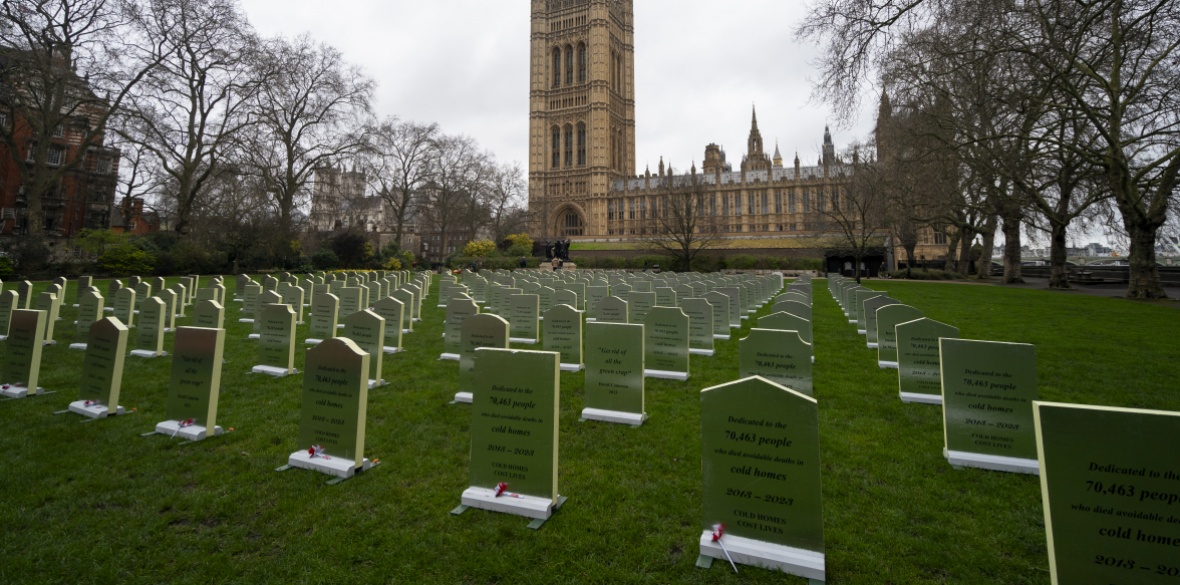
Gravestones in Victoria Tower Gardens, London, during a Greenpeace demonstration, March 13, 2024
FUEL poverty campaigners created a mock cemetery outside Parliament today to mark the deaths of tens of thousands of people who have died from cold-related illnesses since the government cut grants to help insulate homes.
Hundreds of headstones, made with insulation panels used to help people keep their homes warm, were erected in a royal park by Greenpeace and the Fuel Poverty Action campaign.
Greenpeace said that 70,000 people — on average 58 a day — have died from cold-related illnesses since the government slashed subsidies for loft and wall insulation in 2013.
Greenpeace UK fuel poverty campaigner Paul Morozzo said: “Thousands of people are literally freezing to death in their own homes during winter.
“And not only have successive governments failed to prevent this needless and shocking loss of life but they have fuelled this silent public health crisis by slashing insulation funding and failing to deliver a proper scheme to upgrade our cold, damp, draughty homes.”
“The next government’s energy policy should aim at ending fuel poverty, not managing it, and the money to do it is right there in energy company profits.”
In Manchester, there was an angry response to what the End Fuel Poverty Coalition described as a ‘another feeble budget.’
“The Chancellor failed to close the 91 percent loophole in windfall taxes, and failed to invest in the green jobs that would deliver cheaper home-grown energy for us all, and healthier homes,” said a spokesperson for the Coalition.
…
Stu Bretherton, Energy For All Campaign Coordinator at Fuel Poverty Action said he hopes Wednesday’s Statement will be the last Budget of a government that has “driven mass poverty, broken public services, illness and death.”
But Bretherton warned that none of the parties are “offering the bold changes that we desperately need so today we’re seeing trade unions, pensioners, climate activists and health workers Unite for Energy For All.”
“The next government’s energy policy should aim at ending fuel poverty, not managing it, and the money to do it is right there in energy company profits,” he said.
Tories devastating record set to continue unless Budget delivers ‘desperately needed measures’ to recover living standards
In a bleak assessment of the Tories track record, the 2020s are on course to be the ‘second lost decade’ in living standards, a leading charity has warned the Chancellor ahead of his Spring Budget announcement.
Leading anti-poverty charity, Joseph Rowntree Foundation (JRF) published the damning report on Monday, warning that, without political intervention, this Wednesday’s budget risks condemning Britain to another decade of declining living standards.
Based on current government spending plans, working families could be £1,900 a year worse off by 2029 than in 2021. While essentials are predicted to remain less affordable relative to post tax earnings until 2029.
The cutting analysis of the UK’s economic trajectory is a warning to Jeremy Hunt that if he fails to deliver immediate measures to support living standards in the coming budget, then this will be the result.
Decisive intervention from policy makers is what the charity has urged, as it warned that many families will be poorer by the end of the 2020s than at the start. While the Chancellor must prioritise providing long-term economic security for households requiring “the right political will” to turn the situation around.
Currently, post-tax earnings are £2,400 a year lower for the average working family than they were in 2021, while essential goods and services for the average family are £270 a year more expensive than at the beginning of 2021, the JRF research found.
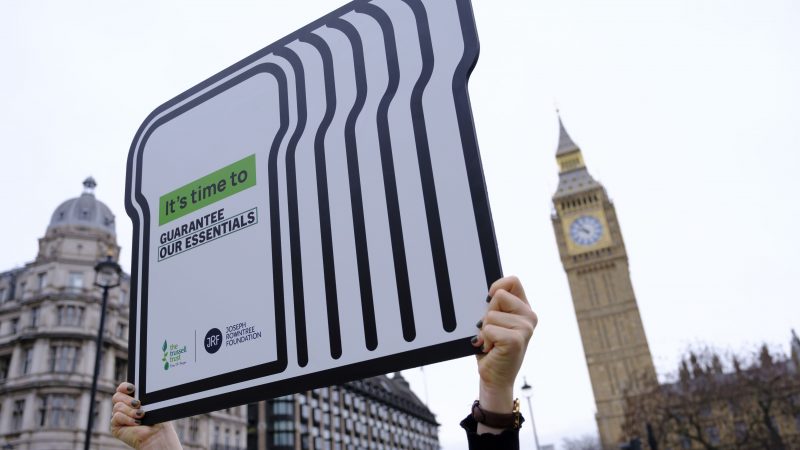
A petition calling on the government to take urgent action to support the introduction of an Essentials Guarantee was presented to political parties in Westminster this week.
Research commissioned by the Trussell Trust has found more than half of recipients of Universal Credit do not have enough money for food.
The study was carried out by YouGov on behalf of the Trussell Trust. It found that 2.4 million claimants (37 percent) had fallen into debt because they could not keep up with essential bills. Two in five (42 percent) reported being behind on one or more household bill.
The research suggested that 780,000 claimants of Universal Credit had been driven to use a foodbank during the month December 2023 to January 2024. More than half of the recipients who were surveyed said they had run out of food. In the previous 12 months, 22 percent of Universal Credit claimants reported being unable to cook hot food as they could not afford to use their own or other utilities. 52 percent said they were behind on their bills and credit commitments or were finding keeping up with them a constant struggle.
From April, the £90 weekly Universal Credit standard allowance is £30 less than the weekly cost of essential items for a singly person, says the charity. It is calling on the Chancellor to provide greater support for people on the lowest incomes in next week’s Spring Budget, including an extension to the Household Support Fund.