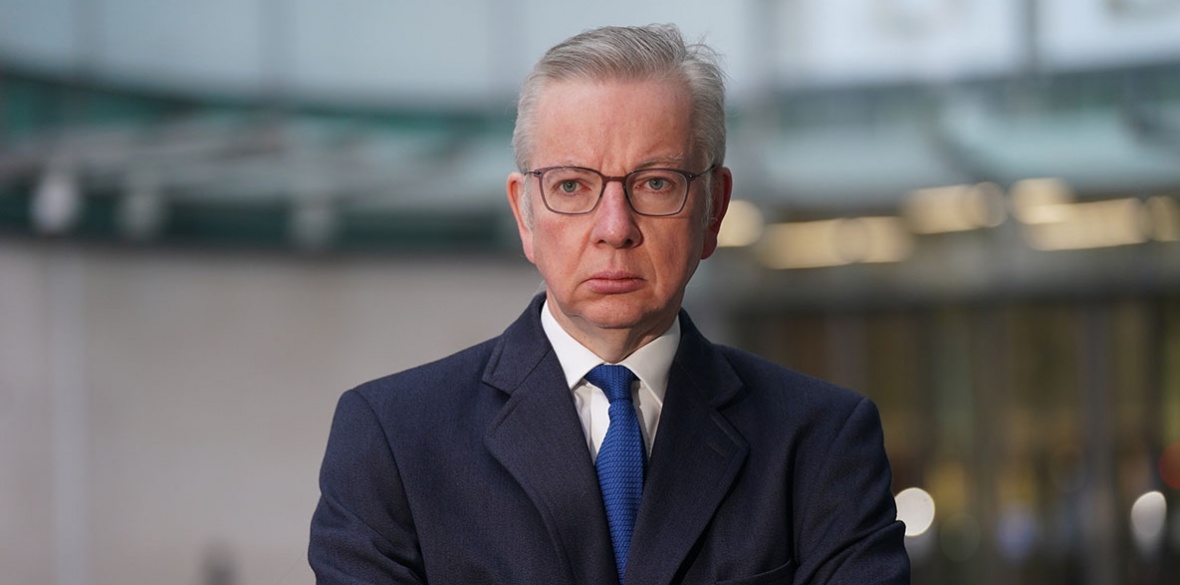
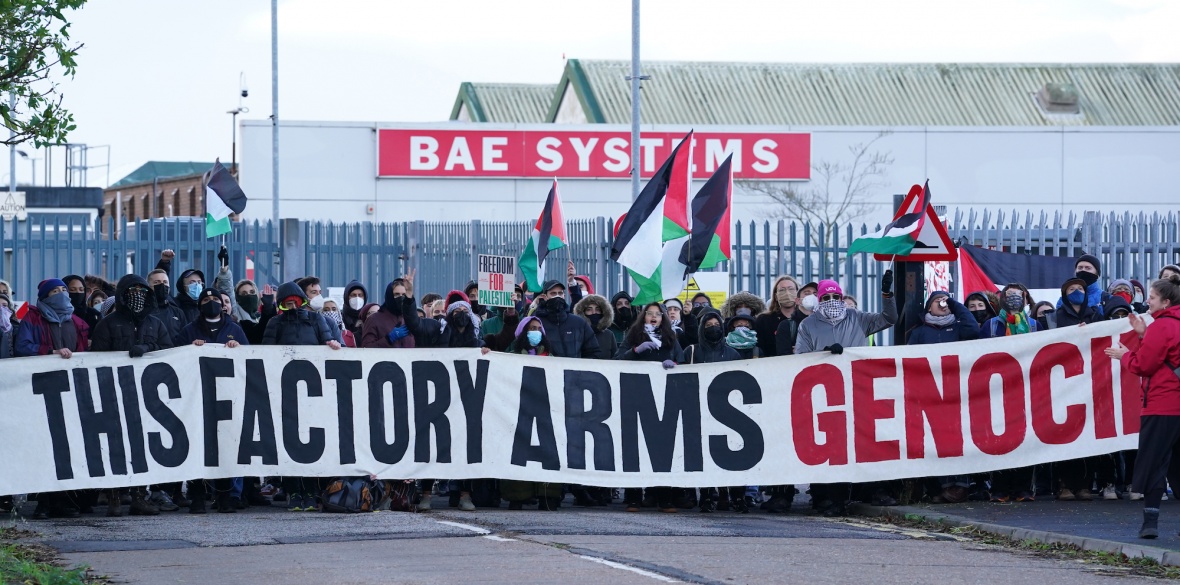
Communities secretary, Michael Gove, February 11, 2024
DEMOCRACY is under threat, campaigners warned today as the Tories launched a new “anti-extremism” drive aimed mainly against Muslims.
Communities Secretary Michael Gove named three Muslim organisations in the Commons as he unveiled the government’s new definition of extremism, apparently responding to the mass movement of solidarity with the Palestinian people that has mushroomed over the last five months.
One of the organisations named by Mr Gove, the Muslim Association of Britain, has been part of the coalition of five groups organising the national demonstrations.
The others singled out by the Tories are Mend and Cage. For show, two obscure far-right groups, British National Socialist Movement and Patriotic Alternative, were also identified.
The five pro-Palestinian campaigns, which include Stop the War and Palestine Solidarity, said in a statement that the “redefinition of extremism is in reality an assault on core democratic freedoms, seeking to silence dissenting voices.”
Stressing “the fundamental right to legitimately campaign to change government policy,” the joint statement added that “the marches have been overwhelmingly peaceful and attended by a broad cross-section of British society.
Unhappy with large protests against the increasingly dire situation in Gaza, Prime Minister Rishi Sunak is seeking to update the UK’s definition of extremism. This, he has argued, is needed because “our democracy itself is a target” of antisemitic and Islamophobic extremists.
However, the reality is that no measures do more damage to democracy than policy proposals like the one Sunak is promoting.
The UK already has a definition for extremism, which is used in efforts to tackle terrorism. We may think of the police as leading those efforts, but the UK’s Prevent strategy now also places a duty on certain other authorities to “have due regard to the need to prevent people from being drawn into terrorism”.
These authorities include local government, education institutions and the NHS. In reality, the UK has placed teachers and NHS staff on the frontline in the fight against terrorism, on top of all their other duties that they were actually trained to do.
To help those with a duty under Prevent to identify people at risk of being drawn into terrorism, the government currently defines extremism as “vocal or active opposition to fundamental British values, including democracy, the rule of law, individual liberty and mutual respect and tolerance of different faiths and beliefs”. Also included are “calls for the death of members of our armed forces”.
This definition is not contained in any law, however. Instead, it features in the government’s Prevent guidance. A key reason why this definition is not contained in legislation is because it is so vague and unclear. It would be difficult to legally oblige anyone with a duty under Prevent to apply the definition – and even more difficult for a court to determine what it means.
Even as guidance, there are still problems with the definition. It offers enormous discretion to the people deciding who is at risk of being drawn into terrorism. Discretion can lead to inconsistent application. That, in turn, can lead to discrimination.
Vague to vaguer
It has been suggested that the new definition of extremism will include the “promotion or advancement of ideology based on hatred, intolerance or violence or undermining or overturning the rights or freedoms of others, or of undermining democracy itself”.
What does it mean to undermine or overturn the rights or freedoms of others? Would arguing for the UK to leave the European convention on human rights count meet the bar?
Likewise, what does it mean to undermine democracy? Does excessive corporate lobbying do so? What about calling for restrictions on the right to free speech or the right to protest? These are fundamental rights that are absolutely necessary for a democracy to flourish. Would they be extremist?
Existing laws are enough
Sunak is presenting the new definition of extremism as a response to protests he depicts as being out of control. But the UK already has numerous laws in place to tackle what it considers to be unacceptable behaviour at protests. The Terrorism Act (which is also incredibly broad) can be used to prosecute people who damage property or create a serious risk to public safety during protests.
Counter-terrorism laws can also capture forms of expression at public demonstrations or online. It is already a crime to express support for a proscribed (unlawful) organisation, or to wear clothing, symbols or publish images in a way which can raise suspicion that you support an unlawful organisation. So, for example, if you express support for Hamas — a proscribed organisation — you are already committing a crime and can be prosecuted for it.
Meanwhile, the Public Order Act contains offences dealing with hate speech. These include using threatening, abusive or insulting words or behaviour, or displaying written material which is intended to or likely to stir up racial or religious hatred.
In 2022, the Police, Crime, Sentencing and Courts Act expanded the criminal offence of causing a public nuisance to include “serious distress, serious annoyance, serious inconvenience or serious loss of amenity”. This can now be applied by he police to criminalise protests that are considered to be making too much noise.
It is hard, therefore, to see which bases are not already covered for a government looking to prosecute people for extremism. These mechanisms have already been used to clamp down on all kinds of activism. In reality, there is no gap in the law that needs fixing. Rather, this proposal looks like a classic example of a government talking tough on crime and terrorism in order to boost its poll ratings in an election year.
The right to protest
Adding new definitions for extremism only creates problems. The vaguer a definition gets, the easier it is to misuse. It can also have a pervasive chilling effect on free speech. People may self-censor out of fear of being identified as extremist, not least when their employer has a duty under Prevent.
The fact of the matter is that human rights law allows for protests to be disruptive. Otherwise, they could be simply ignored. Human rights law also allows people to “shock, offend, and disturb” through speech.
The government may not be happy with large public protests against its foreign policy but it should not be viewed as extremist to march for a ceasefire in Gaza. Likewise, it should not be viewed as extremist to vocalise opposition to the potential genocide being committed by the Israeli Defence Forces. If this were so, then the International Court of Justice is extremist.
There is a deep danger of conflating protest with extremism and terrorism, undermining the legitimacy of these protests. To stretch the concept of extremism to cover these views is what is actually undermining democracy and the rights and freedoms of others.
Government told to reject John Woodcock’s proposals to blacklist Palestine solidarity and climate campaign groups
UNIONS and human rights groups have called on the government to reject “profoundly anti-democratic and repressive” proposals to blacklist Palestine solidarity and climate campaign groups.
John Woodcock, Westminster’s adviser on political violence, urged the government earlier this month to ban politicians from engaging with the Palestine Solidarity Campaign (PSC), as well as groups such as Extinction Rebellion and Just Stop Oil.
Mr Woodcock, who has received money from Israel lobby groups, said that the government should take a “zero-tolerance approach” to pro-Palestine protests, which he claimed were a “menace […] threatening our democracy.”
In a joint statement, civil rights orgnisations Liberty, Friends of the Earth and Amnesty International said the activities of organisations like PSC are “essential elements of our democratic system.”
“Any suggestion that the government or political parties should ban all meetings or engagement with legal civil society organisations or sections of the electorate is profoundly anti-democratic and sets a dangerous precedent,” it warned.
…
“Politicians should be listening to the wishes of the public and put pressure on Israel to end its murderous assault, rather than trying to shut down democratic engagement and debate.”
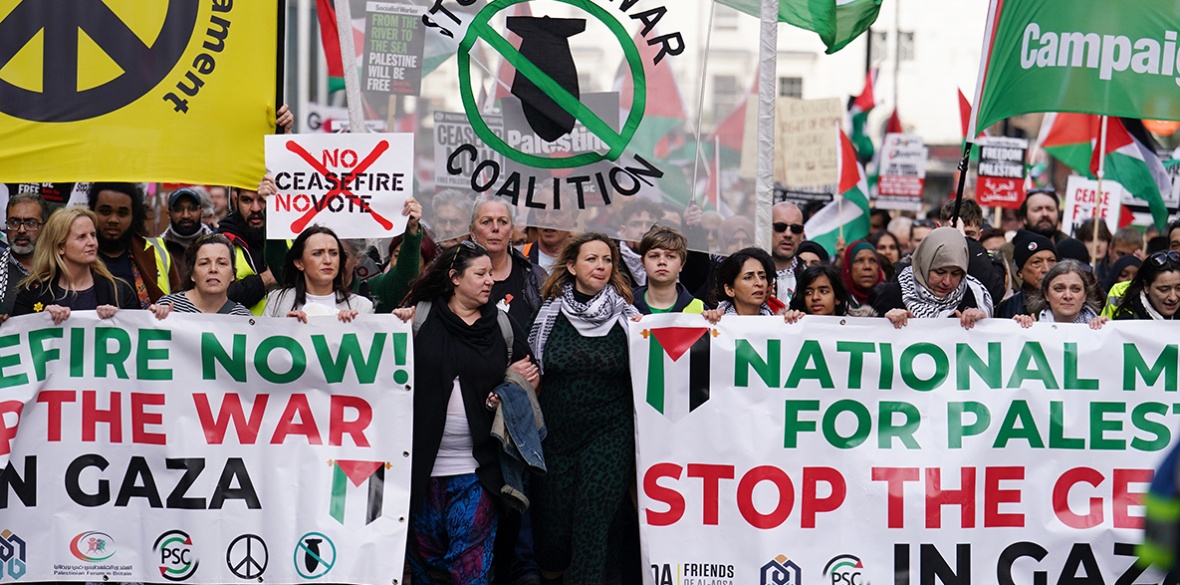
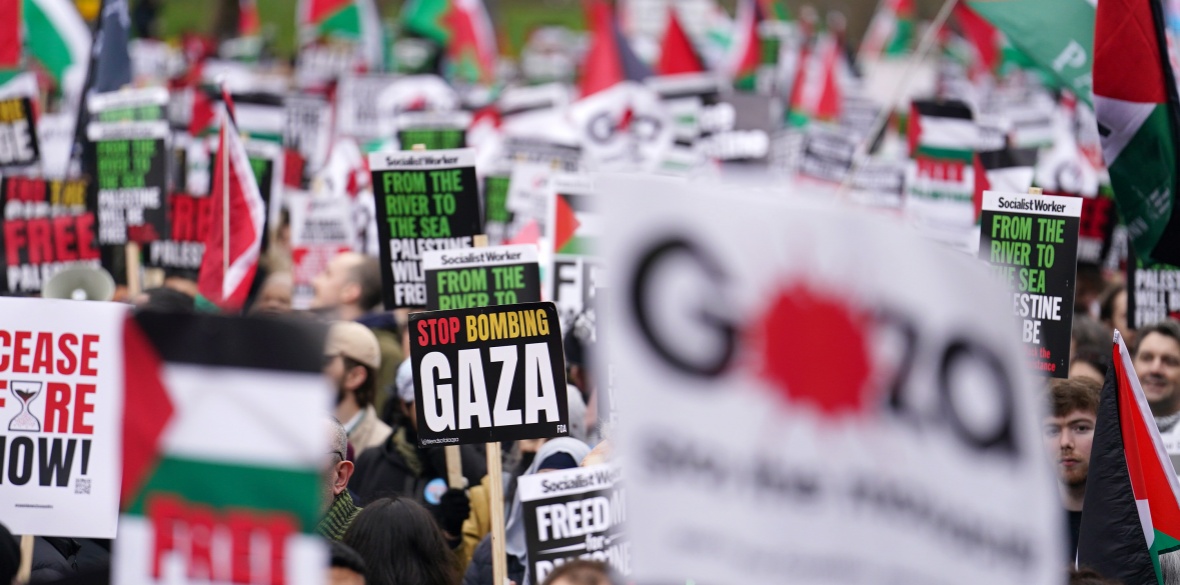
People take part in a pro-Palestine march in central London during a national demonstration for ceasefire in Gaza, March 9, 2024
Defiant protesters reject ‘extremism’ label by MPs to stop marches
CAMPAIGNERS have slammed the government’s “repressive” attempts to clamp down on the right to protest and redefine extremism, warning they are “poorly drafted and open to legal challenge.”
Communities Secretary Michael Gove is expected to announce a looser definition of extremism within days.
Organisations and individuals that breach the new definition will be banned from receiving public funds, engaging with government agencies and appearing at university campuses.
Several Muslim groups are reportedly set to be on the list, including the Muslim Council of Britain and the Muslim Engagement and Development NGO.
Mr Gove claims he aims to ban groups which “undermine the UK’s system of liberal democracy.”
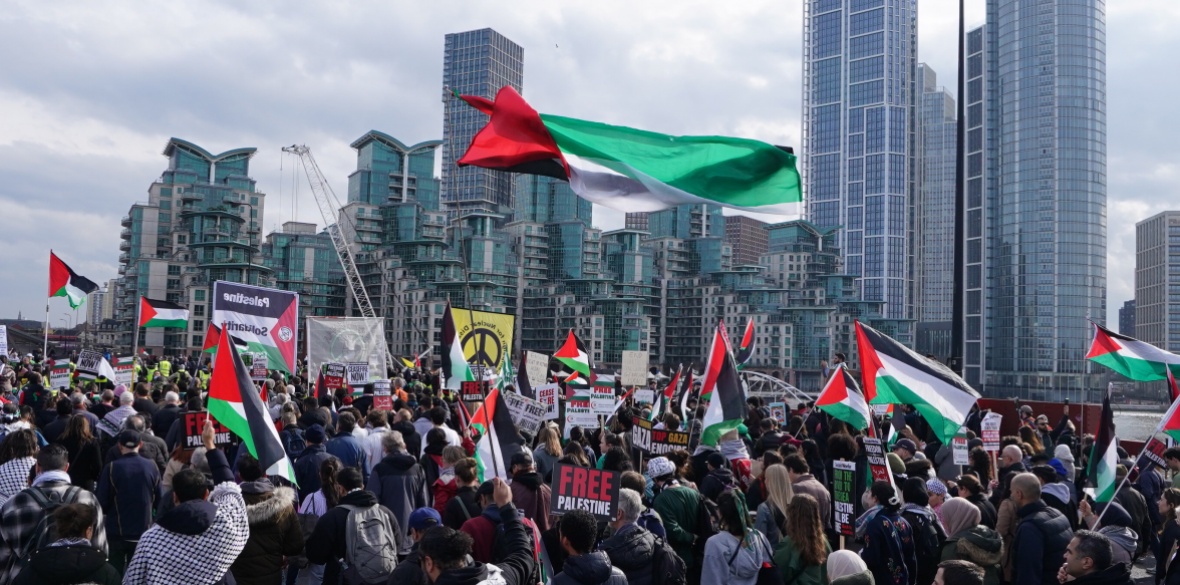
People take part in a pro-Palestine march in central London, organised by the Palestine Solidarity Campaign, February 17, 2024
BRITAIN’S rulers are coming for our democratic rights. And their way is being prepared with a barrage of propaganda and lies.
The “counter-extremism commissioner” Robin Simcox peddles an outrageous smear against the peace movement when he claims Palestine solidarity demonstrations make London a “no-go zone for Jews.”
Tell that to the large and growing Jewish bloc that has marched for a Gaza ceasefire at every national demo.
But, as Stop the War Coalition officer John Rees warns, the ruling-class’s cynical strategy of interpreting empathy with Palestinians as hostility to Jews has sown confusion and fear.