Braverman’s consultation on anti-protest laws was ‘only open to police’

Spread the love

Original article by Anita Mureithi republished from OpenDemocracy under a Creative Commons Attribution-NonCommercial 4.0 International licence

Liberty’s lawyers say police feedback was ‘directly incorporated into the final text’ of Braverman’s anti-protest laws  | Richard Baker / In Pictures via Getty Images

High Court told government only sought feedback from people it knew would agree with its controversial changes

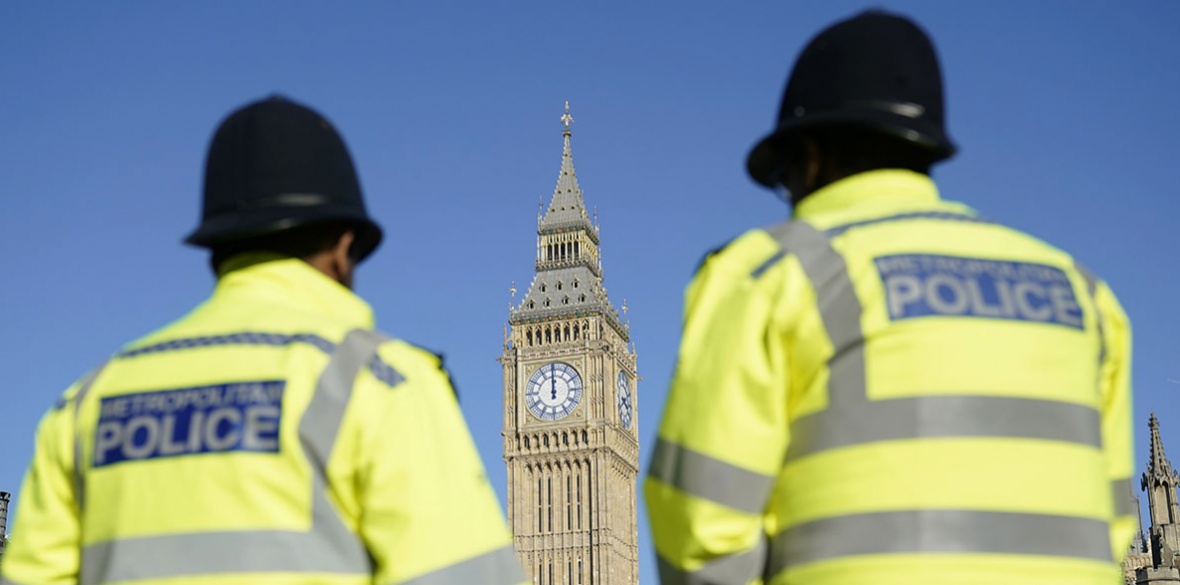
Only police were consulted on anti-protest laws before they were forced through by the UK government, according to human rights lawyers suing the home secretary.

Campaign group Liberty has been in court this week challenging James Cleverly over amendments to the Public Order Act that were pushed through by his predecessor, Suella Braverman, last year.

Liberty was given permission to take legal action against Braverman in October after she used secondary legislation – subject to less parliamentary scrutiny – to strengthen police powers to shut down protests that cause “more than minor disruption to the life of the community”.

The group says Braverman’s actions amounted to a “serious overreach” and that she acted unlawfully because the changes to the law had already been rejected in the House of Lords.

And Liberty has labelled a consultation on the proposed laws in 2022 as “one-sided” and “unfair” – because the Home Office only consulted police. The government gave the Met, Staffordshire Police, Essex Police, the National Police Chiefs’ Council, and the College of Policing opportunities to give their views on the legislation, but did not seek input from anyone who might be impacted by the laws.

Liberty argued: “The [home secretary] voluntarily embarked upon a process of consultation about the contents and drafting of the regulations but then only consulted a narrow group of stakeholders in support of the amendments rather than an even-handed group representative of all those whose interests may be adversely impacted.”

Its lawyers also say police feedback was “directly incorporated into the final text” of the amendments to the Public Order Act, including on the definition of “serious disruption to the life of the community”.

The new powers have been criticised by Liberty and other human rights groups due to the vagueness of the new language, which campaigners say allows police to shut down almost any protests. The changes forced through by Braverman mean officers can interfere with and arrest anyone taking part in protests that they believe will cause “more than minor disruption to the life of the community”.

Police feedback on “cumulative disruption” was also included in the final amendments to the act. Under this law, officers must take into account all “relevant cumulative disruption”, regardless of whether or not your protest is related to any other protest or disruption in the same area. Before this amendment, there was no explicit requirement for police to consider this.

While the government held multiple meetings with police representatives in December 2022 to seek input and “refine policy”, Liberty argues that the fact that no rights groups or members of the public were consulted is rooted in “procedural unfairness” and that the changes must be reversed.

Katy Watts, Liberty’s lawyer leading the case said: “The government has shown it’s determined to put itself above the law, avoid scrutiny and become untouchable – so it’s no surprise it only consulted people it knew would agree with its new law.

“Our democracy exists to make sure a government can’t just do whatever it wants, and an important part of that is consulting a wide range of voices on new laws – especially those likely to raise reasonable concerns. This improves government decision making and helps to make our laws better. The government’s failure to do this is just one of the ways it acted unlawfully when it forced these powers though.”

The laws were initially brought in to clamp down on protests by climate activist groups like Just Stop Oil, Insulate Britain, and Extinction Rebellion, but other protesters are now also being targeted.

The government has accused pro-Palestine protesters of “hijacking legitimate protests”, “shouting down and coercing elected representatives”, and has also called them “un-British” and “undemocratic”.

In a new ‘defending democracy policing protocol’ released this week, the government pledged £31m of additional funding to protect MPs after safety fears were raised.

The Home Office said it wants to “protect the democratic process from intimidation” but according to its own policy paper, only met with police representatives from the National Police Chiefs Council, the Association of Police and Crime Commissioners, and the College of Policing.

The Home Office did not respond to a request for comment.

The two-day hearing ended yesterday and Liberty’s lawyers expect a decision could take up to three months.

Original article by Anita Mureithi republished from OpenDemocracy under a Creative Commons Attribution-NonCommercial 4.0 International

licence

OpenDemocracy’s free daily email

Protest isn’t harassment, says group suing UK government over law change

Home Office ‘did not discuss’ Islamophobia risk in wake of Hamas attacks

Continue ReadingBraverman’s consultation on anti-protest laws was ‘only open to police’

Morning Star: It’s Rishi Sunak & Co not ‘the mob’ that are the real threat to our democracy

Spread the love

https://morningstaronline.co.uk/article/editorial-sunak-threat-democracy

We have been told that all marchers are Islamists or “extremists” and present Home Secretary James Cleverley has demanded that the organisers call them off since they have “made their point.”

However, the government has not yet got that point. It continues to thwart efforts to secure an immediate ceasefire in Gaza.

And the propaganda overlooks the fact that the repeated huge demonstrations have been almost entirely peaceful. Such few arrests as there have been have been mainly about the police stopping the display of what they regard as unacceptable slogans or images.

It is clear that the Establishment is rattled by the intensity of opposition to its pro-Israel policy and by the fact that the cosy Commons consensus is rejected by the country outside, which overwhelmingly wants a ceasefire.

And masses repeatedly mobilised on the streets always rattle the state, more or less regardless of the issue. These protests are still more menacing to the elite because they challenge the prerogatives of imperialism.

It is no surprise therefore that state prosecutor Starmer’s Labour has hardly raised a peep of protest.

But the solidarity protests are the voice of democracy. The bipartisan move against them is a threat to all our freedoms. The left must stand against the hysteria and assert our democratic right to hold politicians to account.

https://morningstaronline.co.uk/article/editorial-sunak-threat-democracy

Well said Morning Star

Continue ReadingMorning Star: It’s Rishi Sunak & Co not ‘the mob’ that are the real threat to our democracy

Protest isn’t harassment, says group suing UK government over law change

Spread the love

 Original article by Anita Mureithi republished from OpenDemocracy under a Creative Commons Attribution-NonCommercial 4.0 International licence

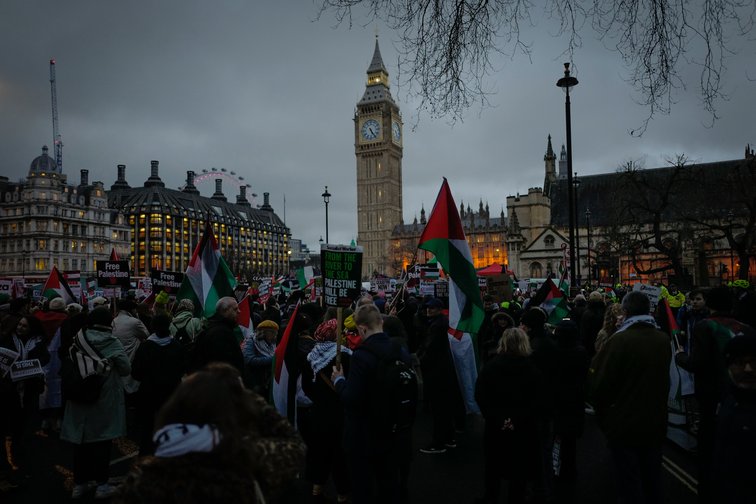
Protesters gather in Parliament Square, London, to call for a ceasefire in Gaza, 21 February 2024
 | Alberto Pezzali/NurPhoto via Getty Images

Human rights group Liberty says spotlight on MPs’ safety has seen Tories ‘vilify’ Palestine marchers

Ahuman rights campaign group suing the government for forcing through anti-protest laws says people who go on Palestine marches are being “vilified” to “stoke division”.

Liberty is today challenging the home secretary, James Cleverly, in the High Court over a decision by his predecessor Suella Braverman to introduce new legislation targeting protesters that had already been rejected by Parliament.

The case comes in a week where protest rights are in the spotlight. Pro-Palestine marches are being labelled a threat to MPs and the Home Affairs Select Committee has called on the government to force organisers to give more notice.

Speaking to openDemocracy ahead of the hearing, Liberty director Akiko Hart said: “We’re seeing both our fundamental rights of protest being undermined, but also specific protests like the pro-Palestinian marches being vilified.”

Hart took aim at the “incredibly irresponsible rhetoric from senior politicians where protest is equated to intimidation and harassment”.

MPs’ safety fears were raised last week following chaos in the House of Commons over a symbolic vote on a ceasefire in Gaza. Though some MPs have reported an increase in abuse and threats, campaigners warn that peaceful protests are now being associated with terrorism in order to undermine them.

“There were legitimate concerns around MPs’ safety – obviously, two MPs have been murdered in the last ten years,” she said. “We need to take that very, very seriously. I would also say that it’s MPs who are racialised who are most at risk from harassment, and that’s what the evidence shows us.

“But to conflate harassment with protest, which is what’s happening this week, is really dangerous and irresponsible. There are laws in place to deal with harassment and abuse. That isn’t the same as legitimate protest.”

In its recommendations, the Home Affairs Select Committee said more notice was needed ahead of Palestine marches because the size and frequency of the protests is a burden on police resources. But according to the coalition organising the national Palestine marches, the measures would further limit the right to peaceful protest. Hart also said the current notice period of six days is enough for police to prepare for marches.

“Extending that will just restrict people’s ability to be able to make their voices heard. With this, as with any other issue, the point about protest is that it is not about whether or not you agree – it’s about our right to protest,” she explained.

Liberty was given the green light to sue Braverman in October after she used secondary legislation – which doesn’t get the same level of parliamentary scrutiny – to allow police to restrict or shut down any protest that could cause “more than minor disruption to the life of the community”.

“It shouldn’t be the case that you would have to take the home secretary to court with all the time and effort and energy and expertise that that involves,” said Hart. “The reason we are doing so is because of the then home secretary’s egregious act of circumventing Parliament.”

The government previously tried to insert the new powers into the Public Order Act 2023 in January last year, but was blocked by the Lords.

The point about protest is that it is not about whether or not you agree – it’s about our right to protest

Liberty believes a win “would be a powerful check against any future minister or government that intends to do the same thing”.

Hart told openDemocracy that there have already been clear examples of the impact of anti-protest laws that have come through the Police, Crime, Sentencing & Courts (‘Policing’) Act and the Public Order Act, which both give police more powers to restrict protests.

“There were anti-monarchy protesters who were arrested on the basis that the luggage straps that they were carrying were seen to be tools for locking-on, which was a new offence created under the Public Order Act, but they were carrying them to secure their placards.

“We’re also seeing it in sentencing. Last summer, the Court of Appeal upheld the sentences of the two protesters who scaled the Dartford crossing. And those sentences were two years and seven months, and three years – the harshest sentences ever handed down in modern times around protests around civil disobedience,” she said.

The trial against the home secretary is expected to run for two days at the Royal Courts of Justice in London. Hart told openDemocracy that while she and Liberty’s team of lawyers are feeling optimistic, “there’s a level of underlying exhaustion at how this government is conducting itself and responding to the protests that are happening”.

A Home Office spokesperson said: “The right to peaceful protest is fundamental; the right to disrupt the hard-working public is not.

“We have taken action to give police the powers they need to tackle criminal tactics used by protesters such as locking on and slow marching, as well as interfering with key national infrastructure.

“We work closely with the police to make sure they have the tools they need to tackle disorder and minimise disruption.”

Get OpenDemocracy’s free daily email

 Original article by Anita Mureithi republished from OpenDemocracy under a Creative Commons Attribution-NonCommercial 4.0 International licence

Continue ReadingProtest isn’t harassment, says group suing UK government over law change

Campaigners insist draconian limits on right to protest will be resisted

Spread the love

https://morningstaronline.co.uk/article/campaigners-insist-draconian-limits-right-protest-resisted

PLANS for even more draconian limits on people’s right to protest — including outside Parliament — will be resisted, campaigners insisted today.

Government “violence adviser” Baron Walney, who was Labour MP John Woodcock before his elevation, has recommended that “threatening” protests outside Parliament, MPs’ offices and council buildings be banned and dispersed by police.

The clampdown adds to existing new limits on protests including for being “too noisy” or causing inconvenience.

The Stop the War Coalition pledged to mobilise against any new laws or regulations banning protests outside Parliament, and humanitarian campaign group Liberty condemned the proposals as “knee-jerk and deeply concerning.”

Peaceful protests have been condemned by reactionary politicians and the media as “hate marches” and calls for Palestinians to have freedom “from the river to the sea” have been dubbed “anti-semitic.”

Sam Grant, advocacy director at human rights campaign group Liberty, said: “When people care deeply about an issue, it’s natural for them to make their voices heard at the place where decisions are made.

“For centuries, protesting outside Parliament has been how people have campaigned for positive change in society, from the right to vote to equal marriage.

“We’ve already seen a tightening on how people protest outside Parliament through the Policing Act 2022, and these plans could extend that much further.”

https://morningstaronline.co.uk/article/campaigners-insist-draconian-limits-right-protest-resisted

Continue ReadingCampaigners insist draconian limits on right to protest will be resisted

How police in England can now stop basically any protest

Spread the love

Original article republished from openDemocracy under a Creative Commons Attribution-NonCommercial 4.0 International licence.
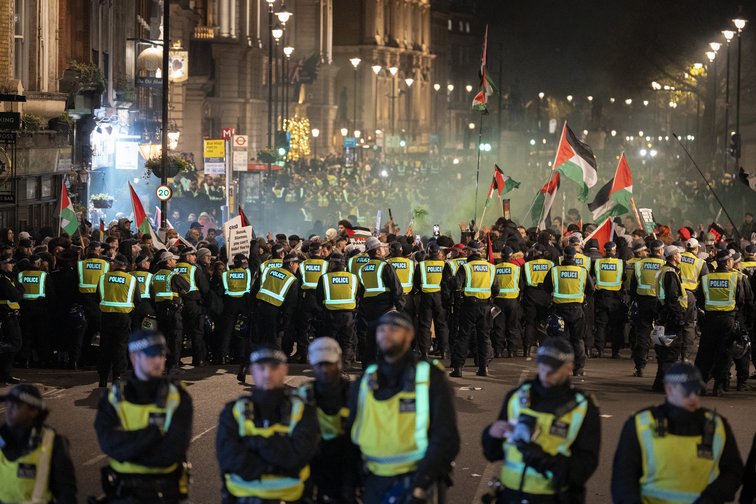
New anti-protest legislation forced through by Suella Braverman has been labelled “unlawful”

Adam Ramsay

15 June 2023, 3.55pm

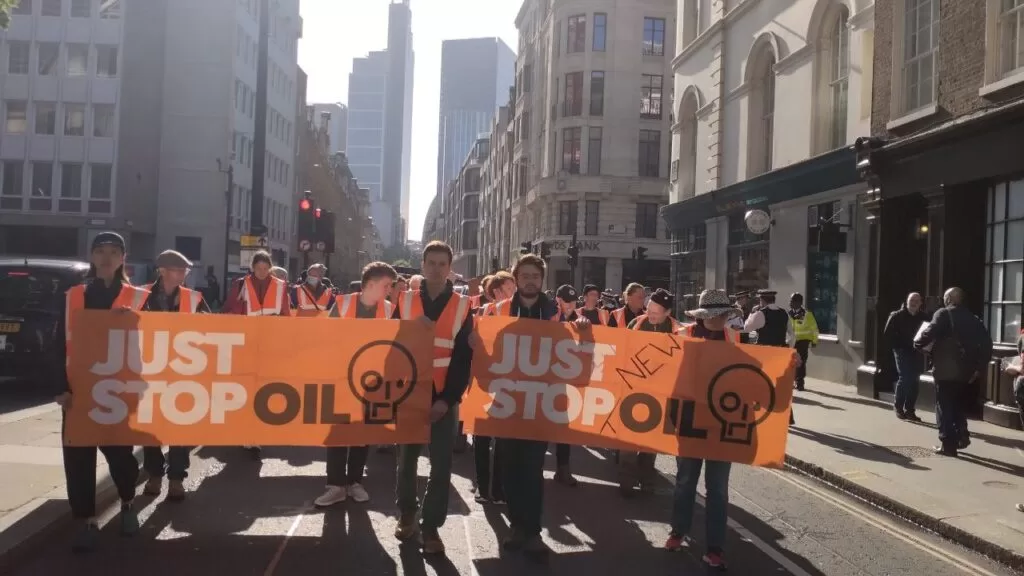
A Just Stop Oil protest in central London
Suella Braverman forced through new anti-protest laws after slow-marching demonstrations from Just Stop Oil activists in London

At midnight last night, the right to protest in England and Wales became a matter of police discretion.

Yesterday, the police could restrict or stop a protest to prevent it causing either “serious public disorder, serious damage to property, or significant and prolonged disruption to the life of the community”.

Those powers already allowed plenty of room for interpretation, but from today the threshold is even lower. This week, home secretary Suella Braverman forced through new laws in a way never seen before in the UK. Here’s what you need to know.

What are the new police powers targeting protests?

Changes to the Public Order Act mean police can now restrict or stop a protest if they believe it could cause “more than minor disruption to the life of the community”. They have the power to arrest anyone taking part in a protest, or even anyone encouraging others to take part.

Officers are also now required to consider “cumulative disruption” from protest, even if the protests in question are organised by different people and about different issues. And the definition of “community” has been changed to include anyone affected by a protest, not just people who live or work in the area it’s happening in.

“The regulations also say the police will be required to take into account all relevant disruption. For example, if there are regular traffic jams in the area, that would have to be taken into account [when the police decide whether to ban a protest], even if it had nothing to do with the protest”, Jodie Beck, policy and campaigns officer at Liberty told openDemocracy.

Braverman argued the new laws were needed to target slow-marching protests from climate activists Just Stop Oil and Extinction Rebellion.

What do they mean?

In reality, the police could find a way to argue that any protest meets the threshold for imposing restrictions, if they wanted to. The new law, says Beck, is a “huge expansion of police powers” that could also lead to police allowing some protests to go ahead while imposing restrictions on others, simply based on how the officers felt about the message behind them.

While the government has focused on one particular type of protest – slow-marching – all protests are potentially impacted.

Beck gives the example of striking railway workers and their supporters holding a rally outside a train station. The police “could decide that means a more than minor disruption to people’s travel,” and so ban the gathering, and arrest anyone taking part.

It could even be that police officers rule that a picket line causes “more than minor” disruption to the workplace it is picketing – after all, that’s the point.

But it’s not just the new laws which have shocked experts. It’s also how they came about this week.

How did the new laws restricting protests get passed?

Originally, Suella Braverman tried to sneak the new legislation into the Public Order Act, which passed earlier this year and came into effect just before the coronation. Rather than allowing these changes to face the usual scrutiny in the House of Commons, the home secretary had them added as last minute amendments to the bill in the House of Lords, after MPs had already voted on it. Her attempt failed – the Lords thought these measures were too draconian and voted them down, though they approved the broader new bill.

Undeterred, Braverman turned to a constitutional trick that’s never been used before. Because while new bills – known as ‘primary legislation’ – require line-by-line scrutiny in both houses, various laws already on the statute book give ministers powers to make small changes via something called ‘secondary legislation’. And secondary legislation doesn’t get nearly as much scrutiny, with both the Commons and Lords simply voting for or against.

The home secretary argued that another act passed last year by then-home secretary Priti Patel – the Police, Crime, Sentencing and Courts Act – already gave her the power to make these changes via secondary legislation. So that’s what she did this week, making it the first time ever that a government has used secondary legislation to push through a measure that had already been voted down by parliament.

The secondary legislation passed through the Commons on Monday, with the Tories taking full advantage of their majority. In the Lords, Green peer Jenny Jones filed a highly unusual fatal motion, a rare procedure used to try and kill off the passage of a bill. Normally, because it’s an unelected house, the Lords tweaks legislation passed by the Commons, but doesn’t ultimately vote it down. Jones argued that, because the government was bringing back a law which had already been voted down by parliament through a route which requires almost no scrutiny, this should be an exception.

Labour, although they complained about Braverman’s shenanigans, refused to back Jones, and abstained on the motion, meaning it passed. Police, Crime and Fire minister Chris Philp then enacted the new measures from midnight last night (secondary legislation doesn’t need royal assent). And so now, the police can shut down any protest they like.

The story doesn’t end there. Liberty is taking the government to court, calling the move “unlawful” and arguing that it broke many of the basic principles of the British constitution.

What do human rights campaigners say?

Katy Watts, a lawyer at Liberty, accused the government of “putting itself above the law” and said the move gives police “almost unlimited powers to stop any protest the government doesn’t agree with”.

And Beck believes we need to see this in the context of a much broader attack on our democratic rights. Noisy protests have been banned. The government is already attacking the right to strike, making it easier for bosses to sack people who vote to withdraw their labour. They’ve made it harder to vote, and harder to challenge them in the courts.

“Even if you’ve never been to a protest, you never know when you might need to,” she said.

With the new laws, there is a growing chance you’ll be arrested if you do.

Original article republished from openDemocracy under a Creative Commons Attribution-NonCommercial 4.0 International licence.

Continue ReadingHow police in England can now stop basically any protest