Tag: protests

  • Protests erupt against rising extrajudicial killings in Pakistan

    Spread the love

    Original article by Abdul Rahman republished from peoples dispatch under a Creative Commons Attribution-ShareAlike 4.0 (CC BY-SA) license.
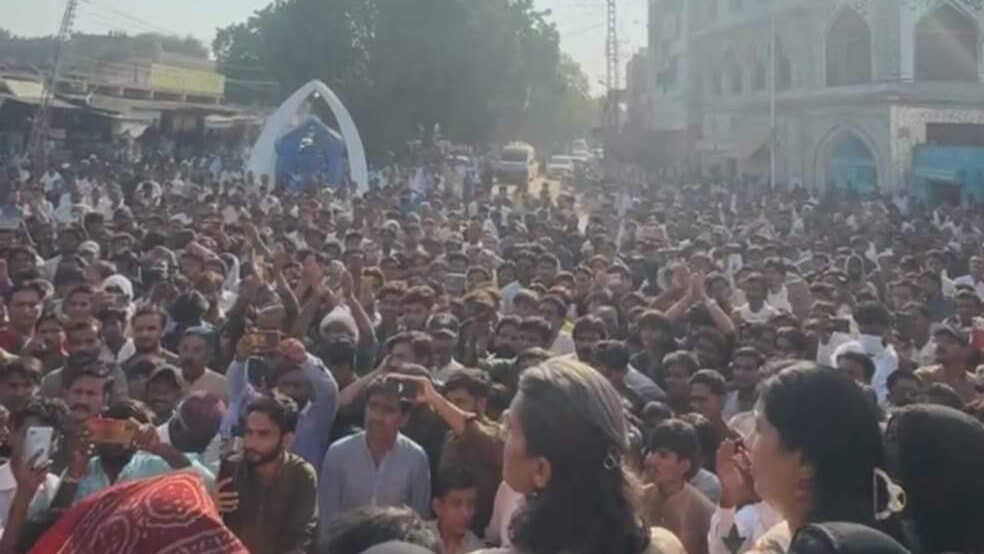
    Protesters during a rally against extrajudicial killings on September 25, Sindh. Source: Atif Tauqeer/X

    Progressive and left movements in Pakistan are voicing alarm over the increasing collaboration between the state and extremist forces, which they say is undermining citizens’ rights to life and religious freedom

    Hundreds of people gathered in Umerkot on Wednesday, September 25, to protest the rising instances of extrajudicial killings in Pakistan’s Sindh province. Protesters voiced concern over the growing collaboration between the state and religious extremist forces and demanded justice for the victims.

    The protest was organized by a Joint Action Committee made up of civil society groups and left organizations in Sindh, following the extrajudicial killing of Dr. Shahnawaz Kunbhar, a medical doctor, by the provincial police in what was allegedly a staged encounter last week.

    Dr. Kunbhar’s daughter also attended the protest, where demonstrators accused the Pakistan People’s Party (PPP)-led provincial government of protecting extremist forces and the policemen involved. Protesters questioned the PPP leadership’s secular credentials, according to Dawn.

    On September 18, the physician had been arrested under Pakistan’s controversial blasphemy law which prohibits insulting Islam or Islamic figures and can result in the death penalty. His home was raided by Sindh police and just a few hours later he was killed, with the police reporting it as in the context of a shoot out. When the police attempted to return his body to the family for cremation, a mob reportedly snatched the body and later burned it, motivated by the blasphemy accusations.

    In response, protesters have demanded an immediate ban on extremist religious preachers and the arrest of individuals who incited the violence through social media posts. They also called for immediate action against the police officers responsible for Dr. Kunbhar’s killing.

    Commending the protesters in Umerkot, Haqooq-e-Khalq party leader Ammar Ali Jan said in a post on X that while the state surrenders to extremists, people are showing “unparalleled bravery to defend humanity.”

    Lynchings on the rise

    Pakistan has seen a rise in mob lynchings related to blasphemy accusations. On September 12, a policeman shot dead a person accused of blasphemy while in custody in Quetta, Balochistan province. Afterwards, state officials reportedly pressured the family of the victim to “pardon” the accused policeman.

    According to reports in Pakistani media, at least four people have been killed in mob violence related to blasphemy since May, including members of minority communities. In all cases, the role of police and local authorities has come under scrutiny.

    Dr. Kunbhar’s extrajudicial killing has drawn strong condemnation from the Human Rights Commission of Pakistan (HRCP). In a statement on X, the HRCP called this pattern of violence “an alarming trend,” especially given the alleged involvement of law enforcement.

    The HRCP called upon the state to react to the rise in religious extremism, claiming that it has “historically sponsored” such hate. The commission urged Pakistani authorities to act swiftly to “counter the rising radicalization that triggers such incidents.”

    Several civil society movements and human rights groups echoed these concerns, demanding immediate action to curb religious extremism in Pakistan and protect citizens’ rights to life and religious freedom. Amnesty International stated: “The horrific spate of extrajudicial killings of people accused of blasphemy highlights the government’s ongoing failure to uphold their obligation to respect and protect human rights, including the right to life, freedom of religion or belief, and prohibition of discrimination.”

    Original article by Abdul Rahman republished from peoples dispatch under a Creative Commons Attribution-ShareAlike 4.0 (CC BY-SA) license.
  • Frankfurt and Oslo airport flights hit as climate protests continue

    Spread the love

    https://www.theguardian.com/world/article/2024/jul/25/frankfurt-airport-temporarily-halts-flights-after-climate-activists-stage-demonstration

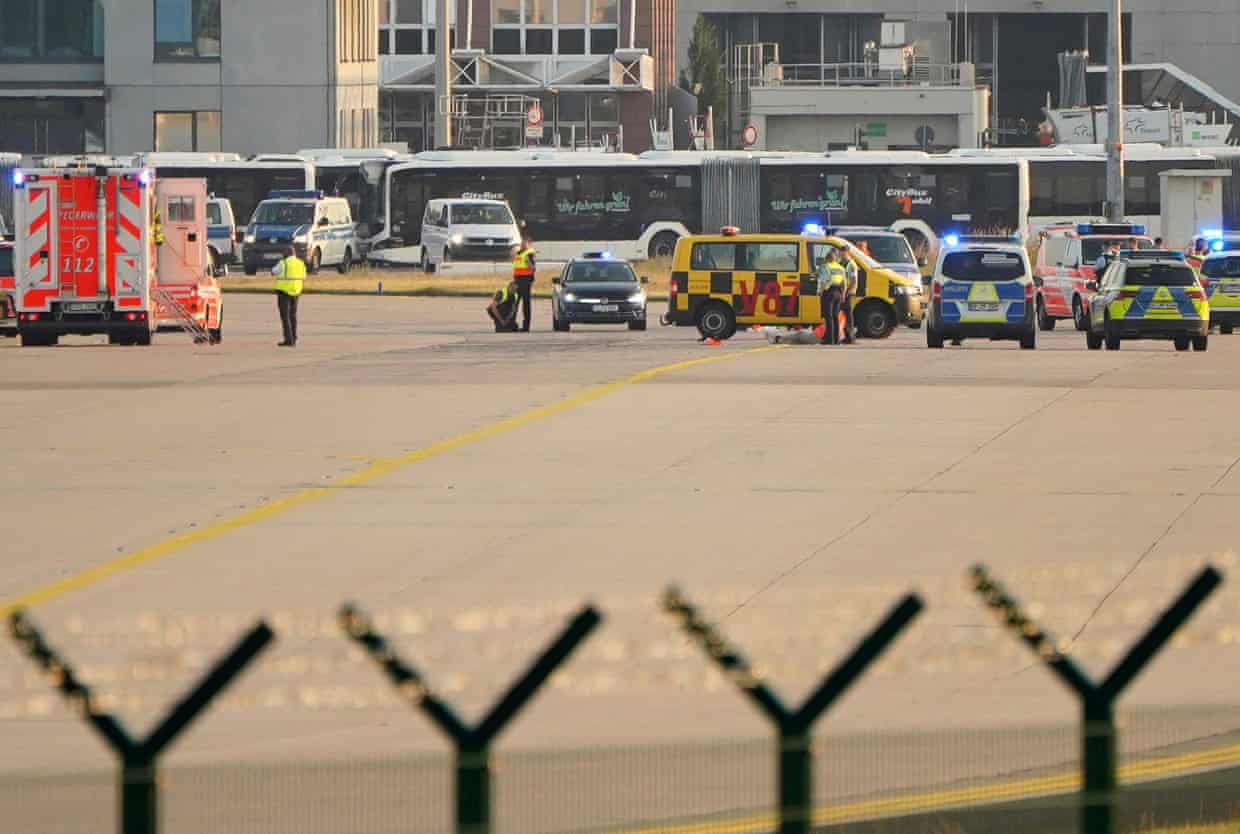
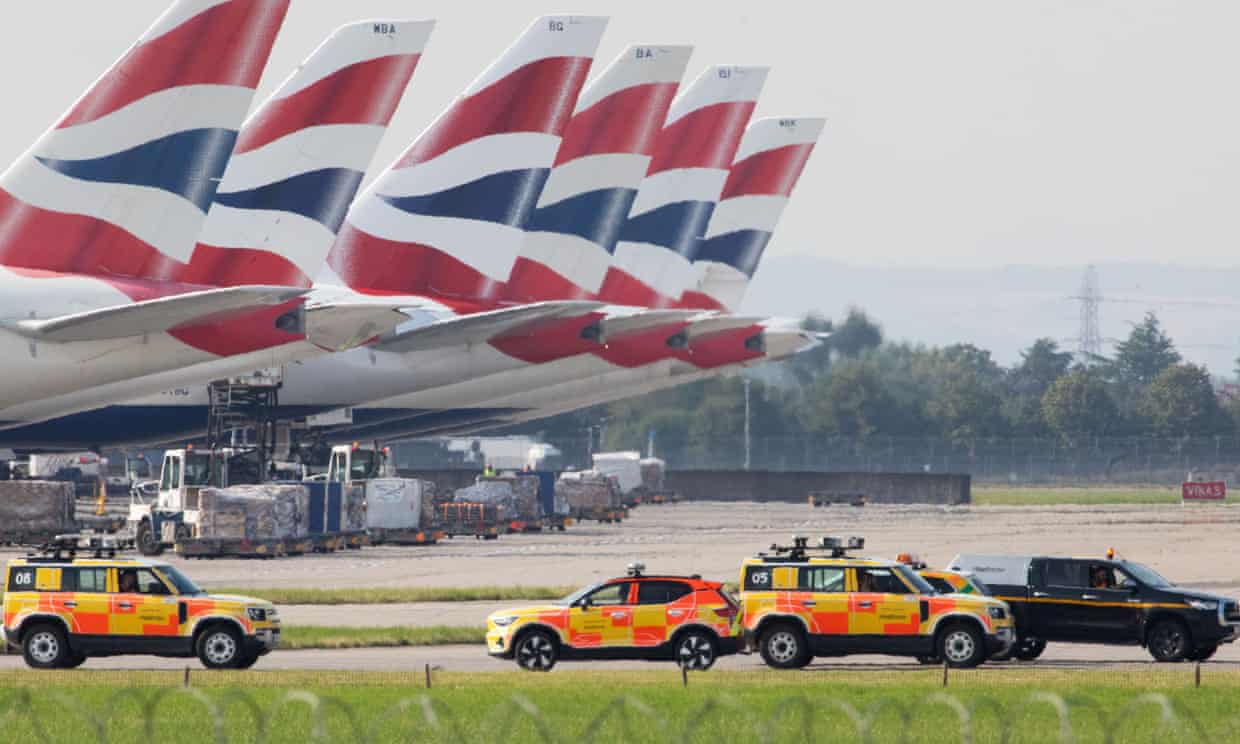
    Police, security and medical staff parked their vehicles after Letzte Generation (Last Generation) activists staged a demonstration at Frankfurt airport. Photograph: Timm Reichert/Reuters

    Flights at Germany’s busiest airport ‘gradually resuming’ on second day of coordinated ‘oil kills’ protests

    Climate activists have disrupted flights at Frankfurt and Oslo airports on the second day of coordinated “oil kills” protests across Europe and North America.

    Demanding an end to fossil fuels by 2030, supporters of Letzte Generation (Last Generation) briefly suspended flights at Frankfurt airport on Thursday morning. The activists said they had cut a wire fence, entered on bicycles and skateboards and glued themselves to the tarmac.

    In Oslo, protesters from Folk Mot Fossilmakta and Scientist Rebellion Norway caused large queues by blocking a check-in lane with a banner that read: “Fast track to phase out.”

    “I would rather not be here today, but I can no longer stand and watch as our elected officials do too little, too slowly,” said Ina Nagler, a climate researcher who took part in the Oslo protest. “The science is clear: We must drastically reduce the use of fossil fuels during this decade.”

    The protests, which seek to pressure governments to speed the shift to a clean economy, have hit airports during the start of the busy summer season. On Wednesday morning, activists disrupted travel plans at airports from Helsinki to Barcelona. Further airport protests are expected in the US and Canada on Thursday.

    …

    https://www.theguardian.com/world/article/2024/jul/25/frankfurt-airport-temporarily-halts-flights-after-climate-activists-stage-demonstration

  • ‘Oil Kills’ protesters disrupt flights at airports across Europe in wave of action

    Spread the love

    https://www.theguardian.com/world/article/2024/jul/24/oil-kills-protesters-disrupt-flights-at-airports-across-europe-in-wave-of-action

    Police and Heathrow airport security were on high alert after Just Stop Oil protesters were arrested at the airport’s perimeter fence. Photograph: Kristian Buus/In Pictures/Getty Images

    Ten activists arrested at Heathrow, over 30 flights cancelled at Cologne-Bonn, and planes delayed or diverted

    Climate activists acting under the banner “oil kills” have glued themselves to the tarmac and grounded flights across Europe as holidaymakers attempt to make summer getaways.

    In a wave of protests at airports from Oslo to Barcelona, activists disrupted flights and demanded that rich and polluting countries phase out fossil fuels by 2030. The protests, which the activists said had led to several arrests, came a day after climate scientists logged the world’s hottest day on record.

    An activist taking part in the protest at Cologne-Bonn airport holds her hand glued to the runway. Photograph: Letzte Generation Handout/EPA

    “Ordinary people are taking matters into their own hands today to do what our criminal governments have failed to do,” the campaign said in a statement. “We are putting our bodies on the wheels of the machine of the global fossil economy and saying ‘oil kills’.”

    In Germany, protesters from the climate group Letzte Generation (Last Generation) briefly stopped flights on Wednesday morning after they cut a chain-linked fence and glued themselves to the tarmac at Cologne-Bonn airport. The airport said that 31 flights had been cancelled and six diverted.

    In Austria, activists delayed a flight by refusing to sit down before takeoff while others spilled orange paint in the terminal at Vienna airport. In Switzerland, they blocked roads leading to Zürich and Geneva airports.

    …

    https://www.theguardian.com/world/article/2024/jul/24/oil-kills-protesters-disrupt-flights-at-airports-across-europe-in-wave-of-action

  • Argentine organizations reject attempts by Milei to silence dissent with fear

    Spread the love

    Original article by Pablo Meriguet republished from peoples dispatch under a Creative Commons Attribution-ShareAlike 4.0 (CC BY-SA) license.
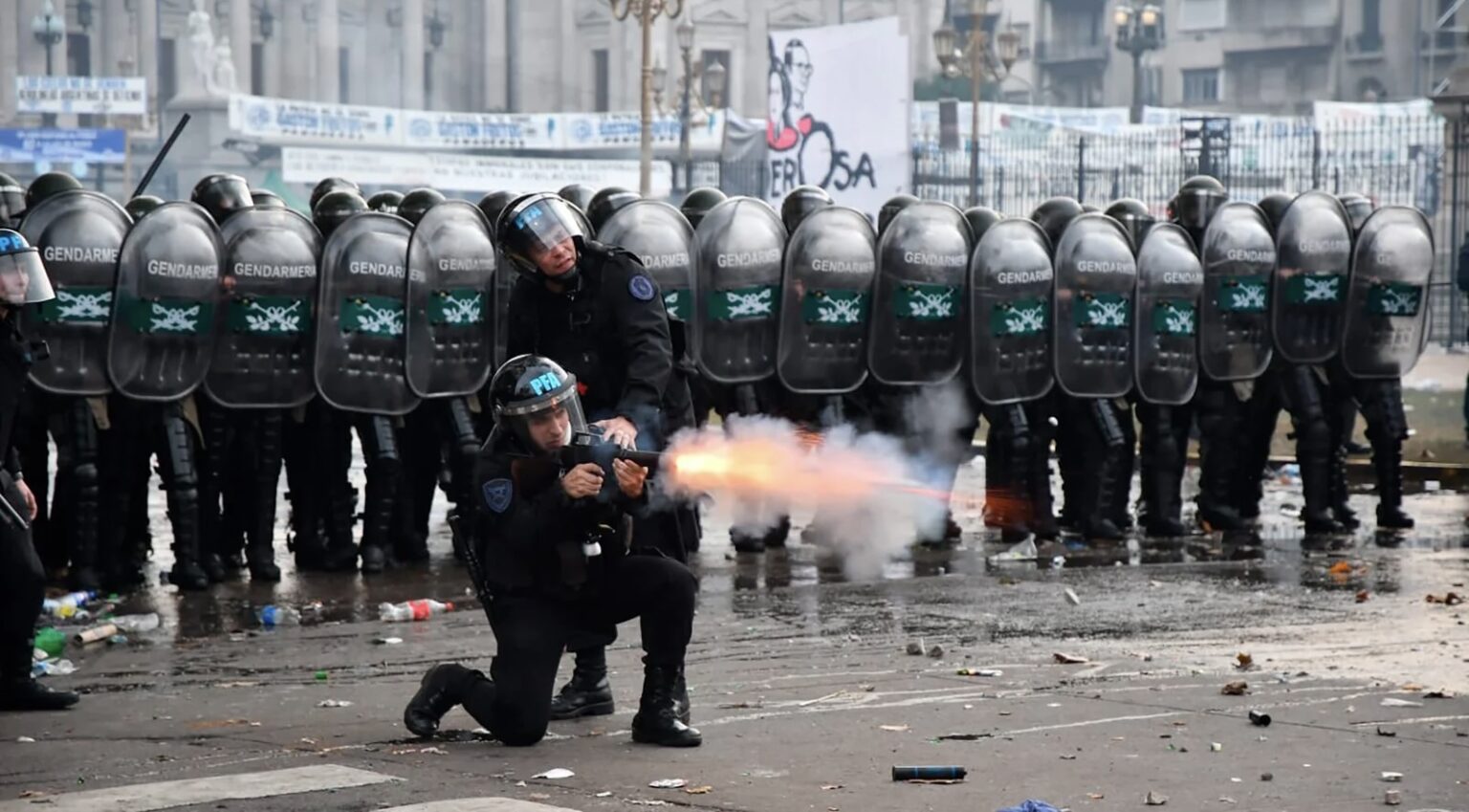
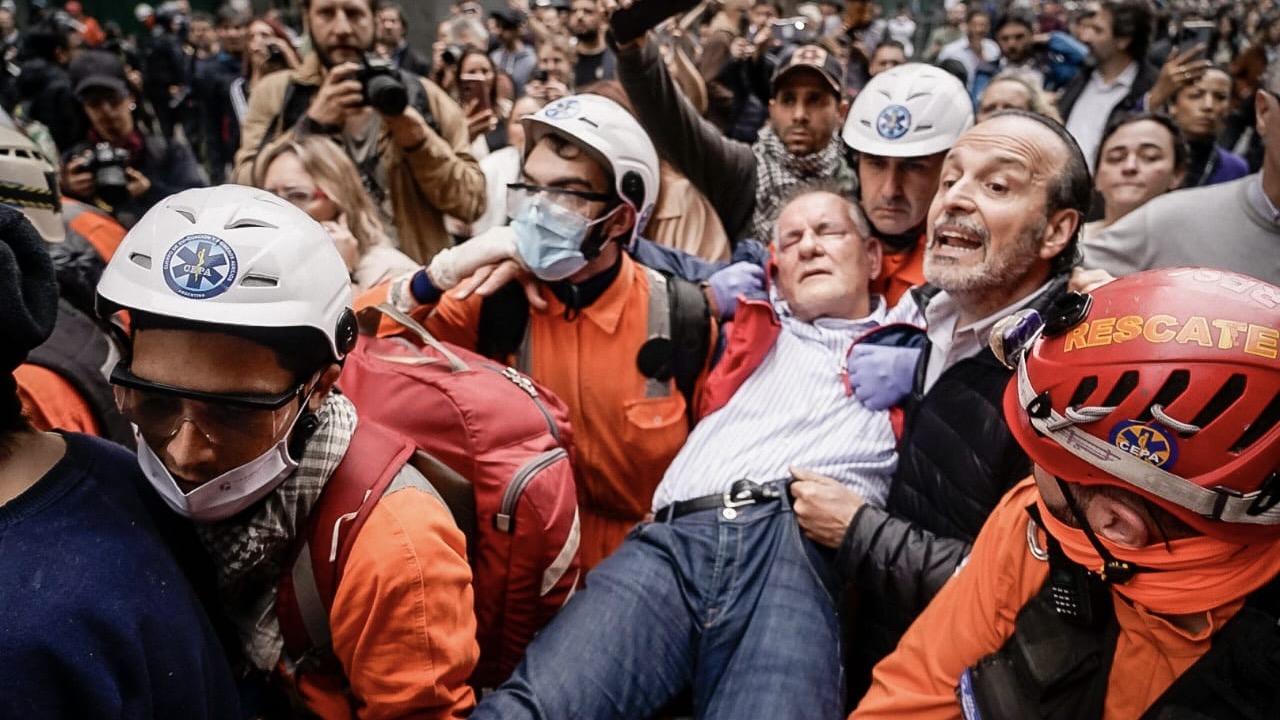
    Police in Argentina brutally repressed a mobilization against Milei’s controversial economic reforms. Photo: UP Diputados

    Over 30 people were detained in Buenos Aires during the brutal repression of the protests against Milei’s economic reform law

    Last week, the Argentine Senate debated the bill called “Law for Bases and Starting Points for the Freedom of Argentines” (Ley Bases), a set of economic and political reforms proposed by the far-right government of Javier Milei. While the Executive sought the necessary votes in the Senate to pass the law, thousands of demonstrators gathered around the legislature to demand that the law be shelved.

    The protests were called by several social organizations and trade unions, including the country’s largest trade union confederations, the General Confederation of Labor (CGT), the Argentine Workers’ Central Union, and the Argentine Workers’ Central Union (Autonomous).

    The action of the police, under the orders of the Minister of Security, Patricia Bullrich, was excessive and brutal. Even lawmakers were not spared the violent repression. Peronist legislators, Eduardo Valdés, Carlos Castagnetto, Leopoldo Moreau, Juan Manuel Pedrini, Carolina Yutrovic and Luis Basterra, denounced that they were beaten by the security forces. In addition, several detainees told press that “they were stripped naked and that pepper spray was thrown at them”.

    Martin Dirroco, a worker detained during the protests, recounted: “We were in Congress and we began to feel the tear gas, our throats began to burn and we began to leave. We heard more and more shots fired; we could see the repression. […] Suddenly a lot of people started to come, we tried to leave and seven motorcycles appeared. The one on the back of the motorcycle was pointing a gun at us. They got off the motorcycle and told us to stay still. They shooted and shouted ‘everybody against the wall’. They started pushing and shoving, holding me and throwing me to the ground. […] We had to sleep in a courtyard with handcuffs on”.

    On Wednesday, June 12, 33 people were arrested, with many held for several days. Carlos Lopez, a left Argentine political leader, told Peoples Dispatch that as of today there are still five people detained on alleged charges of “public intimidation” and “arson”. Lopez comments that some people were even arrested 15 blocks from the Senate, far away from the events for which they are accused. “They are trying to sow terror from the government, the State, so that the population feels fear and shuts its mouth”. In addition, López continues, the detainees did not have adequate access to water and food; some spent more than 15 hours in a police patrol car and many could not speak to their lawyers: “There was intimidation, torture and threats […] We ask for everyone’s solidarity so that this type of action does not happen again,” said López.

    Police launching tear gas canisters at protesters on Wednesday June 12 in Buenos Aires. Photo: Somos Telam

    The President’s Office celebrated the approval of the law and called the demonstrators “terrorists”: “Starting from 38 deputies and 7 senators, with terrorist groups attacking the Congress, having to deploy the Security Forces in defense of democracy, with the political caste resisting and operating until the last moment, and having to resort to the tie-breaker of the Vice President of the Nation, Victoria Villarruel, tonight’s is a triumph of the Argentine people and the first step towards the recovery of our greatness, having approved the most ambitious legislative reform of the last forty years.”

    Several human rights organizations, such as the Grandmothers and Mothers of the Plaza de Mayo, the Permanent Assembly for Human Rights, the Relatives of the Disappeared and Detained for Political Reasons, among others, called for a demonstration on Tuesday June 18 to demand the release of the 16 people that were still detained (including several students and professors) accused of “terrorism”. During a press conference, various relatives of the detainees denounced the injustice of the accusations against the prisoners and affirmed that they are not terrorists and demanded their immediate release.

    Milei’s “Ley Bases”

    At the end of the debate last Wednesday, the law was approved thanks to the vote of Vice President Victoria Villarruel, who broke the tie. The controversial law must be approved a second time in the Chamber of Deputies.

    The reforms of the “Ley Bases” propose a paradoxical transformation of the functioning of the Argentine State. At the same time that they seek to diminish the State’s capacity to control the economy, they strengthen the President’s political power to make economic and political decisions, which will no longer have to be approved by the legislative branch. In other words, the intention is to build a weaker but more agile State to execute President Milei’s neoliberal plan.

    One of the most controversial changes is the creation of the “Incentive Regime for Large Investments” (RIGI, for its initials in Spanish). The purpose of this regime is to reduce the State’s control over large companies that invest more than USD 200 million in the country. The government promises these big companies a reduction in taxes, privileges in the project approval process, and protection of capital from state control for 30 years. RIGI seeks, among other things, the exploitation of natural resources by major companies.

    According to the “Ley Bases”, the President may have “extraordinary powers” for one year if he declares a public emergency in the economic, financial, and energy fields. In this sense, Milei would have several powers that currently only the Legislative has. To achieve its approval in the Senate, the Executive committed itself not to interfere with 15 public agencies, such as the National Service of Food, Health and Quality (SENASA), the National Bank of Genetic Data (which has information on those who disappeared during the last dictatorship), among other institutions. However, the government will be able to legislate through expeditious decrees, which implies, in general, the first great legislative victory for its political project.

    In addition, the “Ley Bases” authorizes the privatization of Intercargo, a state-owned company dedicated to provide services to air travel companies, and Energía Argentina S.A., which is in charge of the extraction and exploration of hydrocarbon deposits, their transportation, and storage. Although Milei wanted to privatize more than 40 public companies, the negotiations forced him to limit his aspirations. Nevertheless, Milei’s major project in this regard seems to be aimed, at first, at the privatization of the mining, energy and fuel sectors.

    Finally, the “Ley Bases” seeks to make a discreet, although controversial, labor reform, as it proposes, among other things, to eliminate penalties for companies that use informal workers, which is currently sanctioned by law.

    While the Executive celebrates its neoliberal legislative victory, the families of the prisoners continue to pressure the justice system to free the detainees and drop the serious charges that could mean several years in prison.

    Original article by Pablo Meriguet republished from peoples dispatch under a Creative Commons Attribution-ShareAlike 4.0 (CC BY-SA) license.
  • Antisemitism: The Big Lie Smearing Campus Protesters

    Spread the love

    Original article by RICHARD ESKOW republished from Common Dreams under Creative Commons (CC BY-NC-ND 3.0). 

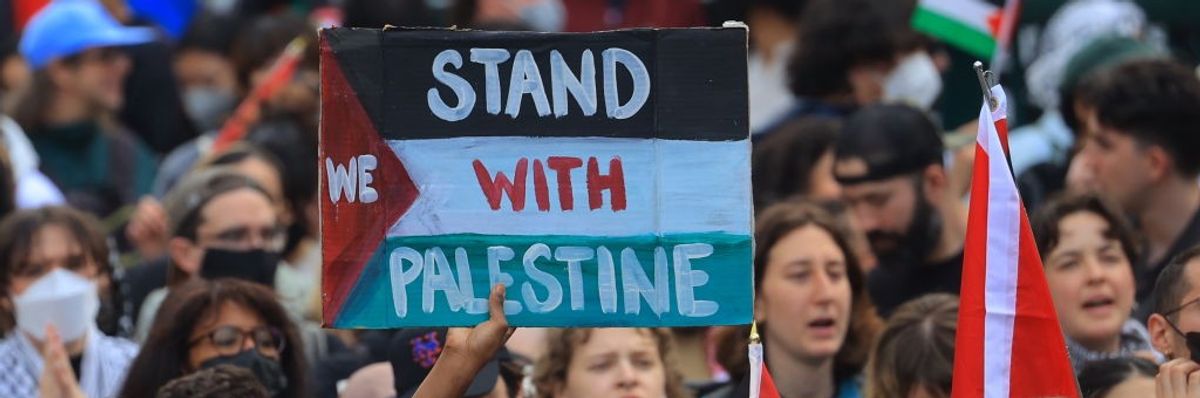
    Pro-Palestinian demonstrators and workers gather and take to the streets to protest against Israeli attacks on Gaza during ”May Day Rally” in New York, United States on May 01, 2024.  (Photo by Selcuk Acar/Anadolu via Getty Images)

    The people who make, report, and teach history should take note: it has never been kind to those who spread Big Lies. This time will be no different.

    Mainstream journalists and politicians have engaged in a campaign of mass slander against U.S. college students protesting the Gaza genocide. Their “antisemitism” Big Lie echoes the racist hate campaigns of the past, inciting hostility toward young people whose only crime is their dedication to justice.

    A newly published survey provides some important context for these protests and undermines the smear campaign against the protesters.

    Students Are Not Antisemitic

    The Chicago Project on Security and Threats (CPOST), a project of the University of Chicago, recently published “Understanding Campus Fears After October 7 and How to Reduce Them,” subtitled “a non-partisan analysis of Antisemitism and Islamophobia among College Students and American Adults.” Robert A. Pape, political scientist and CPOST’s director, writes that its findings “are an opportunity to re-center the national discussion around students and away from politics.” Let’s hope so.

    Understandably, Pape and his colleagues focus on the steps that should be taken to make all students feel safe on campus, regardless of religion, ethnicity, or politics. In doing so, their report includes important findings that deserve wider attention.

    Their “antisemitism’ Big Lie echoes the racist hate campaigns of the past, inciting hostility toward young people whose only crime is their dedication to justice.

    Is there a “climate of antisemitism” on campus? CPOST’s study found that college students are less Islamophobic than the general population, but they are not more antisemitic. The level of student bias against Jews is the same as their bias against Muslims, but no greater.

    Why, then, is there a national debate about campus antisemitism and none about the comparable scourge of Islamophobia? What message does that send to the Muslim students whose fears are being ignored?

    The Protests Aren’t Antisemitic, Either

    House Minority Leader Hakeem Jeffries wants a vote on the “Countering Antisemitism Act,” but neither he nor the president have proposed similar safeguards against Islamophobia. House Speaker Mike Johnson, who said that Columbia protesters have begun “to threaten lives and intimidate and harass people,” has an even more draconian antisemitism bill—also without plans to address Islamophobia.

    President Biden, like the others, has condemned what he calls “antisemitic protests.” That slur is challenged by the Chicago study. The authors found that “while college students are not more antisemitic than the general population,” they are “more anti-zionist.” They also found that “prejudicial antisemitism and anti-zionism are largely separate phenomena,” with an “overwhelming” absence of any overlap between antisemitism and a negative view of Israel.

    We’ve know for decades that the lie which equates anti-zionism with antisemitism serves a political goal by suppressing speech. We now have evidence to back it up.

    “From the River to the Sea”

    One protest slogan has been cited over and over as “antisemitic,” with accusers claiming it calls for genocide against Jews: “From the river to the sea, Palestine will be free.”

    Most students do not use it in anything approaching a genocidal way. The CPOST study found that only 14 percent of Muslim students, or roughly one in seven, interpret that slogan “to mean the expulsion or genocide of Israeli Jews.” That figure is too high, as is the 13 percent of students who believe that violence against Muslims is sometimes justified. But it also tells us that most people who use the slogan are not calling for harm against anyone.

    Does antisemitism exist among [protesters]? Since it is pervasive in this society, the answer is yes. But amplifying a comment or two from a couple of isolated individuals is a totalitarian smear tactic.

    That makes sense, since the phrase can be interpreted nonviolently in at least two ways. One is that a two-state solution should include the territory ceded to Palestine in 1948, which touched both the Jordan River and the Mediterranean Sea. Another is that Israel and Palestine should become a single, democratic, non-racial and non-theocratic state, with rights and safety for all. Under that interpretation, “Palestine will be free” is no more a call to genocide than “South Africa will be free” was a call to kill whites during the anti-apartheid struggle.

    The study does note that the slogan makes two-thirds of Jewish students feel unsafe. For that reason, Pape recommends avoiding it.

    But we now have confirmation that campus officials, politicians, and the media are misleading the public about that phrase. They’re endangering the protesting students and worsening the fears of pro-Israeli students. They should stop.

    Conclusion

    The political scientist Bernard Cohen once wrote that, while the press isn’t always successful and telling people what to think, “it is stunningly successful in telling people what to think about.” The student protests are a textbook example. The debate around these protests is focused on the false charge of antisemitism, not on the moral challenge raised by the protesters.

    Does antisemitism exist among them? Since it is pervasive in this society, the answer is yes. But amplifying a comment or two from a couple of isolated individuals is a totalitarian smear tactic. Republicans did it with the racist Willie Horton ads in 1988. Trump does it when he highlights crimes allegedly committed by immigrants. And politicians, journalists, and college administrators are doing it today with their charges of protester antisemitism.

    CPOST’s moderate recommendations for easing campus fears include, “Clear and immediate communication by college leaders condemning violence and intimidation by students and against students on their campuses.” Instead, those leaders are ordering police violence against protesting students, as they and the political/media elite stoke more fear and hatred against them—even in the wake of the anti-protestor mob violence at UCLA. That isn’t just wrong; it’s a dereliction of duty.

    As leaders, these prominent individuals have been entrusted with the care and protection of the nation’s young people. Instead, they’re slandering them and putting them at risk. Why? To distract us from a genocide.

    The people who make, report, and teach history should take note: it has never been kind to those who spread Big Lies. It won’t be this time, either.

    Original article by RICHARD ESKOW republished from Common Dreams under Creative Commons (CC BY-NC-ND 3.0).