Tag: Reform 2025 Ltd (Reform UK)

  • Trump’s Order to Keep Michigan Coal Plant Running Has Cost $80 Million So Far

    Spread the love

    Original article by Marianne Lavelle republished from Inside Climate News under Creative Common License (CC BY-NC-ND 3.0).
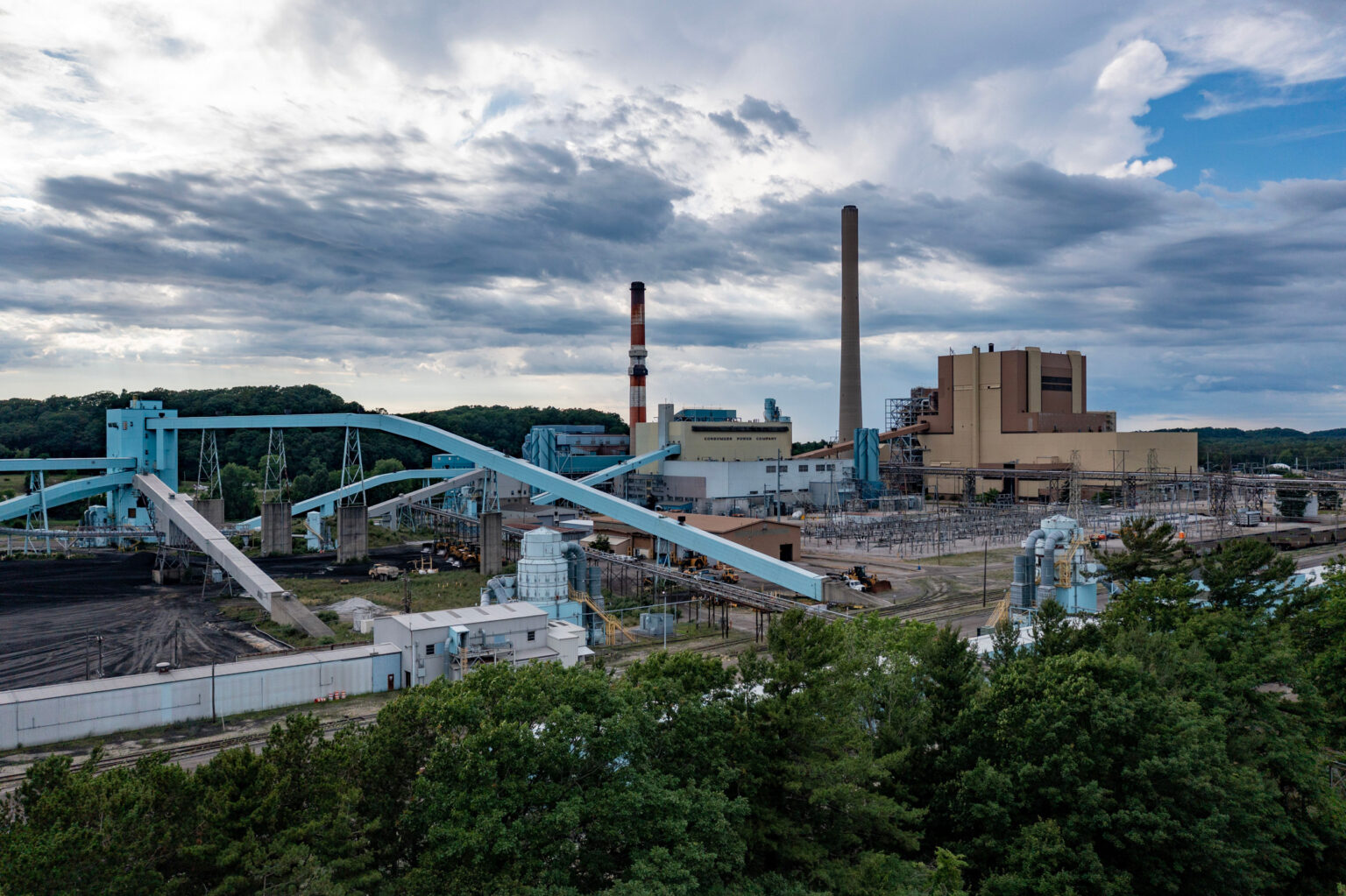
    A view of Consumers Energy’s J.H. Campbell coal-fired power plant in West Olive, Mich. Credit: Jim West/UCG/Universal Images Group via Getty Images

    Midwestern electricity ratepayers will pay the still-mounting tab under a plan Consumers Energy reported to regulators and investors.

    The Trump administration’s emergency order to keep the huge J.H. Campbell coal plant on Lake Michigan operating past its planned retirement date has cost at least $80 million since May, its operator, Consumers Energy, told regulators and investors this week.

    The company said in its third-quarter earnings report Thursday that it would pursue the process laid out in the U.S. Department of Energy’s order for collecting those costs: It will seek payment from ratepayers across the Midwest.

    Even though the peak summer electricity demand season has passed, executives at Consumers, Michigan’s largest energy provider, said that they see no sign of let-up in the emergency orders.

    “We expect those to continue for the long-term,” said CEO Garrick Rochow in a conference call for investors. “And we’re prepared to continue to operate the plant and comply with those orders.”

    He said the costs—$615,385 per day—should be shared beyond the 1.9 million electricity customers of Consumers Energy. The company plans to propose the tab be split among ratepayers (an estimated 42 million to 45 million electricity customers) in the nine states served by the regional electric grid operator, the Midcontinent Independent System Operator (MISO).

    “The benefits go to MISO,” Rochow said. “Not just to our customers, they go to MISO.”

    Rochow said the Trump administration envisioned this approach. “That order from the Department of Energy has laid out a clear path to cost recovery,” he said. Consumers Energy will have to apply to the Federal Energy Regulatory Commission in order to pass the costs to the ratepayers, and states that oppose such a cost allocation could move to intervene in those proceedings.

    U.S. Energy Secretary Chris Wright issued two consecutive 90-day orders—on May 23 and on Aug. 20—to keep the Campbell plant open under the emergency provisions of the Federal Power Act. In the past, such orders have been used to ensure energy delivery at times of natural disasters. But Wright used the act to execute Trump’s agenda to ramp up energy production, saying Campbell needed to stay open to minimize the risk of power outages and address critical grid security issues in the Midwest.

    The Department of Energy did not immediately respond to a request for comment on the Campbell cost figures, nor did MISO. When he extended the Campbell order in August, Wright said that he was directing MISO “to take every step to minimize cost to the American people.”

    “This order will help ensure millions of Americans can continue to access affordable, reliable, and secure baseload power,” he said in that statement.

    But critics say the operation of the 63-year-old plant is generating unnecessary costs as well as pollution. In a September regulatory filing challenging the DOE’s order, a coalition of environmental groups pointed out that even on the day of highest peak demand this summer, MISO had an unused surplus of resources greater than 10 times the power provided by the Campbell plant.

    And indeed, according to recent Environmental Protection Agency data, two of the three units at the Campbell plant were not operating at all for about 30 days of the 131 days from the start of the DOE order through Sept. 30. The third unit at the plant only ran for 18 days. Such stoppages could occur for maintenance or simply because the grid operator did not call on the plant to deliver energy to the grid.

    “Forcing this unnecessary coal plant to keep operating is bilking consumers for the benefit of the coal industry,” said Michael Lenoff, senior attorney for Earthjustice, which is representing the environmental groups. 

    Because DOE did not respond to their petition for reconsideration of the Campbell order within 30 days, the environmental groups and the states of Michigan, Minnesota and Illinois have asked the D.C. Circuit Court of Appeals to review the case. The purpose of the litigation, Lenoff said, is “to stop the administration from harming consumers, trampling markets and unlawfully usurping the authority of states and regulators to make decisions in the public interest.”

    Campbell is by far the largest of three fossil fuel electricity plants that are staying open beyond their planned retirements under Trump administration emergency orders. Campbell released 6.6 million metric tons of carbon in 2023, the most recent year for which data is available. Talen Energy’s Wagner plant near Baltimore and Constellation Energy’s Eddystone plant just south of Philadelphia, both run on oil and natural gas. Some detail on their costs for keeping open may emerge next week, when Talen and Constellation report their third-quarter earnings.

    Consumers Energy, which is continuing to work toward its previously stated goal of achieving net-zero carbon emissions by 2040, had projected that the retirement of the Campbell plant would save its customers $600 million over the next 20 years, or $30 million per year. Instead, running the plant for the past five months has cost close to three times that annual amount.

    Original article by Marianne Lavelle republished from Inside Climate News under Creative Common License (CC BY-NC-ND 3.0).

    Elon Musk urges you to be a Fascist like him, says that you can ignore facts and reality then.
    Elon Musk urges you to be a Fascist like him, says that you can ignore facts and reality then.
    Donald Trump urges you to be a Climate Science denier like him. He says that he makes millions and millions for destroying the planet, Burn, Baby, Burn and Flood, Baby, Flood.
    Donald Trump urges you to be a Climate Science denier like him. He says that he makes millions and millions for destroying the planet, Burn, Baby, Burn and Flood, Baby, Flood.
    Nigel Farage urges you to ignore facts and reality and be a climate science denier like him and his Deputy Richard Tice. He says that Reform UK has received £Millions and £Millions from the fossil fuel industry to promote climate denial and destroy the planet.
    Nigel Farage urges you to ignore facts and reality and be a climate science denier like him and his Deputy Richard Tice. He says that Reform UK has received £Millions and £Millions from the fossil fuel industry to promote climate denial and destroy the planet.
  • Fossil fuel projects around the world threaten the health of 2bn people

    Spread the love

    https://www.theguardian.com/environment/2025/nov/12/fossil-fuel-projects-health-research

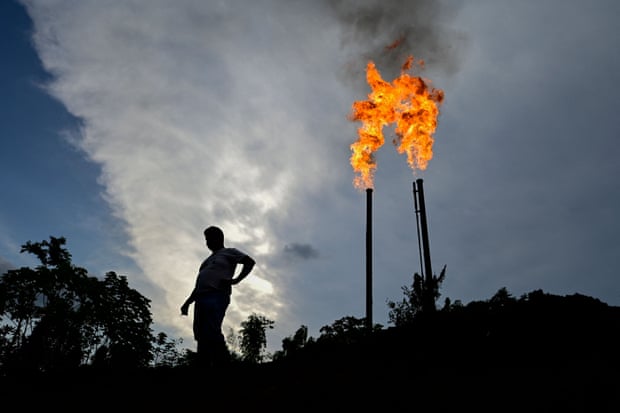
    Ecuadorian activist Donald Moncayo Jiménez stands next to a gas flare from a refinery in the Sucumbíos province of Ecuador, on 14 January 2023. Photograph: Pedro Pardo/AFP/Getty Images

    Exclusive: ‘Deep-rooted injustices’ affect billions of people due to location of wells, pipelines and other infrastructure

    A quarter of the world’s population lives within three miles (5km) of operational fossil fuel projects, potentially threatening the health of more than 2 billion people as well as critical ecosystems, according to first-of-its-kind research.

    A damning new report by Amnesty International, shared exclusively with the Guardian, found that more than 18,300 oil, gas and coal sites are currently distributed across 170 countries worldwide, occupying a vast area of the Earth’s surface.

    Proximity to drilling wells, processing plants, pipelines and other fossil fuel facilities elevates the risk of cancer, respiratory conditions, heart disease, premature birth and death, as well as posing grave threats to water supplies and air quality, and degrades land.

    Almost half a billion (463 million) people, including 124 million children, now live within 0.6 miles (1km) of fossil fuels sites, while another 3,500 or so new sites are currently proposed or under development that could force 135 million more people to endure fumes, flares and spills, according to Extraction Extinction: Why the Lifecycle of Fossil Fuels Threatens Life, Nature, and Human Rights.

    Most active projects have created pollution hotspots, turning nearby communities and critical ecosystems into so-called sacrifice zones – heavily contaminated areas where low-income and marginalized groups bear the disproportionate burden of exposure to pollution and toxins.

    …

    Article continues at https://www.theguardian.com/environment/2025/nov/12/fossil-fuel-projects-health-research

    Elon Musk urges you to be a Fascist like him, says that you can ignore facts and reality then.
    Elon Musk urges you to be a Fascist like him, says that you can ignore facts and reality then.
    Donald Trump urges you to be a Climate Science denier like him. He says that he makes millions and millions for destroying the planet, Burn, Baby, Burn and Flood, Baby, Flood.
    Donald Trump urges you to be a Climate Science denier like him. He says that he makes millions and millions for destroying the planet, Burn, Baby, Burn and Flood, Baby, Flood.
    Nigel Farage urges you to ignore facts and reality and be a climate science denier like him and his Deputy Richard Tice. He says that Reform UK has received £Millions and £Millions from the fossil fuel industry to promote climate denial and destroy the planet.
    Nigel Farage urges you to ignore facts and reality and be a climate science denier like him and his Deputy Richard Tice. He says that Reform UK has received £Millions and £Millions from the fossil fuel industry to promote climate denial and destroy the planet.
  • Who supports Reform and why? The charts that show who favours Farage’s party

    Spread the love

    https://www.theguardian.com/politics/2025/nov/13/who-votes-for-reform-and-why-charts-that-show-who-supports-farage-party

     Composite: Reuters/The Guardian

    Based on the largest poll of supporters yet, these charts and maps show five distinct groups that could hand Reform a majority

     The real Reform voters have been revealed – it’s a slapdash coalition Farage will struggle to hold together

    Research based on a poll of 11,000 Reform UK supporters, the biggest survey of its kind, tells us more about who is intending to vote for the party than has been previously known.

    The in-depth polling analysis from Hope Not Hate reveals a voter coalition that stretches from struggling workers and frustrated graduates to wealthy retirees, in places from Hitchin to Runcorn.

    While immigration is often viewed as the defining issue for Reform supporters, the data shows a far more complex picture. This diverse coalition is deeply divided on big issues such as the economy, the climate crisis and the role of government.

    …

    Who are the Reform supporters?

    The research divides them into five groups, based on their attitudes towards different issues. These groups are the “working right”, “hardline conservatives”, “squeezed stewards”, “contrarian youth” and “reluctant reformers”. They differ in some key ways.

    …

    Anki Deo, who leads the policy and insights team at Hope Not Hate, says that in “an era of hyper-marginal politics where election results are decided by just a few percentage points”, identifying these groups and where they live is crucial.

    She adds: “For those of us desperate to prevent a Farage-led government in 2029, this research shows us that not all is lost. Reform UK voters do not fit a single profile or ideology. Far from a homogenous group, it is a broad coalition, with many voters having quite different and contradictory views from each other.

    …

    https://www.theguardian.com/politics/2025/nov/13/who-votes-for-reform-and-why-charts-that-show-who-supports-farage-party is recommended

    Nigel Farage explains the politics of Reform UK: Racism, Fake anti-establishmentism, Deregulation, Corporatism, Climate Change Denial, Mysogyny and Transphobia.
    Nigel Farage explains the politics of Reform UK: Racism, Fake anti-establishmentism, Deregulation, Corporatism, Climate Change Denial, Mysogyny and Transphobia.
    Nigel Farage urges you to ignore facts and reality and be a climate science denier like him and his Deputy Richard Tice. He says that Reform UK has received £Millions and £Millions from the fossil fuel industry to promote climate denial and destroy the planet.
    Nigel Farage urges you to ignore facts and reality and be a climate science denier like him and his Deputy Richard Tice. He says that Reform UK has received £Millions and £Millions from the fossil fuel industry to promote climate denial and destroy the planet.
    Nigel Farage reminds you that he's the man that brought you Brexit and asks what could possibly go wrong.
    Nigel Farage reminds you that he’s the man that brought you Brexit and asks what could possibly go wrong.
  • No time to recover: Hurricane Melissa and the Caribbean’s compounding disaster trap as the storms keep coming

    Spread the love
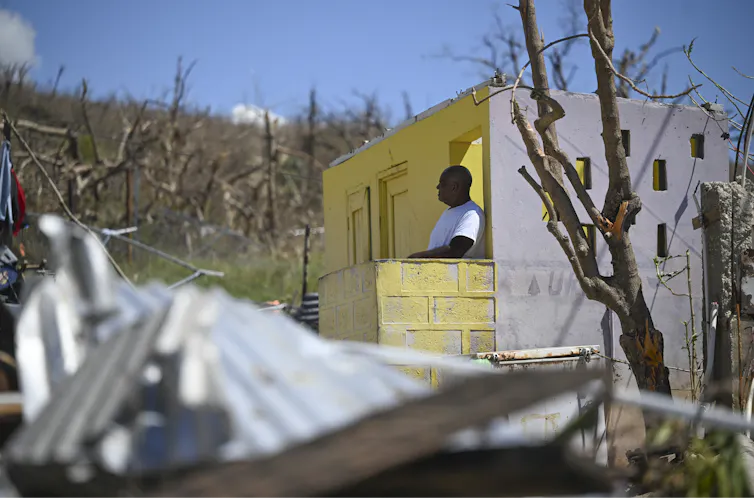
    Hurricane Melissa tore off roofs and stripped trees of their leaves, including in many parts of Jamaica hit by Hurricane Beryl a year earlier. Ricardo Makyn/AFP via Getty Images

    Farah Nibbs, University of Maryland, Baltimore County

    Headlines have been filled with talk of the catastrophic power of Hurricane Melissa after the Category 5 storm devastated communities across Jamaica, Cuba and Haiti in October 2025. But to see this as a singular disaster misses the bigger picture: Melissa didn’t hit stable, resilient islands. It hit islands still rebuilding from the last hurricane.

    Jamaica was still recovering from Hurricane Beryl, which sideswiped the island in July 2024 as a Category 4 storm. The parish of St. Elizabeth – known as Jamaica’s breadbasket – was devastated. The country’s Rural Agriculture Development Authority estimated that 45,000 farmers were affected by Beryl, with damage estimated at US$15.9 million.

    An aerial view of a city damaged by the hurricane. Mud is in the streets and buildings have lost roofs and walls.
    St. Elizabeth Parish, Jamaica, suffered intense damage from both Hurricane Melissa in October 2025 and Hurricane Beryl a year earlier. Ivan Shaw/AFP via Getty Images

    In Cuba, the power grid collapsed during Hurricane Oscar in October 2024, leaving 10 million people in darkness. When Melissa arrived, it struck the same fragile infrastructure that Cubans had barely begun to rebuild.

    Haiti’s fragile situation before Hurricane Melissa cannot be overstated. The island nation was still reeling from years of cascading disasters – deadly hurricanes, political instability, gang violence, an ongoing cholera crisis and widespread hunger – with over half the population already in need of humanitarian assistance even before this storm hit.

    This is the new reality of the climate crisis: Disasters hitting the Caribbean are compounding and can trigger infrastructure collapse, social erosion and economic debt spirals.

    The compounding disaster trap

    I study disasters, with a focus on how Caribbean island systems absorb, adapt to and recover from recurring shocks, like the nations hit by Melissa are now experiencing.

    It’s not just that hurricanes are more frequent; it’s that the time between major storms is now shorter than the time required for a full recovery. This pulls islands into a trap that works through three self-reinforcing loops:

    Infrastructure collapse: When a major hurricane hits an already weakened system, it causes simultaneous infrastructure collapses. The failure of one system – such as power – cascades, taking down water pumps, communications and hospitals all at once. We saw this in Grenada after Hurricane Beryl and in Dominica after Hurricane Maria. This kind of cascading damage is now the baseline expectation for the Caribbean.

    Economic debt spiral: When countries exhaust their economic reserves on one recovery, borrow to rebuild and are then hit again while still paying off that debt, it becomes a vicious cycle.

    Hurricane Ivan, which struck the region in 2004, cost Grenada over 200% of its gross domestic product; Maria, in 2017, cost Dominica 224% of its GDP; and Dorian, in 2019, cost the Bahamas 25% of GDP. With each storm, debt balloons, credit ratings drop and borrowing for the next disaster becomes more expensive.

    Social erosion: Each cycle weakens the human infrastructure, too. More than 200,000 people left Puerto Rico for the U.S. mainland in Maria’s aftermath, and nearly one-quarter of Dominica’s population left after the same storm. Community networks fragment as people leave, and psychological trauma becomes layered as each new storm reopens the wounds of the last. The very social fabric needed to manage recovery is itself being torn.

    The interior of a school that has been torn apart by hurricane winds. Desks and debris are scattered and light shines through the rafters
    When schools are heavily damaged by storms, like this one in Jamaica that lost its roof during Hurricane Melissa, it’s harder for families to remain. Ricardo Makyn/AFP via Getty Images

    The trap is that all three of these loops reinforce each other. A country can’t rebuild infrastructure without money. It can’t generate economic activity without infrastructure. And it can’t retain the skilled workforce needed for either when people are fleeing to safer places.

    Rebuilding a system of overlapping recoveries

    The Caribbean is not merely recovering from disasters – it is living within a system of overlapping recoveries, meaning that its communities must begin rebuilding again before fully recovering from the last crisis.

    Each new attempt at rebuilding happens on the unstable physical, social and institutional foundations left by the last disaster.

    The question isn’t whether Jamaica will attempt to rebuild following Melissa. It will, somehow. The question is, what happens when the next major storm arrives before that recovery is complete? And the one after that?

    Without fundamentally restructuring how we think about recovery – moving from crisis response to continuous adaptation – island nations will remain trapped in this loop.

    The way forward

    The compounding disaster trap persists because recovery models are broken. They apply one-size-fits-all solutions to crises unfolding across multiple layers of society.

    Breaking free requires adaptive recovery at all levels, from household to global.

    A line of people pass bags of food items one to another.
    Residents formed a human chain among the hurricane debris to pass food supplies from a truck to a distribution center in the Whitehouse community in Westmoreland, an area of Jamaica hit hard by Hurricane Melissa in October 2025. Ricardo Makyn/AFP via Getty Images

    At the household level: Helping amid trauma

    Recovery isn’t just about repairing a damaged roof. When families experience back-to-back disasters, trauma compounds. Direct cash assistance and long-term, community-based mental health services can help restore dignity.

    Cash transfers allow families to address their own needs, stimulate local economies and restore control to people whose lives have been repeatedly upended.

    At community level: Mending the social fabric

    Repairing the “social fabric” means investing in farmer cooperatives, neighborhood associations and faith groups – networks that can lead recovery from the ground up.

    Local networks are often the only ones capable of rebuilding trust and participation.

    At the infrastructure level: Breaking the cycle

    The pattern of rebuilding the same vulnerable roads or power lines only to see them wash away in the next storm fails the community and the nation. There are better, proven solutions that prepare communities to weather the next storm:

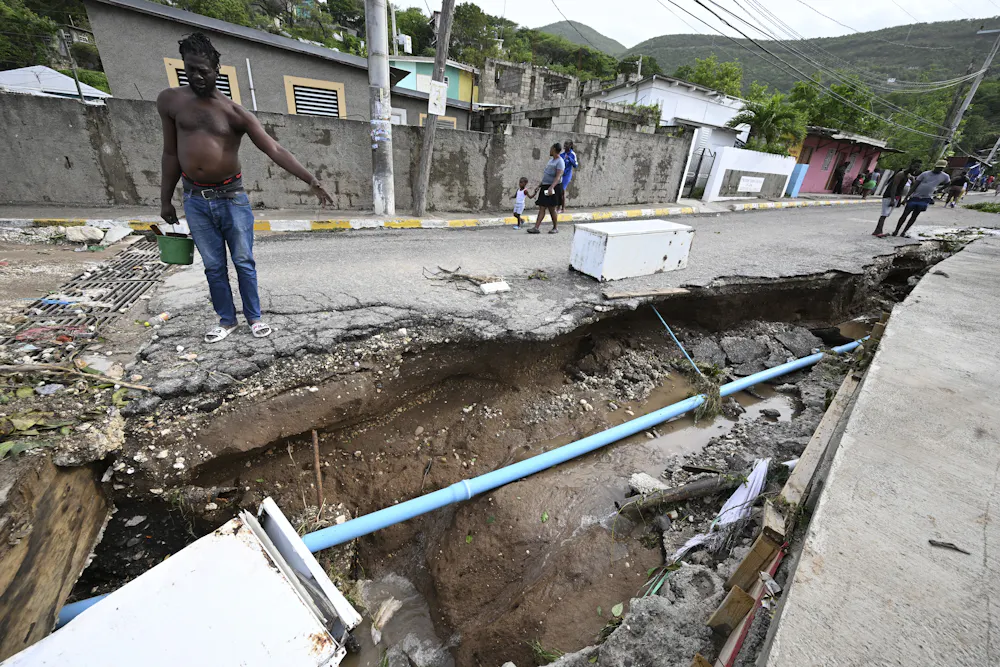
    A man looks into an open drainage area that has been torn up out by the storm
    Hurricanes can damage infrastructure, including water and drainage systems. Hurricane Beryl left Jamaican communities rebuilding not just homes but also streets, power lines and basic infrastructure. Ricardo Makyn/AFP via Getty Images

    At the global level: Fixing the debt trap

    None of this is possible if recovery remains tied to high-interest loans. There are ways for internal financial institutions and global development lenders to allow for breathing room between disasters:

    The current international disaster finance system, controlled by global lenders and donors, requires countries to prove their losses after a disaster in order to access assistance, often resulting in months of delay. “Proof” is established by formal evaluations or inspections, such as by the United Nations, and aid is released only after meeting certain requirements. This process can stall recovery at the moment when aid is needed the most.

    The bottom line

    The Caribbean needs a system that provides support before disasters strike, with agreed-upon funding commitments and regional risk-pooling mechanisms that can avoid the delays and bureaucratic burden that slow recovery.

    What’s happening in Jamaica, Cuba and Haiti today is a glimpse of what’s coming for coastal and island communities worldwide as climate change accelerates. In my view, we can either learn from the Caribbean’s experiences and redesign disaster recovery now or wait until the trap closes around everyone.

    Farah Nibbs, Assistant Professor of Emergency and Disaster Health Systems, University of Maryland, Baltimore County

    This article is republished from The Conversation under a Creative Commons license. Read the original article.

    Elon Musk urges you to be a Fascist like him, says that you can ignore facts and reality then.
    Elon Musk urges you to be a Fascist like him, says that you can ignore facts and reality then.
    Donald Trump urges you to be a Climate Science denier like him. He says that he makes millions and millions for destroying the planet, Burn, Baby, Burn and Flood, Baby, Flood.
    Donald Trump urges you to be a Climate Science denier like him. He says that he makes millions and millions for destroying the planet, Burn, Baby, Burn and Flood, Baby, Flood.
    Nigel Farage urges you to ignore facts and reality and be a climate science denier like him and his Deputy Richard Tice. He says that Reform UK has received £Millions and £Millions from the fossil fuel industry to promote climate denial and destroy the planet.
    Nigel Farage urges you to ignore facts and reality and be a climate science denier like him and his Deputy Richard Tice. He says that Reform UK has received £Millions and £Millions from the fossil fuel industry to promote climate denial and destroy the planet.

  • COP30: Ode to the Amazon

    Spread the love

    https://www.vaticannews.va/en/world/news/2025-11/ode-to-the-amazon-cop-30-brazil-belem-indigenoous-climate-change.html

    The Rio Guajará (Guajará River), part of the vast Amazon River delta 

    As COP30 kicks off in Belém, Brazil, we look at the significance of hosting this year’s UN climate conference in the heart of the Amazon rainforest.

    The world’s largest rainforest – home to more species of plants and animals than anywhere else on Earth – is opening its doors, giving humanity a chance to do right by the planet that hosts it. As we walk through the rainforest, we are humbled, as it reminds us that it is the heartbeat and the lungs of our planet.

    Here in Belém, “the gateway to the Amazon”, life moves in time with nature. The air is thick with humidity, sudden tropical showers fall, followed by the hum of insects and the call of birds. Vultures circle above, herons perch on the riverbanks, and capybaras wander through the green patches that break the city’s skyline. Coconut water stalls line the streets, purple açaí leaves a natural liner around the lips of the men, women and children who eat it – with their fish or in their milkshakes. Even amongst the hustle and bustle, as the streets fill up, Belém is very clearly inseparable from the forest that cradles it.

    …

    Representing the Holy See just prior to the opening of COP30, at the leaders’ summit on 7 November, Vatican Secretary of State, Cardinal Pietro Parolin, reminded delegates of Pope Leo XIV’s message: “If you want to cultivate peace, care for creation.” Cardinal Parolin reminded world leaders that the climate crisis is not only a question of technology or finance, but of justice and solidarity – pointing out that ‘those in the most vulnerable situations are the first to suffer,’ and he called for COP30 to become ‘a sign of hope’ in a world already ‘in flames’ from both environmental and human conflict. 

    His words echoed those of Pope Francis in Laudato si’, who wrote that “we have no such right” to destroy creation, reminding us that humanity’s vocation is not to dominate the earth but to till and keep it – to care for the world and for every creature that shares it with us. 

    The message is clear: caring for the planet is inseparable from caring for one another.

    As delegates gather in Belém over the next two weeks, the world will watch for commitments that can bring together words and action, pray for funding that reaches the communities protecting the world’s organs, and hope for agreements that honour both people and planet.

    https://www.vaticannews.va/en/world/news/2025-11/ode-to-the-amazon-cop-30-brazil-belem-indigenoous-climate-change.html

    Orcas comment on killer apes destroying the planet by continuing to burn fossil fuels.
    Orcas comment on killer apes destroying the planet by continuing to burn fossil fuels.
    Donald Trump urges you to be a Climate Science denier like him. He says that he makes millions and millions for destroying the planet, Burn, Baby, Burn and Flood, Baby, Flood.
    Donald Trump urges you to be a Climate Science denier like him. He says that he makes millions and millions for destroying the planet, Burn, Baby, Burn and Flood, Baby, Flood.
    Nigel Farage urges you to ignore facts and reality and be a climate science denier like him. He says that Reform UK has received millions and millions from the fossil fuel industry to promote climate denial and destroy the planet.
    Nigel Farage urges you to ignore facts and reality and be a climate science denier like him. He says that Reform UK has received millions and millions from the fossil fuel industry to promote climate denial and destroy the planet.