Shetland Schoolchildren Study in Classrooms Sponsored by Norwegian Oil Giant

Spread the love

Original article by Ellen Ormesher republished from DeSmog.
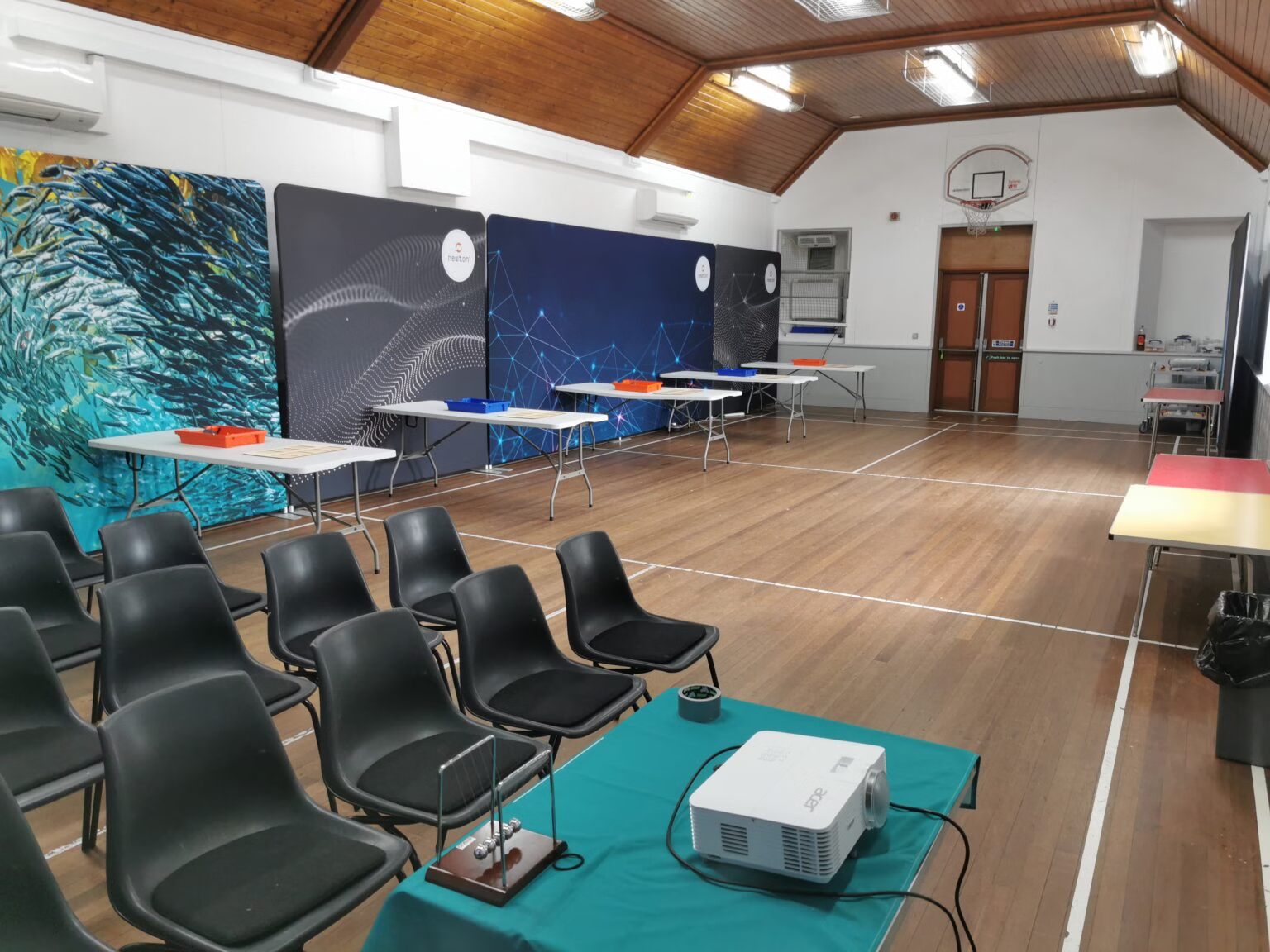
A mobile “Newton Room” classroom operating in Scotland. Credit: Scott O’Hara

Critics fear that Equinor’s latest UK education deal is aimed at quelling opposition to North Sea drilling.

This story was published in partnership with Norway’s E24.

Norwegian oil company Equinor is spending more than £200,000 to sponsor science classrooms in the Shetland Islands, as it seeks approval for plans to develop the vast Rosebank oilfield 80 miles off the coast.

Opponents of Rosebank — the largest new oil and gas field in the North Sea — have accused Equinor of using its deep pockets to dilute concerns over further drilling. Developing the project would result the release of millions of tonnes of planet-heating carbon dioxide (CO2) emissions when the oil it pumps is burned.

Ariane Burgess, a Scottish Green Member of the Scottish Parliament, said Equinor’s backing for the classrooms was “concerning.”

“The timing and location of these investments raise questions about the motives behind them, particularly in light of Equinor’s broader strategy to secure social license to operate in sensitive areas,” said Burgess, one of seven Scottish Green law-makers in the 129-seat assembly in Edinburgh.

The pop-up classroom — known as a “Newton Room” — launched in March and aims to reach 1,000 children aged 10 to 14 across the archipelago of 20,000 people over the next two years, said Highlands and Islands Enterprise, a Scottish agency partnering on the project.

The classroom will be set up in community centres near primary and secondary schools on several of Shetland’s 16 inhabited islands, taking in the Shetland mainland, Unst, Foula, Yell and Fair Isle.

Equinor, which is majority-owned by the Norwegian state, said the project would deliver “pioneering, face-to-face” programmes to develop science, technology, engineering and mathematics skills. The decision to fund the initiative had “no link” to Equinor’s plan to develop Rosebank, and it had declined an opportunity to include its corporate logo, the company said.

“We are proud to support the first Shetland mobile Newton Room and to assist its core operations in the Highlands and Islands,” said Alice Baxter, Equinor’s UK spokesperson. “We look forward to seeing how the mobile Newton Room benefits the wider Shetland community and are delighted to be a key partner in this great programme for the region.”
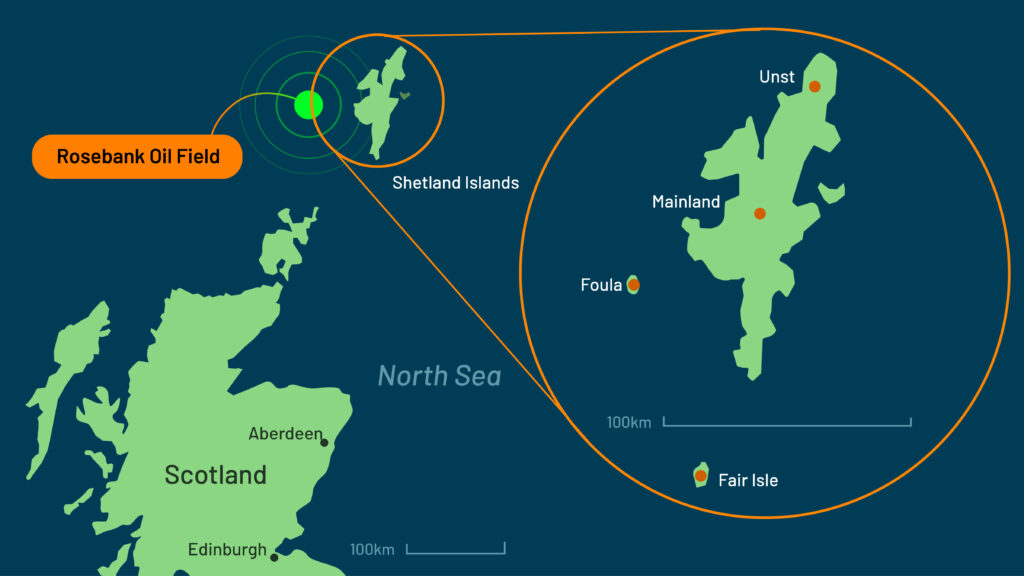
Credit: Sabrina Bedford

‘Brainwash Children’

Equinor spent a total of $82.7 million on sponsorships between 2020 and 2024, with science, education and research as the main focus, according to a government response to a parliamentary question submitted by Lars Haltbrekken, an MP for the Socialist Left Party, on June 16.

Haltbrekken, a long-time critic of Equinor’s 30-year history of sponsoring education in Norway, had submitted the question in response to reports in Norwegian media detailing the company’s backing for a computer game aimed at UK schoolchildren. The game, called EnergyTown, was developed in partnership with London-based marketing agency We Are Futures and the Association for Science Education, a professional teachers’ body.

Climate campaigners said the game crossed the line between education and promoting fossil fuels because it portrayed renewable energy as “less reliable.”

EnergyTown was part of a two-year-old science education initiative called Wonderverse which has reached over 80,000 schoolchildren in the UK, according to Equinor’s website. Website copy that has since been deleted described Wonderverse as designed to “build future talent pipelines and secure permission to operate at a time of sensitivity around fossil fuels, particularly in light of approval for the Rosebank development.” We Are Futures did not respond to a request for comment.

“[Equinor] is trying to brainwash children into thinking it has the solution to the climate crisis, when in reality, fossil fuels are the reason we are struggling with the climate crisis today,” Haltbrekken told DeSmog. 

Equinor, formerly known as Statoil, was the founding partner of the Newton Rooms mobile classroom programme developed by the nonprofit FIRST Scandinavia in Norway in 2003.

“It’s interesting to see how Equinor has developed a playbook for influencing children in Norway and then copy-pasted it to other countries like Scotland,” said Julie Forchhammer, co-founder of Norwegian climate advocacy group Klimakultur. 

In Scotland, Equinor’s current education partnerships include a deal with the Aberdeen Science Centre, a museum near the Norwegian company’s UK headquarters in Aberdeen, and another with the city’s TechFest annual science festival.

Equinor committed £208,500 for the Shetland Islands mobile classroom project as part of a total package of £385,000 to support the Science Skills Academy education initiative run by Highlands and Islands Enterprise, said Morven Fancey, the agency’s head of housing, skills and population.

“Our core content and supporting educational materials for Newton Room activities were developed at the beginning of the Highland operation and are branded by [Science Skills Academy] independently of any industry involvement,” Fancey said.

Island Opinion Divided

The sponsorship deal with Highlands and Islands Enterprise was agreed in 2023, Fancey said. That was the same year that Equinor won approval for Rosebank from the UK’s former Conservative government, sparking outcry among climate campaigners.

Equinor is now seeking re-approval for Rosebank after Scotland’s highest court dealt a blow to the project in January by ruling the original decision unlawful because it had failed to consider the environmental impacts of burning the fossil fuels extracted from the oilfield.

Opening any new oil and gas fields in the North Sea is incompatible with achieving 2015 Paris Agreement goals of avoiding catastrophic climate change by limiting global warming to 1.5°C, according to a June report by academics at University College London. Burning Rosebank’s oil and gas would produce up to 200 million tonnes of CO2 over the project’s lifetime, which is more than the combined annual emissions of 28-low income countries, wrote one of the report’s authors in an article for The Conversation. 

Opinion over Equinor’s role in sponsoring the classrooms is divided on the Shetland Islands, which have historically benefitted from oil and gas money.

“In Shetland, the fact that our kids have amazing leisure facilities, the roads have no potholes, and the care homes are good is all because of fossil fuels,” said Margaret Goddard, a doctor who lives on the islands of Burra, and who has daughters aged 11 and 14.

But she expressed concerns over the climate crisis, and Equinor’s motives, acknowledging, “These things are very difficult.”

Alex Armitage, a Scottish Green councillor for Shetland Islands Council said he found Equinor’s role “quite dystopian.”

“An oil company that’s making very little effort to reduce carbon emissions and is greenwashing all of its operations is seeking to show that it’s trying to help the next generation,” Armitage said. “Everything it’s doing goes against that.”

Like other oil companies, Equinor has rowed back on its climate commitments in the past year, having announced in February that it would slash planned investment in renewables and low-carbon solutions by around 50 percent between 2024 and 2027. By 2026, Equinor plans to maintain over 95 percent of its energy production from fossil fuels, according to analysis by the environmental law nonprofit ClientEarth.

Equinor holds an 80 percent stake in Rosebank in a joint venture with Ithaca Energy, which is owned by Israel’s Delek Group. In 2023, Delek Group appeared on a UN list of 97 companies whose activities in the West Bank “raised particular human rights concerns.”

‘Extensive Influence’

Oil companies view educational and cultural sponsorships as crucial tools for deflecting pressure from climate activists, influencing legislation, and portraying themselves as gatekeepers to climate solutions, according to a previous DeSmog review of internal industry documents subpoenaed by the U.S Congress as part of an investigation into oil industry disinformation that concluded last year.  

Equinor was not a direct target of the investigation, which focused on the U.S. businesses of ExxonMobil , Chevron, Shell USA Inc. and BP America. The Norwegian company is, however, a member of the American Petroleum Institute lobby group, which described sponsored community groups as among the “best and most influential voices with targeted policymakers on industry issues,” according to a subpoenaed document from October 2017. 

The findings built on previous research showing how the fossil fuel industry has spent nearly a century using educational sponsorships to shape public opinion about energy and the environment. As early as 1928, Standard Oil of California (which became Chevron) was sponsoring educational radio broadcasts that reached millions of American students over decades. Recent programmes include BP’s Science Explorers, a series of free online resources that now reaches over half of UK secondary schools.

In the latest sign of the oil and gas industry seeking to influence young people, DeSmog reported on June 30 that a group of six Canadian fossil fuel companies known as Pathways Alliance had been sponsoring science fairs for children. The finding followed a report issued by the Canadian Association of Physicians for the Environment earlier this year that documented the sector’s “extensive influence on climate education for elementary and secondary school students.”

‘Cynical Tactic’

Equinor has been a sponsor of the Aberdeen Science Centre since 2019, funding the facility and supporting its partnership with Norway’s Vitenfabrikken (The Science Factory), a children’s science museum in the city of Bergen. The two institutions are linked via an initiative called the North Sea Collaboration Project, which develops science and technology activities aimed at children, focused on “carbon emissions reduction solutions” and climate awareness, according to the Aberdeen Science Centre’s website.

Aberdeen Science Centre did not respond to a request for comment.

The TechFest event, which Equinor sponsors alongside BP and Shell, includes Equinor branding in its 2025 programme directory next to listings for workshops aimed at children as young as four. TechFest did not respond to a request for comment.

Through its Hywind floating wind project, Equinor provided £60,000 to transform a disused classroom at Peterhead Academy into what the school called an “ultra-modern” renewables space, complete with screens, break-out areas and turbine models, which opened in 2018, according to trade publication Energy Voice.

Peterhead is also the site of a planned Equinor carbon capture and storage project, which is facing questions over its likely economic viability and climate impact. DeSmog revealed in June that UK Chancellor Rachel Reeves had told Equinor last year that the industry would receive a “quid pro quo” in return for higher taxes on its windfall profits in the form of carbon capture subsidies.

Such programmes reflect a broader oil industry strategy to preserve its reputation among future generations, said Klimakultur’s Forchhammer. “It’s a cynical tactic, but they wouldn’t do it if it wasn’t working.”

Additional reporting by Daniel Shailer, Shetland Times

Original article by Ellen Ormesher republished from DeSmog.
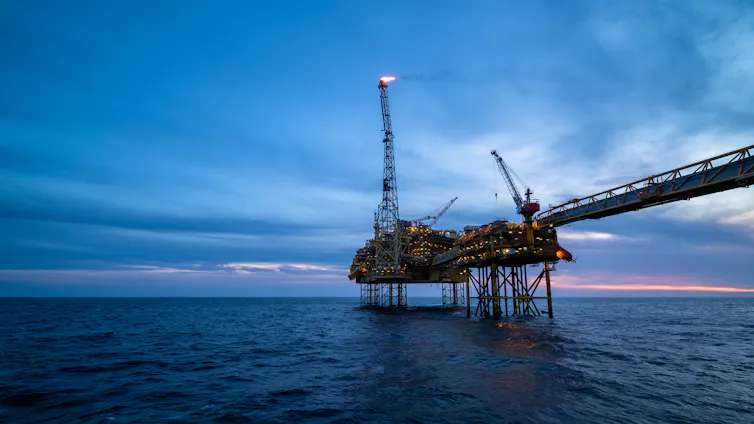
Continue ReadingShetland Schoolchildren Study in Classrooms Sponsored by Norwegian Oil Giant

Rosebank oilfield: why more UK oil means more global emissions

Spread the love
Frode Koppang / shutterstock

Fergus Green, UCL

The UK government will soon face a momentous decision over whether to approve production in the Rosebank oilfield off the coast of Shetland.

Rosebank is the UK’s biggest undeveloped field. Its proponents – the largest of which is Norwegian state-owned petroleum company, Equinor – estimate that it will produce the equivalent of up to 500 million barrels of oil between 2026 and 2051. When burned, this oil will generate up to 200 million tonnes of carbon dioxide, which is more than the combined annual emissions of 28 low-income countries.

Thanks to recent court cases, the climate effects of those “combustion emissions” will need to be taken into account by the government when it decides whether to approve production at Rosebank. In a new report, two colleagues and I reviewed the evidence concerning the implications of new oil and gas fields in the UK.


Get your news from actual experts, straight to your inbox. Sign up to our daily newsletter to receive all The Conversation UK’s latest coverage of news and research, from politics and business to the arts and sciences.


There is a rapidly dwindling global carbon budget for holding temperature increases to below 1.5°C of warming (the more conservative end of the Paris agreement’s temperature goal).

Globally, the emissions from burning the fossil fuels in oil and gas fields and coalmines that are already operating or under development far exceed that budget. In this context, Rosebank’s combustion emissions are highly significant, as they add considerably to that excess.

We also found that the projected production from existing fields is sufficient to meet or exceed global oil and gas demand in modelled economic scenarios in which climate warming is restrained to within 1.5°C. This is further evidence that new fields are not consistent with achieving globally agreed temperature goals.

However, it is often asserted by supporters of new fields that keeping UK oil in the ground won’t reduce global emissions, because another producer will supply the demand and reap the benefits. This is a gross and dangerous oversimplification which, according to the United Nations Environment Programme, “defies basic economics of supply and demand”.

Allowing a new field like Rosebank would increase the supply of oil globally, resulting in a fall in its price which, though small, would cause more oil to be consumed. As UK government advisers at the Climate Change Committee have acknowledged, new petroleum projects “support a larger global market overall” for petroleum. Stopping Rosebank would have the opposite effect, and lead to less oil consumed.

Puffin looks at cliffs
Rosebank is found about 80 miles west of Shetland and its puffins. Philippe Clement / shutterstock

The oil industry likes to trumpet the UK’s relatively low upstream emissions – that is, from the process of extracting oil – compared with those of competitors overseas. But this is a distraction from the bigger issue: the additional greenhouse gases emitted from consuming the extra oil that new fields produce.

A recent peer-reviewed study by economists and experts in the emissions-intensity of oil and gas production concluded that limiting oil supply will almost always lead to lower overall emissions, regardless of the intensity of upstream emissions from different fields. It is highly likely that leaving Rosebank’s oil in the ground will result in lower global greenhouse gases than would occur if the field were developed.

However, this focus on Rosebank’s aggregate emissions ignores two further reasons the field’s development consent should be refused on climate grounds.

A litmus test of climate leadership

First, exploiting new sources of oil supply like Rosebank locks in future oil and gas production, ultimately making it economically, politically and legally harder to wind the industry down.

Second, as the Climate Change Committee also stated, decisions by the UK government concerning petroleum production have an important “signalling effect” internationally and at home.

Internationally, the UK government has rightly acknowledged that climate action “must be accelerated drastically” to keep the average global temperature rise “below 1.5°C”.

The UK has a proud reputation for climate leadership. It was the first country to enact a legally binding framework to reduce greenhouse gas emissions, it rapidly phased out coal-fired power generation, and in 2019 it became the first country to adopt a net zero emissions target.

Building on this legacy, the foreign secretary David Lammy has vowed to “push for the ambition needed to keep 1.5 degrees alive”. But approving Rosebank would signal to the world that the UK government is not sincere about keeping the Paris agreement’s 1.5°C goal “alive”, after all.

Some might think that aspirations to climate leadership are futile given the Trump administration’s “drill, baby, drill” approach to fossil fuels. But Trump’s recklessness at a critical time for global climate efforts makes UK climate leadership more important than ever.

The UK already chairs a suite of international energy transition alliances focused on the international phase-out of coal-fired power, the scale-up of renewables, and the financing of these transitions. It could plug a gap in its influence by rejecting Rosebank and joining the Beyond Oil & Gas Alliance, a “club” of (currently) 25 national and sub-national governments that are working to phase-out oil and gas production and persuade other countries to follow suit.

And it could deepen cooperation with the EU to drive down oil and gas demand and scale up clean energy throughout the region, yielding benefits that will outlive the Trump administration.

Domestically, rejecting Rosebank would send a powerful signal to investors about the sincerity of the government’s commitment to achieve economic growth by becoming a “clean energy superpower”, as the governing Labour party pledged to do at the last election.

But the benefits of clean prosperity must extend to the people and communities caught up in the transition, too. The UK’s North Sea oil and gas reserves, along with the jobs their production supports, are in terminal decline.

Oil and gas workers and the communities in which they are based already face a volatile future. New fields like Rosebank would create some additional jobs in this declining industry. But they cannot arrest its long-term decline.

The government recognises that this transition is already taking place and will continue. With targeted regional and industrial investment, support for workers and their families, and careful planning that meaningfully involves affected communities, the UK has an opportunity to demonstrate to the world how to achieve a just transition away from oil and gas.


Don’t have time to read about climate change as much as you’d like?
Get a weekly roundup in your inbox instead. Every Wednesday, The Conversation’s environment editor writes Imagine, a short email that goes a little deeper into just one climate issue. Join the 45,000+ readers who’ve subscribed so far.


Fergus Green, Associate Professor in Political Theory and Public Policy, UCL

This article is republished from The Conversation under a Creative Commons license. Read the original article.

Continue ReadingRosebank oilfield: why more UK oil means more global emissions

Oil giant funds computer game that promotes fossil fuels to schoolchildren

Spread the love

Original article by Josephine Moulds republished from TBIJ  under a Creative Commons Attribution-NonCommercial-NoDerivs 3.0 Unported License.

The online game is targeted at pupils as young as seven

Equinor, the company looking to develop the Rosebank oil field in the North Sea, has funded a computer game aimed at UK school children, promoting the idea that fossil fuels are part of a green energy mix.

In an unusually frank admission of lobbying children, a web page promoting the game stated that it “aligns with our work to build future talent pipelines and secure permission to operate at a time of sensitivity around fossil fuels, particularly in light of . . . the Rosebank development”. The story was first revealed by the Norwegian news publication E24.

Rosebank – the UK’s largest untapped oilfield – was greenlit by the Conservative government in 2023, prompting condemnation from climate campaigners. That decision was ruled unlawful by the courts in January this year because it had not taken into account the carbon emissions created by burning any oil and gas produced. Equinor, Norway’s state energy company, continues preparation work on the site under its joint venture with Shell. [*1]

The game lets players choose between renewable energy or fossil fuels to power their city.

Marketing agency We Are Futures, which describes itself as “the go-to partner for building advocacy for brands amongst young people”, developed Equinor’s schools-based, curriculum-linked education programme, Wonderverse. It also received support from the Association for Science Education (ASE), a UK membership organisation for science teachers and technicians.

Read more: £4bn in UK public pensions funding North Sea oil giants drilling new wellsBP has been rowing back on renewables for years. So why was it helped by ‘net zero’ banks?Allianz’s board says it’s time to save the planet. They can start with their own investments

The game was promoted on ASE’s School Science website, which also stated: “With over two-thirds of teens believing the oil and gas industry causes more problems than it solves, Wonderverse helps lay misconceptions to rest by exploring some of the challenges involved in a just energy transition.”

The ASE web page, which has been taken down since the story first broke, said the programme, aimed at 7–14 year olds, is “designed to spark wonder for science and the future of energy”. It includes a game, in which players attempt to build a city that survives until the year 2050, and in-school education materials to “showcase how modern cities use energy resources and the ways the energy transition can be managed”.

While players are encouraged to invest in research into renewable energy, TBIJ successfully ran a city powered by oil and some renewables until 2050. Meanwhile, scientists say there must be huge declines in the use of coal, oil and gas to reach net zero emissions by 2050 and avoid further catastrophic climate change.

Screenshot from Game Over screen of Energy Town

Charlotte Howell, who leads the climate campaign group Parents for Future, was shocked that Equinor was behind an energy-themed game aimed at UK schoolchildren. She told E24: “We want to know how this can be allowed. I’m horrified that Equinor, as a partly state-owned company, is working against UK ambitions on climate. They are lobbying directly against our children.”

Tessa Khan, executive director at climate campaign group Uplift, said it was “morally indefensible” to pretend that the UK needed Rosebank for energy security when in reality it would accelerate the climate crisis.

Khan told TBIJ: “It’s one thing for Equinor to mislead the public about the benefits of new oil fields like Rosebank, but it is quite another to target children with blatant fossil fuel propaganda disguised as ‘education’. This so-called ‘computer game’ is not about learning – it’s about teaching the next generation to see oil and gas as inevitable, when the climate science could not be clearer that we need to leave new fossil fuels in the ground.”

Equinor told TBIJ it was not aware of the promotional material associated with the game until notified by media, and denied that rolling out the school game is part of a lobbying campaign to promote developing Rosebank.

A spokesperson said: “The overall intention and aim for Wonderverse and Energy Town is to provide schools and teachers with a suite of high-quality resources to help students learn more about where energy comes from, whilst building … the employability skills needed to successfully enter employment. The learning resources have been awarded a green tick by the Association for Science Education, assuring the programme’s quality for use in schools.” They also said the game was developed using data from the International Energy Agency.

ASE’s School Science website provides free online science resources for teachers and students. The site was sponsored by partners including ExxonMobil, which ASE describes as “the world’s leading nongovernmental energy company aiming to meet world energy demand in an economically, environmentally and socially responsible manner”. ExxonMobil is the world’s third most polluting company, according to Carbon Majors, a database of historical fossil fuel production data.

A spokesperson for ASE said the promotional text was provided via briefing materials from We Are Futures. They said the School Science website was no longer actively maintained and will be decommissioned, and that ExxonMobil is no longer a partner of ASE.

We Are Futures, which also works for the UK government and BP, did not respond to a request for comment.

After the court ruling in January, Equinor is set to reapply to the UK government for approval to develop Rosebank. This time it must include information about the emissions that will be produced by burning the oil extracted from Rosebank. According to Uplift, those emissions could be more than the combined annual CO2 emissions of all 28 lowest-income countries in the world, including Uganda, Ethiopia, and Mozambique. Equinor is reportedly “confident” that the project will go ahead and expects it to start up in 2026 or 2027.

Khan said: “If Equinor is serious about supporting the next generation, it should start by walking away from Rosebank and using its power and influence to focus solely on renewable energy. That’s the only way to really protect our children’s future.”

Reporter: Josephine Moulds
Environment editor: Rob Soutar
Deputy editor: Chrissie Giles
Editor: Franz Wild

Fact checker: Frankie Goodway
Production editor: Sasha Baker

TBIJ has a number of funders, a full list of which can be found here. None of our funders have any influence over editorial decisions or output.

Original article by Josephine Moulds republished from TBIJ  under a Creative Commons Attribution-NonCommercial-NoDerivs 3.0 Unported License.

*1 by dizzy. Equinor is attempting to develop the Rosebank oil field in partnership with Ithaca Energy, not Shell.

Campaigners take part in a Stop Rosebank emergency protest outside the U.K. Government building in Edinburgh, after the controversial Equinor Rosebank North Sea oil field was given the go-ahead Wednesday, September 27, 2023. (Photo: Jane Barlow/PA Images via Getty Images)
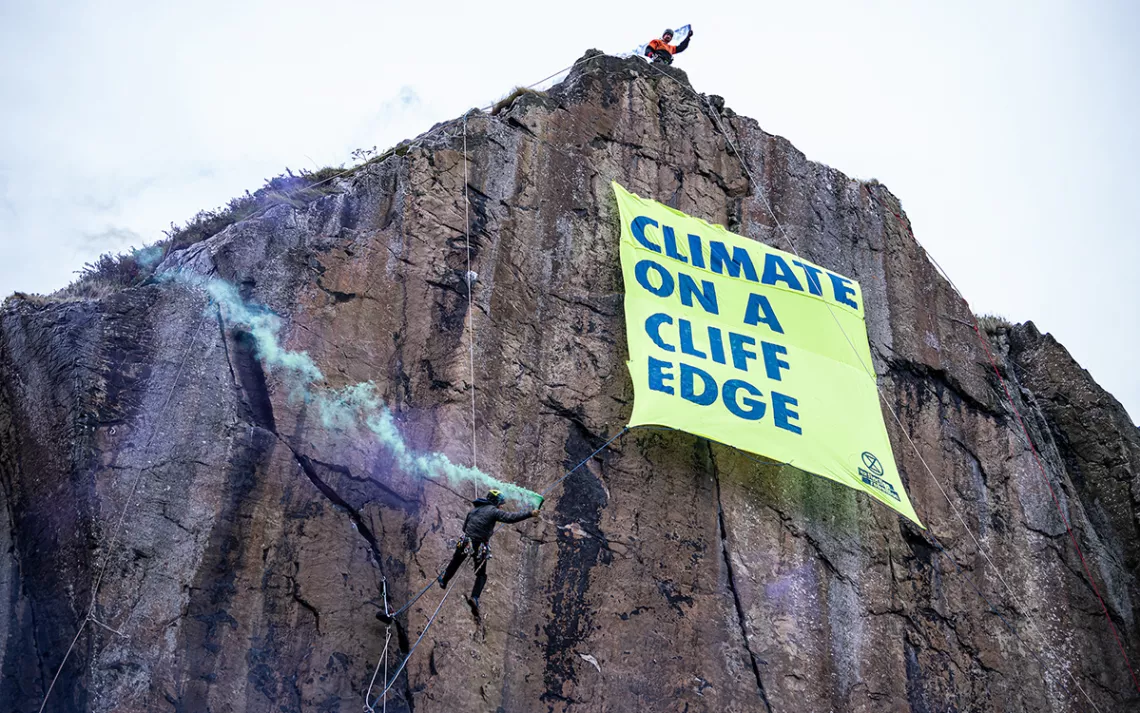
Experienced climbers scale a rock face near the historic Dumbarton castle in Glasgow, releasing a banner that reads “Climate on a Cliff Edge.” One activist, dressed as a globe, symbolically looms near the edge, while another plays the bagpipes on the shores below. | Photo courtesy of Extinction Rebellion and Mark Richards
Greenpeace activists display a billboard during a protest outside Shell headquarters on July 27, 2023 in London.
Greenpeace activists display a billboard during a protest outside Shell headquarters on July 27, 2023 in London. (Photo: Handout/Chris J. Ratcliffe for Greenpeace via Getty Images)

Continue ReadingOil giant funds computer game that promotes fossil fuels to schoolchildren

Human rights groups intervene over Rosebank links to illegal Israeli settlements

Spread the love

https://morningstaronline.co.uk/article/human-rights-groups-intervene-over-rosebank-links-illegal-israeli-settlements

 Climate activists from Greenpeace and Uplift during a demonstration outside the Scottish Court of Session, Edinburgh, on the first day of the Rosebank and Jackdaw judicial review hearing, November 12, 2024

HUMAN rights and environmental groups have challenged Rosebank oil field’s links to illegal Israeli settlements at its owner’s AGM.

Amnesty International intervened at the AGM of Equinor — the majority owner of the controversial Rosebank oil field — in Norway on Wednesday over its links to Delek Group, an Israeli fuel conglomerate.

Equinor shares ownership of Rosebank with Ithaca Energy, which is majority-owned by Delek Group.This means Equinor’s Rosebank project could send £253 million to the group, which operates in illegal settlements and provides fuel to the IDF, the campaigners say.

Delek Group has also been flagged by the UN for human rights violations in Palestine.

Greenpeace also tabled a first-of-its-kind shareholder proposal, which calls on Equinor to conduct due diligence over its links to companies operating in Israel’s illegal settlements.

Article continues at https://morningstaronline.co.uk/article/human-rights-groups-intervene-over-rosebank-links-illegal-israeli-settlements

Orcas comment on killer apes destroying the planet by continuing to burn fossil fuels.
Continue ReadingHuman rights groups intervene over Rosebank links to illegal Israeli settlements

What does it mean to be a climate denier?

Spread the love

[I previously published this article on 31 December 2023. It’s a little dated but still a good one.]

In the ‘coming soon’ notice announcing this article I said that “[t]here aren’t any real climate deniers anymore”. I was mistaken and there are a very few people like Jeremy Corbyn’s brother Piers Corbyn. I’ve only met and spoken with him once but I’m satisfied that he’s genuine in his beliefs despite them being misguided. He and others like him have the right to believe whatever they like and he’s harmless enough – while he may persuade a few people the vast majority will understand that he’s mistaken and wrong.

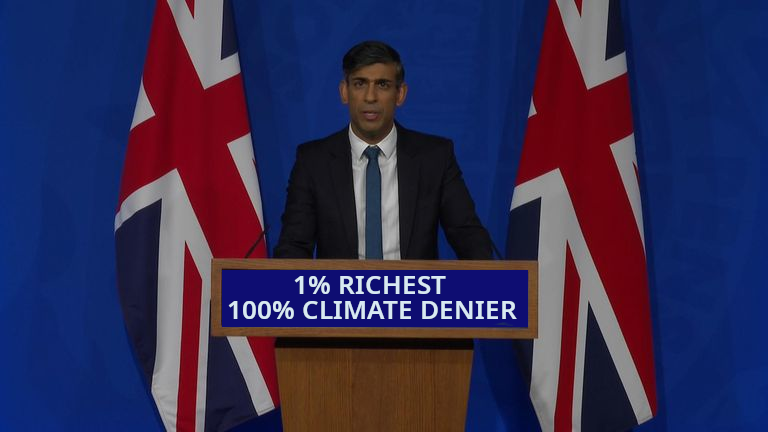
Image of UK Prime Minister Rishi Sunak reads 1% RICHEST 100% CLIMATE DENIER

So apart from Piers Corbyn and a few similar people, there is no such thing as a climate denier nowadays. The Capitalists profiting from climate destruction have known for 60 years of more that they were profiting from destroying the planet and were forcing future generations to endure intolerable climate conditions, annihilating many thousands of species of plants and animals and generally totally fekking everything.

Governments are controlled, directed, owned by a very few extremely rich and powerful people, the very people that are profiting and maintaining their wealth, power and influence from destroying the planet. According to this perspective we do not exist in a democracy and it is instead a pretence hiding the influence of the rich and powerful. We exist in a plutocracy – we have a wealthy ruling class that politicians serve.

It cannot be accepted that politicians like UK’s Prime Minister Rishi Sunak or our expected next Prime Minister Keir Starmer and the like are mistaken true believers like Piers Corbyn believes. Rather they are climate deniers in the sense of the fossil fuel industries – Exxon, Shell and BP – who know fully well that they are destroying the planet but deceive and mislead to continue making a filthy profit. It’s obvious to see that these politician cnuts serve this rich elite’s interests – Tory and Labour UK governments have answered to media tycoon Rupert Murdoch, sucking up to him, grateful to accept his orders.

Image of InBedWithBigOil by Not Here To Be Liked + Hex Prints from Just Stop Oil's You May Find Yourself... art auction. Featuring Rishi Sunak, Fossil Fuels and Rupert Murdoch.
Image of InBedWithBigOil by Not Here To Be Liked + Hex Prints from Just Stop Oil’s You May Find Yourself… art auction. Featuring Rishi Sunak, Fossil Fuels and Rupert Murdoch.

Sunak, despite being fully aware of the climate crisis is continuing to destroy the planet. Announcing the go-ahead for the Rosebank oil field he said that he intends to get every last drop of North Sea oil.

All the media companies attacking climate activists – GB News, the Mail, Express, etc – represent filthy rich interests profiting from climate destruction.

12/3/2025 Extra

President Trump is a climate science denier because he was supported financially by the fossil fuel industry during his re-election campaign. He explicitly called for financial support from the “liquid gold” fossil fuel industry.

Power-mad orange gasbag Donald Trump says Burn, Baby, Burn.
Orcas comment on killer apes destroying the planet by continuing to burn fossil fuels.
Continue ReadingWhat does it mean to be a climate denier?