400+ Actions to End Fossil Fuels Planned Around the World for Sept. 15-17

Spread the love
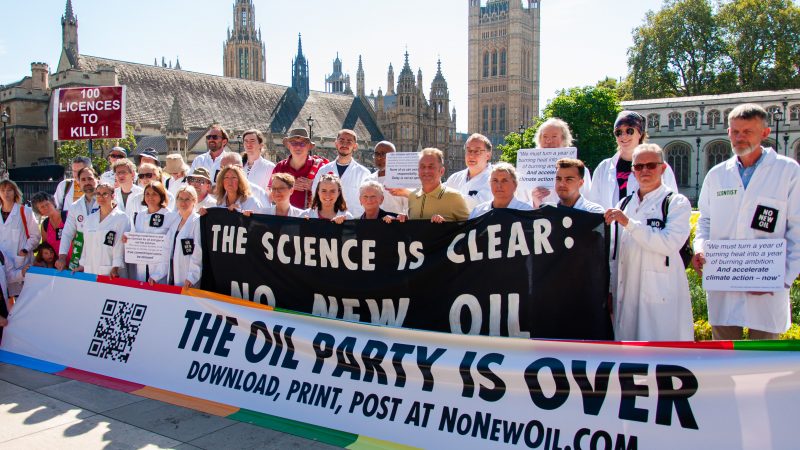
Scientists protest at UK Parliament 5 September 2023.

Original article by JULIA CONLEY republished from Common Dreams under Creative Commons (CC BY-NC-ND 3.0). 
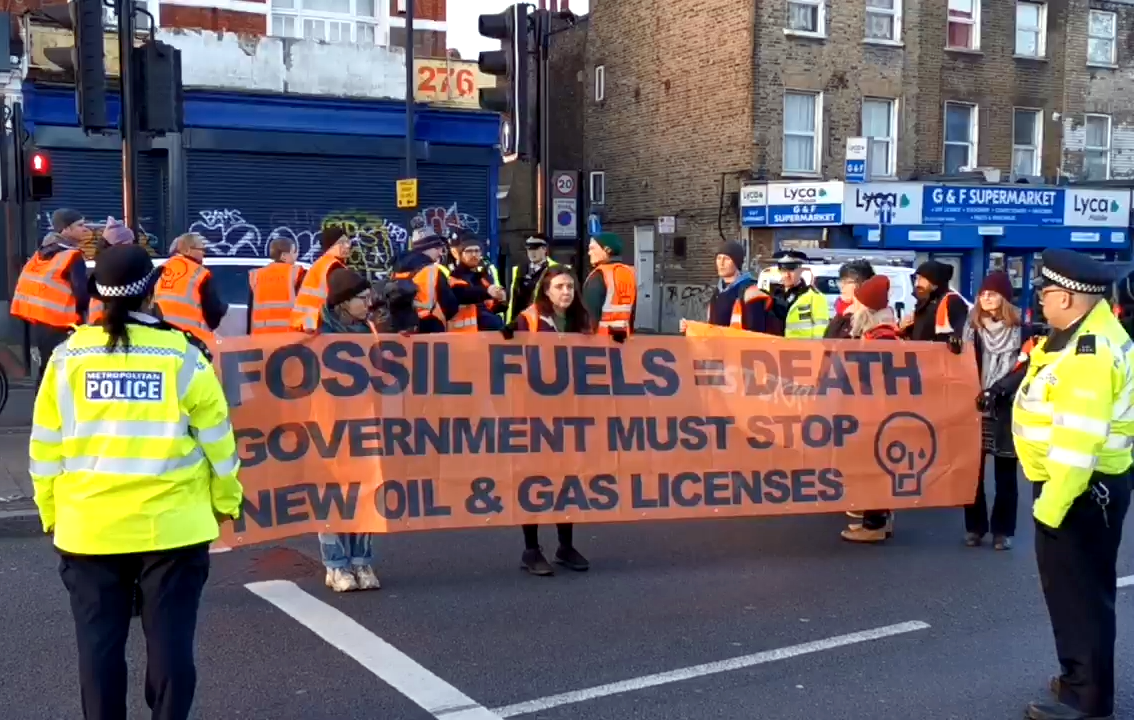
“When we the people use our collective power we can win,” said one campaigner.

“September 15-17, 2023. Everywhere.”

Those are the dates and location of the international mobilization against fossil fuels set to take place this coming weekend, and the last word is hardly an exaggeration as organizers with the Global Fight to End Fossil Fuels report that more than 400 actions, marches, rallies, and other events have already been registered around the world.

More than 780 organizations have endorsed the day of action—up from 500 less than a week ago—and millions of participants are expected to rally from Cape Town, South Africa to Manila, Philippines and Lahore, Pakistan, as well as in dozens of cities and towns across the United States, the largest emitter of greenhouse gases in history.

The protests are scheduled just before the United Nations Climate Ambition Summit, taking place on September 20 in New York, where groups including the NAACP, Sierra Club, and Sunrise Movement are supporting the March to End Fossil Fuels on September 17.

More than 10,000 people are expected to march in New York to demand that U.S. President Joe Biden end federal approvals for new fossil fuel projects like the Willow drilling project in Alaska and phase out oil and gas drilling in federal lands and waters; declare a climate emergency to unlock resources to accelerate the transition to renewable energy; and provide a just transition that creates millions of green jobs while supporting people who have worked in the fossil fuel industry.

“President Biden is in an unparalleled position to lead the world toward cleaner, less polluting energy options and eliminate the dependence on dangerous fossil fuels,” said organizers of the New York march. “If he takes action, he will protect our health, boost our economy, and tackle the climate crisis head-on.”

The March to End Fossil Fuels is backed by advocates including author Naomi Klein350.org co-founder Bill McKibben, actor and Third Act leader Jane Fonda, and lawmakers including U.S. Sen. Ed Markey (D-Mass.) and Rep. Rashida Tlaib (D-Mich.).

On Monday, scientists including Lucky Tran of the March for Science and biologist Sandra Steingraber announced that 300 climate experts had signed their letter to Biden reminding him that “a broad scientific consensus exists” that fossil fuel extraction must be drawn down immediately to keep global heating below 1.5°C.

https://twitter.com/Prof_FSultana/status/1701287399345561724?ref_src=twsrc%5Etfw%7Ctwcamp%5Etweetembed%7Ctwterm%5E1701287399345561724%7Ctwgr%5E38e8876908f1a885f6f8c9d1f348cd78264d5ea6%7Ctwcon%5Es1_c10&ref_url=https%3A%2F%2Fwww.commondreams.org%2Fnews%2F400-actions-march-climate

The scientists plan to release the letter with all signatures ahead of Sunday’s march.

The global mobilization—and the Climate Ambition Summit, where leaders of countries that emit the most heat-trapping gases will be expected to present updated plans to reduce their emissions and phase out fossil fuels—comes after a summer in the Northern Hemisphere in which numerous temperature records were broken.

As Common Dreams reported last week, U.N. Secretary-General António Guterres warned that “climate breakdown has begun” when U.S. scientists found the summer was the hottest on record. Scientists have said that extreme weather events such as wildfires in Canada and heatwaves in the U.S. and Europe in recent months would not have happened without human-caused planetary heating.

Tasneem Essop, executive director of Climate Action Network, emphasized that popular uprisings against the fossil fuel industry and the politicians that continue to support it have found success, such as the campaign that pushed Ecuadorians to vote against drilling in the Yasuní National Park in the Amazon last month.

“July 2023 was the hottest month in recorded climate history,” said Essop. “The unparalleled, deadly climate disasters sweeping the world seem to leave polluters unfazed. Historical emitters like Norway, the U.K., and the USA are announcing new fossil fuel projects even as floods, fires, and heatwaves take over our lives. We take inspiration from recent victories in the Yasuní region with the referendum to stop oil drilling.”

“When we the people use our collective power we can win,” Essop added. “Let our resistance against fossil fuels in September send a loud message to the fossil fuel industry and their supporters that their time is up.”

Outside of the U.S., more than 3,000 people are expected to join the Pakistan Climate March in the southern Sidh province; 100,000 are expected to join a march in Abuja, Nigeria; and 3,000 are expected to march near Malacañang Palace in Manila.

“We demand a phaseout of fossil fuels now,” said Farooq Tariq, secretary-general of Kissan Rabita Committee in Pakistan. “The fossil fuel industry and its supporters bear responsibility for the climate crisis and perpetuate a predatory and destructive economic system that harms both people and the planet.”

Original article by JULIA CONLEY republished from Common Dreams under Creative Commons (CC BY-NC-ND 3.0). 

Continue Reading400+ Actions to End Fossil Fuels Planned Around the World for Sept. 15-17

UN Puts Out ‘Truly Damning Report Card’ for Climate Action Before Global Summits

Spread the love
Scientists protest at UK Parliament 5 September 2023.

Original article by JESSICA CORBETT republished from Common Dreams under Creative Commons (CC BY-NC-ND 3.0). 

“This report is a wake-up call to the injustice of the climate crisis and a pivotal opportunity to correct course,” said one expert.

“The United Nations’ polite prose glosses over what is a truly damning report card for global climate efforts. Carbon emissions? Still climbing. Rich countries’ finance commitments? Delinquent. Adaptation support? Lagging woefully behind.”

That’s how Ani Dasgupta, president and CEO of the World Resources Institute, began his response to a “global stocktake” report released Friday by the U.N. Framework Convention on Climate Change (UNFCCC) ahead of two global summits.

“This report is a wake-up call to the injustice of the climate crisis and a pivotal opportunity to correct course,” Dasgupta continued. “We already knew the world is failing to meet its climate goals, but leaders now have a concrete blueprint underpinned by a mountain of evidence for how to get the job done.”

“There are a few bright spots worth celebrating,” he noted. “But overall, the report finds there are more gaps than progress—gaps that can only be erased by transformational change across systems like energy, food, land, and transport. The future of our planet depends on whether national leaders use this stark assessment as a catalyst for bold systems transformation.”

“This report makes clear that President Biden is squandering precious time every second he fails to take bold action on fossil fuels.”

The UNFCCC report comes nearly eight years after countries finalized the Paris climate agreement, which aims to keep global temperature rise this century below 2°C, relative to preindustrial levels, with a more ambitious target of 1.5°C.

“The global stocktake was designed under the Paris agreement to assess our global response to the climate crisis and chart a better way forward,” the UNFCCC explained Friday. “The global stocktake is held every five years and is intended to inform the next round of nationally determined contributions to be put forward by 2025.”

Data collection began in 2021, ultimately resulting in more than 170,000 pages of written submissions and over 252 hours of meetings and discussions. The new synthesis report summarizes 17 key technical findings from the discussions.

“I urge governments to carefully study the findings of the report and ultimately understand what it means for them and the ambitious action they must take next,” said U.N. Climate Change Executive Secretary Simon Stiell. “It’s the same for businesses, communities, and other key stakeholders. While the catalytic role of the Paris agreement and the multilateral process will remain vital in the coming years, the global stocktake is a critical moment for greater ambition and accelerating action.”

As University College London professor of climatology Mark Maslin explained, the report “makes it clear that the Paris agreement was a game-changer” but also countries’ greenhouse gas (GHG) emission reduction pledges are not in line with the 1.5°C target.

“The U.N. estimates that… we need to reduce global GHG emissions by 43% by 2030 and further by 60% by 2035 compared to 2019 levels and reach net-zero [carbon dioxide] emissions by 2050 globally,” Maslin summarized. “This is a huge ask given that greenhouse gas emissions were at their highest level ever in 2022.”

“All the technology exists to undergo the net-zero transformation but the huge increases in renewables, [electric vehicles], and batteries [have] to be even more rapid to make the huge cuts suggested by the U.N.—estimates are we need everything to happen five times faster,” he added.

The UNFCCC publication was released in preparation for the U.N. Climate Change Conference (COP28)—scheduled for November and December in Dubai, United Arab Emirates—where the first global stocktake will conclude.

“This global stocktake report provides clear direction on how we can meet the expectations of the Paris agreement by taking decisive action in this critical decade,” said COP28 President-Designate Sultan Al Jaber—whose selection for the summit post is controversial because he also heads the UAE’s Abu Dhabi National Oil Company. “We must urgently disrupt business as usual and unite like never before to move from ambition to action and from rhetoric to real results.”

The report also comes just ahead of U.N. Secretary-General António Guterres’ Climate Ambition Summit scheduled to begin on September 20 in New York City. In response, activists have planned the March to End Fossil Fuels on September 17.

Organizers of the NYC march are calling on U.S. President Joe Biden to stop federal approvals for new fossil fuel projects and repeal permits for “climate bombs” like the Willow project and the Mountain Valley Pipeline; phase out oil and gas drilling on public lands and waters; declare a climate emergency; and provide a just transition.

Advocacy groups supporting the march issued fresh demands for action on Friday in response to the UNFCCC publication.

“This report makes clear that President Biden is squandering precious time every second he fails to take bold action on fossil fuels,” said the Center for Biological Diversity’s Jean Su, who previously authored a document detailing how an emergency declaration would empower the administration to tackle the climate crisis. “Every day we’re seeing and feeling the harms of fossil-fueled climate change from extreme heat to deadly wildfires and devastating floods.”

“As leader of the world’s largest oil and gas producer, Biden has more power than anyone to stop expanding the fossil fuels driving this deadly crisis,” Su added. “Ahead of the U.N.’s Climate Ambition Summit, thousands of people will be in the streets of New York on September 17 for the March to End Fossil Fuels. This is the perfect opportunity for Biden to declare a climate emergency, use all his executive powers to phase out fossil fuels, and finally secure a legacy as a climate leader.”

“We need the biggest players to use their power to avert climate chaos, and to flex their muscle to protect human life rather than protecting corporate polluters.”

Greenpeace International policy coordinator Kaisa Kosonen on Friday called out governments across the globe, declaring that “our house is burning down and the people with the power to save us are still sipping coffee pretending it’s not happening.”

“No government can claim they didn’t know how to fix the climate problem,” she said. “They’ve been thrown a lifesaver again and again by scientists, and now we have this report. What the world is waiting for is action; leadership. We need the biggest players to use their power to avert climate chaos, and to flex their muscle to protect human life rather than protecting corporate polluters.”

Looking toward COP28, Kosonen argued that “at this year’s U.N. climate summit, governments must agree to end the use of oil, gas, and coal in a fast and fair way and make the polluters pay. Leaders can no longer smile and claim they support the Paris agreement and its 1.5°C warming limit, if they fail to give fossil fuels an end date and continue their expansion.”

“The solutions are ready—renewables are now the cheapest power source—but we’ve got to push the fossil fuel industry out of the way,” she stressed. “Fossil fuel corporations are holding us hostage, but their time’s up.”

The UNFCCC report and resulting calls for action follow a series of scientific findings throughout the week that also generated demands for a swift end to fossil fuels, including that Antarctica is warming more quickly than models project, this summer is the hottest on record, and last year greenhouse gas concentrations, global sea level, and ocean heat content all hit record highs.

Original article by JESSICA CORBETT republished from Common Dreams under Creative Commons (CC BY-NC-ND 3.0). 

Continue ReadingUN Puts Out ‘Truly Damning Report Card’ for Climate Action Before Global Summits

Scientists march on Parliament to demand MPs listen to no new oil demand

Spread the love
Scientists protest at UK Parliament 5 September 2023.

https://leftfootforward.org/2023/09/scientists-march-on-parliament-to-demand-mps-listen-to-no-new-oil-plea/

Over one hundred experts from across the country came together yesterday in the UK’s largest ever climate protest by scientists to demand MPs say no to new oil and gas.

This July the government approved the licensing of 100 new oil and gas fields, as Rishi Sunak pledged he would “max out” the UK’s oil and gas reserves in a move blasted catastrophic by experts.

Now climate change experts have left their labs to take to the streets of Westminster to tell the Prime Minister and MPs that the plans are just not feasible, and that they must listen to the science.

Campaigner and scientist Emma Smart told Left Foot Forward why scientists were taking action, many for the first time.

“The government isn’t acting on the science- the truth- and the media aren’t reporting it, consequently the public are not aware of the scale or urgency of what we are currently facing”, said Smart.

“But scientists are acutely aware, even if their discipline isn’t directly climate science. That’s why many are moving from publication to public action, for they feel it is now their duty in a climate crisis to not just write science, but to shout it from the streets.

“Historically, non-violent direct action has delivered the necessary pressure on these ‘pillars of power’ and now scientists are leaving their labs and taking to the streets to drive the change we so desperately need.”

She added: “Watch this space – scientists are refusing to be bystanders anymore.”

https://leftfootforward.org/2023/09/scientists-march-on-parliament-to-demand-mps-listen-to-no-new-oil-plea/

Continue ReadingScientists march on Parliament to demand MPs listen to no new oil demand

Getting real: what would serious climate action look like?

Spread the love

From Getting real: what would serious climate action look like?

So what would it look like? Let me sketch out just a few examples. An early win would be an immediate moratorium on airport expansion and a plan to deliver a fair 80 percent cut in all air travel by 2030. Also, no more new internal combustion engine cars would be built from 2025, and there would be a huge shift away from private cars in cities and urban environments coupled with a shift towards public transport and active travel. Maybe rural communities would continue to use EVs, but with a rental rather than ownership model. Also necessary would be the retrofit of existing homes, not just a pilot scheme but actually rolling it out street by street at mass scale. Passive house standards would be required on all new properties and also a maximum size threshold. Why are we building homes that are 200 to 400m2? Cut this to a maximum of 100 to 150m2, still large homes, but with much less resource and material use – and of course less land! And when we sell existing very large houses, have them carefully and creatively divided into normal sized homes. All of which would free up labour and resources to achieve the necessary decarbonisation agenda. On top of all of this we need a massive expansion of electrification in the energy system. This is an unprecedented scale and rate of change – pushing the productive capacity of society to its limit and consequently demanding the reallocation of labour and resources to deliver a decarbonised, sustainable and prosperous future.

[H]ow do we get the debate opened up? How can the silent majority, who will do really well out of these changes, have their voices heard without being twisted by those running the show? If the media, ‘the great and good’ experts and we high-emitters continue to have our way there will be no shift in business-as-usual until we’re hit by the climate chaos of inaction. If, however, enough voices can break through the stifling status quo, perhaps a more honest and inclusive debate can be catalysed. As we have progressed beyond the climate deniers, so now we need to move beyond the ‘mitigation deniers’ who greenwash business-as-usual. To me at least, the rise of civil society engagement on climate issues along with real-world technologies demonstrating what is already possible, suggest that we may be in the foothills of a social and technical tipping point. Of course, we can’t know this until we are actually living through it. But we can increase its likelihood and hasten the demise of the high-carbon status quo by repeatedly and coherently countering the ‘mitigation deniers’ wherever they may reside.
 

Kevin Anderson is a Professor of Energy and Climate Change at the Universities of Manchester (UK) , Uppsala (Sweden) and Bergen (Norway). Kevin is also co-founder of the Climate Uncensored website – https://climateuncensored.com/about/ – where readers can find more detailed discussion of the issues covered in this article.

From Getting real: what would serious climate action look like?

Continue ReadingGetting real: what would serious climate action look like?

UK scientists urge Rishi Sunak to halt new oil and gas developments

Spread the love
Just Stop Oil protesting in London 6 December 2022.

https://www.theguardian.com/environment/2023/mar/29/uk-scientists-rishi-sunak-oil-and-gas-developments-climate-crisis

Call comes on eve of revised net zero strategy that allows drilling in North Sea and boosts ‘unproven’ carbon capture

Hundreds of the UK’s leading scientists have urged the prime minister, Rishi Sunak, to halt the licensing of new oil and gas developments in the UK, ahead of his anticipated launch of a revised net zero and energy security strategy on Thursday.

The scientists, who include Chris Rapley, former head of the Science Museum and professor at UCL and Mark Maslin, professor of earth system science at UCL, warn that there must be no new developments of oil and gas, for the world to limit global heating to 1.5C above preindustrial levels.

The call, backed by more than 700 scientists, comes on the eve of the government’s “energy security day”, when a new net zero strategy will be published.

https://www.theguardian.com/environment/2023/mar/29/uk-scientists-rishi-sunak-oil-and-gas-developments-climate-crisis

Continue ReadingUK scientists urge Rishi Sunak to halt new oil and gas developments