Tag: Scotland

  • Humza Yousaf: Scottish government discovered UK Covid policy via the news

    Spread the love

    Original article by Finlay Johnston republished from Open Democracy under a Creative Commons Attribution-NonCommercial 4.0 International licence.

    Scotland’s first minister also said information would often arrive ‘minutes before the meeting’

    Humza Yousaf said he was “deeply frustrated” by the Boris Johnson government’s failure to collaborate with the Scottish government during the pandemic.

    Scotland’s first minister, who served as both justice secretary and health secretary in the devolved government during the pandemic, told the Covid inquiry information was often arriving “at the absolute last minute before a meeting”.

    “Five, ten minutes before the meeting was to start,” he explained. “Or we were reading about an announcement of a decision already been made by the UK government.”

    Yousaf also criticised Alister Jack, the UK government’s secretary of state for Scotland.

    “When we were on these phone calls [with the UK government], his [Jack’s] engagement was very limited and there would often be meetings where he wouldn’t say anything at all. Perhaps he was there to observe what was said on the meetings as opposed to necessarily contributing,” Yousaf said.

    Jack and the Scottish government have had frequent run-ins, most notably around the Scottish government’s decision to reform gender recognition laws. Jack used his role to block the progressive legislation using unprecedented powers.

    The UK’s Covid inquiry is currently focusing on how the Scottish government handled the crisis. Jack is due to give evidence next week.

    The inquiry was also shown WhatsApp messages exchanged between Yousaf, while health secretary, and senior health adviser Jason Leitch.

    The messages show Leitch advising Yousaf to keep a drink in his hands at all times when attending a function, so he didn’t have to wear a mask. Leitch also wrote “literally no one” was following the government advice, which at the time stated that you must wear a mask when not seated at a dinner.

    Jamie Dawson, counsel to the inquiry, pushed Yousaf on whether he was being given a “workaround”.

    Yousaf responded: “I never asked for a workaround or how not to comply and neither would I suggest that he was giving that.”

    The inquiry saw another exchange of messages between Leitch and Yousaf where the pair discussed Nicola Sturgeon’s decision-making process.

    Leitch and Yousaf were discussing a rise in cases in Glasgow in May 2021, when Yousaf became health secretary. The pair also discussed a meeting held between Leitch and Sturgeon relating to the rise in cases.

    Leitch wrote: “There was some FM [First Minister] keep it small shenanigans as always, she actually wants none of us.”

    Yousaf was asked at the inquiry whether Sturgeon frequently took decisions without full cabinet discussion.

    “There were times when the former First Minister needed a tighter cast list[…] But I think this was a classic example of [Leitch] perhaps overspeaking,” he said.

    Yousaf also apologised for the Scottish government’s failure to preserve WhatsApp messages and made reference to an announcement made earlier today to the Scottish parliament that there will be an external review into the use of mobile messaging apps.

    Original article by Finlay Johnston republished from Open Democracy under a Creative Commons Attribution-NonCommercial 4.0 International licence.
  • Grouse shooting in Scotland has an alarming death toll – and not just for game birds

    Spread the love

    Mark Caunt/Shutterstock

    Clair Linzey, University of Oxford

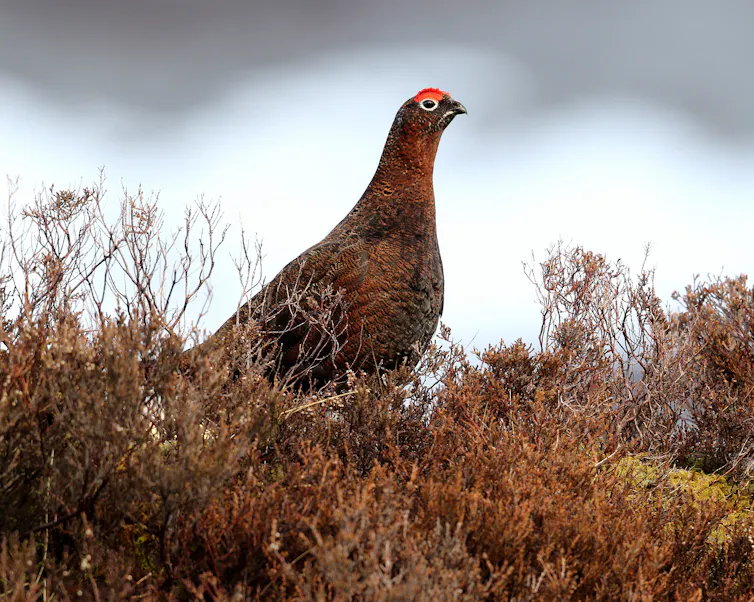
    The Scottish moors are considered areas of outstanding beauty, and often assumed to be “wild” and “untamed”. However, these landscapes are the result of management techniques that are now under scrutiny by the Scottish government.

    These practices include burning the moorlands (muirburn) and controlling the number of animals on the moors through trapping, snaring and poisoning. All of these measures are pursued to keep the number of red grouse artificially high so they can be shot in grouse season.

    An estimated 260,000 animals are killed each year in Scotland as part of these legal “predator control” measures. Targeted animals include foxes, weasels, stoats, rats, rabbits and various types of corvid like crows, magpies, jackdaws and jays.

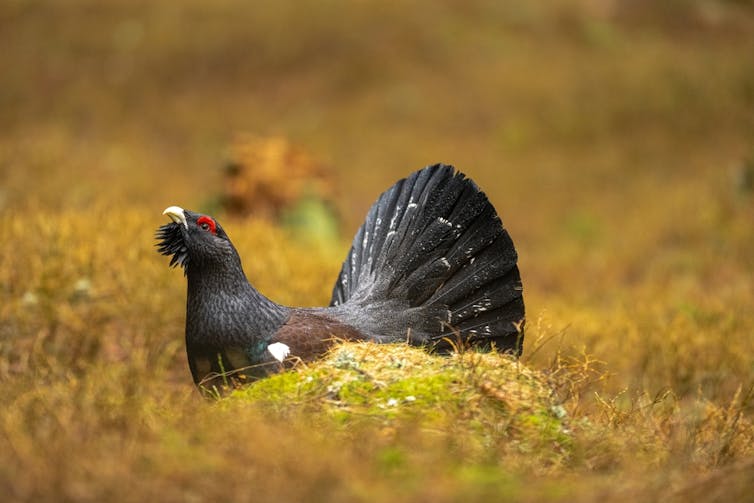
    Many animals are also killed unintentionally. A report that was commissioned by the League Against Cruel Sports Scotland, a UK-based animal welfare charity, shows that as many as 39% of the trapped animals are not the intended target. These animals include pine martens, hedgehogs, badgers, deer and hares. But there have also been reports of endangered and protected animals, such as raptors and the capercaillie, being killed.

    In a recent report, which I co-authored with Dr Katie Javanaud and Professor Andrew Linzey from the Oxford Centre for Animal Ethics, we examined the moral basis for these practices. We found that it is impossible to overstate the severity of the suffering caused to animals caught in traps.

    The western capercaillie in a spruce forest.
    Some endangered and protected animals, like the capercaillie (pictured) are unintentionally killed.
    Jaroslav Macenauer/Shutterstock

    Prolonged suffering

    The Agreement on International Humane Trapping Standards, to which the UK is a signatory, is the primary measure against which the welfare of trapped animals is judged. The standards consider traps to be “sufficient” and “efficient” if the animals are killed in anywhere between 45 seconds and five minutes. In fact, the standards still consider traps efficient if 20% of animals do not die within five minutes.

    Any system of killing that only causes death after 45 seconds to five minutes is unnecessarily cruel. The animals suffer an appalling range of injuries that would not be acceptable in any other context. Entrapment for free-living animals is at best a distressing experience that obviously involves psychological and emotional harm.

    All forms of predator control, whether that be trapping, snaring or poisoning, are predicated on exposing animals to hours or days of prolonged suffering. And all of this supposes that these traps can practically be inspected often. This is a question in and of itself given the vast area over which the methods are used and the limited manpower available, as well as adverse weather conditions.

    Stopping the suffering

    The suffering caused by these “management techniques” is also made invisible, reduced to being a private matter on private estates. However, cruelty to animals is a public moral issue and should be subject to political accountability.

    Effective legislation requires three important components: compliance, inspection and enforcement. However, the illegal trapping of raptors indicates that there is limited compliance with the current legislation.

    All raptors are protected under the Wildlife and Countryside Act 1981. But traps and poisons kill animals indiscriminately. So, as long as traps and poisons continue to be in use, legally protected animals like raptors will continue to be caught and killed.

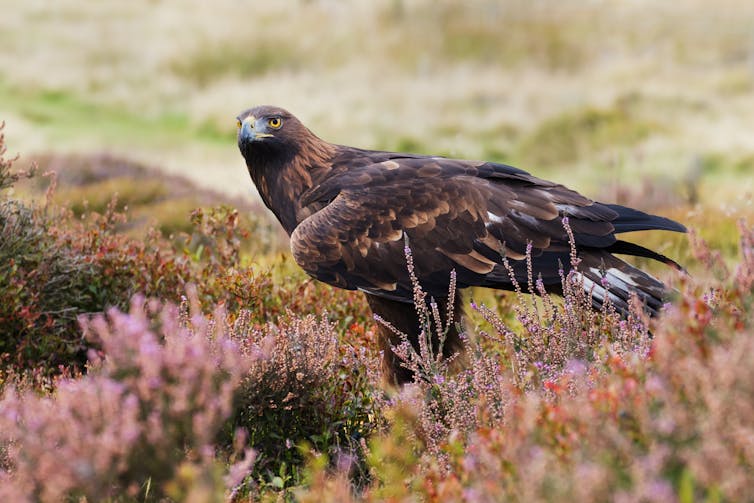
    A golden eagle standing behind a clump of heather.
    All raptors are protected under the Wildlife and Countryside Act 1981.
    Ian Duffield/Shutterstock

    Raptor persecution is one of the main concerns of the Scottish government’s proposed Wildlife Management and Muirburn Bill. The bill aims to change “rules around how people can capture and kill certain wild birds and wild animals” and “rules around the making of muirburn”.

    The government plans to address these problems by licensing the use of traps and giving the Scottish Society for Prevention of Cruelty to Animals (SSPCA) powers of inspection, as well as introducing a licensing scheme for grouse hunting and the management of land.

    It also intends to bring in an outright ban on glue traps. These traps consist of a small board coated with a sticky adhesive, a practice the RSPCA argue causes “unacceptable cruelty”.

    We need to do more

    The plan to introduce powers of inspection for the SSPCA should be commended. But licensing the killing of animals on Scotland’s moors serves only to codify and ingrain the suffering and deaths of those animals.

    All current methods of “predator control” either cause (often prolonged) suffering or make animals liable to suffering. To license any of the traps currently in use is to institutionalise the suffering and death of thousands of animals a year.

    Our report concludes that predator control is uncontrollable. There simply are not the mechanisms in place to control it. Poisons and traps of various kinds are readily available for purchase in shops and on the internet. There is no moral alternative to making all of these practices illegal.

    We propose the promulgation of a new charter for free-living animals. Scotland could lead the way in pioneering legislation that protects all animals, domestic and free-living. This legislation should begin with the recognition of sentience and enshrine in law the value and dignity of wild animals such that their right to live unmolested is respected.


    Imagine weekly climate newsletter

    Don’t have time to read about climate change as much as you’d like?

    Get a weekly roundup in your inbox instead. Every Wednesday, The Conversation’s environment editor writes Imagine, a short email that goes a little deeper into just one climate issue. Join the 30,000+ readers who’ve subscribed so far.The Conversation


    Clair Linzey, Research Fellow in Animal Ethics, University of Oxford

    This article is republished from The Conversation under a Creative Commons license. Read the original article.

  • Campaigners take to Westminster Bridge to block Rosebank

    Spread the love
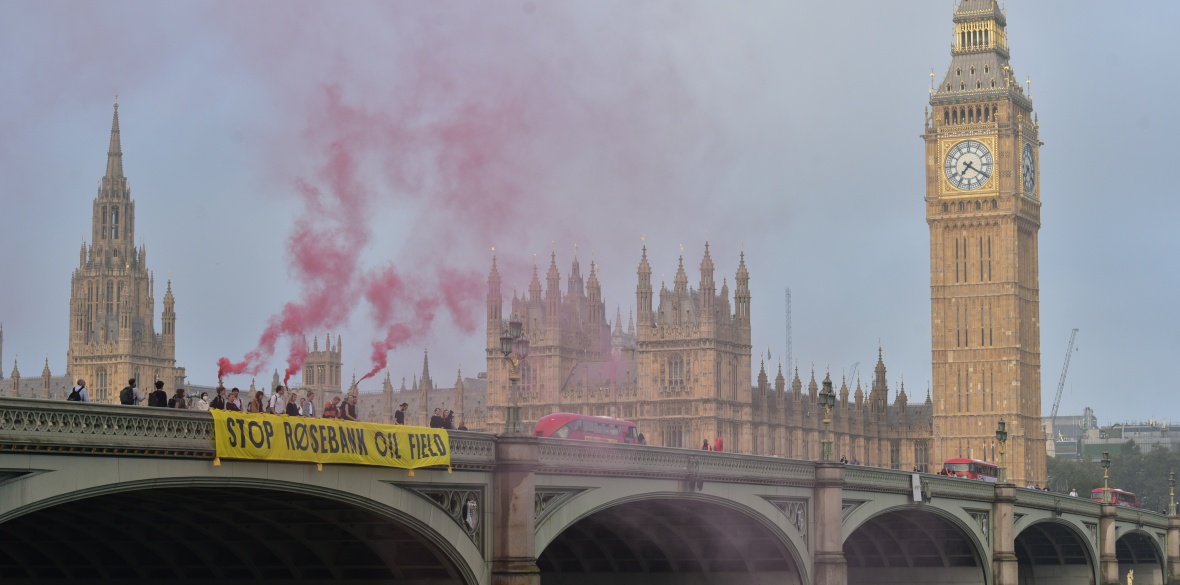
    Fossil Free London set off flares and dropped a 15-metre banner Image: Fossil Free London
    Fossil Free London set off flares and dropped a 15-metre banner Image: Fossil Free London

    ENVIORNMENTAL activists have demanded MPs block a “reckless and absurd” climate time-bomb.

    MPs returning to Parliament today were welcomed by Fossil Free London, who set off flares and dropped a 15-metre banner from the nearby bridge demanding development of the Rosebank oil field be dropped.

    The decision to develop the field has been repeatedly delayed but, if granted, the licence could see oil giant Equinor benefit to the tune of £3.7 billion in tax breaks as the Tory tax giveaway to big oil — costing £10.6bn so far — continues apace.

    Fossil Free London’s Joanna Warrington said: “Rishi Sunak wants to give billions of pounds of public money to a giant oil company in exchange for the climate time-bomb, which will do absolutely nothing to lower our energy bills.

    …

    https://morningstaronline.co.uk/article/b/campaigners-take-westminster-bridge-block-rosebank

    First Minister Humza Yousaf ‘not convinced’ by Rosebank

    In a conversation with the Daily Record, Scotland’s first minister said: “My starting position on Rosebank is I’m not convinced it should go ahead and I’ve said as much publicly, for a number of reasons.

    “First and foremost, for example, the majority of Rosebank is oil as opposed to gas – that oil, of course, then gets exported.

    “Any suggestion that helps us in terms of our domestic energy security, I think, doesn’t quite stack up.”

    Humza Yousaf added: “Unlimited oil and gas extraction is not Scotland’s future,” when asked about the controversial Rosebank oil field.

    …

  • Scottish leaders challenged over lack of urgency in tackling climate change

    Spread the love

    https://morningstaronline.co.uk/article/b/scottish-leaders-challenged-over-lack-of-urgency-in-tackling-climate-change

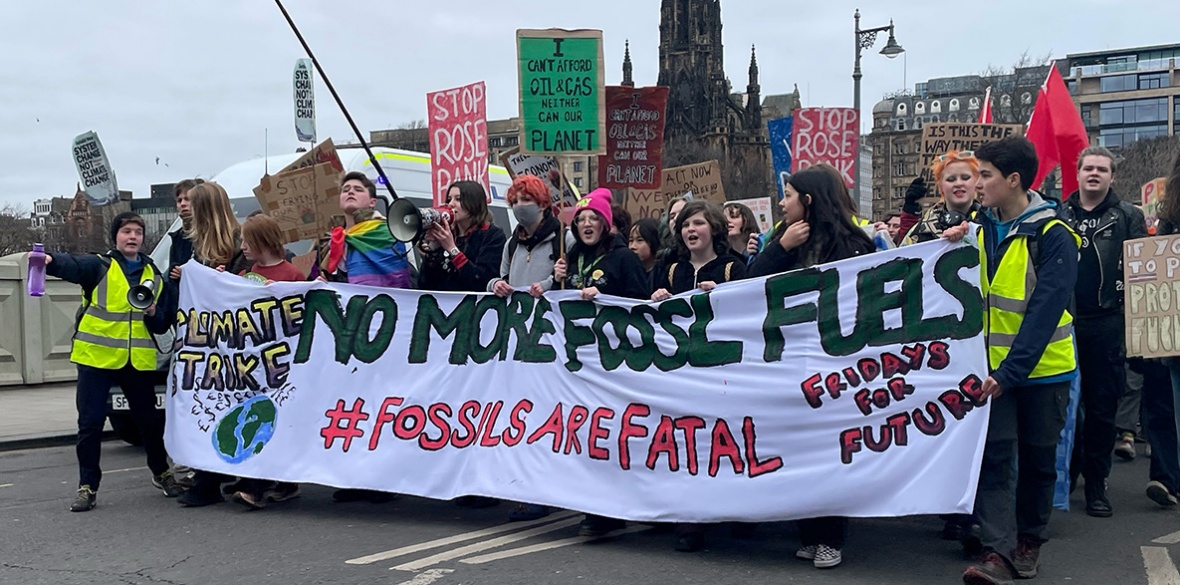
    Climate protesters march through Edinburgh calling for an end to fossil fuel extraction, March 3, 2023

    SCOTTISH leaders of all political parties have been challenged by a coalition of nature charities over their lack of urgency in tackling climate change.

    Twenty-six groups have joined to write an open letter aimed at the leaders of the five parties represented at Holyrood — the SNP, Conservatives, Labour, Greens and Liberal Democrats.

    …

    In their letter they insisted that “without significant action” on the environment Scots could face “increasing disruption to our lives and face escalating impacts on food production and human health.”

    The intervention comes as the organisations told how “extreme heat, dangerously warm seas, and out of control wildfires are causing havoc around the world.”

    Amid these “unprecedented extreme global weather events,” the groups — who have more than 500,000 supporters between them — said they were “deeply concerned that our political leaders are not responding to the intertwined nature and climate crises with the urgency required.”

    They added: “The status quo is not sustainable. Yet we have seen key environmental commitments shelved or delayed, and increasing signals that differing views on environmental policy will be exploited for electoral purposes or treated as disposable.”

    https://morningstaronline.co.uk/article/b/scottish-leaders-challenged-over-lack-of-urgency-in-tackling-climate-change

  • Scotland generates record-breaking renewable energy

    Spread the love
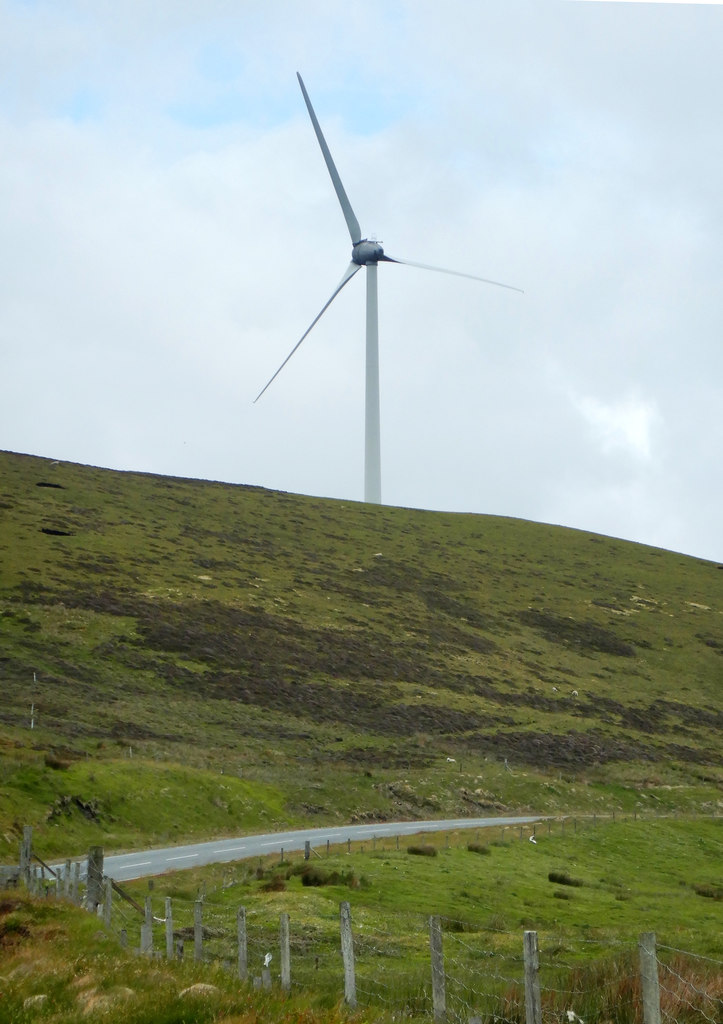
    Shetland’s biggest Wind Turbine Image © Copyright Andy Waddington and licensed for reuse under this Creative Commons Licence.

    https://energydigital.com/articles/scotland-generates-record-breaking-renew able-energy

    … According to official data, Scotland broke previous records by generating 35.3TWh of renewable electricity in 2022, marking a 28.1% increase from 2021 and 9.8% from 2020. This amount of electricity could power all households in Scotland for over three years. The fourth quarter of 2022 saw the largest increase in renewable electricity generation in Scotland’s history, rising by 14%.

    Between September and December 2022, the renewable electricity capacity grew from 13.6GW to 13.8GW. In addition, Scotland’s net electricity exports increased by 17% to 18.7TWh in 2022, with a wholesale market value of approximately £4 billion.

    Wind energy was the primary contributor to Scotland’s renewable electricity generation in 2022, accounting for 27.5TWh. Of this amount, 5.8TWh came from offshore wind, while 21.8TWh was generated from onshore wind.

    …

    https://energydigital.com/articles/scotland-generates-record-breaking-renewable-energy