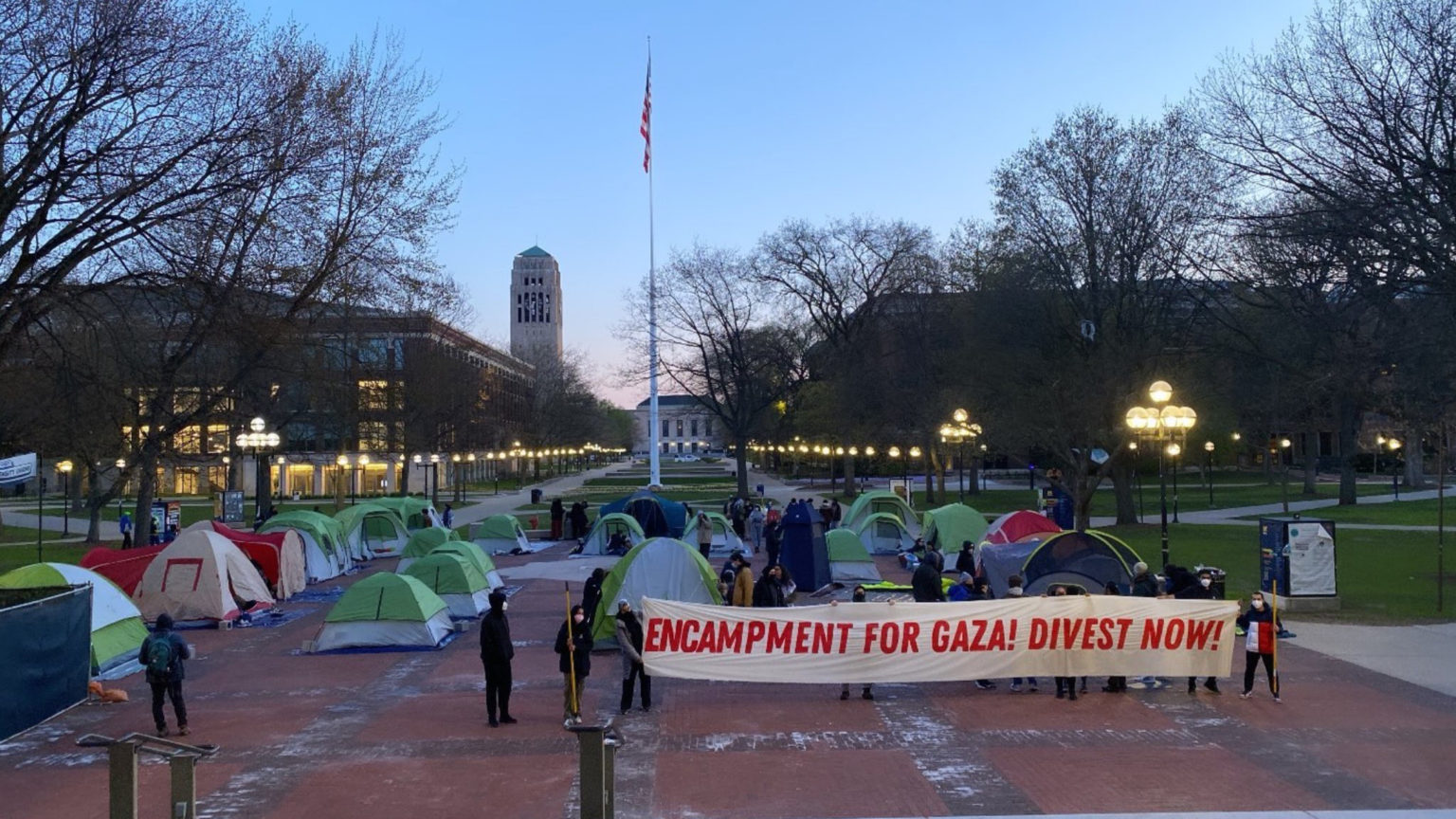
Students set up an encampment at the University of Michigan in solidarity with Gaza (Photo via Jewish Voice for Peace UMich)
Police launch new wave of repression as student movement for Palestine grows
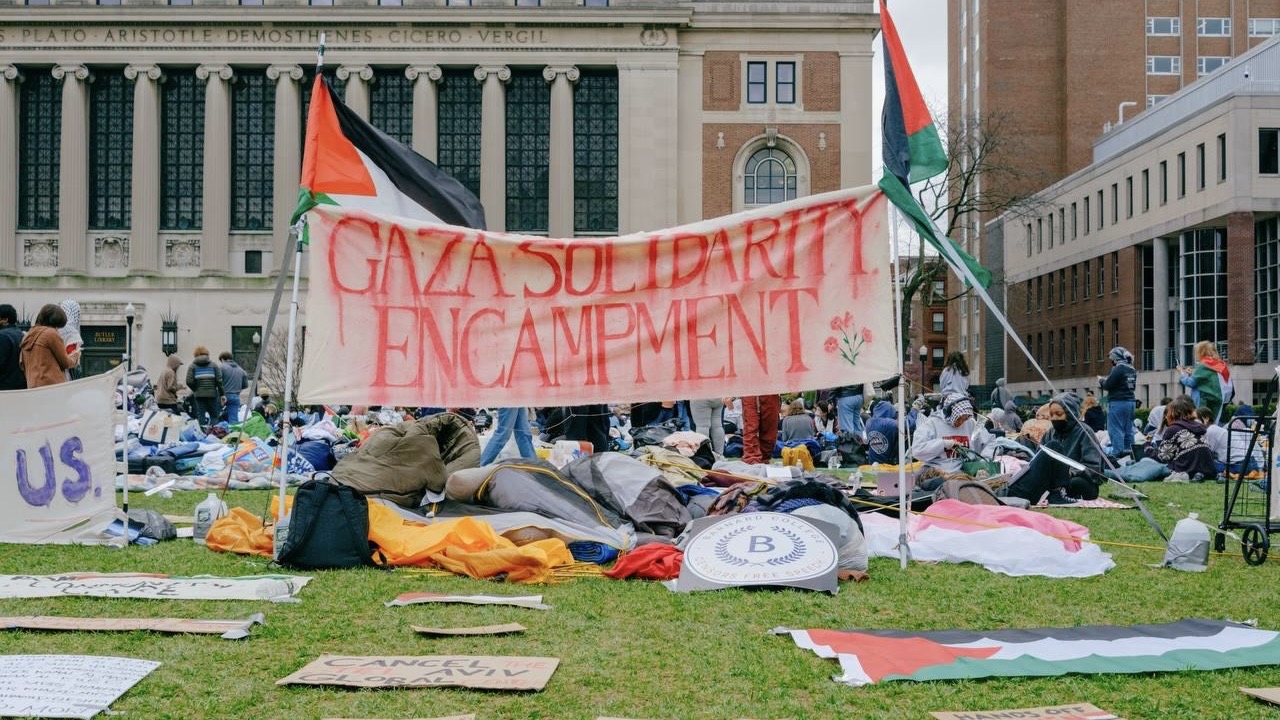
Almost a week after Columbia students launched their Gaza Solidarity Encampment, students across the country have taken from their example and began encampments in public spaces in their own universities in solidarity with Palestine.
In the early hours of the morning of April 22, students at New York University began an encampment on Gould Plaza, joining their New York City counterparts at the New School, which had launched an encampment the previous day.
In the Greater Boston Area students at the Massachusetts Institute of Technology, Emerson College, and Tufts University set up encampments at their own universities. Students at the University of Michigan also launched an encampment on April 22, pitching tents outdoors with ice still visibly on the ground.
🚨🇵🇸BREAKING: Students at University of Maryland have begun an encampment in College Park for Gaza, declaring a People’s University!
THEIR DEMANDS ON UMD: 1️⃣ DIVEST from military companies & contractors 2️⃣BREAK THE SILENCE and denounce the genocide in Gaza 3️⃣END policing on… pic.twitter.com/5PIGUnqDA5
— Party for Socialism and Liberation (@pslnational) April 22, 2024
Also on the morning of April 22, New Haven police repressed the Gaza Solidarity Encampment at Yale University, which had been established on April 20, making 47 arrests. In response, students took over the street outside of campus, shutting down an intersection with hundreds of demonstrators.
Students are broadly demanding that their universities divest from Israel, and have pledged to maintain their encampments until their demands are met. The intensification of the student action began when Columbia students launched their encampment at 4 am on April 17. Despite a severe crackdown by the University and the NYPD, resulting in 122 arrests, students have been able to sustain the encampment on the Butler Lawn for almost a week, inspiring others across the country to do the same and put pressure on their own universities to divest from Israel.
On the afternoon of April 22, a new wave of repression began outside of Columbia’s campus as several demonstrators were arrested outside the campus gates, who were picketing outside of the encampment.
NOW: “Lock them up!” NYPD orders officers to arrest protesters demonstrating on the sidewalk in front of the gates to Columbia University
SRG has been called in. An officer said NYPD “doesn’t make the rules” when asked by an organizer why they are not allowed to protest there pic.twitter.com/M72jfxZ9BA
The sun once again shines on the students occupying the main lawn of Columbia University which continues despite a heavy coordinated crackdown
On the morning of April 19, Columbia students emerged from their tents camped out on the main lawn of Columbia University’s campus in New York City, after having held their ground for over 48 hours in what organizers dubbed the “Gaza solidarity encampment.” This action was coordinated entirely by the students, who are part of various organizations including Columbia University Apartheid Divest, Columbia Students for Justice in Palestine, and Columbia Jewish Voice for Peace.
“The energy here is incredible. There’s double the amount of people than at the original encampment—maybe even more.”
🏫🇵🇸We’re on day 3 of the student occupation of Columbia! We spoke to Sarah, a grad student at the university, about police repression yesterday—and how that… pic.twitter.com/2XjvT04iCT
— Party for Socialism and Liberation (@pslnational) April 19, 2024
On Friday, inspired by the bold action taken by student organizers, students at both the University of North Carolina and Miami University in Ohio have begun to stage their own encampment in solidarity with Columbia students and Gaza. In response to the upsurge in student solidarity actions, National Students for Justice in Palestine has issued a “call to action” for students in universities across the country to “seize the university and force the administration to divest, for the people of Gaza.”
UNC students right now starting an encampment outside of the university administration building in solidarity with Columbia students and Palestine 🇵🇸 pic.twitter.com/oY4dYKmWQl
Outside of Columbia University, a large crowd has taken to the streets in solidarity with the encampment.
BREAKING: Actress @SusanSarandon has joined the Palestine solidarity activists rallying outside of Columbia University gates to share her message of solidarity with the students. pic.twitter.com/oxTqkLARjx
Students initially took over the lawn at 4 a.m. on Wednesday, April 19, and managed to hold their ground for over 24 hours. The energy on the ground at the encampment reached a peak last night when arrests of students on campus appeared to be imminent. Over 400 students poured into campus and formed a march around the encampment to protect students from a potential crackdown by either the New York Police Department or the Columbia administration. Students chanted “We will not stop, we will not rest, we will divest!” Soon, Columbia President Minoushe Shafik would call in the New York Police Department to arrest 122 students on Thursday afternoon. Police then confiscated student belongings, throwing them haphazardly in an alleyway in between dorm buildings on campus.
UPDATE: A massive group of students have surrounded the Columbia University Palestine solidarity encampment to express their support for the protesters pic.twitter.com/WN6yc7MSac
After ordering the NYPD mass arrests of student protestors, Columbia quickly discarded the Gaza Solidarity Encampment tents, leaving student belongings in between dorm buildings. Undeterred, new students have once again taken over the encampment pic.twitter.com/4zA2KZUJes
— Palestinian Youth Movement (@palyouthmvmt) April 18, 2024
After the mass arrest, the hundreds of students who had been picketing around the encampment in solidarity moved immediately into action. Around 1,000 poured into the other side of the lawn to start a second encampment, and have been able to successfully hold the lawn since then.
The last of the arrested students were released late into the night on Thursday, to resounding cheers from fellow students and supporters who stood outside of the 1 Police Plaza NYPD headquarters in solidarity with those held inside.
Early on day 2 of the encampment, three students at Barnard College, the women’s college that is part of the larger Columbia University system, woke up to their suspensions via email and the disabling of their student IDs. The Columbia administration is reportedly issuing a new wave of suspensions to any student who attempts to pick up their belongings.
Columbia students are drawing from the example of the 1968 occupation of the University’s Hamilton Hall by students in protest of the Vietnam War. This time around, students are protesting their institution’s complicity in the ongoing Israeli genocide in Gaza. Their demands are that “Columbia University divests all finances, including the endowment, from corporations that profit from Israeli apartheid, genocide, and occupation in Palestine.”
“Morale on campus is high. People initially expected that we were gonna bleed members on the second day, but that’s not happening,” Grant Miner, Vice President of the Student Workers of Columbia, the union of graduate student workers, told Peoples Dispatch on Thursday, shortly before he himself was arrested. “We’re here to stay until we get divestment. We won’t be moved until we are moved by force, or until Columbia meets our demands. No compromises.” Miner was one of the last to be released late on Thursday night.
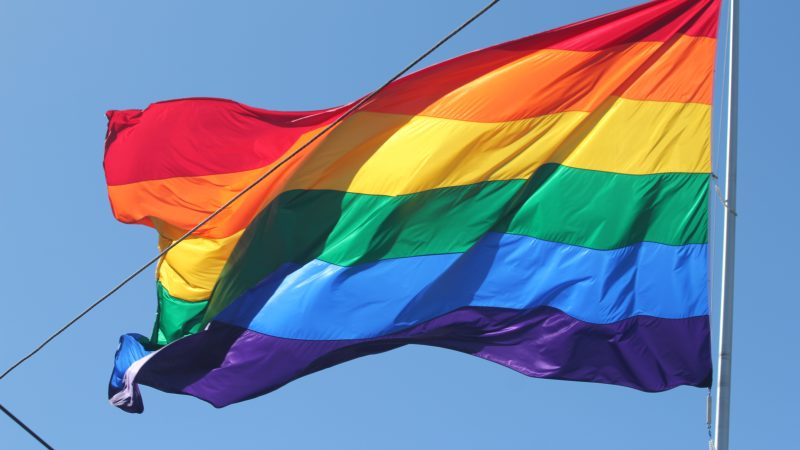
‘Through this decision, Leeds Pride asserts its position as an advocate for inclusivity, striving to ensure that Pride celebrations remain a platform for equality.’
Leeds Pride has terminated its sponsorship partnership with Leeds-based software company Phoenix Partnership (TPP), following the row over alleged racist comments the organisation’s founder and CEO Frank Hester said about Diane Abbott.
Organisers of Leeds Pride, which is due to take place on July 21, in celebration of LGBTQ+ culture, said they were ‘discontinuing’ the partnership, saying it was now ‘imperative it reassesses its association’ with Hester.
In a statement on social media, Leeds Pride said: “In light of recent developments involving alleged racist comments made by the TPP’s chief executive, it became imperative for Leeds Pride to reassess its association with the company. The decision to terminate the sponsorship agreement underscores the organisation’s dedication to upholding the values of diversity within the LGBTQ+ community and beyond.
“Leeds Pride acknowledges the concerns voiced by members of the community and recognises the importance of taking steps to uphold its principles. Through this decision, Leeds Pride asserts its position as an advocate for inclusivity, striving to ensure that Pride celebrations remain a platform for equality.”
…
Controversy consumed the businessman after the Guardian reported that Hester had allegedly made racist comments about MP Diane Abbott. The newspaper claimed he had said: “It’s like trying not to be racist but you see Diane Abbott on the TV, and you’re just like… you just want to hate all black women because she’s there.
“And I don’t hate all black women at all, but I think she should be shot.”
Across Argentina millions are participating in a national general strike to protest the Milei government’s widespread attacks on people’s rights
Mobilization against Milei on December 27, 2023. Photo: CELS
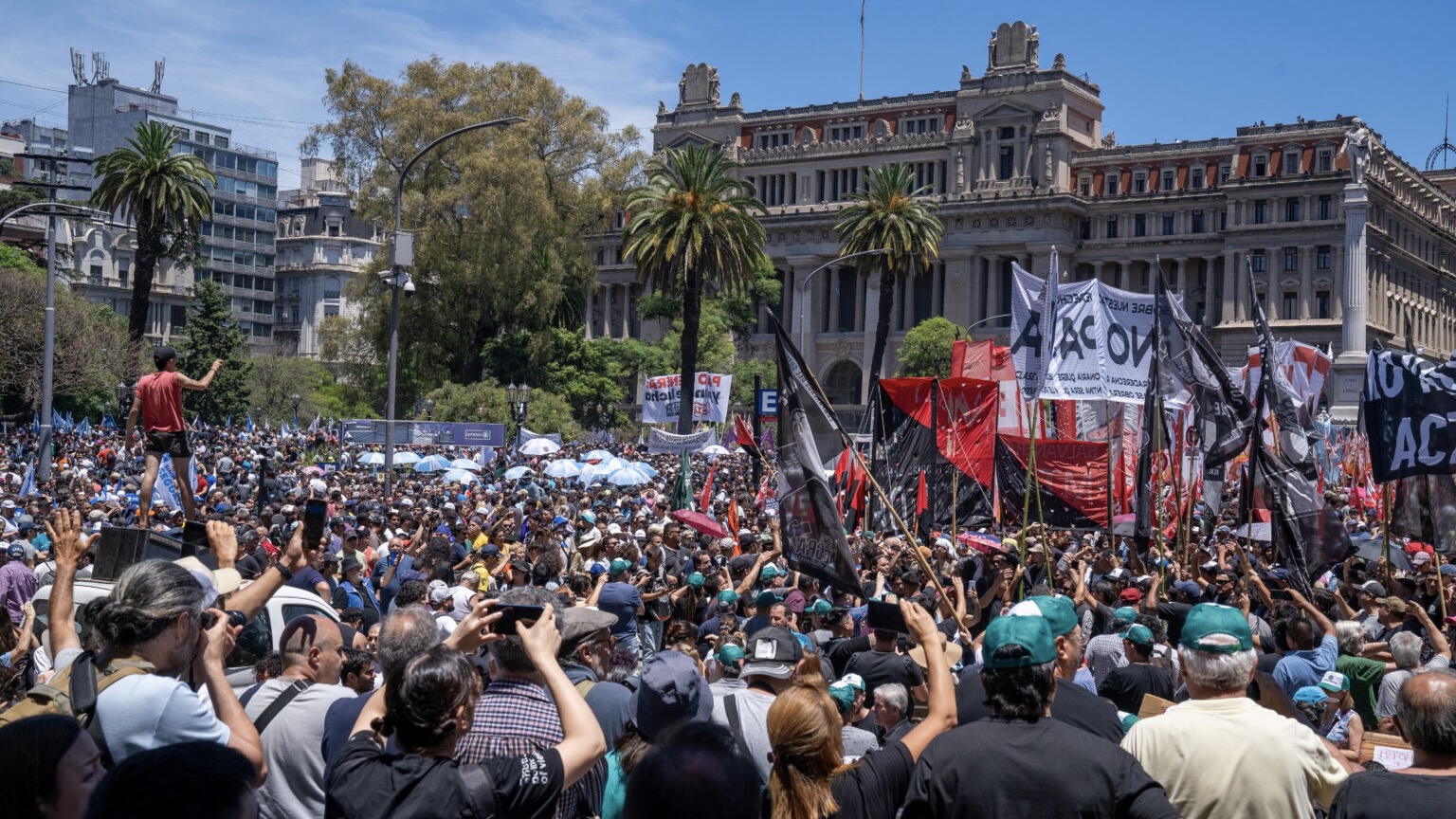
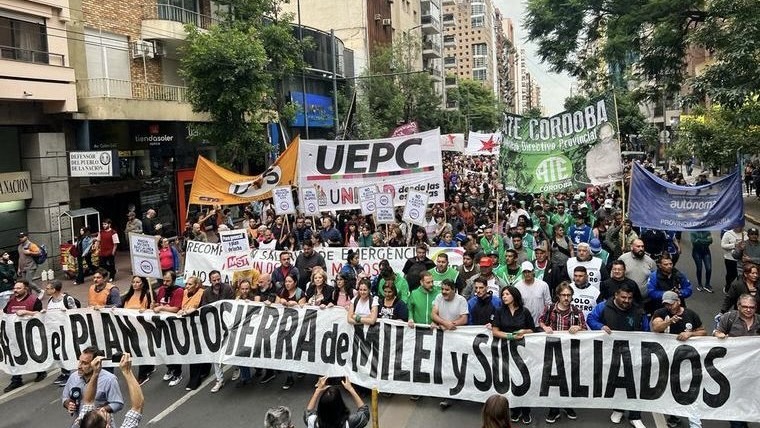
On January 24, across Argentina, millions of workers are participating in a national general strike against the anti-workers laws pushed forward by far-right libertarian president, Javier Milei.
Since he was inaugurated on December 10, 2023, Milei has worked quickly to draft legislation which threatens the hard-fought for rights of the Argentine people.
In response, Argentina’s trade unions, social movements, and human rights organizations have been on the streets to reject these measures, and called for a national general strike for January 24. For the last several weeks, hundreds of trade unions, neighborhood associations, cultural groups, left groups, community kitchens, and social movements have been organizing local and neighborhood assemblies and meetings to mobilize for the strike.
The largest concentration will be in Buenos Aires, Argentina’s capital, where hundreds of thousands are expected to congregate in the center of the city outside Congress. Mobilizations are also scheduled in dozens of other cities across the country like Córdoba, Rosario, San Miguel de Tucumán, Mendoza, Mar del Plata, Bahía Blanca, and others. While basic essential services will not be disrupted by the strike, the majority of the economy and daily life is set to be paralyzed due to the massive industrial action.
Who is participating?
The January 24 national strike is historic, as it is the first time in recent history that the country’s three major labor confederations are uniting for a joint industrial action. The General Confederation of Labor (CGT), the Argentine Workers’ Central Union, and the Argentine Workers’ Central Union (Autonomous) together represent millions of workers and have all called on their affiliated unions to participate in the day of mobilization.
The confederations are made up of dozens of unions representing workers in education, construction, civil service, food processing, healthcare, mining and metalwork, restaurants, commercial transportation (truck drivers, shipping, etc.), public transportation (buses, subway, and provincial trains), state workers, auto industry, textile, real estate, commercial, acting, national companies, the courts, music industry, communications and technology, among others. In other words, nearly the totality of the Argentine working class.
Mobilization against Milei in Córdoba in December 2023. Photo: CTA-A
Other unions such as the Union of Workers of the Popular Economy (UTEP) which represents street vendors, cooperatives, recyclers, agricultural workers, childcare workers, community kitchen workers, and others from the informal sector or “popular economy” have also pledged their participation in the mass mobilization.
Human rights organizations are also heeding the call for mobilizations such as the Grandmothers of the Plaza de Mayo, the Center of Legal and Social Studies (CELS), HIJOS (Sons and Daughters for Identity and Justice Against Forgetting and Silence), and others.
Several social and political forces that were part of the Union for the Homeland coalition which was defeated by Javier Milei in the presidential race in November, have also declared they will join the mobilization, such as Frente Patria Grande, La Campora, and Movimiento Evita.
Why are they mobilizing?
The strike has been called to reject Milei’s DNU and Omnibus Law, both pieces of legislation which trade unions say directly attack workers rights, impose brutal economic neoliberal austerity measures, and threaten the national sovereignty of the country. Organizations have called on the judiciary and the legislature to intervene to rule the DNU unconstitutional and revoke it in Congress, and to stop his Omnibus law from being passed. Both pieces of legislation have already met major legal roadblocks and have already undergone modifications from their first versions.
The Decree of Necessity and Urgency (DNU) 70/2023 was announced by Milei on December 20, 2023 (10 days after he took office). DNUs can be used by the executive to circumvent Congress and implement change immediately. Milei’s DNU titled “Bases to Rebuild the Argentine Economy” contains over 350 articles which would affect over 70 pieces of legislation, some completely overturned and others modified.
Milei and his cabinet announcing the DNU.
The DNU calls for the deregulation of major sectors of the Argentine economy such as energy, export, the credit card industry, transportation – including the aeronautic sector, healthcare, communications, tourism, and more. It also opens the door for the privatization of key state companies and the national bank and promotes foreign investment. It also impacts labor rights and rights of trade unions, such as the right to strike, the right to overtime pay, and other hard fought for rights of workers.
The Omnibus Law, officially called the Bases and Starting Points for the Liberty of Argentines, was sent to Congress by Milei on December 27, 2023. The 351-page bill contains more than 664 articles which will be debated in Congress. The Omnibus law attempts to take Milei’s “deregulation” approach a step further and expands it to all major areas of life in Argentina.
It includes a proposed reform to the Penal Code focused on “control of the streets” and calls for increasing sentences against protesters and in some cases eliminating the possibility of bail. It also initially stated that any meeting of three or more people in a public space must have the permission of the Minister of Security – this was later withdrawn.
It calls for the privatization of major state enterprises such as Argentine Airlines, ARSAT – a state telecommunications company, Argentine Trains, Public TV, the Water and Sewage Company (AySA), and the National Bank. Milei also included a list of another several dozen companies that have majority state participation such as Argentina Energy, military factories, the General Port Administration, Corredores Viales or the highway company, Argentine Mail, and Telam, the National News Agency.
The Omnibus law also calls for major reforms of the country’s public education system, notably taking away free higher education for foreigners. It also calls for major modifications of the entrance requirements and huge cuts to the overall budget. The country’s robust culture sector would also see major budget cuts under the law with a call to close historic artistic institutions of the country.
Environmental protections such as the Glacier Law, the Forest Law, and the Environmental Protection Law for the Control of Burning Activities would also undergo massive modifications.
The Omnibus also threatens retirees, emboldens police to use their full force, including gunfire, with little consequences, and transforms the electoral system.
The broad and expansive nature of the Omnibus and its outright attacks on so many sectors of society also helps explain why so many will be mobilizing in the strike.
The Secretary of Gender and Diversity of the Association of State Workers (ATE), Clarisa Gambera said, “This January 24, all of the union centers and social organizations of this country will be on the streets, to stop the ferocious advance of the right. Those who say that particular interests were generated over time, what they call particular interests are the rights that we won with struggle over more than 100 years and we are not willing to lose them. We continue to build unity, debates are taking place at the federal level. Comrades from all over the country participate in multi-sectoral meetings, assemblies, plenary sessions that are different ways to activate and add numbers of comrades on the streets this 24th.”
The CGT wrote in a statement rejecting Milei’s austerity measures and his claim that they only affect the “political caste”, not the people. CGT argues that, “The fiscal and exchange adjustment plan announced by the Government will generate a rapid acceleration of the inflationary process, which will destroy the purchasing power of the salaries of formal and informal workers, workers in the social and solidarity economy, self-employed workers, as well as of retirees and pensioners. This means that the announced adjustment does not adjust to the ‘so-called’ caste as promised in the campaign. Milei’s adjustment, once again, falls on the people.”
Repression
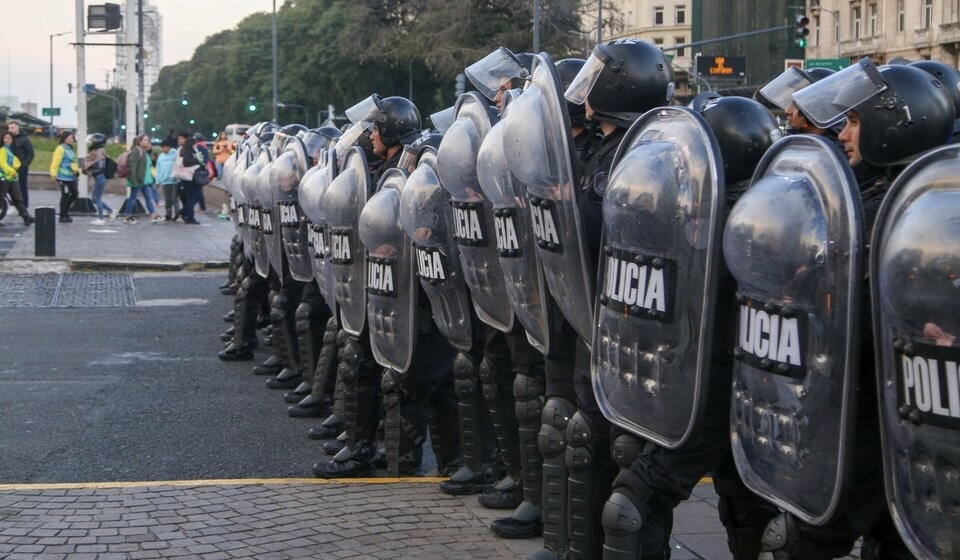
Another major point of contention for the Argentine people is the repressive policy imposed by the Minister of Security Patricia Bullrich, to dissuade mass participation in the inevitable mass mobilizations against Milei’s economic measures. Following the first protests against Javier Milei’s administration, Bullrich warned that it would use all “deterrent measures” to stop protests and on December 14 announced the “Public Order Protocol”.
Among other things, the protocol authorizes the police and security forces to intervene in response to any attempt to partially or totally block any national roads, transportation, or “free movement.” It has been dubbed the “anti-picket” protocol as it targets the historic picket and roadblock tactic of Argentine movements.
Another government “deterrence measure” is the threat from Bullrich that those who participate in protest actions and road blockades that are recipients of social programs will not receive this support: “he who blocks the street does not get paid,” she declared.
On January 10, 2024, Bullrich made good on her threats and, under the auspices of her protocol, sent letters to the major trade union centers of Argentina, unions, social, political and human rights organizations that had participated in protests on December 20, 22, and 27 of 2023 against Milei’s austerity measures and demanded they pay millions in fines for their participation in the allegedly “illegal activity”.
CELS wrote that in issuing these economic sanctions for participation in protests, the Ministry of National Security is “assuming powers that it does not have” and that it is also “trying to condition future action”. For the human rights research center, “This policy constitutes an infringement of the right to protest and demonstration and an act of state interference against freedom of association.”
International solidarity
The national general strike has gained widespread international support. Trade unions across Latin America and the Caribbean, as well as from Pakistan, Italy, Switzerland, Canada, the Netherlands, South Korea, Spain, and more, have pledged to mobilize on January 24 in solidarity with their Argentine comrades, with many calling for protests in front of their Argentine embassies or consulates.
The International Trade Union Confederation (ITUC), which brings together 191 million workers in 163 countries from all continents, released a statement expressing its support for its affiliated organizations in their call for the national general strike against “Milei’s shock therapy”. “Three major union federations, the CGT, the CTA-T, and the CTA-A, have united to stand against the serious threat to fundamental workers’ rights and civil liberties posed by Milei’s move to resurrect out-dated and debunked neo-liberal policies,” reads the statement.
ITUC General Secretary Luc Triangle said, “The actions of the Milei government aim to recreate the darkest days of dictatorship, and they require a strong, united response from the global union movement. We stand in full solidarity with the working people of Argentina in their defense of justice and democracy.”
The World Federation of Trade Unions (WFTU), which represents 105 million workers in 133 countries, expressed its support for its affiliate unions participation in the January 24 strike to “express their opposition to the measures of the ultra-liberal and neo-fascist government of Javier Milei”. It has called on its affiliates in other countries to mobilize in solidarity with the Argentine workers.
Trade Union Confederation of the Americas (TUCA-CSA) joined the other international confederation in standing with the struggle of Argentine workers, and calling on its affiliate organizations to mobilize in solidarity on January 24.
The PIT-CNT of Uruguay, Argentina’s northern neighbor, stated that “it is necessary to join forces and have as a horizon to advance Latin America on the path of struggle and hope towards a more just, free and equal society.”
Palestinians gather at Nelson Mandela Square in Ramallah to demonstrate appreciation to South Africa. (Credit: ramallahmunicipality)
At the International Court of Justice, South Africa spoke on behalf of the billions of people who oppose Israel’s genocide in Gaza — and put Western governments to shame for their deplorable complicity.
‘There is no safe space in Gaza and the world should be ashamed.’
Blinne Ní Ghrálaigh’s closing speech at the International Court of Justice will stay with me forever. Devastating and forensic in equal measure, Ní Ghrálaigh spoke for millions of people around the world who have been utterly appalled by the horrors unfolding live on our screens. ‘This is the first genocide in history where its victims are broadcasting their own destruction in real time,’ she said, ‘in the desperate and so far vain hope that the world might do something.’
Here was an Irish lawyer — who had previously worked on the Bloody Sunday Inquiry — speaking on behalf of South Africa, in support of the Palestinian people. For the Irish and the South Africans, the plight of occupied peoples is only too familiar. It should not come as any surprise, then, that South Africa’s case opened by placing Israel’s latest activity ‘within the broader context of Israel’s 25-year apartheid, 56-year occupation and 16-year siege imposed on the Gaza Strip.’ It was remarkably refreshing to hear South Africa articulate something so obvious yet routinely ignored by politicians in this country. Exposing the shallow state of our own political system, the hearing will go down in history as a momentous display of international solidarity from a people who know what it’s like to endure — and dismantle — apartheid.
This solidarity has grown and grown; South Africa’s case eventually gained the support of many countries, including Bolivia, Brazil and Colombia, as well as interstate actors like The Arab League. Politicians in this country can deny it all they want: millions of people around the world are desperate to see an end to the massacre of human beings, and will continue to support efforts to build a just and lasting peace.
We were required to be at the Court before 6am to gain entry, queuing in desperately cold weather. The International Court of Justice in the Hague is a beautiful building. It was built after the First World War, when there was real hope that the League of Nations and its judicial system would bring about peace. There was something poignant about Palestinian people who had lost relatives in Gaza and the West Bank, who were outside the Court to bear witness in search of justice.
South Africa presented its case against Israel under the Genocide Convention. The hearing was devastating — horror after horror, laid out in plain sight for all to see. The arguments were brilliantly marshalled by South Africa, and they should be commended for doing so. It is regrettable that most of our media did not deem these arguments important enough to broadcast. The BBC did not provide a live stream of South Africa’s case, choosing instead only to show Israel’s response the next day. It is to the credit of Al Jazeera that they not only live-streamed the hearing, but provided continuous and accurate coverage of the conflict, despite witnessing the deaths of their colleagues in the process.
South Africa pointed out that the Genocide Convention existed to protect all people, and that the Israeli action met the requirements of the convention in its deliberate and systematic destruction of civilian life in Gaza. South Africa also cited several statements from Netanyahu and other Israeli politicians pledging to diminish the population of Gaza by at least 90 percent. South Africa demonstrated what Palestinians have been trying to tell us all along: this was not a war of equals, but the systemic slaughter of the Palestinian people.
South Africa is determined not only to be on the right side of history, but change the course of it — and if the International Court of Justice was true to its name, it would give due consideration to South Africa’s case. It would find that the bombardment is wrong, the bombardment is illegal, and the bombardment represents the collective punishment of the Palestinian people. And it would rule that acts of genocide have been committed by the Israeli Government.
In the meantime, the South African case asked for interim relief, which would require a rapid call for an immediate ceasefire. It is a call that should be made by any political representative anywhere in the world committed to the protection of civilian life. It is to the great shame of the British and American political systems that relatively few elected representatives in either country have supported this call for an end to the loss of human life.
There is no way forward other than a ceasefire observed by all sides, which would present the opportunity then to map out a just and peaceful future. This is a decision to be made by the Palestinian people, not by those of us who support them. Acts of solidarity cannot entail telling others what to do.
Outside, after the hearing finished, the fantastic team of lawyers took questions from a huge group of journalists on the steps of the ICJ, in utterly freezing conditions. I was there on behalf of the Progressive International. We held a media event in the street in front of us, and made the case that the popular voice of ordinary people around the world is one of peace, and that we would campaign for as long as it takes to bring about justice for the Palestinian people.
‘We did what we could. Remember us.’ Ní Ghrálaigh finished her address by showing two photos of a whiteboard at a hospital in Gaza. The first showed a handwritten message on it by a doctor. The second photo was of the same whiteboard after an Israeli strike on the hospital. It showed the board completely destroyed. The author of the message had been killed.
Millions are appalled, watching in real time the destruction of human life in Gaza. History will not forget those who refused to treat Palestinian and Israeli lives with equal worth. But neither will it forget those who are determined to campaign for a more peaceful world.
About the Author
Jeremy Corbyn MP, former leader of the Labour Party
Jeremy Corbyn is the member of parliament for Islington North.
I’ve quoted all Jeremy Corbyn’s article, hope that nobody objects. Authors: It’s likely that you are able to use a Creative Commons licence despite being published by others.