Hundreds of Thousands March for Gaza as World Demands Cease-Fire

Spread the love

Original article by JON QUEALLY republished from Common Dreams under Creative Commons (CC BY-NC-ND 3.0). 

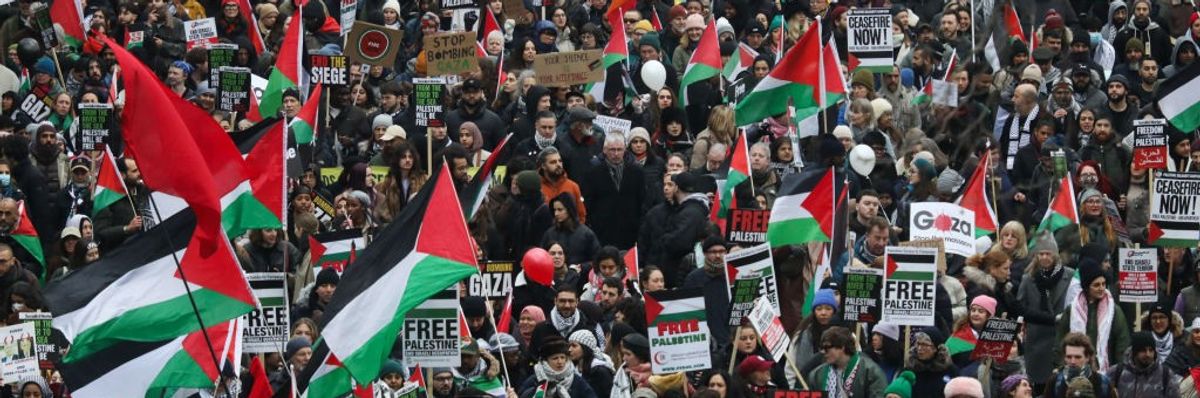
Tens of thousands of people gather to join the Global Day of Action calling for a ceasefire and an end to the war on Gaza on the 13th of January 2024, Central London, United Kingdom. The march and rally coincided with marches all over the World.  (Photo by Kristian Buus/In Pictures via Getty Images)

Coordinated actions from DC to London to Jakarta designed to “send a powerful message not just to the Israelis but to the Western powers who are backing them that the public say ‘not in our name.'”

Major coordinated demonstrations took place across the world on Saturday to mark the 100th day of Israel’s bombardment and military assault on the people of the Gaza Strip that have now claimed the lives of nearly 24,000 Palestinians, a large majority of them innocent men, women, and children who had nothing to do with the attacks orchestrated by Hamas on October 7 of last year.

In London, as many as 500,000 people marched on Parliament Square to demand an immediate cease-fire Gaza, condemn their own U.K. government’s support of Israel’s disproportionate and “genocidal” onslaught, and warn against a wider regional war that experts warn is creeping closer by the day.

‘Justice is lacking’: pro-Palestine demonstrators gather in London www.youtube.com

“This Global Day of Action, from Australia through to Asia, Europe and the Americas, is the first coordinated, international movement against the war being waged by Israel on the Palestinian people,” said Gaza Global Day of Action organizers ahead of the demonstration. “It will send a powerful message not just to the Israelis but to the Western powers who are backing them that the public say ‘not in our name.'”

In Dublin, organizers of a march that saw more than 100,000 march through city streets called it the largest rally for Palestinian rights in Irish history.

As the Irish Timesreports:

The crowd was filled with Palestinian flags, posters calling for an “End to the Gaza genocide” as well as makeshift washing lines, with baby clothes hanging from it, representing the many young lives lost in the conflict.

At the front of the march, four people held mock corpses in bloody body bags to represent the growing number of civilian casualties.

In the United States, tens of thousands marched in Washington, D.C. to denounce the Israeli onslaught—which has claimed over 23,000 lives, including more than 10,000 children—as well as their own government’s complicity in the carnage. President Joe Biden was on the tip of many demonstrators’ tongues and polls in the U.S. have shown very little support across the political spectrum for how he is handling the situation.

Jake and Ida Braford, a young couple from Richmond, Virginia, who brought their two small children to the protest, told the Associated Press the situation in Gaza has made them unsure of their support for Biden come this year’s election.

“We’re pretty disheartened,” Ida told the news agency. “Seeing what is happening in Gaza, and the government’s actions makes me wonder what is our vote worth?”

Following the march, demonstrators left a pile of bloodied baby dolls, including severe parts, in a pile outside the White House as a message to Biden. “The blood of the over 10,000 murdered children in Gaza is on his hands,” said CodePink co-founder Jodie Evans.

Meanwhile, in Indonesia, thousands gathered outside the U.S. embassy in Jakarta to condemn the ongoing “genocide” in Gaza perpetrated by Israel with the backing of the U.S. government and other Western allies.

Global day of action: Demonstration at US embassy in Jakarta urges ceasefire in Gaza www.youtube.com

Large protests were also held in Kuala Lumpur, Malaysia as well as in the South African cities of Cape Town and Johannesburg. On Thursday, a delegation from South Africa presented its case charging Israel with genocide before the International Court of Justice (ICJ) in The Hague.

“We are here today to be part of the global day of action that will see demonstrations planned in more than 66 cities and at least 36 countries,” said a statement released by the organizers in Cape Town. “Today’s rally will be part of a united front of global voices, calling unconditionally for an immediate and permanent ceasefire.”

Cities in Israel were not among those holding large-scale demonstrations against the government’s ongoing military campaign in Gaza. One application by Israelis for a rally in Haifa to denounce the onslaught was rejected.

As Haaretzreported: “The commander of the police’s Coastal District, Maj. Gen. Daniel Levy, explained that the refusal to grant the permit was over “real concerns about a serious disruption to public order,” adding that there was a high likelihood that violence would break out between demonstrators and people opposing the demonstration.”

Original article by JON QUEALLY republished from Common Dreams under Creative Commons (CC BY-NC-ND 3.0). 

Gaza Cease-Fire Now! No Wider War

Bloodied Baby Dolls Left Outside White House to Protest Biden’s Complicity in Gaza

Democrat Applauded for (Not-So) ‘Dumb Idea’ to End Houthi Attacks in Red Sea

Continue ReadingHundreds of Thousands March for Gaza as World Demands Cease-Fire

Germany bans public grieving and solidarity with Palestine

Spread the love

Original article republished from peoples dispatch under a Creative Commons Attribution-ShareAlike 4.0 (CC BY-SA) license.

Demonstrators in Berlin take the streets in solidarity with Palestine (Photo: Montecruz Foto)

Germany is home to Europe’s largest Palestinian community, with roughly 80,000 Palestinians living in the country. For years, German authorities have tried to stifle Palestinian activism in the country, viewing it as a nuisance to its explicit policy of “unconditional support for Israel.” Demonstrations, such as one earlier this year to mark the 75th anniversary of the Nakba, have been sporadically banned in recent years and organizations, like the Palestinian prisoner solidarity network Samidoun, have also come under increasing scrutiny.

Yet the criminalization of solidarity with Palestine on a national level has taken on entirely new dimensions since October 7. After a small demonstration on Berlin’s busy Sonnenallee street on the evening of October 7, the German media and body politic have been up in arms about Palestinians supposedly celebrating terrorism and antisemitism on German streets.

Talking points that were two weeks ago only uttered by far-right AfD politicians are now being openly expressed by politicians from all parliamentary parties in Germany. Playing off the idea of “imported antisemitism,” the social democratic Chancellor Olaf Scholz is now arguing that “we must finally deport on a large scale” residents who do not hold German citizenship and openly protest against Israel. The Christian Democrats (CDU) are even demanding that the recognition of Israel’s right to exist must become a precondition for German citizenship.

Samidoun has been made into public enemy number one, as the media presents the group as a bastion for “sympathizers of terror” that poses “a particular danger, because as a secular organization, they are building bridges between Islamists and radical leftists.” In a speech before parliament on October 12, Chancellor Scholz personally announced a ban on Samidoun along with a ban on the activities of Hamas in Germany. 

In Berlin specifically, which is home to one of the largest Palestinian diaspora communities outside the Arab world, the authorities have been particularly hostile towards any signs of solidarity with Palestine. Since October 7, every demonstration explicitly or implicitly referring to Palestine has been banned, leaving the roughly 30,000 Palestinians living in Berlin with no means of expressing their anguish at the siege and bombardment of Gaza.

Solidarity groups have been trying to bypass this censorship by avoiding political statements and focusing on humanitarian campaigning, yet even demonstrations and slogans such as “Children in Gaza need help” and “Solidarity with the civilian population in the Gaza Strip” were banned. On October 13, the police went so far as to ban a demonstration registered by the group “Jewish Voice for a Just Peace in the Middle East” entitled “Jewish Berliners against violence in the Middle East.” 

Sonnenallee, a busy street in the district in which many Arab migrants live, has become a focal point of dissent against Israel’s attack on Gaza. The police patrol Sonnenallee every evening with tight controls on the public squares. Racial profiling and brutal arrests are commonplace and often recorded and posted to social media. One particular video shows police officers stomping out a candle-lit vigil with their boots.

In a letter to all Berlin schools, the city’s Department for Education, Youth and Family set out strict guidelines on how to discuss the situation in Palestine with students. “Any demonstrative action or expression of opinion that can be understood as advocating or approving of the attacks against Israel or support for the terrorist organizations carrying them out, such as Hamas or Hezbollah, constitutes a threat to school peace in the current situation and is prohibited.” According to the letter, these may include the following: “visibly wearing relevant clothing (for example, the kuffiyeh known as the Palestinian scarf), displaying stickers and patches with inscriptions such as ‘free Palestine’ or a map of Israel in the colors of Palestine (white, red, black, green), and shouting ‘free Palestine!’ and demonstrating verbal support for Hamas and its terrorism.”

At one high school on Sonnenallee, a 61-year-old teacher attempted to confiscate a Palestinian flag from a 14-year-old student and ended up in a physical altercation with a second 15-year-old student. The parents’ association of the school tried to organize a demonstration under the slogan “No place for racism, no place for violence” as a reaction to the incident, yet it was promptly banned by the police, ostensibly as a “a precautionary measure”. The Central Council of Palestinians in Germany has since sent a letter in response to Berlin’s Department for Education, expressing their “great concern about the psychological and educational development [of their children]” in Berlin schools.

As other European states are witnessing mass protests in solidarity with Palestine, the German state has been able to use force and violence to prevent such scenes on German streets. Yet it is unlikely that the government will be able to ban these sentiments of solidarity indefinitely, especially as the images of Israel’s brutal attack on Gaza continue to circulate around the world.

Original article republished from peoples dispatch under a Creative Commons Attribution-ShareAlike 4.0 (CC BY-SA) license.

Continue ReadingGermany bans public grieving and solidarity with Palestine

‘Not Yet Defeated’: 1,000+ March for Climate Justice at COP27

Spread the love

Republished from Common Dreams under Creative Commons (CC BY-NC-ND 3.0). Feel free to republish and share widely.

People participate in the Global Day of Action Climate Justice March at COP27 on November 12, 2022 in Sharm El-Sheikh, Egypt. (Photo: Gertie Goddard/Greenhouse Communications via Twitter)

“COP27 needs to be a turning point for the climate crisis,” said one activist.

KENNY STANCILNovember 12, 2022

Hundreds of people rallied Saturday at the United Nations COP27 summit in Egypt to demand the fundamental political-economic transformations required to achieve climate justice.

“There can be no climate justice without human rights,” declared the COP27 Coalition, an alliance of progressive advocacy groups that planned the protest as part of its push for “an urgent response from governments to the multiple, systemic crises” facing people around the world. “We are not yet defeated!”

“We march today as part of the global day of action,” Janet Kachinga, spokesperson for the COP27 Coalition, said in a statement. “Solidarity is the cornerstone of climate justice.”

“We are marching inside the U.N. space to highlight that our movements are unable to march freely on the streets of Egypt,” said Kachinga.

Ahead of COP27, human rights groups denounced Egypt’s repression of dissidents, including hunger-striking political prisoner Alaa Abd El Fattah. Since the conference began last week in the resort city of Sharm El-Sheikh, Egyptian officials have been accused of spying on and otherwise intimidating participants.

“We refuse to greenwash the Egyptian government’s denial of the right to freedom of association, assembly, and speech by marching in a government-controlled march in the streets of Sharm El-Sheikh,” Kachinga continued.

Instead, from inside a designated Blue Zone governed by U.N. rules, activists sought “to lift up the voices and demands of all our frontline communities and movements facing repression because they dream of a better world,” said Kachinga.

“We are at a crossroads of overlapping crises and governments are not on track to stop the worst of the climate crisis,” said Kachinga. “COP27 needs to be a turning point for the climate crisis, and not a moment to silence people.”

The U.N. recently published a series of reports warning that as a result of woefully inadequate emissions reductions targets and policies, there is “no credible path to 1.5°C in place,” and only “urgent system-wide transformation” can prevent temperatures from rising a cataclysmic 3°C by century’s end.

“Solidarity is the cornerstone of climate justice.”

According to the latest data, atmospheric concentrations of carbon dioxide, methane, and nitrous oxide—the three main heat-trapping gases fueling global warming—hit an all-time high in 2021, and greenhouse gas emissions have only continued to climb this year.

Despite overwhelming evidence that new fossil fuel projects will lead to deadly climate chaos, oil and gas corporations are still planning to expand dirty energy production in the coming years, including in Africa.

“The call for greater oil and gas production is completely out of step with climate science,” Jeni Miller, executive director of the Global Climate and Health Alliance, said Friday in a statement. “Presented as a necessity for development, new investments in fossil fuel infrastructure would instead simply lock a new generation into these dirty fuels, at a time when clean energy is viable and ready to be scaled.”

“The rightful need of people in low- and middle-income countries for access to energy—for clean cooking, for healthcare, for education, for jobs, and many other key determinants of health—must not bring with it the health costs associated with fossil fuels,” Miller added. “It is vital that high-income countries provide financial support for the transition in low- and middle-income countries.”

Related Content

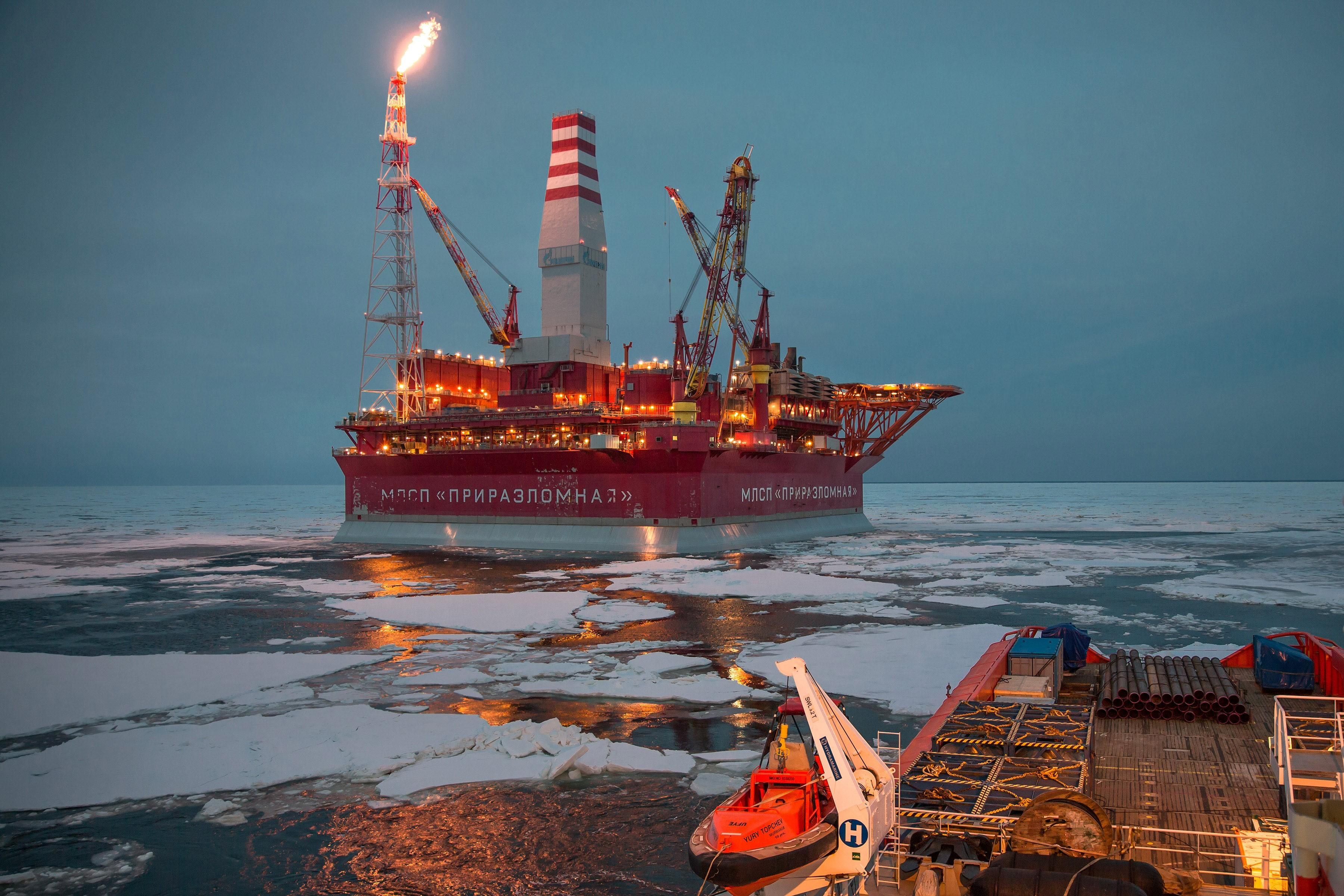
The Prirazlomnaya offshore ice-resistant oil rig is seen in the Pechora Sea, part of Russia's Arctic territory, on May 8, 2016.

Oil and Gas Industry’s Expansion Plans Decried as Attack on ‘Livable Planet’

Kenny Stancil

Among the key demands of the COP27 Coalition is that the rich nations most responsible for causing the climate crisis “fulfill their obligations and fair shares by reducing their emissions to zero and providing poorer nations the scale of financial support needed to address the crisis.”

The coalition argues that “repayment should include adaptation, loss and damage, technology transfer, and factor in debt cancellation for vulnerable countries [that] have been impoverished while dealing with the impacts of the climate crisis.”

A recent U.N.-backed report estimates that poor nations will need a combined total of $2.4 trillion per year by 2030 to fight the climate emergency—including funding for mitigation, adaptation, and loss and damage.

“Unless more urgency is shown, marches will only be the start.”

A separate analysis from Carbon Brief reveals the extent of wealthy countries’ failures to mobilize far smaller sums of money to support sustainable development and enable equitable responses to escalating extreme weather disasters.

Since the COP15 meeting in 2009, developing countries have been promised that rich nations would provide at least $100 billion in climate aid each year by 2020. However, just over $83 billion was delivered in 2020, the most recent year for which data is available. The Global North is not expected to hit its annual target, widely regarded as insufficient, until 2023.

The U.S. is most responsible for the shortfall, providing less than $8 billion toward the $100 billion figure in 2020. That constitutes a mere 19% of the country’s approximately $40 billion “fair share,” or what it should be paying based on its cumulative contribution to global greenhouse gas pollution.

U.S. President Joe Biden has vowed to allocate $11.4 billion per year toward international green finance by 2024—less than 2% of the annual Pentagon budget and still far less than Washington’s fair share—but congressional lawmakers approved just $1 billion in a $1.5 trillion spending bill passed earlier this year.

When it comes to the U.N.-backed loss and damage fund, just a handful of high-polluting countries have pledged a combined total of around $250 million so far, a tiny fraction of the $31.8 trillion that the world’s 20 wealthiest economies collectively owe the Global South, according to the Climate Clock, a recently unveiled display at COP27.

“The science of climate breakdown has never been clearer, and seeing the suffering of my fellow Africans facing drought and famine, the impacts have never been more painful,” said Mohamed Adow, a representative of the COP27 Coalition.

“It’s no wonder that people are rising up across the world to make their voices heard that they will not stand for inaction from their leaders,” Adow continued. “Unless more urgency is shown, marches will only be the start.”

“Today we rise as a people, despite the restrictions, to demand our collective rights to a livable future,” said environmental justice champion Nnimmo Bassey. “We demand payment of the climate debt accumulated by centuries of dispossession, oppression, and destruction.”

“We need a COP led by the people and not polluters,” Bassey continued, alluding to the massive presence of fossil fuel lobbyists at the meeting. “One that rejects ecocidal, neocolonial false solutions that will widen the emissions gap, burn Africa and sink small island states, and further entrench environmental racism and climate injustice!”

Republished from Common Dreams under Creative Commons (CC BY-NC-ND 3.0). Feel free to republish and share widely.

Continue Reading‘Not Yet Defeated’: 1,000+ March for Climate Justice at COP27