Tag: South Africa

  • Trump is cancelling a Republican project to wipe out Aids – putting millions of lives at risk

    Spread the love

    Michael Jennings, SOAS, University of London

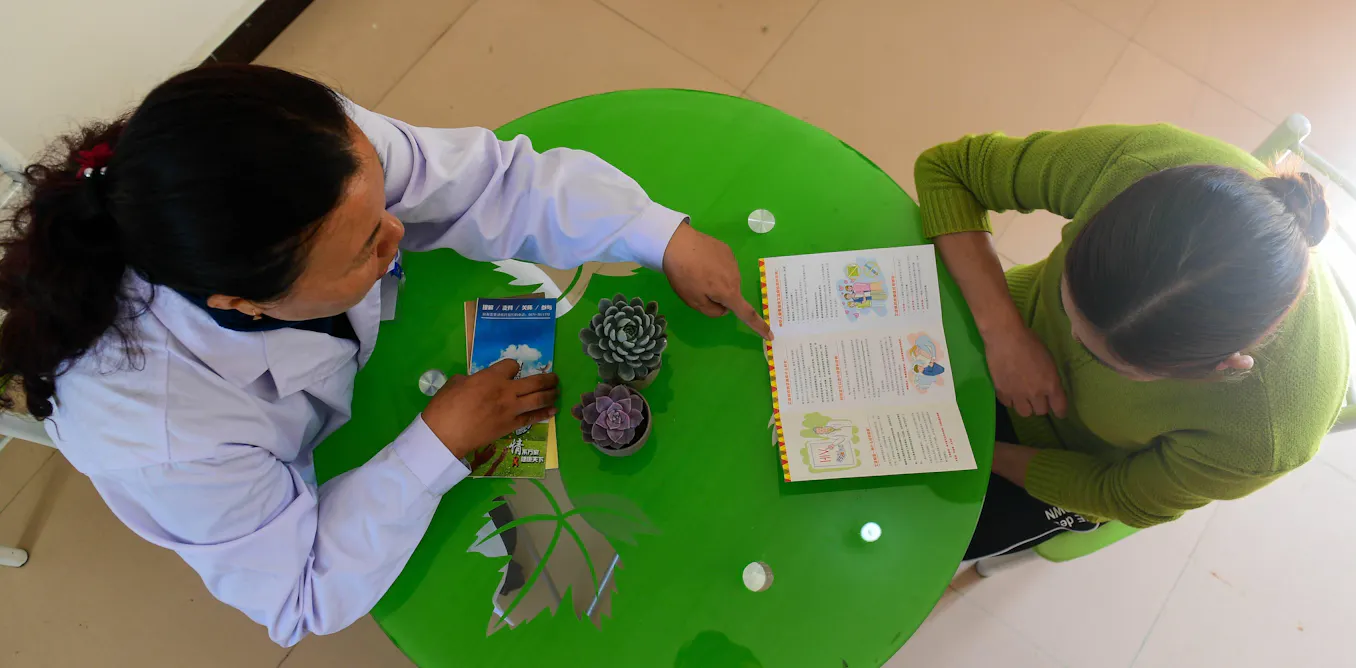
    Enormous progress has been made in tackling the global HIV epidemics over the past two decades. The number of people dying from HIV-related causes has fallen by 51% since 2010; and the number of annual new infections has fallen from 2.1 million new infections in 2010 to 1.3 million in 2023 (a drop of 39%).

    This is the impact of the roll out of massive global programmes for prevention and treatment in this period. In 2003, around 400,000 people living in low and middle-income countries were able to access the life-saving anti-retroviral therapy drugs to manage the virus. Today it stands at more than 25 million people.

    A large part of this success is due to the role of the President’s Emergency Plan for AIDS Relief (Pepfar), established by George W. Bush in 2003. Pepfar now accounts for around 70% of the total funding for the global response to HIV. And it has been a rare example of successful bipartisan support within the US.

    Or at least it was, until the Trump administration included Pepfar in its attack on US aid spending in January. HIV spending under Pepfar was included in the initial freeze on aid grants imposed by executive order. And on February 27, news broke that the US secretary of state, Marco Rubio, had signed off on cuts affecting more than 90% of USAid grants, including the ending of US global HIV funding. Pepfar-funded programmes in South Africa were terminated with immediate effect; and UNAids was sent a letter confirming that the US was stopping its funding to the organisation.

    Although details on what, if any, Pepfar programmes might survive in some form have not yet been forthcoming, the programme has been gutted in its current form, and few now hold out hope for anything significant remaining.

    It has been a remarkable fall for an organisation that at the end of 2024 was funding the treatment of more than 20 million people (including over 560,000 children) across 55 countries; supporting over 90% of the use of pre-exposure phrophylaxis to prevent new infections; funding the testing of 83.8 million people in 2024 (up from 71 million the previous year); and was directly supporting 342,000 health workers across the world.

    The importance of Pepfar as a tool of global soft power, the bipartisan support, and the relative uncontroversial focus of its activities, had led many to assume it would survive the administration’s swingeing reductions of aid. This was not to be the case.

    In hindsight, that bipartisan support had started to weaken as early as two years ago. In 2023, in the face of growing Republican hostility to the programme, former president, George W. Bush, warned Congress not to drop its support for Pepfar. In March 2024, its mandate and funding was renewed, but for 12 months rather than the usual five years. Criticism increased in the days before Trump took power in January of this year when Pepfar notified Congress (as it was bound to) that four nurses funded through Pepfar in Mozambique had performed abortions (entirely legally). Funding had been suspended and an investigation launched, but enraged Republicans insisted on an additional inquiry.

    George W. Bush talks about 20 years of the Pepfar programme.

    Trump is expected to reinstate the controversial Mexico City policy. Abortion issues were already an area of heightened sensitivity and contributed to renewed calls from some Republicans for an end to Pepfar. The executive order removing funding from the World Health Organization was another indication of the direction of travel, and a signal that not even relatively uncontroversial support for health funding (where the impact of aid can be seen most clearly) was safe.

    Whatever the reasons and politics of Pepfar’s decline, the ending of US support for global HIV programmes is a disaster for those in low and middle-income countries. In South Africa, for instance, Pepfar supports around 17% of the budget of the world’s biggest HIV programme. Around 8 million people live with HIV, and around 5.5 million people are being treated, most of whom are supported by Pepfar funds. The immediate challenge is now to fund ongoing treatment in the weeks and months to come before an alternative secure source of funding can be found.

    But even if new funding can be found, the knock-on impact will be serious. The disruption caused by the initial freeze was immense. And the crisis in addressing HIV will also impact wider health issues, especially TB, sexual and reproductive health care. A report published prior to the confirmation of Pepfar’s destruction, suggested ending US support could lead to an additional 565,000 new infections and 601,000 more deaths over the next decade.

    In countries where the US funding for HIV programmes is a higher proportion – and for many low and middle-income countries, Pepfar accounts for about two-thirds of the HIV prevention and treatment budget – it will be even harder to plug the funding gap. The former head of UNAids, Peter Piot, has raised the prospect of countries like Zimbabwe and Zambia running out of anti-HIV drugs.

    Treatment programmes in in Lesotho, Eswatini and Tanzania have already had to close. Amongst the 350,000 people affected are more than 10,000 pregnant women living with HIV who require treatment to prevent passing on the virus to their unborn child.

    The tragedy of the end of Pepfar is that it was one of the clear success stories in how aid can support and transform lives and countries. It played a major role in turning the tide of the epidemic back. The programme was also instrumental in enabling those with the virus to lead full, active lives and contributed to major reductions in the numbers of people newly infected. With a stroke of a pen, that progress has not just been threatened, but reversed.

    Rebuilding a global HIV response less dependent on any single donor is essential. But at a time when big donors are stepping back, rather than stepping up in response to the US aid cuts, prospects for filling the gaps quickly to minimise the harm look very dim.

    Michael Jennings, Professor in Global Development, SOAS, University of London

    This article is republished from The Conversation under a Creative Commons license. Read the original article.

    Neo-Fascist Climate Science Denier Donald Trump says Burn, Baby, Burn.
    Neo-Fascist Climate Science Denier Donald Trump says Burn, Baby, Burn.
    Elon Musk urges you to be a Fascist like him, says that you can ignore facts and reality then.
    Elon Musk urges you to be a Fascist like him, says that you can ignore facts and reality then.
  • ‘No chance’: South Africa says won’t withdraw Israel genocide case despite Trump threats

    Spread the love

    This work by Middle East Monitor is licensed under a Creative Commons Attribution-NonCommercial-ShareAlike 4.0 International License. I

    Minister of Justice and Correctional Services of South Africa Ronald Lamola answers the questions of press members related to the public hearings of South Africa’s genocide case against Israel at the International Court of Justice (ICJ) in The Hague, Netherlands on January 11, 2024 [Dursun Aydemir – Anadolu Agency]

    South Africa has vowed not to withdraw its genocide case against Israel at the International Court of Justice (ICJ), despite the Trump administration’s threats and aid cut.

    There is “no chance” South Africa could withdraw the case it filed in December 2023, Foreign Minister Ronald Lamola told the Financial Times.

    “Standing by our principles sometimes has consequences, but we remain firm that this is important for the world, and the rule of law,” he added.

    South Africa was the first nation to drag Israel to the ICJ over its genocidal war on Gaza that has claimed more than 48,000 lives and reduced the enclave to rubble. A ceasefire that took hold on 19 January is currently in place.

    Last week, US President Donald Trump signed an executive order halting financial aid to South Africa in retaliation for a new land appropriation law it claims seizes property from the country’s White minority, as well as the ICJ case against Israel.

    The US also alleges that South Africa is working with Iran to “develop commercial, military and nuclear arrangements.”

    “The United States cannot support the government of South Africa’s commission of rights violations in its country or its ‘undermining United States foreign policy, which poses national security threats to our Nation, our allies, our African partners, and our interests,” the order read.

    “While we do have a good relationship with Iran, we don’t have any nuclear programmes with them, nor any trade to speak of,” Lamola said.

    South African President Cyril Ramaphosa recently signed the expropriation bill into law, which will allow the state to expropriate land without compensation if it is “just, equitable and in the public interest.”

    The government says the law aims to address apartheid’s past injustices, and that Trump’s accusations are lies, distortions and misinformation.

    According to Ramaphosa, the country was only receiving HIV/AIDS prevention funding from the US.

    After South Africa instituted proceedings against Israel alleging violations of the 1948 Genocide Convention in the Gaza Strip, several countries joined the case including Nicaragua, Colombia, Cuba, Libya, Mexico, Spain, Belize and Turkiye.

    The International Criminal Court has separately issued arrest warrants for Israeli Prime Minister Benjamin Netanyahu and his former Defence Minister Yoav Gallant for war crimes and crimes against humanity in Gaza. Trump has also sanctioned the ICC for investing Israeli officials.

    READ: Israel will stay in south Lebanon, says military spokesperson

    This work by Middle East Monitor is licensed under a Creative Commons Attribution-NonCommercial-ShareAlike 4.0 International License. I

    Elon Musk urges you to be a Fascist like him, says that you can ignore facts and reality then.
    Elon Musk urges you to be a Fascist like him, says that you can ignore facts and reality then.
    Climate Science Denier Donald Trump says Burn, Baby, Burn.
    Climate Science Denier Donald Trump says Burn, Baby, Burn.
  • Ireland to join genocide case against Israel, ask Court to ‘broaden its interpretation’

    Spread the love

    https://www.middleeastmonitor.com/20241211-ireland-to-join-genocide-case-against-israel-ask-court-to-broaden-its-interpretation

    Overview of the courtroom at the International Court of Justice (ICJ) in The Hague, Netherlands on 22 April, 2024 [Selman Aksünger/Anadolu Agency]

    Ireland will formally join South Africa’s genocide case against Israel following government approval and will be asking the Court to “broaden its interpretation” of what constitutes genocide, the nation’s Foreign Minister said Wednesday, Anadolu Agency reports.

    Ireland will join the case at the International Court of Justice (ICJ) in The Hague this month, Micheal Martin said in a statement.

    “There has been a collective punishment of the Palestinian people through the intent and impact of military actions of Israel in Gaza, leaving 44,000 dead and millions of civilians displaced,” Martin said following Wednesday’s Cabinet meeting.

    He stressed that, by legally intervening in South Africa’s case, Dublin will also be asking the ICJ to “broaden its interpretation of what constitutes the commission of genocide by a State”.

    “We are concerned that a very narrow interpretation of what constitutes genocide leads to a culture of impunity in which the protection of civilians is minimised,” underlined Martin.

    He went on to say that Ireland’s view of the Convention is broader and prioritises the protection of civilian life as the government will promote that interpretation in its intervention in this case.

    Martin added that the government has also approved joining Gambia’s case against Myanmar under the same convention.

    In October 2023, Israel launched a genocidal war on the Gaza Strip that has so far killed over 44,800 people, mostly women and children, and now faces a genocide case at the International Court of Justice for its war on Gaza.

    Last month, the International Criminal Court issued arrest warrants for Israeli Prime Minister, Benjamin Netanyahu, and former Defence Minister, Yoav Gallant, for war crimes and crimes against humanity in Gaza.

    READ: Algeria, South Africa insist on holding Israel accountable before ICJ

    This work by Middle East Monitor is licensed under a Creative Commons Attribution-NonCommercial-ShareAlike 4.0 International License.

  • UN Experts Warn Israel Risks ‘Pariah’ Status Over Gaza Genocide

    Spread the love

    Original article by Brett Wilkins republished from Common Dreams under Creative Commons (CC BY-NC-ND 3.0). 

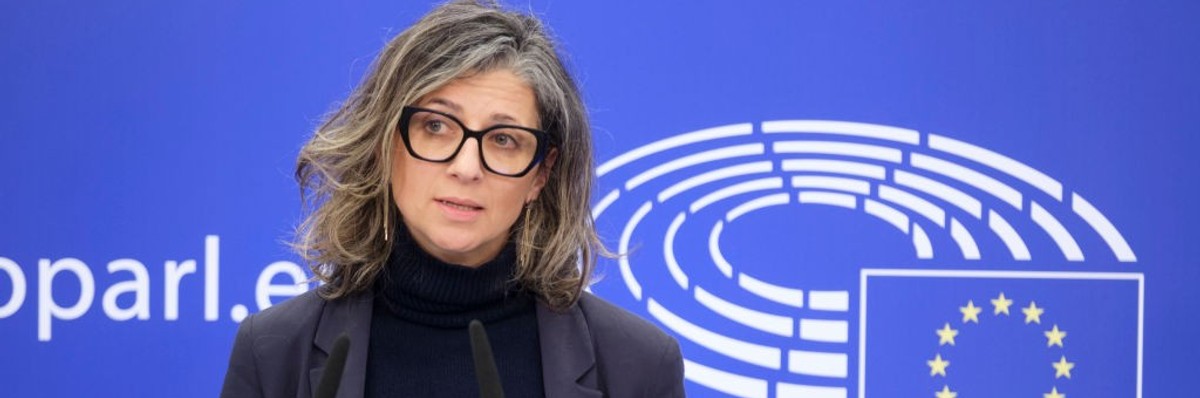
    United Nations special rapporteur on the Occupied Palestinian Territories Francesca Albanese addresses the European Parliament in Brussels on April 10, 2024.
     (Photo: Thierry Monasse/Getty Images)

    One expert even asked if Israel’s United Nations membership should be reconsidered given the country “seems to have zero respect” for the world body.

    United Nations human rights experts warned Monday that Israel risks becoming an international “pariah” over its ongoing assault on Gaza—for which it is on trial for genocide at the world body’s International Court of Justice.

    The special rapporteurs—who are appointed by the U.N. but do not speak on its behalf—condemned Israel’s human rights violations against Palestinians, as well as its blatant disregard for international law and multiple rulings from the ICJ.

    These include an advisory opinion that the 57-year Israeli occupation of Palestine is an illegal form of apartheid that must immediately end, and orders for Israeli forces to avoid genocidal actions in Gaza and to immediately halt the Rafah offensive.

    George Katrougalos, the U.N. special rapporteur on the promotion of democratic and equitable international order and a former Greek foreign minister, said during a press conference that the “first obligation” for harmonious relations between nations “is for everybody to respect the United Nations rules.”

    “This is not happening in the case of Israel,” Katrougalos noted.

    The United Nations agency for Palestinian relief says that around 200 of its staff members have been killed in more than 450 Israeli attacks on agency facilities since October. More than 500 Palestinians have been killed while seeking shelter under the U.N. flag.

    Overall, more than 146,000 Palestinians have been killed or wounded by Israeli forces since October. Almost all of Gaza’s 2.3 million people have been forcibly displaced, and Israel’s “complete siege” has caused widespread starvation—sometimes deadly—and sickness throughout the coastal enclave.

    Comparing the international community’s reaction to Russia’s ongoing invasion of Ukraine and Israel’s war on Gaza, Katrougalos stressed that “we cannot anymore stand this kind of double standards and hypocrisy.”

    “I trust that the progressive and democratic citizens of Israel would not let their country become a pariah like South Africa [had] become during the times of apartheid,” he added. South Africa is leading the genocide case against Israel at the ICJ.

    Francesca Albanese, the U.N. special rapporteur on the rights situation in the occupied Palestinian territory, said that “I think it’s unavoidable for Israel to become a pariah in the face of its continuous, relentless, vilifying assault of the United Nations, on top of millions of Palestinians.”

    “Shockingly, in the face of the abyss reached in the OPT… most member states remained inactive at best, or [are] actively aiding and assisting Israel’s criminal conduct,” she continued.

    “Should there be a consideration of its membership as part of this organization, which Israel seems to have zero respect for?” Albanese added.

    Pedro Arrojo-Agudo, the U.N. special rapporteur on the rights to safe drinking water and sanitation, warned that “we are blowing up the United Nations if we don’t react” to Israel’s human rights violations.

    Arrojo-Agudo added that, as with starvation, Israel is using deprivation of water as a “weapon” and disavowed Israel’s claim that Hamas—which led the October 7 attack on Israel—has “completely mismanaged water in Gaza.”

    The special rapporteurs’ remarks came as representatives of U.N. member states gathered in New York for this year’s annual General Assembly. General debate sessions are set for next week.

    Original article by Brett Wilkins republished from Common Dreams under Creative Commons (CC BY-NC-ND 3.0).