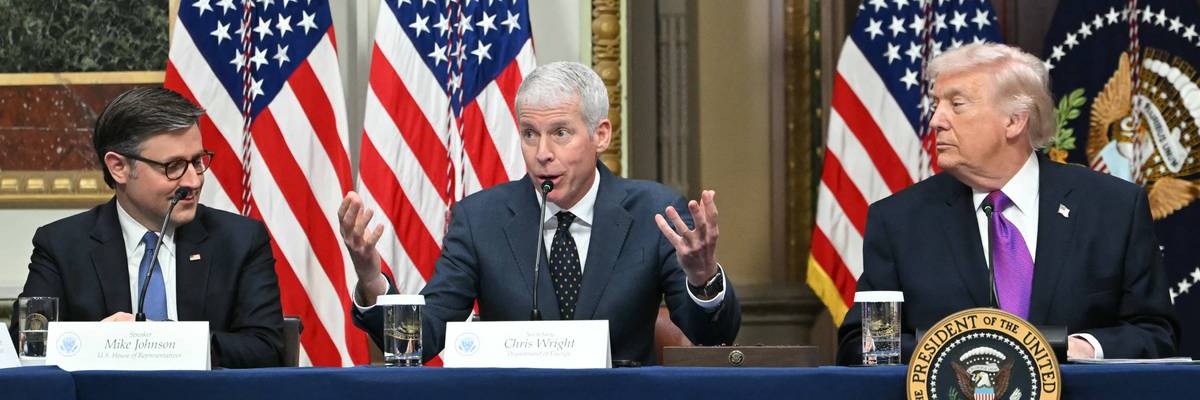
US Speaker of the House Mike Johnson and President Donald Trump listen to Energy Secretary Chris Wright during an event on March 4, 2026. (Photo by Andrew Caballero-Reynolds/AFP via Getty Images)
“The fusion of war-making and market manipulation by top Trump officials isn’t entirely without precedent,” said one observer, “but the speed and brazenness does seem new.”
US Energy Secretary Chris Wright, a former fracking executive, was accused on Tuesday of manipulating global markets after he posted a striking claim on social media: The American Navy, he wrote, had “successfully escorted an oil tanker through the Strait of Hormuz to ensure oil remains flowing.”
The post on X was deleted minutes later, after “oil prices slid at their steepest pace in years,” according to the Wall Street Journal. The White House press secretary later acknowledged publicly that Wright’s claim was false, and the Energy Department—which has been scrambling to quell mounting fears of a sustained increase in oil prices and broader supply chain chaos stemming from the US-Israeli assault on Iran—threw unnamed staff under the bus, saying they “incorrectly captioned” the post.
“So who just made $100 million dollars shorting oil for the 3 minutes that Chris Wright had that post up?” asked hedge fund manager Spencer Hakimian.
Anti-monopoly researcher Matt Stoller wrote in response to the post and its deletion that “the fusion of war-making and market manipulation by top Trump officials isn’t entirely without precedent, but the speed and brazenness does seem new.”
The debacle also notably drew a reaction from the Iranian foreign minister, Abbas Araghchi, who wrote on X that “US officials are posting fake news to manipulate markets.”
“It won’t protect them from inflationary tsunami they’ve imposed on Americans,” wrote Araghchi. “Markets are facing the biggest shortfall in HISTORY: bigger than the Arab Oil Embargo, Iran’s Islamic Revolution, and the Kuwait invasion COMBINED.”
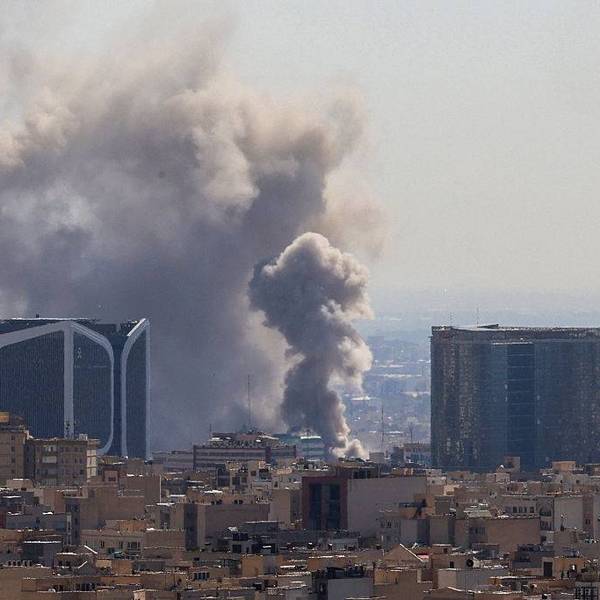
The Strait of Hormuz has become a critical flashpoint of the US-Israeli war on Iran, whose military has threatened to attack vessels that attempt to pass through the route in retaliation for the deadly missile onslaught. An estimated 13 million barrels per day passed through the strait in 2025—roughly 31% of all seaborne crude flows.
“At the beginning of the war we announced, and we announce again, no vessel associated with aggressors against Iran has the right to pass through the Strait of Hormuz,” said the Islamic Revolutionary Guards Corps. “If you have doubts, come closer and find out.”
Reutersreported Tuesday that, contrary to Wright’s deleted post, the US Navy has “refused near-daily requests from the shipping industry for military escorts through the Strait of Hormuz since the start of the war on Iran, saying the risk of attacks is too high for now.”
The United Kingdom Maritime Trade Operations center said early Wednesday that a cargo vessel in the strait was “hit by an unknown projectile,” causing a fire onboard and forcing crew members to evacuate.
The report came hours after the US militarysaid it “eliminated multiple Iranian naval vessels,” including “16 minelayers near the Strait of Hormuz.” The announcement followed, by less than two hours, a social media post from President Donald Trump declaring that “we have no reports” of Iran laying mines in the strait.
“If for any reason mines were placed, and they are not removed forthwith, the Military consequences to Iran will be at a level never seen before,” Trump wrote. “If, on the other hand, they remove what may have been placed, it will be a giant step in the right direction!”
After attending a classified briefing on Tuesday, US Sen. Chris Murphy (D-Conn.) wrote that it was obvious the administration “had no plan” regarding the Strait of Hormuz prior to launching its assault on Iran.
“They don’t know how to get it safely back open,” Murphy wrote. “Which is unforgivable, because this part of the disaster was 100% foreseeable.”
Orcas discuss how Trump was re-elected and him being an obviously insane, xenophobic Fascist.Donald Fuhrump says that Amerikkka doesn’t bother with crimes or charges anymore, not being 100% Amerikkkan and opposing his real estate intentions is enough.Elon Musk urges you to be a Fascist like him, says that you can ignore facts and reality then.
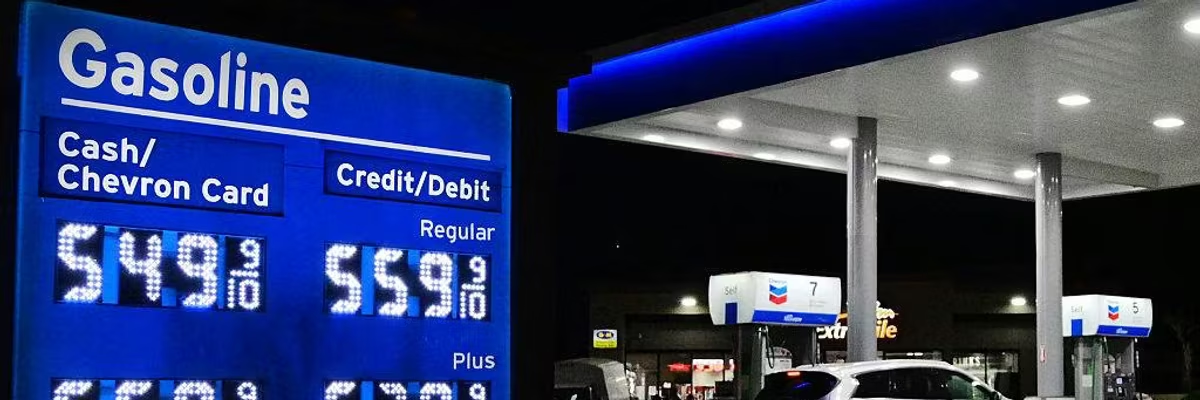
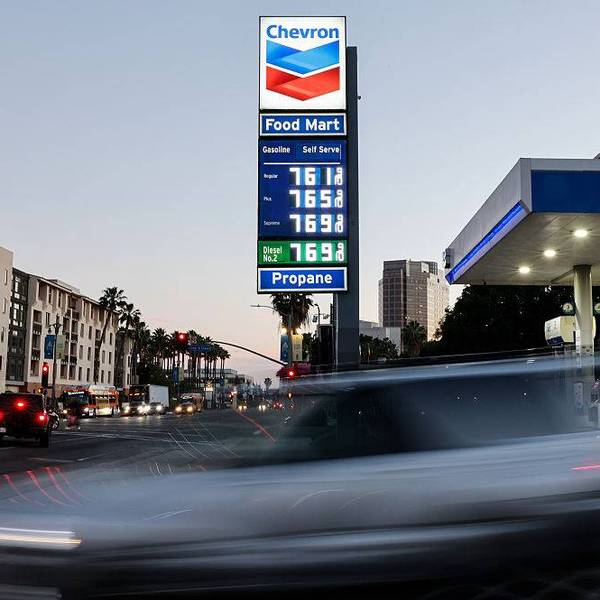
High gas prices are listed at Chevron gas station in Los Angeles on March 9, 2026, as gasoline prices surge amid the ongoing war with Iran. (Photo by Frederic J. Brown/AFP via Getty Images)
“Bahrain, Iraq, Kuwait, and Qatar have no bypass capability whatsoever,” said one expert. “Their shipments are wholly reliant on Hormuz transit.”
House Speaker Mike Johnson is trying to downplay the rise in gas prices caused by President Donald Trump’s war with Iran, but energy analysts are warning that Americans are in for significant pain at the pump.
Speaking at a press conference on Tuesday, Johnson (R-La.) said that the rise in gas prices was a small price to pay for achieving American military objectives in Iran, which he baselessly claimed was about to strike the US if the US didn’t strike first.
Johnson also predicted that the rise in gas prices, which on Wednesday reached an average of $3.58 per gallon in the US, would be short lived.
“Most of this is because the Strait of Hormuz has been closed by the regime down there,” Johnson said. “But it will be reopened, and it will take a couple of weeks, but gas prices will come back down… So this is a temporary blip in an extraordinary trend of a return to American energy dominance.”
Despite Johnson’s rosy assessment, energy experts Trevor Higgins and Akshay Thyagarajan of the Center for American Progress published an analysis on Wednesday explaining why there will be no quick fix for high gas prices.
What’s more, the analysts said that the Iran conflict appeared ready to raise prices on much more than just gasoline.
“Many parts of the US economy are still dependent on fossil fuels, and higher prices for oil and gas increase the prices for gasoline, electricity, fertilizer, food, and more,” they noted. “As long as this war continues—and perhaps for some time thereafter—American households will pay higher prices at the pump, on their utility bills, and on their grocery bills.”
Higgins and Thyagarajan documented how the Iran war’s impact on oil prices was already greater than the impact that Russia’s invasion of Ukraine had in 2022, and they warned it would only grow more severe the longer the conflict persisted.
One particularly worrisome impact of the Iran war, Higgins and Thyagarajan said, would be putting upward pressure on Americans’ utility bills, which have already been rising significantly over the last year thanks to the enormous energy demands of artificial intelligence data centers.
They pointed to the dependence of US power infrastructure on liquified natural gas (LNG), which generates roughly 43% of electricity in the US, as a serious vulnerability.
“Following the start of Operation Epic Fury, both European and Asian LNG futures prices have already skyrocketed,” they wrote. “As of March 9, they’ve increased by 77% and 51%, respectively, compared to prices before the event. This price increase is much higher than the increase immediately after Russia’s invasion of Ukraine. If this increase persists, it could raise utility bills further.”
Clayton Seigle, energy analyst at the Center for Strategic and International Studies, said on Monday that there was very little hope of US gas prices decreasing until Iran reopened the Strait of Hormuz for commercial shipping.
Seigle said that Iran could wage a relatively cheap military campaign against ships attempting to traverse the strait using a combination of speedboats, naval mines, and drones.
“Their destructive firepower is less than that of missiles,” he wrote, “but sufficient to cause damage and deter commercial shipping.”
Seigle also dismissed any plans by other oil-producing nations to ship their products through alternative trade routes, which he said would do too little to ease the oil supply crisis caused by the strait’s closure.
“ Bahrain, Iraq, Kuwait, and Qatar have no bypass capability whatsoever,” he explained. “Their shipments are wholly reliant on Hormuz transit.”
Orcas discuss Donald Trump and the killer apes’ concept of democracy. Front Orca warns that Trump is crashing his country’s economy and that everything he does he does for the fantastically wealthy.Donald Fuhrump says that Amerikkka doesn’t bother with crimes or charges anymore, not being 100% Amerikkkan and opposing his real estate intentions is enough.Orcas discuss rotting brain. Front Orca says “Wish someone would lock him up”.
This work by Middle East Monitor is licensed under a Creative Commons Attribution-NonCommercial-ShareAlike 4.0 International License.
Commercial ships anchor off the coast of the United Arab Emirates due to navigation disruptions in the Strait of Hormuz, Dubai on March 2, 2026. [Stringer – Anadolu Agency]
Any vessel seeking to pass through the Strait of Hormuz “must obtain permission from Iran,” navy commander of the Islamic Revolutionary Guard Corps (IRGC) said on Wednesday, Anadolu reports.
“Were ships given assurances that they could pass through the Strait of Hormuz? This should be asked from the crews of the ships Express Rome and Mayuree Naree, who today, trusting empty promises, ignored the warnings and attempted to pass through the strait — but ended up being caught,” Alireza Tangsiri wrote on the US social media company X.
The US and Israel launched joint strikes on Iran on Feb. 28, which have killed more than 1,300 people, including Ali Khamenei, Iran’s former supreme leader, as well as over 150 schoolgirls.
Tehran retaliated with drone and missile strikes targeting Israel, Jordan, Iraq, and several Gulf countries hosting US military assets.
Iran has effectively closed the Strait of Hormuz since early March. The strategic waterway normally handles about 20 million barrels of oil shipments daily and roughly 20% of the global liquefied natural gas trade. The move has already pushed oil prices above.
US President Donald Trump on Tuesday threatened Iran with unprecedented military consequences if it had placed mines in the Strait of Hormuz and failed to remove them.
This work by Middle East Monitor is licensed under a Creative Commons Attribution-NonCommercial-ShareAlike 4.0 International License.
Keir Starmer explains that UK is participating defensively in Trump and Israel’s criminal war for Israel’s genocidal expansion in Iran and states that he supports Zionism “without qualification”.Orcas discuss rotting brain. Front Orca says “Wish someone would lock him up”.Donald Trump warns against following the https://onaquietday.org blog, says that it’s easy atm, she only needs to report war crimes supporting Israel’s genocidal expansion.
This work by Middle East Monitor is licensed under a Creative Commons Attribution-NonCommercial-ShareAlike 4.0 International License.
Commercial ships anchor off the coast of the United Arab Emirates due to navigation disruptions in the Strait of Hormuz, Dubai on March 2, 2026. [Stringer – Anadolu Agency]
Off the coast of Fujairah, the scene is not dramatic so much as unsettlingly ordinary: tankers waiting, crews watching, port agents reworking schedules that were meant to be routine. The Strait of Hormuz does not need to be fully “closed” to become a global problem. It only needs to feel unsafe for long enough that insurers raise premiums, shippers hesitate and traders price in panic. When that happens, the shock travels faster than any warship: it reaches supermarket shelves, factory orders and household bills.
That is why the current escalation involving the United States and Israel matters far beyond the Gulf. Policy in Washington and Tel Aviv is repeatedly framed as calibrated and limited. Hormuz is the place where that claim collapses. Around this chokepoint, local military decisions convert almost immediately into global inflation.
The chokepoint that keeps the world running
Hormuz is narrow enough to be vulnerable. At its tightest, it is about 33 kilometres wide, and the safe shipping lanes are much tighter than the map suggests. In practical terms, it is a corridor where miscalculation, drones, mines or missile exchanges can disrupt traffic without any actor formally declaring a blockade.
Its importance is measurable in volumes, not slogans. The US Energy Information Administration (EIA) estimates that in 2024, oil flows through Hormuz averaged about 20 million barrels per day—roughly one-fifth of global petroleum liquids consumption. The same assessment notes that these flows accounted for more than one-quarter of global seaborne oil trade. That is the scale at which “regional” becomes “global”.
Liquefied natural gas is also exposed. EIA estimates that about 20 per cent of global LNG trade transited Hormuz in 2024, with Qatar’s exports forming the core of that flow. If crude is the bloodstream of transport and industry, LNG is increasingly the bloodstream of electricity generation and heating.
The usual reassurance is that pipelines can bypass the strait. They can, but only partially. EIA estimates that only about 2.6 million barrels per day of Saudi and UAE pipeline capacity may be available to bypass Hormuz in a disruption. That is not a substitute for 20 million barrels per day moving by sea. It is a bandage on an arterial wound.
The most honest way to describe escalation around Hormuz is that it turns risk into a tax on everyone. When shipping slows, energy prices rise; when energy prices rise, everything rises.
Reuters reported that the crisis pushed oil prices sharply higher and drove European gas prices up as much as 40 per cent, while shipping disruption fed into price spikes for widely traded commodities.
A jump like that is not a trader’s story. It becomes a public health story when hospitals face higher power costs, and a household story when families weigh rent against heating. It becomes a political story when governments scramble for energy security, often by making bad deals quickly.
Even countries that do not import Gulf crude directly are pulled in through pricing. Energy is a benchmark input: it sets transport costs, fertiliser production costs and industrial margins. When war-risk premiums rise and routes lengthen, shipping is no longer just a logistics detail; it becomes a brake on the global economy.
This is where US and Israeli policy choices deserve harder scrutiny. When leaders describe operations as “contained” while markets, insurers and shipping lanes treat them as existential risk, the public is being asked to accept two incompatible realities: that escalation is manageable, and that the world must pay to manage it.
Washington’s response has leaned toward managing symptoms rather than removing the cause. The Trump administration considered using US government-backed insurance and financial guarantees to support maritime trade, and floated the prospect of US Navy escorts through Hormuz. That is not de-escalation. It is the normalisation of a war economy around a chokepoint: more escorts, more guarantees, more implicit commitments that increase the chance of an incident spiralling.
It also exports costs. The heaviest exposure to Hormuz flows falls on Asian and European consumers, not on the decision-makers who set the tempo. If policy imposes inflation abroad while insulating itself from the worst effects, the incentive to take risks becomes dangerously distorted.
Strategic recklessness and the erosion of restraints
Hormuz also exposes how quickly legal and democratic constraints weaken under the pressure of “urgent” military narratives.
In the United States, the War Powers framework exists to stop a president from sliding into war on momentum alone. Yet congressional oversight has repeatedly lagged behind events. A war powers resolution in the House failed, even as the War Powers law sets a sixty-day clock unless Congress authorises continued hostilities. That pattern matters because it removes a key restraint: the requirement to define objectives, limits and an exit.
International law is strained in parallel. If major powers treat the UN Charter’s limits on the use of force as optional, the precedent does not remain in the Gulf; it becomes a template others will use. Reuters’ legal explainer captured the core critique: that the strikes test presidential authority and raise serious questions under international law’s standards for lawful force.
This is not a morality lecture. It is a practical warning. When norms erode, chokepoints become leverage. The world moves closer to a system where shipping lanes are “secure” only for those with the power to enforce their interpretation of security. That is a recipe for permanent instability.
Hormuz as a symbol of fragile interdependence
Hormuz is more than a place. It is a symbol of how modern life is built: just-in-time supply chains, tightly priced energy, global freight networks that assume predictable routes.
When tankers stall, they are not only carrying crude. They are carrying electricity supply for power plants, feedstock for medicines and plastics, fertiliser inputs that show up later in food prices. When war-risk premiums surge, it is not only oil majors who pay. It is the commuter, the small business and the family already budgeting against inflation.
That is why the language of “limited action” is so misleading here. Hormuz does not allow a clean separation between military aims and civilian consequences. Even brief escalation can produce months of economic pain, and economic pain is never evenly distributed.
The responsible course is not to militarise the strait further and hope deterrence holds. It is to lower the temperature: restore meaningful congressional oversight over the use of force, recommit to international legal constraints and treat maritime security as a shared international interest rather than a stage for unilateral power.
Hormuz is a test of responsible policy and global governance. It asks a simple question that leaders rarely answer directly: who is allowed to gamble with the world’s economic stability, and who pays when the gamble goes wrong?
The views expressed in this article belong to the author and do not necessarily reflect the editorial policy of Middle East Monitor.
This work by Middle East Monitor is licensed under a Creative Commons Attribution-NonCommercial-ShareAlike 4.0 International License.
Keir Starmer explains that UK is participating defensively in Trump and Israel’s criminal war for Israel’s genocidal expansion in Iran and states that he supports Zionism “without qualification”.Orcas discuss rotting brain. Front Orca says “Wish someone would lock him up”.Donald Trump warns against following the https://onaquietday.org blog, says that it’s easy atm, she only needs to report war crimes supporting Israel’s genocidal expansion.
Iran is pursuing a multi-layered strategy—military, economic, political, and diplomatic—to raise the cost of war and prevent regime change.
Iran’s strategy in the current war
As the war on Iran continues to expand across multiple fronts, Tehran appears to be pursuing a complex strategy that combines military escalation, economic leverage, domestic mobilization, and diplomatic signaling.
Rather than relying on what Iranian officials once described as “strategic patience,” the current approach suggests that Iran is attempting to fundamentally reshape the battlefield by increasing the costs of the war for the United States, Israel, and any regional actors that choose to participate.
The strategy appears to rest on several interconnected pillars designed not only to respond to military attacks but also to prevent the broader objective that Iranian leaders believe lies behind the war: regime change.
Overwhelming the battlefield
The most visible element of Iran’s strategy has been its attempt to expand the battlefield geographically and operationally.
Rather than focusing solely on Israeli territory, Iran has targeted a wide range of US and allied assets across the region. These include military bases, intelligence facilities, radar systems, and logistical infrastructure that support American operations.
The aim appears to be twofold.
First,
Iranian strikes are intended to impose a form of “strategic blindness” on opposing forces by degrading radar systems, surveillance networks, and early-warning capabilities.
Such attacks reduce the ability of the United States and Israel to monitor Iranian movements and respond effectively to missile launches or other military operations.
Second,by targeting US bases in multiple countries across the region, Iran is sending a clear message that the conflict will not remain geographically contained.
In practical terms, this means that any country hosting American military facilities risks becoming part of the battlefield.
Iranian officials have repeatedly emphasized that these strikes are directed at US military infrastructure rather than the sovereignty of host nations. Nevertheless, the message is unmistakable: if regional territory is used to launch attacks on Iran, that territory may also become a site of retaliation.
This approach reflects a major shift away from Iran’s previous policy of measured responses and limited escalation.
Instead, Tehran appears to be pursuing a strategy designed to overwhelm the enemy on multiple fronts simultaneously, raising the political and military cost of continuing the war.
Economic warfare
Alongside its military operations, Iran is also leveraging one of the most powerful tools at its disposal: the geography of global energy supply.
The Strait of Hormuz—through which roughly a fifth of the world’s oil supply passes—has effectively become a war zone. Although Iran has not formally declared a blockade, the conditions created by the conflict have produced a functional shutdown of the waterway.
Missile exchanges, naval deployments, maritime attacks, and the growing threat environment have drastically reduced the willingness of commercial shipping companies to operate in the area. Insurance costs for tankers have surged, while several shipping operators have suspended or rerouted voyages altogether.
In practice, this means that the strait is not closed by decree but by the realities of war.
This distinction is important. Iran does not need to announce a blockade to achieve the strategic effects of one. The instability itself disrupts energy flows, drives oil prices upward, and injects uncertainty into global markets.
The consequences are felt far beyond the Gulf.
European economies—already weakened by energy shocks following the war in Ukraine—are particularly vulnerable to renewed volatility in oil and gas markets. Rising shipping costs, supply disruptions, and market speculation all compound the economic pressure.
For Tehran, this dynamic serves as a powerful form of indirect leverage.
The longer the war continues, the greater the economic consequences for the global system that underpins Western power. In this sense, the Strait of Hormuz functions not merely as a geographic chokepoint but as a strategic pressure valve capable of transmitting the costs of the conflict far beyond the battlefield.
Domestic cohesion
Another key pillar of Iran’s strategy lies within the country itself.
Western analysts had widely speculated that sustained military pressure—or a leadership decapitation strategy—could produce internal instability or even trigger a political crisis within Iran.
The killing of senior political and military figures, including high-ranking officials, appeared to be designed in part to create such a vacuum.
Yet the anticipated fragmentation has not materialized.
Instead, Iranian authorities have focused on projecting unity and political cohesion. Mass rallies and public demonstrations have taken place across multiple cities, with large crowds gathering in public squares to express support for the government and condemnation of the attacks.
These displays serve an important political function.
By filling public spaces with supporters, the government is attempting to pre-empt the emergence of alternative movements that might claim to represent a popular response to the war.
In effect, the strategy denies external actors the ability to argue that military intervention is intended to support domestic opposition or restore democratic governance.
For Washington and Tel Aviv, the assumption that internal unrest could become a decisive factor appears to have been a significant miscalculation.
Calibrated diplomacy
Despite the widening military confrontation, Iran has also sought to maintain a careful diplomatic balance with Arab governments.
Iranian officials have repeatedly emphasized that their strikes are directed at US military installations rather than the countries that host them.
This distinction is important.
Tehran’s broader objective appears to be preventing Arab states from becoming full participants in the conflict. While warning that any government enabling US military operations could face retaliation, Iran has simultaneously signaled that it does not seek confrontation with the region as a whole.
The message to Arab governments has therefore been dual-layered: do not allow your territory to be used for attacks on Iran, but if you avoid direct involvement, Iran does not consider you an enemy.
Such messaging reflects Tehran’s understanding that regional alignment could dramatically reshape the war’s dynamics.
Despite the coherence of Iran’s overall approach, several weaknesses remain.
One of the most significant challenges lies in the realm of communication.
Iranian media outlets, operating under heavy pressure and frequent targeting, have struggled to project their narrative effectively to global audiences. Compared with the sophisticated international media infrastructure available to Western governments and Israel, Iran’s messaging often fails to reach wider international publics.
This limits Tehran’s ability to frame the conflict on its own terms.
A second challenge concerns the global anti-war movement.
While protests against the war have emerged in various cities around the world, they have not yet reached a scale capable of exerting decisive political pressure on governments supporting the conflict.
For Iran, the expansion of such protests could become a critical factor in constraining the military options available to Washington and its allies.
A war of strategy
Taken together, Iran’s actions suggest a leadership attempting to wage war according to a clearly defined strategic framework.
Military escalation, economic disruption, domestic mobilization, and diplomatic signaling all appear to function as parts of a single integrated approach designed to raise the cost of the conflict beyond what its adversaries may be willing to bear.
Whether the strategy ultimately succeeds remains uncertain.
What is increasingly evident, however, is that the war is evolving into a contest not only of military capabilities but also of strategic coherence.
For now, Iran appears to be operating according to a calculated plan, while its adversaries continue to search for a sustainable path forward in a rapidly expanding conflict.
The views expressed in this article belong to the author and do not necessarily reflect the editorial policy of Middle East Monitor.
This work by Middle East Monitor is licensed under a Creative Commons Attribution-NonCommercial-ShareAlike 4.0 International License.
Keir Starmer explains that UK is participating defensively in Trump and Israel’s criminal war for Israel’s genocidal expansion in Iran and states that he supports Zionism “without qualification”.Orcas discuss rotting brain. Front Orca says “Wish someone would lock him up”.Donald Trump warns against following the https://onaquietday.org blog, says that it’s easy atm, she only needs to report war crimes supporting Israel’s genocidal expansion.