Tag: Strait of Hormuz

  • Strait of Hormuz: if the Iran conflict shuts world’s most important oil chokepoint, global economic chaos could follow

    Spread the love
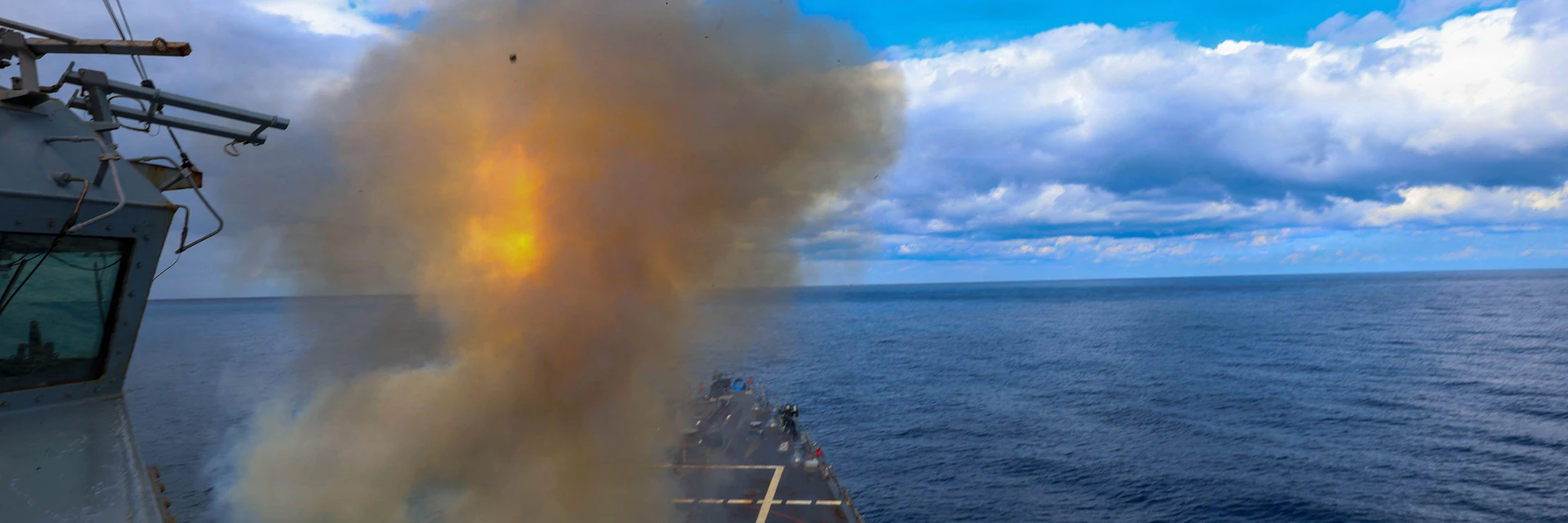
    US warship Thomas Hudner launches a Tomahawk missile as the American military strikes targets in Iran, March 1 2026. U.S Navy/U.S. Navy Photo/Alamy Live News

    Sarah Schiffling, Hanken School of Economics

    The reported sinking of several Iranian warships by US missiles in the Gulf of Oman serves as a reminder of the maritime aspect of the conflict which began February 28 with a barrage of Israeli and American missiles targeting Iran. Two other vessels, believed to be tankers, have also been reported as having been hit by missiles, of an as yet undetermined source, in the vicinity of the strait of Hormuz, underlining the importance of this vital shipping lane – which is likely to play an key part in all sides’ calculations.

    Full details have yet to emerge of the incidents. But there are already signs that the strait will become a major focus of concern because of the huge implications should the conflict disrupt maritime traffic through this the narrow outlet of the Persian Gulf. Ships crossing the strait of Hormuz carry around one-fifth of global oil supplies. That’s about 20 million barrels per day. This makes the strait the most critical energy chokepoint.

    There are a small number of strategic passageways, or chokepoints on which global trade depends and which are vulnerable to disruption. Any disruption reverberates instantly through global markets and supply chains. With conflict raging in Iran and attacks across the Middle East, traders, governments and businesses will be watching oil prices closely as the markets open.

    After Israel and the US launched attacks on Iran on February 28, prompting retaliatory strikes across the region from Iran, Tehran broadcast to vessels in the region claiming that the strait of Hormuz was closed.

    Although the shipping lanes are only about two miles wide, actually physically closing them would be difficult to achieve. The most decisive action Tehran could take would be to mine the shipping lanes. With the large US naval presence in the area, this would be very difficult for Iran to achieve.

    But a formal blockade is not necessary to stop traffic. When perceived threat levels rise, ships stay away. Big shipping companies such as Hapag Lloyd and CMA CGA have already suspended transit through the strait and advised their ships to proceed to shelter.

    Vessel tracking already shows reduced movements in the strait of Hormuz. Ships are waiting to enter or exit the Persian Gulf or diverting away from the region. An advisory from the United Kingdom Maritime Trade Operations (UKMTO) Centre has warned of the “increased risk of miscalculation or misidentification, particularly in proximity to military units”.

    Several ports have suspended operations after debris from an intercepted missile sparked a fire at Dubai’s Jebel Ali Port. While other ports continue to operate, the risk and uncertainty are disrupting shipping in the region.

    Supply chain disruption

    Hormuz is dominated by oil tankers and liquid natural gas carriers, so disruption directly hits global energy supplies. In addition, a lesser-known dependency is that one-third of the world’s fertiliser trade passes through the strait. Both energy and agricultural supply chains have already been destabilised by the Ukraine war. Further price rises could have far-reaching consequences.

    Map of Straits of Hormuz
    The Strait of Hormuz is one of the world’s most important waterways, with 20% of the global trade in oil flowing through a narrow maritime channel. Wikimedia Commons

    The main destinations for oil and gas flowing through Hormuz are China, India, Japan, and South Korea. India, which imports about half of its crude oil through the strait, has activated contingency plans to safeguard energy supplies.

    But apart from amassing strategic national stockpiles to weather immediate disruptions, there may be limited alternatives for countries dependent on getting their energy supplies through the strait. Saudi Arabia and the UAE have some pipelines for both oil and gas that can bypass the Hormuz. There is an estimated spare capacity of 2.6 million barrels per day for these pipelines. But that’s a fraction of what is normally shipped through the strait.

    Oil and gas are traded globally. So even countries whose energy needs are not met by imports from the Persian Gulf will be affected by price increases. Oil prices are expected to increase to up to US$100 (£74) per barrel when markets open on Monday. Opec has agreed to modestly boost oil output in a bid to stabilise markets. But the group of oil producing countries has limited options as key members are affected by the fallout of the attacks on Iran.

    Energy price increases will hit consumers directly when filling up their cars or heating their homes. They also affect companies across a wide range of industries. This has the potential to cause further supply chain disruptions.

    Supply chains rely on predictability. The persistent geopolitical uncertainty has complicated operations worldwide. Limited alternatives make the de facto closure of the strait of Hormuz all the more impactful. The longer the disruption persists, the more significant and structural the economic damage will become.

    Potential for escalation

    There is still a potential for a catastrophic escalation in the strait of Hormuz. The sinking of a tanker would have dramatic consequences for the environment and would likely halt navigation for an extended period of time.

    But prolonged instability may also prove destructive for the global economy. Previously, Iran closing the strait was seen as unlikely considering the global backlash and economic harm to Iran itself. But with regime change now the stated goal of the US-Israeli attacks, the cost of holding the world economy hostage might seem justified to the rulers in Tehran.

    Sarah Schiffling, Deputy Director of the HUMLOG (Humanitarian Logistics and Supply Chain Management Research) Institute, Hanken School of Economics

    This article is republished from The Conversation under a Creative Commons license. Read the original article.

    Orcas discuss rotting brain. Front Orca says "Wish someone would lock him up".
    Orcas discuss rotting brain. Front Orca says “Wish someone would lock him up”.
    Donald Fuhrump says that Amerikkka doesn't bother with crimes or charges anymore, not being 100% Amerikkkan and opposing his real estate intentions is enough.
    Donald Fuhrump says that Amerikkka doesn’t bother with crimes or charges anymore, not being 100% Amerikkkan and opposing his real estate intentions is enough.
    Elon Musk urges you to be a Fascist like him, says that you can ignore facts and reality then.
    Elon Musk urges you to be a Fascist like him, says that you can ignore facts and reality then.

  • ‘I Guess I Can Say I Am’: Trump Confirms He’s Considering Unprovoked Attack on Iran

    Spread the love

    Original article by Brad Reed republished from Common Dreams under Creative Commons (CC BY-NC-ND 3.0).

    President Donald Trump delivers remarks during a working breakfast with governors in the State Dining Room at the White House on February 20, 2026 in Washington, DC. (Photo by Kevin Dietsch/Getty Images)

    One analyst predicted Iran would close the Strait of Hormuz and attack oil installations “in the hope of driving oil prices to record levels” should the US strike.

    US President Donald Trump on Friday confirmed that he’s considering launching an unprovoked military strike against Iran.

    According to the New York Times, Trump was asked by reporters on Friday if he was considering attacking Iran, and he replied, “I guess I can say I am considering that.”

    RECOMMENDED…

    An Iranian man and women walk by an anti-American mural

    Iran Vows to ‘Respond Like Never Before’ as Trump Ramps Up War Threats

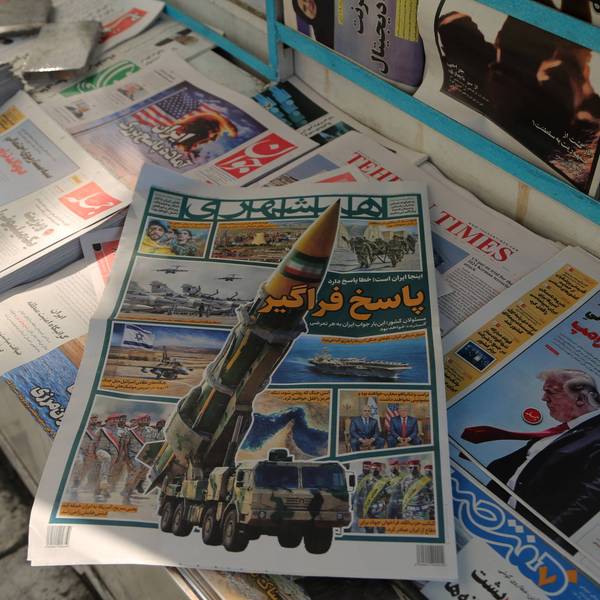
    Iran newspapers focus on potential US military options

    US Military Told Mideast Ally That Trump Attack on Iran is ‘Imminent’: Report

    The US has for weeks been sending fleets of warships, including the world’s largest aircraft carrier, to the Middle East in apparent preparation for a massive military operation against Iran.

    According to a Friday report from Al Jazeera, the buildup is the largest by the US Air Force in the region since the 2003 Iraq War, and it includes deployments of E-3 Sentry Airborne Warning and Control System (AWACS) aircraft, F-35 stealth strike fighters and F-22 air superiority jets, and F-15 and F-16 fighter jets.

    Trump has not given any justification for launching such an attack, nor has he asked the US Congress to approve it, even though the Constitution gives the legislative branch the power to declare war.

    Reps. Ro Khanna (D-Calif.) and Thomas Massie (R-Ky.) have been pushing for a vote in the US House of Representatives on a war powers resolution that would require Congress to debate and approve any act of war with Iran.

    It is also not clear what goals the president would hope to achieve with the attack. A Thursday CNN report indicated that Trump is now weighing several options ranging from “more targeted strikes to sustained operations that could potentially last for weeks,” including “plans to take out Tehran’s leaders.”

    Trita Parsi, co-founder and executive vice president of the Quincy Institute for Responsible Statecraft, wrote in a Friday analysis of Trump’s reported attack plans that there is little chance that the president will be able to achieve a quick victory over Iran simply because the offers he has made to its government are nonstarters.

    “Since the US strategy… is to escalate until Tehran caves, and since capitulation is a non-option for Iran, the Iranians are incentivized to strike back right away at the US,” explained Parsi. “The only exit Tehran sees is to fight back, inflict as much pain as possible on the US, and hope that this causes Trump to back off or accept a more equitable deal.”

    Parsi acknowledged that there is no way Iran can defeat the US militarily, but could “get close to destroying Trump’s presidency before it loses the war” through a number of maneuvers intended to spike the price of oil, including “closing the Strait of Hormuz” and attacking “oil installations in the region in the hope of driving oil prices to record levels and by that inflation in the US.”

    “This is an extremely risky option for Iran,” Parsi conceded, “but one that Tehran sees as less risky than the capitulation ‘deal’ Trump is seeking to force on Iran.”

    Original article by Brad Reed republished from Common Dreams under Creative Commons (CC BY-NC-ND 3.0).

    Orcas discuss Donald Trump and the killer apes' concept of democracy. Front Orca warns that Trump is crashing his country's economy and that everything he does he does for the fantastically wealthy.
    Orcas discuss Donald Trump and the killer apes’ concept of democracy. Front Orca warns that Trump is crashing his country’s economy and that everything he does he does for the fantastically wealthy.
    Donald Fuhrump says that Amerikkka doesn't bother with crimes or charges anymore, not being 100% Amerikkkan and opposing his real estate intentions is enough.
    Donald Fuhrump says that Amerikkka doesn’t bother with crimes or charges anymore, not being 100% Amerikkkan and opposing his real estate intentions is enough.
    Elon Musk urges you to be a Fascist like him, says that you can ignore facts and reality then.
    Elon Musk urges you to be a Fascist like him, says that you can ignore facts and reality then.

  • Iran temporarily closes the Strait of Hormuz

    Spread the love

    https://morningstaronline.co.uk/article/iran-temporarily-closes-strait-hormuz

     Iranian Foreign Minister Abbas Araghchi (right) and International Atomic Energy Agency (IAEA) Director-General Rafael Grossi (left) hold a meeting in Geneva, Switzerland, February 16, 2026. Photo: Iranian Foreign Ministry via AP

    IRAN announced the temporary closure of the Strait of Hormuz today for live fire military drills as its negotiators held another round of indirect talks with the United States in Geneva over its nuclear programme.

    It was the first time that Tehran has announced the closure of the key international waterway, through which 20 per cent of the world’s oil passes, since the US began threatening Iran and rushing military assets to the region. 

    Iran said its Revolutionary Guard had started a drill early on Monday in the Strait of Hormuz, the Persian Gulf and the Gulf of Oman — all crucial international shipping routes. 

    It was the second time in recent weeks that Iran has held a live fire exercise in the Strait of Hormuz.

    As the talks began, Iranian state media announced that the country’s military had fired missiles toward the strait and would close it for several hours for “safety and maritime concerns.”

    The Tasnim news agency, which is close to the paramilitary Revolutionary Guard, said missiles launched inside Iran and along its coast had struck their targets in the strait.

    …

    Article continues at https://morningstaronline.co.uk/article/iran-temporarily-closes-strait-hormuz

    Donald Fuhrump says that Amerikkka doesn't bother with crimes or charges anymore, not being 100% Amerikkkan and opposing his real estate intentions is enough.
    Donald Fuhrump says that Amerikkka doesn’t bother with crimes or charges anymore, not being 100% Amerikkkan and opposing his real estate intentions is enough.
    Elon Musk urges you to be a Fascist like him, says that you can ignore facts and reality then.
    Elon Musk urges you to be a Fascist like him, says that you can ignore facts and reality then.
    Orcas discuss Donald Trump and the killer apes' concept of democracy. Front Orca warns that Trump is crashing his country's economy and that everything he does he does for the fantastically wealthy.
    Orcas discuss Donald Trump and the killer apes’ concept of democracy. Front Orca warns that Trump is crashing his country’s economy and that everything he does he does for the fantastically wealthy.
  • Iran’s parliament approves closure of Hormuz Strait after US strikes on nuclear sites

    Spread the love

    This work by Middle East Monitor is licensed under a Creative Commons Attribution-NonCommercial-ShareAlike 4.0 International License. 

    A general view of Parliamentary session in Tehran, Iran. [Fatemeh Bahrami – Anadolu Agency]

    The Iranian parliament has approved a measure to close the Strait of Hormuz to naval traffic following US strikes on three nuclear facilities, a senior lawmaker said on Sunday, Anadolu reports.

    “The parliament has reached the conclusion that the Strait of Hormuz should be closed,” Major General Esmaeil Kowsari, a member of the parliament’s National Security Commission, said in statements carried by the state-run Press TV.

    The Strait of Hormuz is considered the world’s most important gateway for oil transport.

    “The final decision in this regard lies with the Supreme National Security Council,” Kowsari added.

    The Supreme National Security Council serves as Iran’s highest security authority.

    READ: US ‘crossed every red line’ with latest attack on nuclear facilities: Iranian foreign minister

    US President Donald Trump said early Sunday that his forces bombed three Iranian nuclear sites in Fordo, Natanz, and Isfahan.

    The attacks came as the latest escalation in a US-backed Israeli military assault on Iran since June 13, prompting Tehran to launch retaliatory attacks on Israel.

    Israeli authorities said at least 25 people have been killed and hundreds injured since then in Iranian missile attacks.

    Meanwhile, in Iran, 430 people have been killed and more than 3,500 wounded in the Israeli assault, according to the Iranian Health Ministry.

    READ: Iran hits back at Israel after US attacks nuclear site, many casualties

    This work by Middle East Monitor is licensed under a Creative Commons Attribution-NonCommercial-ShareAlike 4.0 International License.