Investigation Demanded as ICE Reports Third Death at Texas Detention Center in 44 Days

Spread the love

Original article by Julia Conley republished from Common Dreams under Creative Commons (CC BY-NC-ND 3.0). 

Acting Immigration and Customs Enforcement Director Todd Lyons (C) speaks during a press conference on October 30, 2025, in Gary, Indiana. (Photo by Jamie Kelter Davis/Getty Images)

“This is the third person who has died in the $1.24 billion privately-run facility that focuses on profits instead of meeting basic standards,” said one lawmaker.

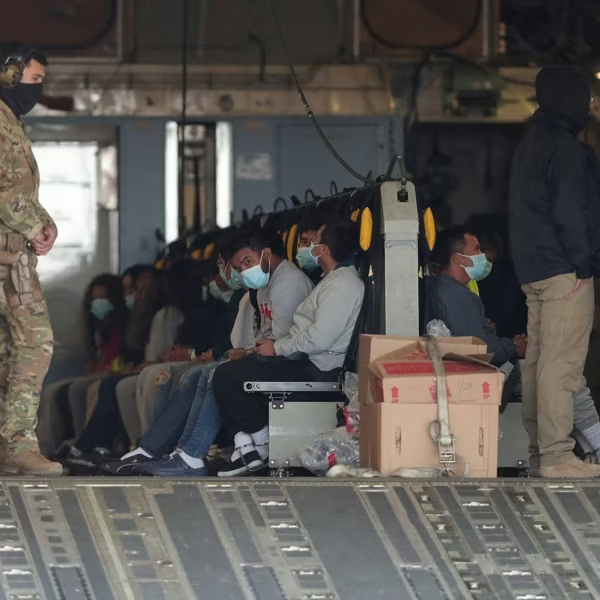
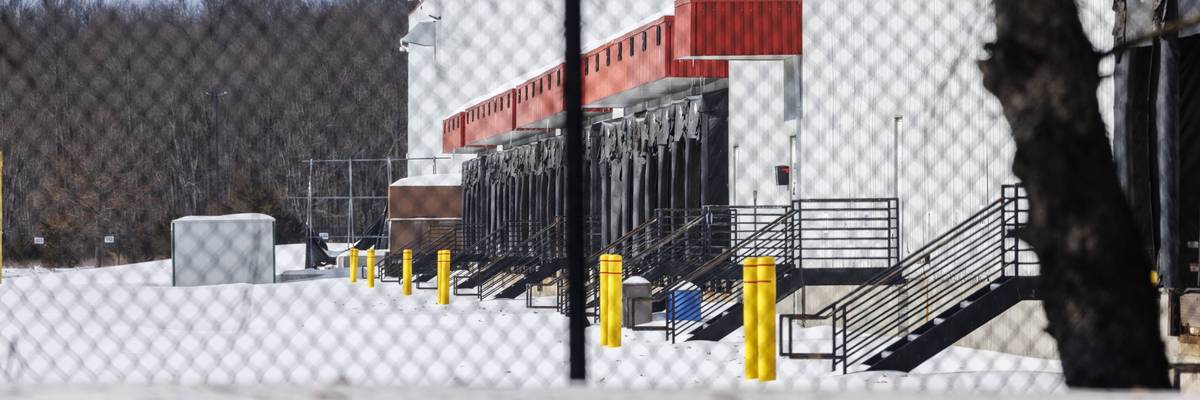
Officials in both Texas and Minnesota are calling for accountability and a full investigation into conditions at Camp East Montana, the sprawling detention complex at Fort Bliss in El Paso, Texas, following the third reported death at the facility in less than two months.

Victor Manuel Diaz, 36, was detained by US Immigration and Customs Enforcement officers in Minneapolis, where ICE has been carrying out violent immigration arrests, cracking down on dissent, and where one officer fatally shot a legal observer earlier this month.

RECOMMENDED…

People hold a rally against ICE in Washington Dc

‘ICE Kills’: Guards Reportedly Choked Man to Death at El Paso Detention Center

Protesters Denounce ICE Outside Chicago-Area Facility

‘Reign of Terror’: ICE Builds Appalling Record of Killings, Beatings, Kidnappings, and More

He was one of roughly 2,903 detainees being held at Camp East Montana at Fort Bliss US Army base, one of the largest ICE detention centers in the country, on January 14 when contract security workers found him “unconscious and unresponsive” in his cell.

He was later pronounced dead and ICE released a statement saying he had died of “presumed suicide,” but officials arre still investigating his cause of death.

Diaz’s death comes days after it was reported that a medical examiner in Texas was planning to classify another death reported at Camp East Montana—that of Geraldo Lunas Campos—as a homicide.

A doctor said Lunas Campos’ preliminary cause of death in early January was “asphyxia due to neck and chest compression.” An eyewitness said he had seen several guards in a struggle with the 55-year-old Cuban immigrant and then saw guards choking Lunas Campos.

A month prior of Lunas Campos’ death, 49-year-old Guatemalan immigrant Francisco Gaspar-Andres died at a nearby hospital; he was a detainee at Camp East Montana. ICE said medical staff attributed his death to “natural liver and kidney failure.”

Minnesota Lt. Gov. Peggy Flanagan called for a “complete and transparent investigation” into what happened to Diaz after his death was announced Sunday.

“We deserve answers,” said Flanagan.

US Rep. Veronica Escobar (D-Texas), who last year expressed concern about the US government’s deal with a small private business, Acquisition Logistics LLC, to run Camp East Montana, said the detention center “must be shut down immediately,” warning that “two deaths in one month means conditions are worsening.”

After the administration awarded a $1.2 billion contract to Acquisition Logistics to build and operate the camp, lawmakers and legal experts raised questions about the decision, considering the small company had no listed experience running detention centers, its headquarters was listed as a Virginia residential address, and the president and CEO of the company did not respond to media inquiries.

“It’s far too easy for standards to slip,” Escobar told PBS Newshour after touring the facility. “Private facilities far too frequently operate with a profit margin in mind as opposed to a governmental facility.”

In September, ICE’s own inspectors found at least 60 violations of federal standards, with employees failing to treat and monitor detainees’ medical conditions and the center lacking safety procedures and methods for detainees to contact their lawyers.

Across all of ICE’s detention facilities, 2025 was the deadliest year for immigrant detainees in more than two decades, with 32 people dying in the agency’s centers.

After Diaz’s death was reported Sunday, former National Nurses United communications adviser Charles Idelson said that “ICE detention centers are functioning like death camps.”

Original article by Julia Conley republished from Common Dreams under Creative Commons (CC BY-NC-ND 3.0). 

Elon Musk urges you to be a Fascist like him, says that you can ignore facts and reality then.
Orcas discuss how Trump was re-elected and him being an obviously insane, xenophobic Fascist.
Donald Fuhrump says that Amerikkka doesn't bother with crimes or charges anymore, not being 100% Amerikkkan and opposing his real estate intentions is enough.
Donald Fuhrump says that Amerikkka doesn’t bother with crimes or charges anymore, not being 100% Amerikkkan and opposing his real estate intentions is enough.

Continue ReadingInvestigation Demanded as ICE Reports Third Death at Texas Detention Center in 44 Days

‘Exactly What We Would Expect’: Climate Scientists Weigh in on Deadly Texas Flooding

Spread the love

Original article by Brett Wilkins republished from Common Dreams under Creative Commons (CC BY-NC-ND 3.0).

Search and rescue workers dig through debris looking for any survivors or remains of people swept up in the flash flooding on July 6, 2025 in Hunt, Texas.(Photo: Jim Vondruska/Getty Images)

“It’s not a question of whether climate change played a role—it’s only a question of how much,” said one expert.

As the death toll from catastrophic flooding in Texas continued to rise, climate scientists this weekend underscored the link between more frequent and severe extreme weather events and the worsening climate emergency caused primarily by humans burning fossil fuels.

Officials said Sunday that at least 69 people died in the floods, 59 of them in Kerr County. Of the 27 missing girls from Camp Mystic—some of whom were sleeping just 225 feet from the Guadalupe River when its waters surged during flash flooding Friday—11 are still missing.

While some local officials blamed what they said were faulty forecasts from the National Weather Service—which has been hit hard by staffing cuts ordered by the Trump administration’s Department of Government Efficiency in line with Project 2025—meteorologists and climate scientists including Daniel Swain of the University of California, Los Angeles have refuted such allegations, citing multiple NWS warnings of potentially deadly flooding.

However, some experts asserted that vacancies at key NWS posts raise questions about forecasters’ ability to coordinate emergency response with local officials.

Climate scientists do concur that human-caused global heating is causing stronger and more frequent extreme weather events including flooding.

“This kind of record-shattering rain (caused by slow-moving torrential thunderstorms) event is *precisely* that which is increasing the fastest in a warming climate,” Swain wrote in a statement. “So it’s not a question of whether climate change played a role—it’s only a question of how much.”

As Jeff Masters and Bob Henson wrote Saturday for Yale Climate Connections:

Many studies have confirmed that human-caused climate change is making the heaviest short-term rainfall events more intense, largely by warming the world’s oceans and thus sending more water vapor into the atmosphere that can fuel heavy rain events. Sea surface temperatures this week have been as much as 1°F below the 1981-2010 average for early July in the western Gulf [of Mexico] and Caribbean, but up to 1°F above average in the central Gulf. Long-term human-caused warming made the latter up to 10 times more likely, according to the Climate Shift Index from Climate Central.

“The tragic events in Texas are exactly what we would expect in our hotter, climate-changed, world,” Bill McGuire, professor emeritus of geophysics and climate hazards at University College London, said Saturday. “There has been an explosion in extreme weather in recent years, including more devastating flash floods caused by slow-moving, wetter, storms, that dump exceptional amounts of rain over small areas across a short time.”

It’s hard to make the Texas flood tragedy worse, except to know that on the same day Trump signed a bill to stop our efforts to defeat the climate change that is causing increased frequency of disastrous floods. And giving us more expensive electricity. www.nytimes.com/2025/07/05/c…

Governor Jay Inslee (@govjayinslee.bsky.social) 2025-07-05T16:29:28.100Z

Instead of taking action to combat the planetary emergency, the Trump administration is ramping up fossil fuel production while waging war on clean energy and climate initiatives. The so-called One Big Beautiful Bill Act signed into law by Trump on Friday slashes the tax credits for electric vehicles and other renewable technologies including wind and solar energy that were a cornerstone of the Biden-era Inflation Reduction Act.

Original article by Brett Wilkins republished from Common Dreams under Creative Commons (CC BY-NC-ND 3.0).

Donald Trump urges you to be a Climate Science denier like him. He says that he makes millions and millions for destroying the planet, Burn, Baby, Burn and Flood, Baby, Flood.
Continue Reading‘Exactly What We Would Expect’: Climate Scientists Weigh in on Deadly Texas Flooding

Amid Soaring Temps, Heat-Related Deaths Have More Than Doubled Since 1999

Spread the love

Original article by Jessica Corbett republished from Common Dreams under a CC licence.

A sign says, “Stop: Extreme Heat Danger,” at the Golden Canyon Trailhead in Death Valley, California on July 9, 2023.
 (Photo: Tayfun Coskun/Anadolu Agency via Getty Images)

“It is likely that continued increases in average temperatures, the number of ‘hot days,’ and the frequency and intensity of heatwaves could be playing a role,” said one researcher.

As 55 million people in the U.S. Midwest faced heat alerts on Monday, research published in the peer-reviewed Journal of the American Medical Association showed that heat-related deaths in the country rose 117% between 1999 and 2023.

“The current trajectory that we’re on, in terms of warming and the change in the climate, is starting to actually show up in increased deaths,” lead author Jeffrey Howard, an associate professor of public health at the University of Texas at San Antonio, told USA Today. “That’s something that we hadn’t had measured before.”

Using a U.S. Centers for Disease Control and Prevention platform, Howard and co-authors from Pennsylvania State University and the Uniformed Services University of the Health Sciences analyzed all deaths from those 25 years coded for “hyperthermia of newborn,” “effects of heat and light,” or “exposure to excessive natural heat” as either a contributing or underlying cause of death.

They found 21,518 deaths for the full period, with 1,069 in 1999. The lowest annual figure was in 2004 (311) and the highest was in 2023 (2,325). Last year was the hottest on record globally and scientists are already warning that this year is expected to continue that trend.

“As temperatures continue to rise because of climate change, the recent increasing trend is likely to continue.”

Last year broke the record that was set in 2016—a year that’s also significant in the new study: “The number of heat-related deaths… showed year-to-year variability, with spikes in 2006 and 2011, before showing steady increases after 2016.”

Howard told CBS News that “it is likely that continued increases in average temperatures, the number of ‘hot days,’ and the frequency and intensity of heatwaves could be playing a role” in the rise since 2016.

“There is also a social and behavioral component as well,” he added, “including differences in access to air conditioning, outdoor work, the number of unhoused individuals, and things like that.”

The researcher noted that Arizona, California, Nevada, and Texas had the highest heat-related deaths—which he said is “not terribly surprising because we know that these are some of the hottest regions in the country, but it does reinforce that the risk varies regionally.”

The paper warns that “as temperatures continue to rise because of climate change, the recent increasing trend is likely to continue. Local authorities in high-risk areas should consider investing in the expansion of access to hydration centers and public cooling centers or other buildings with air conditioning.”

The authors also acknowledged limitations of their research—including “the potential for misclassification of causes of death, leading to possible underestimation of heat-related mortality rates; potential bias from increasing awareness over time; and lack of data for vulnerable subgroups”—meaning the true death toll could be higher.

A legal memo published in June by the watchdog Public Citizen detailed how local or state prosecutors could bring criminal charges against oil and gas companies for deaths from extreme heat made more likely by the fossil fuel-driven climate emergency.

“These victims deserve justice no less than the victims of street-level homicides,” said Aaron Regunberg, senior policy counsel for the group. “And this memo shows that prosecutors have a path to secure that justice, if they choose to pursue it.”

Original article by Jessica Corbett republished from Common Dreams under a CC licence.

Continue ReadingAmid Soaring Temps, Heat-Related Deaths Have More Than Doubled Since 1999

Extreme Heat Expected to Impact Millions of Americans Again This Summer

Spread the love

Original article by JULIA CONLEY republished from Common Dreams under Creative Commons (CC BY-NC-ND 3.0). 

Heat waves rise near a heat danger warning sign in Death Valley National Park, California.
 (Photo: David McNew/Getty Images)

“These are not your grandparents’ heatwaves,” said one meteorologist.

Millions of people in the United States are facing the high likelihood of extreme heat in the coming weeks, with northern states that frequently have relatively temperate summers among those where higher-than-average temperatures are expected this summer, according to federal data.

As The Guardian reported Monday, the National Oceanic and Atmospheric Administration’s (NOAA) new predictions for the summer months state that most of New Mexico and Utah have a 60%-70% chance of hotter-than-normal weather, along with parts of Arizona, Texas, and Colorado.

Houston and the surrounding area has already experienced spiking temperatures that were tied to a heat dome that was positioned over Mexico for several weeks. The high atmospheric pressure drove record-breaking heat across Mexico and in Texas, as well as a powerful storm earlier this month that killed at least seven people and left hundreds of thousands of people in the Houston area without power.

NOAA’s Heat Risk tool showed that on Monday, a significant stretch of southern Texas was experiencing an “extreme” level of heat, defined as including “little to no overnight relief” and affecting the health and safety of “anyone without effective cooling and/or adequate hydration.”

The new tool takes into consideration whether the heat is unusual for the time of the year, whether residents get relief with cooler temperatures in the evenings, and whether temperatures pose an elevated risk of health impacts like heat stroke or heat exhaustion.

NOAA found that the entire Northeast, from Maine to New Jersey and Pennsylvania, has a 40%-50% chance of having above-average temperatures from June through August.

“We can expect another dangerous hot summer season, with daily records already being broken in parts of Texas and Florida,” Kristy Dahl, climate scientist for the Climate and Energy program at the Union of Concerned Scientists, told The Guardian. “As we warm the planet, we are going to see climate disasters pile up and compound against each other because of the lack of resilience in our infrastructure and government systems.”

The predictions come days after the consumer advocacy group Public Citizen released a reportScorched States, about state laws that protect outdoor workers from extreme heat—and those that don’t.

As many as 2,000 U.S. workers die every year from laboring in extreme heat, said Public Citizen, even though “every workplace illness, injury, and fatality caused by heat stress is avoidable, and relatively simple preventative measures—water, shade, and breaks—have proven extremely effective at protecting workers.”

The Occupational Safety and Health Administration’s forthcoming heat standard rules are not expected to be finalized until at least 2026, but states including Washington, Colorado, and Minnesota have issued their own labor laws to protect workers from heat-related injuries.

The Guardian pointed out that the extreme heat expected this summer will likely take hold as the Earth transitions away from El Niño—the natural phenomenon that causes ocean temperatures to rise—and toward La Niña.

“As we transition to La Niña, it still looks to be a potentially record-breaking year. That clearly suggests to me that the anthropogenic signal is there,” James Marshall Shepherd, director of the University of Georgia’s atmospheric sciences program, told The Guardian. “I am also worried about the ocean temperatures, which are very warm, particularly as we approach the Atlantic hurricane season.”

“Attribution studies are pretty decisive that heatwaves will continue to be more intense and frequent” as the planet warms, Shepherd said. “These are not your grandparents’ heatwaves.”

Last year, scientists found that neither the hot and dry conditions that led to destructive wildfires in Canada, nor extreme heatwaves that took hold in Europe and North America, would have been as likely to occur without the planetary heating that’s been linked to continued fossil fuel extraction.

Original article by JULIA CONLEY republished from Common Dreams under Creative Commons (CC BY-NC-ND 3.0). 

Continue ReadingExtreme Heat Expected to Impact Millions of Americans Again This Summer

World’s largest oil companies ‘way off track’ on emissions goals, report finds

Spread the love

https://www.theguardian.com/us-news/2024/mar/22/oil-companies-emissions-goals-report

Gas flares at BP’s Grangemouth oil refinery at dusk in Scotland. Photograph: Murdo Macleod/The Guardian

Despite splashy climate pledges, firms including BP and Saudi Aramco have plans to expand fossil fuel production, says analysis

In recent years, virtually all of the world’s largest oil companies have made splashy climate pledges. But when it comes to actually slashing emissions, those firms are “way off track”, a new report has found.

The analysis from the thinktank Carbon Tracker assessed the production and transition plans of 25 of the world’s largest oil and gas companies. None align with the central goal of the 2015 Paris climate agreement to keep global warming “well under” 2 degrees above pre-industrial levels, the report found.

“Companies worldwide are publicly stating they are supportive of the goals of the Paris-Agreement, and claim to be part of the solution in accelerating the energy transition,” said Maeve O’Connor, analyst at Carbon Tracker and co-author of the report. “Unfortunately, however, we see that none are currently aligned with the goals of the Paris agreement.”

The analysis comes as oil and gas companies are publicly reneging on their climate commitments. Shell last week watered down earlier emissions targets, following BP, which made a similar announcement last year. In October, ExxonMobil also made a deal to buy the shale group Pioneer Natural Resources, while Chevron announced plans to acquire the Texas oil company Hess – marking two of the country’s largest oil and gas deals in decades.

https://www.theguardian.com/us-news/2024/mar/22/oil-companies-emissions-goals-report

Continue ReadingWorld’s largest oil companies ‘way off track’ on emissions goals, report finds