Tag: Texas

  • ‘Exactly What We Would Expect’: Climate Scientists Weigh in on Deadly Texas Flooding

    Spread the love

    Original article by Brett Wilkins republished from Common Dreams under Creative Commons (CC BY-NC-ND 3.0).

    Search and rescue workers dig through debris looking for any survivors or remains of people swept up in the flash flooding on July 6, 2025 in Hunt, Texas.(Photo: Jim Vondruska/Getty Images)

    “It’s not a question of whether climate change played a role—it’s only a question of how much,” said one expert.

    As the death toll from catastrophic flooding in Texas continued to rise, climate scientists this weekend underscored the link between more frequent and severe extreme weather events and the worsening climate emergency caused primarily by humans burning fossil fuels.

    Officials said Sunday that at least 69 people died in the floods, 59 of them in Kerr County. Of the 27 missing girls from Camp Mystic—some of whom were sleeping just 225 feet from the Guadalupe River when its waters surged during flash flooding Friday—11 are still missing.

    While some local officials blamed what they said were faulty forecasts from the National Weather Service—which has been hit hard by staffing cuts ordered by the Trump administration’s Department of Government Efficiency in line with Project 2025—meteorologists and climate scientists including Daniel Swain of the University of California, Los Angeles have refuted such allegations, citing multiple NWS warnings of potentially deadly flooding.

    However, some experts asserted that vacancies at key NWS posts raise questions about forecasters’ ability to coordinate emergency response with local officials.

    Climate scientists do concur that human-caused global heating is causing stronger and more frequent extreme weather events including flooding.

    “This kind of record-shattering rain (caused by slow-moving torrential thunderstorms) event is *precisely* that which is increasing the fastest in a warming climate,” Swain wrote in a statement. “So it’s not a question of whether climate change played a role—it’s only a question of how much.”

    As Jeff Masters and Bob Henson wrote Saturday for Yale Climate Connections:

    Many studies have confirmed that human-caused climate change is making the heaviest short-term rainfall events more intense, largely by warming the world’s oceans and thus sending more water vapor into the atmosphere that can fuel heavy rain events. Sea surface temperatures this week have been as much as 1°F below the 1981-2010 average for early July in the western Gulf [of Mexico] and Caribbean, but up to 1°F above average in the central Gulf. Long-term human-caused warming made the latter up to 10 times more likely, according to the Climate Shift Index from Climate Central.

    “The tragic events in Texas are exactly what we would expect in our hotter, climate-changed, world,” Bill McGuire, professor emeritus of geophysics and climate hazards at University College London, said Saturday. “There has been an explosion in extreme weather in recent years, including more devastating flash floods caused by slow-moving, wetter, storms, that dump exceptional amounts of rain over small areas across a short time.”

    It’s hard to make the Texas flood tragedy worse, except to know that on the same day Trump signed a bill to stop our efforts to defeat the climate change that is causing increased frequency of disastrous floods. And giving us more expensive electricity. www.nytimes.com/2025/07/05/c…

    — Governor Jay Inslee (@govjayinslee.bsky.social) 2025-07-05T16:29:28.100Z

    Instead of taking action to combat the planetary emergency, the Trump administration is ramping up fossil fuel production while waging war on clean energy and climate initiatives. The so-called One Big Beautiful Bill Act signed into law by Trump on Friday slashes the tax credits for electric vehicles and other renewable technologies including wind and solar energy that were a cornerstone of the Biden-era Inflation Reduction Act.

    Original article by Brett Wilkins republished from Common Dreams under Creative Commons (CC BY-NC-ND 3.0).

    Donald Trump urges you to be a Climate Science denier like him. He says that he makes millions and millions for destroying the planet, Burn, Baby, Burn and Flood, Baby, Flood.
    Donald Trump urges you to be a Climate Science denier like him. He says that he makes millions and millions for destroying the planet, Burn, Baby, Burn and Flood, Baby, Flood.
  • Amid Soaring Temps, Heat-Related Deaths Have More Than Doubled Since 1999

    Spread the love

    Original article by Jessica Corbett republished from Common Dreams under a CC licence.

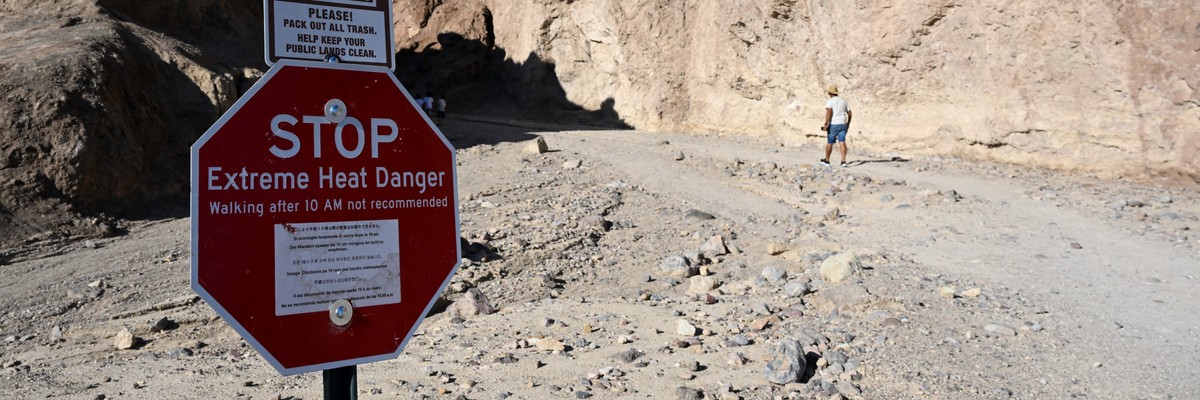
    A sign says, “Stop: Extreme Heat Danger,” at the Golden Canyon Trailhead in Death Valley, California on July 9, 2023.
     (Photo: Tayfun Coskun/Anadolu Agency via Getty Images)

    “It is likely that continued increases in average temperatures, the number of ‘hot days,’ and the frequency and intensity of heatwaves could be playing a role,” said one researcher.

    As 55 million people in the U.S. Midwest faced heat alerts on Monday, research published in the peer-reviewed Journal of the American Medical Association showed that heat-related deaths in the country rose 117% between 1999 and 2023.

    “The current trajectory that we’re on, in terms of warming and the change in the climate, is starting to actually show up in increased deaths,” lead author Jeffrey Howard, an associate professor of public health at the University of Texas at San Antonio, told USA Today. “That’s something that we hadn’t had measured before.”

    Using a U.S. Centers for Disease Control and Prevention platform, Howard and co-authors from Pennsylvania State University and the Uniformed Services University of the Health Sciences analyzed all deaths from those 25 years coded for “hyperthermia of newborn,” “effects of heat and light,” or “exposure to excessive natural heat” as either a contributing or underlying cause of death.

    They found 21,518 deaths for the full period, with 1,069 in 1999. The lowest annual figure was in 2004 (311) and the highest was in 2023 (2,325). Last year was the hottest on record globally and scientists are already warning that this year is expected to continue that trend.

    “As temperatures continue to rise because of climate change, the recent increasing trend is likely to continue.”

    Last year broke the record that was set in 2016—a year that’s also significant in the new study: “The number of heat-related deaths… showed year-to-year variability, with spikes in 2006 and 2011, before showing steady increases after 2016.”

    Howard told CBS News that “it is likely that continued increases in average temperatures, the number of ‘hot days,’ and the frequency and intensity of heatwaves could be playing a role” in the rise since 2016.

    “There is also a social and behavioral component as well,” he added, “including differences in access to air conditioning, outdoor work, the number of unhoused individuals, and things like that.”

    The researcher noted that Arizona, California, Nevada, and Texas had the highest heat-related deaths—which he said is “not terribly surprising because we know that these are some of the hottest regions in the country, but it does reinforce that the risk varies regionally.”

    The paper warns that “as temperatures continue to rise because of climate change, the recent increasing trend is likely to continue. Local authorities in high-risk areas should consider investing in the expansion of access to hydration centers and public cooling centers or other buildings with air conditioning.”

    The authors also acknowledged limitations of their research—including “the potential for misclassification of causes of death, leading to possible underestimation of heat-related mortality rates; potential bias from increasing awareness over time; and lack of data for vulnerable subgroups”—meaning the true death toll could be higher.

    A legal memo published in June by the watchdog Public Citizen detailed how local or state prosecutors could bring criminal charges against oil and gas companies for deaths from extreme heat made more likely by the fossil fuel-driven climate emergency.

    “These victims deserve justice no less than the victims of street-level homicides,” said Aaron Regunberg, senior policy counsel for the group. “And this memo shows that prosecutors have a path to secure that justice, if they choose to pursue it.”

    Original article by Jessica Corbett republished from Common Dreams under a CC licence.

  • Extreme Heat Expected to Impact Millions of Americans Again This Summer

    Spread the love

    Original article by JULIA CONLEY republished from Common Dreams under Creative Commons (CC BY-NC-ND 3.0). 

    Heat waves rise near a heat danger warning sign in Death Valley National Park, California.
     (Photo: David McNew/Getty Images)

    “These are not your grandparents’ heatwaves,” said one meteorologist.

    Millions of people in the United States are facing the high likelihood of extreme heat in the coming weeks, with northern states that frequently have relatively temperate summers among those where higher-than-average temperatures are expected this summer, according to federal data.

    As The Guardian reported Monday, the National Oceanic and Atmospheric Administration’s (NOAA) new predictions for the summer months state that most of New Mexico and Utah have a 60%-70% chance of hotter-than-normal weather, along with parts of Arizona, Texas, and Colorado.

    Houston and the surrounding area has already experienced spiking temperatures that were tied to a heat dome that was positioned over Mexico for several weeks. The high atmospheric pressure drove record-breaking heat across Mexico and in Texas, as well as a powerful storm earlier this month that killed at least seven people and left hundreds of thousands of people in the Houston area without power.

    NOAA’s Heat Risk tool showed that on Monday, a significant stretch of southern Texas was experiencing an “extreme” level of heat, defined as including “little to no overnight relief” and affecting the health and safety of “anyone without effective cooling and/or adequate hydration.”

    The new tool takes into consideration whether the heat is unusual for the time of the year, whether residents get relief with cooler temperatures in the evenings, and whether temperatures pose an elevated risk of health impacts like heat stroke or heat exhaustion.

    NOAA found that the entire Northeast, from Maine to New Jersey and Pennsylvania, has a 40%-50% chance of having above-average temperatures from June through August.

    “We can expect another dangerous hot summer season, with daily records already being broken in parts of Texas and Florida,” Kristy Dahl, climate scientist for the Climate and Energy program at the Union of Concerned Scientists, told The Guardian. “As we warm the planet, we are going to see climate disasters pile up and compound against each other because of the lack of resilience in our infrastructure and government systems.”

    The predictions come days after the consumer advocacy group Public Citizen released a report, Scorched States, about state laws that protect outdoor workers from extreme heat—and those that don’t.

    As many as 2,000 U.S. workers die every year from laboring in extreme heat, said Public Citizen, even though “every workplace illness, injury, and fatality caused by heat stress is avoidable, and relatively simple preventative measures—water, shade, and breaks—have proven extremely effective at protecting workers.”

    The Occupational Safety and Health Administration’s forthcoming heat standard rules are not expected to be finalized until at least 2026, but states including Washington, Colorado, and Minnesota have issued their own labor laws to protect workers from heat-related injuries.

    The Guardian pointed out that the extreme heat expected this summer will likely take hold as the Earth transitions away from El Niño—the natural phenomenon that causes ocean temperatures to rise—and toward La Niña.

    “As we transition to La Niña, it still looks to be a potentially record-breaking year. That clearly suggests to me that the anthropogenic signal is there,” James Marshall Shepherd, director of the University of Georgia’s atmospheric sciences program, told The Guardian. “I am also worried about the ocean temperatures, which are very warm, particularly as we approach the Atlantic hurricane season.”

    “Attribution studies are pretty decisive that heatwaves will continue to be more intense and frequent” as the planet warms, Shepherd said. “These are not your grandparents’ heatwaves.”

    Last year, scientists found that neither the hot and dry conditions that led to destructive wildfires in Canada, nor extreme heatwaves that took hold in Europe and North America, would have been as likely to occur without the planetary heating that’s been linked to continued fossil fuel extraction.

    Original article by JULIA CONLEY republished from Common Dreams under Creative Commons (CC BY-NC-ND 3.0). 
  • World’s largest oil companies ‘way off track’ on emissions goals, report finds

    Spread the love

    https://www.theguardian.com/us-news/2024/mar/22/oil-companies-emissions-goals-report

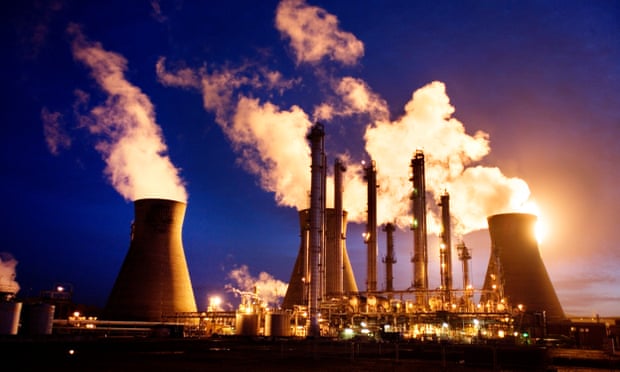
    Gas flares at BP’s Grangemouth oil refinery at dusk in Scotland. Photograph: Murdo Macleod/The Guardian

    Despite splashy climate pledges, firms including BP and Saudi Aramco have plans to expand fossil fuel production, says analysis

    In recent years, virtually all of the world’s largest oil companies have made splashy climate pledges. But when it comes to actually slashing emissions, those firms are “way off track”, a new report has found.

    The analysis from the thinktank Carbon Tracker assessed the production and transition plans of 25 of the world’s largest oil and gas companies. None align with the central goal of the 2015 Paris climate agreement to keep global warming “well under” 2 degrees above pre-industrial levels, the report found.

    “Companies worldwide are publicly stating they are supportive of the goals of the Paris-Agreement, and claim to be part of the solution in accelerating the energy transition,” said Maeve O’Connor, analyst at Carbon Tracker and co-author of the report. “Unfortunately, however, we see that none are currently aligned with the goals of the Paris agreement.”

    …

    The analysis comes as oil and gas companies are publicly reneging on their climate commitments. Shell last week watered down earlier emissions targets, following BP, which made a similar announcement last year. In October, ExxonMobil also made a deal to buy the shale group Pioneer Natural Resources, while Chevron announced plans to acquire the Texas oil company Hess – marking two of the country’s largest oil and gas deals in decades.

    https://www.theguardian.com/us-news/2024/mar/22/oil-companies-emissions-goals-report

  • Exxon’s new ‘advanced recycling’ plant raises environmental concerns

    Spread the love

    https://www.theguardian.com/us-news/2023/apr/10/exxon-advanced-recycling-plastic-environment

    Advocates warn plants like the latest addition to the Texas complex generate hazardous pollutants and provide cover for oil giants to produce new plastic products

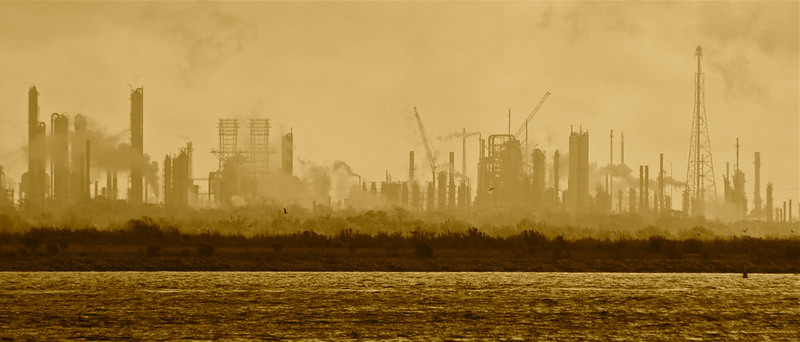
    Exxon plant at Baytown, Texas

    ExxonMobil just launched one of the largest chemical recycling plants in North America – but environmental advocates say the technology is a dangerous distraction from the need to reduce plastic production.

    On the surface, the latest addition to ExxonMobil’s giant petrochemical refinery complex in Baytown, Texas, sounds like it could be a good thing: An “advanced recycling” facility capable of breaking down 36,000 metric tons of hard-to-recycle plastic each year. But plastic waste advocates warn that plants like it do little actual recycling, and instead generate hazardous pollutants while providing cover for oil giants to keep producing millions of tons of new plastic products each year.

    The facility, which began large-scale operations in December of last year, is one of the largest chemical recycling plants in North America. Chemical recycling works by breaking down plastic polymers into small molecules in order to make new plastics, synthetic fuels and other products. Companies like ExxonMobil have rebranded the technology as “advanced recycling” and are now touting it as the latest hi-tech fix to address the plastic crisis, as traditional, mechanical recycling has failed to slow the tide of plastic piling up in landfills and the ocean.

    …

    ExxonMobil’s Baytown complex – which includes the third largest oil refinery in the US and a plant that manufactures 2.3m metric tons of plastic a year – is a major contributor to regional air and water pollution. It also has a long history of emitting chemicals above its permit limits, including the carcinogenic compound benzene. In recent years, ExxonMobil’s Baytown complex has been the site of fires and explosions that have injured workers and triggered shelter-in-place orders for nearby residents.

    “Exxon has a terrible track record of polluting the Baytown community,” Luke Metzger, the executive director of Environment Texas, told the Guardian. “This false ‘chemical recycling’ will only produce more toxic misery for Baytown.”

    https://www.theguardian.com/us-news/2023/apr/10/exxon-advanced-recycling-plastic-environment