Tag: torture

  • Human rights lawyers renew calls for the release of 10,000 Palestinian prisoners

    Spread the love

    Original article by Ana Vračar republished from peoples dispatch under a Creative Commons Attribution-ShareAlike 4.0 (CC BY-SA) license.
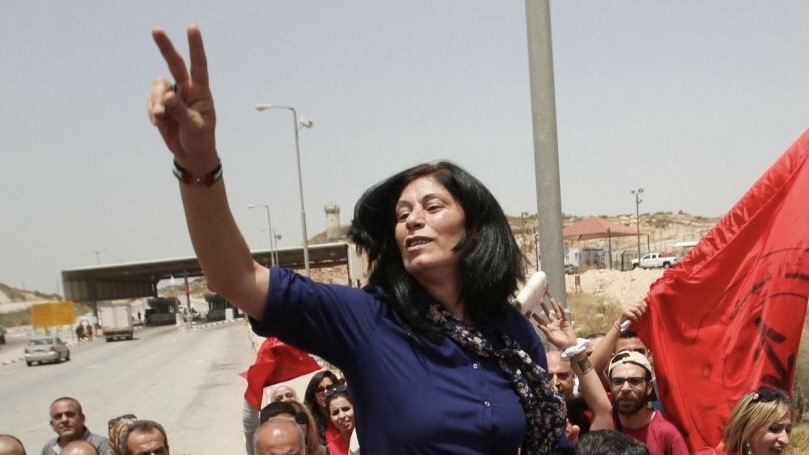
    Khalida Jarrar is one of 10,000 Palestinians that has been arrested by Israel in the last year as part of a massive crackdown. Photo: Archive

    Legal experts and human rights advocates renew their call for solidarity with Palestinian prisoners detained by Israel since October 2023

    Since October 7, 2023, approximately 10,000 Palestinians from across the West Bank and other occupied territories have been imprisoned by Israeli Occupation Forces (IOF) in what human rights lawyers describe as an unprecedented assault on all branches of the resistance movement. Thousands more have been forcibly disappeared from the Gaza Strip, with little information available about their whereabouts.

    Amid the increased use of torture and detention of the Palestinian people by Israel, international solidarity movements have intensified campaigns calling for their release.

    Among those recently detained from the occupied West Bank is Khalida Jarrar, a prominent human and women’s rights activist, who has faced persecution by Israel on multiple occasions, and is now being held in Neve Tirza prison.

    Watch: 11 months in Israeli prison: Shatha Odeh’s struggle for basic rights

    At a briefing on Palestinian political prisoners, organized by the International Peoples’ Assembly (IPA), Tala Nasir from Addameer Association for Prisoner Support and Human Rights, along with human rights lawyer Bilal Naammeh, highlighted the IOF’s violations of basic human rights among prisoners. Nasir pointed out that many arrests in the past year have targeted specific groups of professionals who play an important role in building the material basis of the community, including engineers and health workers. However, anyone can face arrest for something as minor as posting on social media, which occupation forces often manipulate into allegations of supporting resistance groups, including Hamas.

    Israel is attempting to practically ban all political participation by Palestinians, Naammeh noted, a threat reinforced through military courts and remote trials designed to instill fear in the population. Since October 2023, these practices have become even more severe than before. Naammeh described how, in court, Israeli lawyers often accuse defendants of being involved in the resistance. When defense lawyers challenge these accusations due to insufficient evidence, they can be sanctioned or temporarily barred from representing clients.

    As lawyers are currently the only point of contact between prisoners and the outside world, restricting their access—whether through sanctions or lengthy delays—has profound consequences.

    Conditions inside Israeli prisons have also worsened significantly. Access to prisoners is limited, even for representatives of the International Committee of the Red Cross (ICRC). Prisoners face severe shortages of food and water, which has led to weight loss of up to 30 kilograms per person, and are allowed only one hour outside their cells each day, leaving them isolated for the rest of the time, according to Nasir.

    Read more: Creating life from a life sentence: Sana’ Daqqah on the Palestinian prisoners’ movement

    The lack of water and hygiene has led to mass outbreaks of disease and infection, including scabies. According to Naammeh, some prisoners with scabies have been tied to their beds to prevent them from scratching. Other reports indicate that the IOF moves prisoners with scabies between sections in order to purposely exacerbate the contagion. Despite the widespread health crisis, medical care remains out of reach for most. Naammeh highlighted that even the most pressing health issues can take up to two months to receive basic medical attention, leaving prisoners in prolonged suffering.

    Conditions in the camps where Palestinians from Gaza are held are even worse, the two advocates suggested, but up-to-date information is nearly impossible to obtain. The only reports come from Israeli media or the testimonies of those who have been released. Nasir recounted stories of prisoners enduring extreme torture, including rape. Witnesses described prisoners being forced to bark for food and given only thin mattresses for six hours a day, making proper rest impossible. This treatment extends even to those who are supposed to enjoy specific protection under international law, such as health workers. Nasir explained that dozens of health workers abducted from Gaza are being held under the Unlawful Combatants Law, meaning they could remain imprisoned until the end of the conflict under such conditions.

    In response to Israel’s blatant disregard for human rights and international law, Addameer and the IPA renewed their call for the immediate release of all political prisoners and urged international activists to escalate solidarity efforts, including by insisting on adherence to recent International Court of Justice rulings. The organizers reminded participants that even the simplest acts of solidarity can contribute meaningfully to the broader struggle for liberation.

    Original article by Ana Vračar republished from peoples dispatch under a Creative Commons Attribution-ShareAlike 4.0 (CC BY-SA) license.
  • Death toll of Gaza’s health workers crosses 1,000

    Spread the love

    Original article by Peoples Health Dispatch republished from peoples dispatch under a Creative Commons Attribution-ShareAlike 4.0 (CC BY-SA) license.
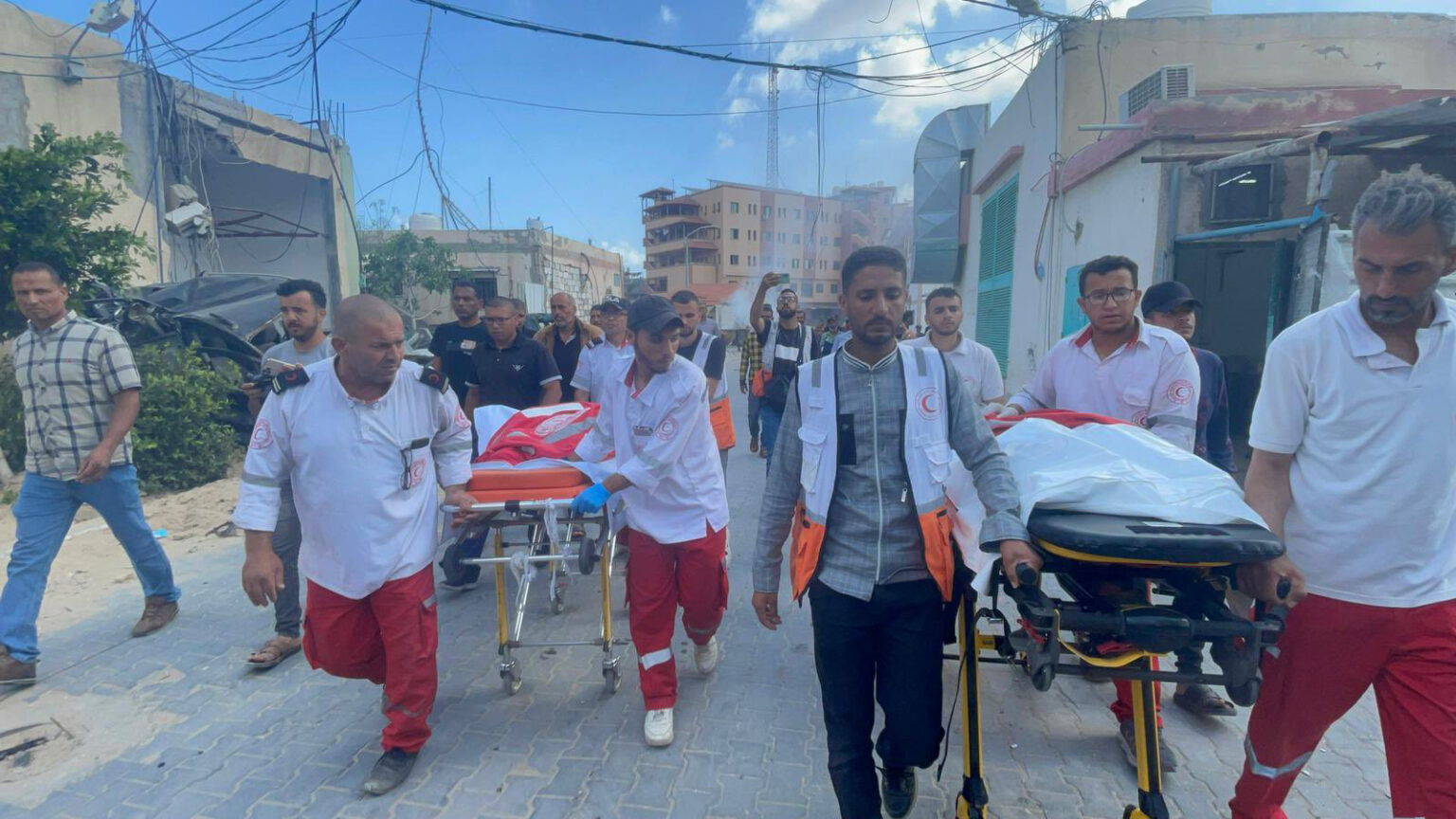
    Palestinian Red Crescent crews mourn fellow paramedics Haitham Tubasi and Suhail Hassouna, killed by Israeli forced (Photo via PRCS)

    A new report from the Palestinian Ministry of Health warns that over 1,000 health workers in Gaza have been killed by Israeli forces since October 2023. Meanwhile, a severe shortage of essential hygiene supplies continues to exacerbate the health crisis

    Israel has killed 1,151 workers in Gaza’s healthcare system since October 2023, according to the Palestinian Ministry of Health. Among the dead are 260 nurses, 184 health associates, 165 physicians, and 76 pharmacists, along with hundreds of management and support staff. While most of the victims’ names have been confirmed by health authorities, over 150 confirmations are still pending due to Israel’s refusal to release the martyrs’ bodies.

    In addition to those killed, hundreds of health workers remain imprisoned, where they face abuse and torture, as documented by international organizations. Ziad Muhammad Al-Dalu, a physician from Al-Shifa Hospital, was among those who died in Israeli custody, as reported by the Ministry of Health. His death serves as yet another example of Israel’s deliberate targeting of Gaza’s healthcare workers and infrastructure, actions that violate international humanitarian law.

    Read more: Palestinian health workers in Gaza describe torture and abuse in Israeli detention

    The ongoing attacks on healthcare have left tens of thousands of people with life-altering injuries. According to the World Health Organization (WHO), approximately 25% of those injured between October 2023 and July 2024 have suffered burns, severe limb injuries, or amputations, with no access to rehabilitation services. Dozens of physiotherapists were killed in the attacks, and inpatient rehabilitation services have been shut down for months. “Even the most essential assistive devices, like wheelchairs and crutches, are lacking due to the restricted flow of aid,” the WHO said.

    Israel’s blockade on humanitarian aid continues to choke Gaza’s healthcare system. At the moment, one of the most urgent problems is the shortage of soap and detergents. With the cost of a small bar of soap reaching USD 10—a price that could buy approximately 2 kilograms of soap in Germany—many families in Gaza are unable to afford basic hygiene supplies. “A family relying on cash-for-work income would spend 60% of the unskilled income on consumable hygiene products,” warned organizations monitoring water and sanitation in Gaza.

    With soap being an omnipresent product, it might be difficult to imagine how severe the effects of a shortage might be, particularly for children. Health and hygiene officials estimate that adequate access to soap in the Gaza Strip could reduce respiratory infections by 20% and diarrheal diseases by up to 40%. This would potentially prevent illness in at least one in three children currently suffering from diarrhea. However, humanitarian organizations estimate that delivering the 5 million soap bars needed each month to meet demand in Gaza is basically impossible under the existing restrictions.

    Read more: Israel targets health workers in the West Bank, obstructs polio campaign in Gaza

    Despite this situation, Gaza recently completed the first phase of its polio vaccination campaign, with an 87% coverage rate among children—just below the 90% benchmark. The campaign is set to resume in the coming weeks, but incidents of Israeli forces obstructing access to those taking part in it persist, jeopardizing future public health efforts.

    As winter approaches, the need for essential medicines, hygiene supplies, and nutritious food in Gaza becomes even more urgent. Concerns about potential floods and worsening living conditions highlight once again the critical need for an immediate ceasefire and rebuilding of the health system.

    Original article by Peoples Health Dispatch republished from peoples dispatch under a Creative Commons Attribution-ShareAlike 4.0 (CC BY-SA) license.
  • Amnesty War Crimes Probe Exposes Israel’s ‘Wanton Destruction’ in Gaza

    Spread the love

    Original article by Brett Wilkins republished from Common Dreams under a CC licence.

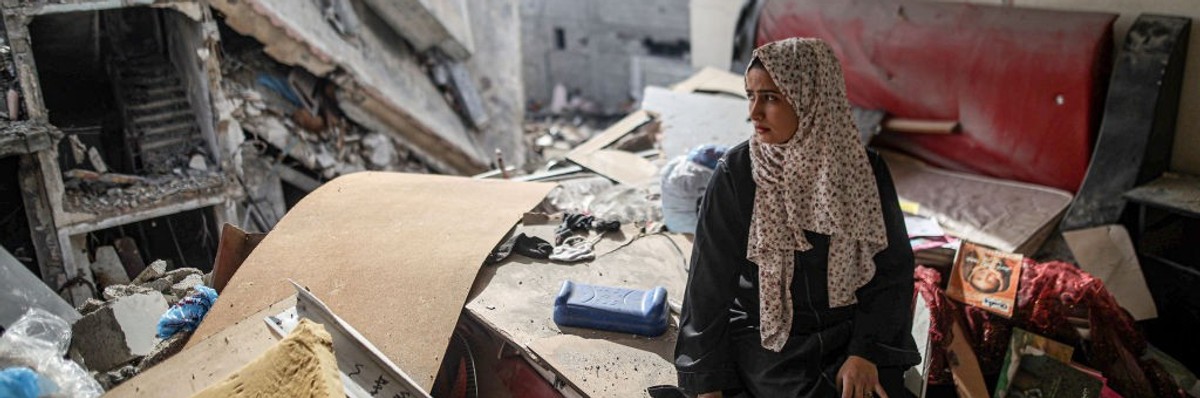
    A Palestinian woman surveys the destruction by Israeli forces of her home and neighborhood in Khuza’a, which is located near Gaza’s border with Israel, on November 25, 2023. (Photo: Mustafa Hassona/Anadolu via Getty Images)

    “The creation of any ‘buffer zone’ must not amount to the collective punishment of the Palestinian civilians who lived in these neighborhoods,” warned one Amnesty campaigner.

    Amnesty International said Thursday that the Israeli military should be investigated for the “war crimes of wanton destruction and of collective punishment” over its destruction of entire communities along Gaza’s border with Israel.

    “Using bulldozers and manually laid explosives, the Israeli military has unlawfully destroyed agricultural land and civilian buildings, razing entire neighborhoods, including homes, schools, and mosques,” the London-based rights group said in a new investigation.

    Amnesty analyzed satellite imagery, as well as photos and videos posted online by invading Israel Defense Forces troops between October and May, and found that the IDF has cleared wide swathes of land up to 1.2 miles (1.8 km) wide along Gaza’s eastern border.

    “In some videos, Israeli soldiers are seen posing for pictures or toasting in celebration as buildings are demolished in the background,” the report states.

    Israeli forces laid waste to much of Khuza’a in Khan Younis governate, under the pretext that Hamas-led militants attacked southern Israel from the town on October 7.

    Salem Qudeih, a teacher who lived in Khuza’a about a mile from the border, told Amnesty that “around my family home we had a three dunam (0.7 acre) orchard full of fruit trees. They were all destroyed. Only an apple tree and a rose were left.”

    “I had bees and produced honey. All of it is gone now,” he added. “Out of the 222 houses of my relatives in the area, only about a dozen remain. My home—where I lived with my wife, my five daughters, and one son—was completely destroyed.”

    Erika Guevara-Rosas, Amnesty’s senior director for research, advocacy, policy, and campaigns, said in a statement: “The Israeli military’s relentless campaign of ruin in Gaza is one of wanton destruction. Our research has shown how Israeli forces have obliterated residential buildings, forced thousands of families from their homes, and rendered their land uninhabitable.”

    “Our analysis reveals a pattern along the eastern perimeter of Gaza that is consistent with the systematic destruction of an entire area,” she continued. “These homes were not destroyed as the result of intense fighting. Rather, the Israeli military deliberately razed the land after they had taken control of the area.”

    “The creation of any ‘buffer zone’ must not amount to the collective punishment of the Palestinian civilians who lived in these neighborhoods,” Guevara-Rosas added. “Israel’s measures to protect Israelis from attacks from Gaza must be carried out in conformity with its obligations under international law, including the prohibition of wanton destruction and of collective punishment.”

    “The Israeli military deliberately razed the land after they had taken control of the area.”

    Other experts—including United Nations officials and scholars—have previously highlighted what Robert Pape, a U.S. military historian and University of Chicago professor, described as “one of the most intense civilian punishment campaigns in history.”

    In the 335 days since October 7, Israeli forces have killed or maimed more than 145,000 Palestinians in Gaza while forcibly displacing almost all of the embattled strip’s 2.3 million people and destroying hundreds of thousands of homes and other structures, according to Palestinian and international officials. Rebuilding after Israel’s obliteration of Gaza’s civilian infrastructure is expected to cost over $18.5 billion, or nearly Palestine’s entire annual gross domestic product.

    Israel is currently on trial for genocide at the International Court of Justice in The Hague. Meanwhile, International Criminal Court (ICC) Prosecutor Karim Khan has applied for warrants to arrest Israeli Prime Minister Benjamin Netanyahu, Israeli Defense Minister Yoav Gallant, and Hamas leaders for alleged war crimes including extermination.

    “International humanitarian law, which applies in situations of armed conflict, including during military occupation, is comprised of rules whose central purpose is to limit, to the maximum extent feasible, human suffering in times of armed conflict,” Amnesty explained Thursday.

    The group noted that under the Fourth Geneva Convention, “extensive destruction and appropriation of property, not justified by military necessity and carried out unlawfully and wantonly,” is a war crime.

    Additionally, the treaty bans collective punishment of civilians, stating that “no protected person may be punished for an offense he or she has not personally committed.”

    Amnesty has repeatedly accused Israel of committing war crimes in Gaza and has urged the ICC to open investigations into multiple “indiscriminate” and “disproportionate” IDF massacres, as well as torture and other alleged human rights violations.

    Original article by Brett Wilkins republished from Common Dreams under a CC licence.

  • ‘Insane Torture’: Israeli Soldiers Confirm Horrific Abuse of Palestinians at Sde Teiman

    Spread the love

    Original article by BRETT WILKINS repulished from Common Dreams under Creative Commons (CC BY-NC-ND 3.0).

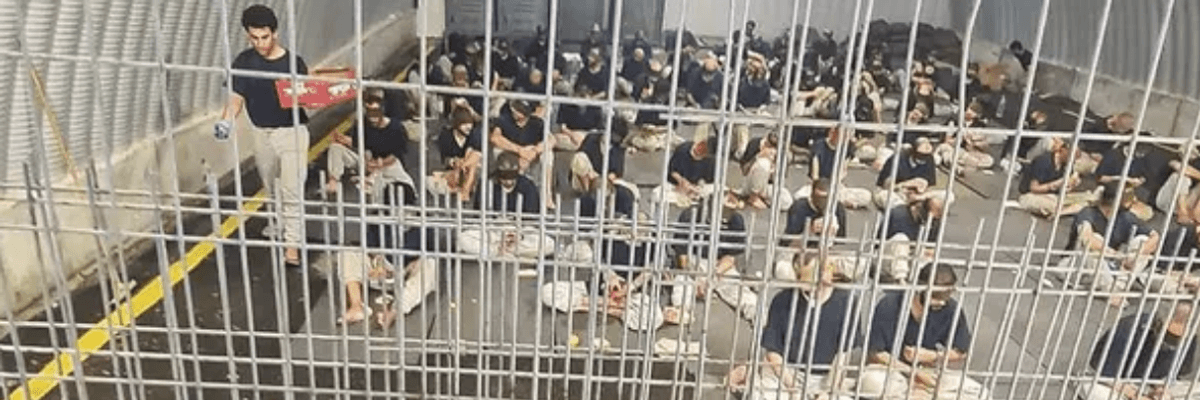
    Palestinians imprisoned at Sde Teiman are shackled and blindfolded 24 hours a day and are forced to sit still and silent in painful positions for hours on end. (Photo: Whistleblower)

    “Teeth were broken, bones were broken,” said one soldier. “You notice how easy it is to lose your humanity,” said another.

    An Israeli newspaper on Friday published interviews with Israel Defense Forces reservists and medical staff who witnessed the “day-to-day torture” of Palestinian prisoners at the notorious Sde Teiman prison in the Negev Desert, where dozens of detainees have died and others were allegedly raped.

    The Israelis described seeing torture and abuse of Palestinians detained in Sde Teiman, who included everyone from Hamas fighters to innocent civilians, and ranged in age from children to octogenarians.

    “We said, ‘It’s torture.’ But you don’t get into it; you change the subject immediately.”

    “What’s happening there is total dehumanization. You don’t really relate to them as if they’re real human beings,” said one public hospital physician who worked at Sde Teiman. “In the end it’s no less than torture. There are ways to administer even poor treatment, or even to torture a person, without crushing cigarettes on them.”

    One female former medical staffer said that “the place was totally unimaginable, I had never considered anything like it.”

    “My first thought was: What have I done?” she said, describing prisoners being forced to relieve themselves in diapers and take their meals through straws.

    “The conditions there were described as torture,” she added. “Maybe. In many senses, yes, I agree with that. Maybe even insane torture.”

    A 37-year-old male reservist said some of the worst abuse was committed by members of Force 100, the unit of the nine Israelis recently arrested for allegedly gang-raping a Sde Teiman prisoner.

    “They took… guys aside and really laid into them,” he said. “I think that each time teeth were broken, bones were broken… And there was also a dog.”

    Former Sde Teiman prisoners have described dogs attacking and performing “vile acts” on them.

    Another IDF reservist said that “when you come to the camp, the first thing that hits you is the smell… of dozens of people who have been sitting in close quarters for more than a month in the same clothes and in insane heat.”

    “They let them shower for a few minutes around twice a week, but I don’t remember ever seeing that they gave them a change of clothes, in any case not on my shifts,” he added.

    The Haaretz interviewees said that much of the abuse occurred in the open.

    “It wasn’t something that was done in the dark,” the 37-year-old reservist said. “Everyone saw what was going on… It’s not something that was done behind the back of the commander of the camp.”

    “Most of the guys were just fine with what was happening,” he continued. “There were some who were a little bothered by it, and there were others who were bothered by it at the start and then they toed the line with the system.”

    “There were people who in conversations suddenly mentioned the word ‘torture,’” he added. “And then we said, ‘It’s torture.’ But you don’t get into it; you change the subject immediately.”

    Some of those interviewed by Haaretz expressed misgivings about what they did or saw at Sde Teiman.

    “When I was there, I wrestled with myself about whether to stay on and try to do the right thing, the best I could as a moral person, or whether I should just get up and declare that I refused to take part in it,” said one male reservist and student. “I came out with a heavy feeling of guilt.”

    Another reservist said, “The more distance I have from the place, the more my eyes have opened up.”

    “What most disturbed me was to see how easily and how quickly ordinary people can disconnect themselves and not see the reality right in front of their eyes when they’re in the midst of a shocking human situation,” he added.

    There were also rare moments of mercy.

    “Sometimes the military police gave the minors candy, like in the evening, before sleep,” the 37-year-old reservist said. “One time a detainee started to cry. He was older, 60 years old. So the duty officer tried to speak to him and cheer him up a little.”

    But more often, guards were “filled with rage,” said one reservist, who added that “there’s a desire for revenge.”

    “What most disturbed me was to see how easily and how quickly ordinary people can disconnect themselves and not see the reality right in front of their eyes.”

    One reservist said that “there was a female officer who gave us a briefing on the day we arrived. She said, ‘It will be hard for you. You’ll want to pity them, but it’s forbidden. Remember that they aren’t people.”

    “You notice how easy it is to lose your humanity in a second, how easy it is to come up with justifications for treating people as if they’re not people,” he added.

    One 27-year-old female reservist said that upon arriving at Sde Teiman—where she was welcomed with popcorn and cotton candy—she was alarmed to find that “good people whom I know talked about being cruel and abusive to people, like they were talking about something routine.”

    “The dehumanization frightened me,” she said. “I couldn’t understand how a group of young people who were around me every day underwent such a dangerous process in such a short time.”

    Another reservist said that some Sde Teiman staff—especially the volunteers—were “sadists” who “really enjoy beating up Arabs.”

    The Haaretz interviews add to a growing body of evidence of torture and other war crimes perpetrated by Israelis against Palestinian prisoners at Sde Teiman and other lockups.

    Former Palestinian detainees and Israeli personnel have described beatings, rape and sexual torture by male and female soldiers, routine amputations due to constant shackling, burnings, electrocutions, attacks by dogs, ice-water dousings, denial of food and water, sleep deprivation, constant loud music, and other abuse.

    The Israeli military is investigating the deaths of at least 36 Sde Teiman detainees, including one who died after allegedly being sodomized with an electric baton.

    On Friday, Alice Jill Edwards, the United Nations special rapporteur on torture, said that “there are no circumstances in which sexual torture or sexualized inhuman and degrading treatment can be justified.”

    “I am troubled by recent attempts by Israeli citizens—including reportedly one member of Parliament—to intervene violently after the arrests of soldiers on these abuse charges,” she said of the recent storming of Sde Teiman and another base by a far-right mob in response to the arrests of the alleged rapists.

    “Criminal proceedings into all allegations must proceed unhindered,” Edwards added. “No one is above the law. No one is immune from prosecution for torture.”

    Original article by BRETT WILKINS repulished from Common Dreams under Creative Commons (CC BY-NC-ND 3.0).

  • Western Media, Leaders Slammed for ‘Deafening’ Silence Over Israeli Torture Revelations

    Spread the love

    Original article by BRETT WILKINS republished from Common Dreams under Creative Commons (CC BY-NC-ND 3.0). 

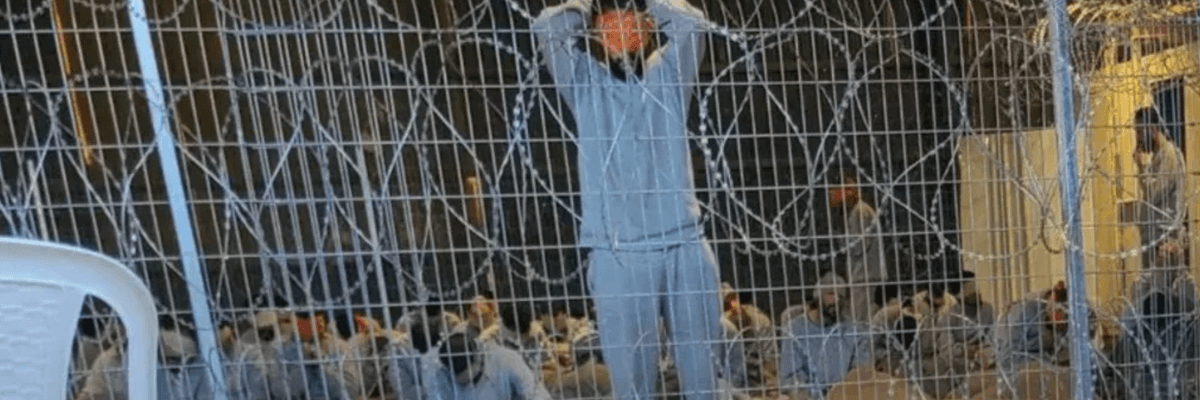
    A leaked photograph obtained by CNN shows a blindfolded man with his arms over his head at the Sde Teiman detention facility. (Photo: CNN)

    “Can you imagine the response if Palestinians were holding Israelis in mass rape camps and torturing them to death?” asked one critic.

    Human rights defenders are calling out Western news outlets and political leaders for their conspicuous lack of coverage and vocalized condemnation after leaked video footage appeared to show Israeli soldiers gang-raping a Palestinian detainee in the notorious Sde Teiman prison and the release of a new report documenting systematic torture of prisoners held by Israel.

    Earlier this week, Israel’s Channel 12 aired a video showing Israel Defense Forces (IDF) reservists assaulting a Palestinian man at Sde Teiman, which is often called “Israel’s Guantánamo.” The victim was reportedly hospitalized with a severe anal injury, ruptured bowel, broken ribs, and lung damage. In addition to torture, former Sde Teiman detainees have described rampant rape and sexual abuse, allegedly often committed by female soldiers.

    Instead of avoiding the Sde Teiman rape story, Israeli media have aired an interview with one of the IDF suspects—who are being hailed as “heroes” by far-right Israelis including multiple Cabinet ministers—and panel discussions including one in which a journalist called for “institutionalized” rape of Palestinian prisoners. This, as Israeli leaders demanded an investigation of the rape video to find and punish whoever leaked the footage, and as Israeli lawmakers argue that it’s permissible to rape Palestinian prisoners.

    Meanwhile, there has been very little coverage of Sde Teiman on U.S. broadcast media, which have come under fire for allowing Israeli officials to censor their coverage of the Gaza onslaught. This stands in stark contrast to the myriad—and sometimes outright false—reports of Hamas militants raping Israeli women during the October 7 attack, which have prompted embarrassing corrections.

    “Can you imagine the response if Palestinians were holding Israelis in mass rape camps and torturing them to death? Every U.S. politician would condemn it, there would be congressional resolutions, countless CNN segments, and celebrity outrage,” Palestinian American poet Remi Kanazi said Thursday on social media. “But the victims are just Palestinians.”

    Dazed politics editor James Greig said on social media Wednesday that “it feels redundant to complain about double standards at this point but still, the contrast between the silence about Sde Teiman and the months of lurid, detailed, and at best factually dubious reporting published when Hamas was accused of sexual violence is extremely stark.”

    Syrian British journalist Richard Medhurst wrote Thursday on social media that “the silence by mainstream media on the IDF’s rape culture is deafening.”

    “These journalists are literally covering for the most violent form of rape, recorded on camera, and documented by doctors,” he added.

    When there is coverage of alleged Israeli crimes in the U.S. media, it is often presented in a manner that casts doubt upon the veracity of Palestinian claims—which are increasingly beyond doubt amid an avalanche of evidence.

    On Monday, asCommon Dreamsreported, the Israeli human rights group B’Tselem released a detailed report, ominously titled “Welcome to Hell,” which documented widespread torture and abuse of Palestinians across Israeli’s detention apparatus. The report found that “there is no room to doubt” that Israel’s torture methods are a systematic, organized policy of its prison authorities.

    Israeli whistleblowers have described having to frequently amputate Sde Teiman detainees’ limbs due to damage from constant shackling. IDF officers have admitted that dozens of Palestinians have died at the prison. IDF soldiers allegedly murdered one detainee by shoving an electric baton in his anus. United Nations experts and the Israeli human rights group B’Tselem have confirmed what the latter described as the “systematic” torture of detainees “that amounts to a war crime and even a crime against humanity.”

    Meanwhile, Israeli protesters have rallied for the right to rape Palestinians, and a far-right mob whose members included a Cabinet minister and multiple Knesset lawmakers stormed two military bases last month in an attempt to free the alleged IDF rapists after nine suspects were arrested.

    Yet “there is still no international outcry,” journalists Lubna Masarwa and Peter Osborne wrote in a Middle East Eyeopinion piece published Friday. “This collective omerta from politicians and the media about Israel’s monstrous conduct is hard to comprehend, given that we are talking about systematic war crimes committed on a horrifying scale by a country already under investigation at the International Court of Justice for potential genocide.”

    “Their silence amounts to complicity,” the authors continued. “As for Israel, the majority of the political and media classes do not appear to think there is much wrong in the torture and abuse of prisoners, with some ministers actively defending the abusers.”

    “These are the signs of a very sick society indeed—one that has passed through an invisible barrier into savagery,” they added. “There are no red lines, no respect for international law, and no accountability. The silence of the West shows that we, too, have entered the same nightmare universe.”

    Original article by BRETT WILKINS republished from Common Dreams under Creative Commons (CC BY-NC-ND 3.0).