Germany lurches further to the right

Spread the love

Original article by Matthew Read republished from peoples dispatch under a Creative Commons Attribution-ShareAlike 4.0 (CC BY-SA) license.
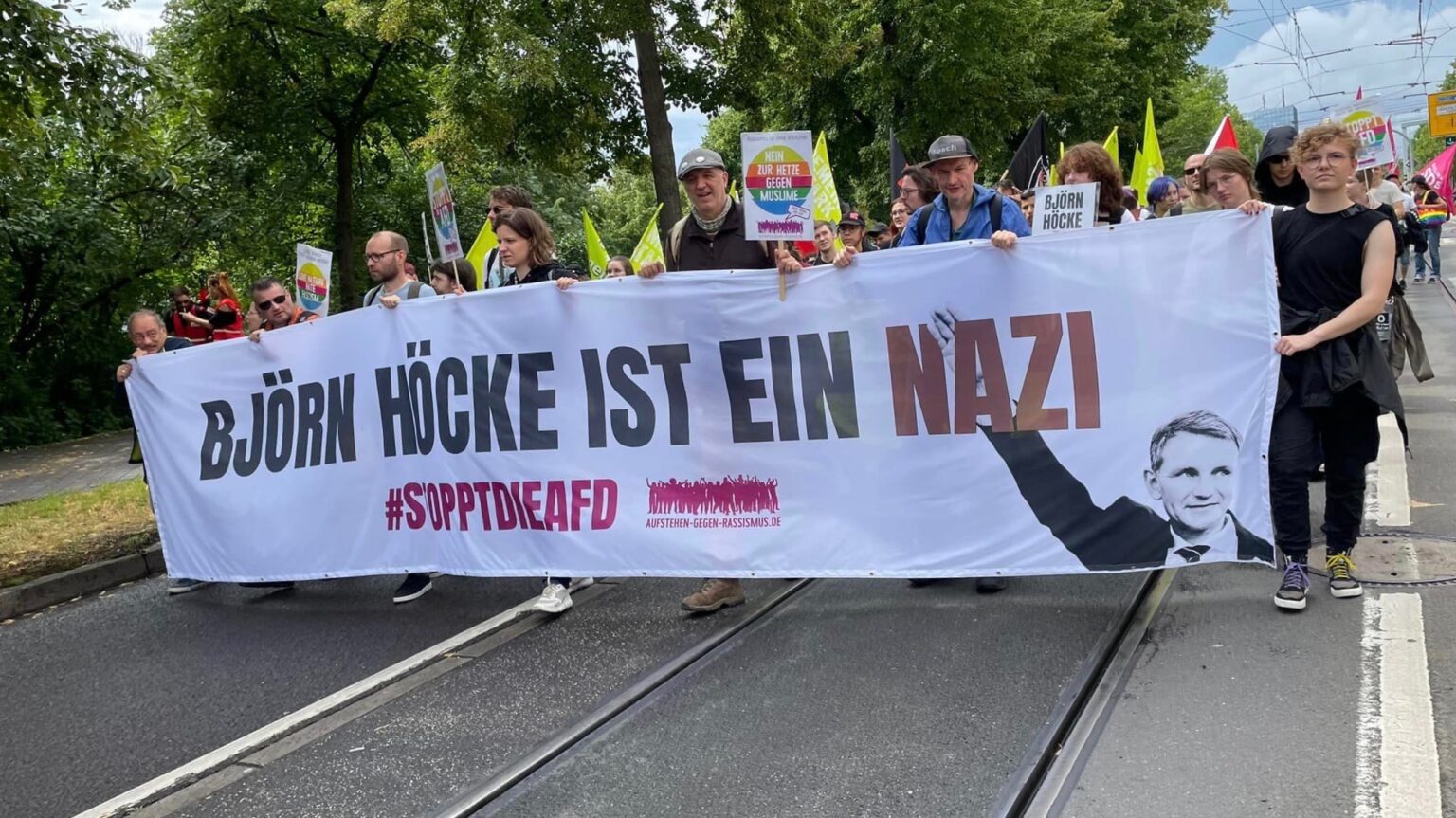
Anti-AfD protest in Magdeburg. (Photo: via Standing Up Against Racism)

The German government has defied EU law by imposing border controls, while Green politicians decry “the poison of Islam” in parliament. Meanwhile, the far-right AfD has surged in recent state elections. What’s driving Germany’s sharp shift to the right?

Germany is entering a period of reaction. This is not only evident from the rise of the far-right Alternative for Germany (Alternative für Deutschland, AfD), but also from the hardline policies of the governing coalition’s so-called centrist parties. The Social Democrats (SPD), Greens, and Liberal Democrats (FDP) have introduced unprecedented measures against migrants and critics of state policies. In September 2024, Federal Interior Minister Nancy Faeser (SPD) imposed border controls, defying European criticism and undermining the EU’s Schengen Agreement. Political scientist Christopher Wratil of the University of Vienna said that Berlin can “no longer claim others are not complying with EU law,” adding that the government is acting “as if the AfD were already in power.” Soon after Faeser’s announcement, Green parliamentary leader Katharina Dröge referred to “the poison of Islam” (das Gift des Islams) during a Bundestag session.

Germany challenged on multiple fronts

To explain this drastic rightward shift, it is necessary to understand the international situation confronting Germany’s ruling class. There are three main fronts on which the German state is currently bogged down.

Firstly, in Ukraine, where NATO’s confrontation with Russia is stalling, if not collapsing entirely. As the second-largest backer of the Zelensky regime, Berlin remains fully committed to winning the war. The government’s July 2024 decision to approve the stationing of US Tomahawk cruise missiles on German soil confirms this. Sanctions on Russia have strained the German economy, especially energy-intensive industries, but the state has absorbed much of the burden through subsidies. The Federation of German Industries, representing 100,000 companies, continues to back the government’s policies. However, popular support for the war is crumbling, as recent EU and state elections show. The two parties most critical of arms deliveries to Ukraine – the AfD and the Sahra Wagenknecht Alliance for Reason and Justice (Bündnis Sahra Wagenknecht, BSW) – made record gains, while the governing coalition suffered heavy losses.

The second front, not yet erupted into open conflict, is East Asia, in the confrontation with China. German capital faces the same dilemma as its US counterpart: while business with China remains lucrative, Chinese producers are outpacing American and European competitors, challenging Western hegemony. Germany has been more reserved than the US in taking a confrontational stance, but the government’s plan to invest 10 billion euros into a 30-billion-euro Intel chip production project in Germany shows its intent to reduce reliance on China. Meanwhile, the Green foreign minister, who called Xi Jinping a “dictator” in 2023, has led a cross-party effort to instrumentalize Taiwan against Beijing. The Ministry of Defense’s recent decision to send a warship through the Taiwan Strait is the latest move in this confrontational policy.

The third front is West Asia, where Germany remains the most outspoken advocate of Israel’s genocidal offensive in Gaza. Unlike the other fronts, there are no economic concerns holding German capital back from fully supporting Israel. This unified stance on Zionism and opposition to the so-called axis of resistance has allowed the government to swiftly implement policies against the Palestinian solidarity movement. While smearing protesters as antisemitic, basic rights such as freedom of assembly and speech are thrown out of the window. Homes are raided, activists arrested, solidarity organizations banned, and laws tightened—most recently with the liberal FDP calling to strip non-EU citizens of the right to assembly. Yet, the Western-backed offensive in Gaza has also stalled, with Israel unable to eliminate Hamas. Domestically, Germany uses force to suppress dissent, but it cannot do so internationally. States from the Global South are openly challenging Germany’s unconditional support for Israel. Namibia accused Berlin of supporting genocide while shirking responsibility for colonial crimes. Nicaragua has filed a case against Germany in the International Court of Justice, accusing it of violating the 1949 Genocide Convention. Others, like Malaysian Prime Minister Anwar Ibrahim, have directly confronted German politicians: “Where have we thrown away our humanity? Why this hypocrisy?”

The escalations on these fronts, along with rising domestic discontent, are fueling insecurity among Germany’s ruling class. A shift to the right is seen as necessary to capture broad sections of the population, keep them integrated into the system, and conjure scapegoats. The consistent messaging around the “Russian threat” and “Islamic terrorism” is used to justify massive military spending, cuts to social programs, and sweeping surveillance laws, including the right to secretly invade private homes. Meanwhile, migrants are blamed for housing shortages and the collapse of the healthcare system.

The collapse of the governing parties in eastern Germany

Elections for two state governments in eastern Germany made international headlines in August 2024 after the far-right AfD made massive gains, even becoming the strongest political force in Thuringia, where it led by almost 10%. There are several reasons for the far-right’s success.

Firstly, there is the historical trajectory of the post-1989 era. Over 30 years have passed since the socialist German Democratic Republic (GDR) was incorporated into the Federal Republic, yet West German promises of “blossoming landscapes” remain unfulfilled. The privatization of the East German economy was the largest wealth transfer in European history: millions lost their jobs and were deprived of their rightful shares in the public property they had built. This left East Germans with little to pass to their children. Almost all key positions in the state and economy were taken by West Germans. Deindustrialization led to higher unemployment, lower incomes, and longer working hours compared to the West. The result was a mass exodus, with nearly 4 million people moving westward since 1989 to escape the bleakness.

The East German population has essentially been relegated to second-class citizens in the Federal Republic. This has fostered a general distrust of Western political parties, whose approach has often been to “educate” rather than represent the East: “Your system lost, you have lost, so we will show you how it’s done.” The natural rejection of this condescending, paternalistic attitude has long been reflected in voter support for anti-establishment parties like The Left (Die Linke) and, more recently, the far-right AfD.

While The Left enjoyed broad support in the early 2000s for opposing the neoliberalization of the labor market, it gradually fell out of favor after joining regional and city governments, where it helped implement the same neoliberal policies it once opposed (such as the privatization of public housing in Berlin). This created a political vacuum in which the AfD was able to present itself as the only oppositional force, despite being a neoliberal party. The AfD taps into the economic and social challenges people face, blaming migrants or incompetent politicians in Berlin rather than the economic system itself. It has been especially successful among skilled laborers and small business owners—those most threatened by, or fearful of, social degradation.

This dynamic, which had already been unfolding for several years – was accelerated by the escalation of the Ukraine war in 2022. The question of arms deliveries to Kiev now played a central role in political debates.

The EU elections in June 2024 – in which the whole country participated – showed that Germans are dissatisfied with the governing coalition (SPD, Greens, and liberal FDP). Voters are now turning to the conservative CDU and far-right AfD, both of which call for tougher social cuts in response to current crises. The AfD gained nearly 5%, becoming the second-largest German party in the EU parliament, surpassing even the SPD. While the AfD has criticized further arms deliveries to Ukraine, it does not oppose NATO or the ongoing militarization in Germany. Many likely voted for the AfD due to its demagoguery on Ukraine, particularly calls to end the war with Russia. Polls from September 2024 show more Germans now oppose further arms deliveries to Ukraine (51%) than support them (38%), and 52% believe diplomatic efforts for peace have been insufficient. The BSW, a new party that split from The Left in 2023, centered this issue in its campaign and secured 6% of the national vote in the EU elections.

The two state elections in August 2024 further revealed that consensus around the Ukraine war effort is breaking down, especially in eastern Germany. All three governing parties lost votes, while the AfD and BSW made record gains. The Left, which had been the strongest party in Thuringia and supported arms deliveries to Ukraine, lost nearly 18% and was overtaken by the BSW. The AfD is now the largest party in Thuringia, winning almost a third of the vote. In Saxony, the AfD came close, with 30.6% compared to the CDU’s 31.9%. Notably, the CDU leader in Saxony has broken from the party’s line, calling for an end to arms deliveries and diplomatic negotiations with Russia.

The successes of the AfD and BSW have left the two eastern German states without a clear path forward. All parties currently refuse to form coalitions with the far-right AfD. While mainstream parties have derided the BSW as the “long arm of the Kremlin,” they also acknowledge the need to contend with this new party. Wagenknecht has stated that the BSW will only join coalitions with parties that oppose the stationing of US Tomahawk cruise missiles in Germany—a largely symbolic stance, as state governments have no control over this decision. More concerning for centrist parties is the disintegration of the political landscape, which could allow the opposition to block decisions requiring a two-thirds majority, including the election of constitutional judges. There is a palpable angst that minority parties in federal and state parliaments could “shut down” Germany’s constitutional courts.

Dark prospects

The upsets in eastern Germany are driven, at least in part, by dissent over NATO’s war effort against Russia. Both the AfD and BSW, from different perspectives, argue that supplying more weapons to Ukraine is not in Germany’s “national interest.” This domestic dissent, coupled with military setbacks in Donbass, is clearly causing doubts within the governing coalition. Just days after the elections in Thuringia and Saxony, Chancellor Olaf Scholz (SPD) expressed support for diplomatic negotiations with Moscow to “discuss how we can move from this war situation towards peace more quickly.”

While the German ruling class grapples with the Ukraine dilemma, its commitment to militarizing society remains strong. In this endeavor, the AfD does not stand in its way. Although the far-right party differs on issues like the war against Russia, relations with the USA, and the future of the EU, it poses no threat to German capital. On the contrary, centrist parties can mask themselves as an anti-fascist bulwark, rallying much of the population (including many on the left) around the slogan of “stopping the AfD,” while simultaneously enacting similarly racist and inflammatory policies toward migrants.

Asylum seekers are once again being deported back to Afghanistan, in flagrant disregard of the EU’s own human rights convention. Even “liking” certain social media posts warrants deportation, according to Interior Minister Nancy Faeser (SPD). At the same time, the German government is ramping up its “brain drain” strategy against the Global South. Just a few days after ordering controls on all of Germany’s borders, Faeser signed an agreement with the Kenyan government to make it easier for Germany to poach Kenyan professionals. A similar agreement with Uzbekistan followed a week later.

Germany’s increasingly aggressive neo-colonial policies abroad and its ever-more repressive policies at home are thus two sides of the same coin.

Original article by Matthew Read republished from peoples dispatch under a Creative Commons Attribution-ShareAlike 4.0 (CC BY-SA) license.
Continue ReadingGermany lurches further to the right

For decades, governments have subsidised fossil fuels. But why?

Spread the love
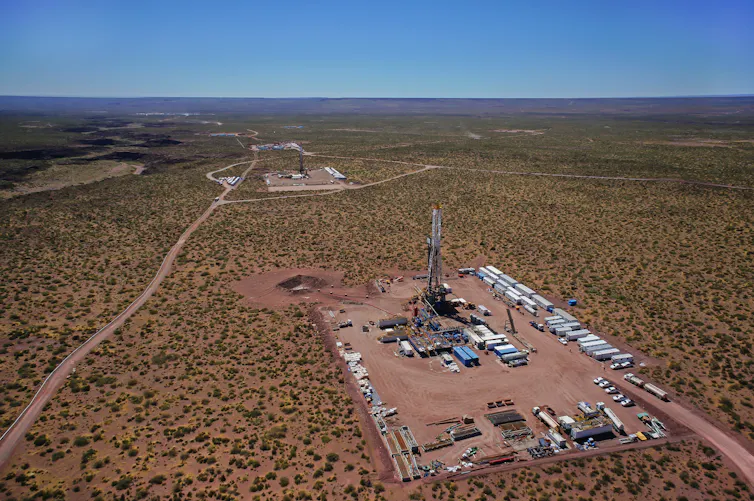
Sobrevolando Patagonia/Shutterstock

Bernard Njindan Iyke, La Trobe University

Even now, decades after we first began trying to avert the worst of global warming, more than 80% of the world’s total energy comes from fossil fuels.

You might think this would make fossil fuel production extremely profitable. But it’s not always the case. Much of the most accessible oil has already been extracted and burned. Many countries want to shore up domestic sources of fossil fuels to boost energy security. Energy price fluctuations and competition from new energy sources such as solar, wind and fossil gas have made it harder for some fossil fuel companies to make money, especially in coal.

This is where fossil fuel subsidies come in. Australia gave A$14.5 billion in subsidies to major fossil fuel producers and consumers in 2023–24 alone.

You might have wondered – why would some of the largest companies on Earth need subsidies? Here’s why.

LNG tanker
Australia’s surging liquefied natural gas industry has been boosted by government funding. KDS Photographics/Shutterstock

Private companies, public money

Globally, private companies dominate fossil fuel production, though fossil fuel-rich nations often have state-owned companies, such as Saudi Arabia’s Aramco and Russia’s Rosneft.

Why would governments give fossil fuel companies money? Many reasons. But the most important is that wealthy countries have historically needed huge volumes of fossil fuels for manufacturing, transport and power. Many countries have some sources of fossil fuels inside their borders, but only a few are self-sufficient. This has enabled fossil fuel giants such as Saudi Arabia to become wealthy beyond belief.

Many governments have used subsidies to boost their energy security and encourage local producers to seek out new sources of coal, gas and oil. These subsidies can make all the difference in making fossil fuel companies competitive internationally. For instance, Canada spent billions on subsidies to boost its oil sands and fracking projects.

Subsidies were essential in the United States’ fracking revolution. Novel approaches to extracting fossil gas and oil – boosted by major tax incentives – turned the US from a major importer of oil and gas into a net exporter by 2019.

You can see why the US did this. At a stroke, it went from being dependent on energy provided by foreign nations to being independent.

Once subsidies are in place, they become very hard to remove. Indonesia’s lavish fuel subsidies now account for 2% of the nation’s GDP. When the national government tried to walk these back, there were riots.

And there’s another reason, too. Fossil fuels are still playing an important role in boosting the economy in most nations. Subsidising them has long been seen as a way to maintain economic growth and stability.

Globally, these subsidies are estimated at a staggering $10.5 trillion each year.

This figure has grown sharply in recent years, after Russia’s invasion of Ukraine. As European nations tried to wean themselves off Russia’s gas, energy prices surged worldwide. In response, some countries introduced new subsidies to support businesses and consumers.

The top-line figure of $10.5 trillion includes two types of subsidy – explicit (meaning real dollars change hands) and implicit (for example, governments building roads and railways to encourage crude oil transport).

Explicit subsidies

Explicit fossil fuel subsidies are direct financial incentives from governments to fossil fuel producers and consumers. These incentives come in different forms, such as tax breaks, direct payments, grants and price controls. All of them aim to reduce the financial burden associated with fossil fuel production and use.

In Australia, explicit subsidies include fuel tax credits and exploration tax reductions. Fossil fuel companies can get subsidies to offset the losses they make during the years it takes to find and begin extracting new fossil fuels.

In the US, oil and gas companies benefit from the oil depletion allowance, which permits them to deduct a percentage of their gross income from oil and gas sales as an expense. They can also claim tax deductions for intangible drilling costs, such as the wages of workers and material needed to find new sources of oil and gas.

China, too, uses direct subsidies, discounted land-use fees, and preferential loans as explicit subsidies to boost coal production and consumption. The national government also supports fossil fuel consumption through direct payments to consumers.

coal miners China
China has used subsidies to encourage exploitation of its large coal resources. zhaoliang70/Shutterstock

Implicit subsidies

Implicit subsidies are often described as “imaginary”. That doesn’t mean they don’t exist, just that they’re not a direct transfer to directly paid to fossil fuel producers.

For instance, the cost of burning fossil fuels is borne by the global community and the natural world, in the form of climate change, damage to human health and other harms. Most fossil fuel companies don’t have to pay a cent for the pollution their products cause – so in effect, they are being granted an indirect subsidy.

Implicit incentives also include government investment in facilities such as transport networks, pipelines, oil refineries and port infrastructure, which will accelerate fossil fuel production and delivery. Think of the Middle Arm development in Darwin, funded by both the federal and territory government.

Why are these subsidies still being paid?

As the world grapples with a worsening climate crisis, fossil fuel subsidies are under great scrutiny.

It’s politically difficult to withdraw subsidies once given. This is why governments around the world have instead begun to give subsidies and tax incentives to green energy developers, including the enormous $500 billion Inflation Reduction Act in the US, the European Union’s Green Deal, and China’s massive subsidies of green technologies such as electric vehicles and solar panels.

The goal here is to make renewable energy and electrified transport steadily more affordable and competitive – just as fossil fuel subsidies did for oil, gas and coal.

Bernard Njindan Iyke, Lecturer in Finance, La Trobe University

This article is republished from The Conversation under a Creative Commons license. Read the original article.

Continue ReadingFor decades, governments have subsidised fossil fuels. But why?

Interview: It’s the Masses against the Machine in Islington North

Spread the love

https://morningstaronline.co.uk/article/its-masses-against-machine-islington-north

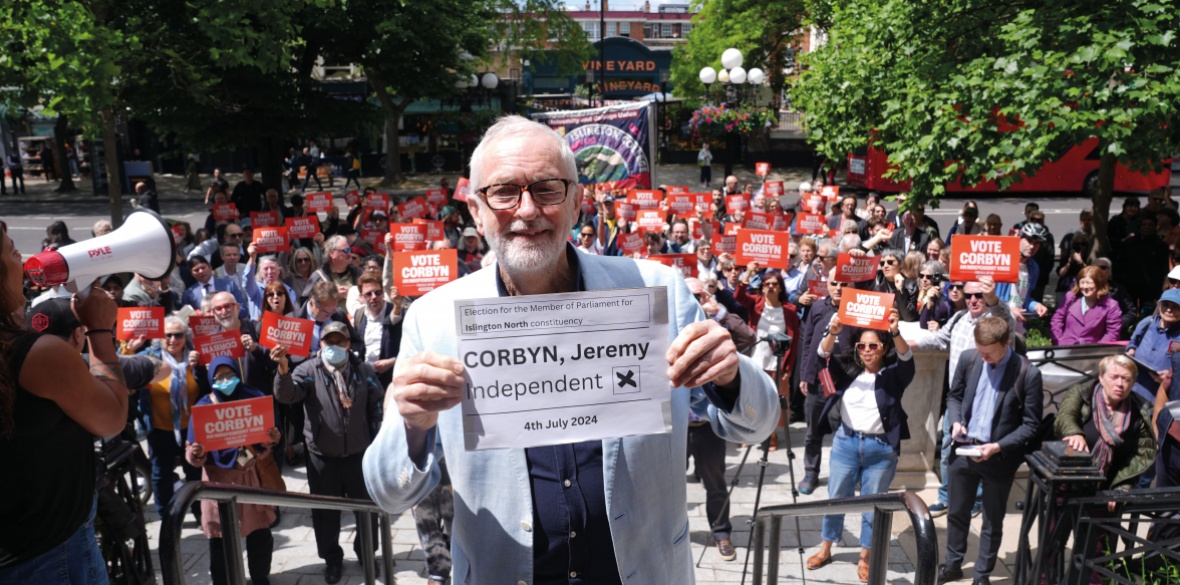
ALL TO PLAY FOR: Jeremy Corbyn poses outside Islington Town Hall, north London, after handing in his nomination papers for the general election

WILL Jeremy Corbyn win? It is the anxious question asked thousands of times a day by men and women on the left across Britain.

Across the world, come to that. The Islington North MP is recognised globally as one of the foremost champions for peace and social justice.

Five years ago he was leading Labour’s charge for office. His period as party leader did one thing the Establishment can never forgive — it gave them a fright. Keir Starmer is the instrument of their vengeance.

Interviewed by the Star in a cafe in the shadow of Finsbury Park station, near his campaign headquarters, he is invited to reflect on what has become of his party of nearly 60 years.

“It’s very sad. When I stepped down as leader it had 600,000 members, it was developing community organising, delayed for two years by officialdom.

“That was the direction we were going in — a broad, community-based grassroots campaigning party. Now it is a very centralised party. Local parties like Islington North have been treated with absolute disdain by the national party.”

His campaign has focused heavily on the local and has not really attacked his former party.

Prompted, Corbyn acknowledges that “if Labour loses that social milieu of people fighting for social justice and peace it just becomes a vehicle with no soul.”

That is the price of the consensus which Corbynism briefly shattered and is now in advanced restoration. Nationally, it is an arid campaign.

“The duopoly of the economic offer, both parties promise the same spending plans, same taxation regime, means the inequalities of the past 15 years are hard-wired into economic plans for the future.”

As ever, Jeremy Corbyn is most fluent, most at ease when discussing either the social problems on the ground, in his own constituency above all, or the dangers facing the world as a whole. I put to him George Galloway’s recent warning that Britain could be at war within six months.

“George is not wrong about that. We are moving towards a very very dangerous situation. Defence spending is by consensus to rise to 2.5 per cent and there are pretty loud voices saying it should go even more, to 3 per cent.”

He slates the bipartisan obsession “with Britain’s global military role — for what? We are building up to a cold war with China,” incurring vast spending on the Aukus nuclear submarine pact ”and not doing anything to bring about peace, not in the Ukraine war, not in Palestine.”

Re-elected, “I will be that voice for peace,” he pledges, a rare politician’s commitment that you can be absolutely sure will be honoured.

“The Gaza crisis has sorted a lot of people out. I think that the opportunity for politics coming back offered by the peace movement is going to be the future. People who come together for social justice.

“If you want to know what the future looks like, look at the demonstrations, people from all walks of life, communities, religions, races; all of this is a way forward.

“It includes a lot of people in the Labour Party who have radical political demands” but also the wave of independent candidates challenging Labour in this election.

“People are working in the same direction like Andrew [Feinstein] and Leanne [Mohamad],” he says.

“I would expect after the election to see a political grassroots movement, a community of activity from the grassroots.” In Islington, he pledges to establish a people’s assembly to render account to.

Article continues at https://morningstaronline.co.uk/article/its-masses-against-machine-islington-north

Zionist Keir Starmes is quoted "I support Zionism without qualification." He's asked whether that means that he supports Zionism under all circumstances, whatever Zionists do.
Zionist Keir Starmes is quoted “I support Zionism without qualification.” He’s asked whether that means that he supports Zionism under all circumstances, whatever Zionists do.

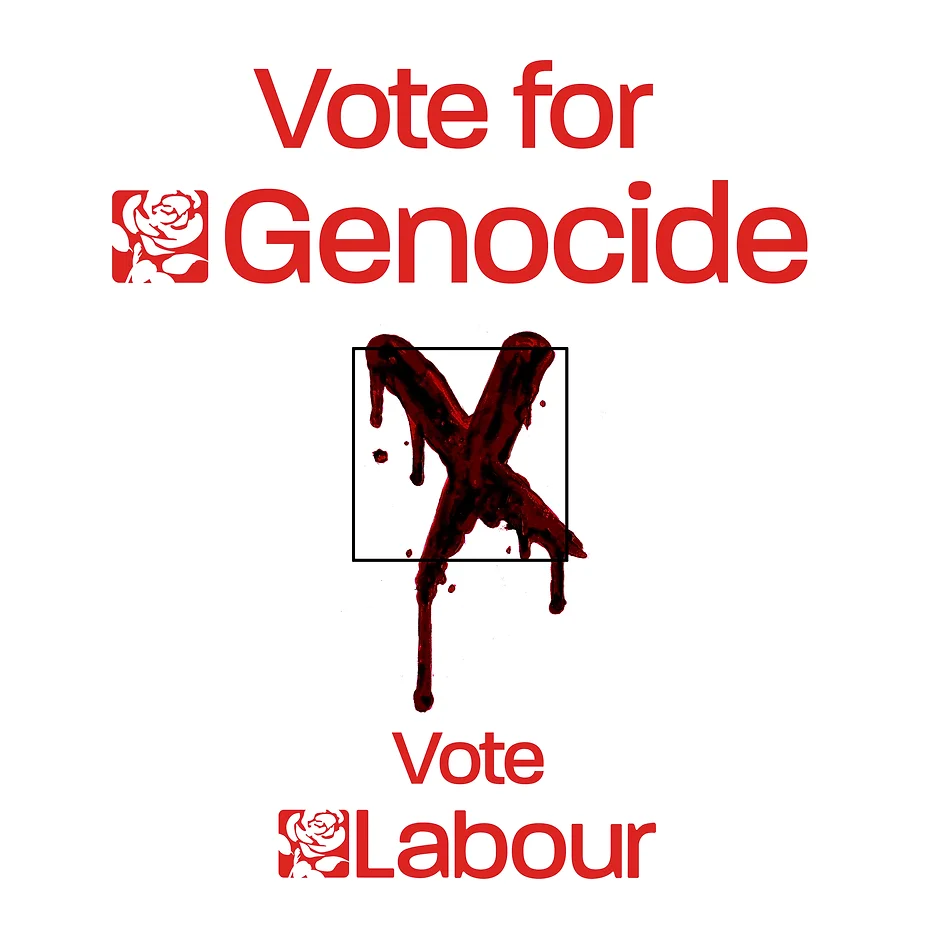
Vote For Genocide Vote Labour.
Continue ReadingInterview: It’s the Masses against the Machine in Islington North

Sunak and Starmer unite for war

Spread the love

https://morningstaronline.co.uk/article/sunak-and-starmer-unite-war

NATO Secretary General Jens Stoltenberg (left) and Prime Minister Rishi Sunak during a press conference at the Warsaw Armoured Brigade in Warsaw during Rishi Sunak’s visit to Poland and Germany, April 23, 2024

Leaders join forces to condemn Farage for comments on Nato expansionism

RISHI SUNAK and Sir Keir Starmer united in support of their bipartisan war policy as the row spread over Nigel Farage’s remarks blaming Nato and European Union expansion for contributing to the Ukraine conflict.

The two leaders expressed outrage that anyone would make an election issue out of the apparent drive to a wider war in Europe and Britain’s complicity in it.

But anti-war campaigners warned that the conflict could not be swept under the carpet.

Reform Party owner Mr Farage had been the first to break through the wall of silence surrounding British policy towards Russia and Ukraine during the election.

Mr Farage said: “The West’s errors in Ukraine have been catastrophic. I won’t apologise for telling the truth.”

He had told the BBC that “the ever-eastward expansion of Nato and the European Union was giving this man a reason to say to his Russian people, ‘they’re coming for us again’ and to go to war,” referring to Russian President Vladimir Putin.

Making it clear that he did not support Russia’s 2022 invasion of Ukraine, he added: “I am not, and never have been, an apologist or supporter of Putin.

“As a champion of national sovereignty, I believe that Putin was entirely wrong to invade the sovereign nation of Ukraine.

“What I have been saying for the past 10 years is that the West has played into Putin’s hands, giving him the excuse to do what he wanted to do anyway.”

The squabbling Tory Party briefly united to condemn Mr Farage.

Mr Sunak said he had played “into Putin’s hands” and former defence secretary Ben Wallace called him, somewhat irrelevantly, “a pub bore.”

Security minister Tom Tugendhat linked the Reform leader with the left, telling the press: “It doesn’t matter whether you’re Jeremy Corbyn or Nigel Farage — if you parrot the Kremlin’s lies, you cannot be trusted with our national security.”

Not to be outdone, Sir Keir huffed that Farage’s comments were “disgraceful,” adding that Ukraine was basically off-limits as a subject for political debate.

“Anyone who is standing for Parliament ought to be really clear that Russia is the aggressor, Putin bears responsibility, that we stand with Ukraine — as we have done from the beginning of this conflict — and Parliament has spoken with one voice on this since the beginning of the conflict,” the Labour leader said.

Indeed, he threatened a dozen Labour MPs with loss of the whip for expressing concern at Nato policy slightly before the 2022 invasion.

https://morningstaronline.co.uk/article/sunak-and-starmer-unite-war

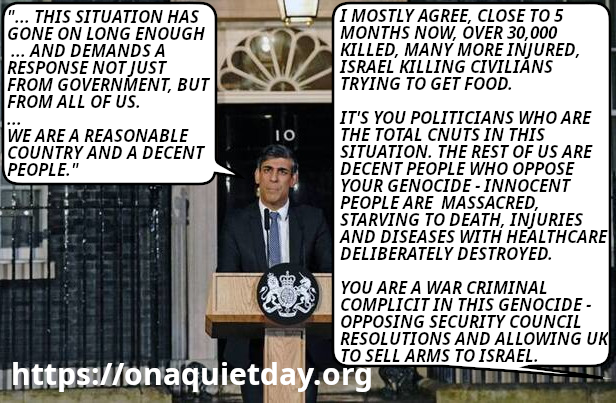
Response to Rishi Sunak's extremism speech at Downing Street 1 March 2024. Second version of this image with text slightly altered.
Response to Rishi Sunak’s extremism speech at Downing Street 1 March 2024. Second version of this image with text slightly altered.
Zionist Keir Starmes is quoted "I support Zionism without qualification." He's asked whether that means that he supports Zionism under all circumstances, whatever Zionists do.
Zionist Keir Starmes is quoted “I support Zionism without qualification.” He’s asked whether that means that he supports Zionism under all circumstances, whatever Zionists do.
Continue ReadingSunak and Starmer unite for war

The black, and Red, contribution to Nazi defeat must never be forgotten

Spread the love

Original article at https://morningstaronline.co.uk/article/victory-over-nazis-was-black-and-red

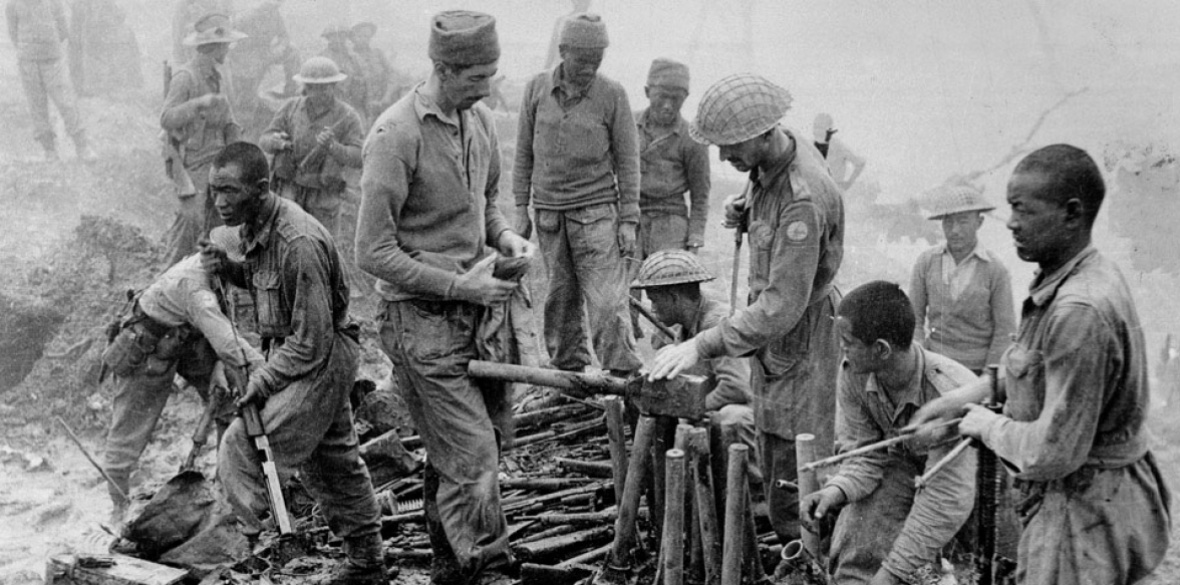
A photograph from the battle of Kohima, in north-east India, during World War II

We have long struggled for black and Asian Allied soldiers to be properly acknowledged in Europe’s commemorations — but now a worse travesty is upon us, as Russia’s crucial role is purged from the record, writes ROGER McKENZIE

President Putin took part in the commemoration of the 60th D-Day anniversary in 2004 and again, 10 years later, for the 70th anniversary — but he was not invited to this one.

The USSR, of which Russia was a key part, lost around 25 million people in the fight against Nazi Germany. But even this until recently undisputed fact is now under challenge.

In fact, the Red Army caused 80 per cent of all WWII German military losses and themselves lost 30 times more people than Britain, France and the US combined.

The Red Army’s defeat of the Nazis at Stalingrad is cited by many experts as being the decisive turning point in World War II. Between 150,000 and 250,000 Germans are estimated to have died at Stalingrad.

For Nazis, Stalingrad was not the battle that exacted the highest death toll, but the psychological impact of the battle was immense and was decisive in winning the war. It occupied and depleted massive Nazi resources which paved the way for the eventual Allied victory.

Over half a million Soviet soldiers and civilians died in the Battle of Stalingrad, among them numerous civilians. But that clearly was not enough to be invited.

Ukraine’s President Volodymyr Zelensky, on the other hand, was in attendance — as he always seems to be at pretty much anything. I now expect to see Zelensky at any event where a photo opportunity exists but the fact that he is invited to a commemoration of an event about the defeat of the Nazis is particularly insulting given the number of Nazis in his own forces and his applause in Canada last year for a veteran of a Waffen SS brigade that fought in Ukraine.

But the Russians are not the only ones that have been deliberately written out of history. The role of black people of African or Asian descent has continually been discarded.


More than 134,000 travelled from other colonies, including some 10,000 from the Caribbean to help defeat the Nazis. Only when casualties began to mount during the war were black people enlisted to join the fighting or become part of the Merchant Navy.

But there was no suspension in the standing orders of racism. Caribbean men joining the Merchant Navy were paid around one-third of the wages that white sailors were paid.

Around two and a half million fighters came from India to support the war effort. About the same time as the D-Day landing Indian, Gurkha and African soldiers fought the historic but little talked about — at least in Britain or the US — battles in Kohima, in north-east India.

These battles fought alongside British soldiers were among some of the toughest in the war and helped to turn the tide against the Japanese. Not for nothing did many of the troops who fought in battles in India and what is now Myanmar during the war call themselves “the Forgotten Army.”

I think they are probably wrong. I don’t think they were forgotten. I believe they were ignored because much of the fighting was carried out by black people. The Battle of Kohima and Imphal was the bloodiest of World War II in India, and it cost Japan many of its most elite fighters.

None of this seems to matter though to those that continue to hide the contribution made by people of African and Asian origin to the victory over the Nazis. We know the erasure of the role of the Red Army in World War II is being carried out for a different purpose.

The leaders of the Western powers can’t bring themselves to acknowledge the massive sacrifice of the Soviet people lest it demonstrate the skill and bravery of its soldiers and the refusal to be defeated by the seemingly invincible Nazis.

It is also part of the inexorable lurch towards a conflict with Russia as Nato ramps up the warmongering rhetoric that could lead to World War III and the catastrophic nuclear destruction of the planet.

Western powers seem far more willing to associate themselves with the Nazis surrounding the leadership of Ukraine and to hobnob with the likes of fascist-inspired Italian leader Giorgia Meloni.

I wonder how fast they will move for a photo opportunity should the far-right Marine Le Pen win the National Assembly election later this month or the next French presidential vote.

They say that history is written by the winners. Well, it seems not all the winners count. This means we must all call out the continued drive to rewrite history.

Original article at https://morningstaronline.co.uk/article/victory-over-nazis-was-black-and-red

Continue ReadingThe black, and Red, contribution to Nazi defeat must never be forgotten