CONFRONTING SIR KEIR: Andrew Feinstein is standing to unseat the Labour leaderPhoto: Marija Carter
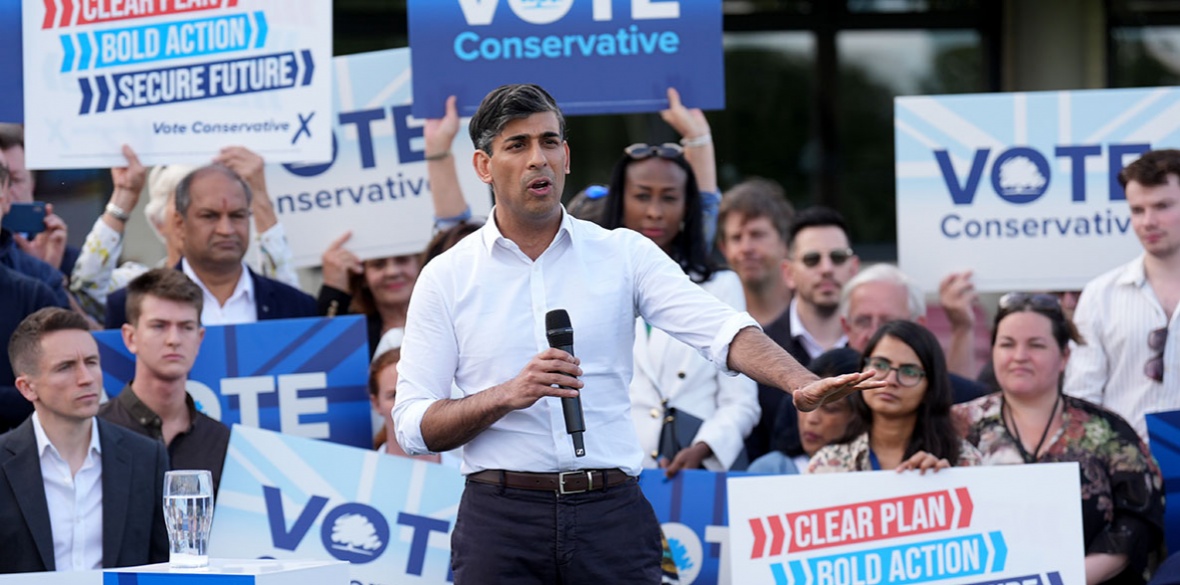
THE latest opinion polls are showing that it is possible Rishi Sunak will lose his own parliamentary seat come July 4. The voters in Richmond, Yorkshire, may be as tired of the Tory Premier as the rest of the country.
…
The voters in Holborn and St Pancras also have the chance to speak for the nation by rejecting a bankrupt and duplicitous leader.
Did Starmer represent the people of Camden, the borough his seat sits within, when he endorsed Israel’s genocidal actions in Gaza, refused to call for a ceasefire until given permission to do so by Washington, and backs continued arms sales to the aggressor? Not likely.
Do they endorse his Islamophobic political positioning, his authoritarian indifference to civil liberties, his culling of any remotely progressive Labour candidate? We doubt it.
Now they have a unique opportunity to clip Starmer’s wings. The country may want, as much through weary resignation and anti-Tory sentiment as anything else, a Labour government. There is absolutely no indication that it wants a specifically Starmer-led one.
And Holborn and St Pancras has an outstanding alternative. It is Andrew Feinstein, an independent left candidate who has parliamentary experience from his service as an African National Congress MP in his native South Africa.
Feinstein, the son of a Holocaust survivor, is well-placed to call out Starmer’s cynical abuse of anti-semitism as a political weapon against the left. He is one of many progressive Jewish men and women sanctioned by the Starmer apparatus.
Zionist Keir Starmes is quoted “I support Zionism without qualification.” He’s asked whether that means that he supports Zionism under all circumstances, whatever Zionists do.
Prime Minister Rishi Sunak during a visit to Cambridge Rugby Club in Cambridge, while on the General Election campaign trail, June 17, 2024
COLLAPSING Conservatives lost their campaign director today as the party was rocked by a fresh row over insider betting on the election date.
Tony Lee was forced to take leave of absence from the campaign as the suspension of his wife, Tory candidate Laura Saunders, was called for by Labour leader Sir Keir Starmer.
The Gambling Commission is reported to be looking into bets placed on the timing of the election. Another Tory candidate who worked in Downing Street, Craig Williams, has already apologised for wagering on a July election in the days before PM Rishi Sunak called the snap poll.
Ms Saunders is the Conservative standard-bearer in Bristol North-West and previously worked at Tory headquarters.
Zionist Keir Starmes is quoted “I support Zionism without qualification.” He’s asked whether that means that he supports Zionism under all circumstances, whatever Zionists do.
SHIFTY Sir Keir Starmer was left squirming today as he dodged election questions about his past conduct and present and future plans.
The lacklustre Labour leader failed to come clean on Gaza, Jeremy Corbyn or his volte-face on public ownership.
Speaking in a radio phone-in, Sir Keir also repeated shadow health secretary Wes Streeting’s controversial call for junior doctors to call off their strike action.
“Don’t strike during the election campaign because we’re very close now to the opportunity for a different approach with a Labour government if we get over the line,” he said.
“So don’t strike because that causes all sorts of issues.”
On the Gaza crisis Sir Keir waffled when asked whether a Labour government would stop arms sales to Israel.
The lawyer said that he would have to “look at the legal advice” and hold “a review.”
He also refused to agree that what is happening in Gaza is a genocide.
“You need the evidence in front of you to make a decision,” he slithered, as if the whole world has not seen an amplitude of such evidence over the last nine months.
The Labour leader was also uncomfortable when he was put on the spot as to whether he would have served in a Corbyn-led cabinet had Labour won the 2017 or 2019 general elections.
He repeated his argument that he “did not think Labour would win” and insisted that the question was “hypothetical,” a silly answer because it was evident to everyone at the time that he would have done.
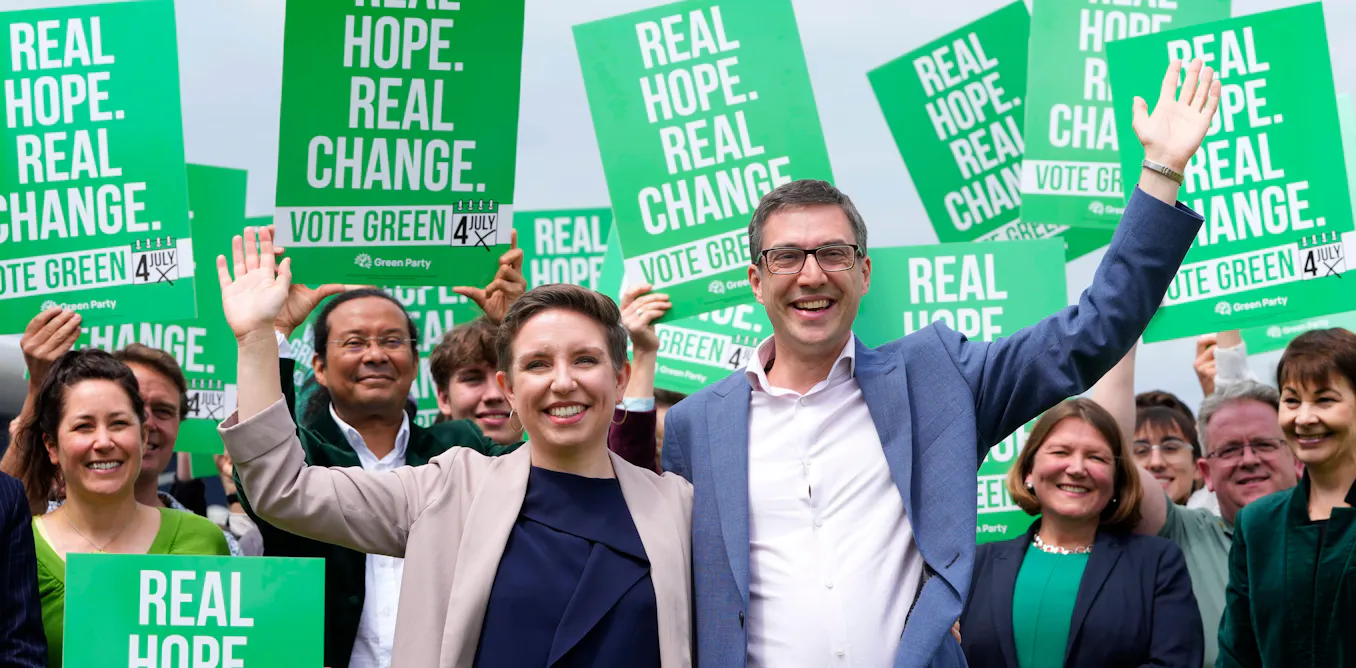
The Green party’s target is to take four seats at the upcoming UK election. Recognising it has no chance of forming a government, its manifesto is written from the perspective of a future pressure group within Westminster.
In doing so, the party highlights some key ideas and steps that could help the UK achieve meaningful climate action. This provides a refreshing attempt to outline an alternative way forward, at a time when climate leadership is severely lacking from other parties.
The Greens’ manifesto has climate action woven through it and the wording often emphasises the link between climate and socioeconomic issues, as the impacts of a changing climate could push more people into poverty and disrupt global food supply chains. It states: “The solutions to the climate crisis are the same as those needed to end the cost of living and inequity crises, making the future not just more liveable but fairer for us all too.”
The Greens argue that a rebalancing of the economy is required to achieve such a just transition. While the party stops short of calling for degrowth (producing fewer unnecessary goods and services in favour of more socially beneficial economic activity), the focus on a carbon tax and push for investment in public services and renewables could deliver a similar impact.
The party also wants to change how success is measured in the economy, calling for “new indicators that take account of the wellbeing of people and planet, and track our progress towards building a greener and fairer future”. This is the first time an established party has explicitly reframed what the measures of a successful nation should be.
The manifesto embraces an agreed basic standard of living and a set of planetary boundaries that our activities shouldn’t push us beyond, based on the theory of “doughnut economics”. By comparison, the existing model focuses almost solely on economic growth as the key measure of success.
Steps to decarbonise
One of the key issues the Greens want to address is the fact the UK’s housing stock is some of the worst in Europe. A vast programme of insulation and decarbonisation measures is needed across all tenures, and the Greens earmark £50 billion over the length of the parliament for retrofitting buildings. One issue here is that they don’t specify how the current supply chain could be scaled up to achieve this.
The manifesto does recognise that to reduce the UK’s carbon impact, buildings can’t just be demolished and rebuilt. Circularity is needed with zero extraction of new materials in the construction of new homes and buildings.
The Greens propose to tackle this with planning applications to include whole-life carbon and energy calculations. Plus, all materials from demolished buildings will need to be considered for reuse, and increased rates for the disposal of builders’ waste would ensure that this is financially viable.
Significant investment is also needed to upgrade the UK’s energy networks to enable decarbonisation, with another proposed £50 billion assigned to electricity generation, transmission and storage. The manifesto also highlights the potential for greater community involvement in – and direct benefit from – new solar and wind farms, which research suggests can speed up the provision of decentralised energy generation.
Where the Greens diverge most widely from the current energy decarbonisation orthodoxy is on nuclear. Their proposal to cancel funding for research on new technology, namely small modular reactors, appears reactionary at a time where its potential is still being explored.
The Green Party would not fund research into small modular nuclear reactors. stocker1970/Shutterstock
In transport, the Greens recognise that simply rolling out the sale of electric vehicles is not enough. They want to expand public transport and active travel (walking and cycling) through a £13 billion investment to deliver public transport as a service rather than for profit.
But this would depend on giving local authorities in England the powers that London has to act as bus operators. Combined Authorities in Greater Manchester, South and West Yorkshire are currently transitioning to a franchised system, but a full “London-style” network is some way off.
The Greens are also the only party to take the bold action of proposing a frequent flyer levy, although they do not detail how it will work. Typically, proposed plans for such levies increase on a sliding scale as the number of flights increases, therefore targeting the 15% of people who make 70% of the trips.
There are also proposals to remove the aviation fuels exemption from fuel duty and introduce a domestic flight ban on journeys that can be done by rail in less than three hours, making this manifesto is an exemplar of action targeted at reducing high consumption in the form of frequent flights.
How would they deliver it?
With all this investment, there’s inevitably a question about how the Greens would pay for their plans. Figures in the manifesto suggest significant government borrowing is needed for such radical changes.
On environmental measures alone, an average annual capital and revenue spend of £40 billion would be required, including £7 billion to be invested in climate adaptation. The entire manifesto requires a budget deficit of £65 billion a year for the next five years, gambled against the as yet unknown costs of inaction.
There are some other ideas on funding. A carbon tax would make polluters pay while providing money to invest in the green transition. And taxing multi-millionaires and billionaires could help fund public services, including renationalised utilities such as water companies.
There is also a question of how practical the plans are. Nothing within the Green party manifesto relies on tech that has yet to be invented or impossible interventions. This is not the stuff of techno-optimism. But there are no cities, regions or devolved nations in the UK that have yet adopted the root and branch transformation this manifesto would require.
However, surveys show most people in the UK want decisions on the overwhelming evidence for climate change and the nature crisis, in order to create a more resilient society. The Green manifesto, then, is an imperfect but sorely needed attempt at climate leadership that reflects the urgency of significant rather than iterative change. That should be welcomed in an election where you could otherwise be forgiven for thinking that a response to the climate emergency was an optional extra.