How the UK’s social security system stopped tackling poverty

Spread the love
Ultraskrip/Shutterstock

Sharon Wright, University of Glasgow

The cost of living is the most important issue for many voters this election. It’s no surprise why. In 2022, nearly 4 million people in the UK experienced destitution, meaning they could not meet their basic physical needs such as having enough to eat and staying warm.

The UK’s social security system is failing in its core purpose to prevent poverty. And yet the Conservatives have promised more crackdowns on welfare, with the prime minister linking this with his pledge to lower taxes.

When the Conservative-Liberal Democrat coalition government came to power in 2010, they inherited a social security system in radically better shape than it is now. What happened?

During the previous Labour governments (1997-2010), 2.4 million people were lifted out of poverty, including 700,000 children. This was done during favourable economic conditions, but was also the result of progressive social security measures such as tax credits and child benefits.


Want more election coverage from The Conversation’s academic experts? Over the coming weeks, we’ll bring you informed analysis of developments in the campaign and we’ll fact check the claims being made. Sign up for our new, weekly election newsletter, delivered every Friday throughout the campaign and beyond.


People received working-age benefit payments for different needs: jobseeker’s allowance, income support for single parents and incapacity benefit for long-term illness and disability. Housing benefit went directly to landlords to cover claimants’ rent.

Enter the global financial crisis. The Conservative-led government’s response was austerity cuts: cutting back on welfare to tackle the budget deficit.

Lowering the value of benefits is the biggest austerity cut to have affected incomes. In 2010, the government switched from uprating the value of benefits each year in line with the retail price index to using a different measure of inflation, the consumer price index, instead. This is usually lower and effectively makes payments worth less.

This was expected to save the government around £6 billion pounds a year. In 2012, the value of benefits was capped to increase at 1% while inflation was forecast at 5.2%.

Benefit sanctions and caps

In 2012, the government introduced a new system of tougher rules and sanctions on people receiving benefits. Conservative politicians said this would end “the ‘something for nothing’ culture”, but the change has had lasting negative effects.

Benefit sanctions were always part of the system, but became extreme in 2012. If, for example, someone misses one Jobcentre appointment their benefit could be reduced or removed for 28 days.

Woman looking worried and tired sat by window with toddler
Many people receiving benefits have been penalised with sanctions. Bricolage/Shutterstock

Nearly a quarter of all jobseeker’s allowance claimants were sanctioned between 2010 and 2015. Research shows that sanctions have “profoundly negative outcomes”, including on people’s mental health.

Other cuts to incomes followed the Welfare Reform Act 2012. The “bedroom tax” penalised social housing tenants who had “extra” bedrooms. The idea was to reduce renters’ housing benefit so they would downsize to a smaller home. However long-term housing shortages mean that smaller properties are rarely available.

In 2013, the household benefit cap was introduced to limit the maximum amount a family could receive in benefits payments. It had the most impact on families with children and those with high rents.

Universal credit

Universal credit, introduced in 2013, was billed as the biggest shake-up of benefits in 70 years. It promised to make work pay and simplify the system. It replaced separate tax credit, unemployment, lone parent, disability and housing payments with a single payment.

Research from think tank the Resolution Foundation suggests that universal credit provides more support for working people who rent their homes than the previous system. But disabled people who cannot work are likely to be much worse off than under the old system.

There are other problems with universal credit. Unlike under the previous system that gave housing benefit straight to landlords, claimants have to pay their rent from a pot of money provided by the government that is almost certainly too small to cover all their costs.

The first universal credit payment takes around five weeks to arrive, meaning people may fall into rent arrears. A result is that some landlords take legal action to evict those receiving universal credit.

Further cuts

In 2015, the Conservatives abandoned targets set by Labour to reduce child poverty. Then in 2016, new legislation slashed spending again. Benefits were frozen for four years.

The two-child limit was applied to tax credits and universal credit in 2017 to remove income for third or subsequent children. Large families faced increased poverty as a result.

In 2020, the pandemic hit. Universal credit and tax credits were raised by £20 per week, but this ended in late 2021. The cost of living crisis has since widened the gap between benefits and prices.

Today, the value of universal credit falls £890 per month short of the cost of living for single people over 25. This is because of the changes to uprating and the benefit freeze.

In Feburary 2024, charity the Trussell Trust published research showing that over half of people on universal credit had run out of money for food in the previous month.

What can the next government do?

The next UK government must make emergency repairs to social security to halt harrowing declines in health and life expectancy. This should ensure a minimum acceptable standard of living, including restoring the value of benefits such as universal credit to cover the costs of living.

Since 71% of children living in poverty are in working families, employers should be required to pay the real living wage. In-work universal credit also needs to top up wages enough to make work pay.

Repairing the social safety net is an enormous challenge, but public support for it has been on the rise for years. In 2010, many people thought benefit claimants didn’t deserve any help. But from 2015 there has been a growing preference to help people receiving benefits.

Sharon Wright, Professor of Social Policy, University of Glasgow

This article is republished from The Conversation under a Creative Commons license. Read the original article.
Continue ReadingHow the UK’s social security system stopped tackling poverty

Inside Big Oil’s Business as Usual: Failure on Climate and Profits from War

Spread the love

Original article by Stella Levantesi republished from DeSmog.

A new report shows oil majors fall short of meeting Paris Agreement targets while fueling global military conflicts.

Oil majors are not on track to hit Paris Agreement climate targets that limit global temperature rise to 1.5°C, a new report reveals.

Eight fossil fuel giants – Chevron, ExxonMobil, Shell, TotalEnergies, BP, Eni, Equinor, and ConocoPhillips – are on course to use 30 percent of the world’s remaining carbon budget for that 1.5°C goal, according to the Big Oil Reality Check report by nonprofit Oil Change International (OCI).

Combined, the oil and gas companies’ extraction plans are consistent with a temperature rise of over 2.4°C, the report found.That level of warming, according to the Intergovernmental Panel on Climate Change, will reduce food security, risk irreversible loss of ecosystems, and increase heat waves, rainfall, and extreme weather events.

“We analyzed the climate promises and plans of the largest eight international oil and gas companies that are owned in North America and Europe. What would it take for an oil and gas producer to align their production with limiting warming to 1.5?” David Tong, global industry campaign manager at OCI and co-author of the report, told DeSmog. 

“If an oil and gas company were serious about transitioning its business model, the first step would be ending all new production and then setting a Paris-aligned phaseout plan,” he added.

‘No New Fossil’ Standard

recent paper by academics at University College London and the International Institute for Sustainable Development, published in Science in May, calls for stopping fossil fuel expansion and building a “No New Fossil” global norm. According to the authors, this would make it “easier to phase down fossil fuels” and achieve the Paris Agreement climate goals.

No new fossil fuel projects would be needed in a 1.5°C world, they wrote, because the “existing fossil fuel capital stock” is sufficient to meet energy demand. The authors also note that preventing new fossil fuel projects is, in general, more feasible than closing existing projects from an economic, political, and legal viewpoint.

In the face of continuing global pressure to stop fossil fuel expansion, Chevron, ConocoPhillips, Equinor, Eni, ExxonMobil, and TotalEnergies have goals to increase oil and gas production within the next three years or beyond, the OCI report finds. While Shell does not quantify a target, the company plans to keep oil production steady while growing gas production in the near future, OCI said.

“None of those companies came anywhere close to alignment [with climate goals],” said Tong. “Six of the eight companies we analyzed have explicit plans to increase their oil and gas production in this critical decade when we need to be cutting our reliance on fossil fuels, cutting oil, gas, and oil production.”

Plateauing oil and expanding gas production, like some of these companies plan to do, is “grossly insufficient” compared with the action that’s needed, Tong added. Even commitments to make businesses more efficient aren’t going to cut it alone, he said.

“It’s like a cigarette company claiming that it will solve lung cancer by producing cigarettes more efficiently,” he noted. “That’s not just not a credible claim. It’s a promise to become a more efficient climate breaker.”

Big Oil and War

According to the OCI report, all the oil majors fail to meet basic criteria for just transition plans for workers and communities where they operate. 

“A number of these companies also face significant ongoing, unresolved allegations of human rights … and Indigenous people’s rights violations,” Tong told me.

A March 2024 investigation, commissioned by OCI and conducted by DataDesk, revealed that ExxonMobil, Chevron, TotalEnergies, BP, Shell, and Eni are “complicit in facilitating the supply of crude oil to Israel.” These findings are particularly noteworthy in the context of “Israel’s mounting evidence of war crimes” against Palestinians in Gaza, the OCI states in its new report. 

Diesel and gasoline for tanks and other military vehicles are supplied by Israel’s refineries, which rely on regular imports of crude oil by these companies and, since October 2023, supplies mainly from Azerbaijan, Kazakhstan/Russia, Gabon, and Brazil, the research has found. 

The fossil fuel industry is “fueling war and military conflicts” in many regions of the world, said Svitlana Romanko, a prominent Ukrainian activist and founder and director of Razom We Stand, a Ukrainian organization campaigning to ban all imports of fossil fuels from Russia. 

According to Romanko, the OCI Big Oil Reality Check report “reinforces the importance of moving away from fossil fuels and investing into distributed renewable energy.”

A new analysis by a group of climate experts estimates that the first two years of Russia’s war on Ukraine resulted in greenhouse gas emissions equivalent to around 175 million tonnes of carbon dioxide. The estimated global cost of this warming in extreme weather impacts: $32 billion. 

After Russia launched its full-scale invasion of Ukraine in February 2022, Russia earned over 681 billion euros in revenue from fossil fuel exports. European Union countries purchased fossil fuels from Russia for more than 195 billion euros.

Big Oil, as well as Russia, is profiting from the war, Romanko said. After the invasion, BP, Chevron, Equinor, ExxonMobil, Shell, and TotalEnergies raked in $219 billion, more than double their profits compared to the previous year.

“Most [governments] subsidize fossil fuels, and these subsidies are accounting for trillions of U.S. dollars annually,” Romanko said. “This is a big part of fossil fuel profits, and the more fossil fuels are subsidized, [the] less investments are made available for renewable energies.”

She pointed out that the partnership between TotalEnergies and Russia’s largest private gas producer, Novatek, was also “instrumental” in helping Russia get access to technologies and engineering services to launch Novatek’s Yamal LNG and Arctic LNG 2 projects.

Romanko notes that fossil fuel infrastructure can also constitute a liability for military attacks and quickly become a target.

“Centralized infrastructure endangers energy supply and overall safety of the supply,” she said. In Ukraine, a massive effort to install solar power plants in schools and hospitals helped decentralize this key resource, Romanko explained. “Decentralized energy supply is essential to building true energy independence,” she added. “And this is the future.”

Pressure for Accountability

Some of the eight oil majors in OCI’s report have faced more international and national scrutiny than others. Such pressure can facilitate accountability, but that’s less likely when the fossil fuel company is closely intertwined with the institutional, political, and economic life of its country. 

A BP gas station sign. Credit: Mike Mozart (CC BY 2.0)

“We need to look at what has succeeded in putting so much pressure on companies like Shell and BP,” OCI’s Tong said. 

One factor: when communities in a company’s home country work closely in partnership with communities in fossil fuel-producing countries. Tong said that positive results also happen when campaigners use a range of strategies to expose producers, from nonviolent direct action to op-eds, research, and court action.

“This is particularly challenging with Eni, TotalEnergies, and Equinor in different ways because of the close interactions that each of the companies have with their home states,” he added.

Public, political, and legal pressure for accountability must also be coupled with industry regulation, according to Tong.

“We concluded that there is no evidence that the oil and gas sector will voluntarily transition to renewable energy, or voluntarily act to align their production with what’s needed for the Paris Agreement,” Tong said. Instead, governments must no longer license new production sites. 

The strong right-wing result in the latest EU Parliament elections could also affect Big Oil’s energy transition. 

“The more the links between the state and big polluters are overt, the more people get out in the streets and protest,” Tong said.

What is safe to say is that Big Oil’s business as usual will increase climate change effects.

“Floods, hurricanes, extreme weather events, and the millions of human lives affected and lost – this damage to nature, to human lives and to life on earth will only mount,” Romanko said. “What will be lost in a few more years will also mount if fossil fuel companies are allowed to continue with business as usual.”

Original article by Stella Levantesi republished from DeSmog.

Continue ReadingInside Big Oil’s Business as Usual: Failure on Climate and Profits from War

Global fossil fuel use hits record level, despite more clean energy production – report

Spread the love

https://www.energymonitor.ai/news/global-use-fossil-fuels-increased-in-2023-according-to-the-energy-institute

Fossil fuel use increased, despite a significant uptick in renewable power generation. Credit: Tatiana Grozetskaya/Shutterstock.

The developing world is still reliant upon coal, gas and oil for the majority of its energy needs, according to the Energy Institute.

Global consumption of fossil fuels such as coal and oil climbed to a record high last year, causing emissions to rise above 40 gigatonnes of carbon dioxide for the first time, said a report released by the Energy Institute.

Fossil fuel consumption rose by 1.5% to 505 exajoules, despite a concurrent rise in the use of renewable energy in 2023.

While advanced economies may have reached peak emissions from the energy sector, developing economies are continuing to increase their use of coal, gas and oil, according to the report.

Fossil fuels made up 81.5% of the world’s total consumption of energy, down from 82% a year before.

Oil consumption was up 2% to above 100 million barrels for the first time.

https://www.energymonitor.ai/news/global-use-fossil-fuels-increased-in-2023-according-to-the-energy-institute

Continue ReadingGlobal fossil fuel use hits record level, despite more clean energy production – report

More than 1,000 hajj pilgrims die amid temperatures approaching 52C in Mecca

Spread the love

https://www.theguardian.com/world/article/2024/jun/20/more-than-1000-hajj-pilgrims-die-in-mecca-as-temperatures-hit-high-of-51c

Pilgrims using umbrellas for shade as they arrived at the base of Mount Arafat, also known as Jabal al-Rahma or Mount of Mercy, during the hajj. Photograph: Fadel Senna/AFP/Getty Images

Saudi authorities said they sent away unregistered pilgrims but many appear to have taken part without access to cooler spaces

The death toll from this year’s hajj has exceeded 1,000, with more than half of the victims unregistered worshippers who performed the pilgrimage in extreme heat in Saudi Arabia.

The new deaths reported on Thursday included 58 from Egypt, according to an Arab diplomat who provided a breakdown showing that of 658 Egyptians who died, 630 were unregistered pilgrims.

About 10 countries have reported 1,081 deaths during the pilgrimage, one of the five pillars of Islam which all Muslims with the means must complete at least once.

The hajj, whose timing is determined by the lunar Islamic calendar, fell again this year during the oven-like Saudi summer.

The national meteorological centre reported a high of 51.8C (125F) this week at the Grand Mosque in Mecca.

A Saudi study published last month said temperatures in the area were rising by 0.4C each decade.

Each year tens of thousands of pilgrims try to join the hajj through irregular channels as they cannot afford the often costly official permits.

https://www.theguardian.com/world/article/2024/jun/20/more-than-1000-hajj-pilgrims-die-in-mecca-as-temperatures-hit-high-of-51c

Continue ReadingMore than 1,000 hajj pilgrims die amid temperatures approaching 52C in Mecca

Sellafield pleads guilty to criminal charges over cybersecurity failings

Spread the love

https://www.theguardian.com/environment/article/2024/jun/20/sellafield-pleads-guilty-to-criminal-charges-over-cybersecurity-failings

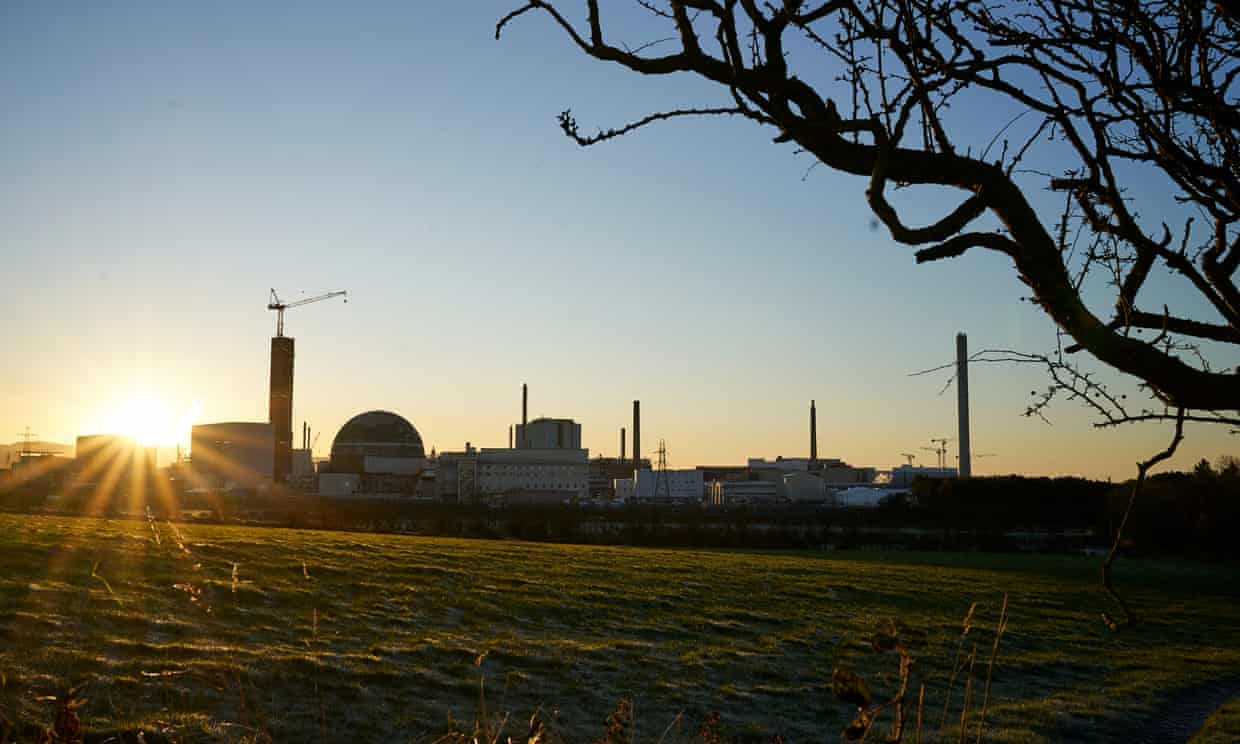
Sellafield’s lawyers have said that cybersecurity requirements were not ‘sufficiently adhered to for a period’. Photograph: David Levene/The Guardian

UK nuclear site pleads guilty to IT security breaches from 2019 to 2023

The UK’s most hazardous nuclear site, Sellafield, has pleaded guilty to criminal charges related to cybersecurity failings brought by the industry regulator.

Lawyers acting for Sellafield told Westminster magistrates’ court on Thursday that cybersecurity requirements were “not sufficiently adhered to for a period” at the vast nuclear waste dump in Cumbria.

The charges relate to information technology security offences spanning a four-year period from 2019 to 2023. It emerged in March that the Office for Nuclear Regulation (ONR) intended to prosecute Sellafield for technology security offences.

Late last year the Guardian’s Nuclear Leaks investigation revealed a catalogue of IT failings at the site dating back several years.

Sellafield pleaded guilty to a charge that it had failed to “ensure that there was adequate protection of sensitive nuclear information on its information technology network”, the Financial Times reported.

https://www.theguardian.com/environment/article/2024/jun/20/sellafield-pleads-guilty-to-criminal-charges-over-cybersecurity-failings

Continue ReadingSellafield pleads guilty to criminal charges over cybersecurity failings