Author: dizzy

  • Study Finds Carbon Offset Schemes ‘Significantly Overestimating’ Deforestation Claims

    Spread the love

    Original article by BRETT WILKINS republished from Common Dreams under Creative Commons (CC BY-NC-ND 3.0). 
    “These carbon credits are essentially predicting whether someone will chop down a tree, and selling that prediction,” said one study author. “If you exaggerate or get it wrong, intentionally or not, you are selling hot air.”

    Most carbon offset schemes significantly overestimate their impact on reducing deforestation, with many of the carbon credits purchased by polluting corporations amounting to little more than “hot air,” according to a researcher behind a study released Thursday that could portend billions of dollars in losses for speculators.

    “Reducing emissions from deforestation and forest degradation (REDD) projects are intended to decrease carbon emissions from forests to offset other carbon emissions and are often claimed as credits to be used in calculating carbon emission budgets,” explains the study, which was published in the journal Science.

    However, according to the study:

    We examined the effects of 26 such project sites in six countries on three continents using synthetic control methods for causal inference. We found that most projects have not significantly reduced deforestation. For projects that did, reductions were substantially lower than claimed…

    Methodologies used to construct deforestation baselines for carbon offset interventions need urgent revisions to correctly attribute reduced deforestation to the projects, thus maintaining both incentives for forest conservation and the integrity of global carbon accounting.

    “Carbon credits provide major polluters with some semblance of climate credentials. Yet we can see that claims of saving vast swathes of forest from the chainsaw to balance emissions are overblown,” study co-author Andreas Kontoleon, from the University of Cambridge’s Department of Land Economy, said in a statement.

    “These carbon credits are essentially predicting whether someone will chop down a tree, and selling that prediction,” he added. “If you exaggerate or get it wrong, intentionally or not, you are selling hot air.”

    Kontoleon added that overestimations of forest preservation have driven an increase in the number of carbon credits on the market, resulting in artificial price suppression.

    “Potential buyers benefit from consistently low prices created by the flood of credits,” he said. “It means that companies can tick their net-zero box at the lowest possible cost.”

    This could mean that carbon speculators stand to lose billions of dollars in the future as offsets become stranded assets.

    “It’s currently a buyer’s market and buyers are, rightly, prioritizing quality. There are over a billion tons of issued but not retired credits in the market—this suggests lots of credits can be written off, and there will remain a large supply for buyers to tap into,” Anton Root, head of research at AlliedOffsets, toldThe Guardian Thursday.

    “A correction like that could help to orient the market toward fundamental supply-demand dynamics, which we don’t currently tend to see, and drive up the price for credits that are deemed to be above the quality threshold,” he added.

    The new research follows other scientific research and journalistic investigations, including a January study by The Guardian, Die Zeit, and SourceMaterial that concluded that over 90% of the rainforest carbon offsets sold by Verra, the nonprofit organization that sets the world’s leading sustainability standard, “are largely worthless and could make global heating worse.”

    While some scientists argue that CO2 extraction, either via natural or technological means, is needed in order to meet the goals of the Paris climate agreement, opponents call the technology a “false climate solution.”

    Green groups including Extinction Rebellion and Food & Water Watch have for years warned against carbon capture and storage, which critics call a “scam” and “greenwashing.”

    “Carbon offset markets are widely discredited,” Food & Water Watch policy director Jim Walsh said earlier this year. “Their only benefit lies in enriching the middlemen charged with selling the lie.”

    Despite this, the Biden administration is pushing ahead with a plan to invest $2.5 billion in a pair of major carbon capture and storage projects, which it claims will “significantly reduce carbon dioxide emissions from electricity generation and hard-to-abate industrial operations” as part of the “effort critical to addressing the climate crisis and meeting the president’s goal of a net-zero emissions economy by 2050.”

    Original article by BRETT WILKINS republished from Common Dreams under Creative Commons (CC BY-NC-ND 3.0). 

  • ‘The Pyrocene Is Well and Truly Here’: Climate Crisis Made East Canada’s Fires 2 Times More Likely

    Spread the love

    Original article by OLIVIA ROSANE republished from Common Dreams under Creative Commons (CC BY-NC-ND 3.0).
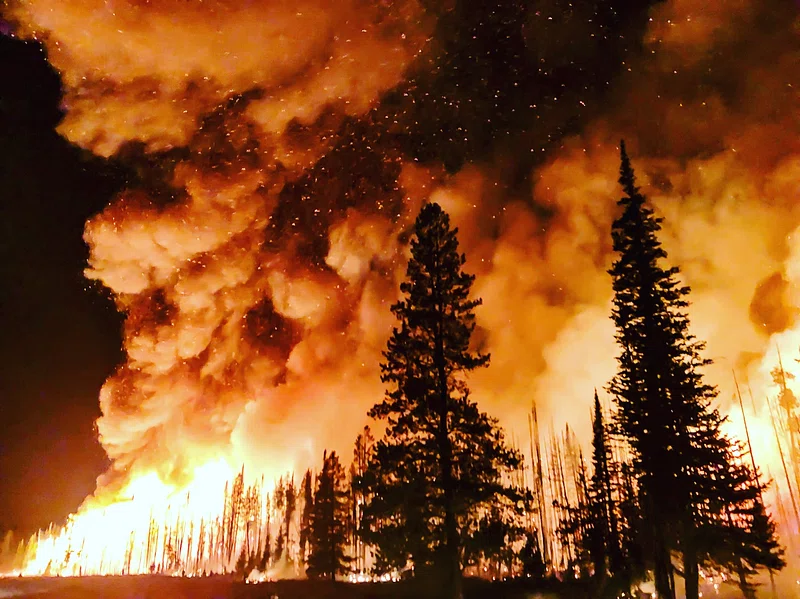
    Canadian wildfire 2023
    Canadian wildfire 2023

    Seasons like this one will only become more likely and intense if policymakers allow global temperatures to rise by 2°C above preindustrial levels.

    The hot, dry conditions that fueled eastern Canada’s unprecedented wildfire season were made at least two times more likely by the climate crisis, the latest study from World Weather Attribution has found.

    The study, published Tuesday, also found that, by the end of July, Quebec’s fire season was 50% more intense than it would have been without the human-generated release of greenhouse gas emissions.

    “The Pyrocene is well and truly here, thanks to our continued burning of fossil fuels,” study co-author and Imperial College London physicist Friederike Otto tweeted.

    Canada’s wildfire season has been the worst on the record books since late June, but the weather conditions that fueled it began the month before. The entire May to July period was the nation’s warmest since 1940, according to World Weather Attribution (WWA). As of August 16, the Canadian government calculated that 5,753 fires had ignited to burn a total of 13.7 million hectares—that’s 123% more fires and 602% more land burned than normal.

    The fires have had a devastating impact on human communities, killing at least 17 people, damaging at least 200 buildings, and forcing more than 150,000 to flee their homes, WWA said in a statement.

    “The wildfires had disproportionate impacts on Indigenous, fly-in, and other remote communities who were particularly vulnerable due to lack of services and barriers to response interventions,” WWA wrote.

    “Now we are able to put the number or an estimate on to what extent those conditions that we have seen this year are caused actually by climate change—and the numbers are very high.”

    The dangerous smoke from all this combustion has menaced the air quality in cities from Ottawa and Toronto to Washington, D.C. and New York City, where pollution neared a record June 7 with an air quality index of 341.

    “The consequences from the wildfires reached far beyond the burned areas with displaced impacts due to air pollution threatening health, mobility, and economic activities of people across North America,” WWA added.

    For the study, the Canada-, U.K.- and Netherlands-based team looked specifically at the fires in eastern Canada, which were particularly abnormal and contributed the most to the smoke that drifted down over the U.S. East Coast and Midwest. They studied the daily severity rating, which defines how hard it is to put out a particular fire. To establish how extreme the season was at its peak, they also looked at the year’s highest seven-day moving average of the fire weather index.

    “Climate change made the cumulative severity of Quebec’s 2023 fire season to the end of July around 50% more intense, and seasons of this severity at least seven times more likely to occur,” the study authors concluded.

    They also found that this peak fire weather was at least twice as likely and around 20% more intense.

    Yan Boulanger, one of the study authors who works as a research scientist for Natural Resources Canada, toldCBC News that the results were “shocking.”

    “We know that those extreme fire-prone weather conditions are occurring more frequently,” he said. “Now we are able to put the number or an estimate on to what extent those conditions that we have seen this year are caused actually by climate change—and the numbers are very high.”

    The study authors also found that seasons like this one will only become more likely and intense if policymakers allow global temperatures to rise by 2°C above preindustrial levels.

    “Until we stop burning fossil fuels, the number of wildfires will continue to increase, burning larger areas for longer periods of time,” Otto told The Guardian.

    Original article by OLIVIA ROSANE republished from Common Dreams under Creative Commons (CC BY-NC-ND 3.0).

  • G20 Nations Dished Out at Least $1 Trillion in Fossil Fuel Subsidies in 2022: Analysis

    Spread the love

    Original article by JAKE JOHNSON republished from Common Dreams under Creative Commons (CC BY-NC-ND 3.0). 

    Painting by Lady Frieda Harris used as the Hermit card in the Thoth tarot. It includes an image of Cerberus, the three-headed dog from Greek mythology..
    Painting by Lady Frieda Harris used as the Hermit card in the Thoth tarot. It includes an image of Cerberus, the three-headed dog from Greek mythology..

    “This support perpetuates the world’s reliance on fossil fuels, paving the way for yet more energy crises due to market volatility and geopolitical security risks.”

    An analysis released this week by the International Institute for Sustainable Development shows that G20 countries spent at least $1 trillion on fossil fuel subsidies in 2022, running afoul of recent pledges to curb financial support for the sector most responsible for the global climate emergency.

    IISD’s report estimates that G20 governments provided a record $1.4 trillion in support for fossil fuels last year, including subsidies and loans from public financial institutions.

    “This support perpetuates the world’s reliance on fossil fuels, paving the way for yet more energy crises due to market volatility and geopolitical security risks,” researchers with IISD and other organizations wrote in a detailed analysis of the new findings.

    “It also severely limits the possibilities of achieving climate objectives set by the Paris Agreement by incentivizing greenhouse gas (GHG) emissions while undermining the cost-competitiveness of clean energy,” they added. “G20 governments need to shift their financial resources away from fossil fuels to instead provide targeted, sustainable support for social protection and the scaling-up of clean energy. Maintaining fossil fuel prices that reflect the cost these fuels impose on society will be necessary to reduce fossil fuel use.”

    The researchers noted that the surge in fossil fuel subsidies—which quadrupled in 2022 compared to the previous year—was “largely due to a dramatic expansion in consumer support in response to peaking fossil fuel prices.”

    “Helping households and businesses during an energy crisis is understandable and necessary, but there are better ways to do it than subsidizing fossil fuels, which keeps consumers locked into emissions-intensive, polluting, and price-volatile energy sources,” the researchers wrote. “Shifting support from fuels to people is fundamental for the sustainable implementation of G20 governments’ pledges to phase out fossil fuel subsidies.”

    G20 governments also provided financial support for fossil fuel production.

    As the researchers explained, “these subsidies are problematic because they influence larger private investment flows, lock in higher fossil fuel production and emissions, and take up scarce fiscal resources that are needed to catalyze investments in clean energy transition solutions.”

    Global investment in renewable energy reached a record high last year, according to IISD, but it still amounted to just half the total worldwide investment in fossil fuels.

    The analysis calls on G20 nations to establish a firm deadline for completely eliminating fossil fuel subsidies, which disproportionately benefit wealthy households that contribute far more to the climate crisis than lower-income households.

    At the 2021 COP26 summit in Glasgow, 197 countries agreed to phase out “inefficient” fossil fuel subsidies—but they did not agree on a timeframe for action, nor did they clearly define “inefficient.”

    The IISD analysis notes that “more than half of the signatories with significant international financing have implemented their Glasgow commitment with integrity, including Canada, France, and the United Kingdom.”

    “However, several developed G20 countries have not yet delivered on implementation: Italy’s policy is not aligned with the Glasgow statement, nor is Germany’s draft policy, and the United States has not published its regulation,” the analysis says. “These countries are among the most responsible for historical CO2 emissions and should take greater responsibility for preventing further emissions by shifting financing from fossil fuels to clean energy.”

    Original article by JAKE JOHNSON republished from Common Dreams under Creative Commons (CC BY-NC-ND 3.0). 

  • UK academics urge Royal Society to condemn fossil fuel industry

    Spread the love

    https://www.theguardian.com/environment/2023/aug/23/uk-academics-urge-royal-society-to-condemn-fossil-fuel-industry

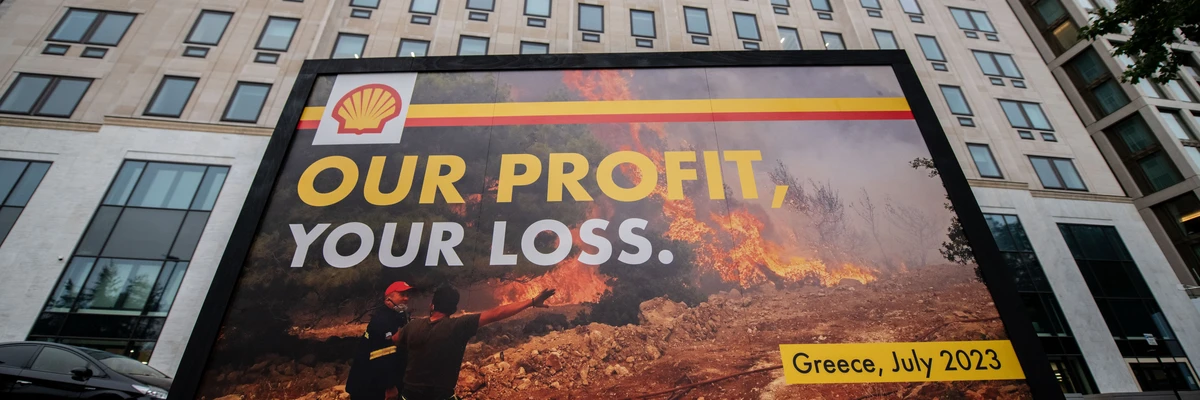
    Greenpeace activists display a billboard during a protest outside Shell headquarters on July 27, 2023 in London.
    Greenpeace activists display a billboard during a protest outside Shell headquarters on July 27, 2023 in London. (Photo: Handout/Chris J. Ratcliffe for Greenpeace via Getty Images)

    Guardian Exclusive: Letter signed by more than 1,200 leading figures calls for ‘unambiguous statement’ about climate crisis

    The Royal Society is under pressure from more than 1,200 leading academics to issue a clear condemnation of the fossil fuel industry.

    The academics have written to the association of the world’s most eminent scientists calling for an “unambiguous statement about the culpability of the fossil fuel industry in driving the climate crisis”.

    The society has agreed to meet representatives of the academics to discuss their demands. Most of those who signed the letter to the society’s president and council are based in the UK.

    The letter says: “The Royal Society has thus far failed to condemn fossil fuel companies that are building new infrastructure that will carry the world far beyond 1.5 degrees of warming and that are lobbying across the world to dictate the pace and terms of an energy transition that will protect their profits at the planet’s expense.”

    The companies were “committing an unprecedented act of violence against humanity”, the letter said, referring to a statement from the UN secretary general, António Guterres.

    …

    https://www.theguardian.com/environment/2023/aug/23/uk-academics-urge-royal-society-to-condemn-fossil-fuel-industry

  • Amazon’s emissions ‘doubled’ under first half of Bolsonaro presidency

    Spread the love

    https://www.theguardian.com/environment/2023/aug/23/amazons-emissions-doubled-under-first-half-of-bolsonaros-presidency-aoe

    New study published in Nature says period was as destructive as record 2016 El Niño drought and heatwave

    The first half of Jair Bolsonaro’s presidency was so destructive for the Amazon that it was comparable to the record 2016 El Niño drought and heatwave in terms of carbon emissions, according to scientists.

    Annual emissions from the world’s largest rainforest roughly doubled in 2019 and 2020, compared with the 2010 to 2018 average, according to a new study published in Nature, as swaths of forest were deliberately cleared and burned for cattle ranching and farming during the first two years of the far-right leader’s time in office.

    While the amount of carbon that the Amazon absorbs and emits changes with weather cycles, generally sucking in more in wet years and less in dry periods, the study found that the rise in emissions under Bolsonaro had little to do with natural processes, but was instead caused by the systematic removal and downgrading of environmental law enforcement in Brazil.

    Under Bolsonaro, the number and severity of fines for illegal deforestation by Brazilian authorities fell dramatically while fires and land-clearing soared, the study found. Carbon emissions increased from an annual average of 0.24 gigatonnes from 2010-18 to 0.44GtC in 2019 and 0.55GtC respectively.

    …

    https://www.theguardian.com/environment/2023/aug/23/amazons-emissions-doubled-under-first-half-of-bolsonaros-presidency-aoe