Author: dizzy

  • Spy tech firm Palantir was shoo-in for NHS data deal, leaked emails suggest

    Spread the love

    Original article by Lucas Amin republished from OpenDemocracy under a Creative Commons Attribution-NonCommercial 4.0 International licence.

    NHS sign

    Exclusive: Labour and Tory MPs demand review as email chain appears to show health chiefs knew firm would win deal

    US spy-tech firm Palantir was a shoo-in for a multi-million-pound NHS contract months before the deal was signed, emails obtained by openDemocracy appear to show.

    The email exchange from 2020, in which senior NHS executives discussed the budget for a new national data platform, sees more than one person referring to Palantir as the recipient of the funding.

    The firm, owned by billionaire Donald Trump donor Peter Thiel, has won five NHS deals in a row without tender. It is heavily tipped to secure a separate contract worth £480m later this year to build a new “operating system” for the NHS.

    Conservative MP David Davis told openDemocracy it was “incredibly concerning that the NHS appears to have already taken decisions to award contracts to Palantir before the end of the procurement process”.

    He added: “Allowing a company with Palantir’s provenance into the NHS needs careful scrutiny. It must not be railroaded through in secrecy.”

    Palantir officially signed a £23.5m deal on 11 December 2020 to operate a full-scale “datastore” of NHS patient information, building on work carried out in the pandemic.

    More than two months earlier, on 5 October 2020, an official from NHS England and NHS Improvement sent an email to the health service’s chief data and analytics officer Ming Tang with the subject line: “Update finances for data platform project [sic].”

    The email provided detailed information on how NHS England could structure a budget for the project, and appears to refer to Palantir as the recipient of the funding, stating at one point: “This [the budget proposal] provides a total of £26m for Palantir higher than our previous ask of £24m.”

    The exec, whose name is redacted, then asks for “an accountant to support us to get the budget transfers” before warning: “Delays here could lead to risk of non-delivery.”

    Tang responded three hours later, writing: “We are trying to keep Palantir to 10-12M per year,” and told the unnamed person to prepare information on the “costs vs funding” of this.

    She also said of the proposed budget: “I won’t send him yet – will share screen instead.” The name of the person she is referring to is redacted throughout the documents openDemocracy has seen, and it is unclear what their role is and which organisation they work for.

    NHS England has denied any wrongdoing. A spokesperson said: “Clarifications were being sought from several potential suppliers as part of routine financial planning and commercial decision-making.” The spokesperson insisted NHS England had “acted in accordance with all relevant commercial and legal rules”.

    But critics say the documents seen by openDemocracy are further proof that Palantir is favoured by NHS executives, despite its controversial links to Donald Trump and the CIA.

    Cori Crider, the director of legal campaigners Foxglove, told openDemocracy: “This goes to show that a handful of officials have favoured them from the start.”

    Surveillance software

    Thiel, the “big money man” for Trump’s Make America Great Again campaign, founded Palantir in 2003 with funding from the CIA-controlled firm, In-Q-Tel. The firm’s clients include the US army, which uses its surveilling software to conduct drone strikes.

    British healthcare campaigners have questioned whether a company with Palantir’s history should be entrusted to work in the NHS. In 2021, the government promised not to enter any new contracts with Palantir without consulting the public after openDemocracy and Foxglove took legal action against the Department for Health and Social Care.

    But earlier this year an openDemocracy investigation revealed the NHS, seemingly in breach of that pledge, had ordered all English hospitals to share confidential patient information with Palantir.

    Parliament must scrutinise why Palantir is being singled out to deliver sensitive data servicesLabour MP Rachael Maskell, vice chair of the health select committee

    Health service insiders believe Palantir has now been lined up to win a £480m NHS contract later this year to run a “Federated Data Platform”. Final tenders for the platform, which will act as a new “operating system” for the NHS, were due to be submitted last week.

    Jo Maugham, the director of Good Law Project, told openDemocracy: “It’s widely believed that Palantir is being lined up for this hugely valuable NHS data contract – despite concerns over what it will do with patient data. These emails support those concerns.”

    There are further concerns about the usefulness of Palantir’s software, with 11 hospital trusts either pausing or suspending trials of the company’s Foundry database. Crider said: “Several real-life pilots of Palantir software at hospitals appear to have failed. We’ve called on Parliament to investigate the deal and get to the bottom of the failed pilots before it’s too late.”

    Labour MP Rachael Maskell, vice chair of the health select committee, also called for more parliamentary scrutiny. She told openDemocracy: “Before another deal is signed with Palantir, Parliament must have the opportunity to scrutinise the financial operations of NHS England and the way it is handing out contracts, issues concerning public consent over data use, and why Palantir is being singled out to deliver sensitive data services.”

    The National Data Guardian

    Six weeks after NHS data chief Tang wrote about “trying to keep Palantir to 10-12M a year”, she met the government’s patient privacy champion, Dame Fiona Caldicott, who was then probing the health service’s relationship with Palantir.

    A document of Tang’s ‘talking points’ for the 19 November meeting, disclosed under the Freedom of Information Act and dated the previous day, suggested no provider had yet been chosen for the contract: “We have been working with Palantir to continue to build out the modules that we think are critical to our response and to package up the code and data models. And we are currently in an open procurement process for a longer-term solution.”

    Caldicott, who has since died, was at the time serving as the UK’s first statutory National Data Guardian and was a hugely influential figure in medical confidentiality. In 2016, her review of the government’s botched attempt to reuse patient data without consent led to the failure of its care.data project.

    Caldicott’s successor at the National Data Guardian, Dr Nicola Byrne, warned NHS England last year that its new data platform “must avoid common pitfalls around trust and transparency that have frustrated previous initiatives”.

    An NHS England spokesperson told openDemocracy: “The description of the procurement process [in Tang’s talking points] was accurate – it was ongoing, and was being conducted on an open basis within a transparent government procurement framework.”

    Palantir told openDemocracy it could not comment on NHS procurement issues.

    Read the emails in full

    Original article by Lucas Amin republished from OpenDemocracy under a Creative Commons Attribution-NonCommercial 4.0 International licence.

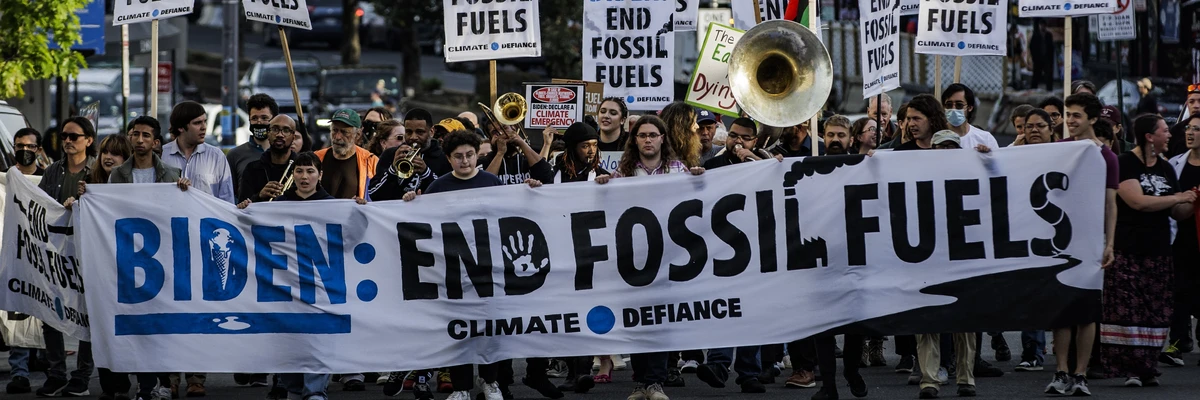
  • ‘They Will Never Change on Their Own’: Top Oil Giants Have No Serious Plans to Curb Emissions

    Spread the love

    Original article by JAKE JOHNSON republished from Common Dreams under Creative Commons (CC BY-NC-ND 3.0). 

    Canadian wildfire 2023
    Canadian wildfire 2023

    “Instead of providing desperately needed clean energy, they feed us greenwashing garbage.”

    A new analysis of the activities of twelve major fossil fuel giants shows that the companies are misleading the public about their emission-reduction commitments while raking in record profits from fossil fuels, which are driving catastrophic extreme weather events across the globe.

    In a report published Wednesday, Greenpeace Central and Eastern Europe examines the decarbonization pledges, investments, and profits of six global fossil fuel giants—including Shell, BP, and TotalEnergies—and six European oil companies.

    The results indicate that, in 2022, close to 93% of the oil giants’ investments on average went to keeping the companies on the “fossil oil and gas path” while just 7.3% were aimed at promoting “low-carbon solutions” and sustainable production.

    “Although most of the sample companies are committed to ‘net zero’ by 2050, a closer look shows that none of them has developed a coherent strategy to achieve this,” the report notes, adding that the examined companies are in fact “scaling back their ambitions” even as their polluting activities wreak havoc worldwide. Shell and BP recently announced they are ditching previous plans to curb oil production and emissions.

    The report shows that BP, Equinor, Wintershall and TotalEnergies cut their investments in renewable products last year—a fact that, according to Greenpeace, bolsters the case for “compulsory investment in genuinely green infrastructure” and other government regulations.

    Kuba Gogolewski, a finance campaigner at Greenpeace CEE, said Wednesday that “as the world endures unprecedented heat waves, deadly floods, and escalating storms, Big Oil clings to its destructive business model and continues to fuel the climate crisis.”

    “Instead of providing desperately needed clean energy, they feed us greenwashing garbage,” Gogolewski added. “Big Oil’s unwillingness to implement real change is a crime against the climate and future generations. Governments need to stop enabling fossil fuel companies, heavily regulate them, and plan our fossil fuel phase-out now. They will never change on their own.”

    “Fossil fuel companies like Shell, TotalEnergies, BP Equinor, and ENI have shown the public they are incapable of self-regulation.”

    The new report offers several examples of companies offering misleading data in an apparent attempt to convince investors and the public of their commitment to the renewable energy transition.

    “Shell reports a ‘renewable capacity’ of 6.4 gigawatts for the 2022 financial year,” the analysis observes. “Only in the footnote… does one learn that this figure also includes plants that are still under construction or committed for sale. The actual capacity at the end of 2022 was only 2.2 gigawatts, as the group admits in another place in its reporting.”

    In the case of BP’s 2022 financial disclosures, the report notes, “there is no number that would show the amount of wind and solar power” the company generated last year.

    “This lapse is only an indication that no major oil company can show a comprehensible plan for a ‘net zero’ in 2050,” the report states.

    “Fossil fuel companies like Shell, TotalEnergies, BP Equinor, and ENI have shown the public they are incapable of self-regulation after scaling back their climate ambitions, despite being heavily responsible for the climate crisis,” said Gogolewski. “That’s why Greenpeace is calling for European governments to strictly regulate the industry and begin its rapid economic and political downsizing.”

    The new analysis comes in the wake of devastating fires in Maui, Hawaii that were fueled by climate change, which contributed to the severely dry conditions that allowed the fires to spread rapidly.

    Maui County is currently suing Shell, BP, and other fossil fuel giants, accusing them of engaging in a “coordinated, multi-front effort to conceal and deny their own knowledge” about the climate threat and profiting “from a massive increase in the extraction and consumption of oil, coal, and natural gas, which has in turn caused an enormous, foreseeable, and avoidable increase in global greenhouse gas pollution and a concordant increase in the concentration of greenhouse gases.”

    The Maui lawsuit states that “wildfires are becoming more frequent, intense, and destructive in the county” as the planet warms due to ever-rising carbon emissions.

    Last month was the hottest on record.

    Original article by JAKE JOHNSON republished from Common Dreams under Creative Commons (CC BY-NC-ND 3.0). 

  • ‘Climate Scam’: 180+ Groups Tell Biden to Drop Support for Hydrogen

    Spread the love

    Original article by JAKE JOHNSON republished from Common Dreams under Creative Commons (CC BY-NC-ND 3.0).

    Climate protestors march in Washington DC
    Climate protestors march in Washington DC

    “Calling hydrogen clean energy is a scam to prop up the oil and gas industry,” said one campaigner.

    More than 95% of hydrogen produced in the United States is made using fossil fuels, but that hasn’t stopped its backers—including industry groups such as the U.S. Chamber of Commerce—from touting the energy source as critical to the fight against climate change.

    A diverse coalition of advocacy organizations on Tuesday implored the Biden administration to stop buying into the hype.

    In a letter to officials at the U.S. Department of Energy (DOE), more than 180 groups called on the administration to abandon plans to invest in hydrogen projects, warning that “a large-scale buildout of hydrogen infrastructure will further exacerbate the climate crisis and disproportionately harm people of color, low-income communities, and Indigenous peoples.”

    Two recently enacted pieces of legislation—the Inflation Reduction Act and a bipartisan infrastructure measure championed by oil industry ally Sen. Joe Manchin (D-W.Va.)—include benefits for the hydrogen industry.

    The latter bill authorized the Department of Energy to spend roughly $8 billion on developing Regional Clean Hydrogen Hubs (H2Hubs), drawing outrage from community organizers in Colorado, New Mexico, and other states behind the Western Interstate Hydrogen Hub, a project aimed at expanding U.S. hydrogen production.

    “We recognize that the Bipartisan Infrastructure Investment and Jobs Act directs DOE to fund these hubs, but we ask DOE to find a different path and reject this false solution. It’s time for DOE to do the right thing,” the groups wrote in their letter on Tuesday.

    The groups behind the letter—including the Center for Biological Diversity and Food & Water Watch—note that hydrogen production generates significant planet-warming emissions.

    “Hydrogen lifecycle emissions which use carbon capture and storage are 20% greater than directly burning natural gas or coal, and 60% greater than burning diesel oil, because of the increased fossil fuels required to power it,” the letter states. “The process of producing gray and blue hydrogen is a major source of fugitive methane emissions from flaring, transportation, and other upstream processes—releasing even more potent greenhouse gases and exacerbating atmospheric warming over the next two decades.”

    “President Biden can’t claim to be a climate leader while his administration continues to embrace the hydrogen climate scam and other policies that continue to perpetuate fossil fuel production and infrastructure.”

    As Nature explained in an editorial warning against “overhyping” hydrogen, “Most hydrogen is currently made by processes—such as steam reformation of natural gas (methane)—that produce large amounts of CO2 as a by-product.”

    “Although ‘green’ hydrogen can be made by using electricity from renewable sources to split water molecules,” the outlet added, “this process is costly compared with more conventional production methods.”

    Silas Grant, a campaigner with the Center for Biological Diversity, said Tuesday that “calling hydrogen clean energy is a scam to prop up the oil and gas industry.”

    “The Biden administration’s plans to expand this dirty energy will only increase oil and gas extraction at a time when the climate emergency demands the opposite,” said Grant. “We need investment in affordable, reliable, community-supported renewable energy like wind and solar.”

    The coalition’s letter comes two months after New Mexico-based advocacy organizations urged the Biden administration to reject funding for the Western Interstate Hydrogen Hub, arguing the initiative would “devastate public health, clean air, Indigenous sacred places, and the climate.”

    “The climate crisis poses a grave threat to all life on Earth,” the groups wrote in a letter to the U.S. Energy Department. “DOE has the power to help lead a transformation to a more sustainable future. To do so, you must help phase out fossil fuels and reject false solutions like hydrogen.”

    But the Biden White House has yet to waver in its support for hydrogen, claiming in a brief last month that “clean hydrogen has the potential to play an important role in decarbonizing the U.S. economy.”

    Jim Walsh, policy director at Food & Water Watch, countered Tuesday that investments in hydrogen are “a distraction from real climate action that will cause more pollution, more strain on water resources, and more extraction of climate warming fossil fuels.”

    “President Biden can’t claim to be a climate leader while his administration continues to embrace the hydrogen climate scam and other policies that continue to perpetuate fossil fuel production and infrastructure,” Walsh added.

    Original article by JAKE JOHNSON republished from Common Dreams under Creative Commons (CC BY-NC-ND 3.0).

  • The Atlas Network and the Building of Argentina’s Donald Trump

    Spread the love

    Original article by Lucas Araldi republished from DeSmog

    Javier Milei, a climate change denier widely supported by Atlas Network, a web of free market think tanks, won the necessary votes to run in Argentina’s presidential election in October.

    ANALYSIS By Lucas Araldi on Aug 22, 2023 @ 15:15 PDT

    Argentine presidential candidate Javier Milei haș been influenced, and boosted, by the Atlas Network. Credit: Todo Noticias (CC BY 3.0)

    Ask Argentine politician, economist, and presidential candidate Javier Milei what he thinks of climate change, and he might tell you that it’s “another lie of socialism” and “part of the agenda of Cultural Marxism.” 

    The right-wing politician is part of coalition Libertad Avanza and this August won the most votes in Argentina’s primary election, enabling him to run for president on October 23. 

    He gained prominence through his talk show appearances, making his debut on the political talk show Animales Sueltos (Stray Animals) in 2016. In addition, he hosted his own radio program called Demoliendo Mitos (Debunking Myths).

    In 2021, Milei was elected as a national deputy for Buenos Aires. Prior to this, he had built an extensive career in both the public and private sectors as an economist, even holding the position of Chief Economist at HSBC.

    Milei has been compared to right-wing populist leaders Donald Trump and Jair Bolsonaro due to his direct and aggressive way of speaking and his radical proposals. Milei would likely be flattered by the comparison — he is a huge fan of these right-wing populists that have emerged in recent years.

    Milei won 30 percent of the vote in the August primary — nearly 10 percent more than the next-most-popular candidate — with a political platform that combines radical neoliberal policy proposals with a conservative populist moral agenda. His economic proposals include reducing the number of government ministries, cutting public spending, dollarizing the economy, and “exploding” the Central Bank, in Milei’s own words. 

    Milei didn’t arrive at these proposals on his own; his views, particularly in regards to the economy, have been shaped by the Atlas Network, a U.S. nonprofit that works to spread free-market think tanks all over the world. 

    Based in Washington, D.C., the Atlas Network supports more than 500 free-market organizations. Some of these groups, such as the Heartland Institute, are also involved in climate science denial and in campaigns against legislation to limit greenhouse gas emissions.

    Around 100 think tanks in Latin America — 10 of which are in Argentina — are part of Atlas’s web. Between 2010 and 2021, Atlas gave approximately $12 million USD to think tanks in the region, mostly for “economic education,” according to U.S. tax filings analyzed by DeSmog. Across the world, including in Latin America, Atlas think tanks collaborate beyond national borders, sharing strategies and ideology. It is common, for example, for Atlas think tanks to share board members or even create their own networks, such as Red Liberal de America Latina (RELIAL).

    Alberto Benegas Lynch, who serves as an adviser for Milei and also is a director at Mont Pelerin Society, is an example of transnational ties within the network. He is part of several Atlas Network groups in Latin America, such as Fundación Federalismo y Libertad and Instituto Libertad y Progreso, both in Argentina, Universidad Francisco Marroquín in Guatemala, and Centro de Estudios para el Desarrollo in Uruguay.  

    Lynch is also known for making denialist statements about climate change. In an opinion article published in 2018 in the Argentinian online newspaper Infobae, for example, he argued that climate change is a fraud based on distortion of statistics. He built his argument from alleged studies of John Coleman, Ivar Giaever, and Patrick Moore. 

    The Argentine newspaper La Nación describes the relationship between Milei and Lynch as one of admiration, as Milei frequently cites Lynch. Beyond that, Lynch wrote several times on the Instituto Libertad y Progreso’s website about his relationship with Milei, as well as his proposals, and how Milei means a miracle for Argentine politics.

    Milei benefits from the whole infrastructure of ideas boosted by the Atlas Network to project himself as presidential. While the other traditional candidates do not have a platform of think tanks that can help them, Milei manages to move between these institutes and use them as hubs for disseminating his ideas and as a safe arena for advancing the debate on his agenda.

    For instance, Milei has connections to other Latin American think tanks in the Atlas Network. He has attended conferences and participated in events promoted by the Fundación Libertad y Progreso, Federalismo y Libertad, and Fundación Atlas, all based in Argentina. He also participated in Instituto de Estudos Empresariais’s Liberty Forum 2022 in Porto Alegre, Brazil. Articles in Fundación Atlas’s blog praise him, with Axel Kaiser, executive director at Fundación para El Progreso in Chile, writing that Milei is helping restore Argentina’s Libertarian legacy by setting up a “cultural and political movement which became the third way.” In 2018, Fundación Atlas awarded Milei the Liberty Prize.

    Milei sat on the advisory board of Fundación Libre (FL), an Argentine far-right think tank that was part of Atlas. FL promoted “individual freedom and republicanism” in the face of “hegemonic progressive ideology and the empire of politically correctness.” Although FL did not focus primarily on denying climate change, it did feature climate-related content, like a YouTube video criticizing Greta Thunberg, that has since been removed. 

    Milei, however, is known for denying climate change, claiming that the planet’s temperature is currently at its lowest level in the past 15,000 years. His source for this belief is a graph from a 2008 study by the geologist Don J. Easterbrook — who is known for erroneously predicting “global cooling.” However, this graph is based on data only from Greenland and is not a reliable indicator of climate change, according to fact-checking groups in Argentina.

    Although Milei uses climate denialism to ignite his followers, climate change was barely discussed in the Argentine primaries, even though the occurrence of extreme weather events has increased twofold since 1980 and could become even worse in the coming decades. Instead, candidates focused on the country’s current food crisis: Argentina faces one of the biggest food inflations in the world and more than 4 million people in the country are food insecure. This scenario also could become worse due to climate change’s impacts on Argentine agriculture. 

    Milei’s significant result at the polls shows that the free-market, neoliberal ideals the Atlas Network is promoting have a huge organizational strength in Argentina that can be converted into votes. Even if Milei doesn’t win the October presidential election, his rise to this level of politics means a victory for the Atlas Network.

    Original article by Lucas Araldi republished from DeSmog

  • Rail fare increase: Green Party calls for fare freeze and for railways to be taken into public ownership

    Spread the love

    https://bright-green.org/2023/08/15/rail-fare-increase-green-party-calls-for-fare-freeze-and-for-railways-to-be-taken-into-public-ownership/

    Green Party’s co-leader Adrian Ramsay.

    The Green Party of England and Wales has called for rail fares to be frozen on the day the government has announced that regulated fares will increase in January 2024.

    …

    Ramsay said: “This government is moving in completely the wrong direction. Fuel duty has been frozen since 2011, while air passenger duty cuts this year will be a disaster for the climate crisis by encouraging people to fly more. This is despite the fact UK rail passengers are already paying more to travel by train than flying and are faced with some of the most expensive tickets in Europe.

    “Emissions from transport are higher than for any other sector of the economy. If the UK is to meet its climate commitments, then we need more people choosing trains over cars and planes, and we need more commuters opting for public transport and active travel to get to work. Making train travel more expensive, while closing rail ticket offices that support travellers to get the best deal, would underscore the government’s contempt for climate action and the travelling public.

    …

    https://bright-green.org/2023/08/15/rail-fare-increase-green-party-calls-for-fare-freeze-and-for-railways-to-be-taken-into-public-ownership/