Age UK has published its own Equality Impact Assessment of the Government’s cut to eligibility for the winter fuel payment.
Four in every five pensioners living below or just above the poverty line will lose the winter fuel payment under planned benefit cuts, according to a charity.
Age UK said its analysis suggested that 10.7 million UK pensioners will lose the benefit, of whom almost one in four (23%) live in poverty – with a household income of less than 60% of the median – or just above the poverty line.
The charity found that 80% – or 800,0000 – of UK pensioners aged 80 and over living in poverty or just above the poverty line will no longer receive the payment, as well as 78% – or 1.1 million – of pensioners with a disability living in the same circumstances.
…
According to the Government’s own equality analysis, an estimated 780,000 pensioners still eligible to receive the winter fuel payment will lose it under planned cuts.
In a document last month, the Department for Work and Pensions (DWP) also said that more than two thirds – around 71% – of those with a disability and 83% of those aged 80 or over would miss out.
PEACE: Former Labour Party leader and now independent MP Jeremy Corbyn speaks at a London rally for Palestine, September 11 2024
Speaking at the Podemos congress over the weekend, JEREMY CORBYN MP outlines three crucial areas for building a powerful leftist movement across Europe: opposing austerity, promoting peace and combating the far right
AS we look to build a united left across Europe, there are three key issues that can form the basis of a strong, powerful movement: anti-austerity, peace and opposition to the far right.
Europe is heading toward a renewed era of austerity. We have witnessed attacks on wages and conditions all over Europe. Working-class living standards have fallen. Wages have stagnated. Meanwhile, there are more billionaires than ever before.
Inequality is not inevitable. It is the result of decisions that governments take to take money from the many and give it to the few. Last week, the British government celebrated its 100-day anniversary.
In that time, it has made two supposedly “tough” choices. One is to keep children in poverty by retaining the two-child benefits cap, refusing to lift 250,000 children out of poverty. The second decision was to cut the winter fuel allowance for 10 million pensioners.
We are told that these have been “tough choices.” Every day, my constituents make tough choices. Tough choices like deciding whether to heat their homes or put food on the table. Tough choices like taking out a loan to pay for this month’s rent. Tough choices like selling their home to pay for their family’s social care.
The government knows that there is a range of choices available to them. They could introduce wealth taxes to raise upwards of £10 billion. They could stop wasting public money on private contracts. They could launch a fundamental redistribution of power by bringing water and energy into full public ownership.
Instead, they have opted to take resources away from people who were promised things would change. There is plenty of money, it’s just in the wrong hands — and we will not be fooled by ministers’ attempts to feign regret over cruel decisions they know they don’t have to take.
Austerity is not a tough choice. It is the wrong choice. The British government tells us there is no money. At the very same time, they are committing to raising defence expenditure to 2.5 per cent of GDP.
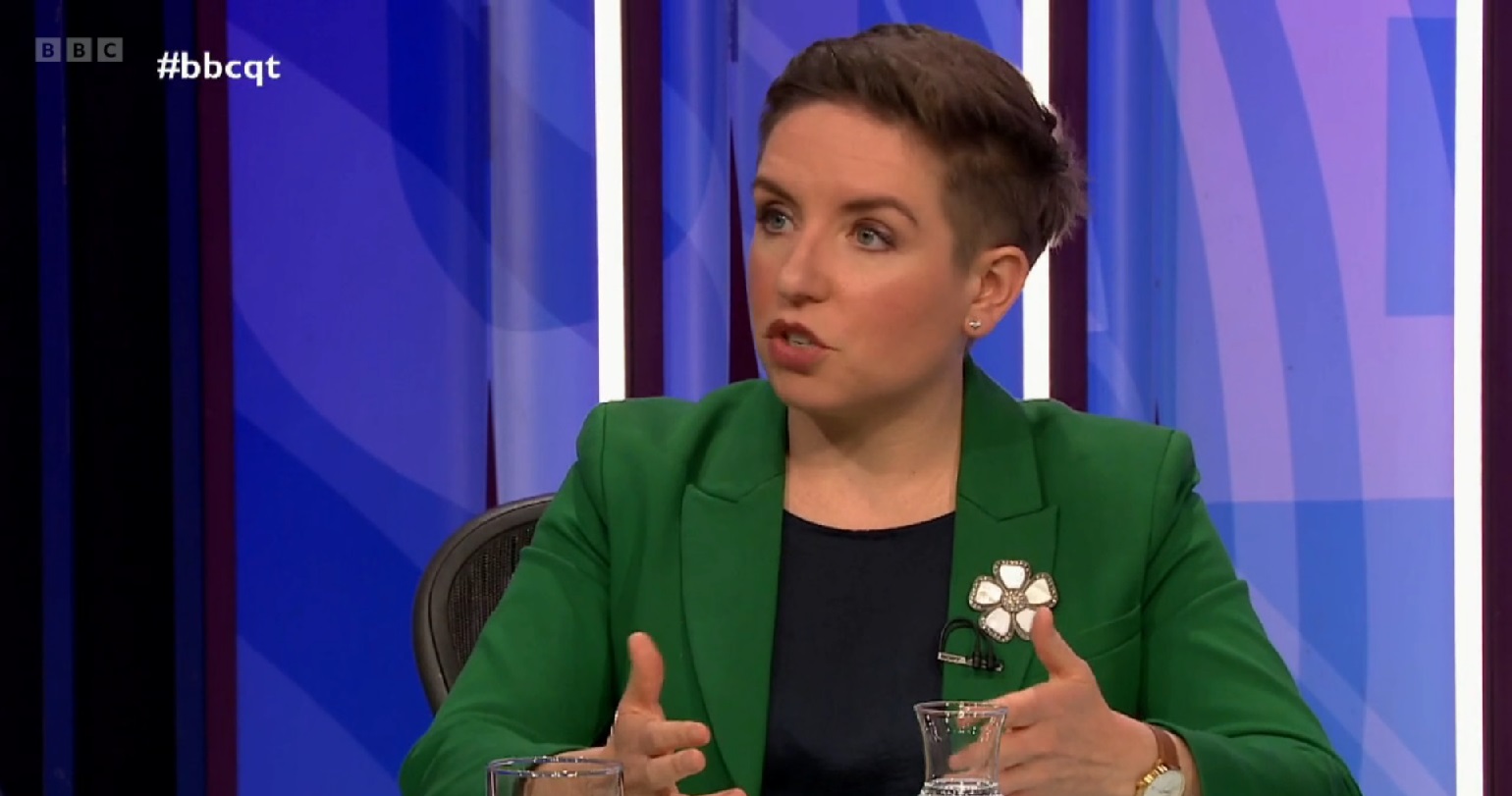
Image of the Green Party’s Carla Denyer on BBC Question Time.
Commenting on Labour’s first 100 days in office, Green Party Co-Leader Carla Denyer MP said:
“The collapse in Starmer’s popularity since taking office has been remarkable. It was clear to me during the election campaign that voters across the country wanted change. After 14 years of Tory failure, they expected Labour to deliver it. The public’s sense of disappointment is palpable.
“Instead, we have a government aligned with Tory austerity. The two-child benefit cap and the scrapping of the Winter Fuel Payment for millions of pensioners are both examples of how this government’s default has been to make the most vulnerable in our society pay. The ‘black hole in our finances’ should, and could, be solved by asking the wealthiest to pay just a fraction more. Instead, Labour seems content with letting the poorest bear the brunt.
“It doesn’t have to be this way. We are one of the richest countries in the world, yet deeply unequal. The Chancellor has hinted that she is willing to borrow more to invest in much-needed infrastructure, which is welcome. But we also need to address the source of everyday revenue spending.
“The last fourteen years have seen the rich get richer, with the top fifth now owning a third of the country’s wealth. It’s only fair that those with the broadest shoulders should now pay a bit more to help our NHS, rebalance society, and improve living standards for everyone. A wealth tax, alongside other changes to the tax system, could deliver this.
“We as a country, and particularly the Labour government, face a political choice. Will they tax more fairly to properly invest in our crumbling frontline services, or will they continue to oversee managed decline and austerity economics? The Greens will, every day, keep pushing for them to properly invest in Britain.”
Keir Starmer commits to play the caretaker role for Capitalism through the “hard times”.
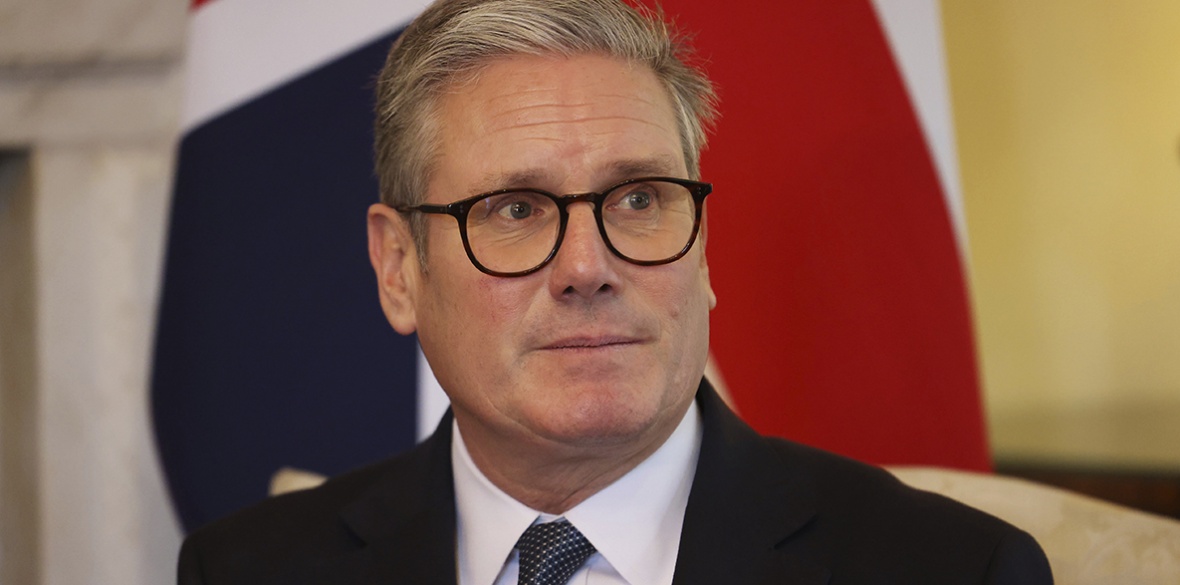
Prime Minister Keir Starmer during his talks with Nato Secretary General Mark Rutte in Downing Street, in London, October 10, 2024
LABOUR and Prime Minister Sir Keir Starmer’s approval ratings are still nosediving as the government marks 100 days in office tomorrow.
New Ipsos polling reveals Sir Keir’s net popularity has fallen to a record low of minus 26 points — worse than Reform leader Nigel Farage.
Rachel Reeves was doing even worse at minus 30 points with four in nine saying she is doing a bad job as Chancellor.
Experts blamed No 10 “turf wars,” scandals over ministerial freebies and cutting pensioner benefits as the Labour Party’s net popularity also plummeted 13.5 points to minus 21 points since the general election.
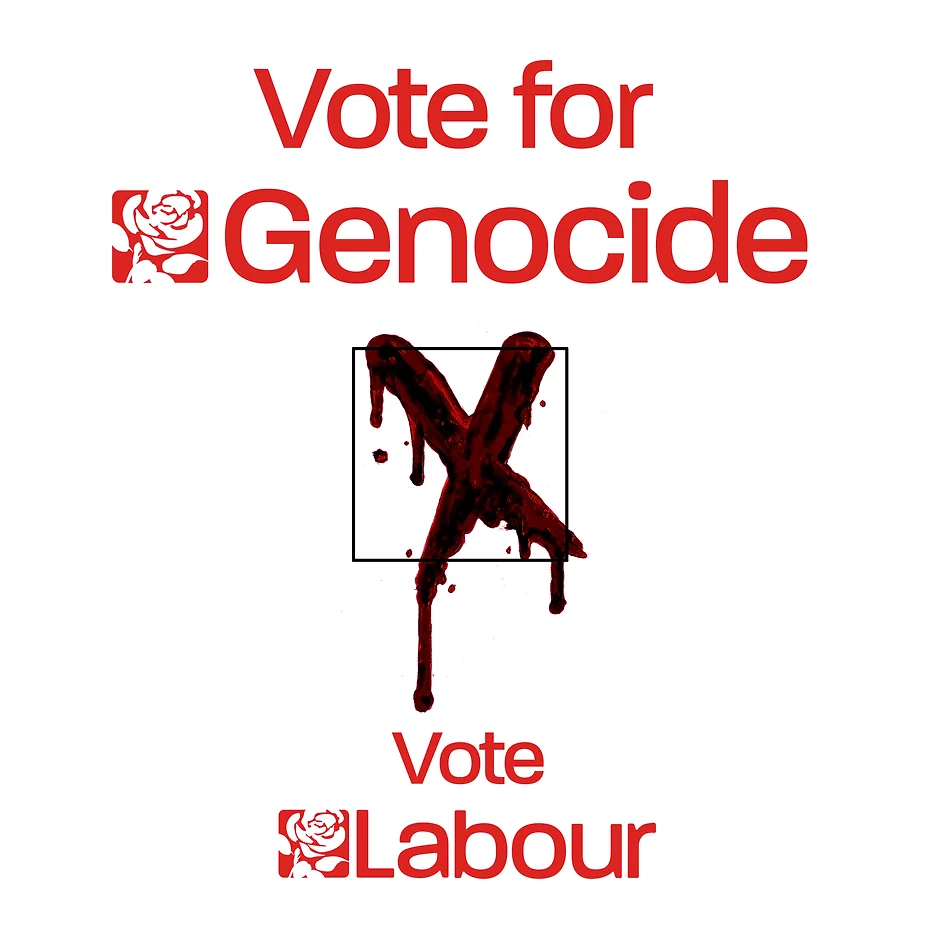
Keir Starmer explains that he feels no shame or guilt benefitting personally from gifts from the rich and powerful while insisting on policies of severe austerity causing suffering and death.Zionist Keir Starmer is quoted “I support Zionism without qualification.” He’s asked whether that means that he supports Zionism under all circumstances, whatever Zionists do.Vote For Genocide Vote Labour.
March for Palestine | Mark Kerrison/In Pictures via Getty Images
A new generation across the UK is demanding political representation. But this unstoppable force is meeting an immovable object, the Labour Party
A new generation across the UK is demanding political representation. Yet, this unstoppable force is now meeting an immovable object, the Labour Party.
On one hand, despite its failure to leave behind much grassroots organisation, Jeremy Corbyn’s leadership galvanised millions. This generation now knows what it’s like to have a voice in the political mainstream. It won’t tolerate being shut out of the political process indefinitely. The success of Green and independent candidates at this year’s general election was in part driven by this fact.
Meanwhile, the realities of climate breakdown, renewed austerity and a genocide in Gaza continue to alienate many. The British public backs the renationalisation of energy by a margin of four to one, the introduction of a wealth tax by a margin of eight to one, and a ban on arms exports to Israel by about three to one.
On the other hand, the Labour Party is a fortress. Many advisors and politicians of the Labour right regarded the party’s defeat under Corbyn in 2019 as a lucky escape, and remain terrorised by the prospect of losing their careers to an insurgent political force. Starmerism is a relentless campaign on behalf of this professional political class, which is determined to shut the left out. Their hubris is an existential threat not just to Labour’s role as a political home for the left, but to the party itself.
Both wings of the Labour Party are being blindsided by this process. The Labour right, and the commentariat that lives in its orbit, likes to think in terms of historical cycles and playbooks. The crushing of the post-Corbynite left was a repeat of Kinnock’s expulsion of the Militant Tendency. 2024 was just 1997 with TikTok.
Starmer’s first act in government – blaming the outgoing administration for an economic mess and indicating a shift towards austerity – was both a conscious mimicry of Tory George Osborne and an homage to New Labour’s fiscal hawkishness.
The Labour left’s attachment to the past is more nostalgic. Its leaders – Aneurin Bevan, Tony Benn, Corbyn – are stripped of their failings and revered. Its heroic defeats – the 1981 Deputy Leadership campaign, the Greater London Council’s fight for survival, Corbyn’s general elections – are endowed with their own folklore.
Life on the outside is unthinkable and futile, as illustrated by every past attempt (the Socialist Labour Party, the Socialist Alliance, Respect, the Trade Union and Socialist Coalition, Left Unity) to build an alternative. “It is the Labour Party or it is nothing”, as Bevan once wrote, chiding members of the Independent Labour Party when they split in 1932.
Both wings of Labour are good at producing a sense of collective memory that reinforces the party’s standing as immutable, and which relates new events to past ones. Neither are good at understanding when reality diverges from the historical script.
In 2015, the left challenged for power, and in doing so broke the old system. Tony Blair did not bother to get rid of Tony Benn. Yet Starmer almost immediately expelled Corbyn and changed Labour’s rule to ensure that no one like him could lead the party again. He has already suspended seven MPs for voting to abolish the two-child benefit cap. It is only a matter of time until more feel forced to rebel.
A politics from below
The real politics happens outside parliament. We’ve already witnessed huge protests take shape against the massacre in Gaza, and the coming years could see mass movements and industrial unrest over cuts and living standards. Having lived through the Corbyn years, the participants of these movements are unlikely to be satiated by the prospect of a soft left Labour leader some time in the 2030s.
Labour’s initial plans will provide some relief. The Employment Rights Bill is likely to be the most significant improvement in workers’ rights in decades. The renationalisation of the railways will also prove popular. But what happens once these progressive measures have been exhausted?
The Green Party came second behind Labour in 39 seats. Pro-Palestinian Independent candidates have made inroads into safe Labour areas. For this to have happened while Labour was in opposition is unprecedented. Unless the new government rapidly shifts its approach on public spending, redistribution and green investment, it will face an earthquake.
“Unless the new government shifts its approach on public spending, redistribution and green investment, it will face an earthquake”
To have any success, the post-Corbynite left will have to ditch its obsession with icons and celebrities. Despite its roots in social movements, Corbynism became a tightly centralised project, in which activists were given little, if any, role in determining policy and strategy. Even now, discussion of the left’s future beyond Labour seems to centre on the intentions of Corbyn, his former advisors, prominent commentators, or MPs.
Building a serious political project is about representing a solid base in society. This task flows from organising, and having roots in social and industrial struggle, not how many Twitter followers you have.
The green surge
Much of the left will also have to get over its age-old sectarianism towards the Greens, who have emerged as by far the most serious organised force to Labour’s left.
If you listen to many old Labour left activists, or read many socialist newspapers, you will be presented with a critique of the Greens that is at least two decades old. They are portrayed as ‘Tories on bikes’ and alternative medicine enthusiasts. Their ability to win seats in North Herefordshire and Waveney is said to be the product of triangulation towards right-wing rural voters. The compromises of Green parties in France and Germany are held up as the inevitable destiny of the UK Greens.
On the contrary, the Greens have become a major force precisely by occupying a space to the left of their sister parties in continental Europe. Since the turn of the millennium, their membership has risen twelve-fold to around 60,000. Waves of new members – from the ‘green surge’ of 2014 to today’s recruits – comprise its activist base.
Many joined on a radical environmental basis, but just as many did so to oppose austerity, champion freedom of movement, or fight for Palestinian rights. There might be a case that their time would be better spent in Labour, or that party affiliation often operates more like a consumer identity than a political strategy. But the existence of a genuinely left-wing, and increasingly successful, Green Party in Britain is simply a fact. Any attempt to rebuild the left as an electoral force – from within Labour or outside – must take account of this.
The landscape of the British left following the fall of Corbynism is still emerging. The only people who are definitely wrong are those who claim to know exactly what will happen. Perhaps Starmer will move back to the centre-left. Perhaps the social and industrial movements won’t materialise. There are many socialists – including me – who remain in Labour and will keep chipping away.
One thing we can be certain of is that things will never go back to the way they were before the Corbyn moment. The late 2010s unleashed forces that are only beginning to shape our politics. The left must adapt if it is to survive.