Category: BP

  • Week of Protests Over Equinor’s Media Sponsorship Greenwashing

    Spread the love

    Original article by Adam Barnett, Phoebe Cooke and Ellen Ormesher republished from DeSmog

    Eldar Saetre, CEO of Equinor. Credit: Jeff Gilbert / Alamy

    Campaigners likened the fossil fuel company’s patronage of climate events to letting an “arsonist sponsor a fire safety conference”.

    Major media companies have sparked a wave of criticism after allowing a Norwegian oil and gas company behind the UK’s largest new North Sea project to sponsor events on climate change.

    Equinor was an official sponsor of two conferences on climate and energy this week, one run by the New Statesman magazine, and one run by Politico. Both saw MPs pull out over the sponsorship, while the first was interrupted by a climate activist. 

    The Norwegian state-owned company has a majority stake in the Rosebank North Sea oil field, which has been dubbed a “carbon bomb” by environmental law charity ClientEarth. 

    Equinor claims it supplies 27 percent of the UK’s energy from oil and gas, and is currently investing $6 billion (£4.8 billion) a year in fossil fuel exploration and drilling.

    “Allowing fossil fuel companies like Equinor to sponsor and speak at climate conferences is as absurd as allowing an arsonist to sponsor and participate in fire safety conferences,” said Carys Boughton of the Fossil Free Parliament campaign. “At this critical time for climate and energy policy-making, we can’t afford this absurdity.”

    Equinor’s sponsorship of these events is the latest example of fossil fuel companies using media partnerships to greenwash their polluting activities. 

    An investigation by DeSmog and Drilled in December detailed how oil and gas companies are using media deals – including partnerships with Politico, the Economist, the Financial Times, Reuters, and the Washington Post – to present a climate-friendly image. 

    DeSmog also revealed this week, based on documents released by a powerful U.S. congressional committee, that fossil fuel companies believe these media partnerships help to protect their “social licence to operate”.

    Michelle Amazeen, a mass communications researcher at Boston University, said that oil and gas sponsorship is “a strategic move by fossil fuel companies to compromise the integrity of events intended to foster dialogue and action around climate issues”. 

    She added that, “While the sponsorship gives the impression of caring about the environment, it’s a veneer that’s like an oil slick obscuring the actual conduct of the fossil fuel industry.”

    This week, a cross-party group of 50 MPs, including three Conservatives, wrote to Prime Minister Rishi Sunak urging him to end the licensing of new oil and gas fields, appoint a climate envoy, and back the Beyond Oil and Gas Alliance, an international coalition working to facilitate a global phase-out of oil and gas production.

    Alice Baxter, Equinor’s UK spokesperson, said: “At Equinor we believe in openness and the importance of engaging in the complex conversations around the energy transition. We respect everyone’s right to protest and encourage robust debate.”

    New Statesman Event 

    Equinor was one of the sponsors of the New Statesman’s Energy and Climate Change Conference on 14 May at the Leonardo Royal Hotel in south London.

    Green Party MP Caroline Lucas pulled out of the event last week due to Equinor’s sponsorship.

    At the event, attended by DeSmog, the second panel discussion featured Equinor’s UK country manager Alex Grant. The session was entitled “How can the UK lead the world in the green transition?”

    When it was Grant’s turn to speak, a Fossil Free London activist in the audience stood up and gave a speech criticising Equinor and its sponsorship of the event.

    https://twitter.com/AdamBarnett13/status/1790302498927829270?ref_src=twsrc%5Etfw%7Ctwcamp%5Etweetembed%7Ctwterm%5E1790302498927829270%7Ctwgr%5E73295af2af403dd47c01accef36a5b825de5fe36%7Ctwcon%5Es1_c10&ref_url=https%3A%2F%2Fwww.desmog.com%2F2024%2F05%2F17%2Fprotests-equinor-media-energy-climate-sponsorship-greenwashing-new-statesman-politico%2F

    The activist said climate scientists “are warning us that we are headed towards a catastrophic 2.5C of global warming. Yet staggeringly, Equinor, that’s sponsoring this event, is opening the largest undeveloped oil field in the North Sea.” 

    Labour MP Meg Hillier, who chairs the Public Accounts Committee and was on the panel, interjected: “Why don’t you let us talk about it, because I’m actually here to be pretty critical of the government, I’d quite like to get my points across.” 

    The protester continued her speech, and was removed by security. Her comments received a round of applause from the audience. 

    Grant replied by saying that Equinor takes a “pragmatic approach” to the energy transition, as opposed to one that “costs more than it needs to”. He also defended the Rosebank project, saying it would reduce carbon emissions over the long term.

    Rosebank could produce around 300 million barrels of oil over its lifetime, emitting 200 million tonnes of carbon dioxide. 

    Questions at the New Statesman event were submitted online, rather than asked in person by the audience. 

    During the event’s final session with Chris Stark, the former chief executive of the Climate Change Committee, which advises the government on its climate policies, DeSmog submitted a question about Equinor and Rosebank’s impact on the climate. The question was not posed to the panel. 

    The latest issue of the New Statesman magazine, which features an interview with climate scientist and author Michael Mann, includes advertorials from biomass company Drax, which is the UK’s largest single source of CO2 emissions, and Calor Gas, one of the UK’s largest suppliers of liquefied petroleum gas.

    The New Statesman hosted a number of events at the 2023 Labour Party conference sponsored by fossil fuel companies and lobbying groups, including Cadent, National Gas, and Offshore Energies UK. 

    The New Statesman did not respond to DeSmog’s request for comment. 

    Politico Event

    On 16 May, Politico held its own Energy and Climate Summit, also sponsored by Equinor. 

    Labour MP Alex Sobel, who chairs the All-Party Parliamentary Group on Net Zero, last week pulled out of the event due to Equinor’s sponsorship. 

    At the event, attended by DeSmog, a panel on Carbon Capture and Storage (CCS) featured David Cairns, a former British ambassador to Sweden and now Equinor’s vice president of political and public affairs. 

    When questioned by the Politico chair, Cairns confirmed that the company had no plans to set targets for phasing out oil and gas.

    He also said it was “debatable” whether the oil and gas industry was making large profits. Equinor reported £28 billion in profits in 2023. Cairns added that it was “really misplaced” to think that the oil and gas industry is an “easy business in which it’s easy to make money”.

    A Politico spokesperson said: “This multi-sponsored Energy and Climate UK Summit is an extension of Politico’s ongoing and robust coverage of climate policy in the United Kingdom. 

    “There is a clear division between Politico’s newsroom and our commercial operations. With critical milestones and a general election on the horizon, we continue to cover climate each day through our dedicated reporting.”

    Politico’s influential London Playbook newsletter has this week been sponsored by the oil and gas giant BP. 

    Michelle Amazeen said that fossil fuel sponsorship of media companies “has delegitimised their journalistic content, opened their journalists up for attack, and has even led to the resignation of journalists who are trying to write about climate issues”.

    Equinor’s AGM 

    Equinor also faced further public criticism this week, when on Tuesday the company was confronted by a climate activist at its annual general meeting (AGM).

    Lauren MacDonald of the environmental group Uplift delivered a four minute speech about the company’s impact on the planet, and promised that campaigners would not stop opposing Rosebank or the company’s other fossil fuel projects.

    At the meeting, shareholders rejected a resolution calling on the company to align its strategy and spending with climate goals.

    “We invest in the energy the world needs now. That is oil and gas,” Equinor’s chief executive Anders Opedal said.

    Tessa Khan, executive director at Uplift, told DeSmog: “Try as it might, Equinor can no longer ignore the scale of opposition to its climate-wrecking business model – it’s not just campaigners who are calling out its harmful mission, it’s also politicians pulling out of Equinor-sponsored events and shareholders demanding it ditch its plans of endless oil and gas expansion.

    “Even if Equinor wants to stay silent, these demands for accountability will only get louder. Governments in the UK and Norway – who can’t afford to ignore this chorus of voices – must reject Equinor’s delay tactics and insist that their activities don’t further endanger our climate. As a first step, this means rejecting new oil and gas fields, and pulling the plug on disastrous projects like Rosebank.”

    All-Energy and Dcarbonise

    Equinor was not the only fossil fuel company to sponsor climate events this week. 

    On Wednesday, climate protesters disrupted the All-Energy and Dcarbonise event in Glasgow, which describes itself as “The meeting place for the renewable and low carbon energy community”, yet featured paid exhibitions from oil and gas majors BP and Shell. 

    Protesters from Stop Polluting Politics, and Fuel Poverty Action interrupted a speech by Scotland’s Net Zero and Energy Secretary Màiri McAllan, and a pre-recorded video of UK Energy and Net Zero Secretary Claire Coutinho. Both appeared alongside Louise Kingham, a senior vice president at BP. 

    “As the lethal reality of climate breakdown becomes unmissable, the PR strategies of big fossil fuel companies like Equinor and Shell reveal their growing isolation, and an increasingly desperate attempt to buy friends,” said Andrew Simms, a director of the New Weather Institute and a co-founder of the Badvertising campaign.  

    “They are the unwelcome guests at the party with everyone waiting for them to leave, but who keep buying rounds for anyone willing to drink with them in order to stay.”

    Original article by Adam Barnett, Phoebe Cooke and Ellen Ormesher republished from DeSmog

    Rishi Sunak on stopping Rosebank says that any chancellor can stop his huge 91% subsidy to build Rosebank, that Keir Starmer is as bad as him for sucking up to Murdoch and other plutocrats and that we (the plebs) need to get organised to elect MPs that will stop Rosebank.
    Rishi Sunak on stopping Rosebank says that any chancellor can stop his huge 91% subsidy to build Rosebank, that Keir Starmer is as bad as him for sucking up to Murdoch and other plutocrats and that we (the plebs) need to get organised to elect MPs that will stop Rosebank.
    Image of InBedWithBigOil by Not Here To Be Liked + Hex Prints from Just Stop Oil's You May Find Yourself... art auction. Featuring Rishi Sunak, Fossil Fuels and Rupert Murdoch.
    Image of InBedWithBigOil by Not Here To Be Liked + Hex Prints from Just Stop Oil’s You May Find Yourself… art auction. Featuring Rishi Sunak, Fossil Fuels and Rupert Murdoch.
  • BP Was Warned Gas-Driven Climate Change Could Cause ‘Unprecedented Famine’

    Spread the love

    Original article by Geoff Dembicki republished from DeSmog.

    Yet the oil and gas major led a campaign to present gas as a climate solution, new ‘confidential’ documents released by a U.S. Congressional investigation reveal.

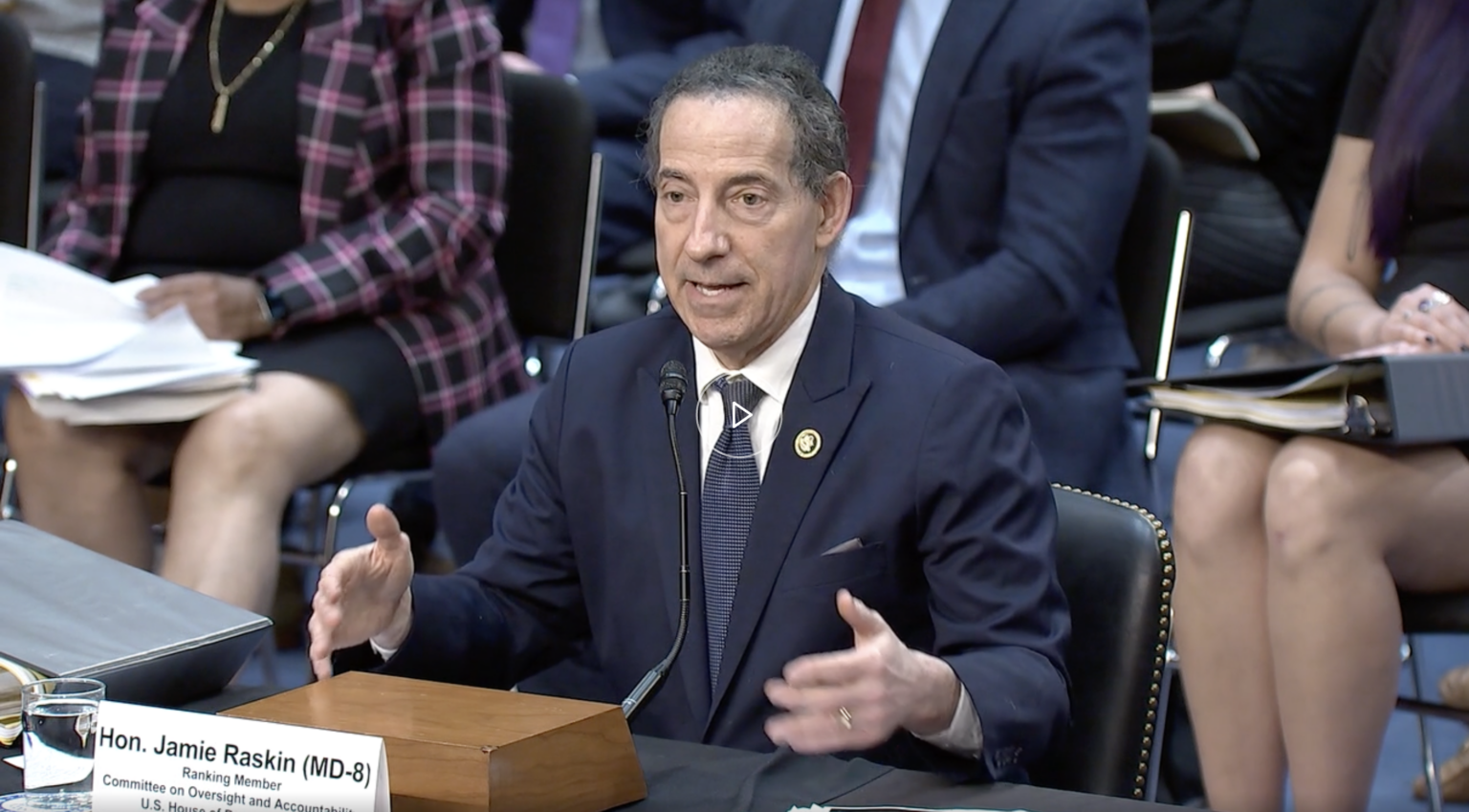
    Democrat Jamie Raskin appeared before a Senate hearing examining Big Oil’s efforts to avoid climate accountability. Credit: US Senate

    BP was warned by Princeton University researchers in 2016 that climate change accelerated in part by new global supplies of shale gas could lead to catastrophic events such as “mass extinctions and unprecedented famine.” 

    Yet despite acknowledging internally the concern that “gas doesn’t support climate goals,” the UK-headquartered oil and gas major embarked on a marketing campaign to “advance and protect the role of gas—and BP—in the energy transition.” 

    That’s been accompanied by large new investments in gas, including a recent agreement to take nearly two million tonnes per year of liquefied natural gas shipments from a $5.1 billion export facility called Woodfibre LNG proposed for the west coast of British Columbia. 

    Revelations concerning BP’s private knowledge about the dangers of gas expansion were contained in a trove of documents—some labelled “confidential”—released by Democrats in early May as part of a joint House and Senate investigation into the oil and gas industry’s climate obstruction. 

    “The fossil fuel industry evolved from denying climate science to spreading disinformation and perpetuating doublespeak about the safety of natural gas and its commitment to reducing greenhouse gas emissions,” the Joint Staff Report argues.  

    BP didn’t respond to questions from DeSmog related to the report. 

    Documents contained in the report, which were obtained via federal subpoenas, suggest that the highest levels of BP leadership have been privately made aware of potential climate disruption caused by natural gas. Comments on a draft outline for a 2017 speech by BP’s then-CEO Robert Dudley articulate that fear explicitly.

    “You don’t say anything about concerns about so-called lock-in, the idea that, once built, gas locks in future emissions above a level consistent with 2 degrees, at least without CCUS,” the comments read, referring to expensive and frequently underperforming carbon capture utilization and storage technologies. 

    A confidential 2018 presentation from BP notes that while gas may release less emissions when burned than coal, those climate gains can be erased by leakages of the “potent” greenhouse gas methane. “Methane (CH₄) accounts for 20% of GHGs [greenhouse gas emissions],” a slide from the presentation notes. “Oil and gas accounts for nearly a quarter of this 20%.”

    The presentation acknowledges the concern, widely reported in the media by that point, that “gas doesn’t support climate goals when you take methane emissions into account.” BP appears to have seen such worries as an “opportunity” for the company, however. 

    The company intended to launch a communications campaign that could “position BP as [a] strong gas player” in part by “demonstrating leadership on methane challenge,” the slide reads.

    Yet the oil and gas producer had been warned that a failure to limit global temperature rise to below 2 degrees could be catastrophic for humankind and the planet. During a 2016 town hall event for BP in Houston, Princeton researchers noted “innovation in the energy sector has been dramatically affected by the arrival of shale gas and oil and low energy prices.” 

    One result, they noted, is that “fossil fuels are so abundant that, for even a weak climate target, attractive fossil fuel will be left in the ground.” But if the world fails to limit warming below 2 degrees, “the climate monsters begin to come into the room,” they noted. 

    As warming approaches 3 degrees, their presentation explained, “we expect a rogue’s gallery, from the loss of all of our coastal cities because of >10 m of sea level rise, to cessation of the ocean’s circulation.”

    Yet the company continues to publicly portray the fossil fuel as a climate solution. “As the world seeks secure, affordable and lower carbon energy, global demand for LNG is expected to continue to grow,” a BP executive said last year upon the company signing its latest off-take agreement with Woodfibre LNG in Canada. 

    This is part of a years-long global campaign to spread “disinformation” about the role of gas “as a bridge fuel to a fossil-free future,” the Congressional report argues. “It is long past time to hold Big Oil accountable for its deception campaign and to take action to undo the harms it has perpetrated.”

    Original article by Geoff Dembicki republished from DeSmog.

  • New report accuses fossil fuel companies of greenwashing, but profits are up

    Spread the love

    https://www.energymonitor.ai/features/new-report-accuses-fossil-fuel-companies-of-greenwashing-but-profits-are-up

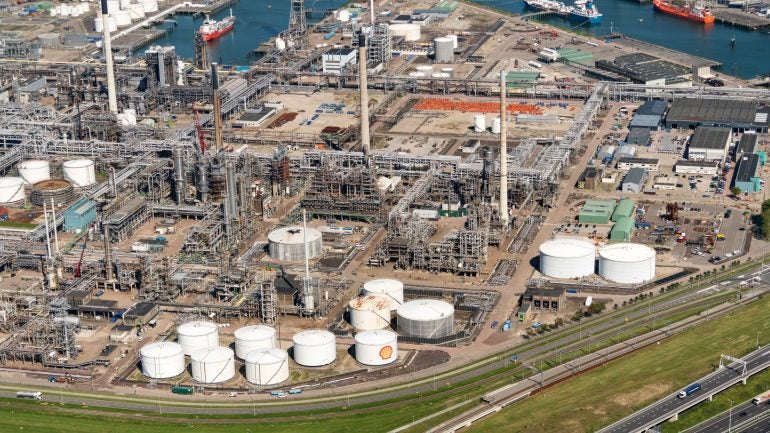
    Aerial view of Shell Pernis in Rotterdam, Holland, taken 7 September 2023. Photo: Aerovista Luchtfotografie/Shutterstock.

    A new report by the Senate Committee on the Budget details how fossil fuel companies have avoided tackling the climate crisis.

    Last week, US Democrats released a report three years in the making detailing the ways that large fossil fuel producers including Shell, BP and Exxon have sought to avoid responsibility for the climate crisis.

    The 65 page-long report, jointly authored by the Democrats House Committee On Oversight And Accountability and the Senate Committee on the Budget, contains files subpoenaed from big oil companies that “demonstrate for the first time that fossil fuel companies internally do not dispute that they have understood since at least the 1960s that burning fossil fuels causes climate change and then worked for decades to undermine public understanding of this fact and to deny the underlying science”.

    Previous documentation has shown that companies including Exxon knew about human-made climate change since at least 1981, and files released earlier this year suggest it may have been known since the 1950s. The importance of this report lies in proving that fossil fuel companies not only knew, but privately believed the science despite public rejection.

    The files also show the tactics used by major fossil companies to discredit climate activism, the report says, among them “pivot[ing] from outright climate denial to a new strategy of deception. Instead of misrepresenting the science and the consequences of climate change, they pivoted to misrepresenting their business plans, their investments in low carbon technologies, the alleged safety of natural gas, and their support for various climate policies and emission reduction targets”.

    Net zero?

    Most major oil companies have made net zero pledges based on the Paris Agreement goal of net zero by 2050, but the report claims they are unlikely to be met. BP, for instance pledged to reach net zero on oil and gas by 2050, but is at the same time ramping up oil production.

    The New York Times reported earlier this year that BP’s interim CEO Murray Auchincloss was clear that it would pursue an increase in fossil fuel production to meet demand, and internal documents gathered by the committees show that it was unwilling to publicly state a commitment to net zero in 2019.

    In an internal email thread discussing a press request for comment, an official said “it goes a bit too far to state or imply support for net zero by 2050, because that would require policy likely to put some existing assets at risk, and we haven’t discussed that internally”.

    This lack of action is further highlighted in a report released by thinktank Carbon Tracker in March, which suggests that companies including Shell and BP are far from hitting Paris Agreement goals.

    …

    https://www.energymonitor.ai/features/new-report-accuses-fossil-fuel-companies-of-greenwashing-but-profits-are-up

  • Congressional Investigation Reveals New Evidence of Big Oil’s Decades-Long Campaign to Deny Climate Science

    Spread the love

    Original article by Adam M. Lowenstein republished from DeSmog.

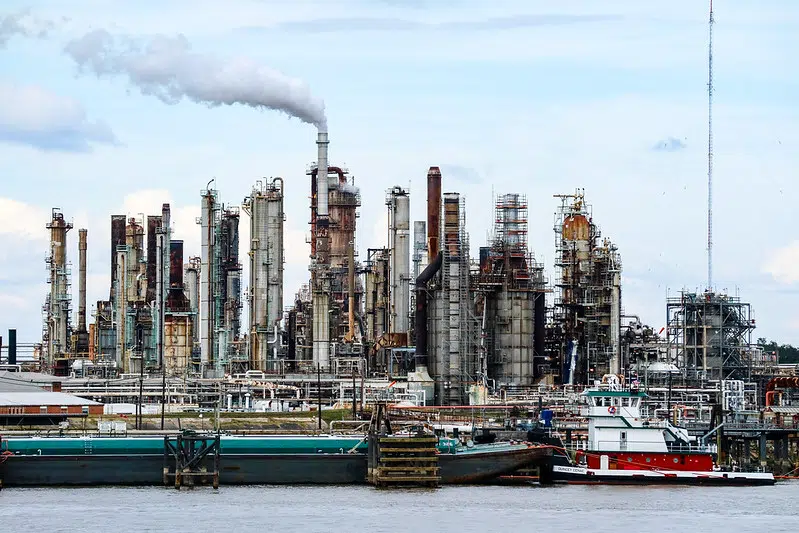
    An ExxonMobil refinery on the banks of the Mississippi River. Credit: Terekhova/Flickr (CC CREATIVE COMMONS INFO)

    Oil and gas companies and their top trade groups were aware for decades that carbon emissions contribute to climate change, according to a scathing new report from congressional investigators. Moreover, industry giants knew that many of the technologies they presented publicly as solutions to the climate crisis – such as algae-based biofuels and carbon capture and storage (CCS) – were neither as green nor as feasible as they promised, the study reveals.

    The Senate Budget Committee and Democrats on the House Committee on Oversight and Accountability published the report and related documents on April 30, three years after launching a joint investigation of Shell, Chevron, BP, ExxonMobil, and two leading industry trade groups..

    Fossil fuel obstructionism has evolved “from denial to duplicity,” said Senate Budget Committee Chairman Sheldon Whitehouse (D-RI), in a May 1 congressional hearing based on the report.

    Both the hearing and the report capture what Whitehouse described as “climate denial lite,” in which the industry pivots “to pretending it is taking climate change seriously, while secretly undermining its own publicly stated goals.”

    The investigation reveals that for ExxonMobil and other leading fossil fuel companies in the report, the perception of taking some sort of action on climate appears to have been as high a priority as actually taking action.

    For example, for years, Exxon sought to associate its brand with algae-based biofuels. In a 2019 video, the company claimed these biofuels “would one day power planes, propel ships, and fuel trucks – and cut their emissions in half.”

    Closeup of biofuel in a laboratory. Credit: Steve Jurvetson, CC BY 2.0 , via Wikimedia Commons

    Between 2009 and 2023, Exxon spent some $175 million on algae-related marketing like this video – almost half as much as the company spent working on the technology. (Exxon and other industry leaders largely stopped funding for algae biofuel research by 2023.)

    Even as the company publicly touted algae biofuels as a climate solution, the company knew the technology remained unproven – and, moreover, that Exxon was not investing nearly enough money if it were serious about developing algae as a viable technology.

    In an email made public by the committee, an Exxon employee noted that one of the company’s executives had “made comments about us getting too far out there on the original algae ads.”

    In an Exxon document released by House investigators with the header “Algae Biofuels Program Talking Points,” the company noted, “ExxonMobil’s analysis has concluded that final development and broad deployment of algae-based biofuels by the company would require future investments of billions of dollars” – orders of magnitude more than the $350 million that Exxon eventually spent.

    Repeating Patterns

    Congressional investigators identified a similar pattern in industry responses to a 2019 decision by Andrew Wheeler, then the head of the Environmental Protection Agency (EPA) under Donald Trump, to roll back a rule designed to reduce methane emissions.

    Internally, BP agreed with Wheeler’s decision. In a 2019 email published by the committee, one executive noted that Wheeler’s “legal theory … for rolling back direct regulation of methane” was “aligned with our thinking.” The American Petroleum Institute (API), the leading trade association for the oil and gas industry, which counts BP as a dues-paying member, lobbied for the rollback.

    In public, however, BP and other oil giants claimed to be disappointed by the Trump administration’s decision. David Lawler, then-chairman and president of BP America, said publicly that “direct federal regulation of methane emissions is essential.”

    “Time and again, the biggest oil and gas corporations say one thing for the purposes of public consumption, but do something completely different to protect their profits,” Jamie Raskin (D-MD), the top Democrat on the House Oversight Committee and one of the leaders of the investigation, said in his prepared testimony.

    “Company officials will admit the terrifying reality of their business model behind closed doors, but say something entirely different, false, and soothing to the public,” Raskin said.

    Yet, even as Raskin and Whitehouse were able to reveal damning new evidence of this corporate doublespeak, they pointed out that a complete public reckoning remained impossible, since the industry refused to fully engage with investigators.

    Denying Reality

    In a pattern that echoes the fossil fuel industry’s decades-long efforts to deny the reality of climate change and, more recently, to portray oil and gas companies as committed to solving the crisis, the four companies and two trade groups that received congressional subpoenas appear to have withheld meaningful information while simultaneously flooding the committees with “hundreds of thousands of generic and non-responsive documents,” Raskin said.

    Many documents submitted by the API were almost entirely redacted. The U.S. Chamber of Commerce produced only 24 documents that congressional investigators considered within the scope of the subpoena, including an invitation to a virtual meeting about “the future of natural gas infrastructure.”

    Fossil fuel interests “completely obstructed the committees’ investigation,” Raskin said in a video played at the hearing.

    During the hearing, this disinformation effort was assisted by congressional Republicans.

    Sen. Ron Johnson (R-WI) read into the record debunked right-wing claims that carbon dioxide is good for the climate because it is “plant food.”

    Source: Senate Budget Committee on X

    Sen. John Kennedy (R-LA) spent significant time alleging that Dr. Geoffrey Supran, a University of Miami climate disinformation expert who testified at the hearing, wrote tweets that Supran did not, in fact, write.

    “These are not my tweets, these are retweets,” Supran attempted to explain when he was finally shown the tweets, as Kennedy continued to speak over him.

    “I’d like to make very clear that this form of character assassination is characteristic of the propaganda techniques of fossil fuel interests,” Supran added.

    Supran’s point, however, was mostly obscured by Kennedy’s ongoing hectoring from the committee dais.

    In a more productive exchange, Sen. Tim Kaine (D-VA) asked Raskin about the argument Exxon put forth that the investigators’ subpoena was “designed to intrude on ExxonMobil’s First Amendment activities, including its constitutionally protected right to petition the government.”

    “That would obviously lead to the end of our civil and criminal discovery system, if the first amendment gave you the right not to turn over documents,” Raskin, a former constitutional law professor, replied.

    “When an objection is made – if it is an extremely unpersuasive, novel, imaginative, unsupported objection – you can always tell, there’s something they really don’t want you to see,” Kaine noted. “I can only imagine the extent of the iceberg under the water that you were not allowed to see.”

    The fossil fuel industry’s refusal to respond adequately to congressional subpoenas, while also flooding the committee with what Raskin’s testimony called a “paper blizzard” of some 125,000 “mass emails, newsletters, flyers, and otherwise meaningless fluff documents,” appeared designed to distract investigators and forestall potential legal action against companies and their executives.

    “There is certainly an adequate legal foundation for litigation against this industry,” Sharon Eubanks, the former head of the tobacco litigation team at the Department of Justice, and leader of the U.S. government’s racketeering case against Big Tobacco, told members of the committee.

    “Both industries lied to the public and regulators about what they knew about the harms of their products, and when they knew it.”

    Original article by Adam M. Lowenstein republished from DeSmog.

  • Young people and scientists occupy new coal-sponsored Science Museum gallery, joined by broadcaster and wildlife campaigner Chris Packham

    Spread the love

    April 12, 2024 by Extinction Rebellion

    • 30+ young people, scientists and supporters occupy Science Museum’s new climate gallery in protest over its sponsorship by coal-producing conglomerate Adani
    • Group announce plan to remain over weekend ahead of the opening to school groups next week
    • Naturalist Chris Packham says sponsorship deal is “beyond greenwash – it’s grotesque” and attends to support the protesters
    • Science Museum criticised over ties to conglomerate involved in manufacturing drones for the Israeli military amidst bombardment of Gaza and destructive coal mining operations in India and Australia opposed by Indigenous groups

    This evening, more than 30 protesters led by young people from Youth Action for Climate Justice and members of Scientists for Extinction Rebellion have occupied the Science Museum’s new climate gallery, Energy Revolution, over its sponsorship by the coal giant and arms manufacturer, Adani. Naturalist and broadcaster Chris Packham joined the group as they began their protest, with scientists and young people now intending to remain in the museum over the weekend, with the first school visits to the gallery beginning on Monday.

    Chris Packham, who famously claimed that peacefully breaking the law is the ethically responsible thing to do when it comes to protecting the planet, told the protesters: “For me science is the art of understanding truth and beauty and a lot of that beauty lies in the natural world. Science tells us that the fossil fuel industry is responsible for the accelerating destruction of our natural world. The Science Museum is a place to spark imagination, to provide answers but also to encourage us to ask questions. The question I’m asking today is a big one, “why on earth are we allowing a destructive industry to sponsor an educational exhibition whilst simultaneously setting fire to young peoples futures?” This is beyond greenwash – it’s grotesque. We urgently need an ‘Energy Revolution’ to steer us away from the course of planetary destruction on which we are heading. We need a rapid, just transition to renewables – that revolution means an end to coal, and starts with the young people and scientists occupying this space this evening. Science tells us the truth, and the truth is that we must change.”

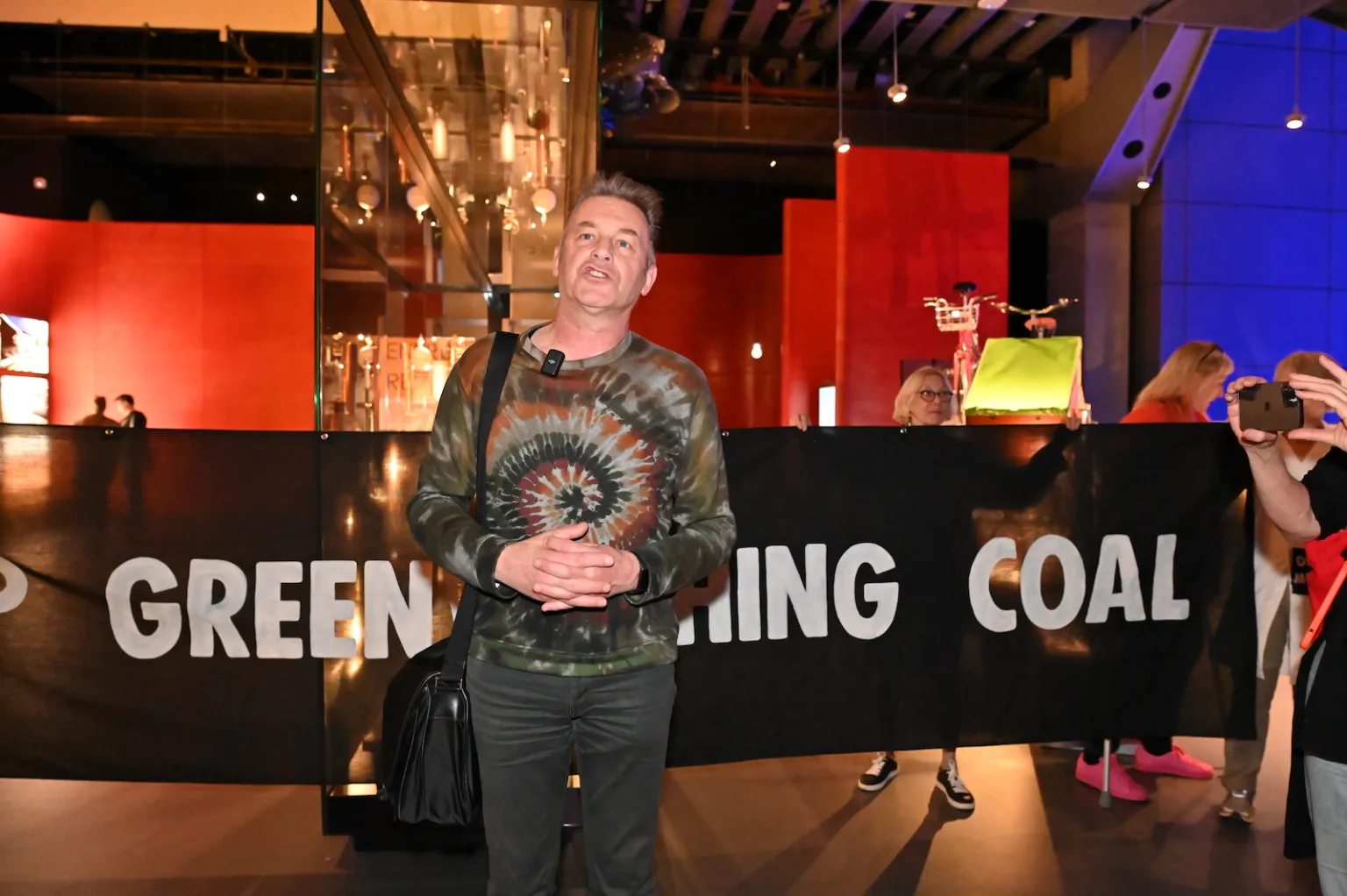
    Naturalist Chris Packham at the Science Museum occupation 12 April 2024. Image: Extinction Rebellion.
    Naturalist Chris Packham at the Science Museum occupation 12 April 2024. Image: Extinction Rebellion.

    The Energy Revolution gallery opened to the public just a few weeks ago amidst protest, with over 150 people taking part in a day of creative action. A few days earlier, guests arriving for the private VIP launch were greeted by protesters as they arrived, as well as the museum throwing a lavish dinner for the Adani Group’s billionaire chairman, Gautam Adani, with the Adani Group’s logo plastered on screens around the room. 

    To coincide with today’s protest, activists have released a new video exposing the truth behind the misleading claims made by Gautam Adani during his speech at the opening of the gallery. While he discussed the energy transition from oil and gas, he neglected to mention coal, the industry from which the Adani Group derives 60% of its revenue. The Science Museum has attempted to defend its sponsorship deal by claiming it has only partnered with the Green Energy division, although evidence clearly shows that it is directly linked to Adani’s coal business and that the museum has maintained a relationship with the main Adani Group.

    At 2pm on Saturday, the occupiers will invite members of the public to join them for an interactive assembly inside the gallery to discuss alternatives to toxic fossil fuel sponsorship at the Science Museum. The group plans to tell the public the truth about the gallery’s sponsor and the urgency of keeping fossil fuels in the ground for a liveable future. Throughout their occupation, the protesters are also constructing sculptures of fragments of coal as a poignant reminder of Adani’s core polluting business.

    Since the announcement of Adani sponsorship of the gallery in 2021, the museum has faced a raft of opposition and protests, including the resignation of two trustees, and of former museum director Chris Rapley from the Advisory Board. The museum has also recently faced protests over Adani’s involvement in the ongoing genocide of Palestinians in Gaza via its partnership with Israeli arms firm Elbit Systems.

    Ian McDermott, a Chemistry teacher who will no longer organise school trips to the museum, has said: “For decades I ran a couple of trips to the museum a year, but I just don’t think it’s in the students’ interests to engage with the greenwashing of the companies destroying their futures.”

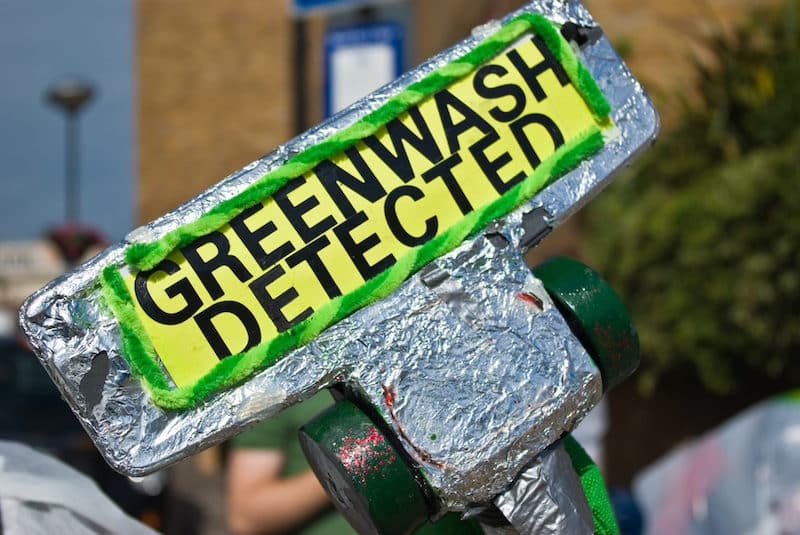
    Protest placard reads Greenwash detected
    Protest placard reads Greenwash detected

    Adani is the world’s largest private developer of new coal mines and coal-fired power plants, including Australia’s largest, the Carmichael Coal Mine built on Wangan and Jagalingou ancestral land. This ongoing investment in coal mining and power flies in the face of the scientific warning that most fossil fuel reserves cannot be burned and emitted if global warming increase is limited to 1.5°C, or even 2°C above pre industrial levels.

    Anya, a young person occupying the gallery said: “To have a coal company sponsoring an exhibition on the future of energy is blatantly deceiving. Through this sponsorship deal, the Science Museum is helping Adani attach itself to the image of a positive and sustainable future when in reality it is a coal giant, weapons manufacturer and genocide supporter. It’s plain wrong for the Science Museum to be deceiving visitors, including young people like me, when it comes to the climate crisis.”

    This is not the only instance of the museum welcoming fossil fuel companies to sponsor and influence its science education programmes and galleries. The Museum’s STEM Training Academy, which aims to support teachers in delivering science education, is sponsored by oil and gas giant BP, while the Museum’s interactive children’s gallery is named after Norwegian oil and gas company, Equinor. 

    Dr. Aaron Thierry, a scientist, who has researched climate impacts in the Arctic, is among those currently occupying the museum: “It’s not just Adani’s brand that the science museum is greenwashing, they’re also allowing the oil and gas giants BP and Equinor to sponsor their exhibits, disregarding the fact that these companies continue to expand fossil fuel production against the warnings of climate scientists. The latest science has shown we must leave the majority of fossil fuels unburned to prevent catastrophic changes to our climate. That an institution like the Science Museum is working with such rouge companies is a disgrace. The museum’s management needs to follow the example of Britain’s other leading cultural institutions and drop all ties to the fossil fuel industry.“

    Scientists for Extinction Rebellion and Youth Action for Climate Justice (who have led this action) are members of Fossil Free Science Museum Coalition who are campaigning for the Science Museum to end its sponsorship by fossil fuel companies.

    Youth Action for Climate Justice (formerly UKSCN London) is a radical youth organisation mobilising for climate justice. YACJ aims to create a new generation of young activists who are educated about society and the change we need, in order to work with other movements to change the system we live in. The group was previously part of Youth Strike for Climate Movement and coordinated the London youth climate strikes in 2019 and 2020, which brought thousands of young people to the streets of London. Instagram | Twitter

    Scientists for Extinction Rebellion are scientists who agree with Extinction Rebellion that it is time to take direct action to confront catastrophic climate and ecological breakdown. Instagram | Twitter

    Other groups involved are: International Solidarity for Academic Freedom in India (InSAF India), India Labour Solidarity (UK), Students for Survival; and numerous Extinction Rebellion groups.