Category: Climate Crisis

  • UN Chief Says Rich Countries ‘Signing Away Our Future’ With Fossil Fuel Development

    Spread the love

    Original article by EDWARD CARVER republished from Common Dreams under Creative Commons (CC BY-NC-ND 3.0).
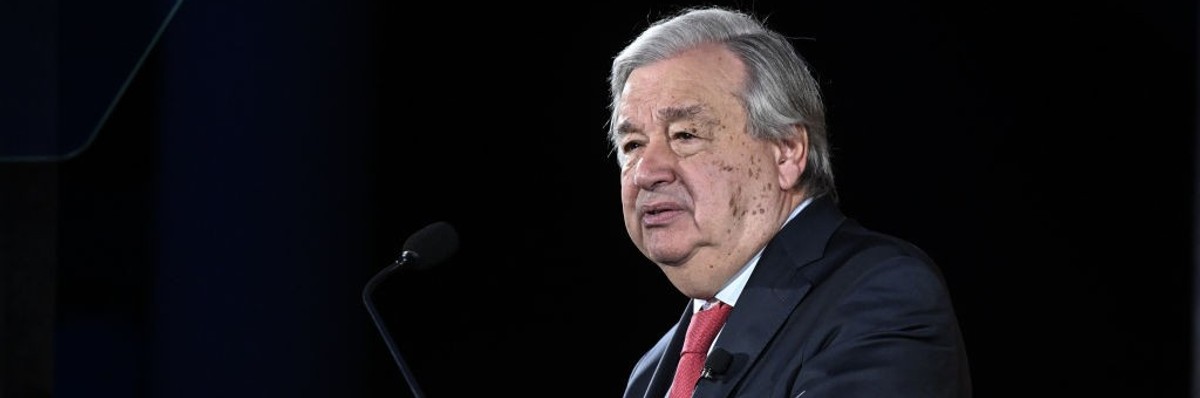
    United Nations Secretary-General Antonio Guterres delivers a special address on climate action in New York in June 2024. (Photo: Fatih Aktas/Anadolu via Getty Images)

    “I must call out the flood of fossil fuel expansion we are seeing in some of the world’s wealthiest countries,” U.N. Secretary-General António Guterres said. “Countries must phaseout fossil fuels—fast and fairly.”

    United Nations Secretary-General António Guterres on Thursday criticized the world’s wealthiest countries for expanding fossil fuel production, one day after an analysis in The Guardian showed that five Western countries are leading a global surge in oil and gas development.

    Guterres’ remarks came as part of a “call to action” on extreme heat at a press conference in New York, after record-setting world temperatures earlier in the week and a series of deadly heatwaves across the world this year.

    Guterres, who has long been outspoken on the need for climate action, called extreme heat one of the “symptoms” of a “disease” that is the “addiction” to fossil fuels.

    “I must call out the flood of fossil fuel expansion we are seeing in some of the world’s wealthiest countries,” he said nine minutes and 53 seconds into his remarks. “In signing such a surge of new oil and gas licenses, they are signing away our future. The leadership of those with the greatest capabilities and capacities is essential. Countries must phaseout fossil fuels—fast and fairly.”

    The U.N. chief’s comments may have been based on Wednesday’s findings that five Western countries—the United States, the United Kingdom, Canada, Australia, and Norway—have significantly scaled up oil and gas licensing this year, despite their international climate commitments. The findings came from an analysis of industry data conducted by the International Institute for Sustainable Development and published in The Guardian.

    The analysis found that the five countries together have licensed or plan to license projects in 2024 that will emit 11.9 billion metric tons of greenhouse gas emissions over their lifetimes. The news renewed discussions about whether countries such as the U.S., though they claim to be climate leaders, should be considered “petrostates“—a contemptuous term formerly reserved for countries such as Saudi Arabia and Russia.

    Guterres has long been outspoken on the issue of fossil fuels. At the COP28 U.N. climate change summit in Dubai last year, he spoke forcefully about the need for phasing them out and meeting the 1.5°C target set in the Paris agreement.

    “The 1.5°C limit is only possible if we ultimately stop burning all fossil fuels,” he said. “Not reduce. Not abate. Phase out—with a clear timeframe aligned with 1.5°C.”

    The loophole-ridden deal that emerged from Dubai didn’t match Guterres’ ambitions, but did call for “transitioning away from fossil fuels.”

    His call to action on Thursday included a four-part plan for dealing with extreme heat: caring for the most vulnerable, protecting workers, boosting resilience, and limiting further temperature rise by phasing out fossil fuels and scaling up renewables.

    Guterres warned that 70% of the global workforce—over 2.4 billion people—is at substantial risk of experiencing extreme heat, and the situation is especially dire for workers in Africa and the Middle East. He called for strong laws to protect workers, which some countries are enacting. The Biden administration recently moved to set the first national workplace heat safety protections in the U.S.

    Original article by EDWARD CARVER republished from Common Dreams under Creative Commons (CC BY-NC-ND 3.0).

  • Harris Campaign Says ‘Oil Barons Are Salivating’ Over Second Trump Term

    Spread the love

    Original article by JULIA CONLEY republished from Common Dreams under Creative Commons (CC BY-NC-ND 3.0). 

    U.S. Vice President Kamala Harris, the presumptive Democratic presidential candidate, speaks at West Allis Central High School during her first campaign rally in Milwaukee, Wisconsin, on July 23, 2024. (Photo: Kamil Krzaczynski/AFP via Getty Images)

    “Trump’s promises to Big Oil would sacrifice good-paying jobs that are driving an American energy and manufacturing boom,” said the campaign.

    U.S. Vice President Kamala Harris on Wednesday seized on Republican presidential nominee Donald Trump’s close ties to oil executives, taking aim at the promises Trump has directly made to billionaires who have contributed nearly $26 million to his campaign.

    Responding to a report from The Wall Street Journal about the record-breaking donations Trump has received from oil magnates for his 2024 campaign as he’s pledged to help them “make an absolute fortune” by continuing to drill for planet-heating fossil fuels, Harris’ newly launched presidential campaign put it bluntly.

    “Oil barons are salivating because climate denier Donald Trump promised to do their bidding while asking them to bankroll his run for the presidency,” said Joseph Costello, a spokesperson for the campaign.

    The spokesperson noted that Trump has offered oil billionaires the chance to all but control his energy policy should he win a second term, telling them directly at a dinner in May that he would dismantle the oil and gas regulations introduced by Harris and President Joe Biden if the industry raised $1 billion for his campaign.

    The Democratic vice president launched her campaign this week after Biden, who had faced pressure to step aside due to his age and health, endorsed her.

    “These Big Oil donations solicited by Trump are being investigated as a ‘blatant quid pro quo’ by Senate investigators,” noted Harris in an email to supporters.

    In addition, said Costello, “Trump’s promises to Big Oil would sacrifice good-paying jobs that are driving an American energy and manufacturing boom, and instead give billion-dollar handouts to corporations at the expense of working families and a healthy future for our children.”

    “These Big Oil donations solicited by Trump are being investigated as a ‘blatant quid pro quo’ by Senate investigators.”

    As the U.S. Energy and Employment Report found in 2022, under the Biden administration, renewable energy jobs have grown faster than the overall U.S. economy, paying higher than average wages, and have made up for rising unemployment in the fossil fuel industry.

    “Under the Biden-Harris administration, America is more energy independent than ever,” said Costello. “Vice President Harris cast the tie-breaking vote on the Inflation Reduction Act, creating hundreds of thousands of good paying energy jobs and making the biggest climate investment in world history. But Trump promises to dismantle all this progress and sell out America’s future for his own personal gain.”

    The vice president condemned the “ready-made executive order” oil lobbyists have already begun drafting for Trump in order to secure “tax handouts, increase costs on Americans, and pollute our environment,” a day after four national climate groups announced their endorsement of Harris.

    The League of Conservation Voters Action Fund, the Natural Resources Defense Council (NRDC) Action Fund, the Sierra Club, and Clean Energy for America Action expressed confidence that if she wins the presidency in November, Harris will “raise climate ambition to make sure we confront the climate crisis in a way that makes the country more inclusive, more economically competitive, and more energy secure.”

    The Wall Street Journal‘s reporting confirms that “the oil barons have their candidate” in Trump, said Matt Compton, chief of staff for Climate Power. “Thank God those of us who care about a clean energy future have Kamala Harris.”

    Original article by JULIA CONLEY republished from Common Dreams under Creative Commons (CC BY-NC-ND 3.0). 

  • Why courts favour cars, not the climate

    Spread the love
    Morgan Trowland and Marcus Decker protest and close the M25 Dartford Bridge.
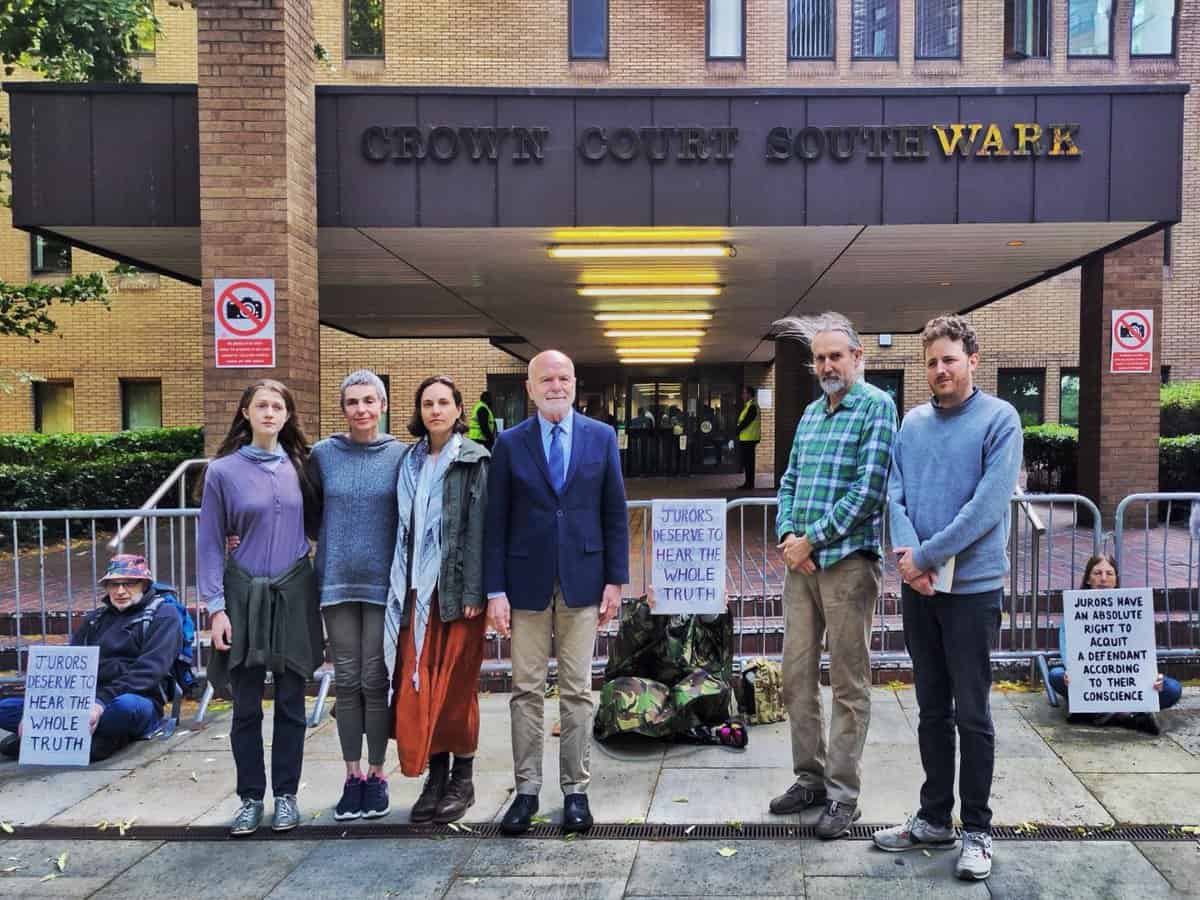
    UN Special Rapporteur on Environmental Defenders under the Aarhus Convention Michel Forst attended the trial of five Just Stop Oil supporters at Southwark Crown Court. He attended as an observer because of his serious concerns.

    Jack Marley, The Conversation

    For planning to block a motorway encircling London, five Just Stop Oil activists were recently sentenced to a minimum of four years in prison.

    Just Stop Oil wants to end the extraction and burning of coal, oil and gas in the UK by 2030. The group’s demands are consistent with what scientists have said is necessary to limit climate change. The same scientific advice underpins international agreements the UK has signed.

    Just Stop Oil’s methods, which include stopping traffic by sitting on roads, are also peaceful. So why are its members facing a long stretch behind bars?


    Imagine weekly climate newsletter

    This roundup of The Conversation’s climate coverage comes from our award-winning weekly climate action newsletter. Every Wednesday, The Conversation’s environment editor writes Imagine, a short email that goes a little deeper into just one climate issue. Join the 35,000+ readers who’ve subscribed.


    Such a severe sentence for non-violent protest has “no equivalent in modern times” according to Graeme Hayes and Steven Cammiss. Hayes is a reader in political sociology at Aston University while Cammiss teaches law at the University of Birmingham. Both have sat in on several high-profile climate protest cases.

    “Nobody should be surprised,” they say. “These sentences are a logical outcome of Britain’s authoritarian turn against protest over the past five years”.

    The state of UK protest law

    Protesters facing prosecution in England and Wales were once partially protected by what’s known as Hoffman’s bargain. This maintained that the state would show restraint and offer lenient sentences to non-violent protesters deemed to be acting proportionately. Last week’s ruling seems to show that this meagre allowance is now dead.

    Protest by Just Stop Oil
    Just Stop Oil has vowed to continue its campaign of disruptive protest.

    The Court of Appeal reaffirmed that Hoffman’s bargain should apply to such cases in 2021 with a ruling that exonerated the Stansted 15, protesters who obstructed a Home Office deportation flight in 2017. However, the court rejected the Stansted 15’s “necessity defence”, the argument that they were obliged to do what they did to avoid a greater harm. This precedent has been upheld in subsequent cases, including climate protest trials.

    Conspiracy to cause public nuisance, which the Just Stop Oil five were found guilty of, is a relatively new offence (introduced in the Police, Crime, Sentencing and Courts Act 2022) that carries a maximum prison term of ten years. People who feel compelled to take part in disruptive protest due to the existential threat of climate change risk a decade in jail without being able to explain their actions to a jury.

    “The legal philosopher Antony Duff suggests that criminal cases are a means of holding fellow citizens to account for their behaviour,” Hayes and Cammiss say.

    “A trial fails in this regard if it doesn’t let defendants account for their behaviour in ways that are meaningful to them.”

    UK anti-protest law is now so restrictive that even minor concessions seem like major victories. Retired social worker Trudi Warner was cleared of contempt of court in April for holding a placard outside London’s Old Bailey, affirming the right of juries to acquit based on their conscience. The result was lauded as a “huge win for democracy” by civil liberty campaigners.

    The reality is far from comforting and should in fact trouble everyone, says Emily Barritt, a senior lecturer in environmental law at King’s College London:

    “Punishing protesters won’t solve the problems that they are highlighting. Lethal air, filthy rivers, collapsing food chains, the climate crisis – these problems will all continue unabated, and soon become much more inconvenient than having to get off the bus to walk the last mile to work.”

    Roads are sacred, the climate less so

    Should the right of motorists to travel unimpeded take precedence over a collective demand for a liveable climate? Whatever most people think, the archetypal “angry motorist” is a constituency which Britain’s political elite appear eager to woo.

    Labour proclaimed itself the only party “truly on the side of drivers” at the recent election, fending off an accusation from the Conservative party that Keir Starmer had “declared war on motorists across Britain”.

    Matthew Paterson, a professor of international politics at the University of Manchester, sees this as a strategy of the political right to remain relevant as the climate crisis unfolds – a bet that the public will baulk at the necessary disruption of decarbonisation.

    Yet channelling Britain’s road rage did not prevent an electoral wipeout for Rishi Sunak and the Conservatives. Rebecca Willis, a professor in energy and climate governance at Lancaster University, was unsurprised.

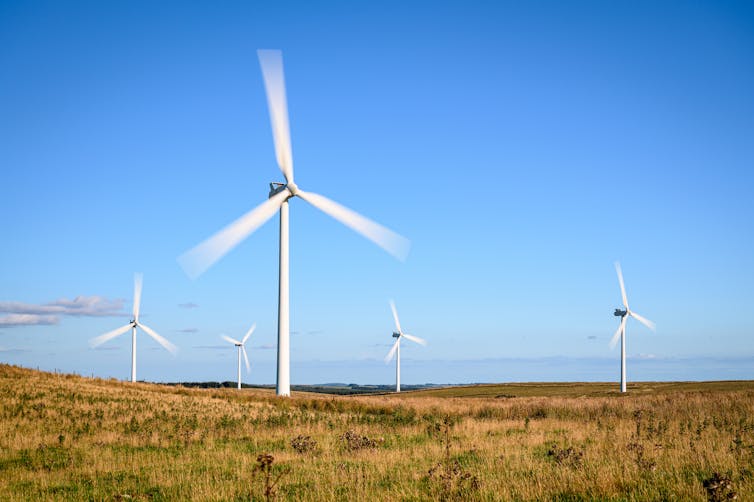
    An onshore wind farm.
    Action on climate change commands broad public support in the UK. Dave Head/Shutterstock

    “The Conservatives’ private polling must have confirmed what public opinion research has consistently told us: there are vanishingly few votes to be won through an agenda of delaying action on climate change,” she says.

    Hayes and Cammiss also note the result of a snap poll which showed 61% of respondents considered the record jail sentences for the five Just Stop Oil activists too harsh.

    Public consent for the UK’s crackdown on peaceful protest cannot be taken for granted. Even so, Oscar Berglund, a researcher in political economy at the University of Bristol, expects more and longer prison sentences for protesters.

    “These are political sentences and climate activists [have] become political prisoners,” he wrote via email.

    “Removing the politics of climate change from the courtroom doesn’t change that.”

    The Conversation would like to thank our readers and subscribers for their continued support after Imagine won best science newsletter of the year at the Publisher Newsletter Awards.

    Jack Marley, Environment + Energy Editor, The Conversation

    This article is republished from The Conversation under a Creative Commons license. Read the original article.

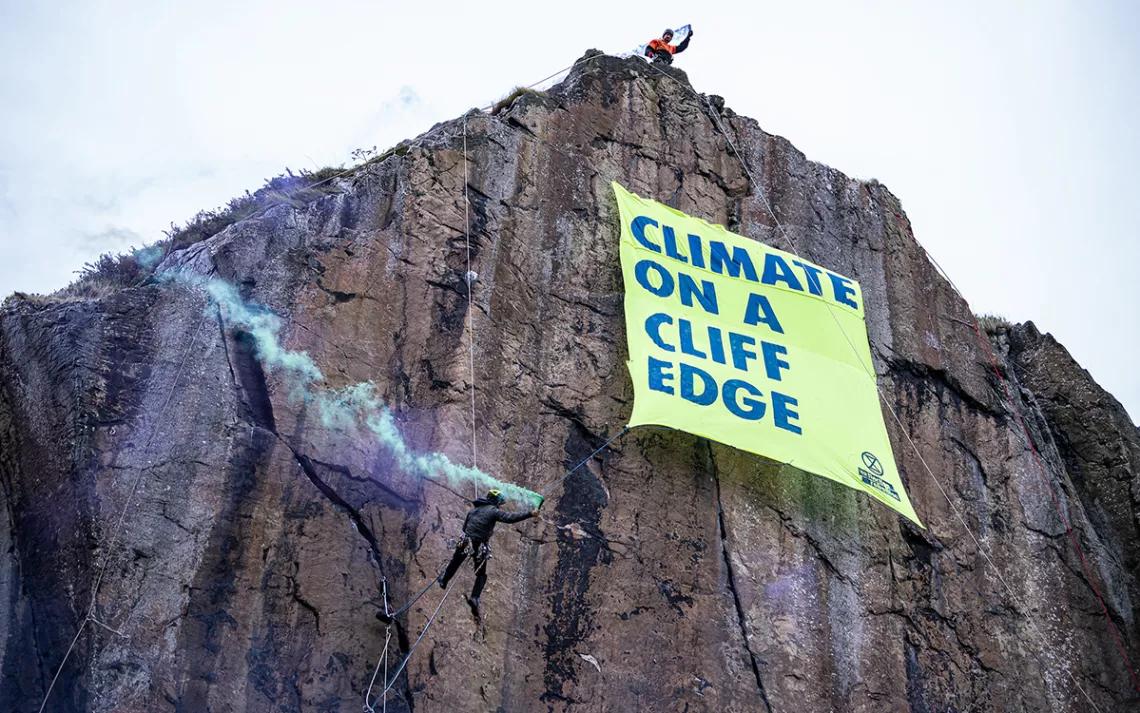
    Experienced climbers scale a rock face near the historic Dumbarton castle in Glasgow, releasing a banner that reads “Climate on a Cliff Edge.” One activist, dressed as a globe, symbolically looms near the edge, while another plays the bagpipes on the shores below. | Photo courtesy of Extinction Rebellion and Mark Richards
    Experienced climbers scale a rock face near the historic Dumbarton castle in Glasgow, releasing a banner that reads “Climate on a Cliff Edge.” One activist, dressed as a globe, symbolically looms near the edge, while another plays the bagpipes on the shores below. | Photo courtesy of Extinction Rebellion and Mark Richards
  • Frankfurt and Oslo airport flights hit as climate protests continue

    Spread the love

    https://www.theguardian.com/world/article/2024/jul/25/frankfurt-airport-temporarily-halts-flights-after-climate-activists-stage-demonstration

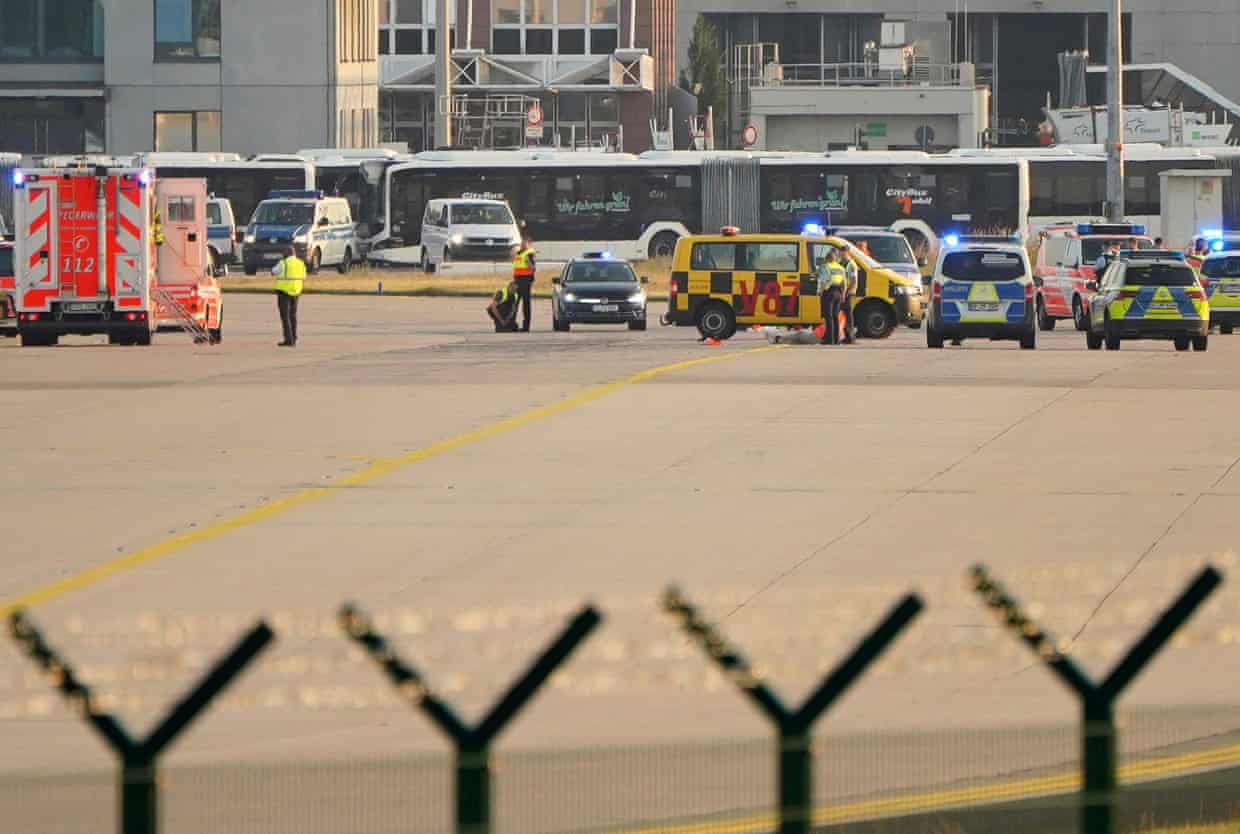
    Police, security and medical staff parked their vehicles after Letzte Generation (Last Generation) activists staged a demonstration at Frankfurt airport. Photograph: Timm Reichert/Reuters

    Flights at Germany’s busiest airport ‘gradually resuming’ on second day of coordinated ‘oil kills’ protests

    Climate activists have disrupted flights at Frankfurt and Oslo airports on the second day of coordinated “oil kills” protests across Europe and North America.

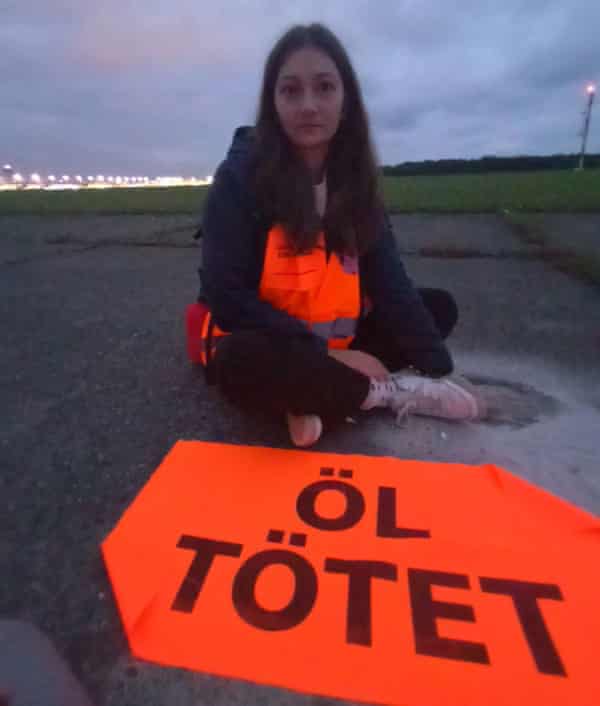
    Demanding an end to fossil fuels by 2030, supporters of Letzte Generation (Last Generation) briefly suspended flights at Frankfurt airport on Thursday morning. The activists said they had cut a wire fence, entered on bicycles and skateboards and glued themselves to the tarmac.

    In Oslo, protesters from Folk Mot Fossilmakta and Scientist Rebellion Norway caused large queues by blocking a check-in lane with a banner that read: “Fast track to phase out.”

    “I would rather not be here today, but I can no longer stand and watch as our elected officials do too little, too slowly,” said Ina Nagler, a climate researcher who took part in the Oslo protest. “The science is clear: We must drastically reduce the use of fossil fuels during this decade.”

    The protests, which seek to pressure governments to speed the shift to a clean economy, have hit airports during the start of the busy summer season. On Wednesday morning, activists disrupted travel plans at airports from Helsinki to Barcelona. Further airport protests are expected in the US and Canada on Thursday.

    …

    https://www.theguardian.com/world/article/2024/jul/25/frankfurt-airport-temporarily-halts-flights-after-climate-activists-stage-demonstration

  • ‘Oil Kills’ protesters disrupt flights at airports across Europe in wave of action

    Spread the love

    https://www.theguardian.com/world/article/2024/jul/24/oil-kills-protesters-disrupt-flights-at-airports-across-europe-in-wave-of-action

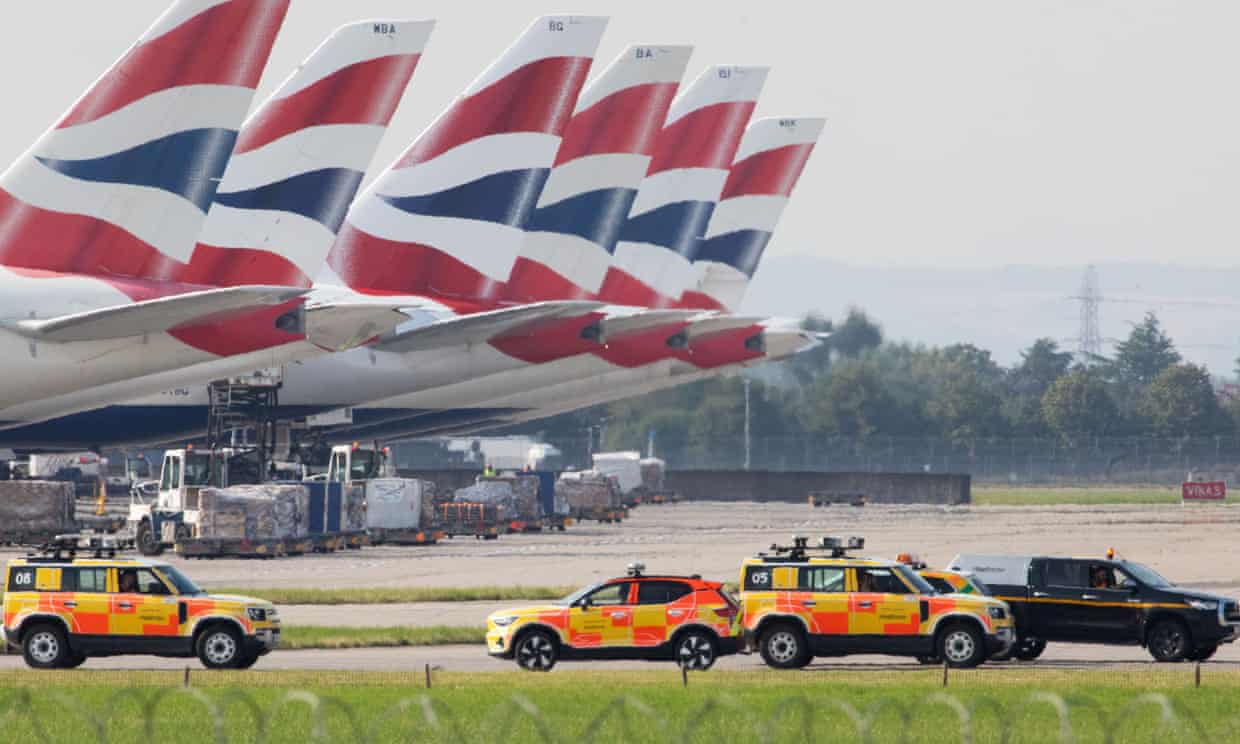
    Police and Heathrow airport security were on high alert after Just Stop Oil protesters were arrested at the airport’s perimeter fence. Photograph: Kristian Buus/In Pictures/Getty Images

    Ten activists arrested at Heathrow, over 30 flights cancelled at Cologne-Bonn, and planes delayed or diverted

    Climate activists acting under the banner “oil kills” have glued themselves to the tarmac and grounded flights across Europe as holidaymakers attempt to make summer getaways.

    In a wave of protests at airports from Oslo to Barcelona, activists disrupted flights and demanded that rich and polluting countries phase out fossil fuels by 2030. The protests, which the activists said had led to several arrests, came a day after climate scientists logged the world’s hottest day on record.

    An activist taking part in the protest at Cologne-Bonn airport holds her hand glued to the runway. Photograph: Letzte Generation Handout/EPA

    “Ordinary people are taking matters into their own hands today to do what our criminal governments have failed to do,” the campaign said in a statement. “We are putting our bodies on the wheels of the machine of the global fossil economy and saying ‘oil kills’.”

    In Germany, protesters from the climate group Letzte Generation (Last Generation) briefly stopped flights on Wednesday morning after they cut a chain-linked fence and glued themselves to the tarmac at Cologne-Bonn airport. The airport said that 31 flights had been cancelled and six diverted.

    In Austria, activists delayed a flight by refusing to sit down before takeoff while others spilled orange paint in the terminal at Vienna airport. In Switzerland, they blocked roads leading to Zürich and Geneva airports.

    …

    https://www.theguardian.com/world/article/2024/jul/24/oil-kills-protesters-disrupt-flights-at-airports-across-europe-in-wave-of-action