Category: Climate Crisis

  • For decades, governments have subsidised fossil fuels. But why?

    Spread the love
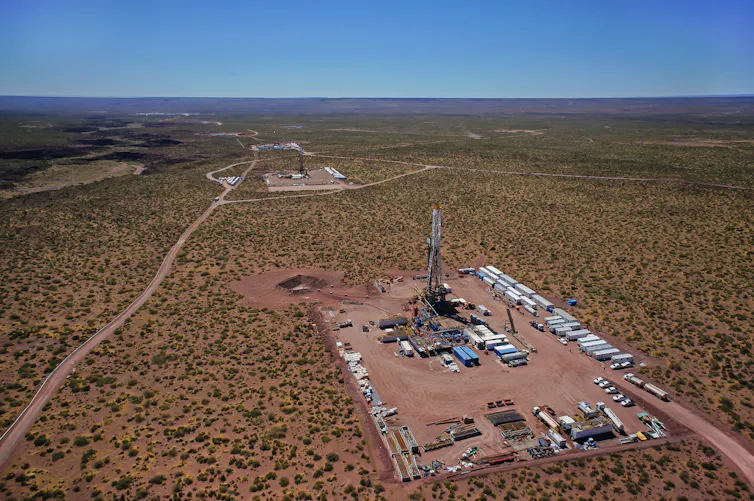
    Sobrevolando Patagonia/Shutterstock

    Bernard Njindan Iyke, La Trobe University

    Even now, decades after we first began trying to avert the worst of global warming, more than 80% of the world’s total energy comes from fossil fuels.

    You might think this would make fossil fuel production extremely profitable. But it’s not always the case. Much of the most accessible oil has already been extracted and burned. Many countries want to shore up domestic sources of fossil fuels to boost energy security. Energy price fluctuations and competition from new energy sources such as solar, wind and fossil gas have made it harder for some fossil fuel companies to make money, especially in coal.

    This is where fossil fuel subsidies come in. Australia gave A$14.5 billion in subsidies to major fossil fuel producers and consumers in 2023–24 alone.

    You might have wondered – why would some of the largest companies on Earth need subsidies? Here’s why.

    LNG tanker
    Australia’s surging liquefied natural gas industry has been boosted by government funding. KDS Photographics/Shutterstock

    Private companies, public money

    Globally, private companies dominate fossil fuel production, though fossil fuel-rich nations often have state-owned companies, such as Saudi Arabia’s Aramco and Russia’s Rosneft.

    Why would governments give fossil fuel companies money? Many reasons. But the most important is that wealthy countries have historically needed huge volumes of fossil fuels for manufacturing, transport and power. Many countries have some sources of fossil fuels inside their borders, but only a few are self-sufficient. This has enabled fossil fuel giants such as Saudi Arabia to become wealthy beyond belief.

    Many governments have used subsidies to boost their energy security and encourage local producers to seek out new sources of coal, gas and oil. These subsidies can make all the difference in making fossil fuel companies competitive internationally. For instance, Canada spent billions on subsidies to boost its oil sands and fracking projects.

    Subsidies were essential in the United States’ fracking revolution. Novel approaches to extracting fossil gas and oil – boosted by major tax incentives – turned the US from a major importer of oil and gas into a net exporter by 2019.

    You can see why the US did this. At a stroke, it went from being dependent on energy provided by foreign nations to being independent.

    Once subsidies are in place, they become very hard to remove. Indonesia’s lavish fuel subsidies now account for 2% of the nation’s GDP. When the national government tried to walk these back, there were riots.

    And there’s another reason, too. Fossil fuels are still playing an important role in boosting the economy in most nations. Subsidising them has long been seen as a way to maintain economic growth and stability.

    Globally, these subsidies are estimated at a staggering $10.5 trillion each year.

    This figure has grown sharply in recent years, after Russia’s invasion of Ukraine. As European nations tried to wean themselves off Russia’s gas, energy prices surged worldwide. In response, some countries introduced new subsidies to support businesses and consumers.

    The top-line figure of $10.5 trillion includes two types of subsidy – explicit (meaning real dollars change hands) and implicit (for example, governments building roads and railways to encourage crude oil transport).

    Explicit subsidies

    Explicit fossil fuel subsidies are direct financial incentives from governments to fossil fuel producers and consumers. These incentives come in different forms, such as tax breaks, direct payments, grants and price controls. All of them aim to reduce the financial burden associated with fossil fuel production and use.

    In Australia, explicit subsidies include fuel tax credits and exploration tax reductions. Fossil fuel companies can get subsidies to offset the losses they make during the years it takes to find and begin extracting new fossil fuels.

    In the US, oil and gas companies benefit from the oil depletion allowance, which permits them to deduct a percentage of their gross income from oil and gas sales as an expense. They can also claim tax deductions for intangible drilling costs, such as the wages of workers and material needed to find new sources of oil and gas.

    China, too, uses direct subsidies, discounted land-use fees, and preferential loans as explicit subsidies to boost coal production and consumption. The national government also supports fossil fuel consumption through direct payments to consumers.

    coal miners China
    China has used subsidies to encourage exploitation of its large coal resources. zhaoliang70/Shutterstock

    Implicit subsidies

    Implicit subsidies are often described as “imaginary”. That doesn’t mean they don’t exist, just that they’re not a direct transfer to directly paid to fossil fuel producers.

    For instance, the cost of burning fossil fuels is borne by the global community and the natural world, in the form of climate change, damage to human health and other harms. Most fossil fuel companies don’t have to pay a cent for the pollution their products cause – so in effect, they are being granted an indirect subsidy.

    Implicit incentives also include government investment in facilities such as transport networks, pipelines, oil refineries and port infrastructure, which will accelerate fossil fuel production and delivery. Think of the Middle Arm development in Darwin, funded by both the federal and territory government.

    Why are these subsidies still being paid?

    As the world grapples with a worsening climate crisis, fossil fuel subsidies are under great scrutiny.

    It’s politically difficult to withdraw subsidies once given. This is why governments around the world have instead begun to give subsidies and tax incentives to green energy developers, including the enormous $500 billion Inflation Reduction Act in the US, the European Union’s Green Deal, and China’s massive subsidies of green technologies such as electric vehicles and solar panels.

    The goal here is to make renewable energy and electrified transport steadily more affordable and competitive – just as fossil fuel subsidies did for oil, gas and coal.

    Bernard Njindan Iyke, Lecturer in Finance, La Trobe University

    This article is republished from The Conversation under a Creative Commons license. Read the original article.

  • Park Fire Doubles in Size, Becomes Sixth-Largest in California History

    Spread the love

    https://www.ecowatch.com/park-fire-california-wildfires-2024.html

    Firefighters set a backfire on the eastern front of the Park Fire, spanning 360,141 acres and 12% contained on July 28, 2024 near Chico, California. David McNew / Getty Images

    Thousands of firefighters in California are battling the Park Fire in northern California after it doubled in size within 24 hours, reported Reuters.

    The massive wildfire is the sixth-largest in the state’s history, having burned 370,000 acres since it started on Wednesday, The New York Times reported. It had also destroyed more than 100 structures and threatened thousands more.

    “It looked like a volcano,” said Paul Mozzino, who had evacuated his Humboldt Highlands home, “like something out of ‘Hellraiser,’” as reported by The New York Times.

    The fire was 12 percent contained, but evacuation orders or warnings remained for Butte, Plumas, Tehama and Shasta counties, CNN reported.

    …

    https://www.ecowatch.com/park-fire-california-wildfires-2024.html

  • The extreme broadness of ‘extremism’

    Spread the love
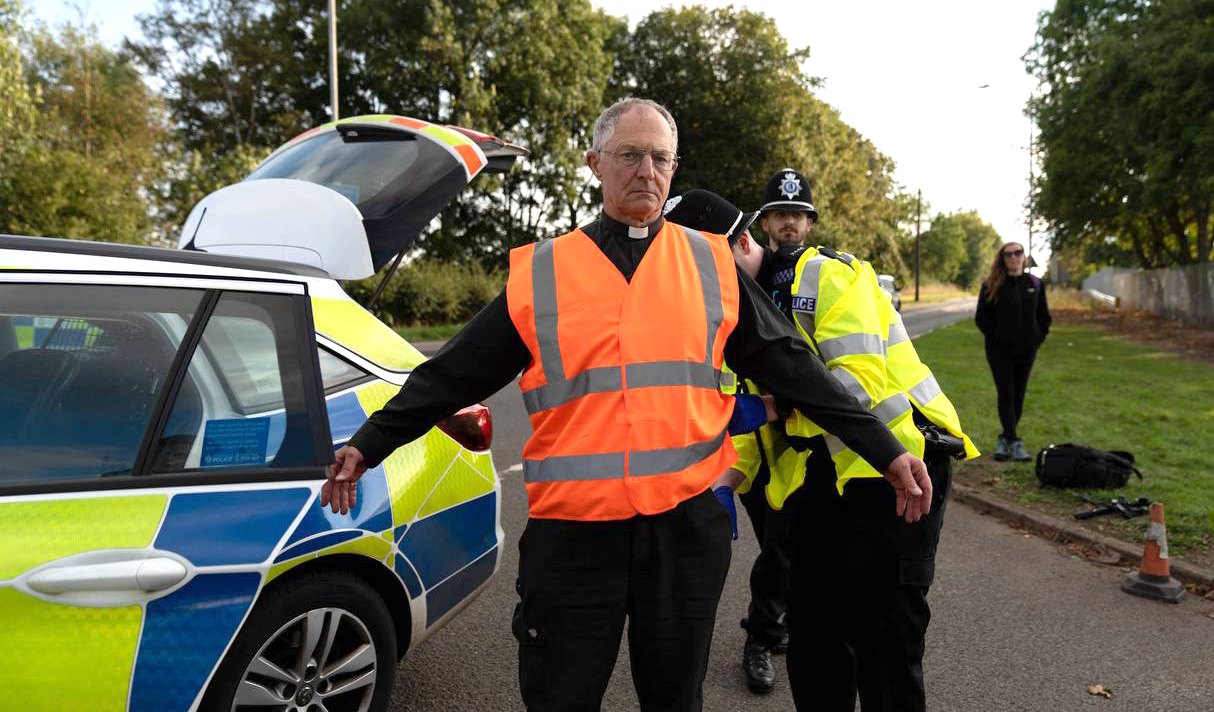
    Image of a Just Stop Oil participant getting arrested at Kingsbury oil terminal.
    A Just Stop Oil participant getting arrested at Kingsbury oil terminal. A JSO / Vladamir Morozov image.

    Original article republished from Freedom under Attribution- NonCommercial-ShareAlike 4.0 International license. There are other interesting articles at this site that is new to me.

    Just Stop Oil are being branded “fanatics” for disruptive actions whose like hardly raised an eyebrow a decade ago

    I wasn’t terribly surprised to see, in the weekend Morning Star, a letter suggesting that while the sentencing of the Just Stop Oil Five was overly harsh, they deserved punishment for their conspiracy to disrupt traffic on the M25.

    The Star is, to be fair, generally quite supportive of JSO’s right to protest, while having some knee-jerk types in its readership, particularly in the crusty old tankie set.  But such complaints get at the heart of an issue JSO has had for some time — they’re often really annoying even for their nominal allies. 

    Many of them are quite posh and can sound patronising or smug. Their targets are disruptive but less often to the wealthy and more to a cross-class cohort of art lovers, or pagans, or sports enthusiasts, or holiday makers. And motorists, of course. Roger Hallam, as their most famous face, often acts like a self-aggrandising edgelord whose projects have a habit of getting people in trouble without much of a plan for long-term support.

    It sometimes makes JSO hard to love, and it gives grouches in politics and the media an excuse to label them attention seekers, or cultists, or extremists.  

    But here’s the thing: for all their PR controversies, JSO aren’t actually extreme at all, and not only in comparison to, say, cops throwing their weight around on a Friday night, or any major event that gridlocks a city centre. Comparing them to similar campaigns from the 1990s or even the early 2000s, JSO are tamer than Lassie. The anti-roads movement, Animal Liberation Front, Earth First!, Reclaim The Streets, even Greenpeace — have all mounted considerably more disruptive campaigns within living memory. You can find reports on some of them in old issues of Freedom and Schnews.

    In fact, a quick look through the latter’s archive for mentions of the M25 very quickly turns up this article from 2012, with the Tories already in power, which notes the following action:

    On Monday 16th July a Greenpeace co-ordinated swoop saw seventy-seven petrol stations within the M25 shut down, and another thirteen in Edinburgh - hitting Shell on the forecourt and in their pockets. Activists disassembled the emergency fuel shut off switches and chained the pumps together, stopping business for the day.

    Twelve years ago, shutting down nearly the entire refuelling system around London and Edinburgh wasn’t considered big enough to fluster the Graun, which reported the whole thing as just another news story for the day. Shell were careful to say they respected the protesters’ views, and the police didn’t even bother to comment! My goodness what a difference a few years makes. Can you imagine the level of dribbling outrage the press would indulge in now? 

    This impressive gap in the treatment of disruptive protests on the same road is symptomatic of an issue touched on in a recent Freedom discussion, which has been worsening for a long time and accelerated, strangely, alongside the culture wars. While the left was accused of going woke and indulging in cancel culture, the right was becoming so pathetically unable to handle confrontation that it changed the laws to jail people for being annoying. Part of Suella Braverman’s anti-protest law (since struck down) literally gave police the power to break up protests for being “too noisy”. 

    And now we’re at the point where Hallam and co. are being jailed for 4-5 years each for conspiracy to disrupt the flow of traffic. But what’s worse is they’ve managed to somehow convince the public this is all a response to sudden rising environmental “fanaticism” entailing behaviour we’ve never seen before. A straight-up bald faced lie to a population who, if they are adults, should be able to personally remember examples of this not being the case which has nevertheless sunk in as truth. What a stunning propaganda victory! If the left had done it, you can bet your life the word “Orwellian” would be burning holes in printing presses across the nation.

    Which brings us back to our letter writer in the Star. The left (and of course the anarchists) need to remember our history, and why it is that solidarity applies even to people we don’t get on with ideologically (or personally). We need to be much, much better at getting our heads out of our arses and fighting back against the demonisation of disruptive protest. It’s not a matter of whether we approve of JSO or Roger the Public Nuisance, or whether think their work is counterproductive in terms of public opinion. 

    Because not too long ago what they’ve been doing wouldn’t have been a jailable offence, or even a front page one. Not too long ago, columnists opining about disruptive protest being “anti-democratic” would have been quite rightly ridiculed for their lack of commitment to human rights. JSO’s re-designation as extremists courting much-deserved jail time is our re-designation.

    Kier Starmer needs to be pressured on this from all sides. He has, after all, taken away the left’s voice in Parliament. Now he needs to hear it in the streets.    

    ~ Rob Ray

    Original article republished from Freedom under Attribution- NonCommercial-ShareAlike 4.0 International license. There are other interesting articles at this site that is new to me.

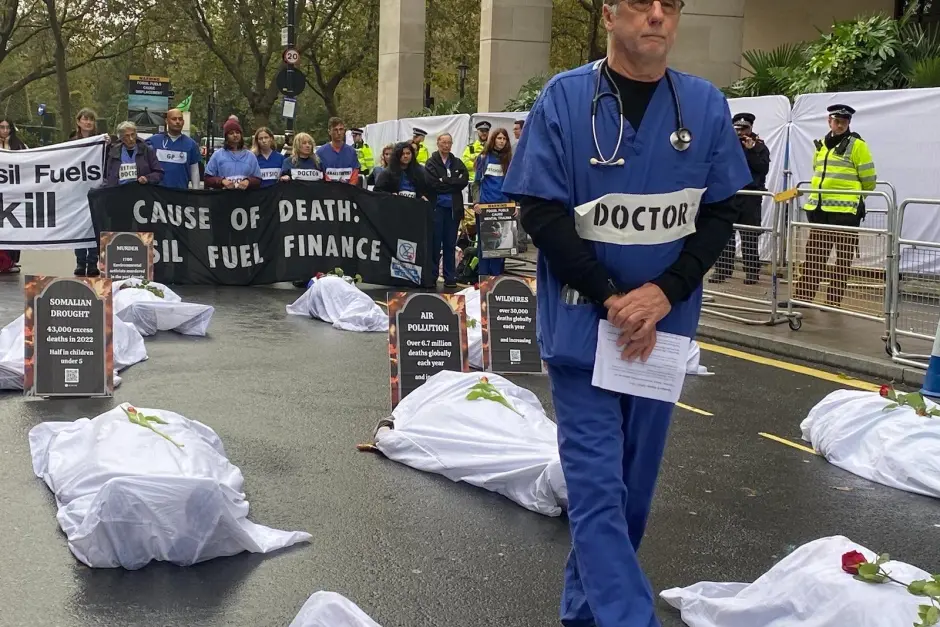
    Health for Extinction Rebellion protests at JP Morgan Chase’s London Embankment offices 19 October 2023.
    Health for Extinction Rebellion protests at JP Morgan Chase’s London Embankment offices 19 October 2023.
  • Climate activists who threw soup on Van Gogh painting told to expect prison time

    Spread the love

    https://morningstaronline.co.uk/article/climate-activsts-who-threw-soup-van-gogh-painting-told-expect-prison-time

    Phoebe Plummer and Anna Holland, who threw soup over Vincent van Gogh’s ‘Sunflowers’ in October 2022 Photo: Just Stop Oil

    TWO Just Stop Oil (JSO) activists who threw soup over Vincent van Gogh’s Sunflowers painting have been found guilty of criminal damage and told to expect jail time.

    Phoebe Plummer and Anna Holland threw two tins of Heinz tomato soup over the painting, which is protected by glass, in October 2022.

    The pair then glued themselves beneath the artwork in an action to demand the then-Tory government halt all new oil and gas projects.

    Although Labour agreed with the ban and implemented it when it took government, the two activists have been told to expect prison time.

    The trial at Southwark Crown Court was overseen by Judge Christopher Hehir, who handed out record sentences totalling 21 years to five activists from the group this month.

    On Thursday, he found the pair guilty of criminal damage exceeding £5,000.

    The National Gallery, where the artwork was displayed, previously said that there was “minor damage” to the frame, but the painting was unharmed.

    …

    JSO pair told to expect jail over soup on painting

    At Southwark Crown Court, Judge Christopher Hehir told the pair to be “prepared in practical and emotional terms to go to prison” when they are sentenced on 27 September.

    Judge Hehir said they “came within the width of a pane of glass of destroying one of the most valuable artworks in the world”.

    He set bail conditions for Plummer, of Clapham in south-west London, and Holland, of Newcastle, which stipulate they must not carry glue, paint or any adhesive substance in a public place, and must not visit any galleries or museums.

    Last week, the same judge sentenced five JSO activists to jail terms of between four and five years.

    The court heard how Plummer said in front of the painting in 2022: “What is worth more, art or life? Is it worth more than food? Worth more than justice?

    “Are you more concerned about the protection of a painting, or the protection of our planet and people?

    “The cost-of-living crisis is part of the cost-of-oil crisis.”

    …