Category: Climate Crisis

  • Allies Vow to Fight Off Big Oil Lawsuit Aimed at Ending ‘Existence’ of Greenpeace

    Spread the love

    Original article by OLIVIA ROSANE republished from Common Dreams under Creative Commons (CC BY-NC-ND 3.0).
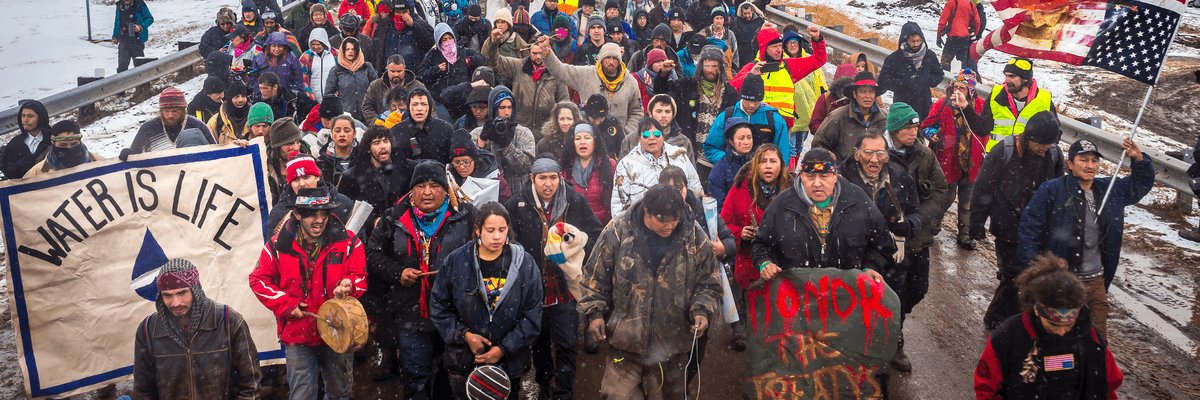
    Dakota Access Pipeline protesters rally at Standing Rock Indian Reservation on February 22, 2017. (Photo: Michael Nigro/Pacific Press/LightRocket via Getty Images)

    “No matter who you are, no matter what your politics are, this is one of the most important issues in America right now,” one Greenpeace spokesperson said.

    Nearly 300 organizations and tens of thousands of individuals have signed an open letter supporting Greenpeace USA against a $300 million lawsuit brought against the environmental group by Energy Transfer—a company with a majority stake in the Dakota Access pipeline.

    The corporation is falsely accusing Greenpeace of being the driving force behind Indigenous-led protests against the Dakota Access pipeline (DAPL) in 2016 and 2017.

    Greenpeace USA announced its supporters on Thursday as it launched a campaign to raise awareness about the lawsuit—which it said could “functionally bankrupt” the organization, threatening its “existence.” However, Greenpeace said that the dangers posed by strategic lawsuits against public participation (SLAPPs), like the one it faces, extend far beyond one organization.

    “No matter who you are, no matter what your politics are, this is one of the most important issues in America right now,” Greenpeace USA spokesperson Rolf Skar said in a statement. “Energy Transfer built the Dakota Access pipeline. But they’re suing anyway in order to send a message: If you dare to oppose us, we will financially ruin you.”

    The Dakota Access pipeline drew massive protests from the Standing Rock Sioux Tribe, more than 300 other tribal nations, and non-Indigenous allies. While former U.S. President Donald Trump forced the pipeline through shortly after taking office in early 2017, the protests rattled the fossil fuel industry and their allies in government. After 2016, 18 states passed anti-protest laws that shielded around 60% of U.S. oil and gas production and related infrastructure from peaceful protests. The industry also turned to “judicial harassment.”

    Energy Transfer (ET) initially brought suits against Standing Rock Tribal Chairman Dave Archambault and other Water Protectors, as well as a federal suit against Greenpeace in 2017.

    At the time, ET CEO Kelcy Warren told a reporter: “Could we get some monetary damages out of this thing, and probably will we? Yeah, sure. Is that my primary objective? Absolutely not. It’s to send a message—you can’t do this, this is unlawful, and it’s not going to be tolerated in the United States.”

    “Everyone who says they care about freedom—of whatever political stripe—should join together to support the Greenpeace campaign to protect people’s right to speak out against corporate abuses.”

    While the 2017 cases were all dismissed, ET immediately filed a similar case against Greenpeace in North Dakota state court in 2019. The new case, which is scheduled to go to trial in February 2025, makes what Greenpeace called a “deeply racist” case that Greenpeace, and not Indigenous leaders, coordinated the Dakota Access protests.

    “The lawsuit against Greenpeace is also an attack on the Indigenous movement in our fight for self-determination to protect Mother Earth, our waters, sacred and cultural sites, and our youth and future generations,” Morgan Brings Plenty of the Standing Rock Youth Council said in a statement. “These colonialist lawsuits are trying to send a warning to anyone who might consider speaking out and to be quiet—any of you could be next.”

    ET also makes several claims that would set a dangerous precedent if upheld, including denouncing legitimate speech as defamatory and making anyone who is present at a protest liable for things that occurred at the same protest.

    “The whole point of this type of lawsuit is to limit freedom of expression, so even if you don’t care about climate change, or you don’t care about Greenpeace, you should pay attention,” Skar said. “What’s at stake isn’t just Greenpeace or environmentalism, but the fundamental American rights to freedom of peaceful expression and advocacy for all of us.”

    Greenpeace has circulated a letter to ET that has so far been signed by more than 290 organizations—including 350.org, Public Citizen, ACLU North Dakota, SEIU, Indigenous Environmental Network, and Amnesty International USA—and tens of thousands of individuals, including prominent celebrities and activists like Jane Fonda, Susan Sarandon, Billie Eilish, and Adam McKay.

    “This is corporate overreach that is part of a disturbing trend of attacks on advocacy and speech around the world,” the letter reads. “We will not allow lawsuits like this one to stop us from advocating for a just, green, and peaceful future. On the contrary, we will ensure they have the opposite effect, increasing the support for organizations like Greenpeace and strengthening the broader movement for justice.”

    “This legal attack on Greenpeace is an attack on us all,” the letter continues. “We will not stand idly by. We will not be bullied. We will not be divided and we will not be silenced.”

    Organizations also issued individual statements of support.

    “Everyone who says they care about freedom—of whatever political stripe—should join together to support the Greenpeace campaign to protect people’s right to speak out against corporate abuses,” said Robert Weissman, co-president of Public Citizen. “As Greenpeace knows from its own experience, too often corporations use their political, economic, and legal power not just to run PR campaigns justifying their wrongdoing, but to threaten public interest advocates with bad-faith lawsuits (SLAPPs) and other intimidation tactics.”

    Brian Hauss, a senior staff attorney for the ACLU, said: “Protesters and advocacy groups should never have to fear the weight of groups like ETP as a condition for expressing their First Amendment rights. The court should see this lawsuit for what it is and toss it.”

    Progressives are also calling for a national legislative solution to the problem of SLAPP suits. While most states do have laws on the books against them, North Dakota is one of the 18 that do not.

    Rep. Jamie Raskin (D-Md.) introduced the Strategic Lawsuits Against Public Participation (SLAPP) Protection Act during Congress’ last session, and plans to reintroduce it in September of this year.

    “The case against Greenpeace illustrates how mega-corporations can use lawsuits to silence, intimidate, and ruin their critics,” Raskin said. “America must demand, and Congress must pass, bipartisan legislation to protect First Amendment rights against ruinous litigation practices.”

    Original article by OLIVIA ROSANE republished from Common Dreams under Creative Commons (CC BY-NC-ND 3.0).

  • Barclays’ $2bn coal loans expose ‘enormous loophole’ in its climate policy

    Spread the love

    Original article by Josephine Moulds republished from The Bureau of Investigative Journalism under a Creative Commons Attribution-NonCommercial-NoDerivs 3.0 Unported License.

    Bank accused of ‘trying to have it both ways’ with coal policy that allows financing for huge polluters

    Barclays helped raise nearly $2bn for companies running highly polluting coal-fired power plants in the US, exposing an “enormous loophole” in its climate policy.

    As part of its strategy to reach net zero, the bank has committed to stop financing companies that make more than half their revenues from coal-fired power.

    Last year, however, Barclays helped raise $1.7bn for coal-fired power companies that appear to exceed that threshold, the Bureau of Investigative Journalism and ITV News can reveal.

    Among these deals were two $400m loans for Monongahela Power, which generates 95% of its electricity from burning coal at two huge plants in West Virginia. The company only sells electricity that it generates itself, suggesting that the vast majority of its revenues are from coal-fired power.

    Barclays, however, said its policy only prohibits financing for companies that make more than 50% of revenues specifically from generating coal-fired power; and that TBIJ’s calculations did not account for these companies’ revenues from transmitting and distributing that power.

    Barclays was Europe’s biggest lender to the coal power industry last yearAndrea Domeniconi / Alamy

    Seth Feaster, an analyst at the Institute for Energy Economics and Financial Analysis (IEEFA) think tank, said: “The bank is trying to have it both ways: a public-facing coal policy that sounds like it will no longer support coal-heavy companies, but the technicality [regarding transmission and distribution revenue] has rendered that policy largely meaningless.

    “The bank has created an enormous loophole that appears to allow it to largely continue doing business as usual with coal-friendly utilities.”

    Natasha Landell-Mills, head of stewardship at the asset manager Sarasin & Partners, which holds Barclays debt, said the bank’s position appeared to be “somewhat disingenuous”.

    “In the end, what matters is that coal-fired power falls in keeping with ensuring a safe climate. As investors, we would expect all related activities that enable coal-fired power to be captured and, if they are not, would hope to see the board urgently address this loophole.” She said this was not just a question of how Barclays is run and its reputation, but that continuing to fund high emitters was also financially risky for long-term investors.

    The news comes amid a storm of protest against the bank, which was revealed in May to be Europe’s biggest funder of fossil fuels.

    It is also Europe’s biggest lender to the coal power industry, taking part in $75bn worth of deals for companies active in the sector last year.

    Bold pledges

    Under pressure from its customers and investors, Barclays has made increasingly bold climate promises. It tightened its coal policy in 2022 and said financing the sector not only poses a threat to the planet but could represent a bad lending decision. Yet a number of companies it funded last year appear to be making most of their money from coal-fired power.

    In addition to the Monongahela Power deals, Barclays helped raise $400m for Kentucky Utilities, which in 2022 generated almost three quarters of its electricity from burning coal. This suggests more than half its revenues were from coal-fired power.

    Barclays also helped raise a $500m loan for Louisville Gas & Electric, which generated 83% of its power from coal in 2022. It makes some revenues from selling gas but calculations based on company and government data suggest its revenue share from coal was more than 50%.

    Mill Creek power plant, a coal-fired stations owned by Louisville Gas and ElectricWilliam Alden / Creative Commons

    Neither company appears to be transitioning to renewable power and their owner, PPL Corporation, said it expects they will use coal and natural gas as their predominant fuels “for the foreseeable future”.

    Monongahela Power is investing millions to keep its two West Virginia plants running until 2035 and 2040, despite scientists warning that developed countries must end power generation from coal by 2030. The company aims to build 50MW of solar generation, but that represents less than 2% of its current coal-fired power capacity.

    Barclays told TBIJ the deals complied with its policy “based on publicly disclosed information and our due diligence”. It said its policy does not have a loophole and that its methodology is robust. “An ambition to be net zero by 2050 does not require an immediate exit from financing coal,” the bank said. “Barclays is financing an energy sector in transition, providing finance to meet current energy needs and also financing the scaling of clean energy”.

    PPL, which owns utilities in Kentucky, Rhode Island and Pennsylvania, said it had set a clear goal to achieve net-zero carbon emissions by 2050 and was transitioning to a cleaner energy mix across the group. It added that it had received approval from the authorities to retire 600MW of coal-fired power generation in Kentucky by 2027. This, however, represents less than 15% of its remaining coal capacity.

    Monongahela Power did not respond to TBIJ’s request for comment.

    Deadly coal plants

    Coal-fired power plants are responsible for more than 40% of global CO2 emissions from energy. At Cop28 UN climate talks in Dubai last year, all countries agreed that accelerating the transition from coal to renewables was essential in order to avert catastrophic climate change.

    Coal is also a major source of toxic air pollution. In the US alone, more than 3,800 people die from soot released by coal-fired power plants every year, according to a report by Sierra Club, a US NGO. While many European banks have distanced themselves from the industry, Barclays has retained strong links with US coal-fired power companies.

    The boom in fracked gas and plunging cost of renewables has changed the landscape for power generation in the US. Seth Feaster at IEEFA said: “[Coal-fired power] companies are going to start struggling because they can’t sell their power in competitive environments.

    “Investing in coal is very risky because most of [these coal plants] are losing money. They’re not going to be around for very long and if something breaks, they tend to shut down early because they can be very costly to repair.”

    Bob Ward from the Grantham Research Institute on Climate Change said: “The coal industry in the United States is failing, it’s on its way out … there’s no excuse for propping up the American coal industry.” He described the distinction Barclays made between the generation, transmission and distribution of electricity from coal in its policy as “semantics”.

    “What consumers and investors will be expecting is that Barclays are complying with the spirit of their declarations, and not just a technicality,” Ward said. “If you are generating most of your income from burning coal and then distributing the electricity results, then that’s the coal. That’s the coal industry. You’re damaging the climate. And that is what Barclays said they would stop.”

    Last month, the organisers of the Wimbledon tennis championships faced calls to drop Barclays as a sponsor over its ties to fossil fuels and defence companies supplying Israel. Barclays addressed criticism of its defence funding, saying it trades in shares on behalf of clients. “Whilst we provide financial services to these companies, we are not making investments for Barclays.”

    Live Nation also dropped the bank as a sponsor for various music festivals – including Download, Latitude and Isle of Wight – after protests from bands and fans.

    Steff Wright, chairman of the Gusto Group, said his construction and manufacturing business is moving away from banking with Barclays. “As a company that’s working towards a green future, we need to look at our supply chain and who else is on that journey with us.

    “We’d encourage all businesses to move away from them, to put pressure on them to rethink their strategy.”

    Reporters: Josephine Moulds
    Environment editor: Robert Soutar
    Impact producer: Grace Murray
    Deputy editors: Chrissie Giles and Katie Mark
    Editor: Franz Wild
    Production editor: Alex Hess
    Fact checker: Somesh Jha

    This reporting is funded by the Sunrise Project. None of our funders have any influence over our editorial decisions or output.

    Original article by Josephine Moulds republished from The Bureau of Investigative Journalism under a Creative Commons Attribution-NonCommercial-NoDerivs 3.0 Unported License.

    More from this project

    Barclays’ billions of ‘sustainable’ finance for fossil fuel industry is greenwash, says investor

    HSBC helped oil and gas industry raise $47bn despite net-zero pledge

    How will new FCA greenwashing rule tackle banks’ dodgy climate claims?

  • Trump vs. Harris: what each presidency would mean for the green transition

    Spread the love

    https://www.energymonitor.ai/features/trump-vs-harris-what-each-presidency-would-mean-for-the-green-transition/

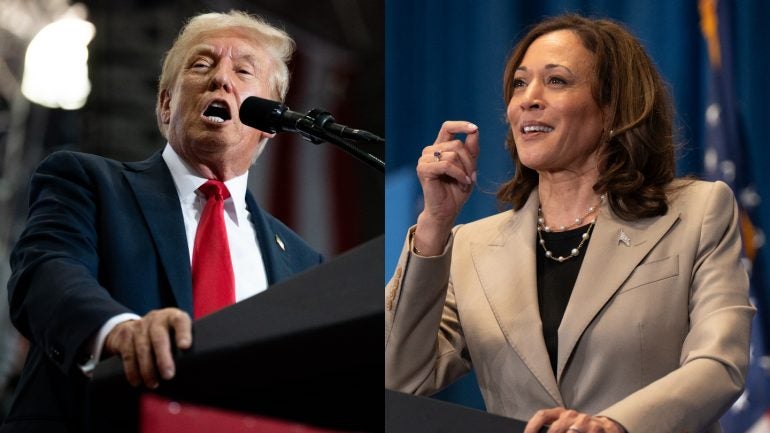
    Trump and Harris’s environmental policies chart starkly different climate futures for the US and the world. Credit (from left): Stephen Maturen/Getty Images and Allison Joyce/AFP via Getty Images

    The presidential candidates for the world’s largest fossil fuel producer have starkly different climate policies.

    All eyes are on the US elections in November this year, with the decision of the 160+ million voters in the country to play a major role in determining the world’s trajectory towards a net-zero future.

    According to the United Nations Environment Programme (UNEP), even with current pledges for emissions reduction, the planet is hurtling towards a rise of up to 2.9°C above pre-industrial levels by the end of the century. This would be catastrophic, and, one report indicates that the crisis could cost $178trn in global economic loss by 2070.

    Projected 2030 emissions must fall by an additional 28-42% to limit warming to 2°C, per UNEP estimates. This means that global decisions on decarbonisation in this decade will have ramifications for this century of humanity.

    …

    Trump dismisses ‘green new scam’

    Under a Trump administration, net-zero goals are expected to be in severe jeopardy.

    During his former presidency, Trump not only reversed more than 100 Obama-era environmental protections but also pulled the US out of the landmark 2016 Paris Agreement, through which countries are working together to keep global emissions below the threshold of a 2°C rise.

    During his campaign for re-election, Trump has dismissed rising environmental regulations as a “green new scam” and made no secret of his intentions to support the fossil fuel industry yet again.

    Speaking to a Fox News journalist at a town hall event in Iowa, he shared plans to expand oil drilling on “day one” and also promised to “drill, baby, drill” in his presidential nomination speech on 18 July.

    Moreover, at an April dinner at Trump’s Mar-a-Lago resort, he was reported to have asked oil industry executives to donate $1bn to aid his presidential campaign, citing benefits for them on avoided taxation and regulation as he plans to reverse environmental rules.

    The projections are dire. According to analysis by Carbon Brief, a climate policy and science website, Trump’s likely policies would add four billion tonnes of greenhouse gas emissions to the atmosphere, which would cause global climate damages worth more than $900bn, as per the latest US government evaluations.

    …

    Harris hailed a ‘climate champion’

    Harris, on the other hand, has a long history of enforcing climate action and is widely expected to carry on the legacy of the IRA.  

    She was an early co-sponsor for the Green New Deal, a comprehensive proposal for systemic decarbonisation in the US, including creating a 100% renewable energy grid and millions of green jobs.

    Most notably, ahead of her brief presidential election campaign back in 2019, Harris unveiled a $10trn plan to reduce US greenhouse gas emissions to zero by 2045, including policies such as working to eliminate fossil fuel subsidies.

    She also pledged to tax polluting industries and said she would establish an independent Office of Climate and Environmental Justice Accountability that would represent and support frontline communities, and monitor government compliance.

    “Success in the presidential election in November would likely lead to Harris continuing to build on this existing climate legislation and defend against Republican criticism,” says Gregory.

    …

    https://www.energymonitor.ai/features/trump-vs-harris-what-each-presidency-would-mean-for-the-green-transition/

  • It’s good to talk

    Spread the love

    There is a huge global issue that needs but is not getting immediate attention. It’s the climate crisis, that fossil fuels industries knew that they were killing our planet for profit.

    We need to understand what’s happening. Let’s start:

    Fossil fuel companies knew from 1960s that they were destroying the planet for their profits, to make themselves rich they knowingly destroyed the World. They must have had the attitude we don’t give a fuck for anyone else, we’re going to get rich. They fucking knew. They fucking knew because they had reports telling them that they were desroying the planet for their profits.

    These fossil fuel companies knew in the 60s, 80 years ago and they decided to destroy the planet so that they would get rich. That’s Capitalism.

    ed: There’s more of course.

    80+ years after the oil companies were advised by their own research that they were destroying the planet, they’re still doing it.

    dizzy: You’re going to have to object to it soon or it will be too late, you will have missed it. We need an immediate transition from fossil fuels.

    dizzy: The world needs an immediate transition from fossil fuels to renewables. The immediacy cannot be overstated …

  • Shell Slammed for ‘Planet-Wrecking’ Profits as Temperatures Soar to New Heights

    Spread the love

    Original article by OLIVIA ROSANE republished from Common Dreams under Creative Commons (CC BY-NC-ND 3.0). 

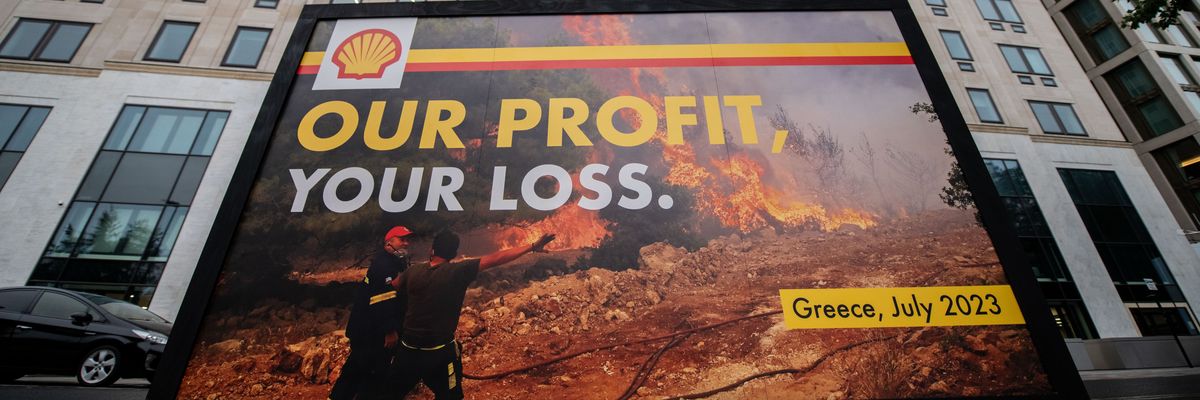
    Geenpeace activists set up a billboard during a protest outside Shell headquarters amid the company’s profits announcement on July 27, 2023 in London, England. (Photo: Handout/Chris J Ratcliffe for Greenpeace via Getty Images)

    “We cannot let countries and communities that have done the least to cause climate change pay the price for Shell’s greed,” one green group said.

    A little more than a week after Earth endured its four hottest days on record, fossil fuel giant Shell announced higher second-quarter profits than expected at $6.3 billion.

    The company also announced a new share buyback program worth $3.5 billion through September, CNBC reported.

    “It is shameful that Shell, as one of the world’s largest and most profitable fossil fuel companies, continues to reap billions in profits off the back of its planet-wrecking oil and gas operations,” Chiara Liguori, the senior climate justice policy adviser at Oxfam Great Britain, said in response to the news. “At a time when the company should be taking strong action to cut emissions it is instead weakening its climate targets and continues to invest in new oil and gas projects, in favor of short-term shareholder returns.”

    “That the profits of two companies alone can outweigh the GDP of six countries already being battered by the climate crisis lays bare the shameful inequity at the heart of the fossil fuel economy.”

    Shell’s announcement covers the months of April through June 2024. While the company made 19% less than it did during the first three months of the year, it made $400 million more than London Stock Exchange Group predicted for the quarter, according to CNBC.

    A Global Witness analysis concluded that Shell paid $23 billion to shareholders since June 2023. Every month in that same 13-month period saw temperatures averaging 1.5°C or more above preindustrial levels—the more ambitious temperature goal enshrined in the Paris agreement. Each month in that stretch was also the hottest of its kind on record.

    “Wildfires raging across the Arctic Circle and temperature records breaking by the day should be a wake-up call,” Greenpeace U.K. said on social media. “But Shell continues to bank billions from digging up climate-wrecking fossil fuels.”

    Shell’s announcement caps a month in which high global temperatures fueled a number of extreme weather events. July began with Hurricane Beryl forming as the earliest ever Category 4 and Category 5 Atlantic hurricane on record, before it devastated several Caribbean islands. Last week, a fast-moving wildfire forced more than 20,000 people to flee historic Jasper in the Canadian Rockies before it destroyed nearly a third of the town. The same week, Typhoon Gaemi dumped more than 1,000 millimeters of rain on Taiwan in less than 24 hours.

    “As people flee wildfires in Canada, floods in Taiwan, and rebuild in the wake of Storm Beryl, Shell is doubling down on fossil fuels, U-turning on renewables, and profiting to the tune of billions from an intensifying climate crisis,” Alice Harrison, head of Fossil Fuel Campaigns at Global Witness, said in a statement.

    Shell’s announcement also comes days after BP posted $2.8 billion in second-quarter profits.

    Global Witness calculated that BP and Shell’s second-quarter profits combined would be enough to pay one-tenth of the $100 billion in climate-related loss and damage money that developing nations have requested by 2030.

    At the same time, the two oil giants’ profits over the past year—£31.2 billion ($39.8 billion)—exceed the £27.7 ($35.3) billion combined gross domestic products of the six nations most impacted by Beryl: Barbados, the Cayman Islands, Dominica, Jamaica, St. Vincent and the Grenadines, and Grenada, according to Global Justice Now.

    “That the profits of two companies alone can outweigh the GDP of six countries already being battered by the climate crisis lays bare the shameful inequity at the heart of the fossil fuel economy,” Izzie McIntosh, climate campaigner at Global Justice Now, said in a statement. “People in the Caribbean devastated by the impacts of Hurricane Beryl are left to pick up the pieces, while rich shareholders and fossil fuel CEOs get to rake in the profits, removed from the chaos they’ve played a leading role in creating.”

    The climate justice organizations called for governments to take action to stop fossil fuel companies before they can further destabilize Earth’s climate.

    “We need accountability and a government that isn’t afraid to stand up to them—it can start by introducing measures to make these polluting megacorporations pay up for the climate damage they’ve caused in the Global South, as well as a fossil fuel phaseout,” McIntosh continued.

    Harrison agreed: “We can’t keep letting polluters off the hook. Governments should be holding fossil fuel majors to account for the crisis they created and forcing them to pay for the damage they are inflicting on millions of families around the world.”

    Oxfam G.B. and Greenpeace U.K. recommended policies for the United Kingdom—where Shell and BP are headquartered—specifically.

    “As global temperatures and the huge costs of tackling the climate crisis continue to rise, the U.K. government has a chance to ensure those most responsible for contributing to global greenhouse gas emissions, like Shell, are held to account by taxing them more,” Liguori said. “This could help raise the vital funds needed to ensure a fair switch to clean, renewable energy in the U.K. as well as fulfilling our international commitments to support communities worst-hit by climate change to adapt and recover.”

    Greenpeace concluded: “We cannot let countries and communities that have done the least to cause climate change pay the price for Shell’s greed. The new Labour government must prove it is different to its predecessor by reining in the fossil fuel giants and imposing bold new taxes on polluters to force them to pay their climate debts at home and abroad.”

    Original article by OLIVIA ROSANE republished from Common Dreams under Creative Commons (CC BY-NC-ND 3.0).