Category: Climate Crisis

  • With $280 Billion in Profits, Oil Giants Are ‘Main Winners of the War in Ukraine’

    Spread the love

    Original article by OLIVIA ROSANE republished from Common Dreams under Creative Commons (CC BY-NC-ND 3.0).

    A protester pretends to celebrate outside Shell’s London headquarters. (Photo: Greenpeace U.K./X)

    “They have amassed untold wealth off the back of death, destruction, and spiraling energy prices,” a Global Witness investigator said of a new analysis.

    As Russia’s invasion of Ukraine approaches its second anniversary, one group has clearly benefited: the five biggest U.S. and European oil and gas companies.

    BP, Chevron, ExxonMobil, Shell, and TotalEnergies have made more than a quarter of a trillion dollars in profits since the war began, according to an analysis published by Global Witness on Monday.

    “This analysis shows that regardless of what happens on the front lines, the fossil fuel majors are the main winners of the war in Ukraine,” Global Witness senior fossil fuels investigator Patrick Galey said in a statement. “They have amassed untold wealth off the back of death, destruction, and spiraling energy prices.”

    Big Oil’s profits were fueled in part by high wholesale gas prices, which were already elevated before Russia invaded Ukraine on February 24, 2022 and skyrocketed afterward. All five companies covered by the analysis reported record profits for 2022.

    This bonanza came as the conflict killed more than 10,000 Ukrainian civilians.

    “Russia’s invasion of Ukraine has been devastating for millions of people, from ordinary Ukrainians living under the shadow of war, to the households across Europe struggling to heat their homes,” Galey said.

    During 2022, U.S. President Joe Biden accused Big Oil of “war profiteering.”

    Global Witness calculated that BP and Shell have raked in enough since the war began—at £75 billion—to pay all British household electricity bills through July 2025. Chevron and ExxonMobil have made a combined $136 billion while Total has netted $50.4 billion.

    These massive profits also come as the climate crisis, driven primarily by the burning of fossil fuels, continues to escalate. 2023 was the hottest year on record, and likely the hottest in 125,000 years. Yet instead of using their record profits to invest in renewable energy technology, the five major oil companies have cut back on their climate initiatives and handed massive payouts to shareholders.

    “This is yet another way in which the fossil fuel industry is failing customers and the planet.”

    Of the more than $280 billion the five companies have brought in since the war began, they returned what Global Witness said was an “unprecedented” $200 billion to shareholders. At the same time, Shell rescinded a promise to curb oil production by 2030 and said it would fire around 200 people employed by its green jobs division. BP, meanwhile, slashed its emissions reduction target from 35-40% of 2019 levels by 2030 to 20-30%.

    The money paid to shareholders is also money that could have been paid to help communities adapt to the climate crisis or recover from the damage it has already caused. The $111 billion that the five companies paid to shareholders in 2023 alone is 158 times more than the money pledged to climate-vulnerable nations at COP28, and the €15 billion that TotalEnergies rewarded shareholders with was more than the €10 billion that France needed to recover from droughts and storms in 2022.

    Galey said the companies were now “spending their gains on investor handouts and ever more oil and gas production, which Europe doesn’t need and the climate cannot take.”

    “This is yet another way in which the fossil fuel industry is failing customers and the planet,” Galey said.

    Original article by OLIVIA ROSANE republished from Common Dreams under Creative Commons (CC BY-NC-ND 3.0).

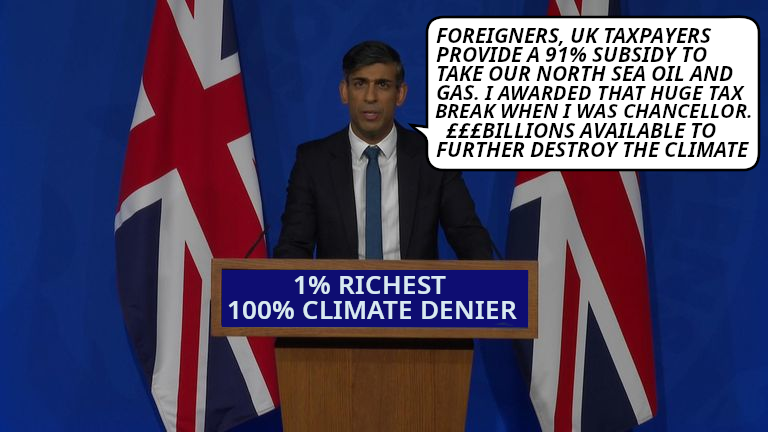
    Rishi Sunak offers huge fossil fuel subsidies to develop fossil fuel extraction in UK.
    Rishi Sunak offers huge fossil fuel subsidies to develop fossil fuel extraction in UK.

    Investigating the so-called ‘windfall tax’

  • Swiss Climate Activists Set Sights on Wealthy with Inheritance Tax Proposal

    Spread the love

    https://bnnbreaking.com/politics/swiss-climate-activists-set-sights-on-wealthy-with-inheritance-tax-proposal/

    Switzerland’s Young Socialists propose a 50% tax on inheritances exceeding 50 million francs, aiming to generate funds for climate.

    Switzerland, a nation known for its political stability and economic prosperity, is witnessing a significant political movement steered by the Young Socialists, the youth wing of the Social Democrats, the country’s second-largest party. They have successfully collected enough signatures to trigger a national referendum. Their target? The wealthy population of the country. Their proposal seeks to impose a hefty 50% tax on inheritances exceeding 50 million francs (approximately $59 million).

    A Green Cause at Heart

    The Young Socialists’ initiative is driven by a compelling intent: to generate funds for combating climate change. They believe that the affluent can and should contribute more to the climate cause. Their proposition, if successful, could generate an estimated 6 billion francs annually. These funds would be allocated exclusively for climate protection measures, contributing significantly to Switzerland’s efforts to combat global warming and transition to more sustainable practices.

    Reflecting a Global Trend

    This move doesn’t stand in isolation. It reflects a broader global trend of increased activism and policy initiatives aimed at addressing environmental concerns, particularly the financial aspects of combating climate change. From protests on the streets to policy proposals in the halls of power, the climate change struggle is increasingly becoming a central issue in contemporary politics. The Young Socialists’ proposition underscores this shift, signifying a push towards leveraging the wealth of the richest individuals in society to finance the transition to more sustainable practices and the reduction of greenhouse gas emissions.

    …

    https://bnnbreaking.com/politics/swiss-climate-activists-set-sights-on-wealthy-with-inheritance-tax-proposal/

  • Big Oil, Plastics Industry Led ‘Campaign of Deception’ to Push Recycling Fraud

    Spread the love

    Original article by Olivia Rosane republished from Common Dreams under Creative Commons (CC BY-NC-ND 3.0).

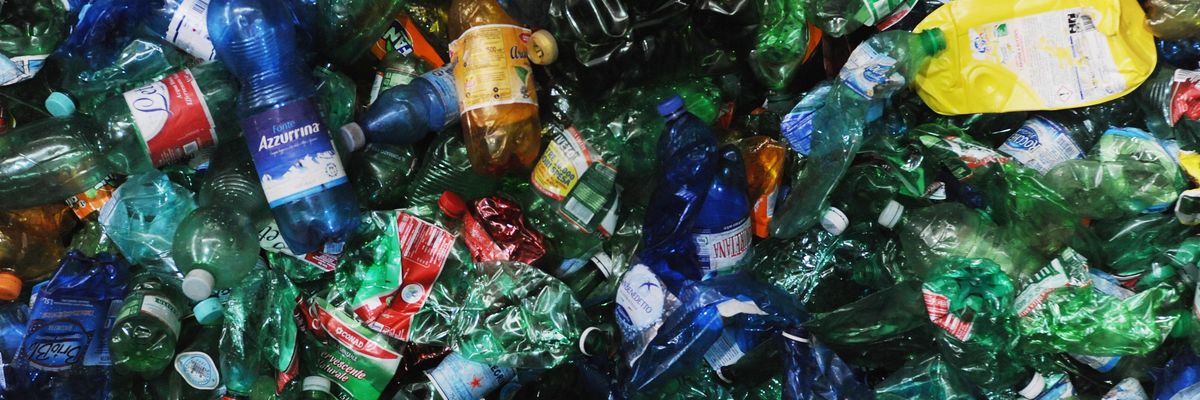
    More than 90% of plastics disposed of between 1950 and 2015 were not recycled. (Photo: Laura Lezza/Getty Images)

    “The oil industry’s lies are at the heart of the two most catastrophic pollution crises in human history,” one advocate said.

    The petrochemical industry—including major oil companies like ExxonMobil—knew for decades that recycling was not a sustainable solution to the problem of plastic waste, yet continued to promote it in order to avoid regulation and deceive consumers into continuing to buy and use their products, a report released Thursday by the Center for Climate Integrity reveals.

    The report, titled The Fraud of Plastic Recycling: How Big Oil and the Plastics Industry Deceived the Public for Decades and Caused the Plastic Waste Crisis, includes newly disclosed industry documents proving that companies and trade groups knew that plastics could not be recycled indefinitely in the 1980s and 90s even as they launched a massive public relations campaign to sell voters and policymakers on the process.

    “This evidence shows that many of the same fossil fuel companies that knew and lied for decades about how their products cause climate change have also known and lied to the public about plastic recycling,” Center for Climate Integrity (CCI) president Richard Wiles said in a statement. “The oil industry’s lies are at the heart of the two most catastrophic pollution crises in human history.”

    Plastic pollution is a major environmental and public health crisis. If current trends continue, plastics are expected to outweigh fish in the ocean by 2050, and the toxic fumes from plastic production facilities and incineration are a major environmental justice hazard for frontline communities. Humans in general also ingest an estimated credit-card’s worth of plastic each week, with unknown but potentially serious health impacts.

    Recycling is often touted as a solution for keeping plastic out of the environment, but this has proven to be ineffective and insufficient: More than 90% of the plastics disposed of between 1950 and 2015 were either burnt, sent to landfills, or dumped into the environment. There are several technical and economic reasons why plastic recycling doesn’t work at scale. Plastics lose quality as they are recycled and can only really be reused once or potentially twice. The decline in quality also means that recycled plastics are more likely to leach toxins added during production or picked up from other waste items. Economically, it is cheaper to produce new plastics than recycle older ones, and only two types of plastic—PET and HDPE—actually attract markets that will recycle them.

    The industry has long been aware of these limitations. In 1969, the American Chemical Society declared, “It is always possible that scientists and engineers will learn to recycle or dispose of wastes at a profit, but that does not seem likely to happen soon on a broad basis.”

    “We are committed to the activities, but not committed to the results.”

    Despite this, petrochemical companies and their trade groups began to push plastic recycling in the 1980s and 90s as a response to growing public concern over plastic waste, and the threat that this would lead to bans on plastic products.

    “No doubt about it, legislation is the single most important reason why we are looking at recycling,” Wayne Pearson, the executive director of industry front group the Plastics Recycling Foundation and a DuPont marketing director, said in 1988.

    The plastics industry used various strategies to sell the public on recycling, according to the report. These included:

    1. Funding front groups to promote recycling;
    2. Running ad and PR campaigns;
    3. Investing in recycling research to convince the public that it was taking action;
    4. Setting unrealistic internal recycling goals;
    5. Writing educational material promoting recycling to school children;
    6. Advocating for “advanced recycling,” a term for breaking plastics down to chemical components that can theoretically be reused but are not in practice; and
    7. Claiming, against evidence, that recycling can be part of a “circular economy.”

    CCI provides new evidence that, while the industry was employing these strategies, it was simultaneously aware of recycling’s limitations.

    For example, a report from the Vinyl Institute trade group concluded in 1986 that “recycling cannot be considered a permanent solid waste solution, as it merely prolongs the time until an item is disposed of.”

    In 1994, Exxon Chemical Vice President Irwin Levowitz told employees of the American Plastics Council that “we are committed to the activities, but not committed to the results.”

    CCI argued that the petrochemical industry should face legal consequences for its “campaign of deception” similar to suits brought against tobacco and opioid companies.

    “When corporations and trade groups know that their products pose grave risks to society, and then lie to the public and policymakers about it, they must be held accountable,” Wiles said. “Accountability means stopping the lying, telling the truth, and paying for the damage they’ve caused.”

    CCI vice president of legal and general counsel Alyssa Johl added: “Big Oil and the plastics industry’s decades-long campaign to deceive the public about plastic recycling has likely violated laws designed to protect consumers and the public from corporate misconduct and pollution.”

    “Attorneys general and other officials should carefully consider the evidence that these companies defrauded the public and take appropriate action to hold them accountable,” Johl said.

    Original article by Olivia Rosane republished from Common Dreams under Creative Commons (CC BY-NC-ND 3.0).

  • February on course to break unprecedented number of heat records

    Spread the love

    https://www.theguardian.com/environment/2024/feb/17/february-on-course-to-break-unprecedented-number-of-heat-records

    Experts struggle to explain how rises in sea-surface temperatures have accelerated so quickly. Photograph: PPAMPicture/Getty Images

    Rapid ocean warming and unusually hot winter days recorded as human-made global heating combines with El Niño

    February is on course to break a record number of heat records, meteorologists say, as human-made global heating and the natural El Niño climate pattern drive up temperatures on land and oceans around the world.

    A little over halfway into the shortest month of the year, the heating spike has become so pronounced that climate charts are entering new territory, particularly for sea-surface temperatures that have persisted and accelerated to the point where expert observers are struggling to explain how the change is happening.

    “The planet is warming at an accelerating rate. We are seeing rapid temperature increases in the ocean, the climate’s largest reservoir of heat,” said Dr Joel Hirschi, the associate head of marine systems modelling at the UK National Oceanography Centre. “The amplitude by which previous sea surface temperatures records were beaten in 2023 and now 2024 exceed expectations, though understanding why this is, is the subject of ongoing research.”

    Humanity is on a trajectory to experience the hottest February in recorded history, after a record January, December, November, October, September, August, July, June and May, according to the Berkeley Earth scientist Zeke Hausfather.

    …

  • UK Government’s New Low Pay Advisor Heads Climate Denial Network

    Spread the love

    Original article by Adam Barnett republished from DeSmog.

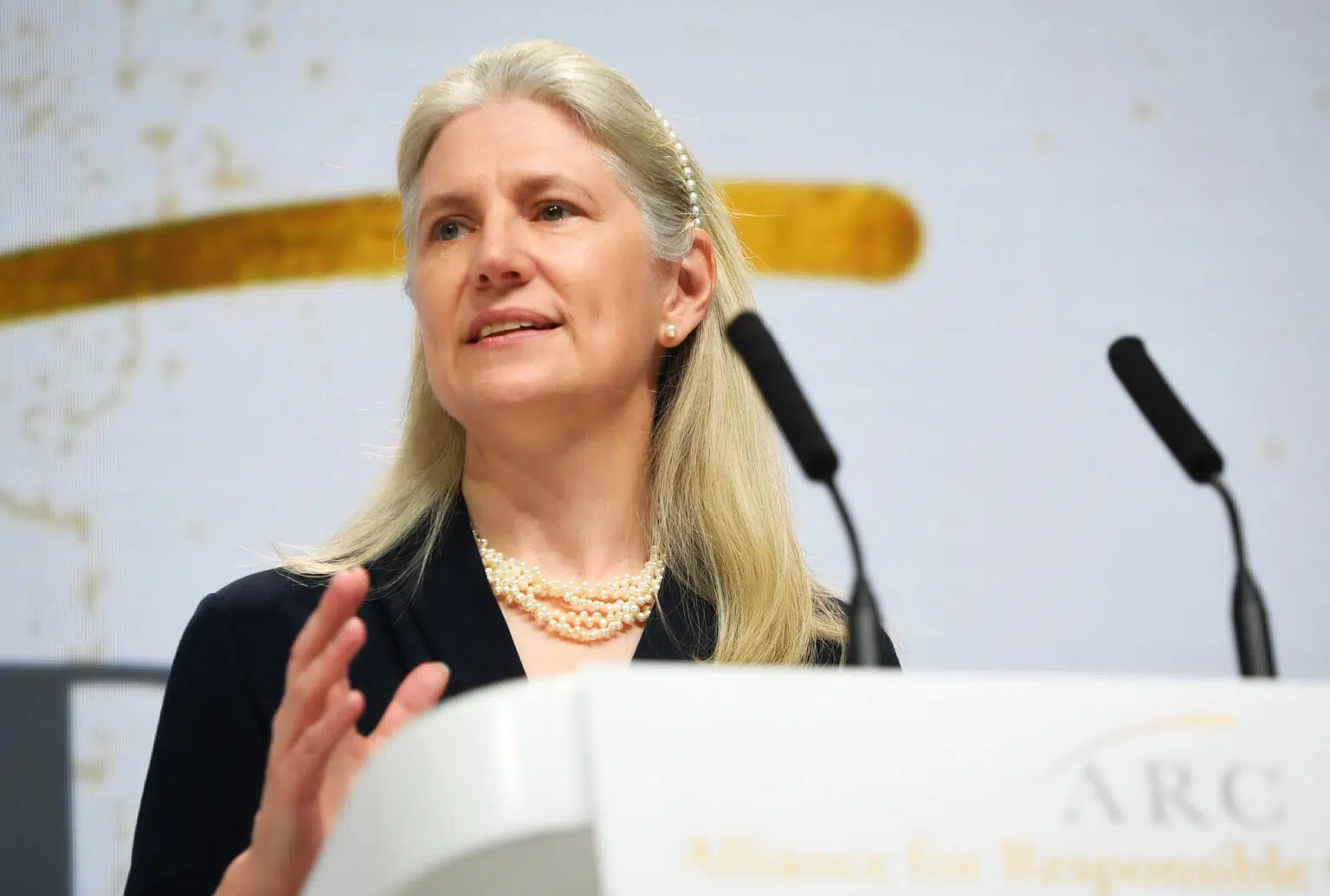
    Philippa Stroud, chair of the government’s Low Pay Commission, and CEO of the Alliance for Responsible Citizenship. Credit: ARC (CC0 1.0 DEED)

    Tory peer Philippa Stroud, who has close ties to the funders of GB News, has been elevated to a senior advisory role by the government.

    A new government advisor on the minimum wage is the head of an international network of climate crisis deniers funded by the owners of GB News, DeSmog can reveal.

    Philippa Stroud was appointed chair of the Low Pay Commission, a body reporting to Kemi Badenoch’s Department of Business and Trade, on 30 January. The government-appointed role pays £530 per day for three days of work per month (£19,114 per year).

    The Conservative peer is the CEO of the Alliance for Responsible Citizenship (ARC), a new pressure group that shares its funders with GB News and is linked to some of the world’s most prominent climate crisis deniers, including psychologist Jordan Peterson. Stroud has been described by The Telegraph as “the most powerful right-winger you’ve never heard of”.

    The appointment comes as senior Conservative Party figures continue to embrace anti-climate politics. On 6 February, former prime minister Liz Truss attacked “net zero zealots” at the launch of her new Popular Conservatism faction. 

    Last month, Energy Security and Net Zero Secretary Clare Coutinho met with and praised fuel pricing lobbyist Howard Cox, a Reform UK candidate who wants to “scrap net zero” and claims that “man is not responsible for global warming”.

    The government is also pushing ahead with legislation that would require the awarding of annual North Sea oil and gas licences. The Climate Change Committee, the independent body that advises the government on its net zero policies, warned on 30 January that mixed messages, including new fossil fuel projects, have damaged the UK’s international climate standing.

    Last year was the first on record to see consistent global warming of 1.5C, according to the EU’s Copernicus Climate Change Service. 

    DeSmog has previously revealed that the Conservative Party received £3.5 million in donations from fossil fuel interests and climate science deniers in 2022.

    Stroud’s appointment also cements the relationship between the Conservative Party and GB News. On Monday, Prime Minister Rishi Sunak took part in an hour-long town hall event on GB News, following the example of several Conservative MPs who are regular guests and presenters on the right-wing broadcaster. 

    Stroud’s ARC project is run by hedge fund manager Paul Marshall and the UAE-based Legatum Group, GB News’s principal backers. The Legatum Institute, a think tank funded by the Legatum Group, gave £50,000 to a faction of the Conservative Party in December. Before taking up her post at ARC, Stroud was CEO of the Legatum Institute. 

    “Anti-science climate change denialism has become the secret handshake that ushers in the faithful and bars the door to unbelievers,” Jolyon Maugham, executive director of the Good Law Project, told DeSmog. “This is an appalling betrayal of the principles of sound government – and of our children who need us to be led by science and not by the financial interests of wealthy Tory donors.”

    ARC, Stroud, the Legatum Group, and the Low Pay Commission were approached for comment. 

    ARC and Legatum

    Philippa Stroud was made a life peer by then prime minister David Cameron (now foreign secretary) in 2015, after failing to win a parliamentary seat in 2010. 

    The Legatum Group, which has employed Stroud both directly and indirectly since 2016, is one of the largest shareholders in GB News, which frequently attacks climate science and policies. A DeSmog investigation found that one in three GB News hosts spread climate denial on air in 2022. 

    GB News’s other major owner is British billionaire Paul Marshall, chairman and chief investment officer of the hedge fund Marshall Wace. DeSmog revealed that, as of June 2023, Marshall Wace owned shares worth $2.2 billion (£1.8 billion) in fossil fuel firms. This included a $213 million (£175.6 million) shareholding in the oil and gas supermajor Chevron, as well as stakes in Shell, Equinor, and 109 other fossil fuel companies. 

    In her statement announcing the launch of ARC, Stroud took aim at climate policies, writing that “we risk driving policy interventions to address environmental concerns without having an honest conversation about the trade-offs for the poor at home or in developing and emerging nations”.

    Poor and indigenous groups in developing countries will be hit hardest by the impacts of climate change, while those suffering from poverty at home have seen their energy bills soar as successive governments have failed to implement green reforms. 

    ARC is fronted by Canadian author Jordan Peterson, who regularly posts about “climate apocalypse insanity” and “eco fascists” to his millions of online followers. Peterson has promoted fringe climate crisis deniers on his YouTube channel and, as revealed by DeSmog, plans to open a new online school also featuring several climate crisis deniers. 

    ARC’s advisory board includes writers Bjorn Lomborg and Michael Shellenberger, both of whom have written books downplaying the threats posed by climate change, as well as Tony Abbott, the former prime minister of Australia and a director of the Global Warming Policy Foundation (GWPF), the UK’s principal climate science denial group. 

    Late last year, speaking on the outskirts of ARC’s launch conference in London, Abbott claimed climate change has “nothing to do with mankind’s emissions”. ARC advisor Vivek Ramaswamy, who also spoke at the conference, has called climate change a “hoax” and has said that “real emergency isn’t climate change, it’s the man-made disaster of climate change policies that threaten US prosperity.”

    The UN’s Intergovernmental Panel on Climate Change (IPCC), the world’s leading climate science body, states it is “unequivocal” that human influence has caused “unprecedented” global warming. 

    Kemi Badenoch, whose department appointed Stroud to her new advisory role, also spoke at the ARC conference alongside Levelling Up Secretary Michael Gove. The pair were joined by a number of Conservative MPs. 

    Stroud’s appointment to the government’s Low Pay Commission was first trailed by The Telegraph in December. A “Whitehall source” told the paper that Stroud was selected for the three-year post to block a possible left-wing appointment by a Labour government.

    Carla Denyer, Green Party co-leader and its parliamentary candidate for Bristol Central said that Stroud’s appointment was “hardly the most appropriate” and that “the Conservatives seem set on placing their people across the quango world before the general election.”

    Original article by Adam Barnett republished from DeSmog.

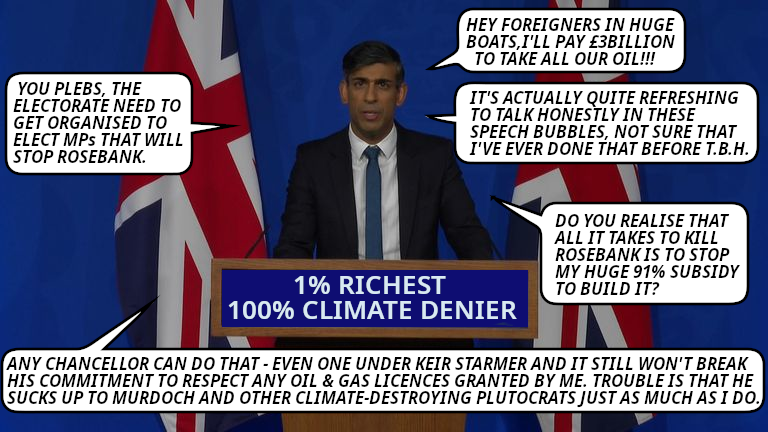
    Rishi Sunak on stopping Rosebank says that any chancellor can stop his huge 91% subsidy to build Rosebank, that Keir Starmer is as bad as him for sucking up to Murdoch and other plutocrats and that we (the plebs) need to get organised to elect MPs that will stop Rosebank.
    Rishi Sunak on stopping Rosebank says that any chancellor can stop his huge 91% subsidy to build Rosebank, that Keir Starmer is as bad as him for sucking up to Murdoch and other plutocrats and that we (the plebs) need to get organised to elect MPs that will stop Rosebank.