Category: Climate Crisis

  • Interview: Why global support for climate action is ‘systematically underestimated’

    Spread the love

    Original article by SIMON EVANS republished from Carbon Brief under a CC license. 

    There is near-universal global public support for climate action, yet people systematically underestimate the commitment of their peers, according to a new study.

    The research, published in Nature Climate Change, is based on a globally-representative sample of nearly 130,000 people in 125 countries.

    It finds that 86% of people “support pro-climate social norms” and 89% would like their governments to do more to tackle warming. Moreover, 69% say they would be willing to contribute 1% of their income to addressing climate change.

    Yet respondents also “systematically underestimate the willingness of their fellow citizens to act”, according to the paper, creating a potentially challenging “perception gap”.

    Carbon Brief interviewed the authors of the study to find out more. The questions and their answers are reproduced in full, below. An abridged version of the transcript was first published in DeBriefed, Carbon Brief’s weekly email newsletter. Sign up for free.

    Carbon Brief: Your survey of nearly 130,000 people in 125 countries found “almost universal” support (86%) for climate action, with 89% wanting more from governments. Were you surprised? 

    Prof Peter Andre, Prof Teodora Boneva, Prof Felix Chopra and Prof Armin Falk: While we did expect to find high levels of approval for climate action in some of the countries that we studied, we were indeed surprised to find that the percentage of the population approving of pro-climate social norms and demanding more political action from their national government is very high in almost all countries in our sample. In 119 of 125 countries, the proportion of individuals who state that people in their country “should try to fight global warming” exceeds two-thirds. In more than half the countries in our sample, the demand for more government action even exceeds 90%.

    We were probably misled by the same pessimism that we found to be so widespread across the globe. 69% of the world’s population is willing to contribute 1% of their monthly income to fight global warming. A broad majority of people across the globe is willing to pay a personal cost. In fact, in 114 out of 125 countries, a majority of respondents is willing to fight climate change. However, in 110 out of 125 countries, the majority thinks that they are in the minority: When asked about how many people in their country are willing to contribute, most respondents think that less than half of their fellow citizens would be willing to contribute.

    [The figure below, taken from the new paper, shows: (top left) the share of respondents willing to contribute none, up to 1% or at least 1% of their income to tackling climate change; (top right) the same result broken down by country; (middle panel) the share believing that “people should try to fight global warming”; (lower panel) the share wanting governments to do more.]
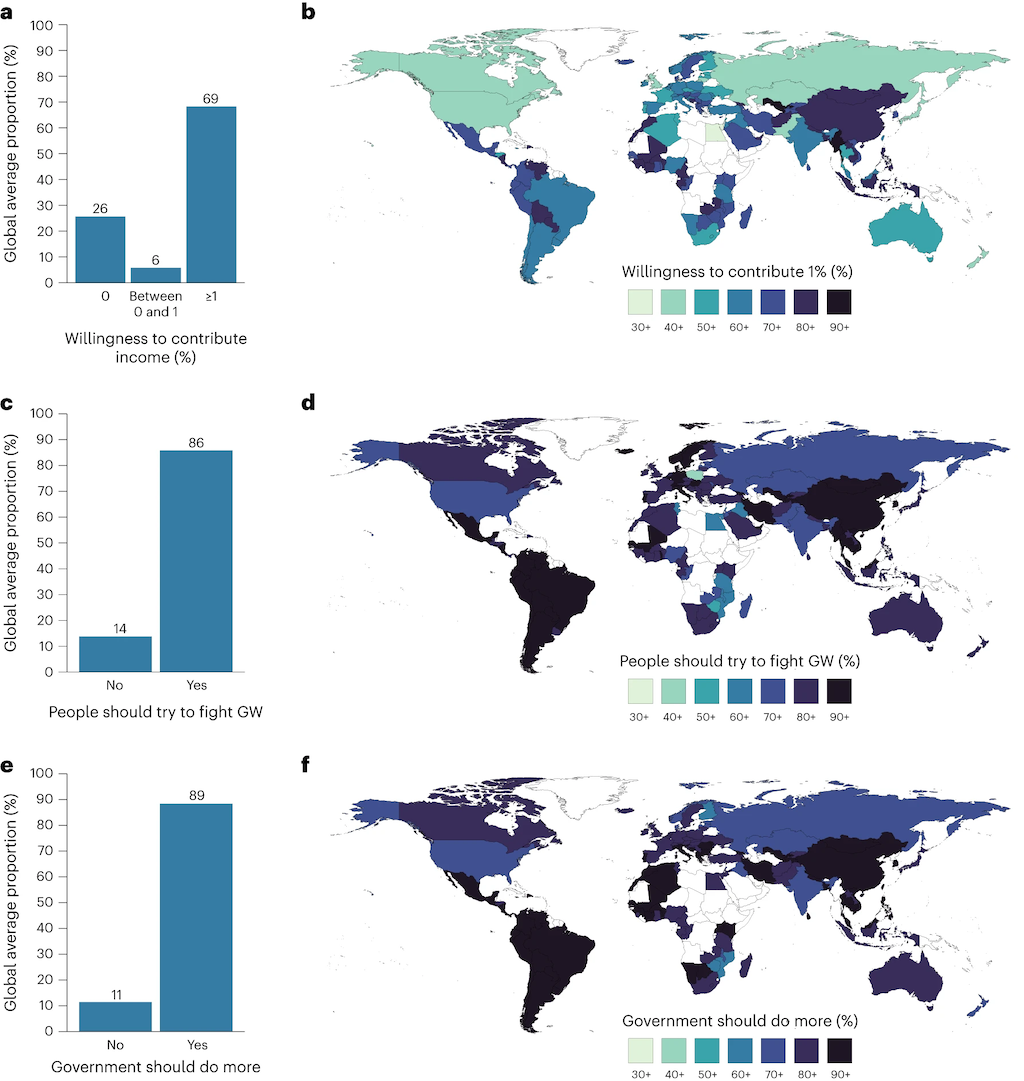
    The figure, taken from the new paper, shows: (top left) the share of respondents willing to contribute none, up to 1% or at least 1% of their income to tackling climate change; (top right) the same result broken down by country; (middle panel) the share believing that “people should try to fight global warming”; (lower panel) the share wanting governments to do more.
    Top panel: Willingness to contribute to climate action, %. Middle: Share agreeing that “people should try to fight global warming”. Bottom: Share wanting governments to do more. Each panel shows global (left) and national averages (right). Credit: Andre et al. (2024).

    CB: A large majority (69%) said they would be willing to contribute 1% of their income to fight global warming. Do you think this would hold for specific policies, such as a carbon tax? 

    PA, TB, FC and AF: The popular support for specific policies will depend on many details that we had to abstract from in the global survey. How effective is the policy? Is it perceived as fair? Who supports the policy in the public debate? So one cannot simply equate support in the survey with support for specific policy proposals. In a representative US sample, we do find that the general demand for more political action is strongly correlated with demand for specific climate policies, such as a carbon tax on fossil fuels, regulatory limits on the CO2 emissions of coal-fired plants, or funding for research on renewable energy. Overall, we think the important conclusion is the following: The large majority of people across the world expresses a general willingness to make costly contributions to fight climate change. This means that we can move the debate forward and focus on how we can best tap into this broad willingness to contribute to best tackle the challenges posed by climate change. 

    CB: There has been a resurgence of anti-climate rhetoric from politicians and the media in many countries. Do you think public opinion has shifted since your survey in 2021-22? 

    PA, TB, FC and AF: We do not detect any clear time trend within our samples from 2021 and 2022, but do not have data for the most recent months. If we were to speculate, we would not want to fall victim to the same pessimism one more time. We would expect that a large majority would still be in favor of climate action today, and this seems to be in line with more recent research. The year 2023 has been confirmed as the warmest calendar year in global temperature data records going back to 1850. In our study, we find that annual average temperatures strongly correlate with the proportion of people being willing to support climate action. Our best guess is that the support for climate action has increased rather than decreased in the last two years.

    CB: You found stronger willingness to contribute among respondents in poorer, hotter and more vulnerable countries. Why do you think richer people are less willing to pay their way? 

    PA, TB, FC and AF: Two potential explanations come to mind. First, richer countries are still strongly dependent on fossil fuels. The adaptation costs could therefore be perceived as relatively high and the required lifestyle changes as too drastic. At the same time, richer countries may be more resilient: A country’s GDP per capita reflects its economic capacity to cope with climate change. The most direct and immediate consequences are likely to be concentrated in more vulnerable countries, which have fewer resources to mitigate the negative consequences of the climate crisis. However, it’s important to stress the positive message: the support for climate action is large even in the richest countries in our sample. In the wealthiest quintile of countries, the average proportion of people willing to contribute 1% is 62%. 

    CB: You found people systematically underestimated the willingness of their peers to contribute to climate action. Why do you think that is – and how could it be changed? 

    PA, TB, FC and AF: The reasons for this perception gap are likely to be manifold. In the past, media and public discussions have given a lot of focus to the small number of climate change sceptics and have fallen prey to the efforts of special interest groups. Moreover, climate change is difficult to tackle. People might mistakenly infer that the slow progress in combating climate change is due to a widespread lack of personal commitment. 

    In our view, correcting this perception gap is more important than understanding its origin. Humans are (what behavioral scientists call) “conditional cooperators”. They contribute more to the public good if they believe that others contribute as well. For this reason, pessimism about others’ contributions is harmful. It can constitute a critical obstacle for climate action. We thus conclude in the paper that, “[r]ather than echoing the concerns of a vocal minority that opposes any form of climate action, we need to effectively communicate that the vast majority of people around the world are willing to act against climate change and expect their national government to act”. We hope that our study sparks a debate on this topic, and increases awareness about the large global support for climate action.

    Original article by SIMON EVANS republished from Carbon Brief under a CC license. 
  • Pro-Coal MP Appointed to Lead Influential Cross-Party Environment Group

    Spread the love

    Original article by Phoebe Cooke and Sam Bright republished from DeSmog.

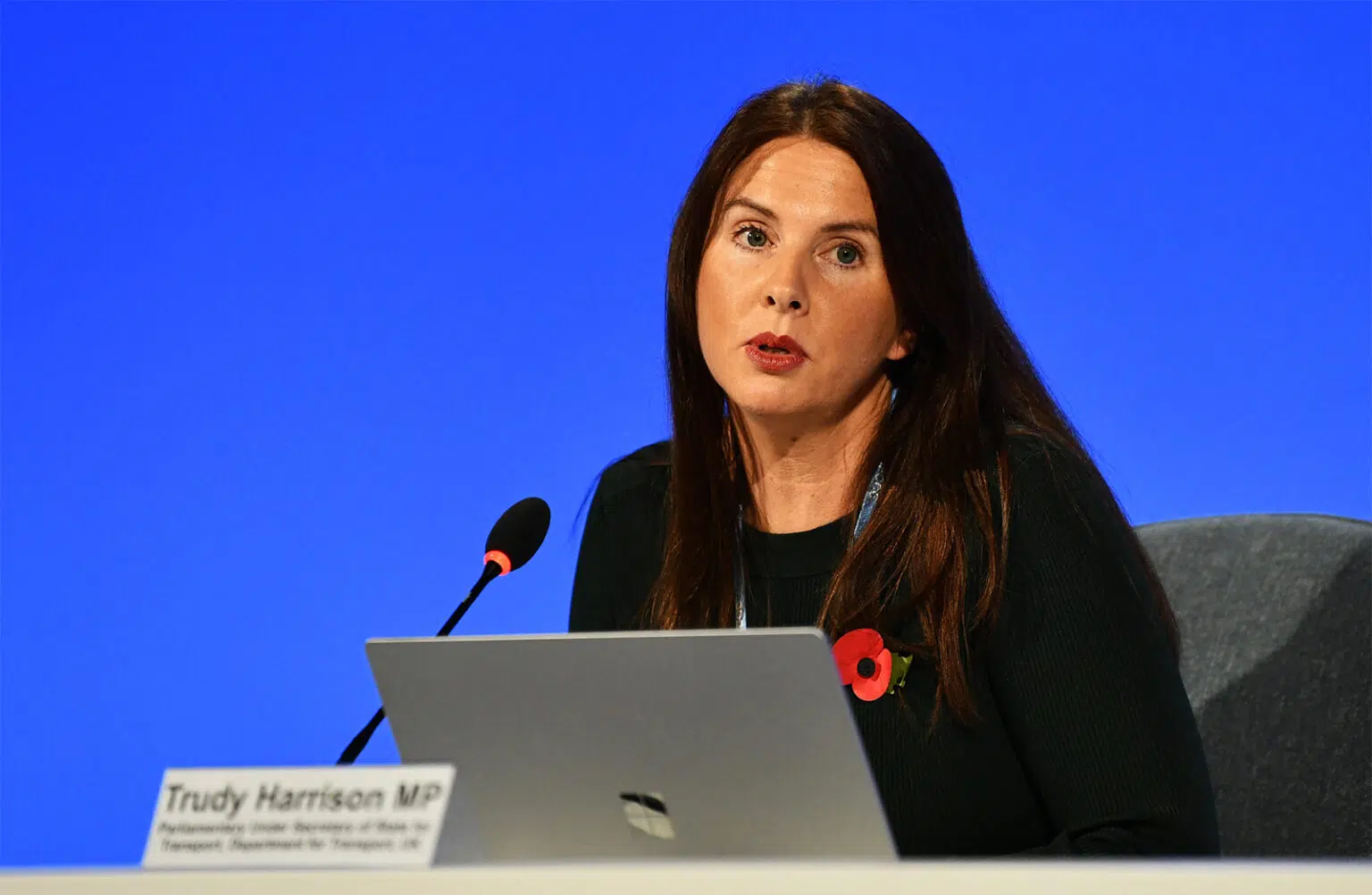
    Conservative MP Trudy Harrison. Credit: Justin Goff/UK Government (CC BY-NC-ND 2.0)

    Conservatives accused of a “stitch up” as Trudy Harrison replaces Green Tory Chris Skidmore.

    A Tory MP who backed the UK’s first new coal mine in over 30 years has been elected to chair the all-party parliamentary group (APPG) on environment.

    Desk-banging and jeering were heard in the House of Commons committee room on Wednesday night as lawmakers voted in Trudy Harrison, who represents Copeland in West Cumbria – where the proposed mine in Whitehaven is located. 

    Harrison replaces former Conservative MP Chris Skidmore, who resigned from the Commons in January in protest at the government’s move to issue new North Sea Oil and gas licences.

    The Copeland MP’s selection was welcomed on social media by the all-party group, which tweeted: “We look forward to working with Trudy as we continue to provide an ambitious, cross-party voice for climate and nature in Parliament.”

    Around 40 MPs and peers elected Harrison in the raucous voting session, which was open to all members of the Commons and Lords. 

    DeSmog understands that a large number of Conservatives turned out to sway the vote in Harrison’s favour, with several people in the room reporting a frenetic atmosphere. “Hordes of Tories” were said to outnumber Labour MPs, many of whom were running late and barred from entry.

    “They clearly felt it a point of principle that they keep control of the chair, regardless who the candidate was – the whole thing was a stitch-up,” a source said, adding: “I think if the public saw how things really work here they would be horrified.”

    All-party parliamentary groups have no formal role in Parliament but can often act as an influential forum for debate, and also produce reports, and make policy recommendations. The chair is a pivotal role, tasked with providing direction to the secretariat – the body that formally runs the APPG – as well as leading on the execution of its agenda. 

    The appointment of a pro-coal MP in this role comes after a week of shattered climate pledges from both main Westminster parties. On Thursday, the Labour Party announced it would scrap its commitment to spend £28 billion a year on green investments, days after it was reported the Conservatives are poised to ditch a mechanism that could slash emissions from domestic heating.

    In January, DeSmog revealed energy secretary Claire Coutinho had accepted thousands of pounds from Michael Hintze, one of the early backers of the UK’s main climate science denial group, the Global Warming Policy Foundation. A member of the group’s board was also appointed to a parliamentary committee on climate change.

    “Slowly, slowly, fossil fuel interests are taking over our institutions,” Jolyon Maugham of the Good Law Project told DeSmog. 

    Alice Harrison, head of fossil fuels campaigning at Global Witness, said: “it seems the new chair of the All-Party Parliamentary Group on the Environment is also a big fan of coal. The Conservatives want to take us back to the 19th century.”

    Coal mine controversy

    Harrison, who served as an environment minister until November last year, advocated passionately for the proposed mine in Whitehaven as it became a political flashpoint in discussions over the UK’s commitment to net zero. 

    At the 2021 planning inquiry she described the coal as an “environmentally friendly” domestic source for steel. She characterised opposition to the mine as “simply gesture politics”, adding that the coal would help “build the technologies powering us to net zero”.

    Levelling up Secretary Michael Gove finally approved plans for the mine in 2022, but it remains deeply controversial. 

    Coal is the most polluting fossil fuel, releasing more carbon dioxide than oil or gas when burnt. It also produces toxic elements like mercury, arsenic and soot, which contribute to air pollution. If it went ahead, the mine would emit nine million tonnes of carbon dioxide and 15,000 tonnes of methane a year.

    Despite the green light, the mine still only has four percent of the funding required to operate, according to campaigners. A number of legal challenges are also pending.

    Scenarios laid out by the Intergovernmental Panel on Climate Change (IPCC) make it clear that global coal use has to collapse to limit global heating to 1.5 degrees and avoid the most devastating impacts of climate change. This week, it was reported that global heating had for the first time  averaged more than this temperature over a 12-month period.

    Harrison, like other supporters of the mine in Whitehaven, has argued that the “coking” coal from this mine is suitable for use by the UK steel industry. But industry bosses have said that the Cumbrian coal is too high in sulphur, which rules it out for use  in British and European steelworks. 

    West Cumbria Mining, the company behind the project, claims the project will create around 500 jobs. However, Westmorland and Lonsdale Liberal Democrat MP Tim Farron said the government was giving the false hope of jobs for political reasons. The jobs, he said, would be short term because the mine’s business case “didn’t stack up”.

    Anne Harris from Coal Action Network told DeSmog: “This appointment makes a mockery of the Environment APPG and shows that this government can never be trusted with this enormous crisis facing humanity.

    “In supporting a new coal mine in Cumbria, Harrison is in a minority, and out of touch with the full impacts of climate change and how fossil fuels cause it. It’s a lie to say the proposed coal mine in West Cumbria would be anything other than a climate disaster.”

    The all-party parliamentary group exists to “strengthen the influence of parliamentarians on public policy and public debate on the environment, and to assist parliamentarians by improving their access to specialist information.”

    Prior to its latest meeting, the Environment APPG had 25 officers (MPs and peers) who participated in its work. These included Green Party MP Caroline Lucas, Shadow Minister for Energy Security Alan Whitehead, Liberal Democrat energy and climate spokesperson Wera Hobhouse, and former Labour environment minister Barry Gardiner. 

    Harrison, and the Department for Energy Security and Net Zero did not respond to requests for comment. The APPG for Environment declined to comment.

    Original article by Phoebe Cooke and Sam Bright republished from DeSmog.

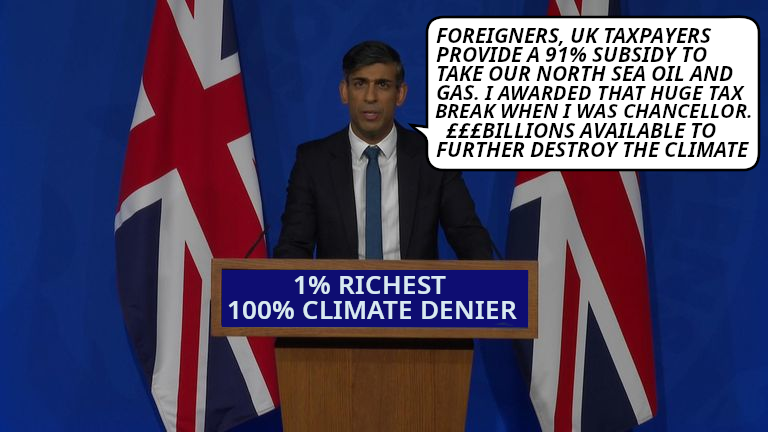
    Rishi Sunak offers huge fossil fuel subsidies to develop fossil fuel extraction in UK.
    Rishi Sunak offers huge fossil fuel subsidies to develop fossil fuel extraction in UK.
  • After Biden HQ Arrests, Sunrise Plans 40+ Protests Across US

    Spread the love

    Original article by JESSICA CORBETT republished from Common Dreams under Creative Commons (CC BY-NC-ND 3.0). 

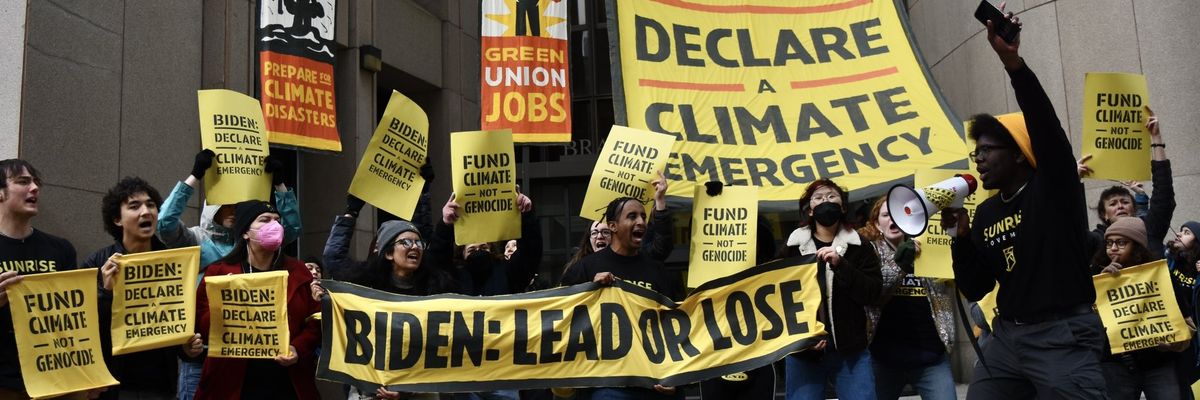
    Nearly two dozen campaigners with the Sunrise Movement were arrested after assembling at U.S. President Joe Biden’s 2024 campaign headquarters in Wilmington, Delaware on February 12, 2024. (Photo: Sunrise Movement/X)

    “President Biden must declare a climate emergency and go all-out to stop the climate crisis,” said the youth-led movement’s campaign director.

    After nearly two dozen Sunrise Movement campaigners were arrested Monday at U.S. President Joe Biden’s 2024 campaign headquarters in Wilmington, Delaware, the youth-led climate group is planning over 40 protests across the country.

    Next Monday, movement members plan to demonstrate at local Democratic Party offices and city halls to demand that Biden declare a national climate emergency and use the full extent of his powers to tackle the fossil fuel-driven global crisis.

    “Biden can’t build renewables on Monday, approve fossil fuels on Tuesday, and then claim to be climate president. That’s not how science works, and young voters know it,” said Sunrise campaign director Kidus Girma in a statement Thursday. “President Biden must declare a climate emergency and go all-out to stop the climate crisis.”

    “He could end the fossil fuel era by refusing to approve a single oil or gas well in this country.”

    “There are dozens of things he could sign into law tomorrow if he wanted,” Girma noted. “He could make sure that every time a climate disaster hits, no one gets evicted and everyone has access to free healthcare. He could end the fossil fuel era by refusing to approve a single oil or gas well in this country.”

    Sunrise is calling on the Democratic president to reverse the massive rise in U.S. fossil fuel production—rather than approving projects like Willow in Alaska—and to “create green union jobs by unleashing the full power of the Defense Production Act.”

    The group’s plans for next week’s protests were announced as nine Democrats joined Republicans in the U.S. House of Representatives to pass a bill intended to reverse Biden’s recent pause on approvals for liquefied natural gas (LNG) exports, and as the Federal Energy Regulatory Commission rubber-stamped the Saguaro Connector Pipeline in Texas.

    While Biden has faced intense criticism from campaigners and scientists for various decisions—from backing Willow and Mountain Valley Pipeline to continuing fossil fuel lease sales and skipping last year’s United Nations summit—former President Donald Trump, the Republican front-runner, has been far more hostile toward climate policies.

    Young voters like those who belong to the Sunrise Movement were key to Biden’s defeat of Trump in 2020 and to Democrats preventing the predicted “red wave” in 2022. They are expected to play a key role in this November’s elections.

    Original article by JESSICA CORBETT republished from Common Dreams under Creative Commons (CC BY-NC-ND 3.0). 

  • Chris Packham gives witness testimony at Just Stop Oil crown court case

    Spread the love
    George Monbiot: “Leave fossil fuels in the ground”

    TV presenter and naturalist Chris Packham testified at the crown court trial of Just Stop Oil supporter, Cressie Gethin. 14th February was the eighth day of Cressie’s trial for Public Nuisance. She is appearing at Isleworth Crown Court, appearing before Judge Duncan. Cressie, 22, a music student from Hereford, faces up to ten years in prison if found guilty. 

    Cressie climbed a motorway gantry above the M25 on the 20th July 2022, two days after the governments’ net zero strategy was declared unlawful, and one day after the UK recorded it’s highest ever temperature of 40.3 degrees celsius, a milestone that scientists previously thought was impossible.

    Cressie Gethin testified: On 20th July 2022, I climbed up onto a gantry over the M25. I hung up two banners – one said ‘Just Stop Oil’ (the campaign in whose name I was taking action) and the other said ‘40 Degrees”’ (this was a day after the 40C heatwave scorched the UK, burnt down houses and left people dead).

    The prosecution have said that my intention was clearly to stop the traffic. However, it is under oath that I say I was not expecting the police to close the entire motorway. I thought it was possible they may decide to close one or two lanes, or perhaps slow the speed of the traffic, but I was very surprised when they closed the whole thing. I was surprised because I was conducting a nonviolent, peaceful protest, the intention of which was to gain media attention and create public pressure on the government to stop new oil and gas.

    When the police did close the motorway, I did not immediately come down – you saw that in the footage. As I said, my intention was to get media attention and I realised that the road closure would be attracting more press coverage and therefore more pressure on the government to take steps to protect its own citizens.

    I will also address the matter of delays at Heathrow. Whilst this may sound unbelievable, I did not realise that the stretch of motorway I was on led to Heathrow – as I say, this may sound ridiculous, but I am telling the truth under oath.

    Because I am bound to the truth, I will also say that, despite not being aware of the location at the time, I do not think that near Heathrow was an inappropriate place to conduct this protest, given that it was there that 40.2C was first recorded the day before, and because of the relevance of air travel to the message I was trying to get heard.

    The 20th July was deliberately chosen to be when the temperature was less dangerous and the Met Office’s extreme heat warnings had been lifted. This was in order to remove any risks linked to heat and dehydration for myself and for any members of the public who were in their cars for longer than anticipated.

    I also took safety precautions that minimised any risk to myself or to drivers on the motorway. I ensured that there was at least one point of attachment between the gantry structure and the banners at all times. I also wore a safety harness so that I was attached to the gantry at all times. This gantry was enclosed and felt safe (it is designed for human access and is essentially a footbridge with enclosed sides) – but I took this precaution to make sure I was being as safe and conscientious as possible.

    I want to make it clear that in no way did I feel a sense of glee or “yes, I’ve won” when the police closed the road. I understood that by closing the road the police would be having to manage traffic that would have otherwise come down that stretch of the motorway, and that didn’t and doesn’t sit easy with me. The reason I didn’t come down goes back to my original intention to get the attention of the media and public, and ultimately, to address rather than ignore injustice and suffering.

    There was a moral dilemma involved in taking this action. I knew there was a possibility that the action would impact some people – that is the nature of visible and attention-grabbing protest. I had to weigh this, which doesn’t sit easy with me, against my sincere desire to protect lives. As I said at the beginning, my overall intentions were and still are to create pressure on the government to writing [righting?] policies that are killing people around the world.

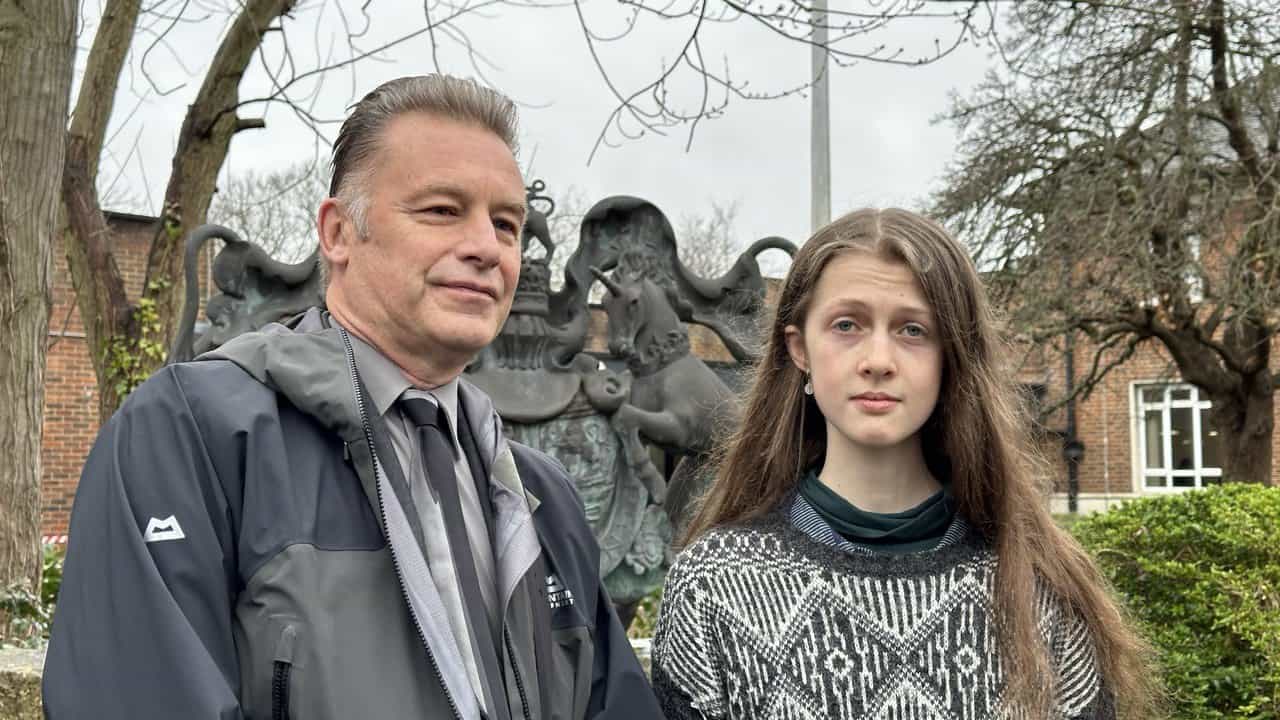
    Chris Packham and Cressie Gethin at Iselworth Crown Court. Image: Just Stop Oil

    Part of Chris Packham’s testimony:

    Prosecution: 26 flights were cancelled.

    Chris Packham: As I recall Heathrow was under stress and it had already capped the amount of flights that could leave.

    Prosecution: There were over 3000 people impacted, 26 flights delayed and 19 flights cancelled. Do you agree that these people were seriously inconvenienced and seriously annoyed?

    Chris Packham: I don’t. It would be difficult for you to apply all of this to Cressie Gethin.

    Prosecution: [something about “her” cause]

    Chris Packham: It’s not “her” cause – it’s the cause.

    Chris Packham: I support the need to raise the alarm on the most serious issue that threatens life and threatens us.

    The trial continues.

    [sourced from 2 Just Stop Oil press releases]

  • Eighteen climate activists involved in non-violent protests to stand trial next week

    Spread the love

    https://morningstaronline.co.uk/article/eighteen-climate-activists-involved-nonviolent-action-go-trial-next-week

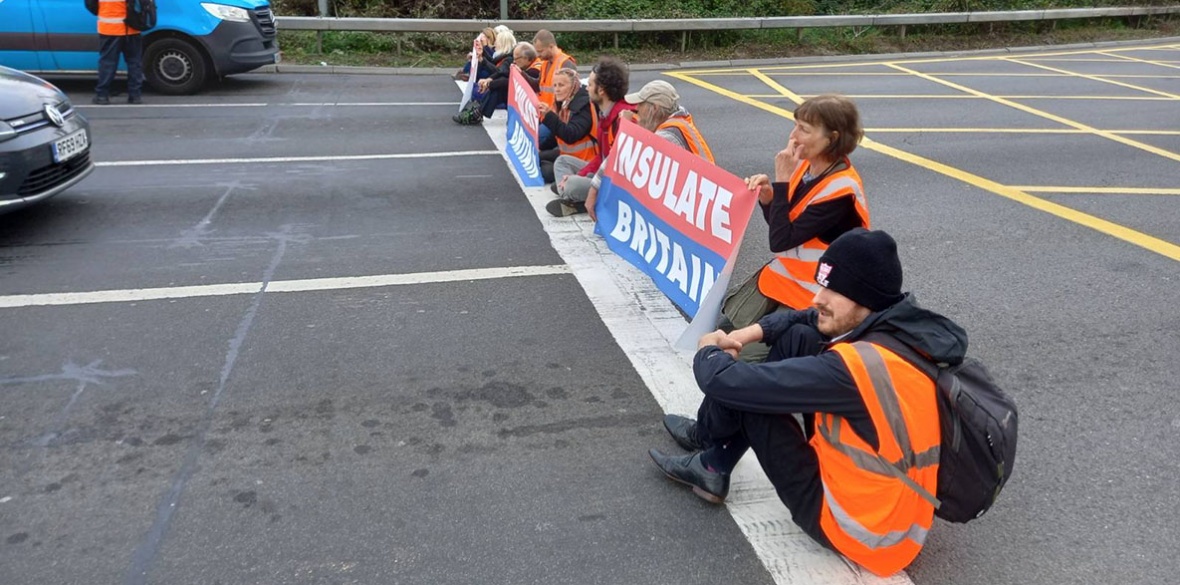
    Insulate Britain activists block a road during a protest Photo: Insulate Britain

    TRIALS of 18 climate activists who participated in non-violent action are set to begin next week as the government enforces authoritarian laws curbing the right to protest.

    Five Extinction Rebellion activists are accused of causing criminal damage to the European headquarters of the half-a trillion-dollar financial firm JP Morgan, during a protest in September 2021 against its funding of fossil fuel firms.

    Eight Insulate Britain supporters are accused of causing public nuisance by peacefully stopping traffic on the M25 motorway in the same month to press the government to insulate Britain’s homes to end fuel poverty and cut carbon emissions.

    And five Just Stop Oil supporters face trial for alleged conspiracy to cause a public nuisance after they they occupied tunnels close to Grays oil terminal in August 2022 in pursuit for their demand for a halt to all new oil, coal and gas projects.

    The trials coincide with fresh government attempts to undermine trials by jury.

    …

    https://morningstaronline.co.uk/article/eighteen-climate-activists-involved-nonviolent-action-go-trial-next-week