Category: Climate Crisis

  • Category 6? Scientists Highlight ‘Growing Inadequacy’ of Current Hurricane Scale

    Spread the love

    Original article by Jessica Corbett republished from Common Dreams under Creative Commons (CC BY-NC-ND 3.0). 
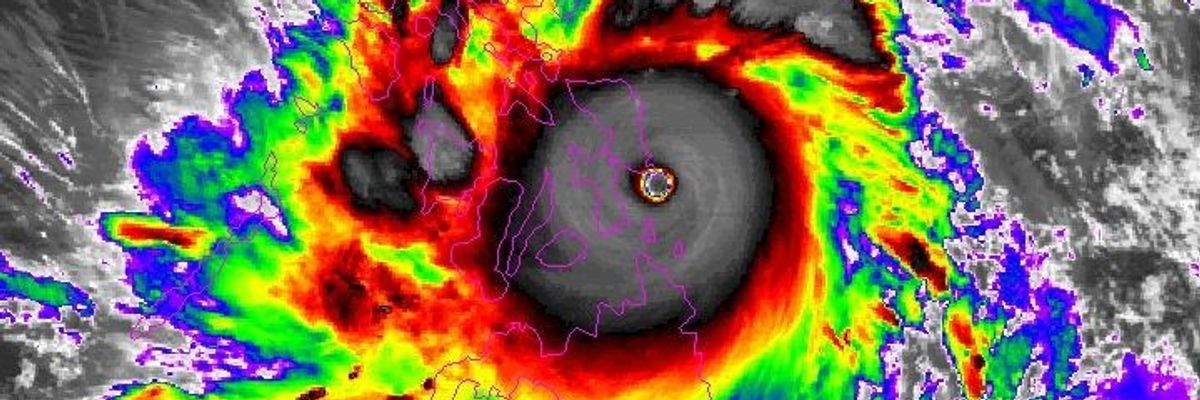
    Super Typhoon Haiyan is shown off the Southeast Guiuan coast on November 7, 2013.  (Image: NOAA)

    The experts found five storms that would fit into their hypothetical category—and they have all happened since 2013.

    Building on arguments and warnings that climate campaigners and experts have shared for years, a pair of scientists on Monday published a research article exploring the “growing inadequacy” of the Saffir-Simpson Hurricane Wind Scale and possibly adding a Category 6.

    Global heating—driven by human activities, particularly the extraction and use of fossil fuels—is leading to stronger, more dangerous storms that are called hurricanes in the North Atlantic and Northeast Pacific, typhoons in the Northwest Pacific, and tropical cyclones in the South Pacific and Indian oceans.

    The Saffir-Simpson scale “is the most widely used metric to warn the public of the hazards” of such storms, Michael Wehner of Lawrence Berkeley National Laboratory and James Kossin of the First Street Foundation explained in their new paper, published in Proceedings of the National Academy of Sciences.

    “There haven’t been any in the Atlantic or the Gulf of Mexico yet but they have conditions conducive to a Category 6, it’s just luck that there hasn’t been one yet.”

    “Our motivation is to reconsider how the open-endedness of the Saffir-Simpson scale can lead to underestimation of risk, and, in particular, how this underestimation becomes increasingly problematic in a warming world,” Wehner said in a statement.

    The scale is: Category 1 (74-95 mph); Category 2 (96-110 mph); Category 3 (111-129 mph); Category 4 (130-156 mph); and Category 5 (greater than 157 mph). Wehner and Kossin considered creating a Category 6 for storms with sustained winds of at least 192 mph.

    The pair found five storms that would fit into their Category 6: Typhoon Haiyan in 2013, Hurricane Patricia in 2015, Typhoon Meranti in 2016, Typhoon Goni in 2020, and Typhoon Surigae in 2021.

    “The most intense of these hypothetical Category 6 storms, Patricia, occurred in the Eastern Pacific making landfall in Jalisco, Mexico, as a Category 4 storm,” the paper notes. “The remaining Category 6 storms all occurred in the Western Pacific.”

    “Two of them, Haiyan and Goni, made landfall on heavily populated islands of the Philippines. Haiyan was the costliest Philippines storm and the deadliest since the 19th century, long before any significant warning systems,” the paper continues.

    The 2013 storm killed at least 6,300 people in the Philippines and left millions more homeless.

    “There haven’t been any in the Atlantic or the Gulf of Mexico yet but they have conditions conducive to a Category 6, it’s just luck that there hasn’t been one yet,” Wehner told The Guardian. “I hope it won’t happen, but it’s just a roll of the dice. We know that these storms have already gotten more intense, and will continue to do so.”

    As the paper details, the pair found that “the Philippines, parts of Southeast Asia, and the Gulf of Mexico are regions where the risk of a Category 6 storm is currently of concern. This risk near the Philippines is increased by approximately 50% at 2°C above preindustrial and doubled at 4°C. Increased risk Category 6 storms in the Gulf of Mexico increases even more, doubling at 2°C above preindustrial and tripling at 4°C.”

    Governments worldwide have signed on to the Paris agreement, which aims to keep global temperature rise this century below 2°C, with a more ambitious target of 1.5°C, but scientists stress that policymakers are crushing hopes of meeting either goal.

    Wehner said that “even under the relatively low global warming targets of the Paris agreement… the increased chances of Category 6 storms are substantial in these simulations.”

    The scientists considered what the addition of a Category 6 could look like, but they aren’t necessarily advocating for it. Kossin said in a statement that “tropical cyclone risk messaging is a very active topic, and changes in messaging are necessary to better inform the public about inland flooding and storm surge, phenomena that a wind-based scale is only tangentially relevant to.”

    “While adding a sixth category to the Saffir-Simpson Hurricane Wind Scale would not solve that issue, it could raise awareness about the perils of the increased risk of major hurricanes due to global warming,” he continued. “Our results are not meant to propose changes to this scale, but rather to raise awareness that the wind-hazard risk from storms presently designated as Category 5 has increased and will continue to increase under climate change.”

    The Washington Post on Monday also emphasized the need for improved communication about flooding and storm surge:

    National Oceanic and Atmospheric Administration research shows such water-related hazards are hurricanes’ deadliest threats, said Deirdre Byrne, a NOAA oceanographer who studies ocean heat and its role in hurricane intensification. While adding a Category 6 “doesn’t seem inappropriate,” she said, combining the Saffir-Simpson scale with something like an A through E rating for inundation threats might have a greater impact.

    “That might save even more lives,” Byrne said.

    In a statement, National Hurricane Center Director Michael Brennan seconded those concerns. He said NOAA forecasters have “tried to steer the focus toward the individual hazards,” including storm surge, flooding rains, and dangerous rip currents, rather than overemphasizing the storm category, and, by extension, the wind threats alone.

    “It’s not clear that there would be a need for another category even if storms were to get stronger,” he said.

    Even if the center has no plans to expand the wind scale, “talking about hypothetical Category 6 storms is a valuable communication strategy for policymakers and the public,” former NOAA hurricane scientist Jeff Masters wrote Monday, “because it is important to understand how much more damaging these new superstorms can be.”

    Original article by Jessica Corbett republished from Common Dreams under Creative Commons (CC BY-NC-ND 3.0). 

  • Tory Lord’s Firm Awarded New North Sea Oil and Gas Licences

    Spread the love

    Original article by Sam Bright republished from DeSmog.

    Former Conservative Treasurer Lord Michael Spencer. Credit: LBC / YouTube

    Michael Spencer, who has donated millions to the Conservative Party, is the largest shareholder in North Sea exploration firm Deltic Energy.

    A company whose largest shareholder is a former Conservative treasurer and major party donor has been awarded two new North Sea exploration licences, DeSmog can reveal.

    It was announced on Wednesday (31 January) that Deltic Energy had been awarded the new licences in the latest North Sea oil and gas licensing round. 

    Conservative peer Michael Spencer currently holds an 18.8 percent (£4.5 million) stake in the firm.

    Spencer has donated over £6 million to the Conservative Party since 2005 and was appointed to the Lords by Boris Johnon in September 2020. The billionaire financier is a former party treasurer and raised an estimated £70 million for the Tories between 2006 and 2010. He currently serves as a director of the Conservative Party Foundation – the party’s multi-million pound endowment fund, created under his watch in 2009 to manage “legacy funds to support the long-term finance” of the party.

    The Guardian and the Good Law Project also revealed today that EnQuest Heather, a subsidiary of EnQuest,` had been awarded a new oil and gas licence. EnQuest Chief Executive Officer Amjad Bseisu has donated nearly £500,000 to the Conservative Party in the last decade and has lobbied to maximise oil and gas exploration in the North Sea.

    DeSmog revealed in May 2023 that EnQuest had been awarded licences to explore carbon dioxide storage under the North Sea. 

    Jolyon Maugham, executive director of the Good Law Project told DeSmog that: “The Electoral Commission records these contributions as donations to the Conservative Party. But, given the extraordinary correlation between donations to the Tories and valuable awards from the government, I wonder whether it would be more accurate to brand them as investments?”

    Both personally and through his family office IPGL, Spencer has donated more than £100,000 to the Conservative Party and its candidates since Rishi Sunak became prime minister in October 2022. 

    Sunak has been advocating forcefully for North Sea oil and gas exploration in recent months, saying that the UK plans to “max out” the UK’s reserves. In addition to its two new licences, Deltic currently has interests in five licences covering nine North Sea areas, known as blocks. New licences were also awarded this week to fossil fuel giants Shell and Equinor.

    “Rishi Sunak’s obsession with doling out new North Sea licences now starts to make some sense,” Tessa Khan, executive director of Uplift, told DeSmog. “It’s clear there is no public benefit from the policy… But new fields could make a tidy little profit for a handful of oil and gas executives and their shareholders, including Conservative Party donors.”

    Through the Offshore Petroleum Licensing Bill, passed by MPs last week, the government is attempting to bind future administrations to annual North Sea oil and gas licensing rounds.

    This is despite the International Energy Agency stating that new fossil fuel exploration is “incompatible” with the Paris Agreement target of limiting global heating to 1.5C. 

    This week, the Climate Change Committee – the independent body that advises the government on its net zero policies – warned that mixed messages, including new fossil fuel projects, have damaged the UK’s international climate standing.

    Spencer told DeSmog that: “I believe it is totally in the best interest of the UK to replace imported oil and gas by energy extracted from our own North Sea.”

    North Sea gas carries higher emissions than imports from Norway, while there is no guarantee that oil and gas extracted under the new licences will be used to supply the UK, given that it is mined by private companies that sell it on the open international market. 

    Khan added that: “new drilling won’t make any difference to our bills, which ministers have admitted; it won’t boost energy security in that the UK has burned most of its gas; and it won’t provide a secure future for the workforce, which has halved in the past decade despite hundreds of licences being issued.

    “The prime minister now needs to come clean with the public on any discussions he’s had with Spencer, or any of his party’s other oil and gas donors,” Khan said. “Sunak cannot continue to privilege the short term interests of a few, rich oil execs over the needs of millions of ordinary people who are struggling to afford to heat their homes.”

    North Sea licences are awarded by the North Sea Transition Authority, a non-departmental public body owned and funded by the Department for Energy Security and Net Zero. There is no evidence that Deltic or Spencer used political contacts to secure the licences.

    According to the NSTA, licensees have to “meet certain financial criteria” and meet the adequate “technical capability”, but there is no published guidance on avoiding conflicts of interest.

    The NTSA, Deltic and EnQuest declined to comment on the record. The Department of Energy Security and Net Zero has been approached for comment.  

    Spencer and Deltic

    Spencer has a number of oil and gas interests. His House of Lords register of interests shows that he has a stake in Pantheon Resources, a UK company exploring for oil in Alaska, and Cluff Energy Africa, described as an “early stage oil prospecting company seeking licences in Africa (Angola and Sierra Leone)”.

    Until December last year, Spencer also held shares in Petrofac, an oilfield services firm heavily involved in the North Sea, including the controversial Cambo project.

    Spencer has publicly advocated for the fossil fuel industry. He told LBC’s Nick Ferrari last September that the UK “sadly has opposed further investment in North Sea oil and gas”. Spencer used the interview to praise then Prime Minister Liz Truss for opposing windfall taxes on the sector, calling them “not Tory policy” and “not pro-business”. He has also expressed support for the controversial policy of fracking for shale gas.

    Spencer is the chair of the Centre for Policy Studies, an influential Conservative think tank whose director was the co-author of the 2019 Tory manifesto. A number of fellow board members have financial interests in oil and gas firms. 

    The Conservatives received £3.5 million from polluters, fossil fuel interests, and climate deniers in 2022, and took over £400,000 from individuals and companies in the fossil fuel industry in 2020 and 2021 as the government weighed up decisions on North Sea oil and gas licences.

    Original article by Sam Bright republished from DeSmog. ENDS

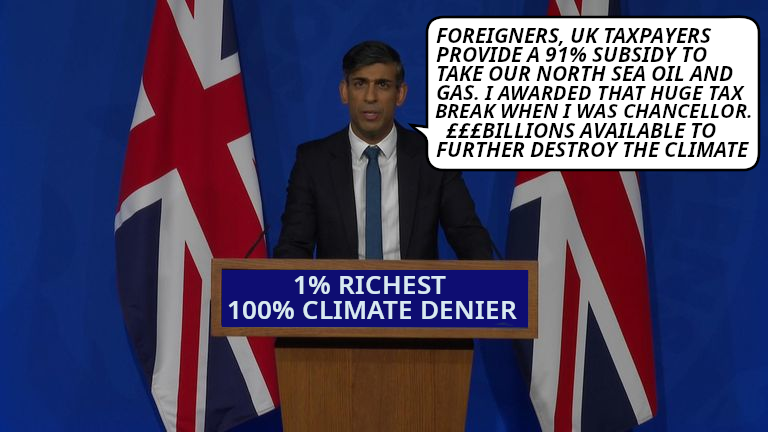
    Rishi Sunak offers huge fossil fuel subsidies to develop fossil fuel extraction in UK.
    Rishi Sunak offers huge fossil fuel subsidies to develop fossil fuel extraction in UK.

    ‘Dishing out licences to climate criminals’

    New UK oil and gas exploration licences approved in the North Sea

  • Judge throws out case against Greta Thunberg and other London protesters

    Spread the love

    https://www.theguardian.com/environment/2024/feb/02/judge-throws-out-case-against-greta-thunberg-and-other-london-protesters

    Greta Thunberg, left, arriving at court for the second day of the trial. Photograph: Kirsty Wigglesworth/AP

    Court rules not enough evidence provided to prove defendants failed to comply with section 14 order at anti-fossil fuel rally

    Outside court in London, Greta Thunberg says "We must remember who the real enemy is ... who our laws are meant to protect." Quoted from https://www.bbc.com/news/uk-england-london-68166341
    Outside court in London, Greta Thunberg says “We must remember who the real enemy is … who our laws are meant to protect.” Quoted from https://www.bbc.com/news/uk-england-london-68166341

    Greta Thunberg and four others charged with public order offences over a protest in London have been cleared after a judge ruled that they had no case to answer.

    Thunberg was charged alongside Christofer Kebbon, Joshua James Unwin, Jeff Rice and Peter Barker with “failing to comply with a condition imposed under section 14 of the Public Order Act”.

    They had been taking part in a protest outside the InterContinental hotel in Mayfair, the venue for the Energy Intelligence Forum (EIF), a fossil fuel industry summit attended by corporate executives and government ministers.

    All were arrested after the senior officer at the scene enacted the section 14 order to impose conditions on the protest, which had blocked access to and from the hotel for guests and EIF delegates.

    …

    https://www.theguardian.com/environment/2024/feb/02/judge-throws-out-case-against-greta-thunberg-and-other-london-protesters

  • New Evidence Reveals Fossil Fuel Industry Sponsored Climate Science in 1954

    Spread the love

    Excerpts from an original article by Rebecca John at DeSmog.

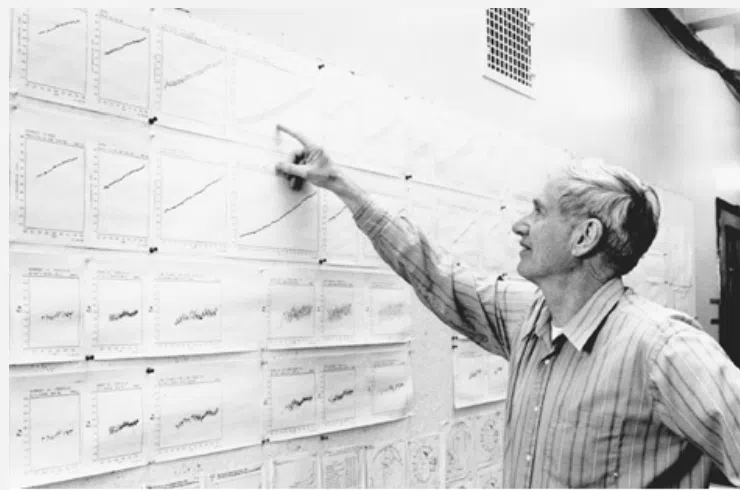
    Charles David Keeling with Keeling Curve graphs. Credit: Keeling Papers, Special Collections & Archives, UC San Diego.

    Documents shed light on the earliest-known instance of climate science funded by the fossil fuel industry, adding to growing understanding of Big Oil’s knowledge of climate change.

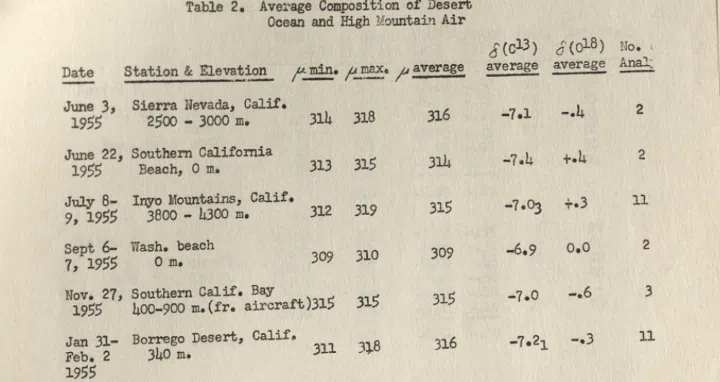
    In 1955 in the wilds of Big Sur, a young Caltech researcher named Charles David Keeling gathered carbon dioxide samples among Northern California’s towering redwoods. Crawling out of his sleeping bag several times a night on research trips conducted over the course of 18 months, from January 1955 to June 1956, Keeling measured background levels of carbon dioxide across the western United States — at Big Sur, but also at desert and high mountain stations, in forests and grassland, above the city of Los Angeles, and over the waters of the Pacific Ocean. 

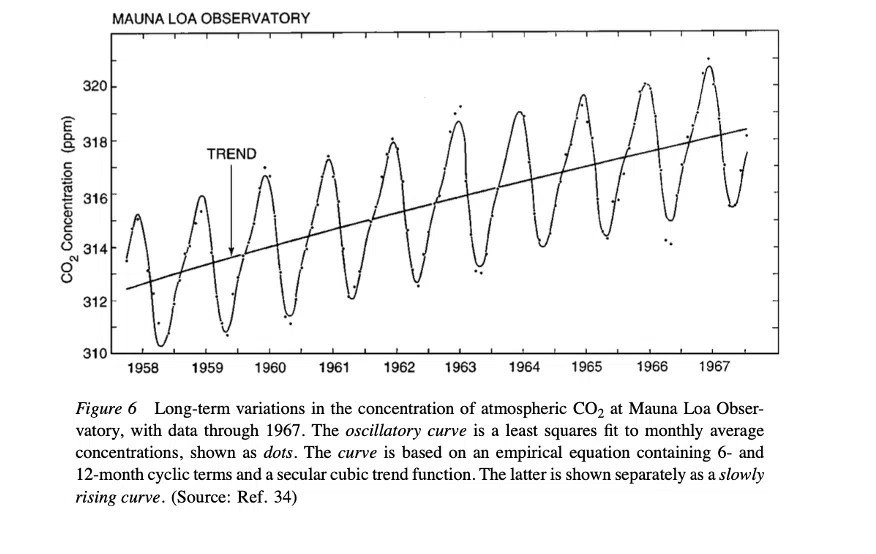
    Keeling’s findings would lead him to conduct a separate series of experiments from the top of the Hawaiian volcano Mauna Loa resulting in the famous Keeling Curve — a visual depiction of rising atmospheric carbon dioxide (CO2) caused by the burning of fossil fuels. His work underpins our understanding of manmade climate change. 

    …

    By December 1954, the Air Pollution Foundation had approved an allocation of $13,814 (approximately $158,000 in today’s money) to fund Keeling’s earliest CO2 investigations.

    These never-before-seen documents from the Caltech Archives and the U.S. National Archives, along with material from the Charles David Keeling papers at the University of California, San Diego, and local Los Angeles newspapers from the 1950s, establish the Air Pollution Foundation’s sponsorship of Keeling’s research at Caltech as the earliest-known instance of climate science funded by the fossil fuel industry. It’s possible it was also the first time that the oil industry was directly informed about CO2-induced climate change — five years before physicist Edward Teller warned the API of the disruptive consequences of burning fossil fuels.

    Fossil Fuel Fingerprints

    Carbon atoms contain a combination of the isotopes carbon-12 (C12), carbon-13 (C13), and carbon-14 (C14). Carbon atoms from fossil fuels, however, contain relatively little C13 and almost no C14, which is radioactive and decays over time. 

    In the 1940s and early 1950s, a carbon isotope scientific revolution was underway in the United States. Scientists had learned that they could measure the different ratios of carbon isotopes in materials to accurately determine the age of ancient objects: carbon dating. By analyzing the isotopic fingerprint of carbon atoms in tree rings, scientists could also identify whether the carbon dioxide absorbed by trees through photosynthesis had been produced naturally or as a result of burning fossil fuels. And, by measuring the isotopic ratios in tree rings of various ages, researchers could also estimate how far CO2 concentrations had risen since the Industrial Revolution as a result of burning fossil fuels. 

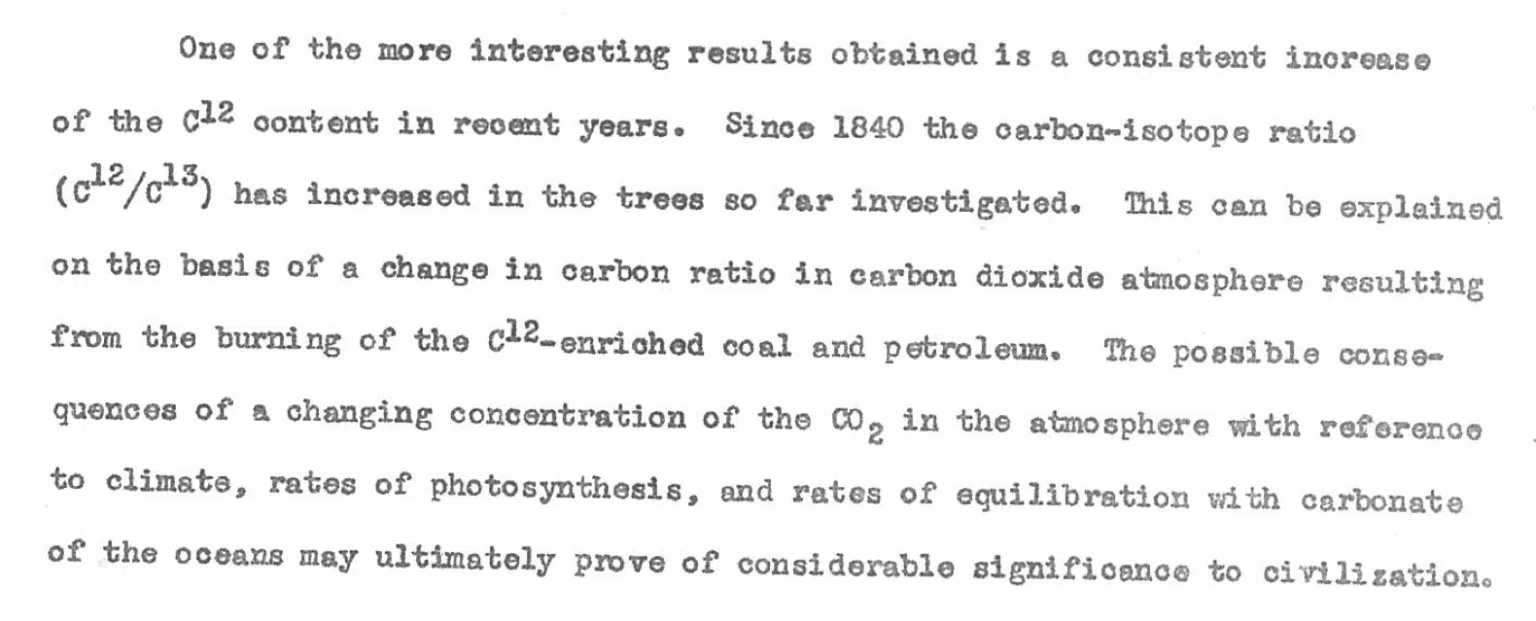
    In a proposal sent to the Air Pollution Foundation in November 1954, Keeling’s research director Epstein wrote, “It is clear that several factors contribute to the variations in the isotopic composition of carbon in trees.” Among these factors, Epstein explained, were the various ecological conditions under which the tree grew, including the isotopic composition of the carbon in the atmosphere. “Since 1840, the carbon-isotope ratio (C12/C13) has increased in the trees so far investigated,” he continued — an increase which could be explained by a change in the carbon-isotope ratio in atmospheric carbon dioxide “resulting from the burning of the C12-enriched coal and petroleum.”

    Samuel Epstein’s Proposal to the Southern California Air Pollution Foundation for the Study of Carbon Isotopes in the Atmosphere, 1954. Read the entire document on DocumentCloud.

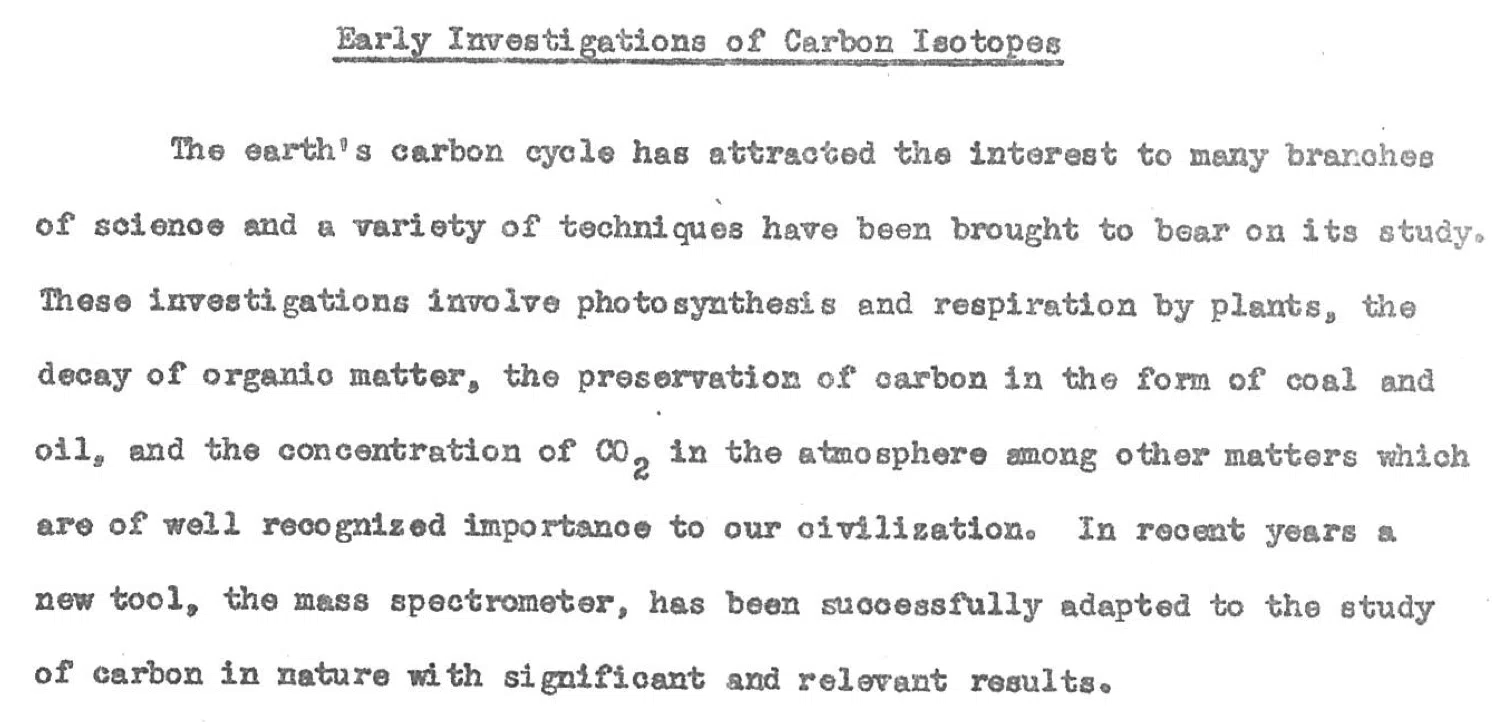
    Epstein’s research proposal for the Air Pollution Foundation left no doubt about the potential significance of this research. Approximately sixty years before the Paris Agreement, he described the “concentration of CO2 in the atmosphere” as a matter “of well recognized importance to our civilization” and explained that the possible consequences of “a changing concentration of the CO2 in the atmosphere with reference to climate” may “ultimately prove of considerable significance to civilization.” 

    Samuel Epstein’s Proposal to the Southern California Air Pollution Foundation for the Study of Carbon Isotopes in the Atmosphere, 1954. Read the entire document in DocumentCloud.

    …

    A table from Keeling’s paper “The Concentration and Isotopic Composition of Atmospheric Carbon Dioxide” showing the average concentrations of carbon dioxide in the atmosphere. Credit: Charles D. Keeling, 1956; Charles David Keeling papers, University of California San Diego. Read the entire document on DocumentCloud.

    Ahead of the Keeling Curve

    Confident in the accuracy of his measurements, Keeling communicated his findings to an employee of the U.S. Weather Bureau and, in the summer of 1956, its director of meteorological research, Harry Wexler, invited him to Washington, D.C., to present his data. Impressed, Wexler suggested that the young researcher continue his investigations by measuring CO2 at the newly built observatory on the Hawaiian volcano Mauna Loa. Keeling secured federal sponsorship for this work and measured atmospheric CO2 on Mauna Loa, observing a rising trend of CO2 increasing year on year from approximately 313 ppm in 1957 to 320 ppm in 1967. Caused primarily by the burning of fossil fuels, the depiction of this trend would come to be known as the Keeling Curve — a key piece of evidence that climate change is human caused. 

    Credit: Charles David Keeling, Rewards And Penalties of Monitoring The Earth, Annual Review of Energy and the Environment (1998)

    …

    Excerpts from an original article by Rebecca John at DeSmog.

    1963 Conference Put Carbon Dioxide and Climate Change in the Spotlight

    Revealed: A U.S. President Was First Informed of CO2’s Impact 59 Years Ago This Month 

  • Government has blown pretence of climate leadership with ‘max out’ fossil fuels pledge say Greens

    Spread the love

    The Climate Change Committee (CCC) has accused the UK government of giving ‘mixed messages’ at the COP28 climate summit held in Dubai in December.

    The CCC said: “The international perception of the UK’s climate ambition suffered from mixed messages following announcements on new fossil fuel developments and the prime minister’s speech to soften some net zero policies. The committee urges a continued visible presence at future Cops and even greater domestic climate ambition to reinforce the UK’s international standing.”

    Image of the Green Party's Carla Denyer on BBC Question Time.
    Image of the Green Party’s Carla Denyer on BBC Question Time.

    Responding, co-leader of the Green Party, Carla Denyer, said:

    “Through its drive to ‘max out’ on North Sea fossil fuels, the UK government has blown any pretence of global leadership on tackling the climate crisis. Ministers have been forced into admitting that their energy security defence of the Offshore Petroleum Licensing Bill was nonsense because oil and gas corporations sell to the highest bidder on the open market.

    “So at odds with the government’s target of reducing emissions is this dangerous Bill that it has led to the resignation of Chris Skidmore who chaired the government’s Net Zero Review.  

    “We need to call time on all new licences for fossil fuel exploration, accelerate the move towards renewable energy and implement a large scale home insulation programme. That is how the UK can show climate leadership.”

    Rishi Sunak offers huge fossil fuel subsidies to develop fossil fuel extraction in UK.
    Rishi Sunak offers huge fossil fuel subsidies to develop fossil fuel extraction in UK.