Category: Climate Crisis

  • The Dirty Secret Behind the Hydrogen Hype

    Spread the love

    Original article by JANE PATTON republished from Common Dreams under Creative Commons (CC BY-NC-ND 3.0). 
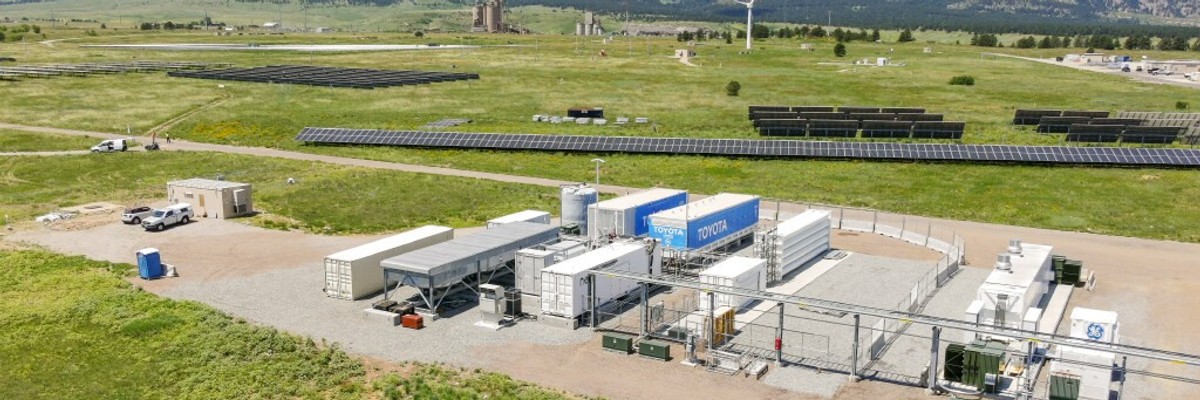
    An aerial view is shown of the hydrogen infrastructure and grid integration research pads at National Renewable Energy Laboratory’s (NREL’s) Flatirons campus. (Photo: Josh Bauer / Bryan Bechtold / NREL)

    Despite promises of economic opportunity and jobs, communities slated for hydrogen projects see them for what they are: A handout for the fossil fuel industry.

    As our planet’s temperature rises, so does the hype around hydrogen. But hydrogen isn’t the climate savior it’s made out to be. Hydrogen is a dangerous distraction, and we should not fall for it.

    Technological fixes to climate change are tempting, and the Biden administration has not resisted the lure of hydrogen: The Department of Energy recently announced a massive $7 billion buildout of seven hydrogen hubs nationwide, the first of several such investments.

    Hydrogen is dangerous, partly because it distracts from the real climate solutions we so desperately need. The world’s best climate scientists have been clear that to maintain a livable planet, we must phase out fossil fuels and transition to truly renewable energy now. Hydrogen hubs take us in the opposite direction by further embedding us in the fossil fuel economy.

    Communities like mine understand all too well that these projects take a toll on our drinkable water, breathable air, bodies, and livelihoods.

    A staggering 99% of hydrogen production relies on fossil fuels, primarily methane, or “natural,” gas. Notably, oil, gas, and petrochemical companies produce the lion’s share of the U.S. hydrogen supply: approximately 10 million metric tons. Once produced, more than two-thirds of hydrogen is used for petroleum refining.

    A cursory examination of the partners across all seven proposed hydrogen hubs reveals who actually stands to benefit from them. Key recipients of this first $7 billion of public money are oil, gas, and chemical corporations, including Exxon, Chevron, Dupont, and Air Products. Air Liquide, a French gas company, is a named partner in at least six of the seven hubs chosen for the next phase of public funding. Fossil fuel and petrochemical companies are pushing for this hydrogen buildout because it is their ticket to greenwash their products as ‘climate solutions’ on the public’s dime.

    Making hydrogen is highly energy intensive, whether using large quantities of renewable power to make ‘green hydrogen’ through electrolysis or pulling in large quantities of methane gas coupled with energy-intensive and unreliable carbon capture systems to produce “blue hydrogen.” At least two of the seven hydrogen hubs are associated with blue hydrogen production, which scientists say “may be worse than gas or coal.“

    Hydrogen production is not only very energy intensive, it also requires considerable amounts of water, a resource that is becoming increasingly more precarious due to the climate crisis. Louisiana this year faced never-before-seen wildfire threats, predicted to continue, largely due to drought. California has had some of the worst wildfire seasons on record. Both states are targeted for the proposed hydrogen buildout.

    Calls for “hydrogen-ready” infrastructure are code for doubling down on building new gas production and pipelines, with the vague hope that this infrastructure might one day carry hydrogen. This is the opposite of what we should do, which is to take urgent action to phase out fossil fuels and transition to renewable energy to avoid climate catastrophe.

    Hydrogen projects, especially blue hydrogen, put communities in harm’s way. To produce blue hydrogen, CO2 must be scrubbed and captured, a process whose effectiveness is questionable at best. This process requires the buildout of additional infrastructure, thousands of miles of new pipelines, and injection wells to store the CO2 underground. This means more hazardous air and water pollution in our communities. People living near this new infrastructure for hydrogen and CO2 stand to face additional risks like pipeline leaks and injection well failures, which can be catastrophic.

    Confusingly, funding for these hydrogen hubs is partially allocated under the “Justice40” initiative, which aims to address decades of underinvestment in disadvantaged communities. Yet many communities targeted for the hydrogen buildout—the same low-income and/or Black, Brown, and Indigenous communities supposed to benefit from the administration’s environmental justice promises—are organizing against proposed hydrogen projects, because of the dangers they present.

    I have had to become an expert on climate solutions out of sheer necessity. I am the fifth generation of my family to call South Louisiana home, and the climate crisis is coming for us in Louisiana faster than anywhere else in the country. At the same time, we’re a target for the nationwide buildout of hydrogen, carbon capture, and other technological false solutions to the climate crisis.

    Communities like mine understand all too well that these projects take a toll on our drinkable water, breathable air, bodies, and livelihoods. The projects come with often elusive promises of jobs, but those poised to truly benefit from these projects are fossil fuel and chemical companies.

    Impacted communities deserve better. They deserve to be at the table when it comes to finding solutions that work for people and the climate. Just as importantly, they deserve justice for the harms wrought upon them by the fossil fuel industry. We all deserve a livable, breathable, drinkable future. And that future is not found in a hydrogen hub.

    Beyond the fossil fuel industry’s expensive hydrogen distraction, there are community-centered solutions that provide jobs and improve lives without jeopardizing communities. There are safe, scalable, proven, and affordable solutions like solar and wind energy, energy efficiency, local and regenerative agriculture, and zero waste programs that empower communities and make the most of limited and dwindling resources.

    We need to stop subsidizing the fossil fuel industry, stop harming communities with false hype for hydrogen, and direct funding to real solutions to the climate crisis.

    We have no time to waste.

    Original article by JANE PATTON republished from Common Dreams under Creative Commons (CC BY-NC-ND 3.0). 
  • ‘Real Solutions, No Bullshit’: Action Targets Biden DOE Over Climate Scams, Greenwashing

    Spread the love

    Original article by JULIA CONLEY republished from Common Dreams under Creative Commons (CC BY-NC-ND 3.0).

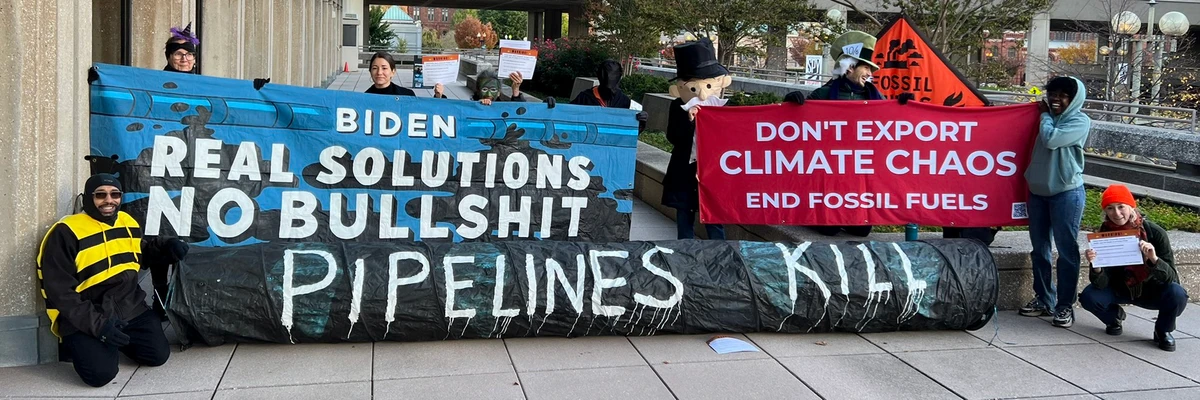
    Climate Justice Alliance campaigners protest outside the Department of Energy in Washington, D.C. on October 31, 2023. (Photo: Climate Justice Alliance/Twitter)
    Climate Justice Alliance campaigners protest outside the Department of Energy in Washington, D.C. on October 31, 2023. (Photo: Climate Justice Alliance/Twitter)

    “Now more than ever, we need real leadership from the Department of Energy to end fossil fuels,” said one organizer.

    Climate advocates on Tuesday donned Halloween costumes to greet attendees of the U.S. Department of Energy’s “Justice Week,” but the organizers assembled outside the agency will be urging guests to demand far more from Energy Secretary Jennifer Granholm and the Biden administration, who they say are “greenwashing” efforts to further equity and environmental justice.

    The department’s Office of Economic Impact and Diversity is holding the five-day event, where officials plan to highlight efforts to move “toward a more equitable, clean, and just energy future.”

    The week will include discussions of the Low-Income Communities Bonus Credit Program, which pushes for more access to renewable energy facilities in underserved communities, and executive actions President Joe Biden has taken to promote environmental justice.

    All those actions, however, have happened alongside the administration’s push in favor of so-called climate “solutions” that scientists say are unproven and serve only to perpetuate fossil fuel extraction under the false assumption that it can do so while still addressing greenhouse gas emissions and planetary heating.

    The DOE, noted Basav Sen, a climate justice project director at the Institute for Policy Studies (IPS) who took part in the action, is “the biggest funder of false solutions such as carbon capture and storage, hydrogen, and direct air capture.”

    “These are scams. We know that the real solution to the climate crisis is to keep fossil fuels in the ground and make a rapid, just transition to real renewable energy controlled by communities,” said Sen, wearing zombie face paint at the direct action. “Instead what were seeing from the Department of Energy is a continuation of the fossil fuel economy.”

    As Common Dreams reported in May, analysts say that just running the machinery to operate a carbon capture and storage project—like the ones the Biden DOE announced a $1.2 billion investment in earlier this year—would increase energy consumption by 20%, adding to carbon dioxide emissions.

    Smog, benzene, and formaldehyde emissions also increase with carbon capture technology, biologist Sandra Steingraber said—three types of pollution that disproportionately affect people in low-income neighborhoods, the very communities the DOE says it’s targeting with environmental justice programs and events like “Justice Week.”

    Additionally, noted Sen, the DOE is continuing to license exports of fossil gas.

    “We are here today to tell attendees of the Department of Energy’s Justice Week that the version of environmental and energy justice that they’re going to hear from the Department of Energy in the event is greenwashing, pure and simple,” said Sen. “The Department of Energy cannot pretend to be on the side of environmental justice while they are actively licensing more fossil gas exports, which means more fracking, more air and water pollution, more pipelines, more export terminals, more sacrifice zones in frontline communities.”

    Some of the campaigners displayed the organizers’ message succinctly on a banner reading, “Real Solutions. No Bullshit.”

    “Now more than ever, we need real leadership from the Department of Energy to end fossil fuels, quit peddling climate scams and advance energy justice,” said Climate Justice Alliance (CJA), one of the groups behind the action.

    Addressing Granholm, the group added that the secretary “can’t cover up [her] record with greenwashing events like Justice Week 2023 while undermining real climate and environmental justice with [her] actions.”

    “We demand an end to fracked gas exports, carbon capture, and hydrogen energy,” CJA said.

    Original article by JULIA CONLEY republished from Common Dreams under Creative Commons (CC BY-NC-ND 3.0).
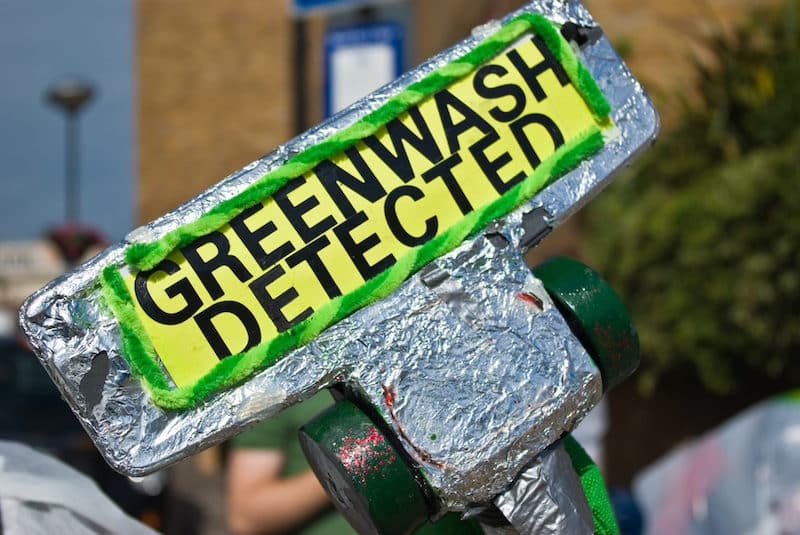
  • ‘Criminal’: Major Banks Funneled $1.8 Trillion to Carbon Bombs Between 2016 and 2022

    Spread the love

    Original article by OLIVIA ROSANE republished from Common Dreams under Creative Commons (CC BY-NC-ND 3.0). 

    Protesters picket outside a Chase Bank branch in November 2019. (Photo: Erik McGregor/LightRocket via Getty Images)

    JPMorgan Chase led the pack with more than $141 billion invested between 2016 and 2022, followed by Citi with $119 billion, and Bank of America with $92 billion.

    Major banks funneled more than $150 billion in 2022 toward “carbon bomb” fossil fuel projects that would blow through the world’s chances of limiting global heating to 1.5°C above pre-industrial levels.

    The data, published by The Guardian Tuesday, shows that major banks in the U.S., Europe, and China funded the companies behind these projects with a total of $1.8 trillion between 2016 and 2022, with U.S. banks contributing more than half a trillion of that total.

    “Criminal,” Nuclear Consulting Group chair Paul Dorfman tweeted in response to the news.

    “We need to rapidly decline our production of fossil fuels and support for fossil fuels, whether that’s regulatory or financial.”

    The “carbon bombs” are 425 fossil fuel extraction projects identified by The Guardian and other nonprofit and media organizations and compiled in an online database in 2022. Each bomb has the potential to release more than a gigaton of carbon dioxide over its lifetime. At first, it was calculated that igniting all 425 bombs would release emissions more than double the remaining carbon budget that scientists say humans can spend and still have a 50% chance of limiting warming to 1.5°C. However, research published Monday calculated that the remaining carbon budget is actually around 250 gigatons of carbon dioxide, not the 500 previously believed. The carbon bombs would release a combined total of more than 1,000 gigatons, or four times the revised number.

    “The budget is so small, and the urgency of meaningful action for limiting warming is so high, [that] the message from [the carbon budget] is dire,” study co-author Joeri Rogelj of Imperial College London told The Guardian Monday.

    That narrowing window makes it all the more urgent that banks stop financing fossil fuels, yet that is not what they are doing, according to the analysis of the carbon bomb data completed by French nonprofits Data for Good and Éclaircies, along with European media partners.

    The data includes a list of the top ten financial backers of companies operating carbon bombs.

    JPMorgan Chase led the pack with more than $141 billion invested between 2016 and 2022, followed by Citi with $119 billion, Bank of America with $92 billion, the Chinese ICBC with $92.2 billion, and BNP Paribas with $71.9 billion. Last year alone, the banks directly or indirectly funded the projects with around $161 billion. This comes despite greenwashing rhetoric from financial institutions pledging to act on climate.

    For example, JPMorgan has promised to set goals to reduce the emission intensity of its portfolios for key sectors, including oil and gas, electricity, and auto making.

    “We provide financing all across the energy sector: supporting energy security, helping clients accelerate their low-carbon transitions, and increasing clean energy financing with a target of $1 trillion for green initiatives by 2030,” a JPMorgan Chase spokesperson told The Guardian. “We are taking pragmatic steps to meet our 2030 emission intensity reduction targets in the six sectors that account for the majority of global emissions, while helping the world meet its energy needs securely and affordably.”

    The data suggests these institutions need to do more and faster.

    “We need to rapidly decline our production of fossil fuels and support for fossil fuels, whether that’s regulatory or financial,” Shruti Shukla, a National Resources Defense Council energy campaigner who was not involved with the research, told The Guardian.

    In a worse-case scenario, nothing will be done to limit emissions, these carbon bombs will be exploited and burned, and weather will turn ever more extreme. However, if world leaders do succeed in rapidly phasing out fossil fuels, these projects could become stranded assets for the companies and banks that invested in them, and if this happens all at once, it could trigger a financial crash, University of Witten-Herdecke sustainable finance research fellow Jan Fichtner told The Guardian.

    To avoid this, the world must work to make fossil fuels less profitable, Fichtner said.

    “In a capitalist system, profitability is the most important current,” Fichtner told The Guardian. “You can try to swim against the current, it’s possible, but it’s very, very difficult.”

    Original article by OLIVIA ROSANE republished from Common Dreams under Creative Commons (CC BY-NC-ND 3.0). 
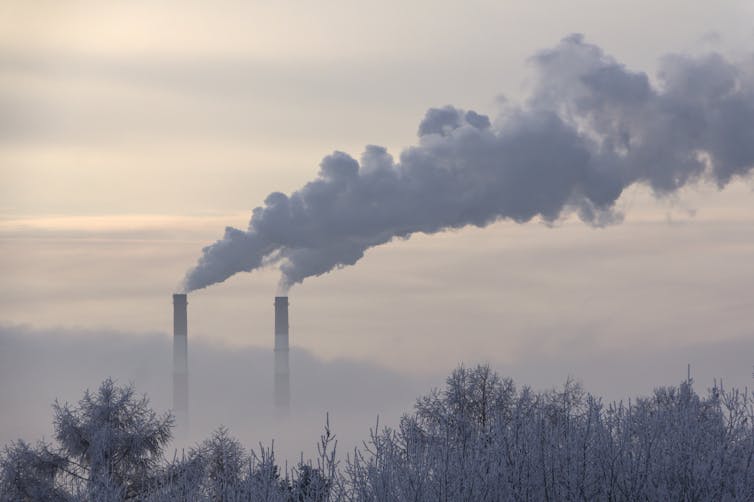
    Greenwash detected.

  • 65 Just Stop Oil supporters arrested in Parliament Square under a Section 7 order

    Spread the love
    Just Stop Oil at Parliament Square protest 30 October 2023. Police issued and made arrests under a Section 7 order. Image: Just Stop Oil.
    Just Stop Oil at Parliament Square protest 30 October 2023. Police issued and made arrests under a Section 7 order. Image: Just Stop Oil.

    65 Just Stop Oil marchers were arrested at Parliament Square on Monday after 10 minutes marching. Unlike previous Just Stop Oil slow marches which were policed using Section 12 orders, they issued a Section 7 order which criminalises members of the public based on alleged interference with ‘the use or operation of key national infrastructure’.

    A Just Stop Oil spokesperson said:

    “Just Stop Oil supporters are willing to slow march to the point of arrest today, and every day until the police take action to prosecute the real criminals – the people who are facilitating new oil and gas when they know that to do so will kill hundreds of millions of people. 

    “Just in the last week, seven people have died in the UK as a result of extreme weather and scientists are telling us it will only get worse. Neither major political party is serving the interests of the country- they are serving the mass murderers profiting while the world burns. There is no real opposition. 

    “In times of crisis, it is down to ordinary people to take a stand against the rich and powerful by disrupting business-as-usual. We know it works. A mass road blocking campaign has just forced the Dutch government to halt oil and gas subsidies. That’s why people are coming together from all over the UK to march day after day in London from today. Its People vs Oil! Sign up at JustStopOil.org”

    One of the participants, Dr Ian Chapman, 52, a GP from Bury St Edmunds said:

    “20 or 30 years from now, I won’t look back and regret having taken direct action, but I will regret it if I don’t. I expect to get arrested today, whilst the people in the building I’m marching past are making decisions that will kill millions. I will get off the road when the police take action against the real criminals.” 

    “We’re running out of time, and we all need to do what we can, right now. I don’t see how you can say you care about future generations, or your nieces and nephews or your grandchildren – I don’t see how you can say you love your children – if you do nothing to stop the destruction of the world they are going to grow up in.”

    Imogen May, 24, a food producer from Halesworth said:

    “I’m marching with Just Stop Oil because I have a six month old nephew, and I am so scared to think what his world will look like in five or ten years’ time. I’d love to live a normal life, without worrying about climate collapse. I know that to have a chance at having a normal life later, we have to take action now.”

    “We’re simply demanding that the UK government does what its own advisors are asking it to do; the same thing as the United Nations, the Climate Change Committee and the Independent Panel on Climate Change. We must halt all new licences for fossil fuel production in the UK.”

  • Carbon budget for 1.5°C will run out in six years at current emissions levels – new research

    Spread the love
    Mykhailo Pavlenko/Shutterstock

    Chris Smith, University of Leeds and Robin Lamboll, Imperial College London

    If humanity wants to have a 50-50 chance of limiting global warming to 1.5°C, we can only emit 250 another gigatonnes (billion metric tonnes) of CO₂. This effectively gives the world just six years to get to net zero, according to calculations in our new paper published in Nature Climate Change.

    The global level of emissions is presently 40 gigatonnes of CO₂ per year. And, as this figure was calculated from the start of 2023, the time limit may be actually closer to five years.

    Our estimate is consistent with an assessment published by 50 leading climate scientists in June and updates with new climate data many of the key figures reported by the Intergovernmental Panel on Climate Change (IPCC) in August 2021.

    How much CO₂ can still be emitted while remaining under a certain level of warming is referred to as the “carbon budget”. The carbon budget concept works because the increase in Earth’s global mean surface temperature has increased in a linear fashion with the total amount of CO₂ people have emitted since the industrial revolution.

    The other side of this equation is that, roughly speaking, warming stops when CO₂ emissions stop: in other words, at net zero CO₂. This explains why net zero is such an important concept and why so many countries, cities, and companies have adopted net zero targets.

    We revised the remaining carbon budget down from the 500 gigatonnes reported by the the IPCC from the start of 2020. Some of this revision is merely timing: three years and 120 gigatonnes of CO₂ emissions later, the world is closer to the 1.5°C threshold. Improvements we made to the method for calculating budget adjustments shrank the remaining budget further.

    Clearing the air

    Alongside CO₂, humanity emits other greenhouse gases and air pollutants that contribute to climate change. We adjusted the budget to account for the projected warming caused by these non-CO₂ pollutants. To do this, we used a large database of future emissions scenarios to determine how non-CO₂ warming is related to total warming.

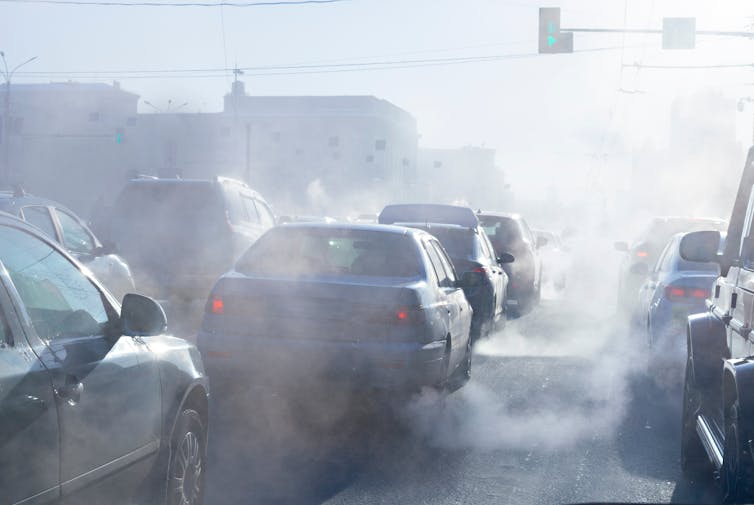
    Some of the warming caused by greenhouse gases is offset by cooling aerosols such as sulphates – air pollutants that are emitted along with CO₂ from car exhausts and furnaces. Almost all emissions scenarios project a reduction in aerosol emissions in the future, regardless of whether fossil fuels are phased out or CO₂ emissions continue unabated. Even in scenarios where CO₂ emissions increase, scientists expect stricter air quality legislation and cleaner combustion.

    Cars surrounded by exhaust fumes in traffic.
    Scientists predict air pollution which cools the climate will decline in future.
    NadyGinzburg/Shutterstock

    In its most recent report, the IPCC updated its best estimate of how much air pollution cools the climate. As a result, we expect that falling air pollution in future will contribute more to warming than previously assessed. This reduces the remaining 1.5°C budget by about another 110 gigatonnes.

    Other updates we made to the carbon budget methodology tend to reduce the budget even more, such as projections of thawing permafrost that were not included in earlier estimates.

    All is not lost

    It is important to stress that many aspects of our carbon budget estimate are uncertain. The balance of non-CO₂ pollutants in future emissions scenarios can be as influential on the remaining carbon budget as different interpretations of how the climate is likely to respond.

    We also do not know for sure whether the planet will really stop warming at net zero CO₂ emissions. On average, evidence from climate models tends to suggest it will, but some models show substantial warming continuing for decades after net zero is reached. If further warming after net zero is the case, the budget would be further reduced.

    These uncertain factors are why we quote a 50/50 likelihood of limiting warming to 1.5°C at 250 gigatonnes of CO₂. A more risk-averse assessment would report a two-in-three chance of staying under 1.5°C with a remaining budget of 60 gigatonnes – or one-and-a-half years of current emissions.

    Time is running out to limit global heating to 1.5°C above pre-industrial levels. While we have revised the remaining carbon budget, the message from earlier assessments is unchanged: a dramatic reduction in greenhouse gas emissions is necessary to halt climate change.

    It looks less likely that we will limit warming to 1.5°C, but this does not mean that we should give up hope. Our update also revised the budget for 2°C downwards relative to the IPCC’s 2021 estimate, but by a smaller amount – from 1,350 to 1,220 gigatonnes, or from 34 to 30 years of current emissions. If current national climate policies are fully implemented (admittedly, an optimistic scenario), this may be enough to hold warming below 2°C.

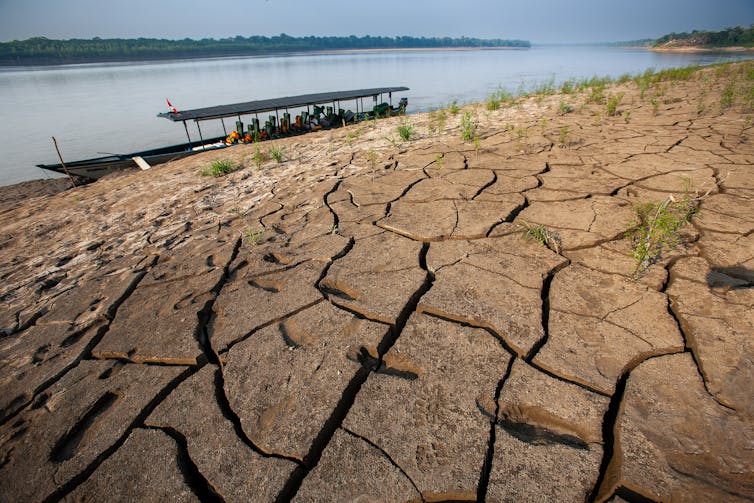
    The risks of triggering tipping points such as the dieback of the Amazon rainforest increase – sometimes sharply – with increasing warming, but 1.5°C itself is not a hard boundary beyond which climate chaos abounds.

    A dry and cracked river bed with rainforest in the distance.
    Tipping points in the Earth system could dramatically accelerate climate change.
    Beto Santillan/Shutterstock

    With effective action on emissions, we can still limit peak warming to 1.6°C or 1.7°C, with a view to bringing temperatures back below 1.5°C in the longer term.

    This is a goal absolutely worth pursuing.


    Imagine weekly climate newsletter

    Don’t have time to read about climate change as much as you’d like?

    Get a weekly roundup in your inbox instead. Every Wednesday, The Conversation’s environment editor writes Imagine, a short email that goes a little deeper into just one climate issue. Join the 20,000+ readers who’ve subscribed so far. The Conversation


    Chris Smith, NERC-IIASA Collaborative Research Fellow, University of Leeds and Robin Lamboll, Research Fellow in Atmospheric Science, Imperial College London

    This article is republished from The Conversation under a Creative Commons license. Read the original article.