Category: Cost of Living crisis

  • Burnham promised a much-needed rupture. Healey delivered gentle tinkering

    Spread the love

    Article by Jon Trickett republished from OpenDemocracy under  a Creative Commons Attribution-NonCommercial 4.0 International licence.
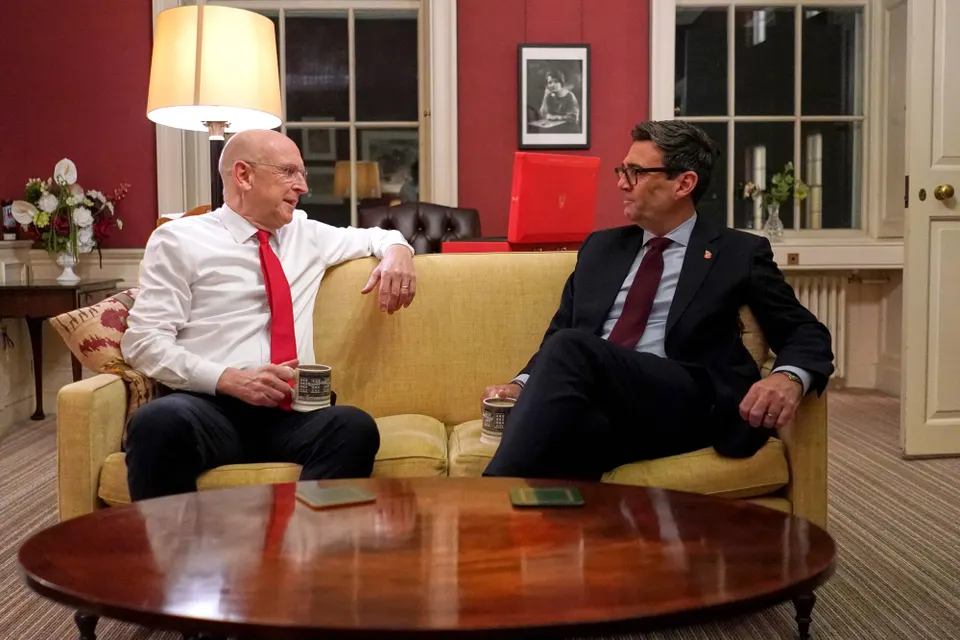
    PM Andy Burnham and chancellor John Healey meet at 11 Downing Street ahead of the budget. Alberto Pezzali – WPA Pool / Getty Images

    Mild bank levies and one-off handouts won’t undo decades of damage to places like Makerfield

    Having spent 30 years as a Labour MP, I have long argued that tinkering around the edges with the UK’s badly skewed economy simply will not do. Andy Burnham seemed to agree when campaigning in the Makerfield by-election in June.

    Back then, Burnham promised a new direction, a break with neoliberalism and the hope of a better future. He seemed to understand that the country needed a rupture with the status quo in order to address the underlying economic, political and social malaise. 

    Within weeks of winning his seat, he became Labour leader and entered Number 10 without a contest, meaning there was no real space to interrogate his political programme. The Labour Party and the country took him at his word, because we had to. 

    The Budget, then, is the first time Burnham’s vision has been properly tested. We should judge it by a ‘Makerfield test’: if the policies unveiled do not work for his constituency, or constituencies like it, they do not work at all. And by that measure, the Budget has failed. 

    Chancellor John Healey said he would secure growth in every postcode. A £100 one-off energy payment is very welcome, but the energy sector has been ripping consumers off for a generation, while retail giants take advantage of their market power by driving up the cost of groceries. If we really want to help people in every area of the country, why not take on the privatised monopolies directly, not with a few more rules, but with proper public ownership?

    Finding additional money for defence is an inevitable choice for a chancellor who helped precipitate Keir Starmer’s downfall by resigning as defence secretary. But the defence industries are concentrated in a small number of regions and will do little in terms of growth for the large part of the country.

    Healey has delivered a Budget within the same fiscal constraints as his predecessors, one that simply does not shake off the cloying grip of neoliberal ideology, Treasury orthodoxy, and the usual vested interests lobbying the government. If the chancellor cannot deliver radical change at a macro-economic level, the only option is to tinker around the edges with micro-economic policy. But that strategy simply doesn’t transform the country in the way Burnham promised Makerfield, and Britain, he would. 

    What is clear is that over-reliance on official institutions, which Burnham has spoken strongly against, has produced a Budget that is at best mildly progressive. 

    Of course, there are good things in the Budget. Healey’s pledge that every penny of the Miners’ Pension Fund will go to miners was welcome, but it should never have been in doubt – and questions still remain over when and how that will happen.

    It is also welcome that the chancellor has recognised the need for “breathing room” from the cost of living crisis, especially with a 6% levy on banks’ profits above £100m. But the truth is that this levy is less than it ought to be, and will apply for only 15 months. It does not go far enough at a time when banks make billions in super profits as many struggle.

    NHS founder Nye Bevan once said socialism is a language of priorities, a mantra that any Labour chancellor should heed in a Budget. That’s why it is disappointing that the chancellor is pushing ahead with plans to abandon the pensions triple lock, a move projected to save £15bn a year, while ignoring policies such as equalising capital gains tax, which could raise over £19bn a year by 2030. Britain doesn’t have to choose between offering a decent pension and decent care. We can, and should, provide both. 

    The country needs to fundamentally rupture with the neoliberal status quo. In recent decades, the government has ceded control of the main economic levers to the Treasury, the Bank of England and the Office for Budget Responsibility, making it difficult for any government to intervene adequately in the economy. 

    Indeed, the UK’s institutions have been colonised by neoliberalism. We have witnessed a long history of catastrophic forecasting failures due to Whitehall orthodoxy: from Denis Healey’s misjudged swingeing cuts in the 1976 IMF crisis to joining the European Exchange Rate Mechanism in 1990 and exiting two years later on Black Wednesday, the promotion of austerity over much of the past two decades, the blind eye turned to deindustrialisation, and most recently, the miscalculations of the Truss Budget. 

    Burnham previously criticised our central institutions, arguing that top-down neoliberal economics doesn’t work. Why, then, expect the country to continue to accept the Treasury’s orthodoxy? 

    His government has spoken a lot about a “radical rewiring” of the state to restore democratic control. But the Budget was always touted as a ‘safety first’ fiscal event, with the promise that a 10-year plan is on its way to address the underlying crises in our economy. My concern is that putting off big decisions until next year’s Spending Review, as the chancellor has said he is doing, suggests potential cuts down the line. 

    The truth is, the UK’s economy is still constrained by tight fiscal rules, which will not deliver the urgent changes needed, especially for communities such as those in Makerfield. Indeed, I would advise that the chancellor needs to be careful to avoid the accusation that he is starting to look a lot like his much-criticised predecessor, Rachel Reeves. 

    Article by Jon Trickett republished from OpenDemocracy under  a Creative Commons Attribution-NonCommercial 4.0 International licence.
    Andy Burnham brings absurd comedy to politics
    Andy Burnham brings absurd comedy to politics

  • Green Party responds to Autumn 2026 Budget

    Spread the love
    Ellie Chowns, Green Party MP for North Herefordshire. CC image Wikipedia.
    Ellie Chowns, Green Party MP for North Herefordshire. CC image Wikipedia.

    Responding to John Healey’s first Budget as chancellor, Treasury Spokesperson and leader of the Parliamentary Green Party, Dr Ellie Chowns MP, said:

    “You’d have thought that after going to the trouble of ousting the last PM, taking his job, and installing a brand-new Chancellor, Andy Burnham would be keen to ensure Labour displayed a bit more ambition at today’s Budget than it did under his predecessor.

    “Unfortunately, what Britain actually saw today was a business-as-usual Budget which failed to engage with the real issues facing our country – choosing to tinker round the edges, rather than properly taxing extreme wealth and profits, making essentials genuinely and permanently affordable, or investing in our long-term climate resilience.

    “There was no discussion of the climate crisis in Healey’s speech today, nor any new investment in renewables and climate adaptation, despite the devastating impact of this summer’s deadly heatwaves and wildfires on our communities, public services, and economy. Instead the Chancellor doubled down on fossil fuels, balancing the books on the assumption that climate-wrecking Rosebank oilfield will be approved.

    “And by refusing to tax extreme wealth and profits fairly in this Budget, the Chancellor has left billions off the table which could have been used to address spiralling inequality and provide genuine relief to struggling families: bringing down energy bills for good and scaling up warm homes funding, implementing an emergency rent brake, introducing free bus travel for young people, and bringing failing water companies into special administration before Christmas.”

  • Amid Growing Hunger Crisis, Trump Tells Voters They Couldn’t Even Afford a Burger at His Private Club

    Spread the love

    Article by Jake Johnson republished from Common Dreams under Creative Commons (CC BY-NC-ND 3.0).

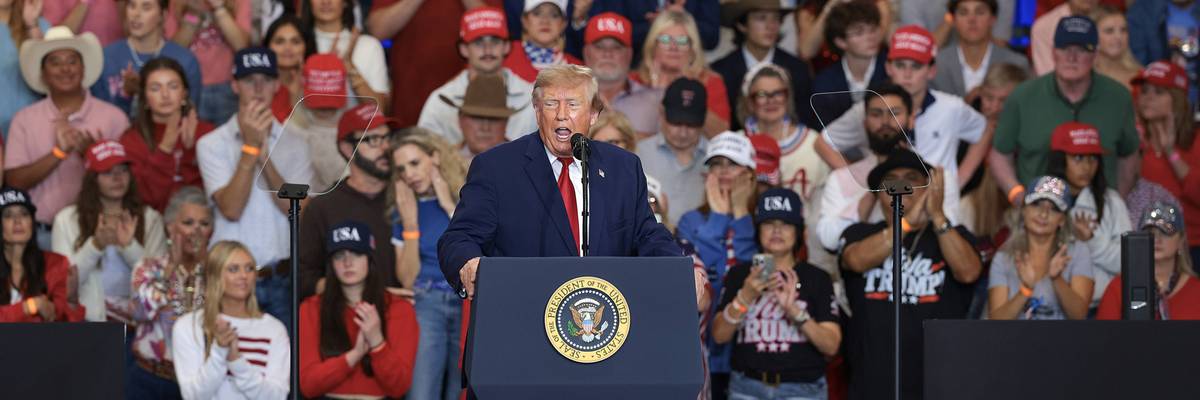
    US President Donald Trump delivers remarks during a campaign rally at Lubbock Memorial Civic Center on October 27, 2026 in Lubbock, Texas. (Photo by Chip Somodevilla/Getty Images)

    “Making fun of the decor at Cheesecake Factory was elitist. Bragging that the crowd wouldn’t be able to afford the food at his private club is, what exactly?”

    US President Donald Trump, whose policies have significantly driven up food costs during his second term, said at a Texas campaign rally on Tuesday that voters likely wouldn’t even be able to afford “a hamburger and a small dessert” at his private Mar-a-Lago resort, remarks that came amid a worsening national hunger crisis fueled by Republican cuts to federal nutrition aid.

    Trump made the comment in the context of his farcical pledge to send every American adult a $5,000 check if Republicans retain control of the US Congress in next month’s midterm elections. “The problem,” Trump said, “is that for $5,000 the most you’ll be able to buy is a hamburger and maybe a small dessert. I’m not even sure you could buy that.”

    RECOMMENDED…

    Workers and volunteers hand out food at a food pantry

    ‘Hunger Disaster Unrolling Before Our Eyes’: Alarm Grows Over Trump Food Aid Evisceration

    "America is Not for Sale" Rally Against Trump's Crypto Dealings

    ‘Let Them Eat Cake’: How Trump Family Pocketed Nearly $3 Billion While Millions of Americans Lost Food Aid

    “No, don’t go there,” the billionaire president said of Mar-a-Lago, where he frequently hosts rich allies and donors. “That’s not a good place if you’re price-conscious.”

    Watch:

    “Working people are struggling to make rent and pay for groceries, and President Trump wants to sell you a $5,000 hamburger at his private golf club. (Fries and a drink extra.),” the AFL-CIO wrote in response to the president’s remarks, which drew laughter from the audience gathered in Corpus Christi.

    Progressive activist Jordan Uhl noted that Trump’s comments came just days after former President Barack Obama sparked right-wing furor by mocking Trump’s gaudy White House renovations.

    “Making fun of the decor at Cheesecake Factory was elitist,” Uhl wrote on social media. “Bragging that the crowd wouldn’t be able to afford the food at his private club is, what exactly?”

    Trump’s remarks came amid what one analyst described as a “hunger disaster unrolling before our eyes” as millions of Americans—including many children—lose federal nutrition assistance due to the Republican budget package that the president signed into law last year.

    “About 2 million kids have lost SNAP since deep cuts were enacted last year,” Katie Bergh, an expert at the Center on Budget and Policy Priorities, observed last week. “The ripple effects: Kids losing SNAP also lose automatic enrollment for free meals at school.”

    According to a recent analysis by Sen. Elizabeth Warren’s (D-Mass.) office, grocery prices have risen 2.6% since Trump signed the Republican budget legislation, and “costs of several everyday staples are rising at a faster annual pace than wages (up 3% in September 2026), including apples (7.5%), coffee (7.1%), fish (6.9%), tomatoes (6.8%), ground beef (5.4%), rice (4.3%), peanut butter (3.8%), and bread (3.3%).”

    “President Trump’s policies are a key driver of these price increases,” the senator’s analysis observed. “His chaotic and unlawful tariffs have raised the cost of food… And President Trump’s reckless and illegal war with Iran is pushing those costs higher still, as rising transportation and fertilizer costs put additional pressure on food prices and supply.”

    Article by Jake Johnson republished from Common Dreams under Creative Commons (CC BY-NC-ND 3.0).

    Orcas discuss rotting brain, front Orca says he wishes someone would lock him up, small Orca speaks bluntly.
    Orcas discuss rotting brain, front Orca says he wishes someone would lock him up, small Orca speaks bluntly.

  • End tax relief for datacentres to fund energy bill support this winter, say Greens ahead of Budget

    Spread the love
    Green party leader Zack Polanski (Green Party of England and Wales). Image: Bristol Green Party Creative Commons CC0 1.0 Universal Public Domain Dedication.
    Green party leader Zack Polanski (Green Party of England and Wales). Image: Bristol Green Party Creative Commons CC0 1.0 Universal Public Domain Dedication.
    • Greens call on government to remove datacentres from full expensing tax relief scheme to bring forward an additional £5 billion in corporation tax across 2027-2029
    • They say this could be used to increase the Warm Homes Discount by up to £500 for those with highest energy needs 
    • Leader Polanski says the government should be prioritising lowering bills over handouts for big tech at Autumn Budget next week

    The Green Party has called on the government to end certain tax reliefs for datacentres and use the money to fund support for energy bills this winter, as households are expected to see bills rise by over £271 in January – the biggest jump in four years.

    The Greens say that by removing datacentres from ‘full expensing’ tax relief, the Treasury could bring forward an additional £5 billion extra in corporation tax across 2027-2029. This could be used to increase the Warm Homes Discount from £150 to up to £650 to support 5.6 million households facing a spike in their energy bills. 

    There are currently around 500 datacentres in the UK but their number is expected to expand by more than a third. Last week, the Chief Executive of Ofgem warned that datacentres could push up household energy bills even further. 

    Earlier this year the Green Party called for an immediate end to the blanket designation of new datacentres as ‘critical infrastructure’ and tighter planning rules to prevent a rash of new datacentres taking precedence over households for water and energy usage.

    Green Party leader Zack Polanski said: 

    “Right now the government is allowing big tech giants and energy-guzzling datacentres to kick their tax obligations down the road while families are being stretched to breaking point by ever-rising energy bills. 

    “This is wrong. The government’s priority at the Budget next week should be supporting families this winter as temperatures drop and bills spike. 

    “Ending full expensing tax relief for datacentres would free up £5 billion – money that could be used to fund immediate support for households struggling with their energy bills.” 

    This is part of a broader package of measures the Green Party are calling for at the Autumn Budget, which they say could raise over £60 billion to fund urgent cost of living measures. The Green Party Leadership, MPs and Peers have today written to the Chancellor laying out their full proposals, which include: 

    • Aligning rates of Capital Gains Tax with Income Tax and closing loopholes, to raise an additional £19.7 billion annually by 2030. 
    • Applying National Insurance to investment income, in line with employment income, to raise at least £6.1 billion per year.
    • Introducing an annual wealth tax of 1% on assets over £10 million, and 2% over £1 billion, to raise at least £14.8 billion. 
    • Introducing a proper windfall tax of 38% on the UK’s biggest banks, to raise at least £19 billion. 
    • Ending tax breaks to fossil fuel producers to raise £2.7 billion. 
    • Introduce a three-year emergency brake on rents and lifting the freeze on Local Housing Allowance which would cost £2 billion a year by 2030. 
    • Funding free bus travel for under 22s in England costing £1.9 billion a year.
    • Extend free school meals to all primary and secondary school children to help with food cost inflation costing around £1.5 billion per year 
  • Greens back STUC plans for frequent flyer levy

    Spread the love

    https://morningstaronline.co.uk/article/greens-back-stuc-plans-frequent-flyer-levy

    ‘We all want first-class public services and the frequent flyer levy is a direct route to funding them’

    THE Scottish Greens have backed STUC calls for a new tax on frequent fliers to cut the cost of travelling by bus and train.

    The plans, first outlined by the STUC’s landmark 2023 Raising Taxes to Deliver for Scotland report, suggested the levy could not only raise as much as £50 million and act as a progressive replacement for the present flat air departure tax.

    Scottish Green co-leader Gillian Mackay said the party “believe in taxing wealth, and protecting our planet.”

    “A frequent flyer levy would allow us to do both of those, while cutting the cost of public transport and investing in services that communities across Scotland urgently need,” she said.

    Arguing the cash raised could be “invested in cheaper train tickets, better public transport and continuing to cut the cost of bus travel until we have a service that is free for everyone,” she added: “With public finances under pressure, the answer cannot be to ask ordinary working people to pay more or accept cuts.

    …

    Article continues at https://morningstaronline.co.uk/article/greens-back-stuc-plans-frequent-flyer-levy