Thames Water sign at a water works in Islington, north London, July 23, 2026
CAMPAIGNERS demanded the government take back control of debt-ridden Thames Water after its “indefensible” decision to give a £1 million golden handshake to its finance chief amid likely drought conditions in large parts of the country.
Britain’s largest water company gave Steve Buck the huge sign-on fee in July as it continues to struggle with a debt pile of around £20 billion, as well as public outcry over pollution and mismanagement of the utility.
The payment, which a senior company figure admitted would be seen as “unjust” by customers, was made despite renewed strain on southern England’s water systems, as Amber heat alerts were issued for most of the country yesterday.
More areas across England are likely to plunge into drought this week, as the Met Office predicted temperatures are to soar into the mid-30°Cs yet again this week.
April 2023 Surfers Against Sewage and Extinction Rebellion protests in St Agnes, Perranporth, Truro and Charlestown which unveiled spoof Blue Plaques to the MPs and Conservative Government who allowed raw sewage to be dumped in the sea (Image: Surfers Against Sewage)Image of a burst water main.
New PM slashes fuel bills and culls Starmer deadwood, but peace activists warn that placing John Healey as new Chancellor shows ‘beyond doubt that the military industrial complex is in charge of Burnham’s economic policy’
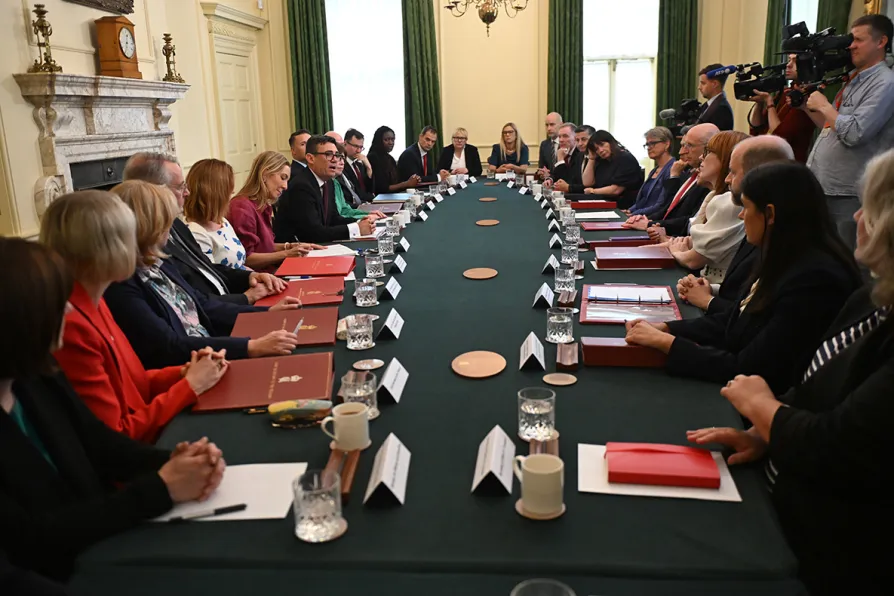
Prime Minister Andy Burnham hosts his first Cabinet meeting at 10 Downing Street, London, July 21, 2026
WE ARE a cost-of-living government, Prime Minister Andy Burnham told his new Cabinet today after slashing energy bills for millions.
Mr Burnham acted to cut VAT on energy bills at a cost of £850 million as his first major move in Downing Street after naming a new team purged of deadwood from Sir Keir Starmer’s government.
However, anti-war campaigners warned that his choice of inveterate warmonger John Healey as new Chancellor presaged a further attack on welfare, health and education.
In a joint statement, Stop the War Coalition and the Campaign for Nuclear Disarmament said: “To hand the Treasury purse strings to a man who demanded a £197 billion increase in arms and nuclear weapons spending demonstrates beyond doubt that the military industrial complex is in charge of Burnham’s economic policy.
“The arms dealers and generals are undoubtedly now in the cabinet. John Healey’s appointment as chancellor will inevitably mean huge fights over welfare, health and housing to come.
“None of the social and economic ambitions — tackling the cost-of-living crisis in particular — that Burnham claims to aspire to will be possible if an ever-growing portion of the economy is devoted to war and destruction,” the two campaigns stated.
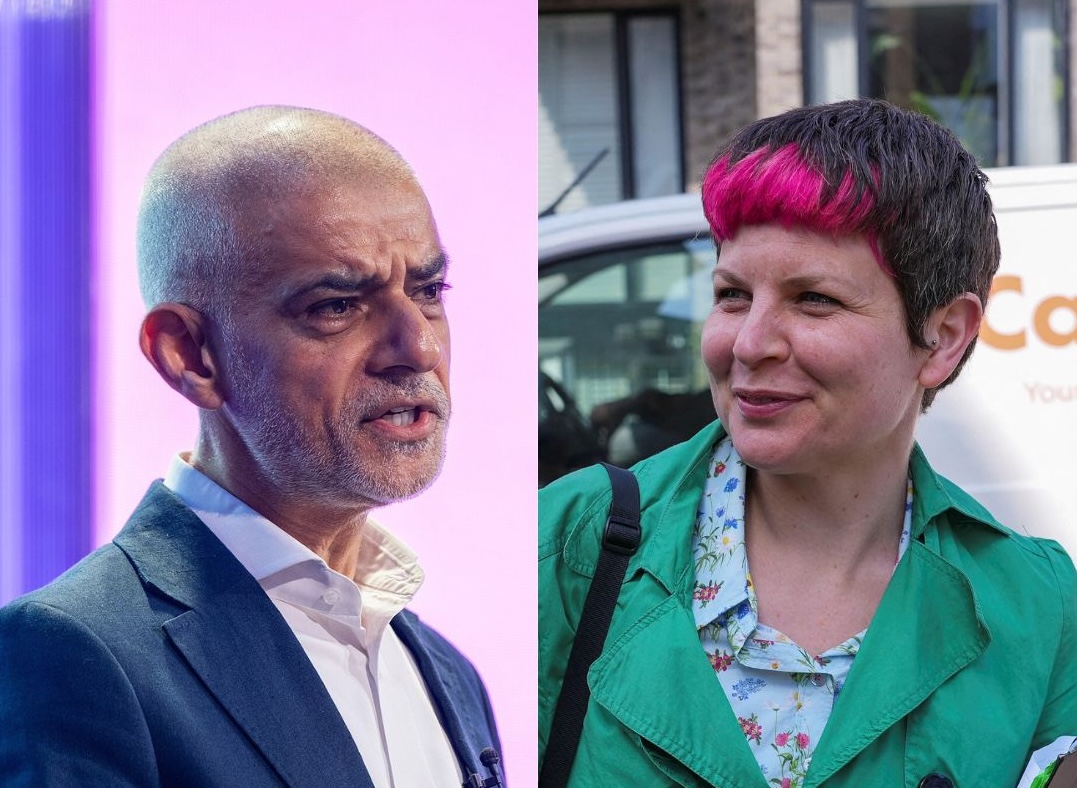
Green party-controlled councils have joined a high court legal challenge led by the Aspire party to stop London mayor Sadiq Khan slashing affordable housing in the city.
Hackney and Lewisham councils, which Zack Polanski’s party took control of following the 7 May elections, have joined the Aspire-run Tower Hamlets council in its bid to stop Khan from cutting the city’s affordable housing quota from 35% to 20%.
…
Khan said in 2016 that more than 50% of new homes in London should be affordable, but later the same year allowed private developers to limit affordable housing in new developments to 35%.
His plan to further reduce the quota comes amid an escalating housing crisis in the city, where the cost of rent is a major driver of poverty and child homelessness.
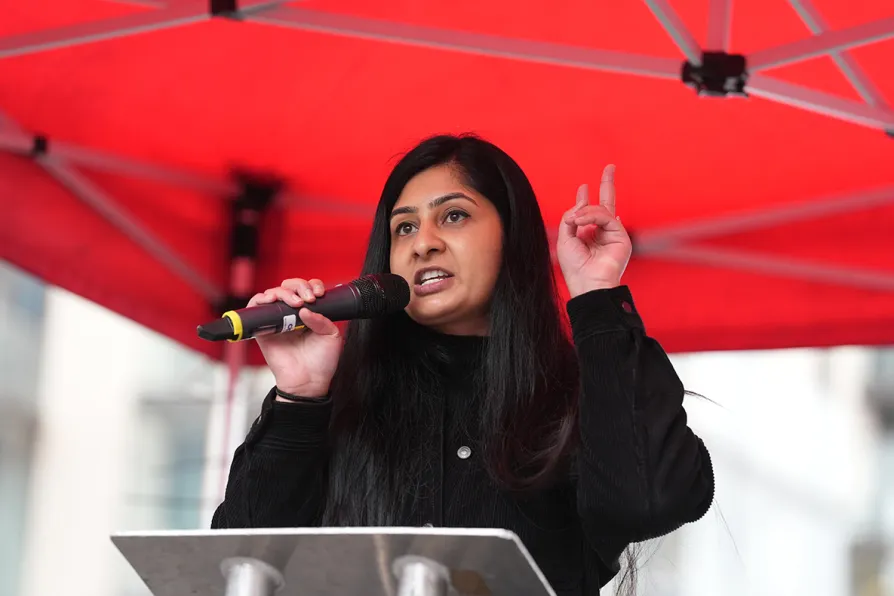
Your Party MP Zarah Sultana speaks at a demonstration organised by CND, Stop the War, Palestine Solidarity Campaign, Muslim Association of Britain, Palestinian Forum in Britain and Friends of Al-Aqsa, in London to call for an end to Iran war, March 2026
YOUR Party MP Zarah Sultana said “good riddance” to the departing Keir Starmer today.
The Coventry South MP, suspended from Labour by Sir Keir for challenging the two-child benefit cap, said that “history will judge Keir Starmer as a man who lied his way to the top of the Labour Party.”
She accused him of using that power to evoke Enoch Powell with his “island of strangers” speech, keeping children in poverty, attacking disabled people, scapegoating refugees, stripping back civil liberties, and handing our public services to Palantir.
“A man who gave the top diplomatic job to the ‘best pal’ of a convicted paedophile, said Israel has the right to cut off water and electricity to Gaza, rolled out the red carpet for Israeli war criminals, and kept the weapons flowing to the Israeli military as it committed genocide. Good riddance,” she added.
Green Party leader Zack Polanski called for “a bold change of direction” after Sir Keir’s departure.
He said: “Starmer lost the confidence of the country because of his abject failure to challenge the power and wealth of an Establishment which has taken for themselves while leaving the vast majority in a cost-of-living crisis.
“We are still waiting to see which version of Andy Burnham is going to show up in Downing Street. While he has talked about a change of course, the early indications are not encouraging and suggest more of the same with better communication skills.
“The time for half measures and sticking plasters is long gone — Burnham must be bold or he will be bust.”
I hope that the Morning Star will excuse me republishing the full article.
Keir Starmer objects to criticism of the IDF. He asks how could anyone object to them starving people to death, forced marches like the Nazis did, bombing Gaza’s hospitals and universities, mass-murdering journalists, healthworkers and starving people queuing for food, killing and raping prisoners and murdering children. He calls for people to stop obstructing his genocide for Israel.Keir Starmer explains that UK is actively supporting Israel’s genocidal expansion and repeats his previous quotation that he supports Zionism “without qualification”. Keir Starmer said “I said it loud and clear – and meant it – that I support Zionism without qualification.” here: https://www.jewishnews.co.uk/keir-starmer-interview-i-will-work-to-eradicate-antisemitism-from-day-one/Keir Starmer says that the Labour Party under his leadership is intensely relaxed about assaulting those least able to defend themselves – the very poorest and most vulnerable.

 Thames Water sign at a water works in Islington, north London, July 23, 2026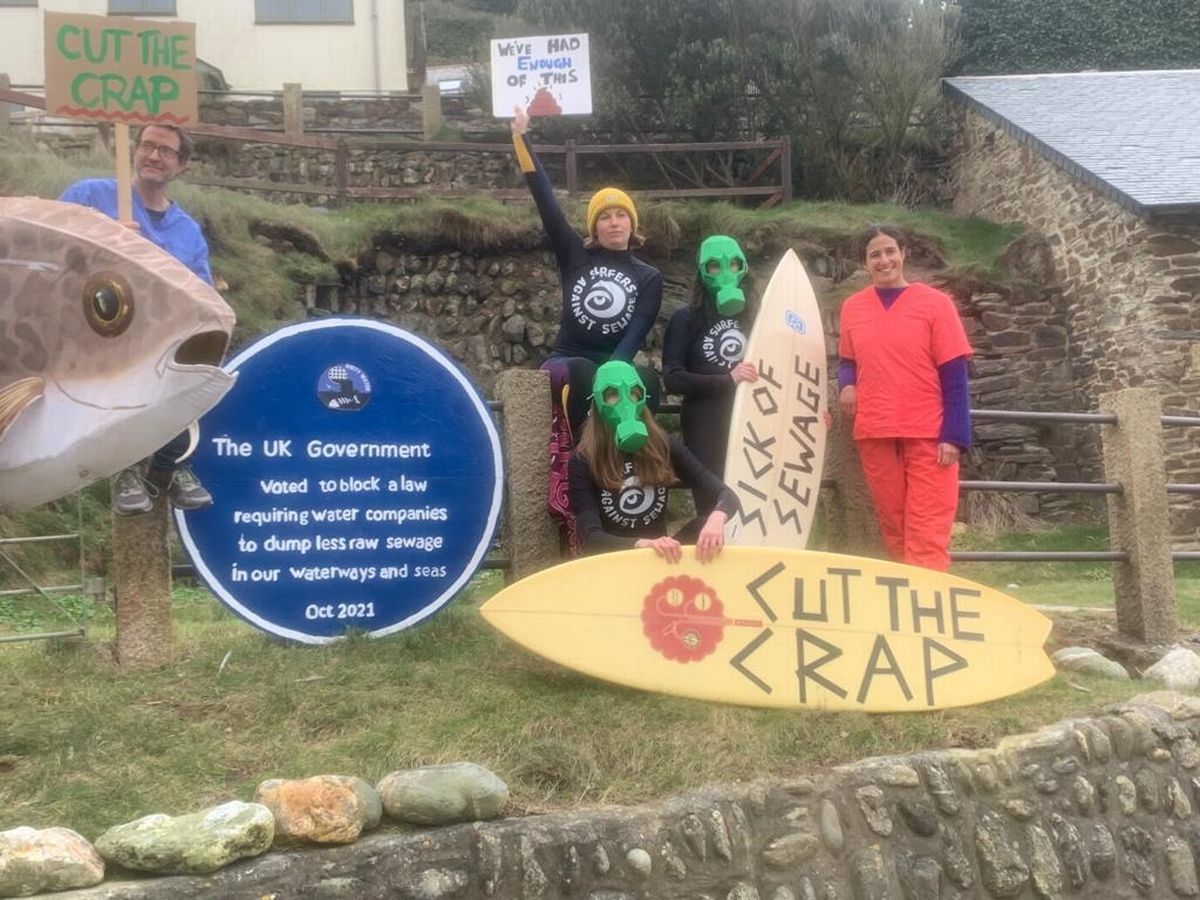

 Prime Minister Andy Burnham hosts his first Cabinet meeting at 10 Downing Street, London, July 21, 2026