Category: Extinction Rebellion

  • How police in England can now stop basically any protest

    Spread the love

    Original article republished from openDemocracy under a Creative Commons Attribution-NonCommercial 4.0 International licence.
    New anti-protest legislation forced through by Suella Braverman has been labelled “unlawful”

    Adam Ramsay

    15 June 2023, 3.55pm

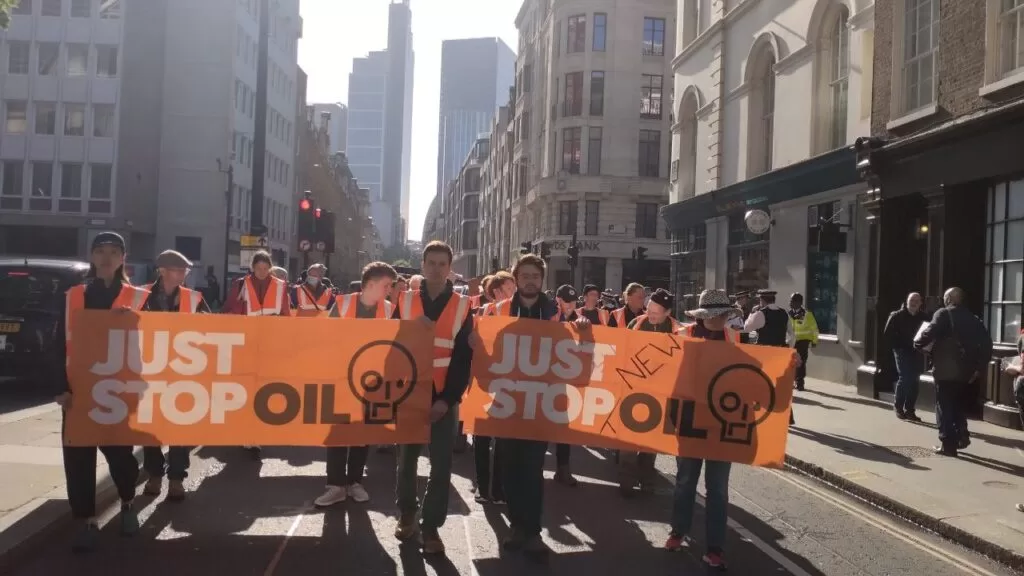
    A Just Stop Oil protest in central London
    Suella Braverman forced through new anti-protest laws after slow-marching demonstrations from Just Stop Oil activists in London

    At midnight last night, the right to protest in England and Wales became a matter of police discretion.

    Yesterday, the police could restrict or stop a protest to prevent it causing either “serious public disorder, serious damage to property, or significant and prolonged disruption to the life of the community”.

    Those powers already allowed plenty of room for interpretation, but from today the threshold is even lower. This week, home secretary Suella Braverman forced through new laws in a way never seen before in the UK. Here’s what you need to know.

    What are the new police powers targeting protests?

    Changes to the Public Order Act mean police can now restrict or stop a protest if they believe it could cause “more than minor disruption to the life of the community”. They have the power to arrest anyone taking part in a protest, or even anyone encouraging others to take part.

    Officers are also now required to consider “cumulative disruption” from protest, even if the protests in question are organised by different people and about different issues. And the definition of “community” has been changed to include anyone affected by a protest, not just people who live or work in the area it’s happening in.

    “The regulations also say the police will be required to take into account all relevant disruption. For example, if there are regular traffic jams in the area, that would have to be taken into account [when the police decide whether to ban a protest], even if it had nothing to do with the protest”, Jodie Beck, policy and campaigns officer at Liberty told openDemocracy.

    Braverman argued the new laws were needed to target slow-marching protests from climate activists Just Stop Oil and Extinction Rebellion.

    What do they mean?

    In reality, the police could find a way to argue that any protest meets the threshold for imposing restrictions, if they wanted to. The new law, says Beck, is a “huge expansion of police powers” that could also lead to police allowing some protests to go ahead while imposing restrictions on others, simply based on how the officers felt about the message behind them.

    While the government has focused on one particular type of protest – slow-marching – all protests are potentially impacted.

    Beck gives the example of striking railway workers and their supporters holding a rally outside a train station. The police “could decide that means a more than minor disruption to people’s travel,” and so ban the gathering, and arrest anyone taking part.

    It could even be that police officers rule that a picket line causes “more than minor” disruption to the workplace it is picketing – after all, that’s the point.

    But it’s not just the new laws which have shocked experts. It’s also how they came about this week.

    How did the new laws restricting protests get passed?

    Originally, Suella Braverman tried to sneak the new legislation into the Public Order Act, which passed earlier this year and came into effect just before the coronation. Rather than allowing these changes to face the usual scrutiny in the House of Commons, the home secretary had them added as last minute amendments to the bill in the House of Lords, after MPs had already voted on it. Her attempt failed – the Lords thought these measures were too draconian and voted them down, though they approved the broader new bill.

    Undeterred, Braverman turned to a constitutional trick that’s never been used before. Because while new bills – known as ‘primary legislation’ – require line-by-line scrutiny in both houses, various laws already on the statute book give ministers powers to make small changes via something called ‘secondary legislation’. And secondary legislation doesn’t get nearly as much scrutiny, with both the Commons and Lords simply voting for or against.

    The home secretary argued that another act passed last year by then-home secretary Priti Patel – the Police, Crime, Sentencing and Courts Act – already gave her the power to make these changes via secondary legislation. So that’s what she did this week, making it the first time ever that a government has used secondary legislation to push through a measure that had already been voted down by parliament.

    The secondary legislation passed through the Commons on Monday, with the Tories taking full advantage of their majority. In the Lords, Green peer Jenny Jones filed a highly unusual fatal motion, a rare procedure used to try and kill off the passage of a bill. Normally, because it’s an unelected house, the Lords tweaks legislation passed by the Commons, but doesn’t ultimately vote it down. Jones argued that, because the government was bringing back a law which had already been voted down by parliament through a route which requires almost no scrutiny, this should be an exception.

    Labour, although they complained about Braverman’s shenanigans, refused to back Jones, and abstained on the motion, meaning it passed. Police, Crime and Fire minister Chris Philp then enacted the new measures from midnight last night (secondary legislation doesn’t need royal assent). And so now, the police can shut down any protest they like.

    The story doesn’t end there. Liberty is taking the government to court, calling the move “unlawful” and arguing that it broke many of the basic principles of the British constitution.

    What do human rights campaigners say?

    Katy Watts, a lawyer at Liberty, accused the government of “putting itself above the law” and said the move gives police “almost unlimited powers to stop any protest the government doesn’t agree with”.

    And Beck believes we need to see this in the context of a much broader attack on our democratic rights. Noisy protests have been banned. The government is already attacking the right to strike, making it easier for bosses to sack people who vote to withdraw their labour. They’ve made it harder to vote, and harder to challenge them in the courts.

    “Even if you’ve never been to a protest, you never know when you might need to,” she said.

    With the new laws, there is a growing chance you’ll be arrested if you do.

    Original article republished from openDemocracy under a Creative Commons Attribution-NonCommercial 4.0 International licence.

  • Extinction Rebellion Melbourne Occupy for Climate 25-27 May

    Spread the love

    Extinction Rebellion climate protesters shut down Melbourne

    [CBD is Central Business District]

    Extinction Rebellion climate protesters shut down a major intersection in the Melbourne CBD during peak hour on Thursday.

    Up to 100 protesters took part in the protest and were met with a strong police presence, Nine News reports.

    They group took over the intersection of Latrobe Street and Queen Street at around 8am, blocking traffic for 20 minutes, before moving down Latrobe Street.

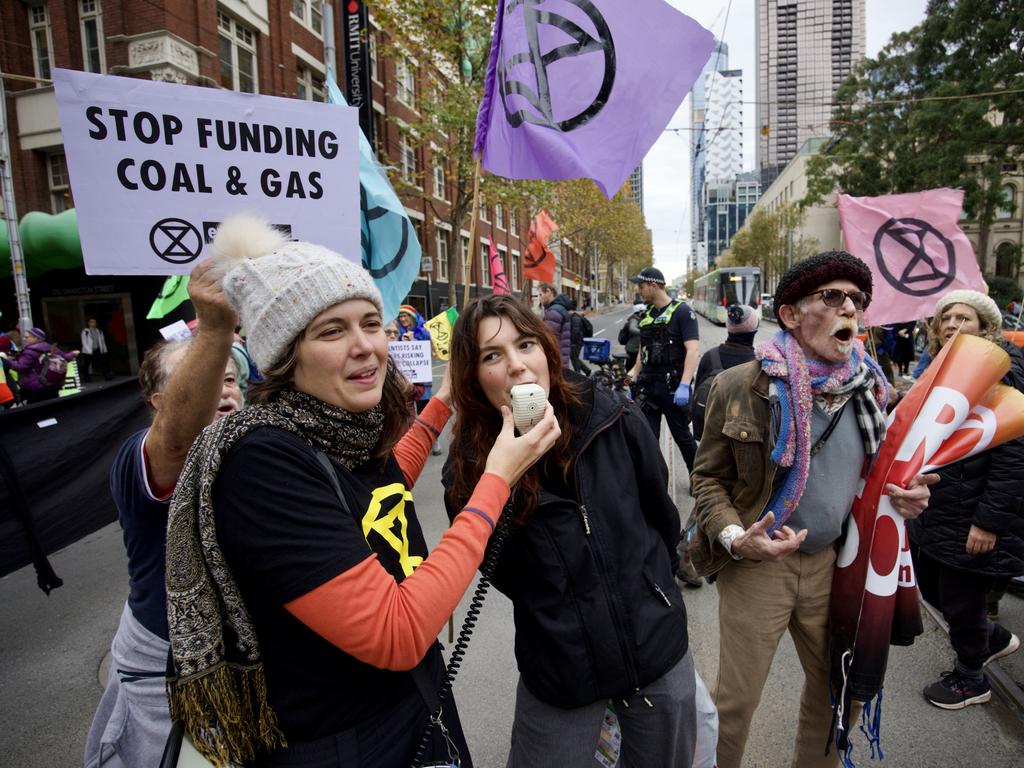
    Extinction Rebellion stops traffic in the city this morning Picture: David Geraghty

    The activist group said the “colourful and dramatic protest” would be the first of three days it planned to create disruptions in the heart of the city, after blocking a major freeway exit during peak hour on Tuesday.

    …

  • Climate activists arrested as private jets receive more protection than planet

    Spread the love

    https://www.greenpeace.org/international/story/59935/climate-activists-arrested-private-jets-receive-protection-planet/

    At least 102 climate activists from seventeen countries representing Greenpeace, Stay Grounded, Extinction Rebellion, Scientist Rebellion and other climate justice groups are still being detained in Geneva, Switzerland 20 hours after a peaceful protest against Europe’s largest annual private jet fair, the European Business Aviation Convention & Exhibition (EBACE) in Geneva.

    “A unique, European coalition of courageous activists from 17 countries severely disrupted the excessive champagne party of a super-rich elite – Europe’s largest private jet sales event. Their demand is unequivocal, private aviation should be consigned to the history books. We support the activists and demand their immediate release.” – said Klara Maria Schenk, a transport expert for the European Mobility For All campaign.

    A hundred climate activists supporting Greenpeace, Stay Grounded, Extinction Rebellion, Scientist Rebellion and other climate movement groups from 17 countries have disrupted Europe’s biggest private jets sales fair, the annual European Business Aviation Convention & Exhibition (EBACE) in Geneva
    © Thomas Wolf / Stay Grounded / Greenpeace

    Activists peacefully occupied jets exhibited at the business event by the Geneva airport and chained themselves to aircraft gangways in order to keep prospective buyers from entering. The protestors held giant tobacco-style health warning label hand banners marking the jets as toxic objects and warning that ‘Private Jets Burn Our Future’, ‘Kill Our Planet’, and ‘Fuel Inequality’. Public service announcements from loudspeakers carried by the activists exposed the devastating consequences of private jets for our planet and revealed the hypocrisy of promoting private jets amidst rising social inequality.

    Contrary to several misleading media reports, the activists never entered the taxiways or runways of the airport. The activists make it clear that at no time they intended to disrupt commercial air traffic at Geneva Airport. A spokeswoman for air traffic control agency Skyguide confirmed protestors had not accessed the runway during the incident, according to Aviation International News.

    …

    https://www.greenpeace.org/international/story/59935/climate-activists-arrested-private-jets-receive-protection-planet/

  • Climate activists disrupt Europe’s biggest private jet fair

    Spread the love

    https://www.theguardian.com/business/2023/may/23/climate-activists-private-jet-fair-greenpeace-stay-grounded-extinction-rebellion

    Protesters from Greenpeace, Stay Grounded, Extinction Rebellion and others chain themselves to aircraft in Geneva

    Dozens of climate activists have disrupted Europe’s largest private jet trade fair by chaining themselves to aircraft to protest against the sector’s carbon emissions.

    The demonstrators on behalf of Greenpeace, Stay Grounded, Extinction Rebellion and Scientist Rebellion also attached themselves to the entrance gates of the event at Geneva airport in the hope of preventing prospective buyers from entering the annual show.

    The activists, who were calling for a global ban on the use of private jets because of their carbon footprint, stuck tobacco-style health warning labels on some of the jets at the European Business Aviation Convention and Exhibition (EBACE) saying private jets “burn our future”, “kill our planet”, and “fuel inequality”.

    …

    https://www.theguardian.com/business/2023/may/23/climate-activists-private-jet-fair-greenpeace-stay-grounded-extinction-rebellion

  • Extinction Rebellion NL protests government subsidies to fossil fuels at A12 (yet again)

    Spread the love

    Translation of https://www.hartvannederland.nl/nieuws/politiek/extinction-rebellion-200-tot-300-deelnemers-eerste-dag-a12-mars by https://www.deepl.com

    Between two and three hundred protesters will join a seven-day march from Arnhem to The Hague, organised by Extinction Rebellion. They will start on Sunday and walk along the A12. The march ends on 27 May, the day the group plans to block the A12 in The Hague again to protest against government subsidies to the fossil industry.

    …

    It is the seventh time that Extinction Rebellion is planning to block the A12. At the last demonstration on 11 March, some 700 activists were eventually detained.

    …

    Video of March 2023 protest.

    During a demonstration by Extinction Rebellion on the A12 in The Hague a symphony orchestra played the second movement of Beethoven’s Symphony no.7. By doing so, the orchestra supported the demand of XR to stop the yearly 17.5 billion in fossil fuel subsidies by the Dutch government. The musicians are convinced that the beauty of music and of people connecting through music will also disappear if the climate crisis exacerbates.

    At the moment the orchestra entered the road, police began to demand the protesters to leave or face arrest. Threatened by the deployment of water cannons, the orchestra decided to play anyway, which seemed to have a de-escalating effect. With this action the orchestra showed in a democratic way that beauty is tarnished.

    Violinist Vera Beths : “Nature is a great source of inspiration for composers. You can find everything in it; harmony, dissonance, rhythm and form. We are in the process of disturbing this balance systematically. That has to stop. We have to start listening again.”

    …