Climate activists face ‘crippling’ legal fees for injunctions banning protest
Spread the love
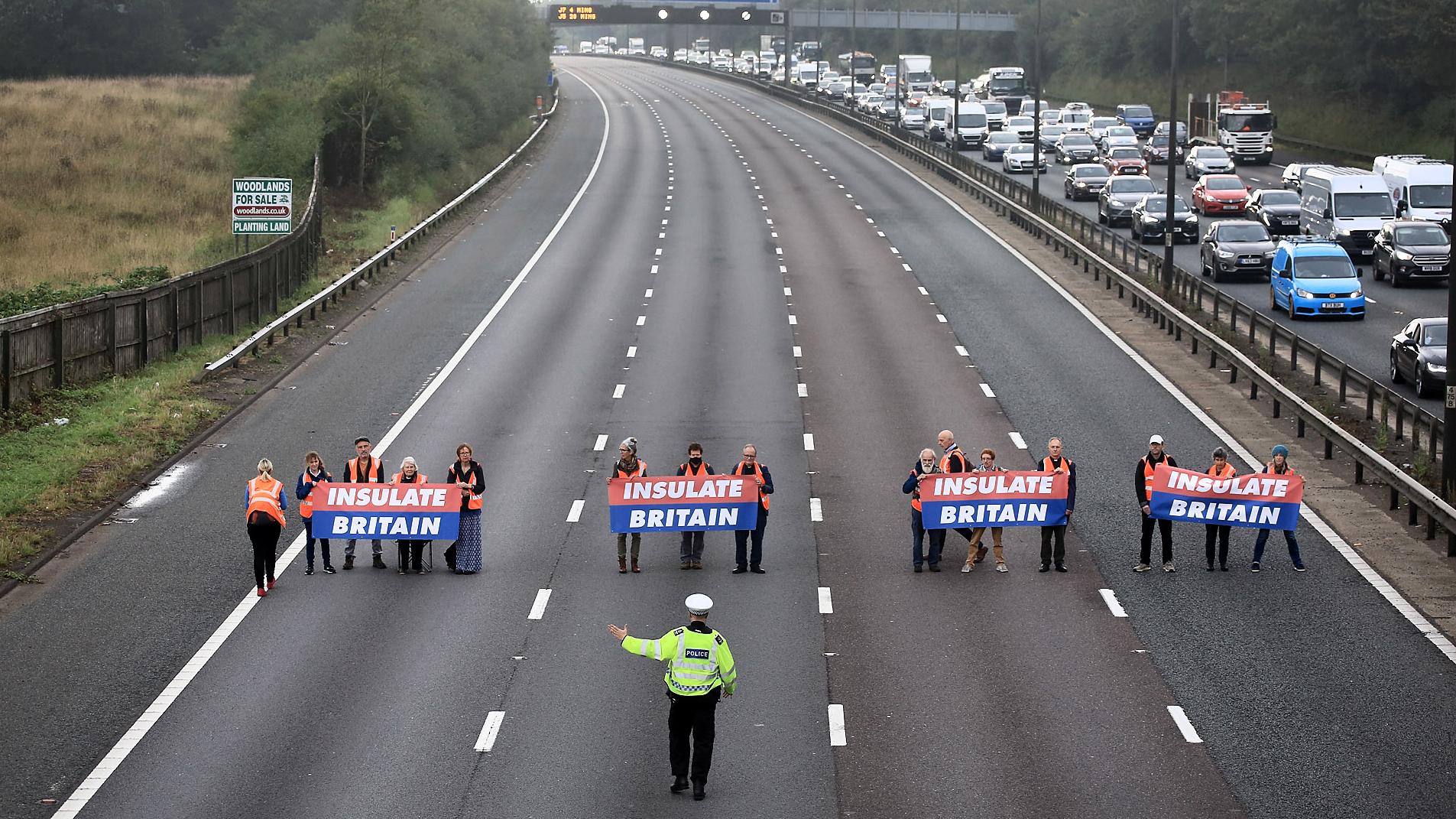
Image of an Insulate Britain roadblock September 2021

Original article by Anita Mureithi repubished from Open Democracy under a Creative Commons Attribution-NonCommercial 4.0 International licence

Protesters facing criminal convictions are being punished twice as National Highways and TfL seek costly injunctions

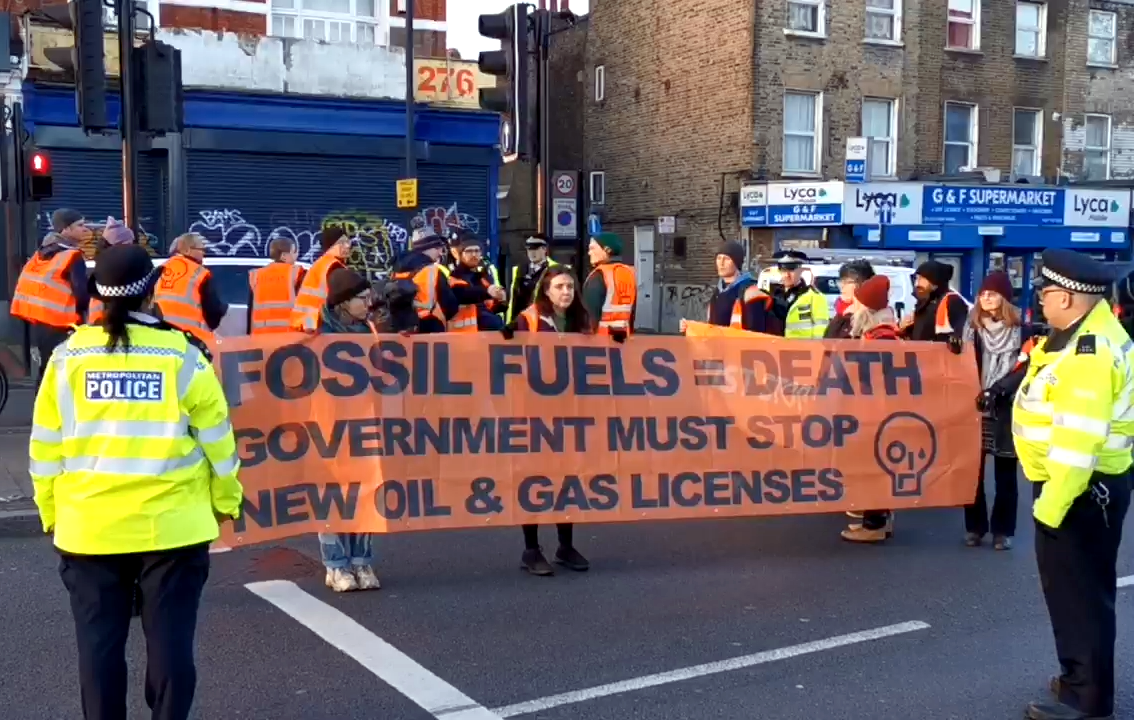
Climate activists have told openDemocracy they are being hit with “crippling” bills totalling thousands of pounds because of legal action brought by government and public bodies to prevent protests.

Injunctions – orders issued through civil courts, usually to ban something – are increasingly being used to crack down on climate demonstrations, activists say, in what they believe is an attempt to silence dissent.

Both National Highways and Transport for London (TfL) have named supporters of environmental campaign groups Insulate Britain and Just Stop Oil on injunctions intended to stop protests on certain roads in recent years. One person named on a TfL injunction told openDemocracy they have never even protested in London.

Breaching an injunction can lead to a contempt of court conviction, which is punishable by up to two years’ imprisonment, an unlimited fine and the seizure of assets.

One Just Stop Oil protester said they had been warned by their lawyers that those who go to trial to fight an alleged breach and lose could be made to pay up to £150,000 to £200,000 in legal fees, while accepting a breach could incur costs of between £5,000 and £20,000.

The protester told openDemocracy that the costs could leave defendants vulnerable to “the kinds of debts which could cripple you and potentially make you homeless”.

Raj Chada, a partner at law firm Hodge Jones & Allen who represents a number of Insulate Britain supporters, said the way injunctions are now being used is “astonishing” and something he’s never seen before in 15 years of working with protesters.

“The injunctions that are currently being used have always been there but it has never been the case that National Highways Agency or TfL would seek injunctions to completely prevent protests in certain areas,” he said.

Yesterday, it was reported that Rishi Sunak is considering weakening the government’s net-zero commitments, including by delaying a ban on the sale of new petrol and diesel cars, watering down the phasing out of gas boilers, and scrapping plans for new energy-efficiency targets for private rented homes.

Such actions are likely to lead to increased environmental protests. Climate activists say the use of injunctions is one way the government has been cracking down on such protests in recent years, alongside new police powers to shut down demonstrations deemed too disruptive, and existing public nuisance laws that can see people imprisoned for up to ten years for taking part in civil resistance.

Chada agrees, saying: “This government in particular doesn’t like being challenged by groups such as Just Stop Oil or Extinction Rebellion.”

Hefty fees

National Highways is a government-owned company responsible for operating, maintaining and improving motorways and major A-roads in England.

According to a court document seen by openDemocracy, National Highways initially sought costs of £727,573 for legal fees incurred in securing injunctions blocking protests on and around the M25. Split between more than 130 climate activists it named on its injunctions, this would have worked out at more than £5,000 per person.

Those named in an interim injunction must go to court to negotiate its full terms, or to try to have their names removed or the injunction overturned. During this process, which can take years, the terms of the interim injunction – which can be harsher than the final parameters – are binding.

In the National Highways case, the court granted a final injunction against 24 people who were found in contempt of court for breaching the interim injunction. It also issued an anticipatory injunction against a further 109 people, meaning they were injuncted in anticipation of potential wrongdoing.

The court ruled that the 109 people who weren’t found in contempt of court should pay £1,500 in interim payments towards National Highways’ legal fees, while the remaining 24 will pay £3,000. The full extent of the costs will be determined at a later hearing.

Labour councillor Giovanna Lewis, an Insulate Britain supporter who has been fighting the National Highways injunction on behalf of all defendants, says the financial consequences are far-reaching. Some of the 133 people injuncted have had to set up payment plans to pay legal fees. Missed payments could result in a visit from bailiffs.

Annie, a 66-year-old retired grandmother from Dorchester, is among those paying off the £1,500 ordered by the court. She believes the government is “trying to squash” protesters.

After being left feeling “shocked” and “horrified” to hear of people dying of cold in their own homes, Annie took part in three road-blocking Insulate Britain protests in the south of England in September 2021. She was arrested and charged with wilful obstruction of the highway, a criminal offence. Thinking that was it, the injunction issued days later came as a shock.

“We were suddenly getting these people in black knocking on the door and trying to deliver massive letters to us,” she said. “This is both National Highways Ltd and TfL. I’ve kept everything, it’s all in a box and there’s between 10 kilograms and 12 kilograms of mail.”

Annie described feeling hounded by lawyers trying to deliver injunction documents. “It came to a point where if I knew that I was making arrangements with friends, I’d ask them not to knock on the front door and come around the back. I just stopped answering,” she said.

A spokesperson for National Highways said people were added to the injunction due to evidence that they “had previously been engaged in protests on or near our roads shortly before or after the injunction order was made, and therefore posed a risk of breaching the injunction in future”. They added that such evidence typically came from the police after arrests.

A spokesperson for TfL also said the names of protesters it included on an injunction that it sought due to “continuing threats of disruptive protests from Just Stop Oil and Insulate Britain” were disclosed by the Metropolitan Police.

‘Anxious and vulnerable’

Organisations applying for an interim injunction don’t have to prove any of the claims they make, according to Green and Black Cross, a grassroots project that helps protesters with legal matters. Companies can name specific people, wider groups, or ‘persons unknown’ who have protested against the organisation or are believed to be likely to do so.

Insulate Britain and Just Stop Oil supporters told openDemocracy that those who are named are being forced to front expensive legal fees to fight the injunction. The hourly rate for a solicitor in London with more than eight years’ experience is £512, according to government guideline figures.

If they lose the case and are injuncted against, the activists can also be made to pay the legal fees of the winning side. The court has discretion over how much they should pay.

They try to impoverish people so that they’re more concerned about earning to pay things off than campaigning on the climate crisis

Mya, who is also the subject of multiple injunctions, was arrested in November 2022 after attempting to climb a gantry over the M25 with Just Stop Oil. She told openDemocracy that costs for people who admit to breaching a National Highways injunction range from £5,000 to £20,000.

These figures were described as “broadly correct” by National Highways, though they said the amount would “vary from person to person, taking into consideration individual circumstances, the severity of the breach and the number of breaches”.

Mya said: “I think the injunctions are there to try and deter people. And then they’re there to also keep people caught up in all these legal proceedings and to try to impoverish people so that they’re more concerned about trying to earn money to pay things off, rather than trying to campaign on the climate crisis.”

As well as the hefty financial costs, Chada told openDemocracy that the human impact of the injunctions has left people feeling “concerned, anxious, vulnerable and fearful of what the cost of their actions will now be”.

“It really is just quite astonishing – the chilling effect of what all of this could be,” he said.

A National Highways spokesperson said: “Our primary concern is always safety – protesting on the strategic road network is extremely dangerous to the protesters and motorists.

“It’s right that dangerous and reckless protesters who disrupt our strategic road network should face the necessary consequences; anyone intending to protest on these roads should know that they run the risk of imprisonment and/or an unlimited fine. People rely on the strategic road network for so many things and they have a right to expect it to operate as it should.”

TfL said it is “doing all it can to ensure that London’s road network operates safely and efficiently and that vital emergency service vehicles are able to move freely through the city”.

Original article by Anita Mureithi repubished from Open Democracy under a Creative Commons Attribution-NonCommercial 4.0 International licence

Whatever you’re interested in, there’s a free openDemocracy newsletter for you. HAVE A LOOK
Continue ReadingClimate activists face ‘crippling’ legal fees for injunctions banning protest

New Study Identifies United States as ‘Planet-Wrecker-in-Chief’

Spread the love

Original article by JAKE JOHNSON republished from Common Dreams under Creative Commons (CC BY-NC-ND 3.0). 

Planned fossil fuel expansion in the U.S. accounts for more than a third of new oil and gas extraction projects set to begin through 2050, according to Oil Change International.

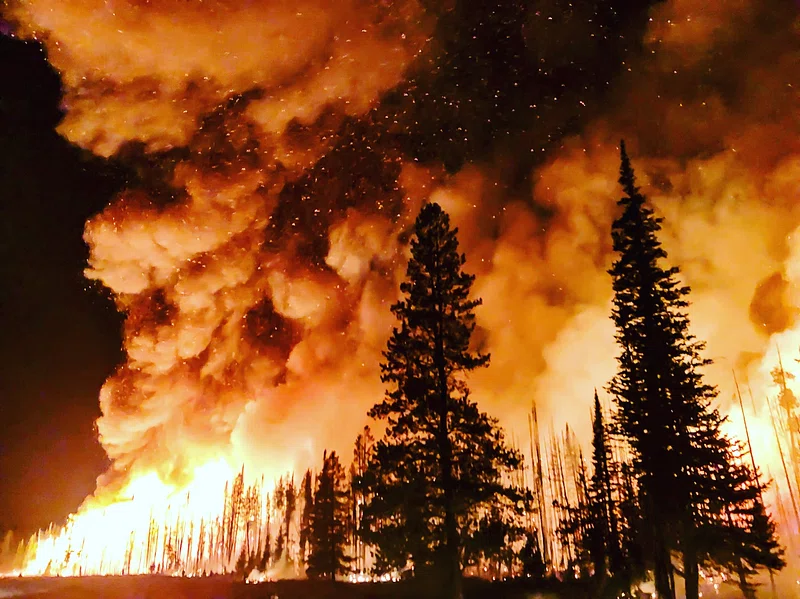
Canadian wildfire 2023

A new report released Tuesday identifies the United States as “planet-wrecker-in-chief,” pointing to the nation’s plans for a massive expansion of oil and gas production over the next two and a half decades even as it postures as a climate leader on the world stage.

According to Oil Change International’s (OCI) research, planned oil and gas expansion in the U.S.—the largest historical contributor to planet-warming greenhouse gas emissions—accounts for more than a third of prospective global oil and gas expansion through 2050. Much of the U.S. expansion is tied to fracking, the report observes.

The U.S. is one of just 20 countries that are projected to be responsible for nearly 90% of the carbon dioxide pollution from new oil and gas extraction projects between 2023 and 2050.

If those 20 countries follow through with their fossil fuel expansion plans, OCI noted, the projects will emit an estimated 173 billion tonnes of carbon dioxide, the equivalent of the lifetime emissions of more than 1,000 new coal plants.

“If that amount of CO2 is emitted into the atmosphere, then we’re in serious trouble,” Romain Ioualalen, global policy lead for OCI and a co-author of the new report, said during a press conference on Tuesday.

Such emissions, Ioualalen warned, would blow through the world’s dwindling carbon budget and make it “mathematically impossible” to limit global warming to 1.5°FC by the end of the century.

“The planet-wreckers report presents unmistakable evidence of the peril of fossil fuel expansion while reckoning with the world’s historic polluters, namely the United States.”

Five rich countries—the U.S., Canada, Australia, Norway, and the United Kingdom—account for more than half of all planned oil and gas expansion globally, even though they are far less reliant on fossil fuel revenues than other nations and have the resources for a renewable energy transition, OCI said.

The new report takes the Biden administration to task for “pledging climate leadership” while simultaneously facilitating “the continued expansion of fossil fuel production in the United States.”

“In 2023 alone, the administration greenlit the Alaska Willow Project; approved multiple LNG export facilities in Alaska and along the Gulf Coast, held a massive oil and gas lease sale in the Gulf of Mexico, fast-tracked the Mountain Valley Pipeline, and oversaw the weakening of bedrock environmental laws, making it easier for fossil fuel infrastructure to move forward,” the report notes.

The new research was released just over a week before United Nations Secretary-General António Guterres’ Climate Ambition Summit, which will be preceded by more than 400 mobilizations worldwide aimed at pressuring world leaders to urgently phase out fossil fuels.

“The planet-wreckers report presents unmistakable evidence of the peril of fossil fuel expansion while reckoning with the world’s historic polluters, namely the United States, and how we must hold them accountable,” Helen Mancini, a 16-year-old Fridays for Future activist from New York City, said in a statement Tuesday.

“The activism youth are doing is not radical,” Mancini added, “it’s a demand for survival that the planet-wreckers must heed.”

Original article by JAKE JOHNSON republished from Common Dreams under Creative Commons (CC BY-NC-ND 3.0). 

Continue ReadingNew Study Identifies United States as ‘Planet-Wrecker-in-Chief’

Don’t look there: how politicians divert our attention from climate protesters’ claims

Spread the love
Just Stop Oil protesting in London 6 December 2022.

Daniel Garcia-Jaramillo, Sheffield Hallam University

The right to protest is a distinctive feature of democratic, liberal societies. Yet the way in which many leading British politicians are currently talking about Just Stop Oil might make you think otherwise. Far from engaging with the issues at stake in these protests, politicians appear to be encouraging the wider public to ignore them or even oppose them.

Having seen their initial protests largely ignored, Just Stop Oil members have been making more disruptive (but non-violent) protests lately. They’ve been present at high-profile sports events like Wimbledon and the World Snooker Championships.

Policing minister Chris Philp dismissed the temporary delays caused to such events as “completely unacceptable”“. He argued that “the vast majority of the public are appalled by this very, very small, very selfish minority” and called on those not protesting to intervene.

With the UK government announcing new licences for oil and gas drilling in the North Sea, it’s clear that collective action that allows people to demonstrate their disagreement in peaceful ways is needed. In apparent contradiction to warnings about the climate crisis, Prime Minister Rishi Sunak’s commitment to the green agenda is wavering.

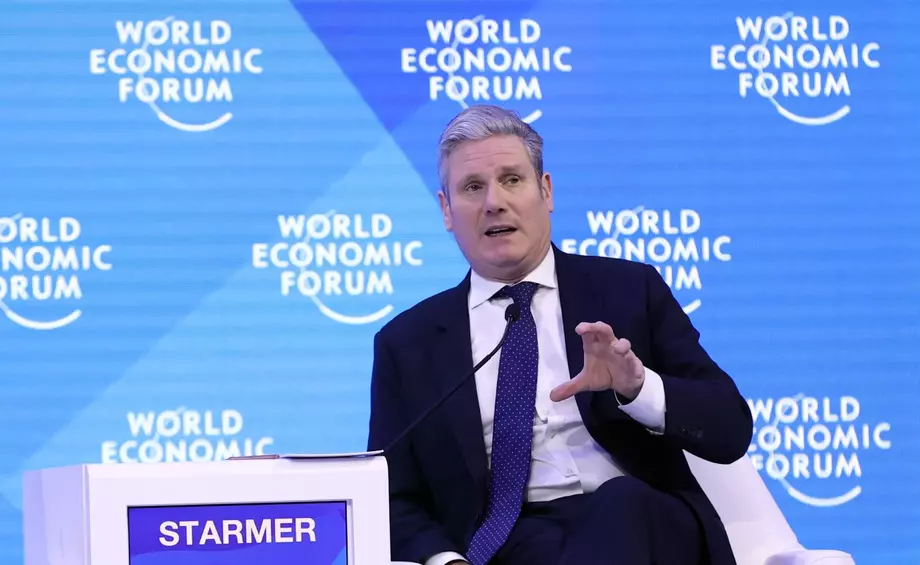
Meanwhile, Keir Starmer, the leader of the Labour party, has cancelled a plan to fund the transition from fossil fuels to green industries from the first day of government, should he win power. His response to criticism on this change was to turn on protesters.

He said: “The likes of Just Stop Oil want us to simply turn off the taps in the North Sea, creating the same chaos for working people that they do on our roads. It’s contemptible.”

Keir Starmer sucking up to the rich and powerful at World Economic Forum, Davos.
Keir Starmer has deployed some divisive language about climate protestors of late.

Diverting the conversation

Referring to people defending the environment as a “minority” that acts against other citizens polarises society and marginalises protesters’ claims. It depicts people’s demands as somehow niche rather than amounting to a highly pressing threat to the majority.

One of the features of language is that when we talk, we only focus on one or, at most, a few aspects of a particular object or event. A lot will inevitably remain unsaid.

Still, when what remains unsaid is one of the most obvious elements of any given topic, what is missing becomes as informative as what was said. In this case, the focus on tactics instead of the substance of the protest betrays an unwillingness to engage with the climate crisis.

The government has put forward the home secretary Suella Braverman rather than the environment secretary to respond to the Just Stop Oil protests (itself a signal that they are seen as a public order issue more than anything else).

Braverman has referred to people protesting for environmental reasons as causing “havoc and misery”. Environment secretary Thérèse Coffey, meanwhile, doesn’t appear to have made any public statements regarding the matter.

To say that people are protesting and not mentioning the reason for the protest leaves the story incomplete. That’s something that rarely happens when UK politicians talk about protests in other countries.

Last year, Sunak referred to women protesting in Iran as displaying “the most humbling and breathtaking courage” in sending “a very clear message that the Iranian people aren’t satisfied with the path that the government has taken”. Here the focus of the conversation is placed on protesters’ claims.

But when talking about protests held in the UK, the debate looms over the disruption caused, as if the core message were secondary or even dispensable. It is only when the core message is ignored that politicians can refer to those acting in defence of human and nonhuman lives as “selfish”.

In the absence of meaningful political engagement, conversations about Just Stop Oil protests in the UK have strayed mainly into tactics and disruption at expense of their core message. However, politicians in democratic nations have a responsibility towards the electorate to engage properly with what citizens demand, not just with the way they make their claims heard.The Conversation

Daniel Garcia-Jaramillo, PhD researcher, Centre for Behavioural Science and Applied Psychology, Sheffield Hallam University

This article is republished from The Conversation under a Creative Commons license. Read the original article.

Continue ReadingDon’t look there: how politicians divert our attention from climate protesters’ claims

World’s richest countries gave record sums of public money to fossil fuel industry last year

Spread the love

https://leftfootforward.org/2023/08/worlds-richest-countries-gave-record-sums-of-public-money-to-fossil-fuel-industry-last-year/

$1.4 trillion of public money went to the fossil fuel sector last year

Just Stop Oil protesting in London 6 December 2022.

Public financing of the fossil fuel industry by G20 countries reached record levels in 2022, a new report has found. The fossil fuel industry is among the sectors most directly responsible for driving the climate crisis.

According to a report by the International Institute of Sustainable Development (IISD), $1.4 trillion of public money flowed into the industry last year in G20 countries, which are among the world’s largest economies. The staggering sums are more than double that of the pre-covid period, despite commitments made at the Glasgow COP26 climate summit in which world leaders pledged to the phasing out ‘inefficient’ subsidies for fossil fuels.

The IISD research found that much of the support related to mitigating the cost of energy for consumers, but that one third was driving investment in new fossil fuel production, equivalent to around $440 billion.

The report’s authors wrote: “This support perpetuates the world’s reliance on fossil fuels, paving the way for yet more energy crises due to market volatility and geopolitical security risks. It also severely limits the possibilities of achieving climate objectives set by the Paris Agreement by incentivizing greenhouse gas (GHG) emissions while undermining the cost-competitiveness of clean energy.

https://leftfootforward.org/2023/08/worlds-richest-countries-gave-record-sums-of-public-money-to-fossil-fuel-industry-last-year/

Continue ReadingWorld’s richest countries gave record sums of public money to fossil fuel industry last year

GB News hosts ‘in hysterics’ over climate change warnings

Spread the love

https://www.thelondoneconomic.com/news/gb-news-dont-look-u-climate-change-interview-laughing-354968/

In an eerie callback to a scene from Don’t Look Up, two GB News hosts had a bizarre reaction to the severe impacts of climate change.

Alex de Koning was invited to speak on the channel, after devastating wildfires in North America and intense flooding in Pakistan claimed many lives earlier this year. However, the activist didn’t exactly have a captive audience to speak to.

Hosts Andrew Pierce and Beverley Turner met de Koning’s climate change warnings with outright skepticism. The pair questioned every point raised by the Just Stop Oil member, and instead, burst into a fit of hysterics while he addressed the global warming death toll.

https://www.thelondoneconomic.com/news/gb-news-dont-look-u-climate-change-interview-laughing-354968/

Continue ReadingGB News hosts ‘in hysterics’ over climate change warnings