Category: Shell

  • How Carbon Capture and Storage Projects Are Driving New Oil and Gas Extraction Globally 

    Spread the love

    Original article by Michael Buchsbaum and Edward Donnelly republished from DeSmog.

    The oil industry’s push to portray carbon capture as a climate solution at COP28 obscures how the technology is really being used.

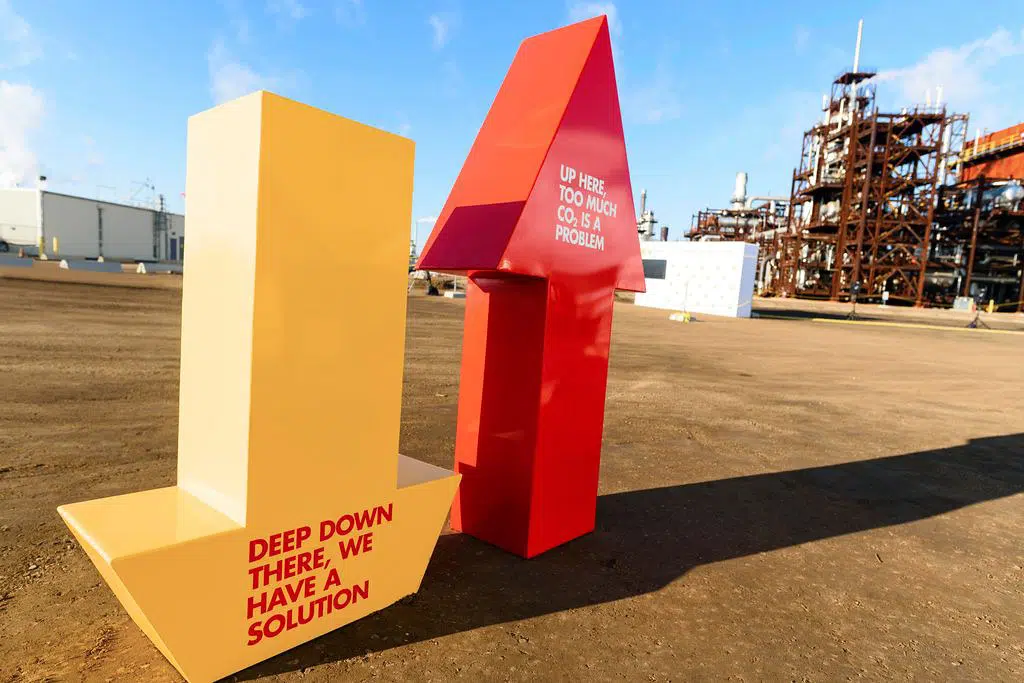
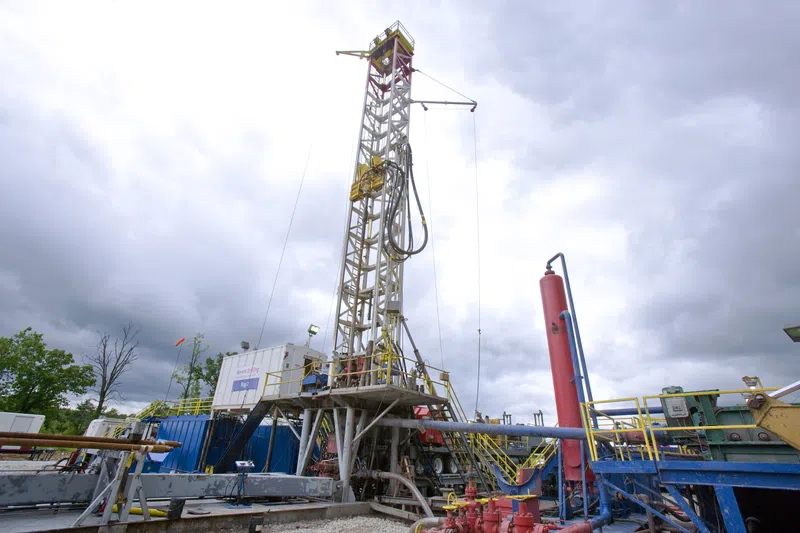
    Shell and its joint venture partners have a Quest carbon capture and storage (CCS) project at its Scotford Complex near Fort Saskatchewan, Canada. Credit: Government of Alberta, CC BY-NC-ND 2.0
    Shell and its joint venture partners have a Quest carbon capture and storage (CCS) project at its Scotford Complex near Fort Saskatchewan, Canada. Credit: Government of Alberta, CC BY-NC-ND 2.0

    When Sultan Ahmed Al Jaber opens the 28th annual UN climate conference in Dubai in November, he will be juggling two roles – convincing the world of the United Arab Emirates’ leadership in reducing greenhouse gas emissions, while preserving the very industry that’s causing them. 

    In addition to his job as summit president, Al Jaber heads the Abu Dhabi National Oil Company (ADNOC), which plans to increase its oil and gas output by 11 percent by 2027. The company says that more oil will mean less emissions, however — provided the industry builds enough facilities to capture carbon dioxide (CO2), the main gas causing the climate crisis.  

    “We must be laser-focused on phasing out fossil fuel emissions, while phasing up viable, affordable zero carbon alternatives,” Al-Jaber said at a pre-COP 28 event in Bonn in June. The statement was widely interpreted as a pitch for carbon capture. 

    On September 6, ADNOC finalized a deal to build a carbon capture and storage (CCS) project in the UAE’s Habshan oil and gas field, extending the company’s existing CCS operations at a steel plant. Now projected to become one of the largest carbon capture plants in the Middle East, ADNOC says the facility will have the equivalent climate impact of removing 500,000 cars from the road.

    In fact, the project will be used to squeeze even more oil from the ground. Most of the CO2 ADNOC already captures is pumped into existing oil wells, forcing residual crude to the surface in a process known as “enhanced oil recovery” or “EOR”.

    It is a trend reflected across the sector: Of the 32 commercial CCS facilities operating worldwide, 22 use most, or all, of their captured CO2 to push more oil out of already tapped reservoirs. This fleet accounts for approximately 31 million tonnes of the world’s roughly 42 million tonnes of operational carbon capture capacity, according to figures published by the industry-backed Global CCS Institute, U.S. Energy Information Administration and other sources. 

    But the fact that existing carbon capture projects are mostly used to bring more oil to the surface has not stopped oil and gas companies championing the technology as a climate solution in the run-up to COP28.

    In January, ExxonMobil Tweeted a video interview with a safety and environment supervisor at its LaBarge CCS project in Wyoming. 

    “Welcome to La Barge — the industrial facility that has captured the most CO2 emissions on earth to date,” says a caption at the start of the clip.

    Nowhere does the video mention that most of the CO2 captured from the LaBarge gas processing plant is being injected underground to extract more oil.  Research by the Institute for Energy Economics and Financial Analysis, a nonprofit energy think tank, shows that 97 percent of CO2 captured by the La Barge facility has been sold for EOR since the plant began operations in 1986. In times when EOR was not profitable, CO2 was simply vented into the atmosphere.

    While CCS is proving a boon for the fossil fuel industry, a DeSmog review of 12 of the world’s biggest projects has found a litany of missed carbon capture targets; cost overruns; and multi-billion-dollar bills to taxpayers in the form of subsidies. 

    DeSmog’s research also raises questions over an oft-cited claim that industry captures 41 million tonnes of CO2 annually — or 0.1 percent of the world’s approximately 37 billion tonnes of energy-related CO2 emissions.

    Beyond the consistent underperformance of many CCS projects, DeSmog found that most either strip out CO2 in the process of refining fossil fuels, or use their captured CO2 to push more oil out of the ground — or both. The result: existing CCS projects are enabling the release of a much greater amount of overall CO2 emissions into the atmosphere than they are storing underground. 

    For examples, see a summary of the 12 projects DeSmog analysed here.

    From Oilman’s Dream to “Climate Solution”

    The process of using carbon dioxide to produce more oil, now known industry-wide as enhanced oil recovery, or “CO2-EOR”, was born in the oil fields of Texas in the early 1970s. 

    Petroleum engineers from leading oil producers such as Shell, Exxon, and Chevron had discovered that injecting CO2 at high pressure into “mature” or “previously developed” oil reservoirs helped increase the flow of otherwise stubborn hydrocarbons — in essence squeezing more volume out of aging wells. 

    Though initial tests found that each ton of injected CO2 could push out an additional two or more barrels of oil, the lack of readily available CO2 made the technique expensive. That changed when companies began siphoning off CO2 emitted from several Texas gas processing plants, and piping it to an oil field to boost productivity. To ensure a steady supply, industry agents scoured the region and purchased the rights to mine naturally occurring CO2 deposits in Colorado, New Mexico, and Arizona — eventually building hundreds of miles of dedicated pipelines to transport the gas to oil-field injection points. 

    By the late 1970s, amid growing concerns over what was then known as the “greenhouse effect,” industry executives began to propose that capturing CO2 and burying it underground could allow the world to continue generating power from fossil fuels far into the future. In 1992, the Paris-based International Energy Agency (IEA) and other energy organizations established a research program to support developers seeking to prove CCS at scale. 

    By the time of the first U.N. climate conferences in the mid-1990s, the oil industry had begun marketing carbon capture as a technological “silver bullet” capable of making coal “clean,” and rendering oil and gas as “low carbon” — a strategy employed by oil majors to this day.

    However, capturing CO2 is not the same as avoiding its climate impacts. If that CO2 is then used to directly produce more oil, or if CCS “abatement” is used to suggest that additional oil and gas production is climate-friendly — or in some cases both — then those CCS projects are invariably acting as a net harm to the climate, by actually increasing overall CO2 pollution. 

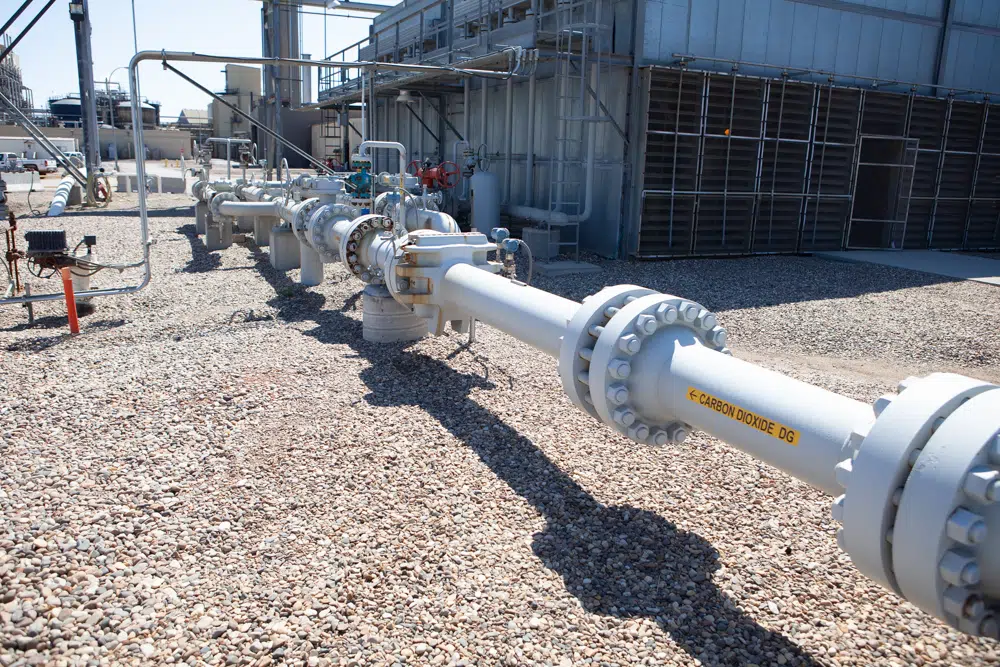
    Carbon dioxide runs through pipes at a North Dakota CCS plant. Credit: Buchsbaum Media.
    Carbon dioxide runs through pipes at a North Dakota CCS plant. Credit: Buchsbaum Media.

    For example, the fossil fuel industry often points to Norway’s pioneering Sleipner CCS facility — which has captured and buried approximately one million tons of CO2 per year under the North Sea since 1996 — as proof that carbon capture works. But that figure does not account for all the additional CO2 that’s emitted when fossil gas produced by the plant is burned by end-users. 

    Energy expert Michael Barnard, estimates that even though Sleipner has stored about 23 million tons of CO2 from 1996-2019, burning the gas refined by the plant over that time has released some 581 million tons of CO2 into the atmosphere — or more than 25 times the amount that was sequestered. (For more details on Sleipner, see DeSmog’s review of 12 CCS facilities).

    Profit Driver

    Now an established technique worldwide, producers generally use CO2-EOR to recover oil from older “depleted” fields, where less sophisticated recovery methods have left up to two-thirds of the original oil behind. If the geology and economics are favorable, using EOR techniques can extend the productive life of developed oil fields for several more decades. 

    To put the significance of this approach to the oil industry into perspective, according to the U.S. National Energy Technology Laboratory, of the 600 billion barrels of oil that have been discovered in the U.S., approximately 400 billion are unrecoverable by conventional means. But half of that unrecoverable oil — or 200 billion barrels — could be squeezed to the surface through CO2-EOR.

    Today, the oil industry pumps some 80 million tonnes of CO2 underground each year to extract more oil, much of it in the U.S. — the world’s leading oil and gas producer, and biggest user of CCS-EOR, which drives six percent of the country’s daily output. In some cases, the technique can squeeze up to four or five additional barrels from otherwise declining fields for every ton of injected CO2. Though geology plays a role, one of the main factors inhibiting even greater EOR volume is the lack of cheaply available CO2. 

    Despite many EOR projects simply being intended to extend oil production, companies often label them as climate-friendly “carbon capture” facilities since about half the CO2 injected underground remains there, depending on local geological conditions. 

    However, climate claims made on the basis of CCS projects also often ignore the fact that much of the CO2 the industry “captures” for EOR purposes is mined from naturally occurring underground deposits, and reburying this gas in an oil field does nothing to reduce the amount of emissions humans are releasing into the atmosphere by burning fossil fuels. 

    Government Backing

    While costs for proven zero-carbon emitting renewable energy technologies are plummeting, CCS projects have remained dependent on subsidies and tax breaks that often incentivise some of the world’s richest and most polluting companies to capture CO2 to produce more oil. 

    Governments worldwide have awarded at least $19 billion in subsidies to CCS projects over the last 20 years, according to data compiled by Oil Change International, a research and advocacy organization. This number includes more than $4 billion in failed projects, including the troubled Kemper Facility, a now-abandoned “clean coal” and EOR scheme. (For details, please see DeSmog’s review of 12 CCS projects).

    Carbon capture technology used at a coal mine in 2014. Credit: Peabody Energy, Wikimedia Commons (CC BY-2.0)”>Wikimedia Commons Wikimedia Commons (CC BY-2.0)”>CC BY-2.0
    Carbon capture technology used at a coal mine in 2014. Credit: Peabody Energy, Wikimedia Commons (CC BY-2.0)”>Wikimedia Commons Wikimedia Commons (CC BY-2.0)”>CC BY-2.0

    By far and away, the United States has extended the most government support for CCS, estimated at $15 billion since 2010. Canada, Australia, and the European Union have also poured billions into the technology. Norway’s state-owned Statoil, now Equinor, was also an early CCS adopter, and the government continues to pour billions into new, more sophisticated projects. Likewise, state-owned companies in China, as well as Brazil’s Petrobras, Saudi Arabia’s Aramco, and the United Arab Emirates’ ADNOC are receiving support to develop and expand their existing CCS operations.  

    U.S. Doubles Down

    Despite the fact that almost three-quarters of existing CCS projects are used to pump more oil, new climate policies on both sides of the Atlantic are driving more government support. 

    In August last year, U.S. President Joe Biden’s Inflation Reduction Act (IRA) – which contained sweeping climate provisions — significantly expanded tax credits for investments in CCS beyond an existing $12 billion in government support. Under the revised “45Q” credits section, companies can now claim $60 per ton of CO2 captured for EOR — up from $35 before the Act was passed — and $85 per ton of CO2 captured for geological storage, up from $50.  

    Additionally, the IRA reduces the requirements for eligible CCS projects while locking in a seven-year extension to qualify for the tax credit, meaning that developers have until January 2033 to begin construction. 

    The industry-backed Global CCS Institute reckons these tax breaks and other enhancements could increase CCS deployment in the U.S. 13-fold to more than 110 million tonnes per year by 2030.

    Since there has been no cap set as to how much the U.S. government can pay through new carbon capture credits, Bloomberg New Energy Finance and Credit Suisse caution these subsidies could balloon to a vast $50 to $100 billion in CCS giveaways over the next decade.

    Flurry of Deals

    More than 50 new CCS projects were announced within months of the passage of the IRA — spurred on by even more support from the Biden administration.

    In July, ExxonMobil, which boasts more CCS experience than any other company, spent over $5 billion to acquire independent oil and gas producer Denbury Resources and its 1,300 miles of CO2 pipeline infrastructure. In projects almost entirely devoted to EOR, Denbury has been injecting over four million tonnes a year of carbon captured from industrial and natural sources into various oil fields in 10 onshore sequestration sites across the Gulf region of the U.S. 

    Buying Denbury allows ExxonMobil to not only advance its various carbon capture deals, but also gives it a great potential revenue source as polluting companies increasingly resort to buying carbon credits to meet climate targets. With an expanding CO2 pipeline network already in place, ExxonMobil can now offer itself up as an emissions disposal company and cash in on the associated tax credits. 

    Looking ahead, ExxonMobil says that CCS and other “carbon management” schemes could develop into a $4 trillion global market by 2050.

    ‘Preserve our Industry’

    The deal-making continued in August, when the White House and the Emirati government endorsed a new partnership between ADNOC and Texas-based Occidental Petroleum to “supercharge and accelerate decarbonization solutions” in the UAE, the United States, and around the world. Both partners are currently running large-scale carbon capture projects specifically aimed at producing “low carbon” oil. 

    One of the technologies the partnership will explore is “direct air capture,” which involves sucking air through giant fans and filtering out CO2 with a chemical-lined filter. The CO2 can then be stored underground or piped to petroleum wells to help extract oil. Bonus funds in Biden’s IRA are now available to prove this experimental technology is viable.

    Currently the world’s first large-scale direct air capture plant in Iceland stores about 4,000 tonnes of CO2 a year, about 0.001 percent, of global carbon capture capacity, according to data from the Global CCS Institute. That’s less than four second’s worth of global emissions. However, these modest beginnings have not tempered oil industry enthusiasm for the technique. 

    “We believe that our direct capture technology is going to be the technology that helps to preserve our industry over time,” Occidental Petroleum Chief Executive Vicki Hollub told a major fossil fuel conference in Houston in March. The company is already the U.S. leader in carbon capture operations, and Hollub says new advances could serve as a lifeline for the oil industry, extending operations “60, 70, or 80 years in the future,” she noted. 

    Direct air capture plants could soon be used to trap CO2 for enhanced oil recovery operations in the US, the UAE and beyond. In 2021, ADNOC announced plans to produce “low carbon” petroleum, and last year Occidental signed its first contract for “net-zero oil”.

    European Commission President Ursula von der Leyen requested a Dutch foreign official to examine CCS as a climate solution. Credit: WikiMedia Commons, CC BY-NC-ND 2.0“>WikiMedia Commons
    European Commission President Ursula von der Leyen requested a Dutch foreign official to examine CCS as a climate solution. Credit: WikiMedia Commons, CC BY-NC-ND 2.0“>WikiMedia Commons

    Europeans Follow Suit

    Aggressive support for CCS from the Biden administration has found echoes across the Atlantic. In March, the European Commission proposed that the EU should target 50 million tonnes per year of CO2 capture capacity by 2030, from almost zero today. The target forms part of the draft Net-Zero Industry Act, a key piece of climate legislation aiming to drive the clean energy transition. 

    European Commission president Ursula von der Leyen has since instructed Wopke Hoekstra, a former Dutch foreign minister who has worked for Shell, to examine CCS as a climate solution before he takes over as climate commissioner in October.

    Against this backdrop of positive policy signals, the oil industry has announced a spate of ambitious carbon capture plans in Europe, a continent with little existing CCS infrastructure outside of Norway – almost all of which plan to store CO2 under the North Sea.

    In the UK, the North Sea Transition Authority, which regulates the country’s oil and gas industry, this month awarded 21 licenses to 14 companies to store captured CO2 into blocks for formerly productive oil and gas fields under the seabed. The combined CCS plan aims to store 30 million tonnes of CO2 annually by 2030.

    Around the world, hundreds of new carbon “abatement” projects reliant on CCS to clean up fossil-fueled electrical generation, steel and cement output, as well as hydrogen production, are now scheduled to come online by the end of the decade.

    This, in turn, has triggered a scramble by companies seeking to enter the rapidly emerging CO2 logistics, handling, shipping and disposal markets.

    Despite all this activity, announced global schemes to capture and bury CO2 constitute only a tiny fraction of what would be needed to slow climate change, critics say. Based on the current project pipeline, the International Energy Agency predicts that by 2030, the world’s annual carbon capture capacity from both new construction and retrofits could amount to a total of 205 million tonnes of CO2, only about 0.5 percent of current global energy-related emissions. 

    Moreover, the core of the IEA’s Net Zero scenario, as well as similar roadmaps for avoiding the worst impacts of climate change, rests on rapidly accelerating the shift to renewables from fossil fuels, regardless of whether a portion of CO2 emissions are “abated” through capture and storage. 

    Aware of the risks of the oil industry presenting CCS as a catch-all climate solution at COP28, some governments are pushing back. In July, ministers from Germany, France, Denmark, the Netherlands and more than a dozen other nations published a joint letter warning that CCS and “abatement technologies must not be used to green-light continued fossil fuel expansion.” Instead, such technologies “must be considered in the context of steps to phase out fossil fuel use, and should be recognised as having a minimal role to play in decarbonization.”

    With the Emirati hosts seemingly determined to champion carbon capture, and the oil industry planning to market ever more barrels of “net-zero” oil, the battle over the future of a 50-year-old technology may have only just begun. 

    Click here for case studies from a DeSmog review of 12 of the world’s leading CCS projects, and their impact on the climate. 

    Original article by Michael Buchsbaum and Edward Donnelly republished from DeSmog.

    Fossil Fuel Companies Made Bold Promises to Capture Carbon. Here’s What Actually Happened.

    Italian Oil Giant Eni Knew About Climate Change More Than 50 Years Ago, Report Reveals

    One Billion People Will Die Without Oil Production, Kuwait Official Claims

    UK/Fossil Fuel Firms Flock to Conservative Party Conference

    Oil Lobby Claims More Production Won’t Raise Emissions, But Ignores Crucial Data

  • Why California is Taking Big Oil to Court — and Why it Matters

    Spread the love

    Original article by Dana Drugmand republished from DeSmog.

    The sweeping complaint details the fossil fuel industry’s coordinated campaign to deceive the public about the dangers of fossil fuels.

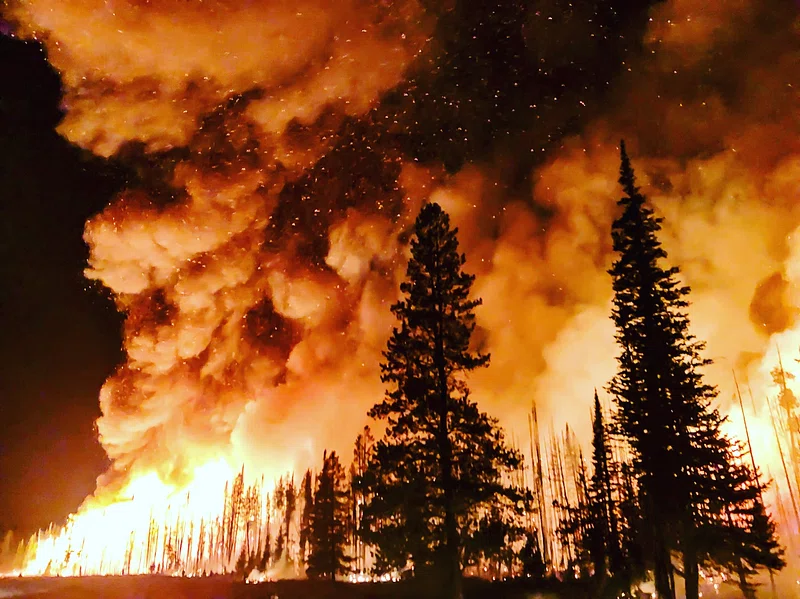
    Canadian wildfire 2023
    Canadian wildfire 2023

    “This is a historic moment,” Rob Bonta, California’s attorney general, told reporters on Sunday, as he stood alongside Gov. Gavin Newsom on the opening day of Climate Week NYC.  The pair of California leaders were there to discuss the lawsuit the state had recently filed against Big Oil on behalf of the people of California to hold fossil fuel companies accountable for the effects of climate change.

    While it is not the first to seek accountability from the fossil fuel industry for its role in fueling the climate crisis, California’s lawsuit stands out in several ways: The state has a reputation for leading on climate policy; it is on the frontlines of climate change; it is a producer of oil and gas; and it is, to date, the most politically and economically powerful state to sue Big Oil.

    More than three dozen states and cities are suing oil, gas, and coal companies over their role in causing climate change. But California is the first fossil-fuel-producing state to do so. That sends a clear political message that the industry “is less powerful and trusted than before,” Nick Caleb, a climate and energy attorney with Breach Collective, told DeSmog. It may signal that fossil fuel companies do not have much of a future powering the state’s economy, Caleb said. 

    California is facing major economic and humanitarian costs from the climate emergency. The state, with a population of nearly 40 million people, has racked up several billions of dollars in climate-related damages on top of the tragic costs to human lives. Some insurance companies are backing away from the state due to the outsized risks. 

    “It’s incalculable in terms of the dollars, the lives lost, the funerals, and dead bodies in Paradise, California,” Newsom said on Sunday. In 2018, the Camp Fire decimated the northern California community and killed at least 85 people.

    “We all know how California has suffered from climate impacts,” Christiana Figueres, one of the key architects of the Paris Agreement, told journalists at a Covering Climate Now conference at Columbia Journalism School in New York City on Thursday. She called California’s lawsuit “a major, major upgrade … in the liabilities and in the reach that climate litigation can have.” 

    The lawsuit names five companies — ExxonMobil, Shell, Chevron, BP, ConocoPhillips — and one lobby group, the American Petroleum Institute. It asserts that the companies knew about the climate risks associated with burning fossil fuels and greenhouse gas emissions, yet underplayed them to the public, and it argues that the climate disasters and devastation California is experiencing could have been largely avoided or mitigated were it not for the lies and deceit of the fossil fuel industry. “California is in the throes of a climate crisis,” the case contends.  

    The 135-page complaint, filed Friday in superior court in San Francisco, lays out the evidence of the alleged deception in great detail. Bonta called it the “most sweeping complaint thus far.”

    “You cannot read it without crawling out of your skin,” Newsom added at Sunday’s press briefing.

    Many of the details and revelations are known, but are worth recapping as they explain why major oil companies are facing similar lawsuits from so many  states and municipalities.

    A Public Campaign of Deception

    First, as the complaint notes, “Defendants have known about the potential warming effects of GHG emissions since as early as the 1950s.” Nuclear physicist Edward Teller warned the oil industry at an API event in 1959 that global warming might melt the polar ice caps and submerge coastal cities. 

    In the late 1960s, as the complaint details, the Stanford Research Institute issued reports that accurately predicted the atmospheric carbon dioxide (CO2) concentration in 2000. The reports, commissioned by API, further warned of the Antarctic ice cap melt, and explicitly connected CO2 rise to fossil fuel combustion. 

    More warnings came from industry scientists in the 1970s, but these were not disseminated publicly. Instead, Exxon realized that legislation affecting its business could take shape and decided to closely monitor the science but not publicly acknowledge or act on it. “In 1979, API and its members, including the Fossil Fuel Defendants, convened a Task Force to monitor and share cutting-edge climate research among members of the oil industry,” the complaint explains. This close assessment of potential climate impacts and climate modeling continued into the 1980s. 

    In 1988, an internal Shell report titled “The Greenhouse Effect” further pointed to fossil fuels as the cause of rising CO2 concentrations and warned of the devastating impacts on society.

    The very real prospect of legislation and international action to combat climate change in the late 1980s and early 1990s, prompted a U-turn within the industry. The industry shifted tactics “from general research and internal discussion on climate change to a public campaign aimed at deceiving consumers and the public, including the inhabitants of California,” the complaint states. In publications and advertorials, the industry directly contradicted what it had known for decades about the role of fossil fuels in increasing CO2 emissions and temperature rise. During this time the Global Climate Coalition actively worked to undermine the public’s understanding of climate science and even to manipulate the Intergovernmental Panel on Climate Change, the UN’s climate science body.

    Exxon and other oil majors also funded “fringe scientists” to peddle their views and  funded dozens of think tanks and front groups to promote climate denial. The complaint calls out a few of these groups, including: the Heritage FoundationHeartland InstituteCompetitive Enterprise InstituteFrontiers of Freedom, and Committee for a Constructive Tomorrow.

    A Conspiracy to “Conceal and Misrepresent”

    The California lawsuit does not bring racketeering charges as some recent climate accountability lawsuits have. It does, however, refer to a conspiracy. According to the complaint, the defendants, through their trade associations and front groups like the Global Climate Coalition, “conspired to conceal and misrepresent the known dangers of burning fossil fuels.” While conspiracy is not charged, the lawsuit references it “for the purposes of establishing that California state court is the correct jurisdiction and venue for this case,” Caleb explained. 

    “Although the Fossil Fuel Defendants were competitors in the marketplace, they combined and collaborated with each other and with API on this public campaign to misdirect and stifle public knowledge in order to increase sales and protect profits,” the complaint argues. 

    The industry’s alleged deception delayed a transition to alternative and cleaner forms of energy and enabled a much greater buildup of greenhouse gas (GHG) emissions than otherwise would have occurred, the lawsuit argues, adding: “Defendants could have chosen a different path.”

    Ben Franta, head of the Climate Litigation Lab at Oxford University and one of the key researchers to uncover evidence of the industry’s early climate change awareness and subsequent efforts to deceive, told DeSmog: “The bottom line is that major fossil fuel companies knew decades ago that their own products, unless replaced with safe energy sources, would cause catastrophic damage in the 21st century. They concealed their knowledge and misled the public about the reality, seriousness, cause, and solutions to the problem in order to keep selling fossil fuels and increase industry profits.” 

    API was instrumental to the execution of this plan. The trade association “played a key role in creating climate denialist organizations such as the Global Climate Coalition,” Franta said. 

    In response, API called California’s lawsuit part of an “ongoing, coordinated campaign to wage meritless, politicized lawsuits” against the oil and gas industry. 

    The Western States Petroleum Association, the main industry lobby for the western region including California, is not a named defendant in the complaint. Franta said API and WSPA have “both played key roles in deceiving the public about climate change and worsening climate damages,” but that “much more research to date has been conducted on API.” 

    Nevertheless, “their contributions to climate change are significant and actionable under California law,” Caleb told DeSmog, adding that WSPA “deserves to be held accountable” for greenwashing and deceptive conduct. WSPA has been named as a defendant in a climate lawsuit filed in June by Multnomah County, Oregon, the first such case to do so.  

    Industry’s Misleading Behavior Has “Not Stopped”

    The complaint says the companies’ “efforts to mislead the public about climate change have not stopped.” In recent years, the oil and gas industry has shifted to prolific greenwashing. It portrays its products as “cleaner” or “low carbon,” and claims the industry is driving climate solutions.

    “Just as tobacco companies promoted ‘low-tar’ and ‘light’ cigarettes … so too do Defendants peddle ‘low-carbon’ and ‘emissions-reducing’ fossil fuel products,” the complaint notes.

    Yet Big Oil is now retreating on its meager climate commitments and doubling down on oil and gas production, even after raking in record profits in 2022. For instance, in June, Shell announced it would not follow through on its earlier promise to gradually decrease oil production through 2030.

    “The fact that they’re still at it, rolling back ambition in real time … is shameful,” Newsom said on Sunday.

    “They need to be held accountable. They need to pay for the damage that they’ve caused. They knew, they knew for years,” Bonta added. 

    In an emailed statement, a Shell spokesperson said the company’s “position on climate change has been a matter of public record for decades”, adding: “We do not believe the courtroom is the right venue to address climate change.”

    ExxonMobil, Chevron, BP, and ConocoPhillips did not immediately respond to requests for comment.

    Lawsuit Opens the “Floodgates”

    Newsom and Bonta made clear on Sunday that they’re hoping the state’s decision to sue Big Oil could therefore encourage other jurisdictions to do the same. California’s actions on climate have often broken new ground and inspired other states to follow suit — a phenomenon is called the “California effect.” For example, the state has set  increasingly stringent vehicle tailpipe emissions standards, implemented the country’s first economy-wide cap-and-trade program, and has recently passed a first-in-the-nation law requiring large companies to publicly disclose their greenhouse gas emissions, 

    Climate lawyers and activists called California’s move to sue Big Oil “historic” and “decisive.”

    “The California lawsuit is the most significant litigation against the industry that’s happened yet,” said Steven Donziger, an environmental and human rights attorney who successfully sued Chevron and faced retaliation for it. “All of these lawsuits together collectively can really force the phaseout of the industry. They’re important.”

    “California’s lawsuit provides major momentum in the race to protect a livable planet,” Kassie Siegel, director of the Center for Biological Diversity’s Climate Law Institute, said in an emailed statement. “This case opens a new avenue for California to lead the nation in ending deadly fossil fuels.”

    Geoffrey Supran, associate professor of environmental science and policy and director of the Climate Accountability Lab at University of Miami, noted that California “is a bellwether for U.S. environmental action,” and that momentum to hold Big Oil accountable through litigation has been mounting for several years.

    “Now that the fifth largest economy in the world has waded in, the floodgates are truly open,” he said.

    As a state that still produces oil and gas, however, some say California is still not moving quickly enough to sever ties with the industry it is now suing. Mark Jacobson, professor of civil and environmental engineering at Stanford University, said that California “can do a lot more, faster,” noting the state continues to permit fossil gas usage in buildings, has not banned oil and gas drilling, and plans to phase out new gasoline-powered vehicles only by 2035, which is “five years after we need to transition 80 percent of the world away from fossil fuels.”  

    Campaign Demands “Polluters Pay”

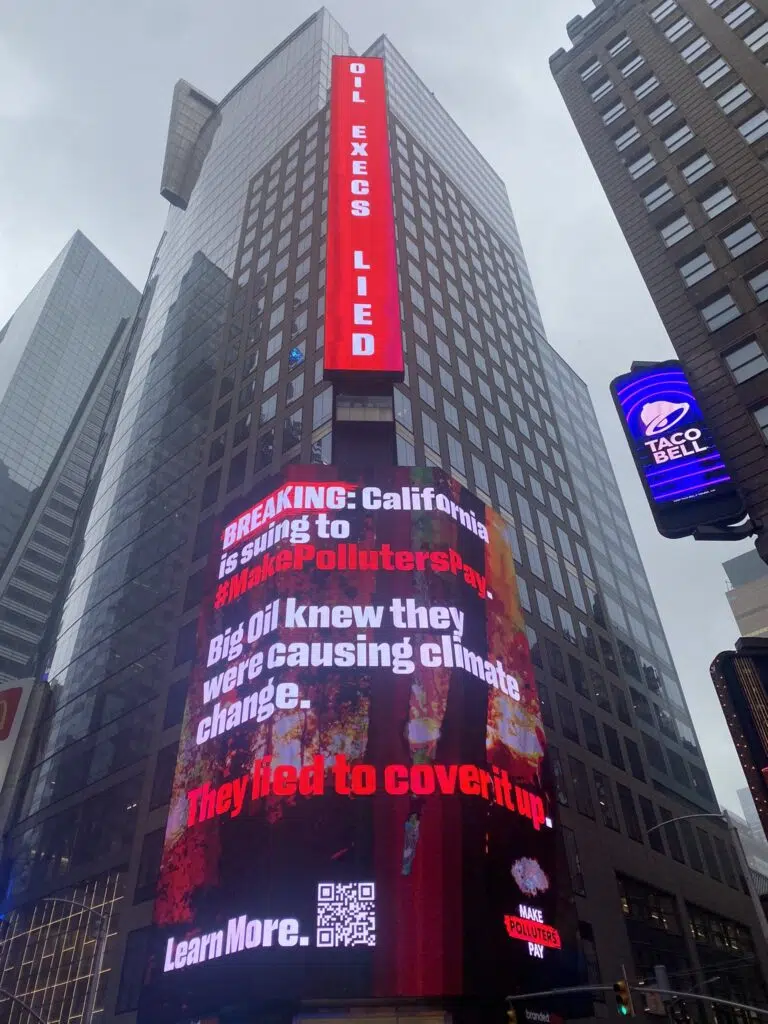
    A new activist campaign called “Make Polluters Pay,” which launched Monday in New York City, with a Times Square billboard and a six-figure digital ad buy and online petition, is supporting California’s call for more climate accountability lawsuits.

    The “Make Polluters Pay” campaign billboard in New York’s Time Square on September 18, 2023. Credit: Jamie Henn, Fossil Free Media
    The “Make Polluters Pay” campaign billboard in New York’s Time Square on September 18, 2023. Credit: Jamie Henn, Fossil Free Media

    “Make Polluters Pay will be the first big public-facing campaign to build support for these climate lawsuits and the broader effort to hold the fossil fuel industry accountable for the damage they are doing to our health, climate and communities,” Jamie Henn, founder of Fossil Free Media, told DeSmog.

    “I think California’s lawsuit is going to turn these climate liability cases into a serious movement that not only excites environmental lawyers, but the public writ large,” he added. “A few hundred million Americans experienced the brutal heat waves and other climate disasters this summer and they’re looking for someone to hold responsible. And when it comes to climate destruction, the answer is clear: it’s Big Oil.”  

    Original article by Dana Drugmand republished from DeSmog.

  • Congressional Dems Request DOJ Investigation into Big Oil’s Climate Deception

    Spread the love

    Original article by Dana Drugmand republished from DeSmog.

    U.S. Department of Justice in Washington DC. Credit: Scott (CC BY-SA 2.0)

    Citing “new evidence” of Big Oil firms’ advanced knowledge of climate risks and their actions to publicly conceal these risks, Democratic members of Congress are renewing calls for the U.S. Department of Justice to investigate carbon majors for potential violations of federal law.

    In a letter sent to Attorney General Merrick Garland on Tuesday, the 20 congressional signatories, led by Sen. Richard Blumenthal (D-Conn.) and Rep. Ted Lieu (D-Calif.), compare Big Oil’s deceptive conduct to that of Big Tobacco. In 2006, major tobacco firms were convicted of violating the Racketeer Influenced and Corrupt Organizations (RICO) Act in litigation brought by the DOJ. The letter requests that the DOJ now open an investigation into ExxonMobil, Shell, and other oil majors to “determine whether they violated RICO, consumer protection, truth in advertising, public health, or other laws.”

    The call for a federal investigation into the fossil fuel industry’s alleged climate deception follows new revelations further showing that Big Oil knew about the climate consequences of its products, yet actively worked to disseminate climate denial and block policy responses to protect profits.

    As DeSmog reported in an investigation published March 31, oil major Shell sponsored climate research in the 1970s — years earlier than previously thought. Despite the stark warnings for society issued in internal reports, the company backed a series of industry publications that downplayed climate risks, emphasized uncertainties in climate science, and called for more fossil fuel use, particularly coal. The investigation was based on more than 200 documents uncovered and compiled by Dutch scholar and activist Vatan Hüzeir.   

    One of those documents, an internal 1989 Shell scenarios report, discussed the potential for an unprecedented climate refugee crisis with global temperatures rising considerably beyond 1.5 degrees C (2.7 degrees F). The report warned: “Civilisation [sic] could prove a fragile thing.”

    The congressional letter to DOJ cites this and several other Shell documents from the investigation, stating: “Despite these warnings, Shell continued to publicly promote the use of fossil fuels and participate in trade associations and other groups that pushed climate denial and opposed solutions.” As DeSmog’s reporting noted, Shell engaged in lobbying and trade associations in the 1990s and 2000s that did just that, such as the Global Climate Coalition and the American Petroleum Institute.     

    The letter also points to two peer-reviewed studies indicating that Big Oil deceived and continues to deceive the public. One, published in January in the journal Science by researchers Geoffrey Supran, Stefan Rahmstorf, and Naomi Oreskes, demonstrated that Exxon’s climate modeling and global warming projections were exceptionally accurate, and explained that despite this skillful scientific understanding, the company’s public statements contradicted its internal knowledge of the climate risk. The other study, by Mei Li, Gregory Trencher, and Jusen Asuka and published in 2022 in the journal PLOS ONE, showed the disconnect between oil majors’ rhetoric and pledges around the low carbon transition and their actual actions and investments that prioritize their fossil fuel business.

    “The available evidence that these companies lied — and continue to lie — to the public about their central role in exacerbating the climate crisis demands further investigation,” the letter contends. It alleges that this conduct may “constitute the most consequential deception campaign in history, with potentially existential consequences for our planet.”

    Shell and ExxonMobil knew their products fueled the #ClimateCrisis, but lied to the public to protect their profits.

    READ: Our bicameral letter, co-led by @SenBlumenthal, urging @TheJusticeDept to investigate whether their actions violated federal law. https://t.co/pg3vP9jPgm— Rep. Ted Lieu (@RepTedLieu) July 25, 2023

    The letter comes amidst alarming signals of climate breakdown across the country, from the hot-tub-temperature water off the Florida Keys, to the worst flooding Vermont has seen in nearly a century, to punishing heat in the Southwest sizzling sidewalks and causing severe burn injuries.

    The Democratic members of Congress who signed onto the letter along with Sen. Blumenthal and Rep. Lieu include Reps. Katie Porter, Jared Huffman, Mark DeSaulnier, Kevin Mullin, and Nanette Díaz Barragán, all of California; Reps. Kim Schrier and Pramila Jayapal of Washington; Rep. Kathy Castor of Florida; Rep. Rashida Tlaib of Michigan; Rep. Cori Bush of Missouri; and Rep. Alexandria Ocasio-Cortez of New York. Sens. Ed Markey of Massachusetts, Sheldon Whitehouse of Rhode Island, Peter Welch of Vermont, Mazie Hirono of Hawaii, John Fetterman of Pennsylvania, and Alex Padilla of California also signed on.

    Just two weeks ago, during an online climate discussion, several members of Congress including Ocasio-Cortez, Whitehouse, and Sen. Bernie Sanders of Vermont, called on the Department of Justice to take legal action against Big Oil, with Sanders suggesting they pay the Attorney General a visit to make their request in person. He and other senators have previously written to the DOJ and President Joe Biden requesting an investigation into the fossil fuel industry’s climate deception.

    Richard Wiles, president of the Center for Climate Integrity, which advocates for holding climate polluters accountable, said in an emailed statement that this deception amounts to the most “consequential fraud committed against the American people” ever. 

    “Just as they did with the tobacco industry, the Department of Justice must exercise its unique power to hold the fossil fuel industry accountable and stop the lying,” Wiles said. “As long as Big Oil’s climate lies, both past and present, remain unchallenged by the DOJ, protecting the American public from the ravages of climate change will remain that much more difficult.”

    Original article by Dana Drugmand republished from DeSmog.

  • The oil industry has succumbed to a dangerous new climate denialism

    Spread the love
    Opec predicts oil demand will be 10% higher by the 2040s.
    Iurii

    Adi Imsirovic, University of Surrey

    If we have not been warned of the dangers of climate change this summer, we never will be. Extreme heat, forest fires and floods have been all over news reports. Yet the oil and gas industry remains largely in denial.

    The International Energy Agency (IEA) says steep cuts in oil and gas production are necessary to reach the Paris (COP 21) goal of keeping global warming at 1.5℃. However, only a tiny fraction of the industry, accounting for less than 5% of oil and gas output, has targets aligned with the IEA’s “net zero” requirements.

    The current secretary general of production cartel Opec, Haitham al-Ghais, expects global oil demand to rise by about 10% to 110 million barrels a day by 2045, a volume incompatible with the Paris goals. The UK government has just offered a helping hand, granting around 100 new North Sea licences. What are we to make of this mismatch?

    The new denialism

    Typical of the new breed of climate denialism is a recent report by the Energy Policy Research Foundation (ERPF), a body funded by the US government and various undisclosed corporate interests and foundations. It sees the IEA’s requirements as a “seal of approval … to block investment in oil and gas production by western companies”. The report views meeting the targets as too costly, too harsh on poor countries and too bad for the energy security of the west.

    In fact, it is wrong on each account. Many eminent economists and scientists use the concept of the social cost of carbon (SCC), which is defined as the cost to society of releasing an additional tonne of CO₂. Expert estimates from 2019 put this at between US$171 and US$310 (£133 to £241). If we go with, say, US$240 per tonne, the social cost of continued carbon equivalent emissions comes out at almost US$8.5 trillion every year.

    A recent study has factored into the calculation climate feedback loops. This is where one problem caused by global warming leads to others, such as melting permafrost unleashing stores of methane.

    When the study estimated the economic damage that this could cause, it produced an SCC in excess of US$5,000. That implies annual costs of more like US$170 trillion a year, which makes the US$4 trillion investment into clean energy that the IEA thinks necessary to meet the Paris climate goals look like a drop in the ocean.

    It may help to break this down to one barrel of oil. A special IEA report for COP28 estimates that on average, each barrel of oil emits 0.53 tonnes of CO₂ equivalent in greenhouse gas across its life cycle, 20% of which comes from production.

    Going back to our average SSC per tonne of US$240, that points to a social cost of US$126 per barrel. With oil currently at US$85 per barrel, the societal damage from producing, transporting, refining and consuming it is far greater – and that’s before including climate feedbacks.

    Meanwhile, the arguments by the EPRF and like-minded supporters about energy security are laughable. The history of the oil and gas industry is a history of wars and geopolitical tensions. Transitioning to cleaner fuels can only increase our energy security and reduce the need to police remote autocracies.

    The argument that poor countries need to continue burning carbon for development reasons is no better. In its latest report from 2022, the Intergovernmental Panel on Climate Change (IPCC) said climate change would probably see an increase in “losses and damages, strongly concentrated among the poorest vulnerable populations”.

    Equally, the World Health Organization estimates that: “Between 2030 and 2050, climate change is expected to cause approximately 250,000 additional deaths per year from malnutrition, malaria, diarrhoea and heat stress.”

    How to respond

    The denialists offer no alternatives to cutting carbon emissions, and often simply ignore climate change altogether. The recent ERPF report mentions climate change only four times. It is as if heatwaves, forest fires, flooding, rising sea levels and the demise of natural habitat caused by climate inaction were happening on another planet.

    We still have time to limit global warming below 1.5℃. It is true that we will need oil and gas for many years, and that there are currently no alternatives for certain sectors such as air travel, shipping and some industries. Nonetheless, there is still much that can be done now to make a substantial difference.

    To incentivise the transition to cleaner energy, governments need to end fossil fuel subsidies, which the IMF estimates amounted to US$5.9 trillion in 2020 alone. We also need to put a proper price on carbon – only 40 countries have attempted this so far, and none has it anywhere near the estimated social cost of emitting carbon.

    Countries that resist charging their own polluters should face a carbon border adjustment mechanism, which is a tariff that effectively puts the polluter on the same footing as local players. If all the actors in the fossil fuel supply chain had to face the cost of the damage they cause, the need to phase out long-term investments in fossil fuels would become more obvious.

    The IEA requirements for “net zero” are just one of the pathways towards meeting the Paris goal of 1.5℃ warming. Others are explored by some of the more credible actors in the petroleum industry, such as Shell, BP and Norway’s Equinor, but all require a substantial decline in oil demand and production by 2050.

    Required production cuts

    Graph showing the required production cuts to meet net zero
    I left the IEA’s scenario off the graph because it published so few datapoints, but it is broadly in line with the others. Meanwhile, the Opec data is for reference and not a net zero scenario.
    BP, Shell, Equinor and Opec

    Instead of criticising efforts to slow climate change and sponsoring ridiculous reports calling for more fossil fuels, the oil industry should eliminate leakages, venting and flaring of methane, and electrify as many processes as possible using renewable power. It should also employ carbon capture, usage and storage technologies over the next ten years – yes this will increase the price of fossil fuels, but that is exactly what we need to make clean sources of energy competitive across the board and speed up the energy transition.

    The sooner the industry starts facing up to the realities of climate change, the more chance it has to survive. The companies and even countries that produce fossil fuels will have to face and pay the cost for the damage they cause. Those costs are already massive and will grow. Those that survive will do so only as a provider of clean and sustainable energy.


    Imagine weekly climate newsletter

    Don’t have time to read about climate change as much as you’d like?

    Get a weekly roundup in your inbox instead. Every Wednesday, The Conversation’s environment editor writes Imagine, a short email that goes a little deeper into just one climate issue. Join the 20,000+ readers who’ve subscribed so far.The Conversation


    Adi Imsirovic, Fellow, University of Surrey

    This article is republished from The Conversation under a Creative Commons license. Read the original article.