

Original article by Adam Barnett and Joey Grostern republished from DeSmog.
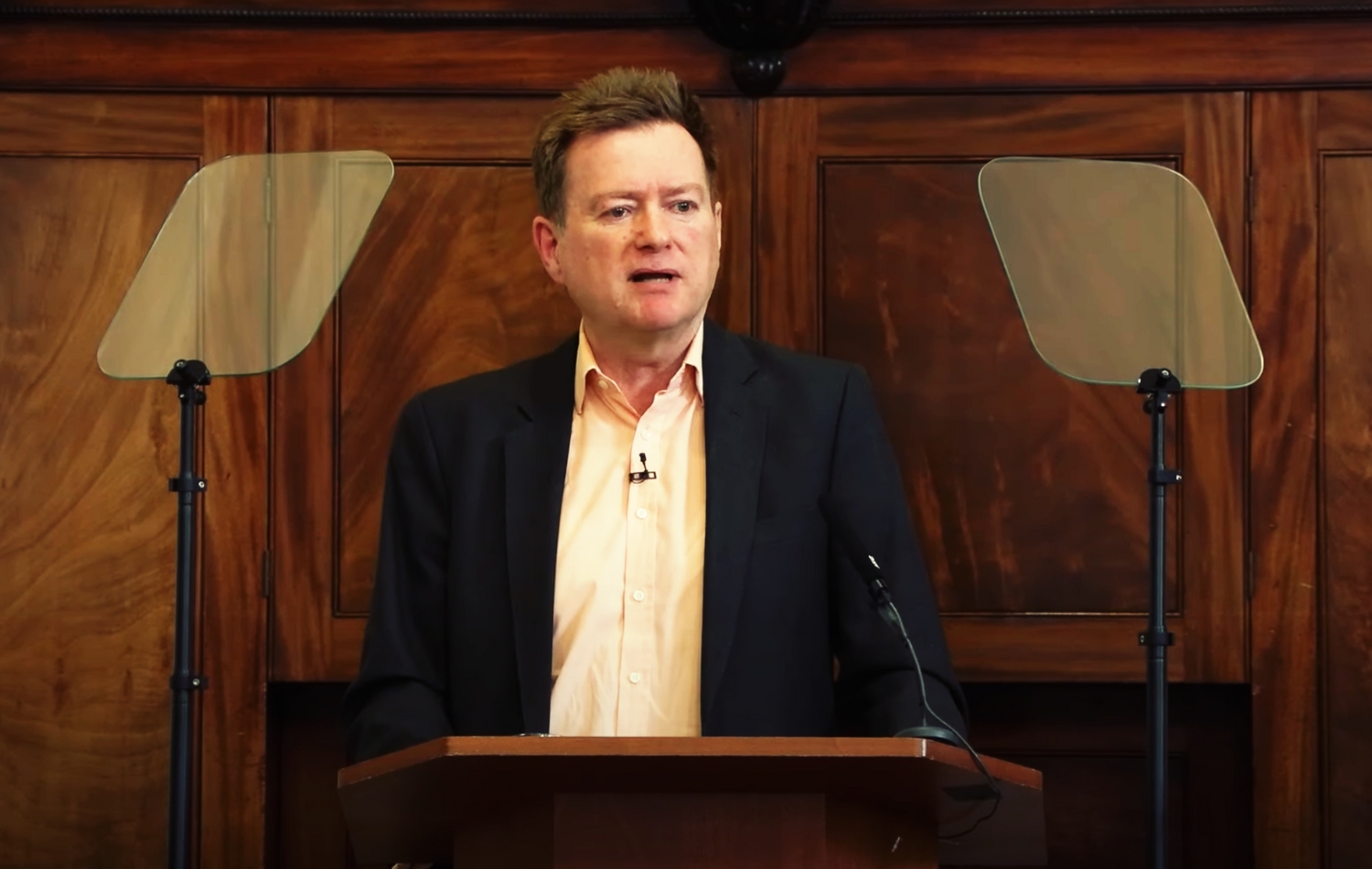
A hedge fund manager who owns three right-wing UK media outlets has called for the BBC to be “broken up” and its fact-checking service “shut down”.
Sir Paul Marshall – proprietor of GB News, The Spectator, and Unherd – was speaking last week (20 May) at the Pharos Foundation, an educational charity that received £350,000 from Marshall’s charity Sequoia Trust in 2023.
Pharos co-founder and director Neil Record, chair of Net Zero Watch, a climate science denial campaign group, is a significant backer of Conservative Party leader Kemi Badenoch.
In his speech, titled ‘Reflections of an Accidental Media Owner’, Marshall said: “the BBC squats like a giant toad in the middle of the UK media landscape”, calling it “a propaganda arm of the state, who [sic] are ultimately its paymasters.”
The multi-millionaire, who runs the hedge fund Marshall Wace, added that “the BBC should be broken up” to separate its “public service elements” like news and documentaries from “entertainment, drama, sport”, adding: “The latter should be privatised and allowed to complete to compete with other entertainment companies.”
Marshall also took aim at BBC Verify, the corporation’s fact-checking service founded in 2023 to cover and debunk online misinformation, calling for the service to be “shut down”.
Marshall accused progressive groups like Stop Funding Hate, HOPE not hate, and Led by Donkeys of acting like “school yard bullies” on social media.
“Unfortunately most of the disinformation agents who seek to track sites or individuals under the misinformation rubric have an explicit or near explicit left-wing agenda,” Marshall said. “This very much includes BBC Verify which is frankly an abuse of taxpayer money and should be shut down.”
GB News has accused of spreading misleading information – including conspiracy theories – since it launched in June 2021, and has been regularly probed by broadcast regulator Ofcom.
In February 2024, HOPE not hate revealed that Marshall had been liking and retweeting posts on X expressing a wide variety of anti-Muslim views, including a post that called for the “mass expulsions” of refugees. Responding to HOPE not hate, a representative for Marshall said: “He posts on a wide variety of subjects and those cited represent a small and unrepresentative sample of over 5,000 posts. This sample does not represent his views.”
As DeSmog has reported, GB News frequently platforms individuals who deny basic climate science, while its guests and presenters attacked climate action nearly 1,000 times in the immediate run-up and aftermath of the 2024 general election.
BBC Verify has debunked false claims about climate issues, including whether the UK is meeting its net zero targets, on the supposed need for new North Sea oil and gas extraction, and false claims about extreme weather events.
As DeSmog has revealed, Marshall’s hedge fund Marshall Wace had billions invested in fossil fuels as of June 2023. One of its major investors, the private equity giant KKR, which is tipped to buy Thames Water, is itself a significant fossil fuel investor.
Richard Wilson, founder of Stop Funding Hate, told DeSmog: “A fossil fuel magnate is pushing for the break-up of the BBC – and lobbying for its fact-checking service to be shut down – while bankrolling a TV channel that pumps out toxic misinformation on climate change.
“GB News has lost over £100 million as advertisers continue to steer clear. So it’s understandable that the channel’s owner would want to lash out at Stop Funding Hate supporters. But we’re happy to take these attacks as a badge of honour – and another sign that our campaigning is working.”
Marshall is a major player in the transatlantic network of radical right-wing politics. He is a co-founder with Canadian activist Jordan Peterson of the Alliance for Responsible Citizenship (ARC), an anti-climate lobby group to which Marshall’s Sequoia Trust gave £1 million in 2023.
His attacks on the BBC echo those of Reform UK, whose leader Nigel Farage receives a six-figure salary to host his own show on GB News.
Reform’s manifesto for the 2024 election included a pledge to scrap the BBC licence fee, labelling the broadcaster “institutionally biased” and “wasteful”.
“Marshall and his professional disinfluencers know they’ve utterly lost the fight on facts, and instead of being correct, they’ve started attacking the fact checking referees at the BBC,” said Philip Newell, communications co-chair of the Climate Action Against Disinformation coalition.
“In a healthy democracy, unbiased news is a vital tool of holding the rich accountable – which is exactly why one part of the disinformation playbook is to attack fact checkers and media institutions that speak truth to power. That an oily hedge fund baron has attacked the BBC only further confirms its validity and value.”
More recently, Donald Trump’s administration in the U.S. cut government funding for public broadcasters NPR and PBS, accusing them of bias.
The Pharos Foundation, which offers “Marshall fellowships” in Sir Paul’s honour, is also politically connected.
Pharos director Neil Record donated £10,000 and the use of office space to Kemi Badenoch’s campaign for the Tory leadership last autumn. Badenoch stayed at Record’s Gloucestershire estate in February ahead of a flagship speech attacking net zero targets.
Record is chair of Net Zero Watch, the campaign arm of the Global Warming Policy Foundation (GWPF), which claims carbon dioxide emissions are “not pollution” and could be a “benefit” to the planet.
He is also a life vice president of the Institute of Economic Affairs (IEA), an anti-regulation think tank that has received funding from the oil giant BP.
Pharos was also co-founded by historian Nigel Biggar, who was nominated for a peerage by Badenoch in late 2024.
After purchasing The Spectator in September 2024 for £100 million, Marshall appointed former Conservative Party Cabinet minister Michael Gove as its editor.
Gove is the founder of think tank Policy Exchange, whose head of political economy James Vitali is a current Pharos research fellow. Marshall donated £890,000 to Policy Exchange between 2020 and 2023.
The chair of Pharos’ development committee, Sian Hansen, until recently worked as chief operating officer at CT Group, the lobbying firm that has represented the Prosperity Institute (formerly known as the Legatum Institute), whose funder the Legatum Group co-owns GB News with Paul Marshall.
CT Group has lobbied on behalf of oil and gas companies, and its clients have included the Australian Petroleum Production and Exploration Association and BHP, which has mining and oil assets.
Original article by Adam Barnett and Joey Grostern republished from DeSmog.

Original article by Brett Wilkins republished from Common Dreams under Creative Commons (CC BY-NC-ND 3.0).
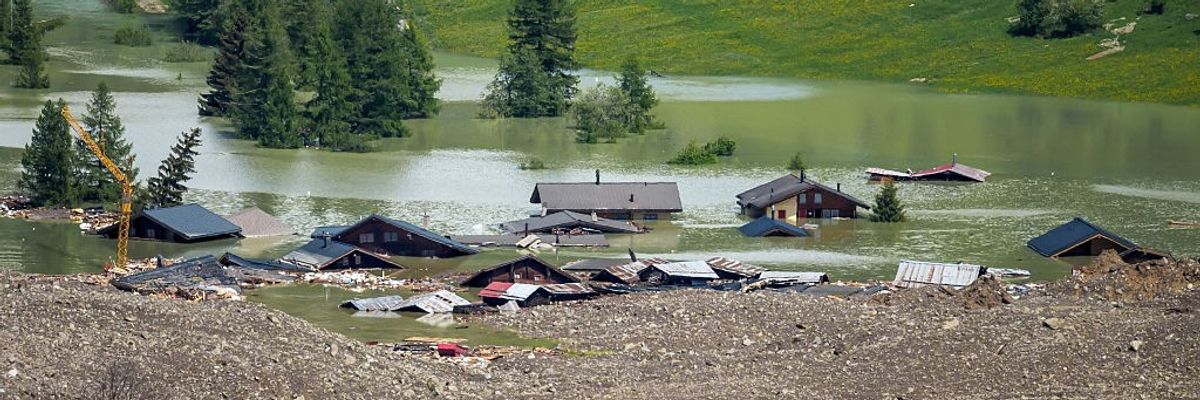
Thawing permafrost exacerbated by human-caused global heating is the likely culprit behind a massive glacier collapse that buried nearly the entire Swiss town of Blatten, one scientist said Thursday while warning of the likelihood of similar disasters in the future.
The alpine hamlet of 300 inhabitants—who were evacuated earlier amid warning signs of disaster—was almost completely wiped out on Wednesday after the Birch Glacier, located in the Lötschental Valley in northern Switzerland, collapsed. The glacial avalanche, laden with boulders and other debris, cascaded down the mountainside and into the village, obliterating everything in its path. Local officials said around 90% of Blatten was buried.
“We’ve lost our village,” Blatten Mayor Matthias Bellwald told reporters. “The village is under rubble. We will rebuild.”
While there are no verified casualties from the disaster, one 64-year-old man has been reported missing.
Mathieu Morlighem, a glaciologist at Dartmouth College in New Hampshire, told ABC News that permafrost thaw under and along the sidewalls surrounding the glacier likely caused the collapse.
“What happened to Birch Glacier is what we would expect from rising temperatures in the Alps and elsewhere,” he explained. “I think we can expect more events like this in the future.”
As ABC News reported:
Glaciers in Switzerland have lost almost 40% of their volume since 2000, and the loss is accelerating, according to the Swiss Federal Institute for Forest, Snow, and Landscape Research. Record-high summer temperatures in 2022 and 2023 caused a 10% glacial ice loss in the country.
Experts warn that Switzerland’s glaciers could disappear completely by 2100 due to the climate emergency.
As Common Dreams reported in March, the crisis is planetary and is predicted to adversely affect nearly 2 billion people who depend upon glaciers for agricultural irrigation and drinking water.
“Most of the world’s glaciers, including those in mountains, are melting at an accelerated rate worldwide,” a United Nations Educational, Scientific, and Cultural Organization report published earlier this year warned. “Combined with accelerating permafrost thaw, declining snow cover, and more erratic snowfall patterns… this will have significant and irreversible impacts on local, regional, and global hydrology, including water availability.”
The Swiss collapse happened a day before Thursday’s opening of the High-Level International Conference on Glaciers’ Preservation in Tajikistan, which aims to “highlight the vital role of glaciers in maintaining global ecological balance and addressing water-related challenges.”
Original article by Brett Wilkins republished from Common Dreams under Creative Commons (CC BY-NC-ND 3.0).


Thomas Newsome, University of Sydney and William Ripple, Oregon State University
You don’t have to look far to see what climate change is doing to the planet. The word “unprecedented” is everywhere this year.
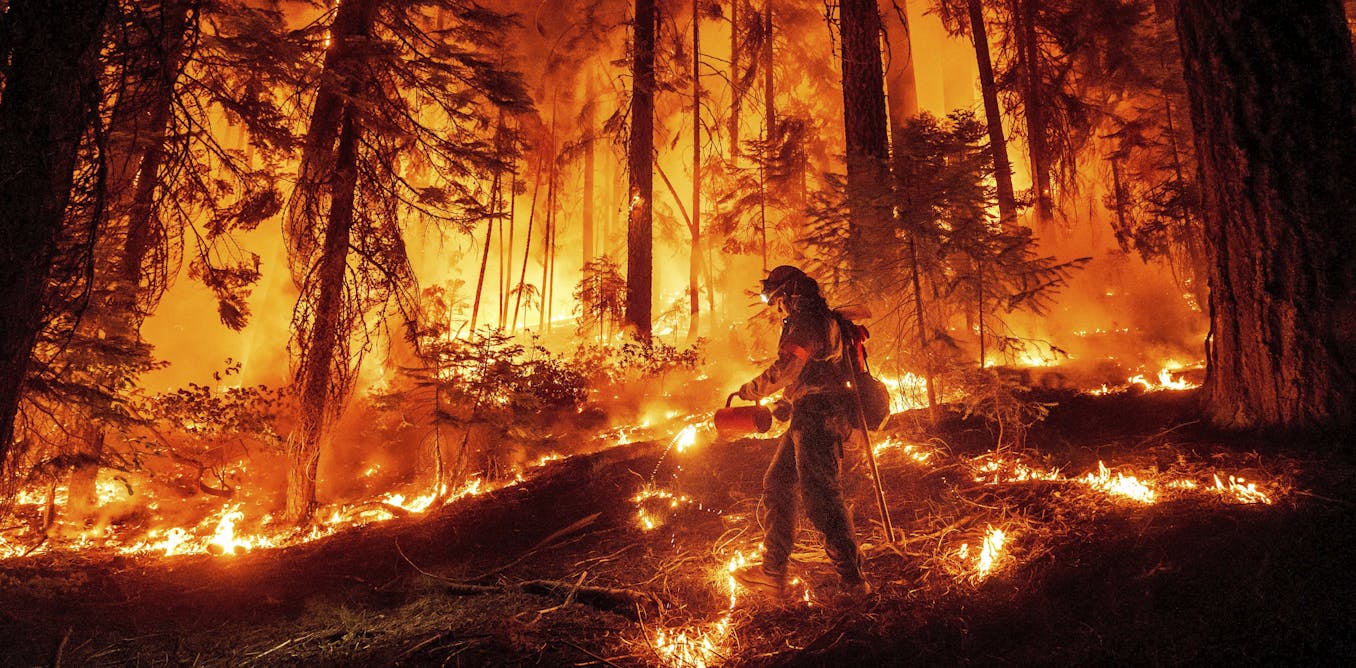
We are seeing unprecedented rapidly intensifying tropical storms such as Hurricane Helene in the eastern United States and Super Typhoon Yagi in Vietnam. Unprecedented fires in Canada have destroyed towns. Unprecedented drought in Brazil has dried out enormous rivers and left swathes of empty river beds. At least 1,300 pilgrims died during this year’s Hajj in Mecca as temperatures passed 50°C.
Unfortunately, we are headed for far worse. The new 2024 State of the Climate report, produced by our team of international scientists, is yet another stark warning about the intensifying climate crisis. Even if governments meet their emissions goals, the world may hit 2.7°C of warming – nearly double the Paris Agreement goal of holding climate change to 1.5°C. Each year, we track 35 of the Earth’s vital signs, from sea ice extent to forests. This year, 25 are now at record levels, all trending in the wrong directions.
Humans are not used to these conditions. Human civilisation emerged over the last 10,000 years under benign conditions – not too hot, not too cold. But this liveable climate is now at risk. In your grandchild’s lifetime, climatic conditions will be more threatening than anything our prehistoric relatives would have faced.
Our report shows a continued rise in fossil fuel emissions, which remain at an all-time high. Despite years of warnings from scientists, fossil fuel consumption has actually increased, pushing the planet toward dangerous levels of warming. While wind and solar have grown rapidly, fossil fuel use is 14 times greater.
This year is also tracking for the hottest year on record, with global daily mean temperatures at record levels for nearly half of 2023 and much of 2024.
Next month, world leaders and diplomats will gather in Azerbaijan for the annual United Nations climate talks, COP 29. Leaders will have to redouble their efforts. Without much stronger policies, climate change will keep worsening, bringing with it more frequent and more extreme weather.
We have still not solved the central problem: the routine burning of fossil fuels. Atmospheric concentrations of greenhouse gases – particularly methane and carbon dioxide – are still rising. Last September, carbon dioxide levels in the atmosphere hit 418 parts per million (ppm). This September, they crossed 422 ppm. Methane, a highly potent greenhouse gas, has been increasing at an alarming rate despite global pledges to tackle it.
Compounding the problem is the recent decline in atmospheric aerosols from efforts to cut pollution. These small particles suspended in the air come from both natural and human processes, and have helped cool the planet. Without this cooling effect, the pace of global warming may accelerate. We don’t know for sure because aerosol properties are not yet measured well enough.
Other environmental issues are now feeding into climate change. Deforestation in critical areas such as the Amazon is reducing the planet’s capacity to absorb carbon naturally, driving additional warming. This creates a feedback loop, where warming causes trees to die which in turn amplifies global temperatures.
Loss of sea ice is another. As sea ice melts or fails to form, dark seawater is exposed. Ice reflects sunlight but seawater absorbs it. Scaled up, this changes the Earth’s albedo (how reflective the surface is) and accelerates warming further.
In coming decades, sea level rise will pose a growing threat to coastal communities, putting millions of people at risk of displacement.
Our report stresses the need for an immediate and comprehensive end to the routine use of fossil fuels.
It calls for a global carbon price, set high enough to drive down emissions, particularly from high-emitting wealthy countries.
Introducing effective policies to slash methane emissions is crucial, given methane’s high potency but short atmospheric lifetime. Rapidly cutting methane could slow the rate of warming in the short term.
Natural climate solutions such as reforestation and soil restoration should be rolled out to increase how much carbon is stored in wood and soil. These efforts must be accompanied by protective measures in wildfire and drought prone areas. There’s no point planting forests if they will burn.
Governments should introduce stricter land-use policies to slow down rates of land clearing and increase investment in forest management to cut the risk of large, devastating fires and encourage sustainable land use.
We cannot overlook climate justice. Less wealthy nations contribute least to global emissions but are often the worst affected by climate disasters.
Wealthier nations must provide financial and technical support to help these countries adapt to climate change while cutting emissions. This could include investing in renewable energy, improving infrastructure and funding disaster preparedness programs.
Internationally, our report urges stronger commitments from world leaders. Current global policies are insufficient to limit warming to 1.5°C above pre-industrial levels.
Without drastic changes, the world is on track for approximately 2.7°C of warming this century. To avoid catastrophic tipping points, nations must strengthen their climate pledges, reduce dependence on fossil fuels, and accelerate the transition to renewable energy.
Immediate, transformative policy changes are now necessary if we are to avoid the worst effects of climate change.
Climate change is already here. But it could get much, much worse. By slashing emissions, boosting natural climate solutions and working towards climate justice, the global community can still fend off the worst version of our future.
Thomas Newsome, Associate Professor in Global Ecology, University of Sydney and William Ripple, Distinguished Professor and Director, Trophic Cascades Program, Oregon State University
This article is republished from The Conversation under a Creative Commons license. Read the original article.
Simon H. Lee, University of St Andrews; Hayley J. Fowler, Newcastle University, and Paul Davies, Newcastle University
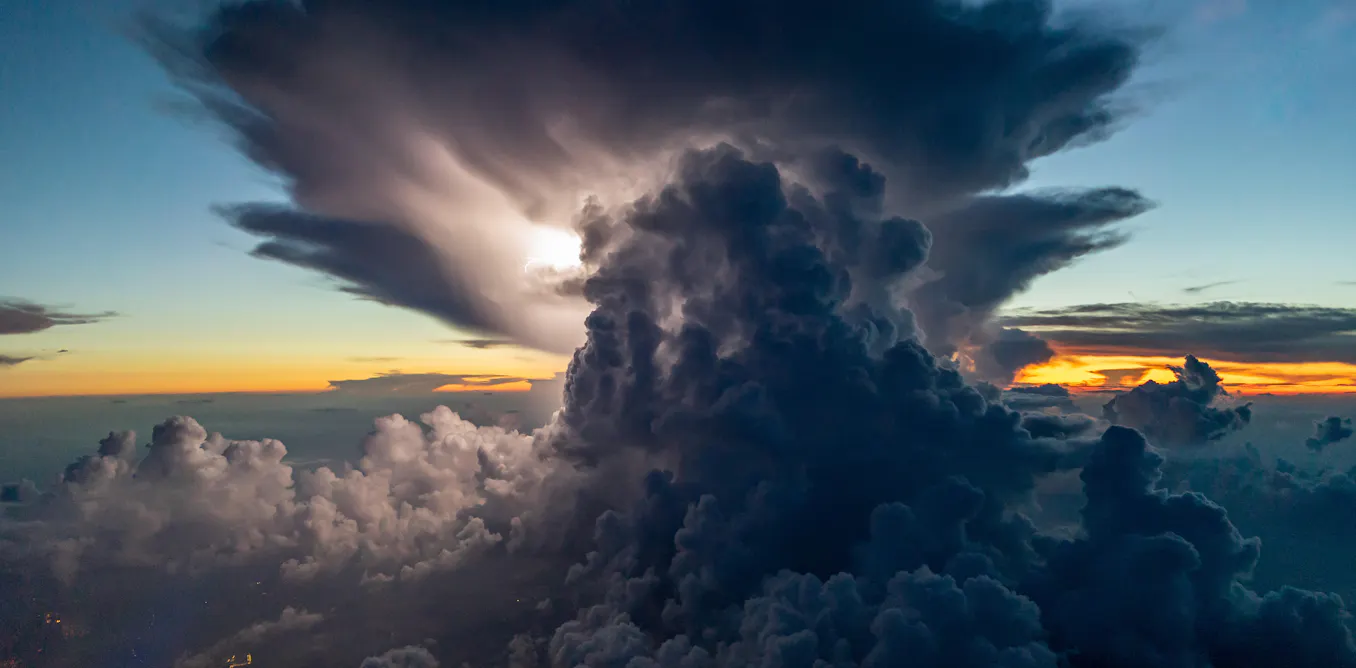
Extreme weather is by definition rare on our planet. Ferocious storms, searing heatwaves and biting cold snaps illustrate what the climate is capable of at its worst. However, since Earth’s climate is rapidly warming, predominantly due to fossil fuel burning, the range of possible weather conditions, including extremes, is changing.
Scientists define “climate” as the distribution of possible weather events observed over a length of time, such as the range of temperatures, rainfall totals or hours of sunshine. From this they construct statistical measures, such as the average (or normal) temperature. Weather varies on several timescales – from seconds to decades – so the longer the period over which the climate is analysed, the more accurately these analyses capture the infinite range of possible configurations of the atmosphere.
Typically, meteorologists and climate scientists use a 30-year period to represent the climate, which is updated every ten years. The most recent climate period is 1991-2020. The difference between each successive 30-year climate period serves as a very literal record of climate change.
This way of thinking about the climate falls short when the climate itself is rapidly changing. Global average temperatures have increased at around 0.2°C per decade over the past 30 years, meaning that the global climate of 1991 was around 0.6°C cooler than that in 2020 (when accounting for other year-to-year fluctuations), and even more so than the present day.
If the climate is a range of possible weather events, then this rapid change has two implications. First, it means that part of the distribution of weather events comprising a 30-year climate period occurred in a very different background global climate: for example, northerly winds in the 1990s were much colder than those in the 2020s in north-west Europe, thanks to the Arctic warming nearly four times faster than the global average. Statistics from three decades ago no longer represent what is possible in the present day.
Second, the rapidly changing climate means we have not necessarily experienced the extremes that modern-day atmospheric and oceanic warmth can produce. In a stable climate, scientists would have multiple decades for the atmosphere to get into its various configurations and drive extreme events, such as heatwaves, floods or droughts. We could then use these observations to build up an understanding of what the climate is capable of. But in our rapidly changing climate, we effectively have only a few years – not enough to experience everything the climate has to offer.
Extreme weather events require what meteorologists might call a “perfect storm”. For example, extreme heat in the UK typically requires the northward movement of an air mass from Africa combined with clear skies, dry soils and a stable atmosphere to prevent thunderstorms forming which tend to dissipate heat.
Such “perfect” conditions are intrinsically unlikely, and many years can pass without them occurring – all while the climate continues to change in the background. Based on an understanding of observations alone, this can leave us woefully underprepared for what the climate can now do, should the right weather conditions all come together at once.
Startling recent examples include the extreme heatwave in the Pacific north-west of North America in 2021, in which temperatures exceeded the previous Canadian record maximum by 4.6°C. Another is the occurrence of 40°C in the UK in summer 2022, which exceeded the previous UK record maximum set only three years earlier by 1.6°C. This is part of the reason why the true impact of a fixed amount of global warming is only evident after several decades, but of course – since the climate is changing rapidly – we cannot use this method anymore.
To better understand these extremes, scientists can use ensembles: many runs of the same weather or climate model that each slightly differ to show a range of plausible outcomes. Ensembles are routinely used in weather prediction, but can also be used to assess extreme events which could happen even if they do not actually happen at the time.
When 40°C first appeared in ensemble forecasts for the UK before the July 2022 heatwave, it revealed the kind of extreme weather that is possible in the current climate. Even if it had not come to fruition, its mere appearance in the models showed that the previously unthinkable was now possible. In the event, several naturally occurring atmospheric factors combined with background climate warming to generate the record-shattering heat on July 19 that year.
The highest observed temperature each year in the UK, from 1900 to 2023
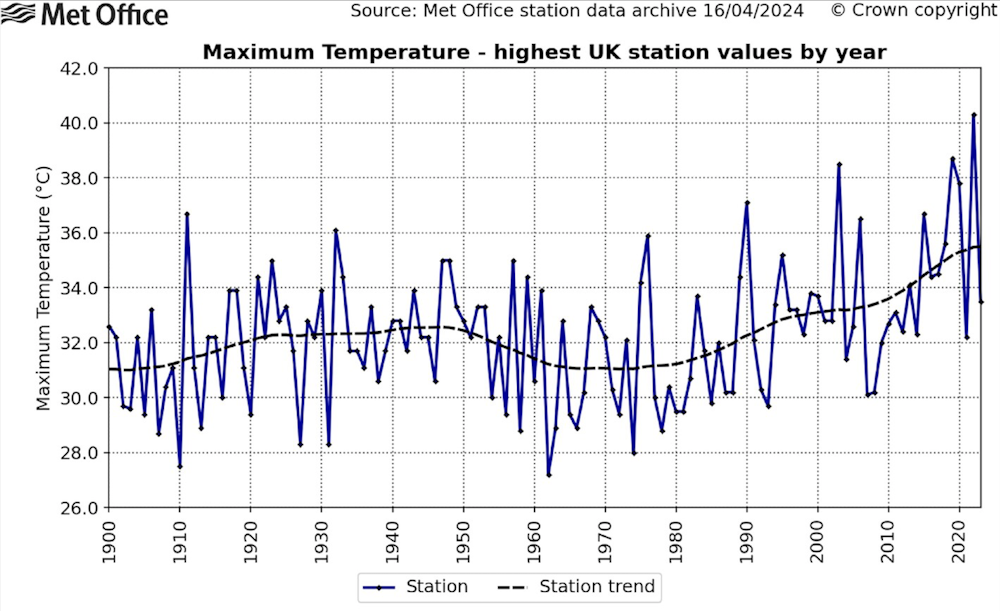
Later in summer 2022, after the first occurrence of 40°C, some ensemble weather forecasts for the UK showed a situation in which 40°C could be reached on multiple consecutive days. This would have posed an unprecedented threat to public health and infrastructure in the UK. Unlike the previous month, this event did not come to pass, and was quickly forgotten – but it shouldn’t have been.
It is not certain whether these model simulations correctly represent the processes involved in producing extreme heat. Even so, we must heed the warning signs.
Despite a record-warm planet, summer 2024 in the UK has been relatively cool so far. The past two years have seen global temperatures far above anything previously observed, and so potential extremes have probably shifted even further from what we have so far experienced.
Just as was the case in August 2022, we’ve got away with it for now – but we might not be so lucky next time.
Don’t have time to read about climate change as much as you’d like?
Get our award-winning weekly roundup in your inbox instead. Every Wednesday, The Conversation’s environment editor writes Imagine, a short email that goes a little deeper into just one climate issue. Join the 35,000+ readers who’ve subscribed so far.
Simon H. Lee, Lecturer in Atmospheric Science, University of St Andrews; Hayley J. Fowler, Professor of Climate Change Impacts, Newcastle University, and Paul Davies, Chief Meteorologist, Met Office and Visiting Professor, Newcastle University
This article is republished from The Conversation under a Creative Commons license. Read the original article.