I have been trying to address a few glitches affecting this blog. I am aware of issues but it may be a matter of impaired performance until I eventually fix it.
19/3/24 Not had any faults for a while. I’ve been trying to fix i but think that it may be thanks to that reclusive character my secret secretary. Thanks to my Secret Secretary and all the others who help me.
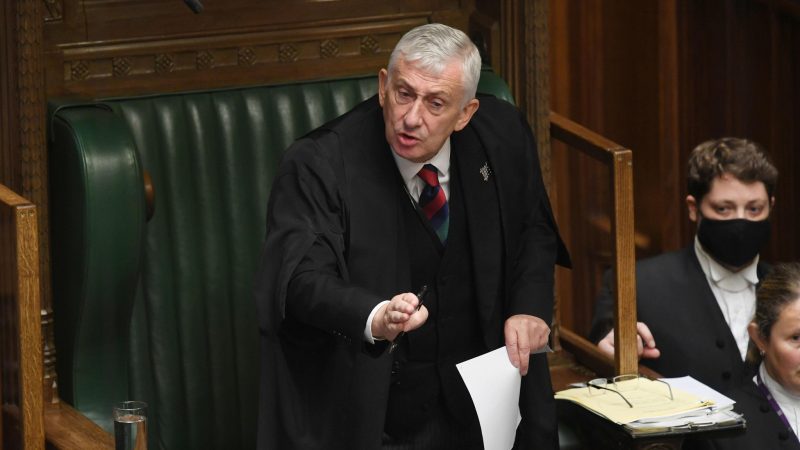
The Commons Speaker Sir Lindsay Hoyle has been criticised after failing to call Diane Abbott at PMQs, despite the MP having racist remarks made about her by the Tory party’s biggest donor, a topic which dominated this week’s session.
Labour leader Keir Starmer and Prime Minister Rishi Sunak clashed in the Commons over racism within the Tory party, after the Guardian revealed that the Conservative party’s biggest donor, Frank Hester, had said that said Diane Abbott made him “want to hate all black women” and that she “should be shot”.
The Guardian revealed that Hester made the comments during a business meeting in 2019.
He is reported to have said: “It’s like trying not to be racist but you see Diane Abbott on the TV, and you’re just like … you just want to hate all black women because she’s there.
“And I don’t hate all black women at all, but I think she should be shot.”
Heavy industry and dense urban populations both contribute to high levels of effluent containing toxic forever chemicals that don’t biodegrade. Shaun Jeffers/Shutterstock
Huge volumes of toxic and cancer-causing forever chemicals are flowing into the River Mersey in north-west England. With a busy, industrialised skyline and both Manchester and Liverpool nearby, it’s the second-most populated river catchment in the UK after the Thames.
None of England’s rivers are in good chemical health. The recent State of Our Rivers 2024 report from The Rivers Trust found that one of the most concerning groups of synthetic chemicals, per- and polyfluorinated substances (PFAS), contaminates almost every river in England.
My team of hydrologists and I found that levels of two cancer-causing PFAS washing off the land and into the Mersey – perfluorooctane sulfonate (PFOS) and perfluorooctanoic acid (PFOA)– are among the highest in the world. Both PFOS and PFOA, now banned in most countries, were used to make many consumer and industrial products including furniture, cookware and fire-fighting foams.
Our study established that around 50% of PFOS, a type of PFAS that’s classed as probably carcinogenic, in the River Mersey was coming from supposedly clean water discharges from 44 different wastewater treatment works. PFAS are found in treated water because they are very difficult to remove using current water treatment technologies. Almost all wastewater treatment work effluents in the UK contain PFAS.
Our research highlights that we don’t really know where the remaining 50% of that PFOS is coming from. Other potential sources include runoff from airports where big amounts of fire-fighting foams are used, agricultural land and landfills. Some PFAS could contaminate groundwater or surface waters used as drinking water.
PFAS chemicals are all around us and impossible to avoid. Found in everything from food packaging to cosmetic products, they are also used to manufacture green energy technologies like electric cars and wind turbines.
Whenever PFAS are used to make these products they end up draining into rivers, so wildlife and humans living in the river basin are exposed to them. We don’t really know the long-term implications of the current exposure levels. But these chemicals will persist. If we keep discharging them into the environment, PFAS exposure levels – and potential risk to humans – can increase through drinking water contamination and accumulation in the food chain.
Pinpointing exactly where, how and when these chemicals enter rivers is not straightforward so scientists and governments don’t really have the regulatory measures and tools to hold polluters to account.
Significant PFAS levels were found in effluent from 44 wastewater treatment plants flowing into the River Mersey. Avigator Fortuner/Shutterstock
Dilute, disperse and detect
Since the 1850s, the Mersey has been a hub of industry, particularly for cotton manufacturing and chemical production. Most cities, including Liverpool and Manchester, have been built close to rivers and seas, partly to dilute pollution and transport it away. Out of sight, out of mind.
Today, enormous volumes of toxic waste are discharged into rivers and seas because dilution reduces chemical concentrations to extremely low or undetectable levels. But undetectable does not mean toxic chemicals are not present.
PFAS are ubiquitous. These forever chemicals have been detected almost everywhere we look, including in Antarctica, in whales and polar bears and in rainwater. Most people on Earth probably have detectable concentrations of PFAS in their blood. An estimated [97% of the US population] have PFAS in their blood, according to one study of 1,682 people.
A state of flux
Governments need to phase out PFAS from society to reduce human exposure and halt their accumulation in the environment and wildlife. The development of safer, healthier, greener alternatives is essential.
Even if the tap gets turned off immediately, the PFAS already in the environment, and in the River Mersey, will persist for thousands of years. To prevent further PFAS entering our rivers, more needs to be known about how they move into and through river systems. As part of our study, we measured this flux.
Instead of measuring a chemical’s concentration, flux is a measure of how much PFAS, for example in kilograms per year, flows off the land and out to sea. By measuring PFAS flux at multiple locations across a river basin like the Mersey, we can distinguish different sources of PFAS to the river, such as runoff from landfills, and establish how much comes from that source.
Governments and environmental regulators need more data like this to develop strategies that will prevent PFAS entering rivers. Our study not only confirmed wastewater treatment works effluents as a source of PFAS to the Mersey, we established exactly how much is coming from that source. This direct accountability is required to effectively target regulations and apply measures that make a difference.
Greater understanding of the flux and movement of PFAS in rivers and seas will help ensure better monitoring and regulation of these toxic forever chemicals – especially in hotspots like the Mersey that should be a top priority for enforcement.
Don’t have time to read about climate change as much as you’d like?
Philippe Lazzarini, commissioner-general of the United Nations Relief and Works Agency for Palestine Refugees in the Near East delivers a speech at the U.N. General Assembly in New York, United States on March 4, 2024. (Photo: Fatih Aktas/Anadolu via Getty Images)
“The implementation of this plan is already underway with the destruction of our infrastructure across the Gaza Strip,” said Philippe Lazzarini, the agency’s commissioner-general.
The head of the United Nations agency for Palestinian refugees told the U.N. General Assembly on Monday that Israeli Prime Minister Benjamin Netanyahu and his allies are intentionally trying to decimate the critical aid body as mass starvation looms in the Gaza Strip.
“UNRWA is facing a deliberate and concerted campaign to undermine its operations, and ultimately end them,” said Philippe Lazzarini, the agency’s commissioner-general. “Part of this campaign involves inundating donors with misinformation designed to foster distrust and tarnish the reputation of the agency. More blatant, is the Israeli prime minister openly stating that UNRWA will not be part of post-war Gaza.”
“The implementation of this plan is already underway with the destruction of our infrastructure across the Gaza Strip,” he continued. “Attempts to evict UNRWA from its headquarters in East Jerusalem, and from a nearby vocational training center for Palestine refugee youth, are underway. Draft legislation in the Israeli Knesset seeks to prohibit outright any activity by UNRWA on Israeli territory.”
The UNRWA, the most important aid agency operating in Gaza, has long been a target of the Israeli government. But attacks on UNRWA have escalated since October 7, with Israeli forces killing more than 150 of the agency’s employees during its war on Gaza and accusing a small number of the body’s staffers of taking part in the Hamas-led assault on southern Israel.
The Israeli government has not provided any evidence to support its claims, but the allegations alone led more than a dozen countries—including the United States—to suspend aid to UNRWA, putting its operations in Gaza and across the Middle East at risk of total collapse.
Last month, the U.S. Senate passed legislation that would prohibit any U.S. funding for UNRWA.
Babies are dying of malnutrition & dehydration.
Man-made famine is looming.
Doctors are amputating limbs of injured children without anesthetic.
Despite all the horrors – the worst might be yet to come.
On Monday, the Israel Defense Forces (IDF) claimed—again, without providing evidence—that 450 of UNRWA’s 30,000 employees are “military operatives in terror groups in Gaza.”
Lazzarini noted Monday that he swiftly terminated agency staffers accused of playing a role in the October 7 attack and that an independent probe into Israel’s accusations was launched by the U.N. Office of Internal Oversight Services.
“Despite these prompt and decisive actions, and the unsubstantiated nature of the allegations, 16 countries have paused their funding, totaling $450 million,” said Lazzarini, thanking the countries that maintained or boosted their funding as the agency faced a potentially existential threat. The European Union has also agreed to partially restore funding.
“Thanks to them, the agency, which is the backbone of humanitarian assistance in Gaza, can continue operating and remains a lifeline for Palestine refugees across the region,” he said. “But for how long? It is hard to say. We are functioning hand-to-mouth. Without additional funding, we will be in uncharted territory—with serious implications for global peace and security.”
“I shudder to think of what will still be revealed about the horrors that have taken place in this narrow strip of land.”
Lazzarini said conditions on the ground in Gaza are “impossible to adequately describe” as Israel continues its bombing campaign and blockade, which have prevented badly needed aid from reaching large swaths of the territory.
“Doctors are amputating the limbs of injured children without anesthetic. Hunger is everywhere. A man-made famine is looming,” said Lazzarini. “Babies—just a few months old—are dying of malnutrition and dehydration. I shudder to think of what will still be revealed about the horrors that have taken place in this narrow strip of land.”
Ahead of Lazzarini’s speech to the U.N. General Assembly, a coalition of aid organizations issued a joint statement warning that if “funding suspensions are not reversed, the risk of a complete collapse of the already restricted humanitarian response resulting in preventable loss of lives in Gaza becomes even more likely.”
“Over 1 million displaced Palestinians are sheltering in UNRWA facilities across Gaza,” the groups said. “UNRWA’s 13,000 staff in Gaza far outstrip the collective capacity of the rest of the humanitarian sector in the territory. Their role in the facilitation and delivery of lifesaving humanitarian aid at scale in this crisis has been heroic. UNRWA’s supply of vital shelter, food, and basic services like sanitation, as well as the use of infrastructure by other aid organizations, is irreplaceable.”
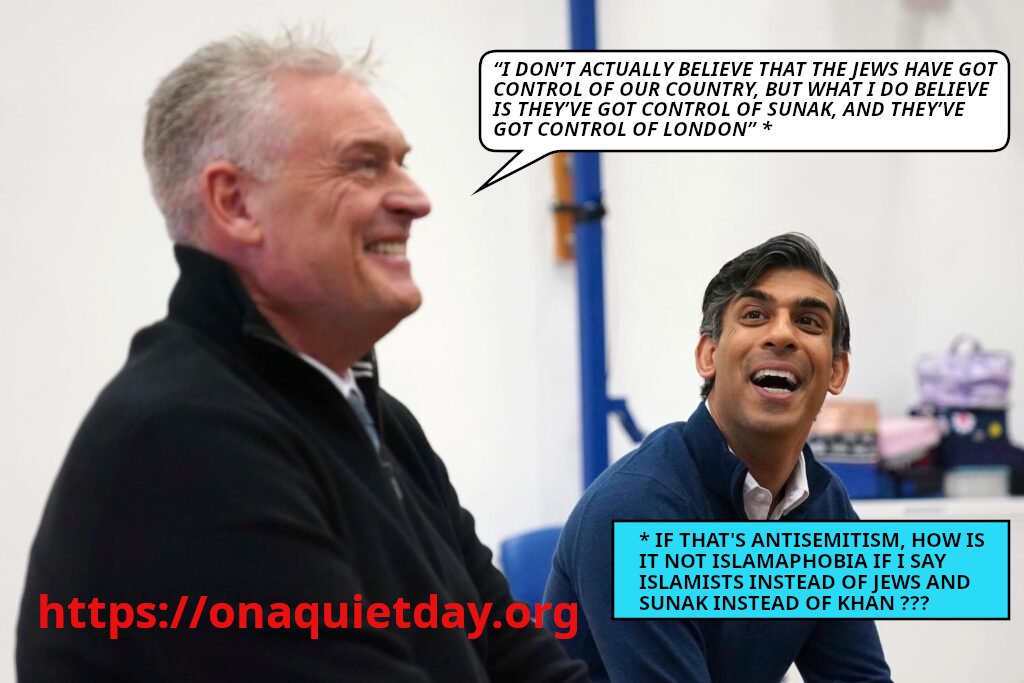
Lee Anderson and Rishi Sunak. Anderson makes more antisemitic remarks to highlight the double standard of antisemitism and Islamaphobia. Sadik Khan’s remarks coming soon ;)Parody remarks attributed to Sadiq Khan highlights the double standard applied to Antisemitism and Islamaphobia.