RISING RIGHT: Activists wearing masks of far-right politicians (L-R) Marine Le Pen, former Polish Prime Minister Mateusz Morawiecki, Vox leader Santiago Abascal, Hungarian Prime Minister Viktor Orban and Italian Prime Minister Giorgia Meloni protest before the EU elections, Madrid, May 19 2024
Driven on by novel forms of hard-right populism like Modi and Trump, European neofascists are skillfully rebranding themselves and taking power by copying the left’s language — just as they did in the last century, writes JOHN GREEN
AROUND the world, we have been witnessing the rise of new right-wing and neofascist political forces at the same time as we have experienced the demise or marginalisation of strong left-wing forces.
We face a new and more virulent Donald Trump presidency in the US, we have seen the success of Giorgio Meloni’s Fratelli d’Italia party in Italy, Modi’s fundamentalist Hinduism in India, Javier Milei’s neoliberal extremism in Argentina, Victor Orban’s authoritarian regime in Hungary and the jack-in-the-box rise of Nigel Farage, who sees himself as a prime minister in waiting, here in Britain.
…
The right loves using the German fascists’ full name, National Socialist German Workers Party, rather than the shortened term Nazi in order to deliberately conflate fascism with socialism and communism in the public’s mind.
As we know, Hitler only belatedly incorporated the term socialist into his party’s name in order to sow confusion and win over working-class voters, which he managed to do very successfully. The National Socialists were soon demasked as firm upholders of rampant capitalism, not socialism.
Of course, drawing comparisons between 1930s Germany and our world today can be dangerous, but there are undoubted parallels from which we can learn. Once again, world capitalism is in a deep crisis, and fascism is seen in some quarters, once again, as offering an apparent way out.
Just as the Nazis did, the neofascists today, recognising the widespread anger among large sections of the population at the way the super-wealthy are destroying our societies with impunity, are pretending to attack the unaccountable oligarchs and super-wealthy tech CEOs, big pharma and authoritarian government.
This is, however, mere rhetoric in order to win over the disaffected working classes; they have no intention of doing anything about the super-rich and tech monopolies who are or will be funding them.
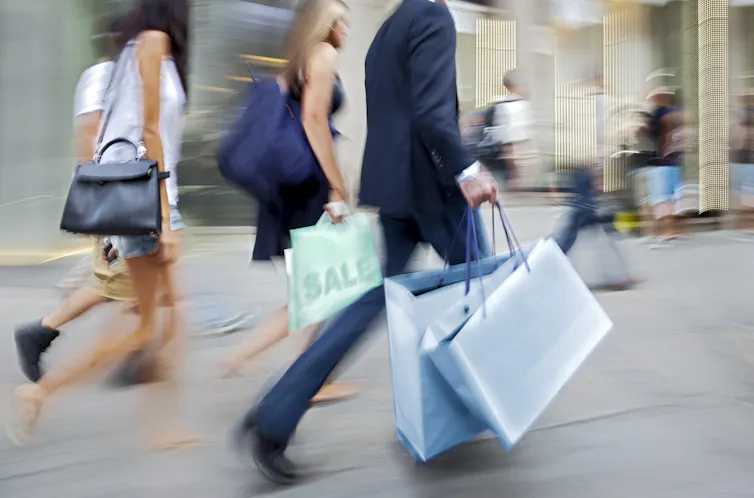
Over the past year, books like Less by Patrick Grant and documentaries like Buy Now: The Shopping Conspiracy have encouraged consumers to rethink their internalised beliefs that more consumption equals better living.
As we enter a new year, it’s the perfect time to reflect on and leave behind some consumer myths that are detrimental to ourselves and to the planet.
Myth 1: Buying more is better for consumers and society
Retail therapy is a common practice to cope with negative emotions and might seem easier than actual therapy. However, research has consistently shown that materialistic consumption leads to lower individual and societal wellbeing. In fact, emerging studies are pointing out that low consumption lifestyles might bring greater personal satisfaction and higher environmental benefits.
Some might argue that buying more stimulates the economy, creates jobs and supports public services through taxes. However, the positive impact on local communities is often overstated due to globalised supply chains and corporate tax avoidance.
To ensure that your spending really does support your community and does not contribute to economic inequalities, it is helpful to learn more about the story behind the labels and the businesses you support with your money.
Myth 2: New is always better
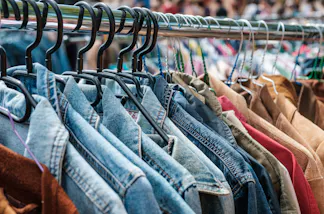
While certain cutting-edge tech may indeed offer improvements over older versions, for most items new might not always be better. As Grant argues in his book Less, product quality has declined over the past few decades as manufacturers prioritise affordability and engage in planned obsolescence practices. That is, they purposely design products that will break after a certain number of uses to keep the cycle of consumption going and hit their sales targets.
But older products were often built to last, so choosing secondhand or repairing older items can save you money and actually secure you better-quality products.
New isn’t always better – sometimes older goods have stood the test of time. New Africa/Shutterstock
Myth 3: Being sustainable is expensive
It’s true that some brands have used the term “sustainable” to justify premium prices. However, adopting sustainable consumer practices can often be free or even bring in some extra cash if you sell or donate the things you no longer need.
Instead of “buying new”, consider swapping unused items with others by hosting a “swapping party” for things like toys or clothes with your friends, family, or neighbours. Decluttering your home could free up space, bring you some joy, and could also help you to connect with others by exchanging items.
Myth 4: Buying experiences are better than buying material things
Previous research has found that spending money on experiences brings more happiness primarily because these purchases are better at bringing people together. But material purchases that help you to connect with others, such as a board game, could bring as much joy as an experience.
When spending money, my research has shown that the key is to understand whether the purchase will help you to connect with others, learn new things or help your community. It’s not about whether we spend our money on material items or experiences.
It is also worth remembering that there are plenty of activities that can help you to achieve those goals with no spending required. So, instead of instinctively reaching to our wallets, perhaps in the new year we could think about whether a non-consumer activity like a winter hike or doing some volunteering could bring us closer to those intrinsic goals like personal growth or developing relationships. These goals have been consistently linked to better wellbeing.
Myth 5: Buying a gift is the best way to express love
Marketers often promote the message that expensive financial gestures are the best way of expressing love and appreciation for others. Spreading this idea will help them to sell more products. However, my research suggests that embracing consumerist ideals might in fact distance us from others.
Research has shown that investing in things that can buy us more time as well as spending money on others can lead to higher levels of wellbeing. Combining these insights suggests that gifting our time to others might be a great way to show affection and could have a positive ripple effect.
For instance, offering to babysit for a busy friend or a family member, helping a relative with a home project or offering your skills to advise or teach someone something new or useful can be incredibly valuable to others.
For 2025, consider a new year’s resolution that is gentle on the wallet and kinder to the planet: it’s possible to resist the commercial pressures to over-consume and find ways to enjoy the simpler pleasures of life, many of which are free anyway.