Tag: BP

  • BP Was Warned Gas-Driven Climate Change Could Cause ‘Unprecedented Famine’

    Spread the love

    Original article by Geoff Dembicki republished from DeSmog.

    Yet the oil and gas major led a campaign to present gas as a climate solution, new ‘confidential’ documents released by a U.S. Congressional investigation reveal.
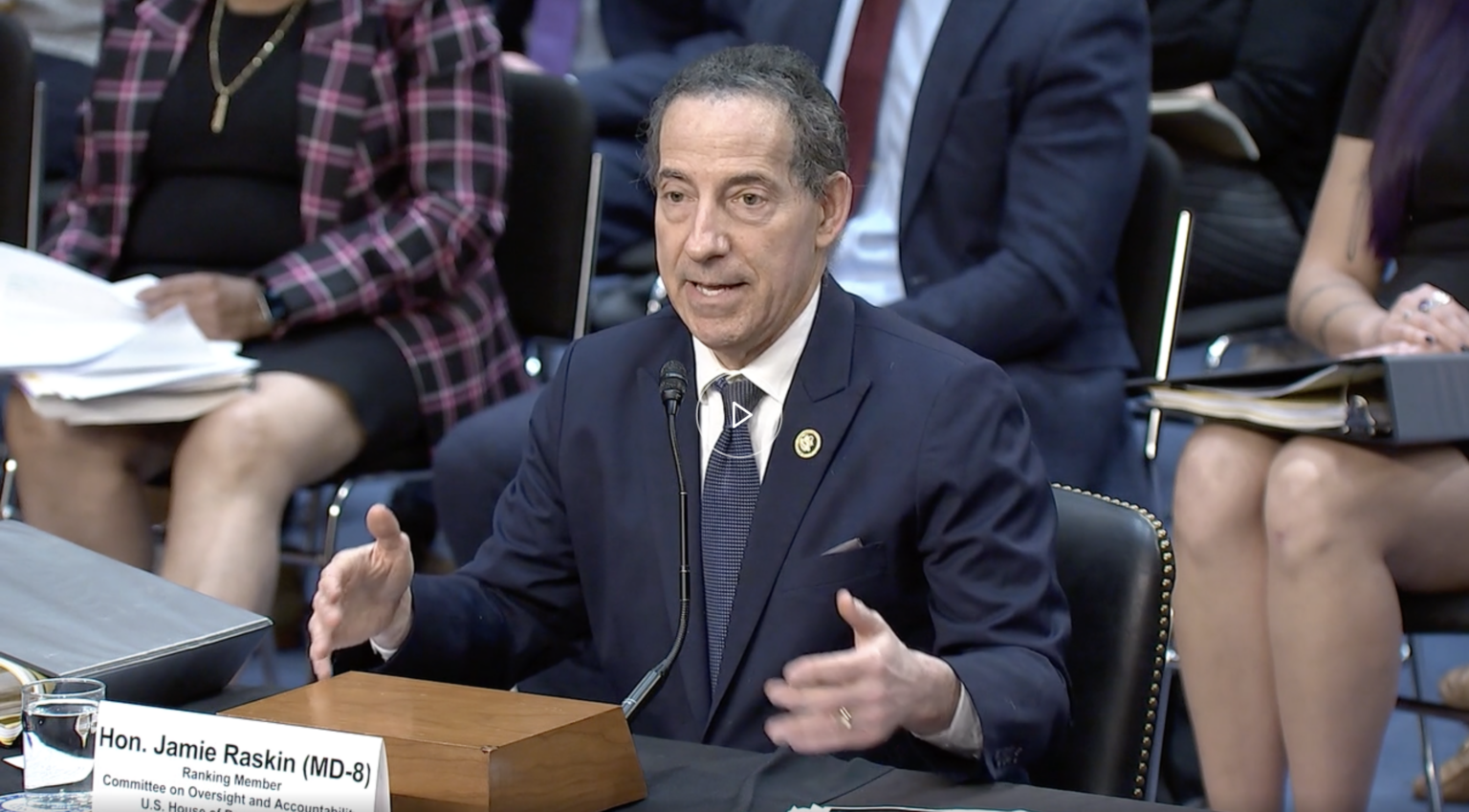
    Democrat Jamie Raskin appeared before a Senate hearing examining Big Oil’s efforts to avoid climate accountability. Credit: US Senate

    BP was warned by Princeton University researchers in 2016 that climate change accelerated in part by new global supplies of shale gas could lead to catastrophic events such as “mass extinctions and unprecedented famine.” 

    Yet despite acknowledging internally the concern that “gas doesn’t support climate goals,” the UK-headquartered oil and gas major embarked on a marketing campaign to “advance and protect the role of gas—and BP—in the energy transition.” 

    That’s been accompanied by large new investments in gas, including a recent agreement to take nearly two million tonnes per year of liquefied natural gas shipments from a $5.1 billion export facility called Woodfibre LNG proposed for the west coast of British Columbia. 

    Revelations concerning BP’s private knowledge about the dangers of gas expansion were contained in a trove of documents—some labelled “confidential”—released by Democrats in early May as part of a joint House and Senate investigation into the oil and gas industry’s climate obstruction. 

    “The fossil fuel industry evolved from denying climate science to spreading disinformation and perpetuating doublespeak about the safety of natural gas and its commitment to reducing greenhouse gas emissions,” the Joint Staff Report argues.  

    BP didn’t respond to questions from DeSmog related to the report. 

    Documents contained in the report, which were obtained via federal subpoenas, suggest that the highest levels of BP leadership have been privately made aware of potential climate disruption caused by natural gas. Comments on a draft outline for a 2017 speech by BP’s then-CEO Robert Dudley articulate that fear explicitly.

    “You don’t say anything about concerns about so-called lock-in, the idea that, once built, gas locks in future emissions above a level consistent with 2 degrees, at least without CCUS,” the comments read, referring to expensive and frequently underperforming carbon capture utilization and storage technologies. 

    A confidential 2018 presentation from BP notes that while gas may release less emissions when burned than coal, those climate gains can be erased by leakages of the “potent” greenhouse gas methane. “Methane (CH₄) accounts for 20% of GHGs [greenhouse gas emissions],” a slide from the presentation notes. “Oil and gas accounts for nearly a quarter of this 20%.”

    The presentation acknowledges the concern, widely reported in the media by that point, that “gas doesn’t support climate goals when you take methane emissions into account.” BP appears to have seen such worries as an “opportunity” for the company, however. 

    The company intended to launch a communications campaign that could “position BP as [a] strong gas player” in part by “demonstrating leadership on methane challenge,” the slide reads.

    Yet the oil and gas producer had been warned that a failure to limit global temperature rise to below 2 degrees could be catastrophic for humankind and the planet. During a 2016 town hall event for BP in Houston, Princeton researchers noted “innovation in the energy sector has been dramatically affected by the arrival of shale gas and oil and low energy prices.” 

    One result, they noted, is that “fossil fuels are so abundant that, for even a weak climate target, attractive fossil fuel will be left in the ground.” But if the world fails to limit warming below 2 degrees, “the climate monsters begin to come into the room,” they noted. 

    As warming approaches 3 degrees, their presentation explained, “we expect a rogue’s gallery, from the loss of all of our coastal cities because of >10 m of sea level rise, to cessation of the ocean’s circulation.”

    Yet the company continues to publicly portray the fossil fuel as a climate solution. “As the world seeks secure, affordable and lower carbon energy, global demand for LNG is expected to continue to grow,” a BP executive said last year upon the company signing its latest off-take agreement with Woodfibre LNG in Canada. 

    This is part of a years-long global campaign to spread “disinformation” about the role of gas “as a bridge fuel to a fossil-free future,” the Congressional report argues. “It is long past time to hold Big Oil accountable for its deception campaign and to take action to undo the harms it has perpetrated.”

    Original article by Geoff Dembicki republished from DeSmog.
  • Most US Voters Agree: Make Big Oil Pay for Climate Damage

    Spread the love

    Original article by BRETT WILKINS at Common Dreams shared under Creative Commons (CC BY-NC-ND 3.0).

    Two-thirds of U.S. voters surveyed by Data for Progress support making fossil fuel companies pay for the damage their products cause to the climate.  (Photo: rmitsch/Getty Images)

    “Voters resoundingly endorse fossil fuel companies contributing their fair share to address a crisis they helped manufacture and still refuse to help fix,” said one campaigner.

    As yet another United Nations Climate Change Conference winds down without a meaningful agreement on phasing out fossil fuels, polling released Tuesday by Data for Progress revealed strong bipartisan support among U.S. voters for legislation forcing oil and gas companies to pay for their role in fueling the planetary emergency.

    The survey of 1,279 U.S. voters, conducted November 3-6, found that around two-thirds of all likely voters support such legislation, a +40-point net margin. Among Democrats, support for the proposed bill is 88%, while 61% of Independent and 46% of Republicans either strongly or somewhat back the proposal.

    “In a resounding call for accountability, two-thirds of the American people support legislation demanding industry titans like Exxon and Shell shoulder their fair share of the climate damages inflicted by fossil fuels.”

    Asked if they were more or less likely to support elected officials who prioritize making Big Oil pay for its climate pollution, 64% of overall respondents, 89% of Democrats, and 58% of Independents answered “more likely.” Republicans were the only group whose members were less likely to back officials who would make oil and gas companies pay for their pollution.

    “In a resounding call for accountability, two-thirds of the American people support legislation demanding industry titans like Exxon and Shell shoulder their fair share of the climate damages inflicted by fossil fuels,” Fossil Free Media communications director Cassidy DiPaola said in a statement.

    “With COP spotlighting the towering price tag of climate change, voters resoundingly endorse fossil fuel companies contributing their fair share to address a crisis they helped manufacture and still refuse to help fix,” she added, referencing the U.N. summit.

    The poll follows the September launch of the “Make Polluters Pay” campaign, a public relations blitz meant to drum up public support for suing fossil fuel corporations—which knew that their products caused climate change decades before publicly saying so.

    That month, California joined dozens of states and municipalities that have targeted fossil fuel giants in court,suing five fossil fuel giants—ExxonMobil, Shell, BP, ConocoPhillips, and Chevron—over their decadeslong effort to deceive the public about their products’ role in fueling global heating.

    The new survey’s findings also came as so-called “loss and damage”—the harm caused by anthropogenic climate change—features prominently at COP28. However, climate campaigners were once again disappointed as the United States and other top polluters failed to make meaningful contributions to the fund.

    The rich nations most responsible for the climate catastrophe pledged just $700 million between them, the equivalent of under 0.2% of the irreversible losses Global South countries suffer each year during the worsening planetary crisis. The United States pledged a paltry $17.5 million.

    “Every year, we travel across oceans to come to these negotiations and we continue to get only drops of ambition,” Drue Slatter, a Fijian climate campaigner attending COP28, wrote in an opinion piece published Tuesday by Common Dreams.

    “Facing the catastrophic effects of extreme weather at home and watching the slow progress of the negotiations, it was hard not to be pessimistic before we even arrived at COP28,” Slatter added. “But the point is that we can’t afford not to be here, we can’t afford to stop fighting because what’s at stake is our very survival.”

    Original article by BRETT WILKINS at Common Dreams shared under Creative Commons (CC BY-NC-ND 3.0).

  • ‘This Is Absurd’: Major Banks Continue to Fund Climate Chaos in Global South

    Spread the love

    Original article by OLIVIA ROSANE republished from Common Dreams under Creative Commons (CC BY-NC-ND 3.0). 

    ActionAid found that since the Paris agreement, banks have funded the largest Big Ag companies doing business in the Global South to the tune of $370 billion and the fossil fuel sector to the tune of $3.2 trillion.

    Since the international community promised to limit global heating to 1.5°C above preindustrial levels, the world’s major banks have funneled 20 times more money to climate-polluting industries in the Global South than Global North governments have given those same countries to address the climate emergency.

    That’s just one of the findings of How the Finance Flows: The Banks Fueling the Climate Crisis, an ActionAid report released Monday.

    “This report names the biggest offenders in the banking world and calls on them to see that they are destroying the planet, while harming the present and future for their children,” Ugandan climate activist Vanessa Nakate wrote in the foreword. “It’s time to hold financial institutions to account, and demand that they end their funding of destructive activity.”

    https://twitter.com/vanessa_vash/status/1698683769710952796?ref_src=twsrc%5Etfw%7Ctwcamp%5Etweetembed%7Ctwterm%5E1698683769710952796%7Ctwgr%5E21ba57345d6aeb813133d6ed52f516caddebf1a7%7Ctwcon%5Es1_c10&ref_url=https%3A%2F%2Fwww.commondreams.org%2Fnews%2Fbanks-fund-climate-chaos

    The report focuses on the financing of two major climate-heating industries in the 134 nations of the Global South: fossil fuels and industrial agriculture.

    “People generally know that fossil fuels are the number one cause of greenhouse gas emissions. But what is less understood is that industrial agriculture is actually the second biggest cause of climate emissions,” Teresa Anderson, the global lead on climate justice at ActionAid International, said during a press briefing ahead of the report’s release.

    This is because of the sector’s link to deforestation, as well as the emissions required to produce industrial fertilizers, she added.

    In total, since the 2015 Paris agreement, banks have funded the largest Big Ag companies doing business in the Global South to the tune of $370 billion and the oil, gas, and coal sectors to the tune of $3.2 trillion.

    “Global banks often make public declarations that they are addressing climate change, but the scale of their continued support of fossil fuels and industrial agriculture is simply staggering.”

    The top three banks that invested the most in these sectors were the Industrial and Commercial Bank of China at $154.3 billion, China CITIC Bank at $134.7 billion, and the Bank of China at $125.9 billion. Citigroup came in fourth at $104.5 billion, followed by HSBC at $80.8 billion.

    While China features prominently in the report as the world’s largest economy, Anderson noted that much of what it produces ends up purchased by consumers in the Global North.

    The top three banks in the Americas funding big agriculture and fossil fuels were Citigroup, JPMorgan Chase, and Bank of America. While Citigroup was the leading regional funder of fossil fuels, JP Morgan Chase gave the most to industrial agriculture.

    In Europe, the top funders after HSBC were BNP Paribas, Société Générale, and Barclays, while Mitsubishi UFJ Financial rounded out the top Asian funders.

    Where is all that money going? When it comes to agriculture, the leading recipient was Bayer, which bought out Monsanto in 2018. Banks have given it $20.6 billion to do business in the Global South since 2016.

    Much of the fossil fuel money went to China’s State Power Investment Corporation and other Chinese companies; commodities trader Trafigura; and the usual fossil fuel suspects like ExxonMobil, BP, Shell, Saudi Aramco, and Petrobras.

    “This is absurd,” Anderson said of the findings. “Global banks often make public declarations that they are addressing climate change, but the scale of their continued support of fossil fuels and industrial agriculture is simply staggering.”

    ActionAid called the report the “flagship” document of its Fund Our Future campaign to redirect global money from climate crisis causes to climate solutions. The report calls on banks to make good on their climate promises and stop funding fossil fuels and deforestation, as well as to put additional safeguards in place to protect the rights of local communities, raise the ambition of their goals to reach “real zero” emissions, and improve transparency and other measures to make sure the projects they fund are behaving ethically.

    “This can be stopped,” Farah Kabir, the country director of ActionAid Bangladesh, said during the press briefing. “The banks cannot continue to fund fossil fuel industries and industrial agriculture.”

    In addition, the report offers recommendations to Global North governments to ensure a just transition to a sustainable future for everyone. These included setting stricter regulations for the banking, fossil fuel, and agricultural industries as well as ending public subsidies for these sectors and channeling the money to positive solutions like renewable energy and agroecology.

    However, the form that funds take when sent to the Global South makes a big difference, said ActionAid USA executive director Niranjali Amerasinghe. Instead of coming in the form of private loans, it needs to be in the form of public money.

    “Providing more loans to countries that are already in significant debt distress is not going to support their transition to a climate-compatible future,” she said.

    One reason that loans are counterproductive is that nations that accept them are forced to provide a return on investment, and currently the main industries that offer this are in fact fossil fuels and industrial agriculture.

    In addition to public funds, debt forgiveness or restructuring and new taxes could also help these countries with their green transition. If companies like Exxon or Bayer doing business in the Global South “were taxed in an equitable way, that would allow those governments to raise public revenue that can then be used to support climate action,” Amerasinghe said.

    In particular, the report emphasizes agroecology as a climate solution that should be funded in Global South countries.

    “Climate change is real in Zambia.”

    Mary Sakala, a frontline smallholder farmer from Zambia, spoke at the press briefing about how the climate crisis and current agricultural policy put a strain on her community.

    “Climate change is real in Zambia,” she said, adding that it had brought flooding, droughts, pests, and diseases that meant that “families currently, as I’m speaking right now, sleep on an empty stomach.”

    Sakala saw hope in agroecology, which would help with food security and resilience, and make farmers less dependent on the government and large companies.

    “We need policies to allow [us] to conserve our environment in a cultural way, to help us eat our food,” Sakala said. “We want… every seed to be utilized and saved and shared in solidarity.”

    And she said that the companies and governments of the Global North have a duty to help them get there.

    “Those people who are continuing to pollute and let the climate change increase, those people need to pay us, because we are suffering from the things that others are doing,” she said.

    Original article by OLIVIA ROSANE republished from Common Dreams under Creative Commons (CC BY-NC-ND 3.0). 

  • In Another Blow to Big Oil, US Supreme Court Rejects Effort to Kill Climate Suits

    Spread the love

    Original article by Jessica Corbett republished from Common Dreams under Creative Commons (CC BY-NC-ND 3.0).

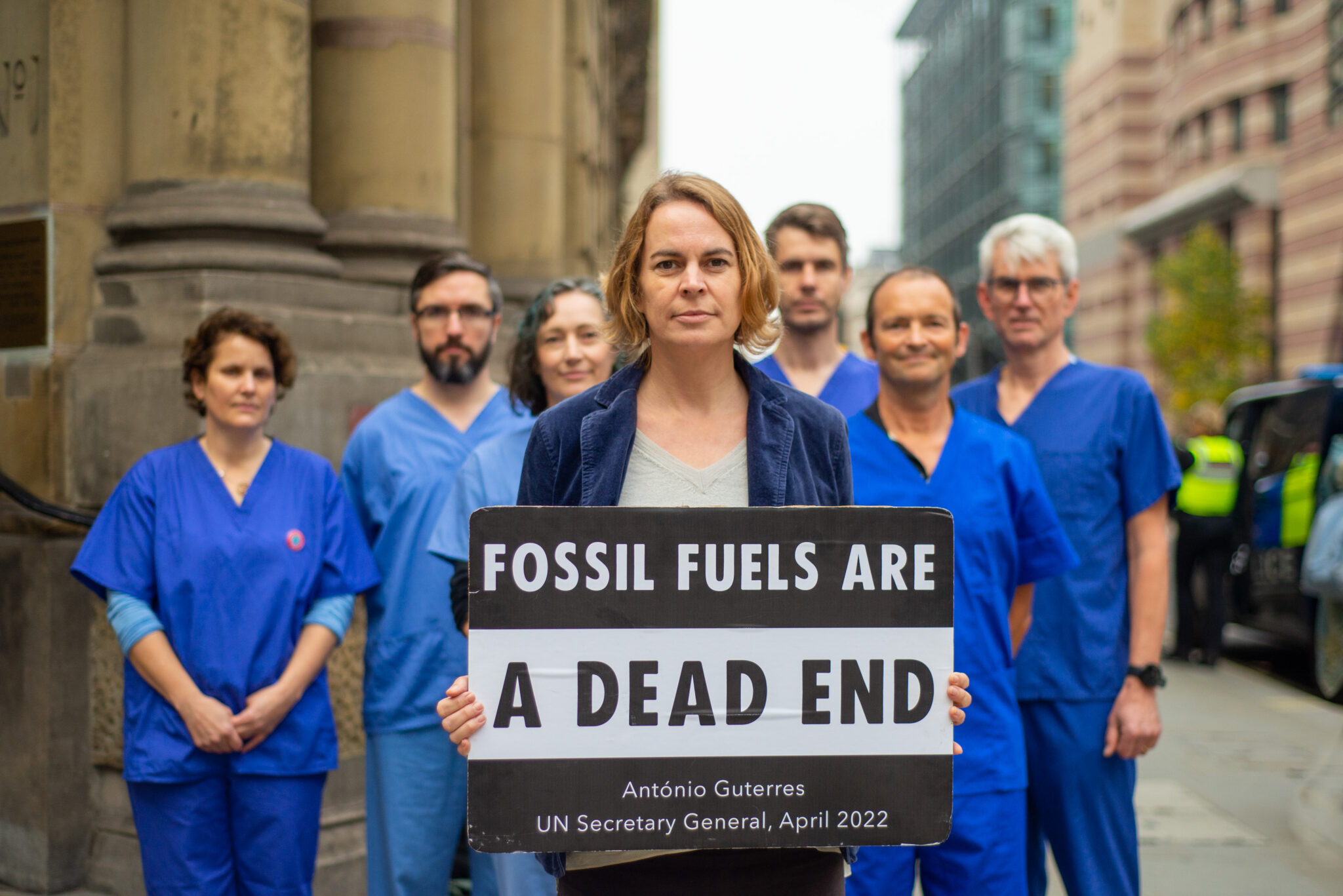
    14.11.22_XR Docs_City of London Mags_Helena Smith_7224
    14.11.22_XR Docs_City of London Mags_Helena Smith_7224

    “The Supreme Court’s decision brings the people of Delaware and Hoboken one step closer to putting these polluters on trial and making them pay for their climate deception.”

    On the heels of similar decisions last month, the U.S. Supreme Court on Monday delivered “another win for climate accountability,” rejecting fossil fuel corporations’ attempt to quash lawsuits filed by the city of Hoboken, New Jersey, and the state of Delaware.

    Both filed in September 2020, the suits from Hoboken and Delaware—like those filed by dozens of other municipalities and states—take aim at companies including BP, Chevron, ConocoPhillips, ExxonMobil, and Shell for fueling the climate emergency. The fossil fuel industry has repeatedly tried to evade accountability by shifting such cases from state to federal court.

    “We appreciate and agree with the court’s order denying the fossil fuel companies’ petition, which aligns with dozens of decisions in federal courts here in Delaware and across the country,” said Democratic Delaware Attorney General Kathy Jennings in response to Monday’s decision.

    The Supreme Court’s decision means that both of these cases will now move forward in state court.

    Jennings on Monday cited an opinion piece she wrote for Delaware Online with Shawn Garvin, secretary of the Delaware Department of Natural Resources and Environmental Control, back when they launched the legal effort in 2020:

    As we stated at the time of filing this case almost three years ago: “It didn’t have to be this way. The fossil fuel industry knew for decades that their products would lead to climate change with potentially ‘severe’ and even ‘catastrophic’ consequences—their words, not ours. But they didn’t clean up their practices or warn anyone to minimize the peril they were creating. Instead, they spent decades deliberately and systematically deceiving the nation about what they knew would happen if they carried on with business as usual.”

    Building on revelations from the past decade that have bolstered climate liability lawsuits, peer-reviewed research published in January shows that ExxonMobil accurately predicted global heating decades ago, while documents released in early April make clear that Shell knew about the impact of fossil fuels even earlier than previously thought.

    “Imagine how far along we might be in the transition to a low-carbon economy today if not for their deception,” Jennings said. “That’s why we filed our lawsuit, and today’s order moves Delawareans one step closer to the justice and economic relief that we deserve.”

    For Hoboken and Delaware, the high court denied fossil fuel companies’ challenge to decision last year from a panel at the U.S. Court of Appeals for the 3rd Circuit, which wrote in part that “our federal system trusts state courts to hear most cases—even big, important ones that raise federal defenses. Plaintiffs choose which claims to file, in which court, and under which law. Defendants may prefer federal court, but they may not remove their cases to federal court unless federal laws let them. Here, they do not.”

    Center for Climate Integrity president Richard Wiles noted Monday that “Big Oil companies keep fighting to avoid trials in state courts, where they will be forced to defend their record of climate lies and destruction in front of juries, but federal courts at every level keep rejecting their efforts.”

    “The Supreme Court’s decision brings the people of Delaware and Hoboken one step closer to putting these polluters on trial and making them pay for their climate deception,” Wiles added. “Fossil fuel companies must be held accountable for the damages they knowingly caused.”

    After the high court’s April decisions—which involved cases brought by the state of Rhode Island as well as municipalities across California, Colorado, Hawaii, and Maryland—Jamie Henn of Fossil Free Media said, “This should open the floodgates for more lawsuits that could make polluters pay!”

    There were no noted dissensions on Monday. However, like last month, Justice Samuel Alito, who owns stock in some fossil fuel companies, did not participate in the decision about these two cases—but Justice Amy Coney Barrett, whose father spent nearly three decades as an attorney for Shell, did.

    Original article by Jessica Corbett republished from Common Dreams under Creative Commons (CC BY-NC-ND 3.0).

  • Staggering BP profits, Labour abandons commitment to abolish tuition fees, Nurses strike continues …

    Spread the love

    Staggering BP profits spark outrage

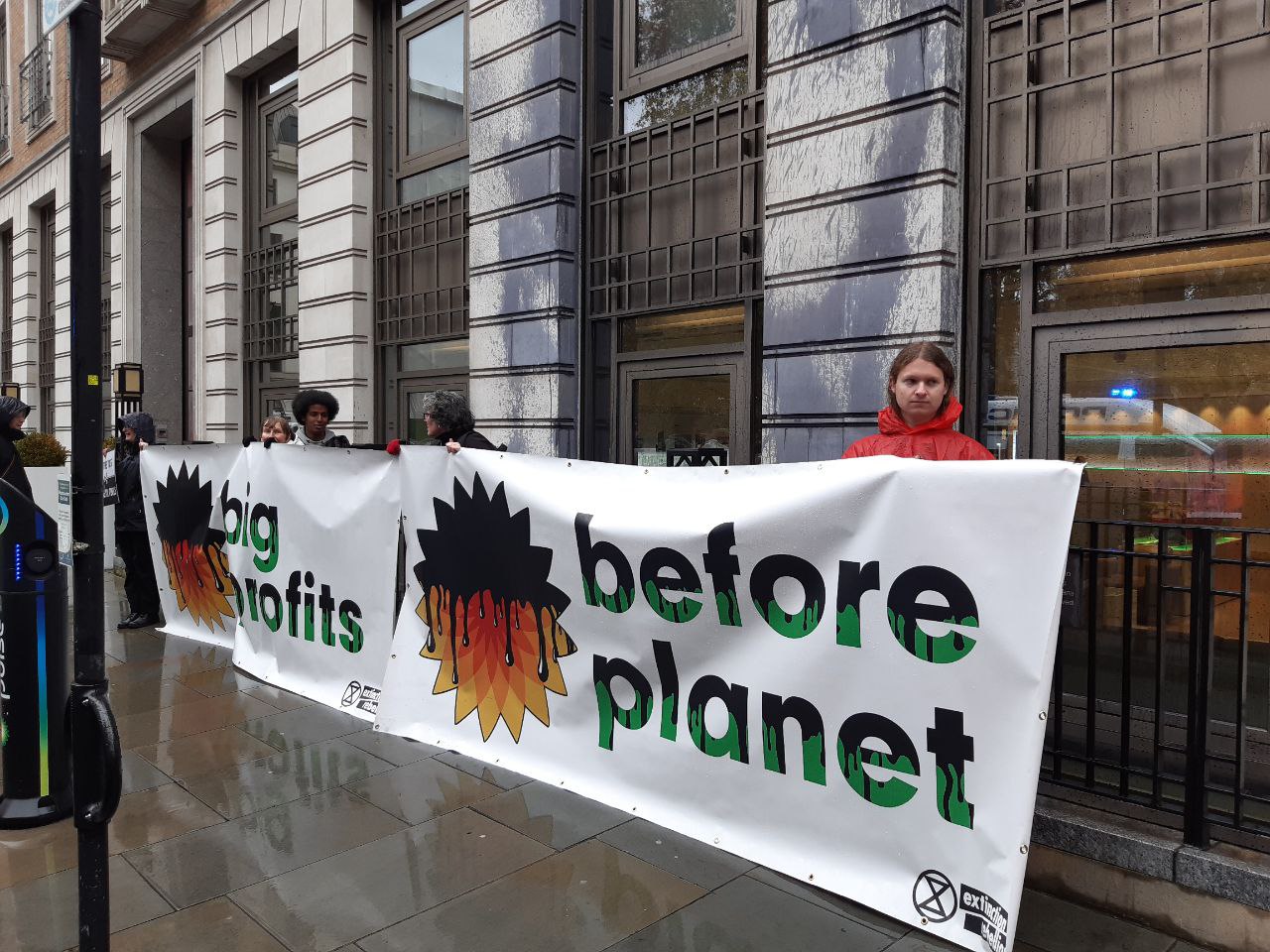
    Extinction Rebellion protests at BP
    Extinction Rebellion protests at BP

    Fossil fuel giant BP has one again reported eye watering profits. In the first quarter of 2023, BP made £4 billion.

    The news has sparked outrage amongst opposition politicians and groups campaigning on the climate and cost of living crises.

    Staggering BP profits spark outrage

    Tuition fees: How the left has responded to Keir Starmer’s U-turn

    Left wing faction Momentum compared Starmer’s shifting position to that of Nick Clegg, who famously went into the 2010 general election pledging to abolish tuition fees only to triple them when in government. A spokesperson for Momentum said: “This move wouldn’t just fly in the face of party democracy and the wishes of Labour Students. It would be a betrayal of millions of young people in desperate need of hope. The Labour leadership should learn from Nick Clegg’s failure, not repeat it.”

    The former Labour leader Jeremy Corbyn made similar comments. He tweeted: “Young people should not be saddled with a lifetime of debt just because they want to get an education. Abolish tuition fees, restore maintenance grants and deliver free education for all.”

    Tuition fees: How the left has responded to Keir Starmer’s U-turn

    Don’t underestimate nurses’ resolve, Pat Cullen tells government

    NHS sign

    Cullen commented that, although the outcome of today’s meeting appeared to be set, nurses will remain in dispute with the government over pay and staffing.

    “Tuesday’s meeting with Steve Barclay appears a foregone conclusion,” said Cullen. “Different unions and different professions came to different, but respectable, conclusions on this pay offer.

    “The deal being accepted by others does not alter the clear fact that nursing staff, as the largest part of the NHS workforce, remain in dispute with the government over unfair pay and unsafe staffing.”

    Don’t underestimate nurses’ resolve, Pat Cullen tells government

    Breaking: Labour councillor exposes himself running hate account mocking left-wing candidates

    Right-wing Liverpool Labour councillor Tom Cardwell has been outed apparently running a hateful troll account attacking local political opponents. 

    The ‘GorstSpam’ Twitter account was set up to attack Garston councillor Sam Gorst and other Liverpool Community Independent (LCI) councillors and candidates who left Labour over the Labour-run council’s swingeing cuts to services for the most vulnerable – and has put out vile misogynistic and homophobic content.

    And Cardwell exposed his link to the account when he tweeted one message pretending to be Gorst, then immediately deleted it and was stupid enough to put the same message out on the ‘Spam’ account moments later

    Breaking: Labour councillor exposes himself running hate account mocking left-wing candidates

    Phillips deletes tweet about buying house at 20 – she told FT she was in ‘squat’ at 22

    Right-wing Labour MP Jess Phillips has deleted a tweet in which she said she bought her first home at the age of twenty and described how it changed her and her children’s ‘fortune’

    Phillips has previously told the Financial Times, presumably in an oddly-placed effort to boost her working-class credentials, that at age 22 she was living in a ‘squat’

    Phillips deletes tweet about buying house at 20 – she told FT she was in ‘squat’ at 22

    Apologies that I sometimes lose it dear readers