Tag: CO2

  • How Carbon Capture and Storage Projects Are Driving New Oil and Gas Extraction Globally 

    Spread the love

    Original article by Michael Buchsbaum and Edward Donnelly republished from DeSmog.

    The oil industry’s push to portray carbon capture as a climate solution at COP28 obscures how the technology is really being used.
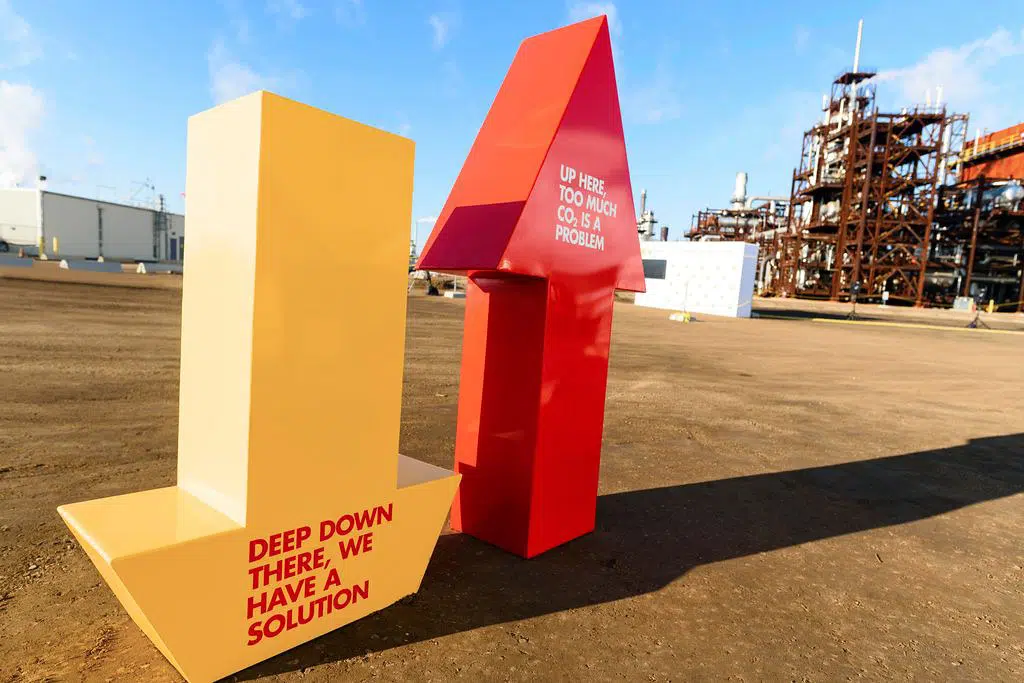
    Shell and its joint venture partners have a Quest carbon capture and storage (CCS) project at its Scotford Complex near Fort Saskatchewan, Canada. Credit: Government of Alberta, CC BY-NC-ND 2.0
    Shell and its joint venture partners have a Quest carbon capture and storage (CCS) project at its Scotford Complex near Fort Saskatchewan, Canada. Credit: Government of Alberta, CC BY-NC-ND 2.0

    When Sultan Ahmed Al Jaber opens the 28th annual UN climate conference in Dubai in November, he will be juggling two roles – convincing the world of the United Arab Emirates’ leadership in reducing greenhouse gas emissions, while preserving the very industry that’s causing them. 

    In addition to his job as summit president, Al Jaber heads the Abu Dhabi National Oil Company (ADNOC), which plans to increase its oil and gas output by 11 percent by 2027. The company says that more oil will mean less emissions, however — provided the industry builds enough facilities to capture carbon dioxide (CO2), the main gas causing the climate crisis.  

    “We must be laser-focused on phasing out fossil fuel emissions, while phasing up viable, affordable zero carbon alternatives,” Al-Jaber said at a pre-COP 28 event in Bonn in June. The statement was widely interpreted as a pitch for carbon capture. 

    On September 6, ADNOC finalized a deal to build a carbon capture and storage (CCS) project in the UAE’s Habshan oil and gas field, extending the company’s existing CCS operations at a steel plant. Now projected to become one of the largest carbon capture plants in the Middle East, ADNOC says the facility will have the equivalent climate impact of removing 500,000 cars from the road.

    In fact, the project will be used to squeeze even more oil from the ground. Most of the CO2 ADNOC already captures is pumped into existing oil wells, forcing residual crude to the surface in a process known as “enhanced oil recovery” or “EOR”.

    It is a trend reflected across the sector: Of the 32 commercial CCS facilities operating worldwide, 22 use most, or all, of their captured CO2 to push more oil out of already tapped reservoirs. This fleet accounts for approximately 31 million tonnes of the world’s roughly 42 million tonnes of operational carbon capture capacity, according to figures published by the industry-backed Global CCS Institute, U.S. Energy Information Administration and other sources. 

    But the fact that existing carbon capture projects are mostly used to bring more oil to the surface has not stopped oil and gas companies championing the technology as a climate solution in the run-up to COP28.

    In January, ExxonMobil Tweeted a video interview with a safety and environment supervisor at its LaBarge CCS project in Wyoming. 

    “Welcome to La Barge — the industrial facility that has captured the most CO2 emissions on earth to date,” says a caption at the start of the clip.

    Nowhere does the video mention that most of the CO2 captured from the LaBarge gas processing plant is being injected underground to extract more oil.  Research by the Institute for Energy Economics and Financial Analysis, a nonprofit energy think tank, shows that 97 percent of CO2 captured by the La Barge facility has been sold for EOR since the plant began operations in 1986. In times when EOR was not profitable, CO2 was simply vented into the atmosphere.

    While CCS is proving a boon for the fossil fuel industry, a DeSmog review of 12 of the world’s biggest projects has found a litany of missed carbon capture targets; cost overruns; and multi-billion-dollar bills to taxpayers in the form of subsidies. 

    DeSmog’s research also raises questions over an oft-cited claim that industry captures 41 million tonnes of CO2 annually — or 0.1 percent of the world’s approximately 37 billion tonnes of energy-related CO2 emissions.

    Beyond the consistent underperformance of many CCS projects, DeSmog found that most either strip out CO2 in the process of refining fossil fuels, or use their captured CO2 to push more oil out of the ground — or both. The result: existing CCS projects are enabling the release of a much greater amount of overall CO2 emissions into the atmosphere than they are storing underground. 

    For examples, see a summary of the 12 projects DeSmog analysed here.

    From Oilman’s Dream to “Climate Solution”

    The process of using carbon dioxide to produce more oil, now known industry-wide as enhanced oil recovery, or “CO2-EOR”, was born in the oil fields of Texas in the early 1970s. 

    Petroleum engineers from leading oil producers such as Shell, Exxon, and Chevron had discovered that injecting CO2 at high pressure into “mature” or “previously developed” oil reservoirs helped increase the flow of otherwise stubborn hydrocarbons — in essence squeezing more volume out of aging wells. 

    Though initial tests found that each ton of injected CO2 could push out an additional two or more barrels of oil, the lack of readily available CO2 made the technique expensive. That changed when companies began siphoning off CO2 emitted from several Texas gas processing plants, and piping it to an oil field to boost productivity. To ensure a steady supply, industry agents scoured the region and purchased the rights to mine naturally occurring CO2 deposits in Colorado, New Mexico, and Arizona — eventually building hundreds of miles of dedicated pipelines to transport the gas to oil-field injection points. 

    By the late 1970s, amid growing concerns over what was then known as the “greenhouse effect,” industry executives began to propose that capturing CO2 and burying it underground could allow the world to continue generating power from fossil fuels far into the future. In 1992, the Paris-based International Energy Agency (IEA) and other energy organizations established a research program to support developers seeking to prove CCS at scale. 

    By the time of the first U.N. climate conferences in the mid-1990s, the oil industry had begun marketing carbon capture as a technological “silver bullet” capable of making coal “clean,” and rendering oil and gas as “low carbon” — a strategy employed by oil majors to this day.

    However, capturing CO2 is not the same as avoiding its climate impacts. If that CO2 is then used to directly produce more oil, or if CCS “abatement” is used to suggest that additional oil and gas production is climate-friendly — or in some cases both — then those CCS projects are invariably acting as a net harm to the climate, by actually increasing overall CO2 pollution. 
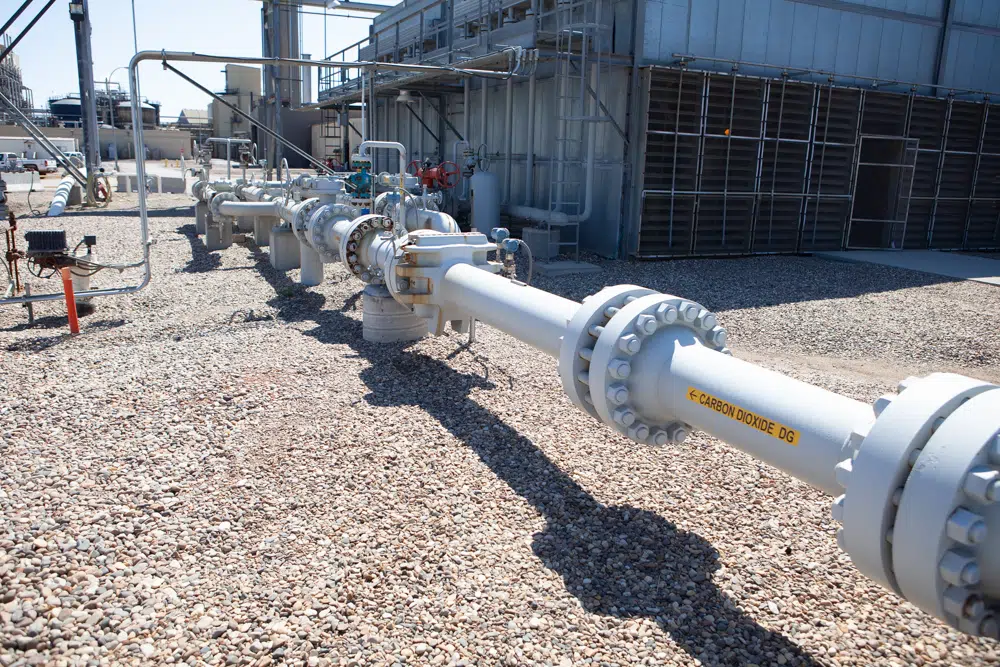
    Carbon dioxide runs through pipes at a North Dakota CCS plant. Credit: Buchsbaum Media.
    Carbon dioxide runs through pipes at a North Dakota CCS plant. Credit: Buchsbaum Media.

    For example, the fossil fuel industry often points to Norway’s pioneering Sleipner CCS facility — which has captured and buried approximately one million tons of CO2 per year under the North Sea since 1996 — as proof that carbon capture works. But that figure does not account for all the additional CO2 that’s emitted when fossil gas produced by the plant is burned by end-users. 

    Energy expert Michael Barnard, estimates that even though Sleipner has stored about 23 million tons of CO2 from 1996-2019, burning the gas refined by the plant over that time has released some 581 million tons of CO2 into the atmosphere — or more than 25 times the amount that was sequestered. (For more details on Sleipner, see DeSmog’s review of 12 CCS facilities).

    Profit Driver

    Now an established technique worldwide, producers generally use CO2-EOR to recover oil from older “depleted” fields, where less sophisticated recovery methods have left up to two-thirds of the original oil behind. If the geology and economics are favorable, using EOR techniques can extend the productive life of developed oil fields for several more decades. 

    To put the significance of this approach to the oil industry into perspective, according to the U.S. National Energy Technology Laboratory, of the 600 billion barrels of oil that have been discovered in the U.S., approximately 400 billion are unrecoverable by conventional means. But half of that unrecoverable oil — or 200 billion barrels — could be squeezed to the surface through CO2-EOR.

    Today, the oil industry pumps some 80 million tonnes of CO2 underground each year to extract more oil, much of it in the U.S. — the world’s leading oil and gas producer, and biggest user of CCS-EOR, which drives six percent of the country’s daily output. In some cases, the technique can squeeze up to four or five additional barrels from otherwise declining fields for every ton of injected CO2. Though geology plays a role, one of the main factors inhibiting even greater EOR volume is the lack of cheaply available CO2. 

    Despite many EOR projects simply being intended to extend oil production, companies often label them as climate-friendly “carbon capture” facilities since about half the CO2 injected underground remains there, depending on local geological conditions. 

    However, climate claims made on the basis of CCS projects also often ignore the fact that much of the CO2 the industry “captures” for EOR purposes is mined from naturally occurring underground deposits, and reburying this gas in an oil field does nothing to reduce the amount of emissions humans are releasing into the atmosphere by burning fossil fuels. 

    Government Backing

    While costs for proven zero-carbon emitting renewable energy technologies are plummeting, CCS projects have remained dependent on subsidies and tax breaks that often incentivise some of the world’s richest and most polluting companies to capture CO2 to produce more oil. 

    Governments worldwide have awarded at least $19 billion in subsidies to CCS projects over the last 20 years, according to data compiled by Oil Change International, a research and advocacy organization. This number includes more than $4 billion in failed projects, including the troubled Kemper Facility, a now-abandoned “clean coal” and EOR scheme. (For details, please see DeSmog’s review of 12 CCS projects).
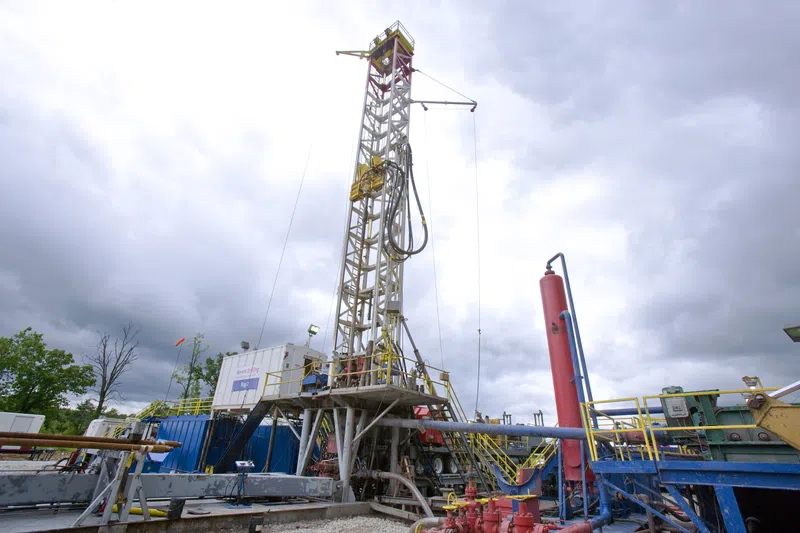
    Carbon capture technology used at a coal mine in 2014. Credit: Peabody Energy, Wikimedia Commons (CC BY-2.0)”>Wikimedia Commons Wikimedia Commons (CC BY-2.0)”>CC BY-2.0
    Carbon capture technology used at a coal mine in 2014. Credit: Peabody Energy, Wikimedia Commons (CC BY-2.0)”>Wikimedia Commons Wikimedia Commons (CC BY-2.0)”>CC BY-2.0

    By far and away, the United States has extended the most government support for CCS, estimated at $15 billion since 2010. Canada, Australia, and the European Union have also poured billions into the technology. Norway’s state-owned Statoil, now Equinor, was also an early CCS adopter, and the government continues to pour billions into new, more sophisticated projects. Likewise, state-owned companies in China, as well as Brazil’s Petrobras, Saudi Arabia’s Aramco, and the United Arab Emirates’ ADNOC are receiving support to develop and expand their existing CCS operations.  

    U.S. Doubles Down

    Despite the fact that almost three-quarters of existing CCS projects are used to pump more oil, new climate policies on both sides of the Atlantic are driving more government support. 

    In August last year, U.S. President Joe Biden’s Inflation Reduction Act (IRA) – which contained sweeping climate provisions — significantly expanded tax credits for investments in CCS beyond an existing $12 billion in government support. Under the revised “45Q” credits section, companies can now claim $60 per ton of CO2 captured for EOR — up from $35 before the Act was passed — and $85 per ton of CO2 captured for geological storage, up from $50.  

    Additionally, the IRA reduces the requirements for eligible CCS projects while locking in a seven-year extension to qualify for the tax credit, meaning that developers have until January 2033 to begin construction. 

    The industry-backed Global CCS Institute reckons these tax breaks and other enhancements could increase CCS deployment in the U.S. 13-fold to more than 110 million tonnes per year by 2030.

    Since there has been no cap set as to how much the U.S. government can pay through new carbon capture credits, Bloomberg New Energy Finance and Credit Suisse caution these subsidies could balloon to a vast $50 to $100 billion in CCS giveaways over the next decade.

    Flurry of Deals

    More than 50 new CCS projects were announced within months of the passage of the IRA — spurred on by even more support from the Biden administration.

    In July, ExxonMobil, which boasts more CCS experience than any other company, spent over $5 billion to acquire independent oil and gas producer Denbury Resources and its 1,300 miles of CO2 pipeline infrastructure. In projects almost entirely devoted to EOR, Denbury has been injecting over four million tonnes a year of carbon captured from industrial and natural sources into various oil fields in 10 onshore sequestration sites across the Gulf region of the U.S. 

    Buying Denbury allows ExxonMobil to not only advance its various carbon capture deals, but also gives it a great potential revenue source as polluting companies increasingly resort to buying carbon credits to meet climate targets. With an expanding CO2 pipeline network already in place, ExxonMobil can now offer itself up as an emissions disposal company and cash in on the associated tax credits. 

    Looking ahead, ExxonMobil says that CCS and other “carbon management” schemes could develop into a $4 trillion global market by 2050.

    ‘Preserve our Industry’

    The deal-making continued in August, when the White House and the Emirati government endorsed a new partnership between ADNOC and Texas-based Occidental Petroleum to “supercharge and accelerate decarbonization solutions” in the UAE, the United States, and around the world. Both partners are currently running large-scale carbon capture projects specifically aimed at producing “low carbon” oil. 

    One of the technologies the partnership will explore is “direct air capture,” which involves sucking air through giant fans and filtering out CO2 with a chemical-lined filter. The CO2 can then be stored underground or piped to petroleum wells to help extract oil. Bonus funds in Biden’s IRA are now available to prove this experimental technology is viable.

    Currently the world’s first large-scale direct air capture plant in Iceland stores about 4,000 tonnes of CO2 a year, about 0.001 percent, of global carbon capture capacity, according to data from the Global CCS Institute. That’s less than four second’s worth of global emissions. However, these modest beginnings have not tempered oil industry enthusiasm for the technique. 

    “We believe that our direct capture technology is going to be the technology that helps to preserve our industry over time,” Occidental Petroleum Chief Executive Vicki Hollub told a major fossil fuel conference in Houston in March. The company is already the U.S. leader in carbon capture operations, and Hollub says new advances could serve as a lifeline for the oil industry, extending operations “60, 70, or 80 years in the future,” she noted. 

    Direct air capture plants could soon be used to trap CO2 for enhanced oil recovery operations in the US, the UAE and beyond. In 2021, ADNOC announced plans to produce “low carbon” petroleum, and last year Occidental signed its first contract for “net-zero oil”.

    European Commission President Ursula von der Leyen requested a Dutch foreign official to examine CCS as a climate solution. Credit: WikiMedia Commons, CC BY-NC-ND 2.0“>WikiMedia Commons
    European Commission President Ursula von der Leyen requested a Dutch foreign official to examine CCS as a climate solution. Credit: WikiMedia Commons, CC BY-NC-ND 2.0“>WikiMedia Commons

    Europeans Follow Suit

    Aggressive support for CCS from the Biden administration has found echoes across the Atlantic. In March, the European Commission proposed that the EU should target 50 million tonnes per year of CO2 capture capacity by 2030, from almost zero today. The target forms part of the draft Net-Zero Industry Act, a key piece of climate legislation aiming to drive the clean energy transition. 

    European Commission president Ursula von der Leyen has since instructed Wopke Hoekstra, a former Dutch foreign minister who has worked for Shell, to examine CCS as a climate solution before he takes over as climate commissioner in October.

    Against this backdrop of positive policy signals, the oil industry has announced a spate of ambitious carbon capture plans in Europe, a continent with little existing CCS infrastructure outside of Norway – almost all of which plan to store CO2 under the North Sea.

    In the UK, the North Sea Transition Authority, which regulates the country’s oil and gas industry, this month awarded 21 licenses to 14 companies to store captured CO2 into blocks for formerly productive oil and gas fields under the seabed. The combined CCS plan aims to store 30 million tonnes of CO2 annually by 2030.

    Around the world, hundreds of new carbon “abatement” projects reliant on CCS to clean up fossil-fueled electrical generation, steel and cement output, as well as hydrogen production, are now scheduled to come online by the end of the decade.

    This, in turn, has triggered a scramble by companies seeking to enter the rapidly emerging CO2 logistics, handling, shipping and disposal markets.

    Despite all this activity, announced global schemes to capture and bury CO2 constitute only a tiny fraction of what would be needed to slow climate change, critics say. Based on the current project pipeline, the International Energy Agency predicts that by 2030, the world’s annual carbon capture capacity from both new construction and retrofits could amount to a total of 205 million tonnes of CO2, only about 0.5 percent of current global energy-related emissions. 

    Moreover, the core of the IEA’s Net Zero scenario, as well as similar roadmaps for avoiding the worst impacts of climate change, rests on rapidly accelerating the shift to renewables from fossil fuels, regardless of whether a portion of CO2 emissions are “abated” through capture and storage. 

    Aware of the risks of the oil industry presenting CCS as a catch-all climate solution at COP28, some governments are pushing back. In July, ministers from Germany, France, Denmark, the Netherlands and more than a dozen other nations published a joint letter warning that CCS and “abatement technologies must not be used to green-light continued fossil fuel expansion.” Instead, such technologies “must be considered in the context of steps to phase out fossil fuel use, and should be recognised as having a minimal role to play in decarbonization.”

    With the Emirati hosts seemingly determined to champion carbon capture, and the oil industry planning to market ever more barrels of “net-zero” oil, the battle over the future of a 50-year-old technology may have only just begun. 

    Click here for case studies from a DeSmog review of 12 of the world’s leading CCS projects, and their impact on the climate. 

    Original article by Michael Buchsbaum and Edward Donnelly republished from DeSmog.

    Fossil Fuel Companies Made Bold Promises to Capture Carbon. Here’s What Actually Happened.

    Italian Oil Giant Eni Knew About Climate Change More Than 50 Years Ago, Report Reveals

    One Billion People Will Die Without Oil Production, Kuwait Official Claims

    UK/Fossil Fuel Firms Flock to Conservative Party Conference

    Oil Lobby Claims More Production Won’t Raise Emissions, But Ignores Crucial Data
  • New Study Identifies United States as ‘Planet-Wrecker-in-Chief’

    Spread the love

    Original article by JAKE JOHNSON republished from Common Dreams under Creative Commons (CC BY-NC-ND 3.0). 

    Planned fossil fuel expansion in the U.S. accounts for more than a third of new oil and gas extraction projects set to begin through 2050, according to Oil Change International.

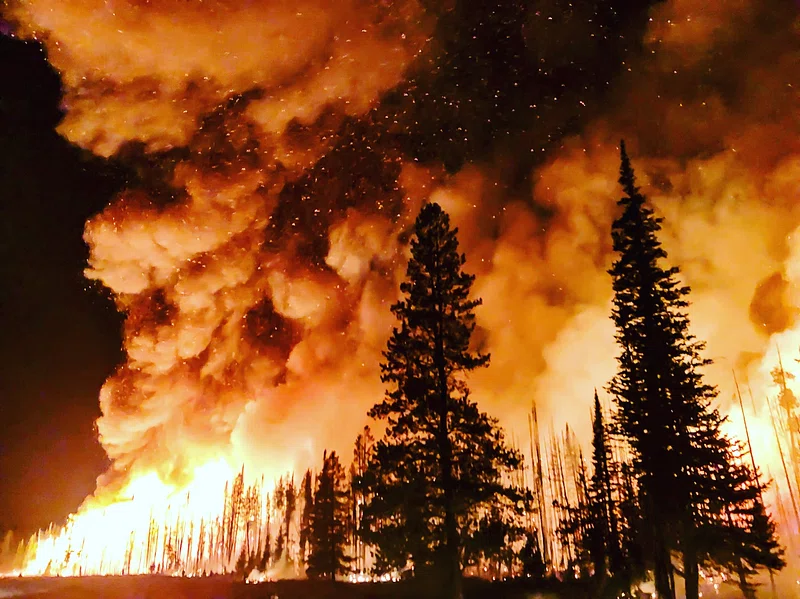
    Canadian wildfire 2023
    Canadian wildfire 2023

    A new report released Tuesday identifies the United States as “planet-wrecker-in-chief,” pointing to the nation’s plans for a massive expansion of oil and gas production over the next two and a half decades even as it postures as a climate leader on the world stage.

    According to Oil Change International’s (OCI) research, planned oil and gas expansion in the U.S.—the largest historical contributor to planet-warming greenhouse gas emissions—accounts for more than a third of prospective global oil and gas expansion through 2050. Much of the U.S. expansion is tied to fracking, the report observes.

    The U.S. is one of just 20 countries that are projected to be responsible for nearly 90% of the carbon dioxide pollution from new oil and gas extraction projects between 2023 and 2050.

    If those 20 countries follow through with their fossil fuel expansion plans, OCI noted, the projects will emit an estimated 173 billion tonnes of carbon dioxide, the equivalent of the lifetime emissions of more than 1,000 new coal plants.

    “If that amount of CO2 is emitted into the atmosphere, then we’re in serious trouble,” Romain Ioualalen, global policy lead for OCI and a co-author of the new report, said during a press conference on Tuesday.

    Such emissions, Ioualalen warned, would blow through the world’s dwindling carbon budget and make it “mathematically impossible” to limit global warming to 1.5°FC by the end of the century.

    “The planet-wreckers report presents unmistakable evidence of the peril of fossil fuel expansion while reckoning with the world’s historic polluters, namely the United States.”

    Five rich countries—the U.S., Canada, Australia, Norway, and the United Kingdom—account for more than half of all planned oil and gas expansion globally, even though they are far less reliant on fossil fuel revenues than other nations and have the resources for a renewable energy transition, OCI said.

    The new report takes the Biden administration to task for “pledging climate leadership” while simultaneously facilitating “the continued expansion of fossil fuel production in the United States.”

    “In 2023 alone, the administration greenlit the Alaska Willow Project; approved multiple LNG export facilities in Alaska and along the Gulf Coast, held a massive oil and gas lease sale in the Gulf of Mexico, fast-tracked the Mountain Valley Pipeline, and oversaw the weakening of bedrock environmental laws, making it easier for fossil fuel infrastructure to move forward,” the report notes.

    The new research was released just over a week before United Nations Secretary-General António Guterres’ Climate Ambition Summit, which will be preceded by more than 400 mobilizations worldwide aimed at pressuring world leaders to urgently phase out fossil fuels.

    “The planet-wreckers report presents unmistakable evidence of the peril of fossil fuel expansion while reckoning with the world’s historic polluters, namely the United States, and how we must hold them accountable,” Helen Mancini, a 16-year-old Fridays for Future activist from New York City, said in a statement Tuesday.

    “The activism youth are doing is not radical,” Mancini added, “it’s a demand for survival that the planet-wreckers must heed.”

    Original article by JAKE JOHNSON republished from Common Dreams under Creative Commons (CC BY-NC-ND 3.0). 

  • NOAA Finds Carbon Concentrations Highest in 800,000 Years as Sea Level Rise Hits Record

    Spread the love

    Original article by JESSICA CORBETT republished from Common Dreams under Creative Commons (CC BY-NC-ND 3.0).

    The new global report states that burning fossil fuels is “the main driver of increasing atmospheric CO2.”

    Amid a summer of extreme heat across the Northern Hemisphere, an international report led by the U.S. National Oceanic and Atmospheric Administration revealed Wednesday that greenhouse gas concentrations, global sea level, and ocean heat content hit record highs last year.

    “This report is a truly international effort to more fully understand climate conditions around the globe and our capacity to observe them,” NOAA National Centers for Environmental Information (NCEI) Director Derek Arndt said of State of the Climate in 2022, which features contributions from more than 570 scientists in over 60 countries.

    “It is like an annual physical of the Earth system, and it serves present and future generations by documenting and sharing data that indicate increasingly extreme and changing conditions in our warming world,” Arndt added of the 33rd annual report, published by the Bulletin of the American Meteorological Society.

    As humanity continued to extract and burn fossil fuels and engage in polluting agricultural practices, all three of the main atmospheric greenhouse gases—carbon dioxide, methane, and nitrous oxide⁠—reached record concentrations last year. The CO2 average was 417.1 parts per million, topping not only modern observational records but also paleoclimatic records that go back as far as 800,000 years.

    “People are causing the largest known change in global climate since our transition to agriculture thousands of years ago,” said Paul Higgins, associate executive director of the American Meteorological Society.

    In the ocean—which has absorbed most warming from greenhouse gases in recent decades—heat content rose to record highs last year. The annual surface temperature was 0.45-0.54°F above the 1991-2020 average, making 2022 among the six warmest years since record-keeping began in the 1800s and the hottest La Niña year on record. The global mean sea level set a record for the 11th straight year, rising about 4 inches above the 1993 average, when satellite measurements began.

    While approximately 58% of the ocean surface endured at least one marine heatwave, temperatures also soared on land. As the report details:

    Europe as a whole observed its second-warmest year on record, with 16 individual countries observing record warmth at the national scale. Records were shattered across the continent during the summer months as heatwaves plagued the region. On July 18, 104 stations in France broke their all-time records. One day later, England recorded a temperature of 40°C [104°F] for the first time ever. China experienced its second-warmest year and warmest summer on record. In the Southern Hemisphere, the average temperature across New Zealand reached a record high for the second year in a row. While Australia’s annual temperature was slightly below the 1991-2020 average, Onslow Airport in Western Australia reached 50.7°C [123°F] on January 13, equaling Australia’s highest temperature on record.

    […]

    The effects of rising temperatures and extreme heat were apparent across the Northern Hemisphere, where snow-cover extent by June 2022 was the third smallest in the 56-year record, and the seasonal duration of lake ice cover was the fourth shortest since 1980. More frequent and intense heatwaves contributed to the second-greatest average mass balance loss for Alpine glaciers around the world since thestart of the record in 1970. Glaciers in the Swiss Alps lost a record 6% of their volume. In South America, the combination of drought and heat left many central Andean glaciers snowfree by mid-summer in early 2022.

    Nearly a third of global land faced moderate or worse drought in 2022, from a 63% footprint in the contiguous United States to the continuation of a 13-year megadrought in central Chile. The report notes that an ongoing drought in Africa has “led to crop failure, millions of livestock deaths, water scarcity, and inflated prices for staple food items.”

    Meanwhile, in South Asia, “Pakistan received around three times its normal volume of monsoon precipitation in August, with some
    regions receiving up to eight times their expected monthly totals,” the report highlights. “Resulting floods affected over 30 million people, caused over 1,700 fatalities, led to major crop and property losses, and was recorded as one of the world’s costliest natural disasters of all time.”

    Global conditions last year and Big Oil’s record profits fueled demands for bold action to overhaul agricultural practices and stop burning fossil fuels—which, as the report points out, is “the main driver of increasing atmospheric CO2.” Such calls have continued in recent months, as oil and gas giants kept rewarding shareholders with hefty stock buybacks and dividends during what has been another historically hot summer, according to data released Tuesday.

    “Our planet has just endured a season of simmering—the hottest summer on record,” United Nations Secretary-General António Guterres said Wednesday, less than three months away from the U.N. COP28 summit. “Leaders must turn up the heat now for climate solutions.”

    Original article by JESSICA CORBETT republished from Common Dreams under Creative Commons (CC BY-NC-ND 3.0).

    Related from Common Dreams:

    Now End All the Drilling, Campaigners Say as Biden Rescinds Arctic Refuge Leases

    ‘Worst Possible News’: Scientists Urge Immediate Action as Greenhouse Gas Levels Hit All-Time High

    ‘Climate Breakdown Has Begun’: Summer of 2023 Was Hottest Ever Recorded

    CO2 Levels Are the Highest in a Million Years as Extreme Weather and Flooding Rage Across the Globe

    ‘This Is Unprecedented’: Record-Breaking Rain Brings Deadly Flooding to Greece, Turkey, Bulgaria

  • Energy Dept. Announces $1.2 Billion to Advance Controversial Climate Technology

    Spread the love

    Original article by Dana Drugmand republished from DeSmog.

    ‘Direct air capture’ of carbon pollution is still experimental, but a fossil fuel company is embracing it as a way to keep drilling.

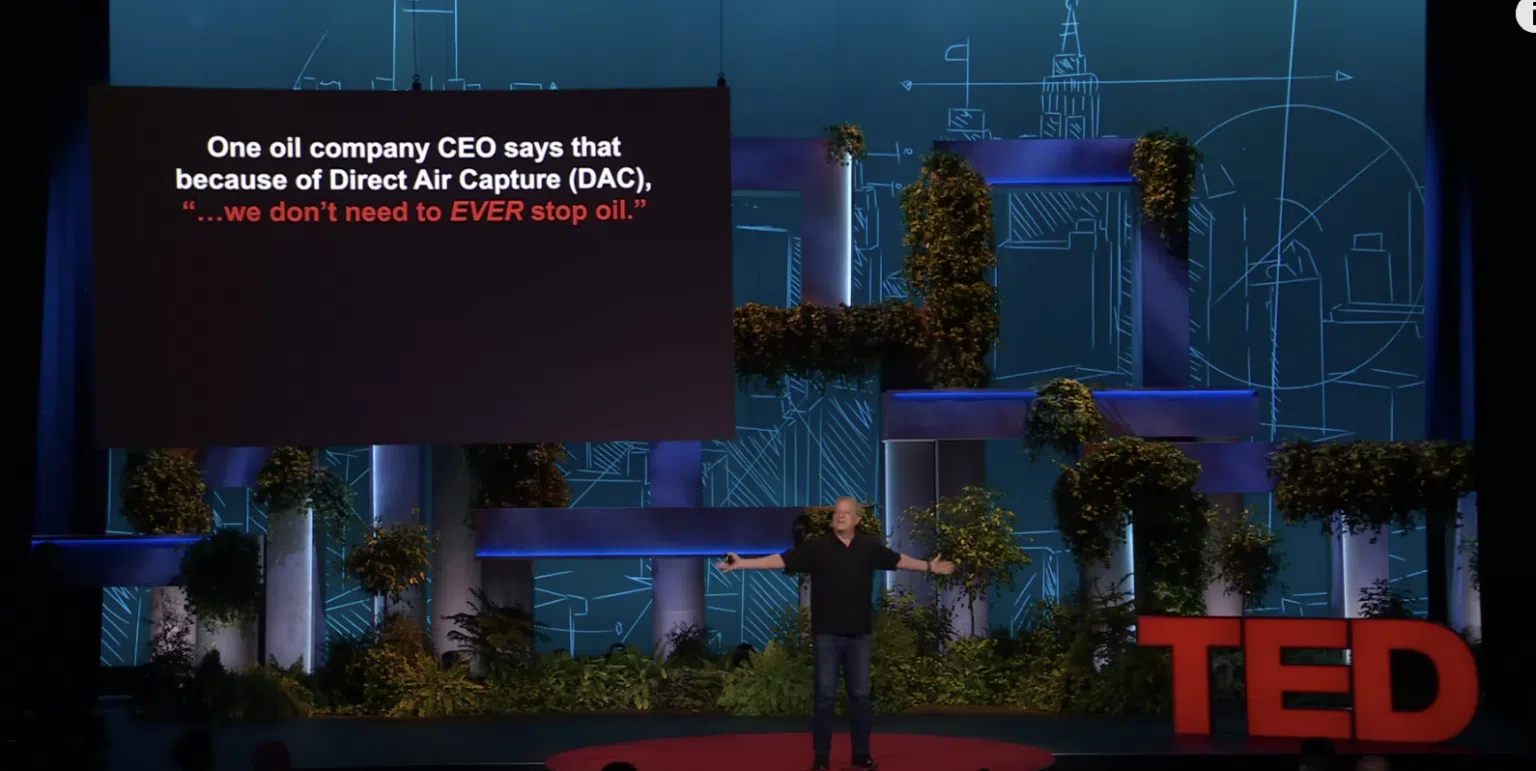
    In a new TED Talk posted on August 7, 2023, former Vice President Al Gore pointed to Occidental CEO Vicky Hollub’s acknowledgement that direct air capture enables a fossil fuel forever strategy. Credit: Screen grab of <a href=”https://youtu.be/xgZC6da4mco”TED Talk video via YouTube.

    The U.S. Department of Energy has announced that a subsidiary of U.S.-based oil company Occidental Petroleum will receive a grant to develop a commercial-scale direct air capture (DAC) facility in southern Texas. 

    It is one of two DAC projects selected under a $1.2 billion federal program to scale up DAC, which the Energy Department has called the “world’s largest investment in engineered carbon removal in history.”

    This new DOE funding is part of a larger $3.5 billion allocation from Congress – under the Infrastructure Investment and Jobs Act, part of the Biden administration’s signature climate legislation – to develop four large-scale DAC hubs. But some critics contend that the federal government’s involvement in this new climate technology is giving fossil fuel companies cover, allowing them to create the impression that they are part of the transition to greener energy while they continue to focus most of their activities and money on their core oil and gas businesses.

    Direct air capture is a nascent technology designed to capture carbon dioxide from the ambient air. In theory, it could help remove “legacy emissions,” or the carbon pollution that has already been emitted. Research and development projects to date have not yet shown how DAC can be scaled up to a global scale that would have an effect on slowing climate change. 

    Yet major polluters are already capitalizing on the conceptual promise of this technology to promote it as a climate solution.

    “Oxy has said out loud that this is a ‘get out of jail free’ card, enabling the oil and gas industry to continue business as usual,” said researcher Kert Davies, director of special investigations with the Center for Climate Integrity, referring to Occidental Petroleum’s stock ticker symbol, “instead of heeding the urgent fossil fuel phaseout warning scientists have shouted in our faces for decades.” 

    Climate advocate and former Vice President Al Gore noted in a recent TED Talk that Occidental CEO Vicky Hollub has said that because of DAC, “we don’t need to ever stop oil,” and that the technology gives the fossil fuel industry “a license to continue to operate.” 

    According to Gore, “They’re using it in order to gaslight us, literally.”

    Direct air capture may play a role someday, but the best option now is to halt carbon emissions in the first place, said John Fleming, senior scientist at the Center for Biological Diversity’s Climate Law Institute. “[Direct air capture] requires large amounts of energy, spurring more demand for the same fossil fuels that caused the climate crisis,” Fleming said. 

    Two of the four DAC hubs funded by the Department of Energy will be located on the Gulf Coast. In addition to Occidental’s hub in Kleberg County, Texas, a project proposed by Battelle, Climeworks, and other partners, called “Project Cypress,” will be constructed in Calcasieu Parish, Louisiana. On paper, the two projects together will have the capacity to remove two million metric tons of CO2 from the atmosphere per year. It is unclear exactly how much each project will receive in government funding, as they will be undergoing award negotiations.

    DOE has not yet announced selection of the other two DAC hub projects. “We’re expecting in 2024 or soon thereafter that we will have another solicitation for additional hubs,” said Kelly Cummins, deputy director of DOE’s Office of Clean Energy Demonstrations.

    Under the Inflation Reduction Act’s expanded tax credits for carbon capture technologies – a subsidy under section 45Q of the Internal Revenue Code for developers to capture CO2 from polluting facilities or from the atmosphere – qualifying DAC projects can receive $180 per ton of CO2 captured and stored, a significant increase from the previous credit of $50 per ton. 

    Occidental subsidiary 1PointFive, which focuses on developing carbon capture, utilization and storage (CCUS) and DAC projects, will be developing the South Texas DAC facility, according to DOE’s announcement. The company is currently building a smaller DAC facility in Ector County, Texas, in the Permian Basin, where Occidental continues to operate as one of the largest extractors of oil and gas. 

    Occidental has indicated that CO2 captured from its Permian Basin DAC plant could be used to drill for more oil through a process it has long used known as enhanced oil recovery (EOR). In its latest annual report, the company stated that its CO2 EOR operations “are critical to Occidental’s long-term strategy.”

    However, according to DOE’s Cummins, this hub is not expected to be linked to enhanced oil recovery (EOR) operations.

    A ‘Gimmick of the Fossil Fuel Industry’

    Researchers who have analyzed the technical requirements of direct energy capture, such as energy load, warn that it is little more than a boondoggle. A 2020 analysis published in Nature Communications found that “the energy and materials requirements for [DAC] are unrealistic even when the most promising technologies are employed.” 

    In a 2019 study that examined the  impacts of direct air capture, Mark Jacobson, a professor of civil and environmental engineering at Stanford University, found that it would increase CO2 emissions, air pollution, fossil mining and fossil infrastructure, largely because of the enormous amount of energy required to extract, compress, and separate the CO2. 

    Even if renewable energy is used to operate DAC, Jacobson told DeSmog that this would simply divert renewables away from directly replacing fossil fuels. At least for the next several decades or until fossil fuels are eliminated, “it is impossible for there to be a benefit of DAC, only an opportunity cost. It will only delay our solution to the climate problem,” Jacobson said.

    “DAC is simply a gimmick of the fossil fuel industry to keep themselves operating and pretend they are doing something useful,” he added.

    We really need to be smarter than this if we want to hold out any hope of solving global warming, air pollution, and energy security problems.

    People making decisions are leading us into the fire. https://t.co/TyoUKQ7kZi— Mark Z. Jacobson (@mzjacobson) August 11, 2023

    In a statement, Occidental’s Hollub said the company looks forward to partnering with DOE to “deploy this vital carbon removal technology at climate-relevant scale.”

    June Sekera, a climate researcher who has studied DAC, said that the feasibility of actually getting to that scale is “absurd,” and that DAC is meaningless from a climate change perspective. 

    Sekera, a research fellow at the Global Development and Environment Institute at Tufts University, told DeSmog that “the IPCC has said that DAC is going to be removing [essentially] zero CO2 by 2030.” The one commercial-scale DAC plant currently operating anywhere in the world, in Iceland, is designed to remove just 4,000 tons of CO2 a year, she said.

    The IPCC, or Intergovernmental Panel on Climate Change, is the United Nations body that issues regular reports on the latest climate change science.

    U.S. Secretary of Energy Jennifer Granholm told reporters on Thursday that if deployed at a commercial scale, DAC technology “can help us make serious headway on our net zero goals.” But climate and environmental justice advocates are largely opposed to the kinds of “carbon management” projects that fossil fuel interests are promoting, including direct air capture, and see them as a way for industrial polluters to continue operating as usual.

    “We know that engineering-based removal activities are technologically and economically unproven, especially at scale, and pose unknown environmental and social risks,” said Marion Gee, co-executive director of Climate Justice Alliance. 

    Fenceline Watch, a Texas-based environmental justice organization, said in a statement that DOE’s funding of DAC hubs in Texas and Louisiana “represents, once again, the sacrifice of our communities along the Gulf Coast in the interest of the oil, gas, and petrochemical industry.”

    Carbon180, an organization supporting carbon removal, told DeSmog that addressing environmental justice issues and not catering to polluters’ interests are key to building industrial-scale carbon removal in an equitable way. “We believe that the carbon removal industry can and should be built to redress the harms and injustices of the past. We’re keen to see DOE prioritize the interest of communities and not those of the fossil fuel industry,” said Sasha Stashwick, director of policy at Carbon180.

    But Fenceline Watch contends that direct air capture further endangers communities already overburdened by industrial pollution.

    “While the industry positions direct air capture facilities as a viable solution to removing carbon from the air, the reality is these hubs have never proven to be able to achieve these claims,” the organization said in an emailed statement. “This is a greenwashing campaign that will continue to put our communities’ health, environment, and safety at risk.”

    Original article by Dana Drugmand republished from DeSmog.

  • Airlines downplayed science on climate impact to block new regulations

    Spread the love

    Original article by Ben Webster and Lucas Amin republished from openDemocracy under a Creative Commons Attribution-NonCommercial 4.0 International licence.

    Campaigners say the lobbying tactics used to argue against tougher measures on emissions echo those of the 20th century tobacco industry

    Image of a dirty passenger aircraft

    Airlines have been accused of using a “typical climate denialist” strategy after downplaying decades of scientific research on aviation emissions to block tougher regulations.

    Campaigners said the lobbying tactics echoed those of the 20th century tobacco industry, which fought stricter measures by magnifying minor doubts on the health risks of smoking.

    Documents obtained by openDemocracy show airlines and airports privately told the government there was too much uncertainty about the additional warming effects of flights to justify introducing new policies to tackle them.

    But senior climate scientists contradicted the industry’s claims, saying the science is well established on what are known as aviation’s “non-CO2 effects”.

    These are caused by emissions at high altitude of water, nitrous oxides, sulphur dioxide and particulate matter, with aircraft vapour trails, also known as contrails, a particular problem because they form clouds at high altitude that trap heat radiated from the Earth.

    The Intergovernmental Panel on Climate Change estimated in a special report in 1999 that the total historic impact of aviation on the climate was two to four times greater than from its CO2 emissions alone.

    Research in 2021 largely confirmed those findings and concluded aviation emissions were warming the climate at “approximately three times the rate of that associated with aviation CO2 emissions alone”. An EU study from 2020 also found non-CO2 emissions warm the planet about twice as much as CO2 emissions, but acknowledged there were “significant uncertainties”.

    The Department for Transport considered regulating these non-CO2 impacts and asked for views on the issue in a consultation in 2021 on its proposed “Jet Zero strategy”.

    Responses from airlines and airports, obtained under FOI by openDemocracy, reveal several used the same tactic of arguing the science was too uncertain to justify policies to address non-CO2 effects. Several recommended instead that the government should limit its action on the issue to funding further research into it.

    ‘A bit of a joke’

    Airlines UK, a trade body that lobbies for airlines including British Airways (BA), easyJet and Virgin Atlantic, told the DfT that “the science around these [non-CO2 impacts] is not yet robust enough to form reduction targets”.

    When asked during the Jet Zero consultation what could be done to tackle non-CO2 impacts, Ryanair said it was “too early to say until impact is better understood”.

    Low-cost airline Wizz Air told the DfT: “There is too high a level of uncertainty of non-CO2 emission contribution to climate change for a policy to be formed.”

    Airlines UK, Ryanair and Wizz – alongside others across the industry – called on the DfT to instead fund further research into the science of non-CO2 impacts.

    The tactic appears to have worked, with the DfT announcing in the Jet Zero strategy last year that more work would be done with scientists and the industry to understand the issue.

    The DfT did, however, say the government was “exploring whether and how non-CO2 impacts could be included in the scope of the UK ETS (emissions trading scheme)”.

    Professor Piers Forster, an atmospheric physicist and member of the independent Climate Change Committee, told openDemocracy it was “completely wrong” for the aviation industry to claim the science on aviation’s non-CO2 effects was too uncertain to address them.

    He said: “It’s a bit of a joke to say the effects are too uncertain to do anything about. We see their contrails and we’ve known for over 20 years that they are warming the planet. The industry should not hide behind uncertainty.”

    He added that “the non-CO2 effects absolutely have to be accounted for in some way and action should be taken to reduce them”.

    Milan Klöwer, a climate physicist at Massachusetts Institute of Technology, said airlines were adopting a “typical climate denialist strategy” by overstating the level of uncertainty about non-CO2 effects.

    “Even in the best case they roughly double the effect of CO2 emissions on the climate,” he said.

    He called on airlines to start accounting for their non CO2 effects and invest more in solutions, such as alternative fuels, which reduced those effects.

    Rob Bryher, aviation campaigner at climate charity Possible, said: “These documents show that airlines cannot be trusted to decarbonise on their own. Demand management solutions like a frequent flyer levy, introducing fuel duty, carbon pricing, or management of airport capacity are going to be crucial.”

    Matt Finch, UK policy manager of campaign group Transport & Environment, said: “Aviation’s non-CO2 impacts are somewhere between huge and absolutely massive. But the industry doesn’t want you to know that. Instead of confronting its environmental problems head-on, the industry copies the tobacco industry of the ’50s and the oil industry of the ’70s in casting doubt and disbelief around the science.”

    BA said it was working with academics and experts on non-CO2 impacts of flying while Sustainable Aviation, an industry group that includes airlines, said it was committing to addressing them but reiterated more research was needed. Wizz Air said it was already addressing the impacts through a range of measures.

    Some airlines ignore non-CO2 effects in schemes they support to help passengers calculate and offset the emissions of their flights.

    BA’s emissions calculator states a one way flight from London Heathrow to New York emits 348kg CO2E (carbon dioxide equivalent) and charges £3.97 for offsetting.

    Atmosfair, a German non-profit organisation which supports the decarbonisation of flying, calculates the same journey on a Boeing 777-200 – an aircraft type used by BA – emits 896kg and charges 21 euros (£18.37) for offsetting. Atmosfair’s emissions total comprises 308kg of CO2 emissions and 587 kg equivalent for “climate impact of contrails, ozone formation etc”.

    While the DfT has so far failed to act on non-CO2 effects, they are mentioned in official advice to companies from the Department for Business Energy and Industrial Strategy on how to report their emissions.

    It says: “Organisations should include the indirect effects of non-CO2 emissions when reporting air travel emissions to capture the full climate impact of their travel.”

    A DfT spokesperson said: “Our Jet Zero Strategy confirmed our aim of addressing the non-CO2 impacts of aviation, by developing our understanding of their impact and possible solutions, and the UK is one of the leading countries working to address this issue.”

    Sustainable Aviation Fuel

    International Airlines Group (IAG), which owns BA, Vueling and Aer Lingus, told DfT’s Jet Zero consultation it could address non-CO2 emissions by supporting “sustainable aviation fuel” (SAF).

    SAF is a jet fuel made from sources which the industry claims are sustainable, including cooking oil and animal fat. It performs in a similar way to kerosene but can produce up to 80% less CO2 depending on how it is made. It potentially also reduces contrails.

    IAG told the Jet Zero consultation SAF was “the only viable solution for decarbonising medium and long haul flights”, which account for about 70% of global aviation emissions.

    But further documents obtained by openDemocracy reveal IAG then lobbied the DfT to water down its SAF mandate.

    In response to a separate consultation, IAG argued the SAF mandate should only cover flights within the UK or to the EU, and not the long haul flights on which British Airways makes most of its profits.

    IAG also lobbied against a proposal to ban airlines from dodging the mandate by filling their tanks with cheap kerosene at overseas airports – a practice known as “tankering”.

    A BBC Panorama investigation in 2019 revealed tankering by BA and other airlines was creating small financial savings but unnecessary carbon emissions.

    IAG also argued against a proposal aimed at building demand for “power-to-liquid” jet fuel, which is produced by combining hydrogen made by renewable energy with carbon captured from the atmosphere.

    Unlike other so-called sustainable jet fuels, power-to-liquid fuel does not involve a feedstock needed by other industries to decarbonise, such as used cooking oil or animal fat.

    IAG called it “a very expensive pathway to directly decarbonise aviation”.

    Sustainable Aviation, an industry group that includes airlines, said: “We are committed to addressing [non-CO2] impacts based on the scientific evidence, but further research is key to developing effective mitigation solutions, for example the use of sustainable aviation fuels (which contain lower contrail forming particulates), alongside steps such as optimising flight routes to avoid contrail formation.”

    BA, IAG’s principal airline, said: “We are actively engaging with academics, experts within the industry and the government’s Jet Zero Council to take proactive steps to look into non-CO2 impact.”

    Wizz Air said it was mitigating non-CO2 effects “through route optimisation and jet fuel improvements” and by using Airbus A321neo aircraft which reduced NOx emissions by 50%.

    Ryanair did not respond to a request for comment.

    Original article by Ben Webster and Lucas Amin republished from openDemocracy under a Creative Commons Attribution-NonCommercial 4.0 International licence.