On September 13, 2023, Chinese President Xi Jinping and Maduro held historic talks in Beijing at the Great Hall of the People (Photo: Ministry of Foreign Affairs of the People’s Republic of China via Twitter)
This week, China’s Ministry of Foreign Affairs formally expressed its opposition to US military operations in the Caribbean, following an attack on October 15 that left six people dead on Venezuelan vessels. Spokesperson Lin Jian stated that Beijing “opposes the use or threat of force in international relations” and rejects external interference in Venezuela’s internal affairs.
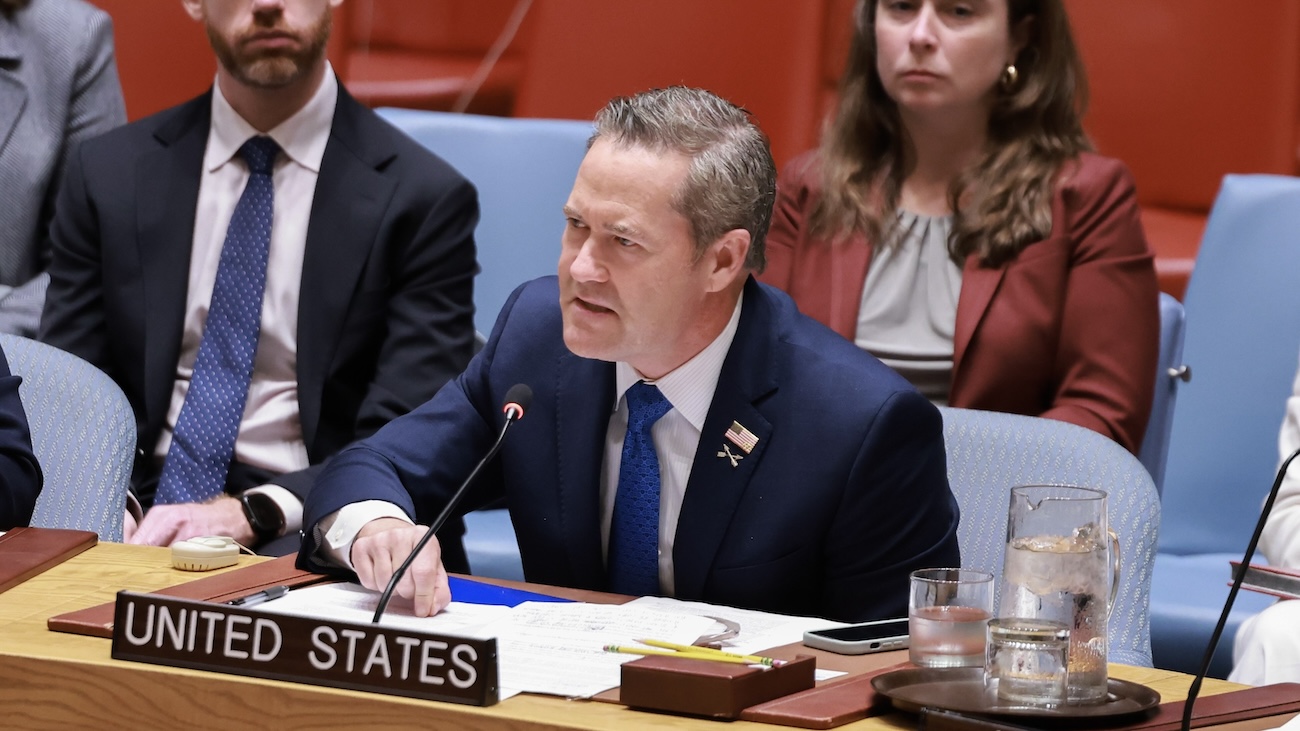
In response to questions from reporters, Lin Jian criticized Washington’s unilateral actions, which mobilized warships and a nuclear submarine in the region under the pretext of combating drug cartels. The October 15 attack brings the total number of deaths in five recent US military actions against Venezuelan vessels to 27.
China also expressed support for the declaration by 33 Latin American countries on the establishment of a nuclear-weapon-free zone on the continent.
China supports strengthening international cooperation to combat transnational crimes and opposes unilateral law enforcement actions by the United States against vessels from other countries that exceed reasonable and necessary limits,” said the Chinese spokesman.
Venezuelan diplomatic mobilization
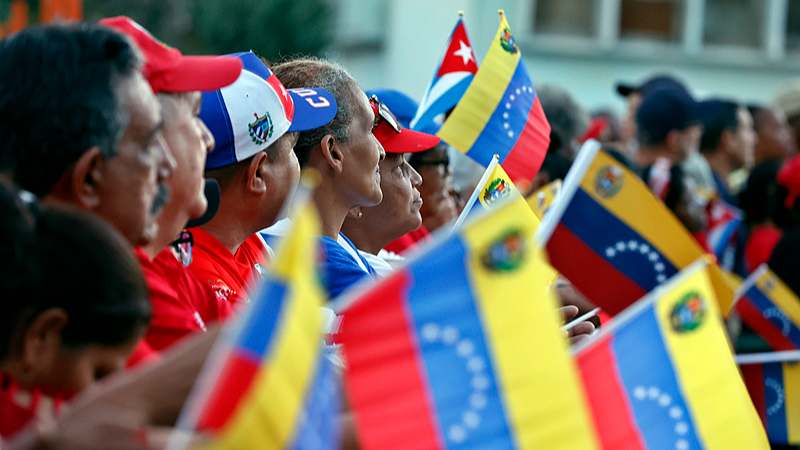
This week, the Venezuelan Embassy in Beijing also summoned diplomatic representatives from various countries and international media outlets to denounce what it classifies as a risk of military invasion. Ambassador Remigio Ceballos Ichaso told Brasil de Fato that Washington is conducting “a disinformation campaign aimed at justifying an intervention.”
“Accusing Venezuela of being a drug cartel is completely false, a fiction that they have been trying to impose on the international community for decades,” said Ceballos Ichaso.
The Venezuelan government has received expressions of solidarity from Nicaragua, Bolivia, Colombia, Cuba, and Mexico. Humberto Collado, commercial attaché at the Nicaraguan embassy in China, said that “what the US is doing is threatening a democratic country, its president, and its entire people, undermining the socio-political stability of the region.”
Russian and UN position
Russia criticized US military actions through statements by the Ministry of Foreign Affairs and the Russian ambassador to the United Nations, Vasily Nebenzia, stating that such operations “represent an escalation in the region, violate international law and Venezuelan sovereignty.”
The World Drug Report 2025 from the United Nations Office on Drugs and Crime (UNODC) recognizes Venezuela’s efforts to combat drug trafficking and points out that the country is not among the main international drug corridors. The UN has emphasized that any military or coercive intervention that violates the sovereignty of a member state is contrary to the United Nations Charter.
US sanctions against Venezuela began in 2006, during Hugo Chávez’s administration, intensifying after 2013 with Nicolás Maduro, totaling about a thousand restrictive measures by 2019. These measures resulted in food and medicine shortages, restrictions on access to essential resources, and impacts on the Venezuelan economy.
Internal mobilization
President Nicolás Maduro ordered national defense military exercises with the participation of Bolivarian militias and volunteers, including fishermen and rural residents. The government characterized the mobilization as defensive and voluntary, aimed at ensuring national sovereignty.
In a letter to UN Secretary-General António Guterres, Maduro reiterated Venezuela’s commitment to peace and international law. Foreign Minister Samuel Moncada stated that “the real threat to regional peace is the presence of US military and nuclear weapons in the Caribbean.”
This article was translated from an article originally published in Portuguese on Brasil de Fato.
Donald Fuhrump says that Amerikkka doesn’t bother with crimes or charges anymore, not being 100% Amerikkkan and opposing his real estate intentions is enough.Orcas discuss how Trump was re-elected and him being an obviously insane, xenophobic Fascist.
Marking the 80th anniversary of Nazi Germany’s defeat, Global South leaders are gathering in Moscow, while EU remains absent
Source: Ministry of Foreign Affairs of Russia/X
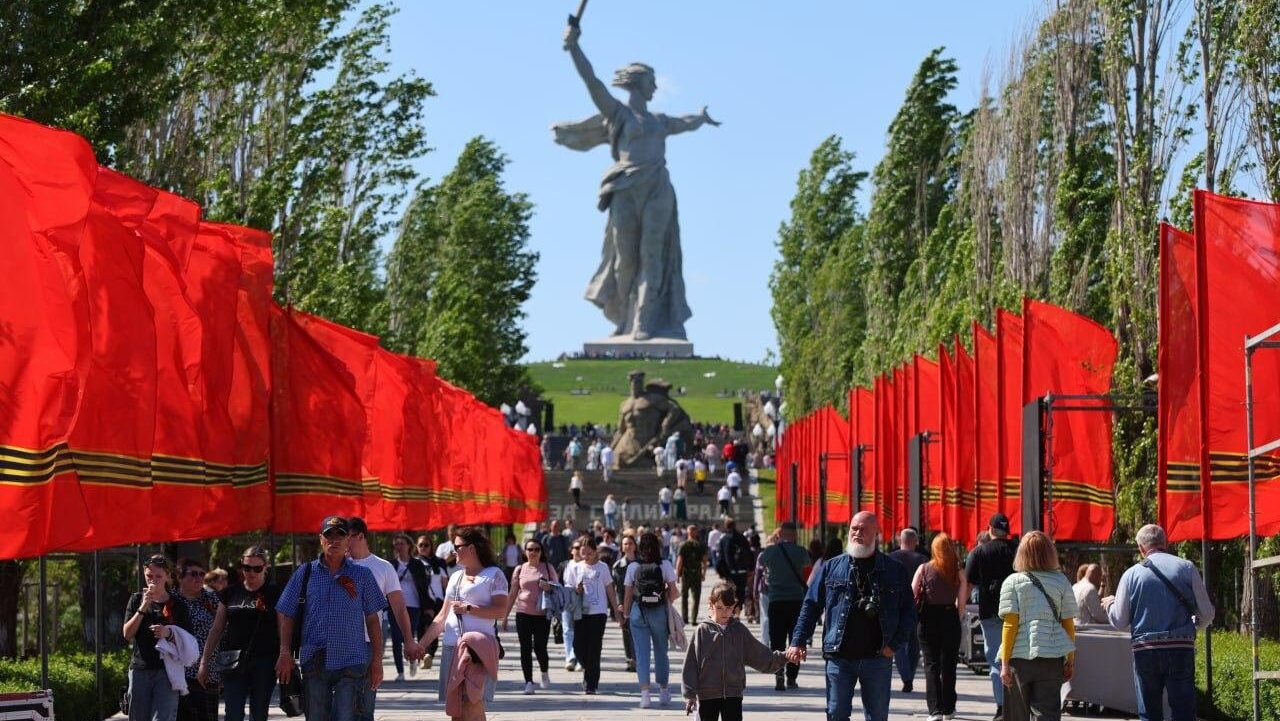
Early high-level events marking the 80th anniversary of the defeat of Nazi Germany are underway in Russia, where the traditional Victory Parade on Friday, May 9, will welcome a host of world leaders and other guests to commemorate the Red Army’s role in the liberation of Europe. According to Russian authorities, 29 countries have confirmed their leaders will attend the event, including Brazil, Burkina Faso, China, Cuba, Venezuela, and Vietnam.
Victory Day, falling on May 8 in most of Europe and on May 9 in Russia due to time zone differences, marks the official surrender of Nazi Germany in 1945. Although the date holds deep historical significance for Europe, its political leaders will be largely absent from this year’s events in Moscow. Slovakia is the only EU country to appear on the latest list of attendees, ignoring warnings from the bloc’s High Representative for Foreign Affairs, Kaja Kallas, who implied there would be ‘consequences’ for European officials participating in the event. Her threats mark the latest episode in a long-standing campaign of historical revisionism led by the EU, aimed at minimizing and obscuring the Soviet Union’s role in the liberation of Europe in World War II.
Honoring Red Army’s role in defeating Nazi Germany
In contrast to the EU, Global South leaders attending the events expressed their respect and acknowledged those who fought for liberation. At the beginning of his visit, Venezuelan President Nicolás Maduro stated simply: “It was the Red Army that liberated Europe.” Similarly, Chinese President Xi Jinping emphasized the importance of maintaining an accurate historical perspective on World War II and applying its lessons to the present, particularly when it comes to resisting Western domination.
“Eighty years ago, the forces of justice around the world, including China and the Soviet Union, united in courageous battles against their common foes and defeated the overbearing fascist powers,” Xi wrote in an article for the Russian Gazette. “Eighty years later today, however, unilateralism, hegemonism, bullying, and coercive practices are severely undermining our world.”
Despite efforts by Western governments to demonize the Red Army, many around the world still remember the USSR’s decisive role in the antifascist struggle, the immense sacrifices it made during the war, and the international solidarity it championed. “The peoples of the world have not forgotten who, in 1945, liberated them from Nazi enslavement and destruction,” stated Gennady Zyuganov, leader of the Communist Party of the Russian Federation, ahead of Victory Day.
“Celebrating the 80th anniversary of the great victory over fascism, we must remember the origins of Nazism,” he added. “Imperialism, which gave birth to that plague, is not a thing of the past. It is no coincidence that today our former allies in the anti-Hitler coalition are erasing us from the list of victorious countries.”
Left movements reclaim antifascist legacy for today’s struggles
Although communist groups across Europe circulated statements honoring the Red Army’s role in World War II, some also voiced concern about the context of this year’s central commemoration in Russia – just as much as the revisionism of core EU countries
It is in the spirit of reclaiming the resistance, that left and progressive groups across the region are organizing their own events. In Belgium, for example, activists have rallied around long-standing demands to re-establish May 8 as a public holiday. In former Yugoslav countries, actions will affirm the relevance of antifascism today, particularly in connection with solidarity for Palestine and mobilizations against genocide. All these events are not limited to remembrance: they aim to resist efforts to rewrite history in service of the Global North’s current political agenda.
CodePink led a November 2, 2022 rally against the U.S. economic blockade of Cuba outside the White House in Washington, D.C. (Photo: CodePink)
“Seriously? You wait until six days before leaving office to do what you promised to do during your 2020 campaign?” said one observer.
In a move likely to be reversed by the incoming Trump administration, President Joe Biden on Tuesday notified Congress of his intent to remove Cuba from the U.S. State Sponsors of Terrorism list, a designation that critics have long condemned as politically motivated and meritless.
Noting that “the government of Cuba has not provided any support for international terrorism” and has “provided assurances” that it will not do so in the future, the White House said in a memo that the Biden administration is moving to rescind the first Trump administration’s January 2021 addition of Cuba to the State Sponsors of Terrorism (SSOT) list and take other measures to ease some sanctions on the long-suffering island of 11 million inhabitants.
Cuba’s SSOT designation was based mostly on the socialist nation’s harboring of leftist Colombian rebels and several U.S. fugitives from justice for alleged crimes committed decades ago, even though no other country has been placed on the SSOT list for such a reason and despite right-wing Cuban exile terrorists enjoying citizenship—and even heroic status—in the United States.
“Despite its limited nature, it is a decision in the right direction and in line with the sustained and firm demand of the government and people of Cuba, and with the broad, emphatic, and repeated call of many governments, especially Latin America and the Caribbean, of Cubans living abroad, political, religious and social organizations, and numerous political figures from the United States and other countries,” the Cuban Ministry of Foreign Affairs said in a statement.
“It is important to note that the economic blockade and much of the dozen coercive measures that have been put into effect since 2017 remain in force to strengthen it, with full extraterritorial effect and in violation of international law and human rights of all Cubans,” the ministry added.
For 32 straight years, the United Nations General Assembly has overwhelmingly voted for resolutions condemning the U.S. blockade of Cuba. And for 32 years, the United States, usually along with a small handful of countries, has opposed the measures. Last year’s vote was 187-2, with Israel joining the U.S. in voting against the resolution.
Cuba followed Biden’s move by announcing it would “gradually” release 553 political prisoners following negotiations with the Catholic Church, The New York Timesreported.
Many progressives welcomed Biden’s shift. Congresswoman Nydia Velázquez (D-N.Y.) said in a statement that Cuba’s SSOT designation “has only worsened life for the Cuban people without advancing U.S. interests” and “has made it harder for Cubans to access humanitarian aid, banking services, and the ability to travel abroad.”
“It has also deepened food and medicine shortages and worsened the island’s energy crisis, especially after Hurricane Rafael,” she added. “These hardships have driven an unprecedented wave of migration, leading to the largest exodus in Cuba’s history.”
Rep. Ilhan Omar (D-Minn.) called Biden’s move “a long overdue action that will help normalize relations with our neighbor.”
“This is a step toward ending decades of failed policy that has only hurt Cuban families and strained diplomatic ties,” Omar added. “Removing this designation will help the people of Cuba and create new opportunities for trade and cooperation between our nations. I look forward to continuing the work to build bridges between our countries and supporting policies that benefit both the American and Cuban people.”
David Adler, the co-general coordinator at Progressive International, called the delisting “far too little, far too late.”
“POTUS removing Cuba’s SSOT designation in the final days of his presidency only means one thing: He knew—from day one—that the designation was simply an excuse to punish the Cuban people,” Adler added. “But he maintained it anyway. Sickening.”
The peace group CodePink released a statement welcoming Biden’s shift, but adding that “it is unacceptable that it took this administration four years to address these injustices.”
“President Biden made the inhumane decision every single day to not alleviate the suffering of millions of Cubans by keeping this designation in place,” the group added. “As we mark this overdue progress, we can only hope that the Trump administration does not reverse these crucial steps towards justice and diplomacy.”
Trump’s nominee for secretary of state, Sen. Marco Rubio (R-Fla.) is the son of Cuban immigrants and a fierce critic of Cuba’s socialist government. In 2021, Rubio introduced legislation aimed at blocking Cuba’s removal from the SSOT list. Trump has also tapped Mauricio Claver-Carone—a staunch supporter of sanctioning Cuba—as his special envoy for Latin America.
Alex Main, director of international policy at the Center for Economic and Policy Research, said Tuesday that “while this decision, which comes years after 80 members of Congress urged Biden to reverse Trump’s ‘total pressure’ approach should have been made long ago, it is better late than never.”
“Sixty years of failed policy should be more than enough, and hopefully the new administration will have the wisdom and the courage to pursue a new course, one that’s in the best interest of both the U.S. and the Cuban people,” Main added.
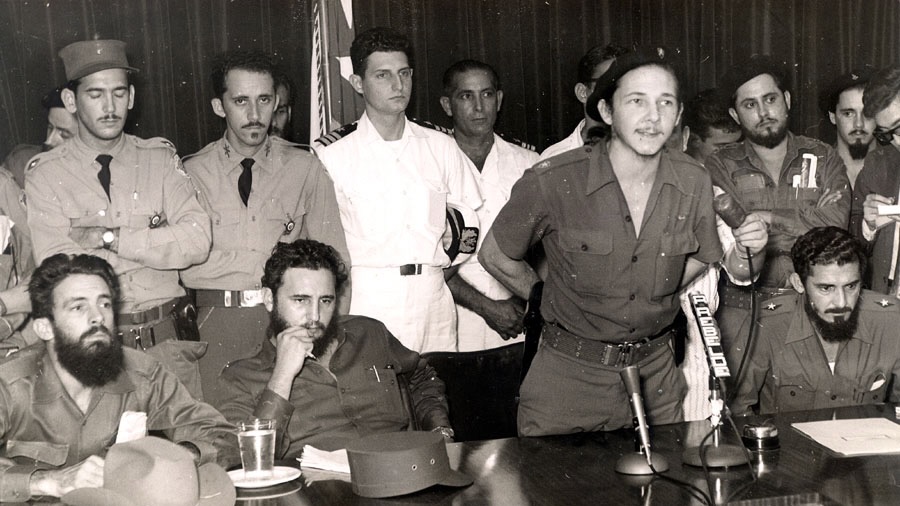
Cuba was first placed on the SSOT list by the Reagan administration in 1982 amid an ongoing, decadeslong campaign of U.S.-backed exile terrorism, attempted subversion, failed assassination attempts, economic warfare, and covert operations large and small in a futile effort to overthrow the revolutionary government of longtime leader Fidel Castro. Cuba says U.S.-backed terrorism has killed or wounded more than 5,000 Cubans and cost its economy billions of dollars.
In stark contrast, Cuba has not committed any terrorism against the United States.
Former President Barack Obama removed Cuba from the SSOT in 2015 during a promising but ultimately short-lived rapprochement between the two countries that abruptly ended when Trump took office for the first time in 2017.
“Cuba will continue to confront and denounce this policy of economic war, the interference programs, and the disinformation and discredit operations financed each year with tens of millions of dollars from the United States federal budget,” the Cuban Foreign Ministry said Tuesday. “It will also remain ready to develop a relationship of respect with that country, based on dialogue and noninterference in the internal affairs of both, despite differences.”
The Biden admin has taken the long overdue step of removing Cuba from the State Sponsors of Terror list. Congratulations & thank you to @dsa_cuba organizers and our friends @AllianceForCuba@LAWGaction, @NNOCuba, & everyone who helped make the case for Cuba at home & in… pic.twitter.com/6fJkVF1Ldz
David Adler, the co-general coordinator at Progressive International, called the delisting “far too little, far too late.”
“POTUS removing Cuba’s SSOT designation in the final days of his presidency only means one thing: He knew—from day one—that the designation was simply an excuse to punish the Cuban people,” Adler added. “But he maintained it anyway. Sickening.”
The peace group CodePink released a statement welcoming Biden’s shift, but adding that “it is unacceptable that it took this administration four years to address these injustices.”
“President Biden made the inhumane decision every single day to not alleviate the suffering of millions of Cubans by keeping this designation in place,” the group added. “As we mark this overdue progress, we can only hope that the Trump administration does not reverse these crucial steps towards justice and diplomacy.”
Trump’s nominee for secretary of state, Sen. Marco Rubio (R-Fla.) is the son of Cuban immigrants and a fierce critic of Cuba’s socialist government. In 2021, Rubio introduced legislation aimed at blocking Cuba’s removal from the SSOT list. Trump has also tapped Mauricio Claver-Carone—a staunch supporter of sanctioning Cuba—as his special envoy for Latin America.
Alex Main, director of international policy at the Center for Economic and Policy Research, said Tuesday that “while this decision, which comes years after 80 members of Congress urged Biden to reverse Trump’s ‘total pressure’ approach should have been made long ago, it is better late than never.”
“Sixty years of failed policy should be more than enough, and hopefully the new administration will have the wisdom and the courage to pursue a new course, one that’s in the best interest of both the U.S. and the Cuban people,” Main added.
Cuba was first placed on the SSOT list by the Reagan administration in 1982 amid an ongoing, decadeslong campaign of U.S.-backed exile terrorism, attempted subversion, failed assassination attempts, economic warfare, and covert operations large and small in a futile effort to overthrow the revolutionary government of longtime leader Fidel Castro. Cuba says U.S.-backed terrorism has killed or wounded more than 5,000 Cubans and cost its economy billions of dollars.
In stark contrast, Cuba has not committed any terrorism against the United States.
Former President Barack Obama removed Cuba from the SSOT in 2015 during a promising but ultimately short-lived rapprochement between the two countries that abruptly ended when Trump took office for the first time in 2017.
“Cuba will continue to confront and denounce this policy of economic war, the interference programs, and the disinformation and discredit operations financed each year with tens of millions of dollars from the United States federal budget,” the Cuban Foreign Ministry said Tuesday. “It will also remain ready to develop a relationship of respect with that country, based on dialogue and noninterference in the internal affairs of both, despite differences.”
Over half a million Cubans filled the Malecón on Friday December 20 in a massive march against the US blockade. Photo: Presidencia Cuba
Hundreds of thousands of Cuban people participated in the mass demonstration against the six-decade US blockade of Cuba and the inclusion of Cuba on the US state sponsors of terrorism list.
“President Biden, take Cuba off the infamous list!” exclaimed the over half a million Cubans who marched on Havana’s malecón to the US Embassy. The mass march was called for by Cuban President Miguel Díaz-Canel earlier this week to demonstrate the absolute and total rejection of the Cuban people to the six-decade US-imposed blockade on the island as well as the inclusion of Cuba to the US State Sponsors of Terrorism list (SSoT) which together have wreaked havoc on the island’s economy.
The march was led by Cuban President Miguel Díaz-Canel and General Raúl Castro who were flanked by over half a million Cubans from all sectors of life including students, doctors, construction workers, artists, and more. Cuban youth and students who participated in the massive mobilization carried banners reading “the youth will not fail!” and “this is the revolution!”
“The youth will not fail!” Photo: UJC
The mass mobilization began at the Anti-Imperialist Tribunal José Martí on the malecón, which is located directly in front of the US Embassy. There, the Cuban president delivered an address wherein he condemned the inaction of Joe Biden in reversing the policies of his predecessor Donald Trump which have tightened the economic and financial stranglehold on Cuba. Biden, he said, “has done nothing to move away from the line of reinforced blockade and economic asphyxiation of Cuba left as a legacy by the Republican administration that returns to the Oval Office in January.”
He also highlighted that people from across the US and the world have in the recent period called attention to the inhumane US policy that goes against international law, “In recent weeks and days there have been numerous pronouncements from US leaders and from other parts of the world demanding that Biden make use of his authority to at least remove the name of a nation that should never have been on this spurious list.”
He emphasized that, “When our international trade is persecuted and financial transactions are impeded, the people of Cuba are being denied food, medicine, fuel, goods, supplies and merchandise essential for their survival.”
In addition to condemning the illegal blockade, Díaz-Canel also alerted the Cuban people that there are currently paramilitary groups training in the south of Florida with the intention of carrying out terrorist attacks against Cuba. “They are based in South Florida and do not hide to train. They do it publicly, in plain sight and with the protection of local authorities, even violating their own laws and international treaties.”
The president’s announcement was both a warning and an attempt to expose the deep hypocrisy of calling Cuba a sponsor of terrorism, whilst in plain view of US authorities, these groups, “organize, promote and finance terrorist actions against social and economic structures in Cuba.” This phenomenon is not new and he reminded the people of how the US sheltered “self-confessed terrorists” and CIA agent Luis Posada Carriles and Orlando Bosch who were the architects of numerous criminal attacks against the Cuban people, the worst one being the 1976 bombing of a Cuban aircraft which resulted in the death of 73 people. “Knowing such antecedents,” Díaz-Canel stated, “no US ruler can classify Cuba as a terrorist state.”
Cuban President Miguel Díaz-Canel and General Raúl Castro marching on the malecón. Photo: Presidencia Cuba
The demand to end the over 60-year US blockade on Cuba and remove the country from the SSoT list has become even more urgent in light of the energy crisis on the island. In recent months, Cuba has suffered a series of blackouts due to its major challenge in accessing fuel to keep its power plants operating.
The election of far-right leader Donald Trump as president has also awoken fears that he may intensify existing unilateral coercive measures against Cuba.
However, as manifested in the mass mobilization, the Cuban people have vowed to remain firm in the face of any threat lodged at them by the US government and maintain that they are open to dialogue with any US administration based on mutual respect and equality.
In concluding his address, Cuban President Miguel Díaz-Canel declared, “If the United States persists in its determination to undermine our sovereignty, our independence, our socialism, it will only find rebellion and intransigence! Every administration that has tried has been outlived by the Cuban Revolution, and it will continue to be so. This is a march, yes, a very anti-imperialist march! Against US imperialism and its pretension to impose itself in Cuba by force or seduction, we will march now and always!”
Heads of State Summit of ALBA-TCP in Caracas, Venezuela. Photo: ALBA-TCP
ALBA-TCP was founded in 2004 in an attempt to counter the US proposal of creating a “free trade zone of the Americas
December 14 marked the 20th anniversary of the creation of the Bolivarian Alliance for the Peoples of Our America-People’s-Trade Agreement (ALBA-TCP). ALBA-TCP was created in 2004 as a geopolitical alternative to the devastating advance of neoliberalism in the region.
The project was founded on December 14, 2004, in Havana by Cuban President Fidel Castro and Venezuelan President Hugo Chávez. Currently, the organization has 10 member countries and four countries considered “special guests.” In 2006, Bolivia signed its membership; in 2007, Nicaragua; in 2008, Dominica; in 2009, Antigua and Barbuda and St. Vincent and the Grenadines; in 2014, St. Kitts and Nevis and Grenada; and in 2021, St. Lucia. The special invited countries are Syria, Haiti, Suriname, and now Palestine.
To commemorate the 20 years, social movements, political parties, and heads of state gathered in Caracas, Venezuela for the 24th Heads of State Summit as well as parallel meetings. The event was attended by the host, Venezuelan President Nicolás Maduro; Bolivian President Luis Arce; Cuban President Miguel Díaz-Canel; Nicaraguan President Daniel Ortega; Prime Minister of St. Vincent and the Grenadines, Ralph Gonsalves; Prime Minister of Dominica, Roosevelt Skerrit; and the Prime Minister of Antigua and Barbuda, Gaston Browne.
Independence and solidarity among countries
In their addresses during the Summit on December 14, the heads of state and invited countries stressed the importance of solidarity among countries seeking alternative ways of development and the need for unrestricted solidarity among people struggling against imperialist attacks. They also demonstrated their support for Nicolás Maduro and his victory in the last presidential elections.
Miguel Díaz-Canel said “We reiterate the strongest support for the Bolivarian revolution, led by President Nicolás Maduro…We also call for the elimination of the blockade against Cuba …We cry out for a free Puerto Rico and declare our solidarity with Haiti, our Cuban doctors are there…We reiterate our demand for a ceasefire in Gaza and condemn the attacks perpetrated by Israel against Lebanon, Syria, and Iran.”
The Bolivian President, Luis Arce, highlighted the historical importance of ALBA in its fight against economic projects promoted by the United States such as the FTAA (Free Trade Area of the Americas): “The embrace of Hugo Chávez and Fidel Castro not only marked history but also manifested the defeat of the hegemonic project of the FTAA. ALBA was born, ALBA placed the human being at the center, promoting that a better world is possible. Bolivia reaffirms, once again, its commitment to ALBA-TCP, because it is a resistance that raises its voice against the unjust and criminal blockade against Cuba…ALBA is also a firm voice against the arbitrary and unilateral measures imposed against Venezuela and Nicaragua, which affect the welfare of our peoples.”
Nicolás Maduro said, “We must win the battle of life and truth in the streets, networks, media, and walls, as well as in the conscience and spirituality of the people.” He also added the importance of the struggle of the people to be masters of their destiny without imperial impositions or impositions of any kind. In the same line of discourse, Nicaraguan President Daniel Ortega said “From Nicaragua we reaffirm our commitment to ALBA. We will continue to fight the battle.”
The Prime Minister of Dominica, Roosevelt Skerrit stated “We congratulate the electoral triumph of President Nicolas Maduro on July 28. We wish him all the best…We also want to reaffirm our solidarity with the people of Cuba, a brave people for whom we have our greatest respect and love; we will never cease to lend our voice against the United States to eliminate the blockade against Cuba.”
Ralph Gonsalves, Prime Minister of St. Vincent and the Grenadines, harshly criticized US interference in the development of the past Venezuelan elections “Perhaps [the US government] thinks it is superior,” he said in this regard. He also stressed that the creation of ALBA-TCP was a fundamental invention for the emancipation of the American people, “ALBA is the product of the geniuses of our peoples.”
Inclusion of Palestine to ALBA-TCP
At the current summit, it was announced that Palestine had been included as a “brotherly country” and was included as a “permanent guest”. According to the resolution of the Heads of State, ALBA-TCP condemns the attacks against the Palestinian population and the “illegally occupied territories” and rejects “the merciless and inhuman genocide committed by the State of Israel, the occupying power, as well as its plan of spoliation, invasion, and domination.” Likewise, they denounced the support of several governments currently collaborating with the actions of the Israeli army and called for an “immediate ceasefire…From the heart of the peoples and governments of this alliance, we declare Palestine a brother country of the ALBA-TCP, and reaffirm our commitment to the defense of the Palestinian cause, which is the defense of humanity,” reads the resolution.
In this regard, Riyad al-Malki, advisor to the President of State for International Affairs of Palestine said “History will remember those who stood on the side of justice, ALBA’s lasting solidarity with Palestine is a testimony of freedom and collective resistance.” Furthermore, Malki added “This Alliance is a living testimony of collective integration to challenge imperialism and ensure a just world. These values resonate with the Palestinian struggle, an end to the illegal occupation.”
A call for counter-hegemonic struggle
The joint document signed by all the countries highlights the historical importance of ALBA-TCP in the struggle for a more equitable world: “Twenty years after this giant step, we pay homage to the founding leaders, Hugo Chávez Frías and Fidel Castro Ruz, who adopted that December 14, 2004, in Havana, Cuba, the vision of the future embodied in the founding documents of ALBA, which have allowed us to walk united until the present, animated by the ancestral force that led our peoples to be free and that encourages us to continue integrated in this Alliance for Life.”
Similarly, it was stressed that the existence of this multilateral organization operates as a possibility to create a region that resists the impositions of the most developed countries: “Today, we want to ratify before our peoples, the counter-hegemonic, democratic, anti-imperialist and anti-fascist nature of our Alliance and renew our commitment to help and protect each other, to continue building together a future of shared goals under the founding principles of complementarity, cooperation, social justice, defense of our sovereignty and solidarity.”
In this sense, Luis Arce stressed that “In the face of the challenges of a world threatened by fascism and neo-fascism, ALBA is not an option, ALBA is a necessity that must continue with firm steps, reaffirming the founding principles of solidarity, justice, and cooperation…ALBA is not only an alliance, it is a promise for the future, a living resistance, an instrument for the most dispossessed, and a reminder that together, as peoples, we are invincible.”
Objectives and principles of ALBA-TCP
According to ALBA’s official website, the fundamental objective of the project is “to achieve integral development, ensure social equality and contribute to guaranteeing the quality of life, good living, independence, self-determination and identity of the peoples.” For this very reason, the principles of ALBA-TCP propose that political decisions be made horizontally and take into account the economic differences of its members without meaning that the importance of each of the members is underestimated.
The principles shared by the countries are “trade and investment should not be ends in themselves, but instruments to achieve sustainable development; special and differentiated treatment, according to the level of development of the various countries; economic complementarity and cooperation; cooperation and solidarity; the creation of the Social Emergency Fund; the integrative development of communications and transportation; the sustainability of development; energy integration; the promotion of investments of Latin American capital in the region; the defense of Latin American and Caribbean identity and culture; respect for intellectual property; and the agreement of multilateral positions and in negotiations with countries and blocs in other regions.”