European movements call for an end to the US-imposed blockade on Cuba, condemning disinformation campaigns that hinder the progress of the socialist project on the Caribbean island
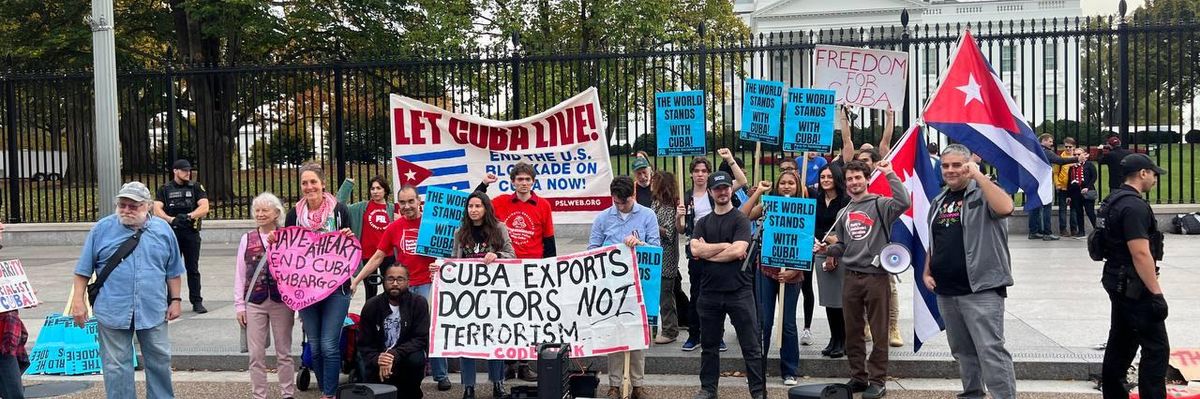
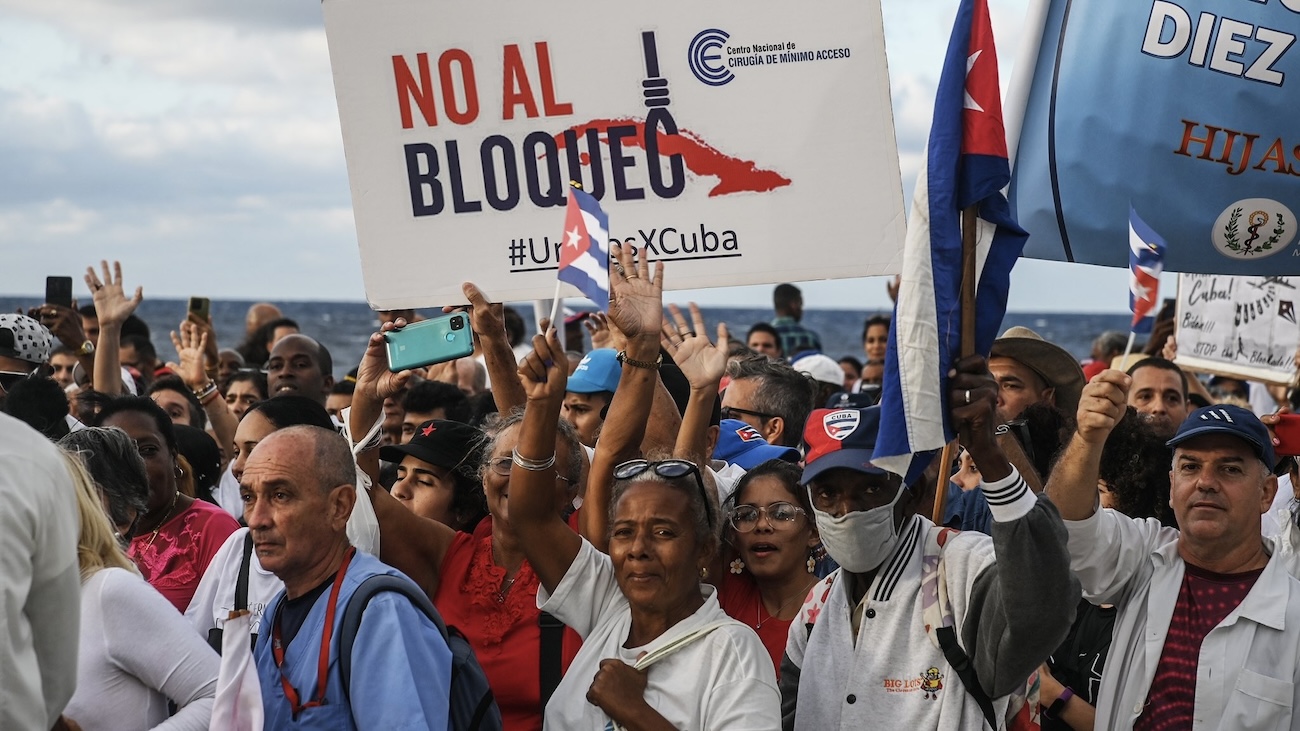
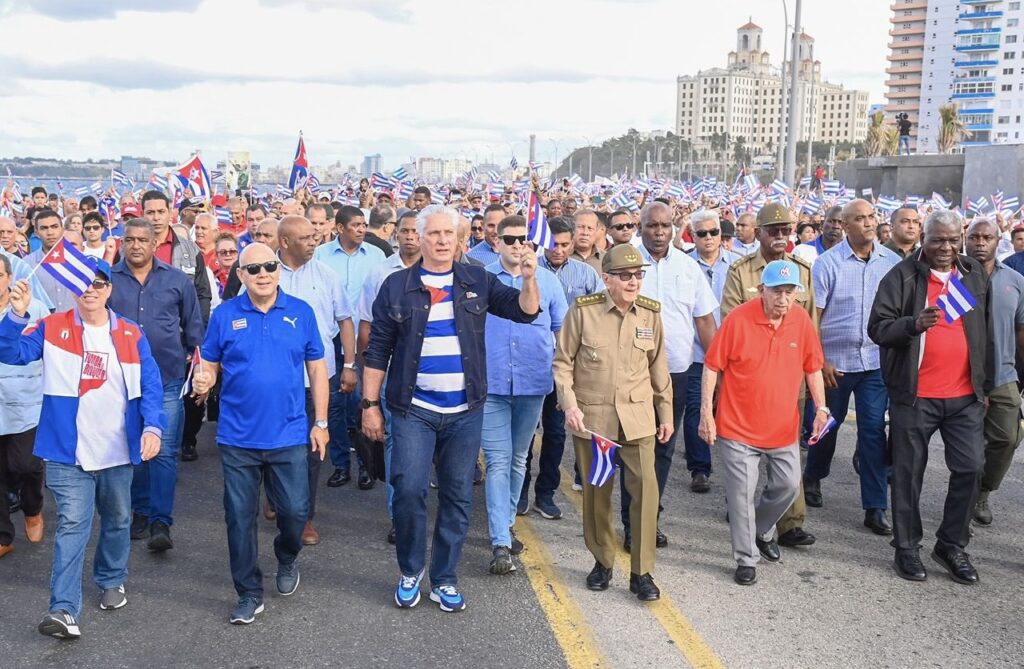
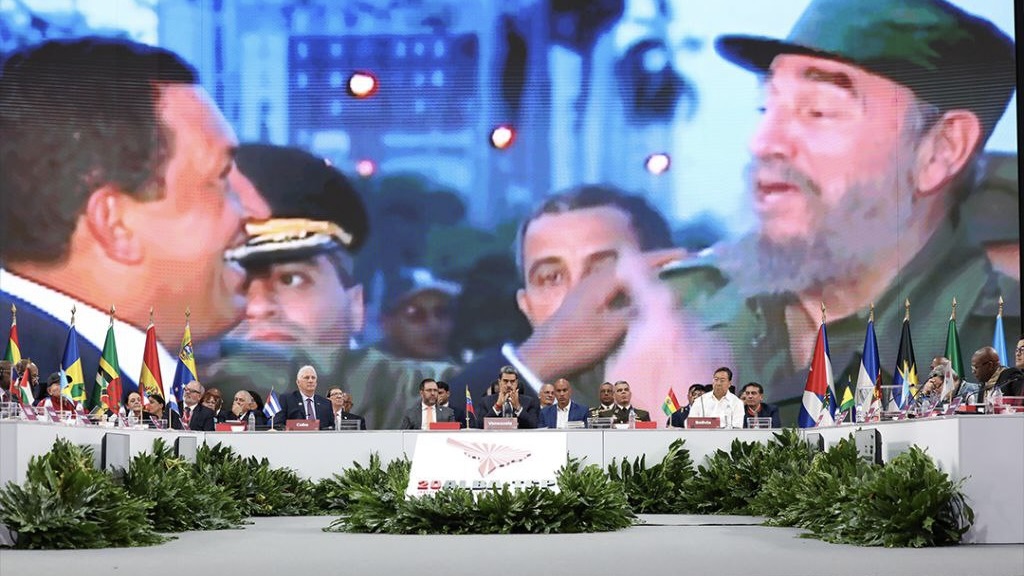
As Cuba continues to face the challenges of a US-imposed blockade and widespread disinformation campaigns, over 300 representatives of social movements, trade unions, and political organizations gathered in Paris during the weekend of November 22-24 for the 19th European Continental Meeting of Solidarity with Cuba. The delegates focused on strengthening ties between the Caribbean island and European countries, addressing the economic consequences of the blockade and everyday realities of life under these pressures.
The meeting produced a declaration outlining guidelines for European networks to counter mainstream defamation of Cuba, such as a campaign to end the country’s classification as a state sponsor of terrorism. In direct contrast to the stance of European leaders who align with the US-imposed blockade, participants expressed “unconditional support for the Cuban Revolution and its right to build the socialist project chosen by the majority of the people,” the Cuban Institute of Friendship with Peoples (Instituto Cubano de Amistad con los Pueblos, ICAP) reported in a statement.
According to Rodrigo Suñe from the International Peoples’ Assembly, the declaration “reaffirms unconditional support for Cuba’s right to continue building its path to socialism in a sovereign manner.” This, Suñe explains, will be achieved by “gradually and collectively” strengthening political solidarity with Cuba’s struggle against attacks led by successive US administrations.
Among these attacks, Suñe highlights the US-imposed blockade, designed to strangle the Cuban economy, and a “permanent media war” aimed at spreading manipulation and misinformation. He emphasizes that those in solidarity with Cuba must actively denounce and counter these campaigns. To achieve this it is essential to raise awareness and exchange information about the everyday realities of life in Cuba under the blockade. Reflecting this priority, part of the meeting focused on analyzing the blockade’s impact on Cuba’s economy, trade, and financial systems.
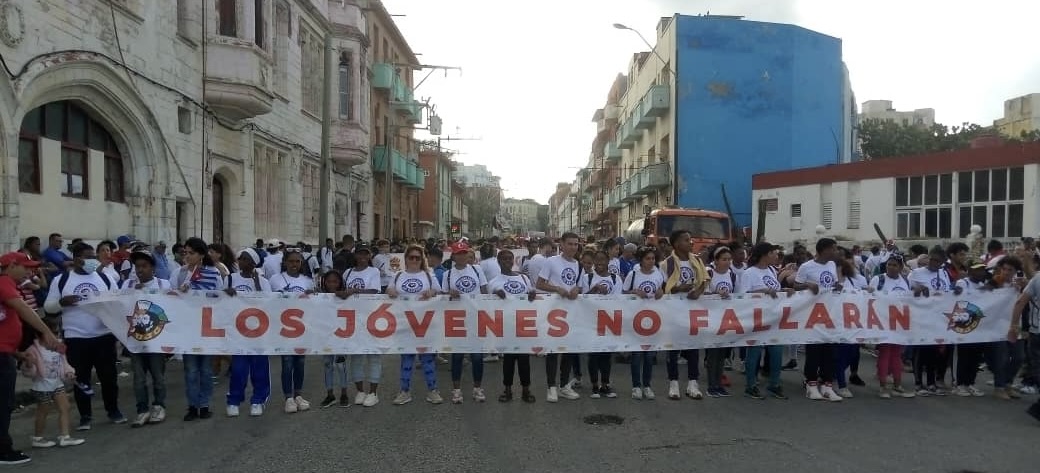
“We left the meeting with a mission to strengthen material solidarity by financing and implementing new cooperation projects, as well as promoting and organizing campaigns to send priority donations,” says Suñe. “To achieve this, it will be crucial to involve young people and expand their participation in building solidarity.”
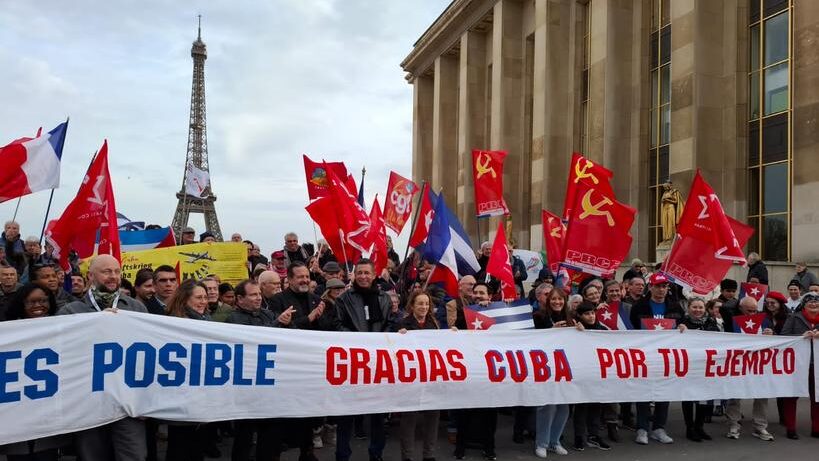
On the final day of the conference, participants staged a protest in central Paris, reaffirming their call for solidarity with Cuba and urging European countries to radically change their approach. Currently, European Union member states continue to follow US policy on Cuba, a stance that, according to ICAP, does not reflect the interest – or the will – of the peoples of Europe. As part of the meeting’s conclusions, an appeal was launched for the EU to break away from US interference and remove the obstacles hampering its relations with Cuba, Rodrigo Suñe told Peoples Dispatch.
This work is particularly important given the escalating crises at a global level. “We are facing a very complex situation, with the deepening of the capitalist crisis, wars, and the rise of the far-right and its neofascist ideals. This is why we need to improve the quality of our articulation of internationalist solidarity,” explains Suñe.
The commitment to strengthening solidarity between Europe and Cuba will remain a key focus for ICAP and other organizations as they prepare for the next meeting, scheduled to take place in Turkey in 2026. Leading up to that event, Suñe says, the movements involved will focus on building a unified strategy to strengthen both political and material solidarity with Cuba, addressing the challenges discussed during their meeting in Paris.
People drive along a road littered with fallen power lines after the passing of Hurricane Rafael in San Antonio de los Banos, Cuba, November 7, 2024
AMAGNITUDE-6.8 earthquake shook eastern Cuba on Sunday, after the socialist island had already suffered weeks of hurricanes and power cuts.
The epicentre of the quake was about 25 miles south of Bartolome Maso, according to a report by the US Geological Survey.
The impact was felt across the east of the island, including in bigger cities such as Santiago de Cuba, as well as Holguin and Guantanamo.
…
On Wednesday, Hurricane Rafael, a Category 3 storm, ripped through western Cuba, with strong winds knocking out power across the island and destroying hundreds of homes.
In October, the island was hit by blackouts lasting for days, a product of Cuba’s energy crisis largely caused by the six-decade-old illegal US blockade, which prevents the import of vital parts for even minor repairs.
Shortly afterwards, a powerful hurricane struck the eastern part of the island, killing at least six people.
Cuba is in the midst of an ongoing humanitarian crisis, and October’s widespread power outages are only adding to the Cuban people’s troubles. For the last six decades, Cuba has been on the receiving end of myriad sanctions by the United States government. This blockade has proved devastating to human life.
Reporting on Cuba’s blackouts have either omitted or paid brief lip-service to the effects of US sanctions on the Cuban economy, and how those sanctions have created the conditions for the crisis. Instead, media have focused on the inefficient and authoritarian Communist government as the cause of the island’s troubles.
Pulping the economy
Michael Galant (The Hill, 1/5/24): “Businesses and financial institutions, including many from outside the United States, often elect to sever all connections to Cuba rather than risk being sanctioned themselves for association with ‘a sponsor of terror.’”
One of President Donald Trump’s final acts in office was to re-designate Cuba as a State Sponsor of Terrorism, after President Barack Obama had removed them from the list in 2015 as a part of his Cuban thaw. Inclusion on the list subjects a country to restrictions on US foreign aid and financing, but, more importantly, the SSoT list encourages third-party over-compliance with sanctions. “Businesses and financial institutions, including many from outside the United States, often elect to sever all connections to Cuba rather than risk being sanctioned themselves,” The Hill (1/5/24) reported.
Trump reportedly added Cuba to the list for harboring members of FARC and ELN, two left-wing Colombian armed movements. However, Colombian President Gustavo Petro later “noted that Colombia itself, in cooperation with the Obama administration, had asked Cuba to host the FARC and ELN members as part of peace talks,” the Intercept (12/14/23) wrote. Indeed, if Cuba deported the dissidents, they would have been in violation of the protocols of the peace talks, which they were bound to by international law (The Nation, 2/24/23).
President Joe Biden has not begun the process of reviewing Cuba’s inclusion on the list, despite his campaign promises to the contrary.
The terror designation, plus the many other sanctions imposed by Trump and continued by Biden, are no small potatoes. Ed Augustin wrote at Drop Site (10/1/24) that
the terror designation, together with more than 200 sanctions enacted against the island since Obama left office, has pulped the Cuban economy by cutting revenue to the struggling Cuban state…. The combined annual cost of the Trump/Biden sanctions, [economists] say, amounts to billions of dollars a year.
Augustin argued that the economic warfare regime is a root cause of the rolling blackouts, water shortages and mass emigration that have plagued Cuba in recent years. Even imports that are ostensibly exempt from sanctions, like medication, are caught in the dragnet as multinational companies scramble to cut ties with the island. Banks are so reluctant to run afoul of US sanctions, Augustin wrote, “that often, even when the state can find the money to buy, and a provider willing to sell, there’s simply no way of making the payment.”
Cuba’s pariah status as a SSoT has put a stranglehold on its economy, and its government’s ability to administer public services. However, US restrictions on Cuba are almost never mentioned in US coverage, and reporting on the recent blackouts is no exception.
Cash-strapped Communists
Reuters (10/10/19): “Tougher US sanctions against Cuba have led international banks to avoid transactions involving the island, while prospective overseas investors put plans on hold.”
Coverage has emphasized the inability of Cuba’s government to pay for necessary fuel imports. The New York Times (10/19/24) reported “the strapped Communist government could barely afford” to pay for fuel. Elsewhere, the Times (10/18/24) claimed “a severe economic crisis and the cash crunch it produced made it harder for Cuba to pay for those fuel imports.”
The Washington Post (10/18/24) made broadly similar arguments, chalking the blackouts up to “a shortage of imported oil and the cash-strapped government’s insufficient maintenance of the creaky grid.”
The “cash crunch” referenced by the Times is not just the result of an abstract economic crisis, as is implied. Instead, it is a direct effect of US sanctions on financial institutions. During the Obama administration, European banks, including ING and BNP Paribas, were fined to the tune of over $10 billion for transacting with Cuba (Jacobin, 3/27/22). Even before Cuba was choked further as a result of their SSoT designation, reporting by Reuters (10/10/19) showed the extent to which banks were terminating operations with Cuba and Cuban entities:
Many Western banks have long refused Cuba-related business for fear of running afoul of US sanctions and facing hefty fines.… Panama’s Multibank shut down numerous Cuba-related accounts this year and European banks are restricting clients associated with Cuba to their own nationals, if that.…
Businessmen and diplomats said large French banks, including Societe Generale, no longer want anything to do with Cuba, and some are stopping payments to pensioners living on the Caribbean island.… For the first time in years, the island has had problems financing the upcoming sugar harvest. Various joint venture projects, from golf resorts to alternative energy, are finding it nearly impossible to obtain private credit.
This de-risking by financial institutions manufactures a cash-scarce economy. Cuba’s inability to procure cash for imports is not a function of financial mismanagement, or a lack of credit-worthiness. Instead, it is a deliberate effect of American foreign policy. By omitting the actions of the most powerful government on earth, mainstream coverage allows only that only Cuban failures could be the cause of a shortage of cash.
‘Terrorism’ cuts off tourism
Britain’s ambassador to Cuba told the Telegraph (11/6/23), “Those who come are profoundly shocked at what the SSOT designation is doing to the people here.”
Cuba has historically used tourism as a way of bringing money into the economy, but lately the Cuban tourism industry has been severely depressed. The explanation employed by corporate media for the decline of this industry is to blame the extended effects of the pandemic recession (New York Times, 10/19/24; Washington Post, 10/18/24).
This explanation, however, is incomplete. Cuba has indeed had a lackluster rebound in their tourism industry, but the Times and the Post fail to explain why Cuba has faltered while other Caribbean islands have more than re-achieved their pre-pandemic tourist numbers.
Travelers from Britain, Australia, Japan and 37 other countries do not need to procure a visa for travel to the United States. Instead, they can use ESTA, an electronic visa waiver. This greatly reduces the cost and the annoyance of obtaining permission to visit the US. However, since Cuba’s 2021 listing as a SSoT, any visit to the country by an ESTA passport-holder revokes the visa waiver, for life (Telegraph, 11/6/23). In other words, any Brit (or Kiwi, or Korean, and so on) who visits Cuba must, for the rest of their lives, visit a US embassy and pay $180 before being able to enter the United States. US policy, not a Covid hangover, is hamstringing any possibility of a resurgence in tourism to Cuba.
Blame game
During Cuba’s most recent energy crisis, the New York Times published three stories describing the blackouts. Two of these stories mention the US blockade only as something that the Cuban government blames for the crisis.
The New York Times (10/21/24) presented the idea that the US is punishing Cuba’s economy as a Communist allegation: “The Cuban government blames the power crisis on the US trade embargo, and sanctions that were ramped up by the Trump administration.”
The headline on the Times website (10/21/24) read: “A Nationwide Blackout, Now a Hurricane. How Much Can Cuba Endure?” The paper was right to report on the humanitarian crisis ongoing in Cuba, but it chose to downplay the most important root cause: the decades-long US blockade on Cuba’s economy and its people.
That same story described Cuba as “a Communist country long accustomed to shortages of all kinds and spotty electrical service.” Why is the country so used to shortages? Eleven paragraphs later, the Times gave an explanation, or at least, Cuba’s explanation:
The Cuban government blames the power crisis on the US trade embargo, and sanctions that were ramped up by the Trump administration, which severely restricts the Cuban government’s cash flow. The US Department of the Treasury blocks tankers that have delivered oil to Cuba, which drives up the island’s fuel costs, because Cuba has a limited pool of suppliers available to it.
Earlier coverage by the Times (10/18/24) similarly couched the effects of the blockade as merely a claim by Cuba. The Washington Post (10/22/24) also situated the blockade as something that “the Cuban government and its allies blame” for the ongoing crisis.
To report that Cuban officials blame the US sanctions for the energy crisis is a bit like reporting that fishermen blame the moon for the rising tide. It is of course factual that US trade restrictions–which affect not just US businesses, but also multinational businesses based in other countries–are a blunt weapon, with impact against not just a government, but an entire people.
At the very least, it is incumbent upon journalists to do at least minimal investigation and explanation of the facts concerning the subject of their reporting. None of the coverage in either major paper bothered to investigate whether this was a fair explanation, or even to report generally the effects a 60-year blockade might have on an economy.
Brief—and buried
“Cuban economists and foreign analysts blamed the crisis on several factors,” the New York Times (10/19/24) reported; 18 paragraphs later, the story gets around to mentioning US sanctions.
On October 19, the Times gave its most complete explanation of the relationship between the US sanctions regime and the Cuban blackouts:
Cuba’s economy enjoyed a brief honeymoon with the United States during the Obama administration, which sought to normalize relations after decades of hostility, while keeping a longstanding economic embargo in place. President Donald J. Trump reversed course, leading to renewed restrictions on tourism, visas, remittances, investments and commerce.
This explanation can be found in the 31st paragraph of the 37-paragraph story. Only once the Times has painted a picture of all the ways the Communist government has gone wrong can there be a brief mention of the role of US sanctions. And how brief it is; the Times chose not to detail the extent of blockade against Cuba, nor how Cuba was wrongfully placed on the SSoT list, nor the failure of Biden to reevaluate Cuba’s status as he promised on the campaign trail.
Describing the US starvation of Cuba’s economy in abstract terms like “economic crisis” provides cover for deliberate policy decisions by the US government. By reporting on the embargo only as something that the Cuban government claims, it is easy for readers to dismiss that explanation as simply a Communist excuse. Instead of asking why the United States is choosing to enforce a crippling sanctions regime on another country, outlets like the New York Times find it easier to repeat the line that Cuba’s government has only itself to blame for its problems.
FAIR’s work is sustained by our generous contributors, who allow us to remain independent. Donate today to be a part of this important mission.
Cuban Foreign Minister Bruno Rodríguez speaks during a press conference on the impact of the U.S. embargo in Havana on September 12, 2024. (Photo: Adalberto Roque/AFP via Getty Images)
“The world has spoken—it’s time for the U.S. to listen and lift the blockade.”
The United Nations General Assembly on Wednesday once again overwhelmingly urged the U.S. government to end its decadeslong blockade on Cuba, with just the United States and Israel voting against the measure and Moldova abstaining.
The UNGA’s other 187 members present voted to adopt the nonbinding resolution on “the necessity of ending the economic, commercial, and financial embargo imposed by the United States” against the Caribbean island.
This is the 32nd straight year that the U.N. body has approved a resolution against the embargo that began in 1962.
“The U.S. and Israel stand isolated as the only two votes against,” Democratic Socialists of America’s International Committee said after the Wednesday vote. “The world has spoken—it’s time for the U.S. to listen and lift the blockade.”
Though a few other nations have opposed the resolution over the years, Michael Galant of Progressive International and the Center for Economic and Policy Research noted that this vote was “two genocidaires v. the world.”
Israel faces a genocide case at the International Court of Justice for its yearlong assault of the Gaza Strip, which has killed at least 43,163 Palestinians and injured another 101,510, according to local officials in the Hamas-governed enclave. The U.S. Congress and Biden administration have given Israel billions of dollars in weapons and opposed U.N. cease-fire resolutions.
CodePink’s Medea Benjamin responded to the Wednesday vote with a video shared on social media, saying that Israel “loves blockades, because it’s doing its own blockade of Gaza,” and “is dependent on the United States to carry out its genocide.”
“Now this is not just some idle vote,” she said of the approved resolution. “This blockade that the U.S. maintains is a form of economic warfare. It’s no exaggeration to say that now, when there is an economic crisis in Cuba, the U.S. blockade, which keeps Cuba from using the financial markets, from having normal trade with countries all over the world, is actually leading to deaths, leading to people going hungry, leading to people lacking food and medicine that are essential for their lives.”
“And that’s why the United States must be condemned for this ongoing horrific, inhumane, and illegal blockade,” Benjamin added.
Cuba’s representative delivered similar remarks to the UNGA on Wednesday. As Reutersreported:
Cuban Foreign Minister Bruno Rodríguez said in a speech before the assembly that what is often referred to as the U.S. trade embargo is a “blockade” because the web of laws and regulations complicate financial transactions and the acquisition of goods and services not just from the United States but internationally.
“The blockade against Cuba is an economic, financial, and trade war which qualifies as genocide,” said Rodriguez, charging the U.S. policies were deliberately aimed at promoting suffering among the Cuban people to force change in the government.
Some international observers praised the countries who did condemn the blockade. Middle East expert Assal Rad declared, “This is the real international community.”
Manolo De Los Santos, a founder of the People’s Forum and a researcher at Tricontinental: Institute for Social Research, said that “this overwhelming consensus is in contrast with the indifference of the United States, which continues to deny any responsibility for sanctions while tightening its stranglehold on Cuba.”
Earlier this month, the People’s Forum published a letter in The New York Times to U.S. President Joe Biden, warning that he has “exactly 90 days to reverse” former Republican President Donald Trump’s “brutal policy on Cuba.”
Biden was vice president a decade ago when then-President Barack Obama “opened a hopeful new chapter in U.S.-Cuba relations by taking the first steps toward normalization,” the letter details. “People in both countries were optimistic that Cuba and the United States could become neighbors rather than Cold War enemies. However, Trump dismantled that policy, imposing pain and suffering on the Cuban people.”
“Removing the state sponsors of terrorism designation would allow Cuba to engage in financial transactions and restore its electrical grid, as well as address shortages of food and medicine to alleviate the immense hardship faced by the Cuban people, who have endured over 62 years of economic strife under the embargo,” the letter adds. “It’s time to act. Let Cuba live!”
Biden faced similar pressure in August, when hundreds of legal experts and groups called on him “to comply with existing international law by ending the use of broad unilateral coercive measures” particularly in “cases such as Cuba, Iran, North Korea, Syria, and Venezuela.”
The U.N. vote comes as early voting is underway for the November 5 election in which Trump is facing Biden’s vice president, Kamala Harris.
Neither campaign provided details on each candidate’s position when contacted by Reuters earlier this week, though Morgan Finkelstein, national security spokesperson for Harris, said that the Democrat “stands with the people of Cuba as they fight for their rights after decades of repression and economic suffering at the hands of the communist regime” and “will stand up to all authoritarians—including the very leaders that Trump has praised and embraced.”
In 2023, 187 nations voted in favor of lifting the US blockade against Cuba (Photo: Bruno Rodríguez Padilla via X)
The US blockade on Cuba has been widely condemned by the majority of the world, yet in recent years, instead of lifting it, successive US administrations have made it worse.
On October 29, the United Nations General Assembly began a series of debates to discuss the resolution on the long-standing economic blockade applied by the United States against the island of Cuba. Since the 1960s, the United States has systematically punished the Cuban people through a stringent blockade on its economy for having declared and built a political and economic model different from the one advocated and directed by the United States. The vote on the resolution will take place on Wednesday, October 30.
On more than 30 occasions, the United Nations Assembly has discussed the blockade against Cuba, which costs the island 5 billion dollars annually, according to some estimates. Every year the resolution is proposed and the whole world, through the vote of the absolute majority of the member countries of the United Nations General Assembly, has condemned the imperialist attitude of the United States towards Cuba.
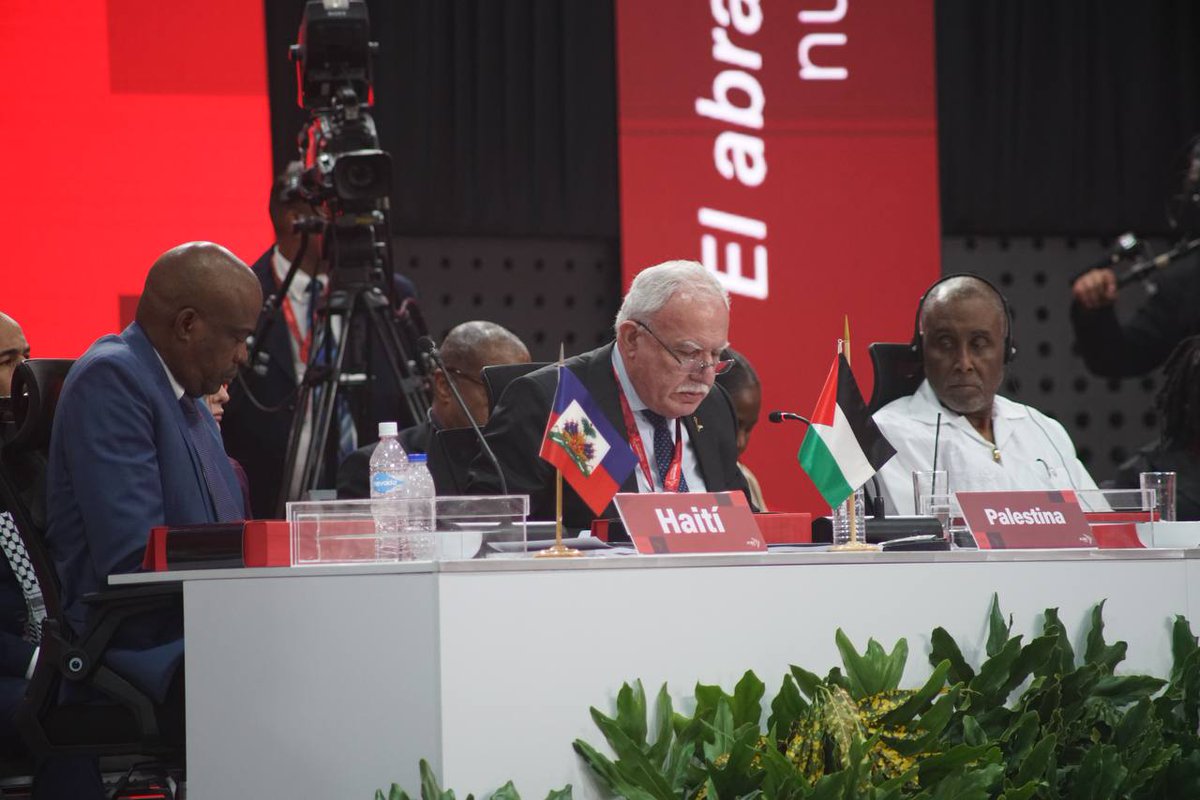
This year, several regional platforms including, the Community of Latin American and Caribbean States (CELAC), the Association of Southeast Asian Nations, the Organization of Islamic Cooperation (OIC), the Non-Aligned Movement (NAM), the Caribbean Community (CARICOM), among others, announced their support for Cuba at the United Nations General Assembly in the face of the criminal blockade.
In this regard, the Russian delegate Vasily Alekseyevich Nebenzya said at the UN Assembly on Tuesday, “We continue to strongly advocate for the immediate lifting of the illegal embargo that has been imposed by the United States against Cuba for more than 62 years.”
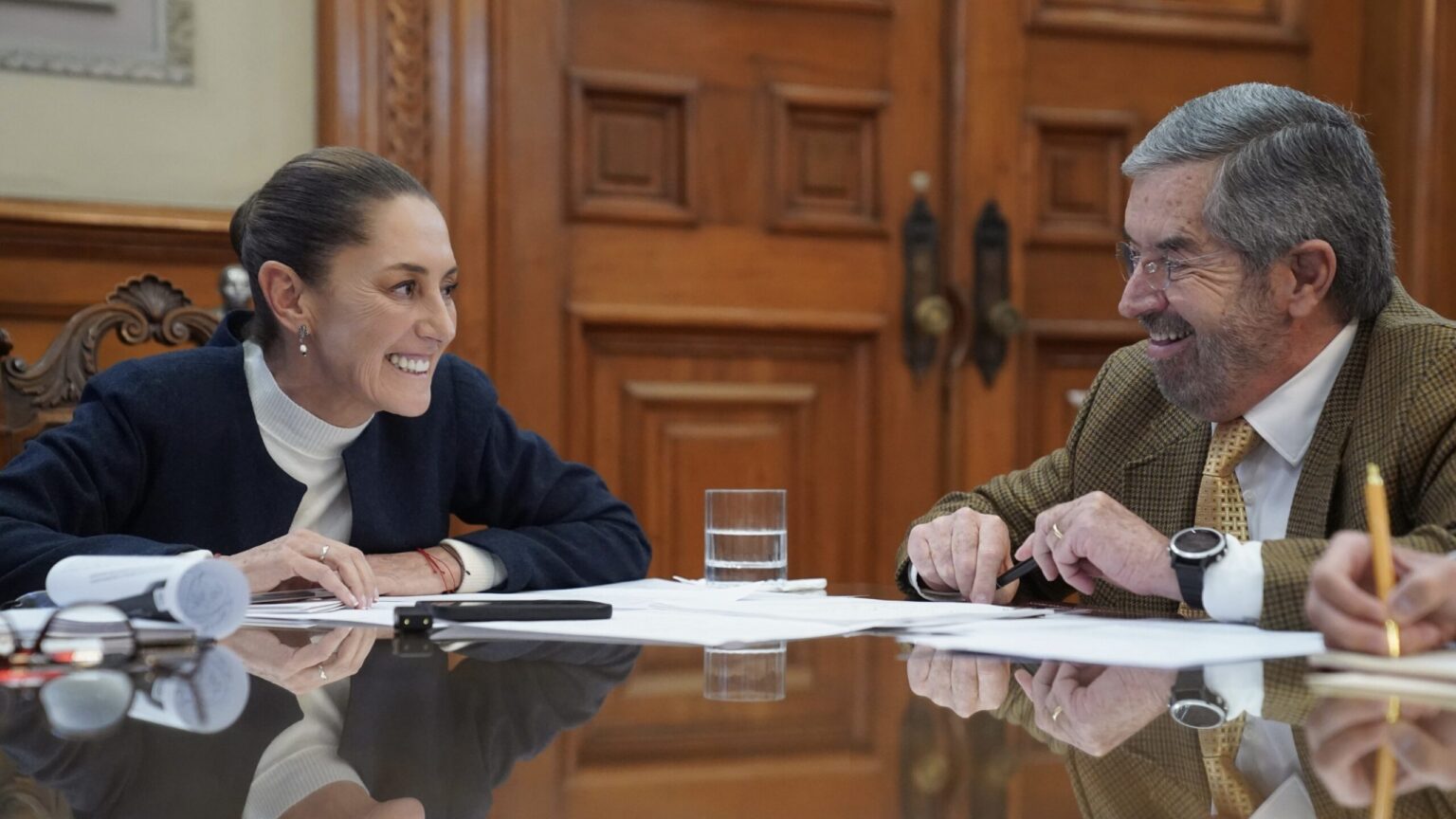
The Mexican representative to the UN, Héctor Vasconcelos, stated in the session that he categorically rejects the blockade against Cuba and that it is in direct violation of international law. “It is time to open a new chapter and allow Cuba to participate fully in the global community without the restrictions imposed by this unjust and inhumane blockade,” Vasconcelos declared.
Almost all countries, except the United States, Israel, and one or two other governments allied with Washington’s policy, vote against the blockade and request the elimination of the sanctions against the socialist country. This, for many, reflects the anti-democratic attitude of the US government, which claims to represent the highest values of human rights and global cooperation, although, in this type of case, it scandalously ignores the demands of the vast majority of countries in the world.
For his part, the Cuban Secretary of State, Bruno Rodríguez, expressed his gratitude for the support given on October 29 by more than 30 delegations that expressed their desire for the United States to lift the blockade against Cuba: “We are grateful for the statements made by the 31 delegations that took the floor at the United Nations General Assembly, demanding the end of the US blockade against Cuba. Tomorrow [October 30] we will continue the debate and the vote against this genocidal policy will take place.”
The blockade tightens
Despite this enormous show of support for Cuba, the United States insists on the economic measure. It has even gone so far as to radicalize it, as happened during the administration of Donald Trump, who applied 243 new sanctions, including the removal of certain travel categories which allowed individual US citizens to visit the island, and included Cuba in the list of state sponsors of terrorism, which further hindered the development of the Cuban economy.
Instead of reversing the measures of his predecessor and returning to the opening policy started by Barack Obama, Biden maintained the more stringent measures against Cuba. In 2023, the US Department of Homeland Security added an additional coercive measure, stating that the ESTA visa waiver program, used largely by citizens of Europe, would be denied to anyone from eligible countries if they had traveled to Cuba anytime after July 2021. In essence, a direct punishment to anyone, even beyond US borders, who dares to visit the Caribbean nation.
A history of systematic political-economic punishment
The first time the US government applied an economic embargo on Cuba was in 1958, during the dictatorship of Fulgencio Batista. Although the Cuban Revolution overthrew that military government, the US government punished the Caribbean Island again in 1960.
In the beginning, the restrictions did not include food and medicine, but from 1962, during the radicalization of the Cuban Revolution, the embargo became almost absolute. Cuba’s natural and historical trading partner, both because of its large territorial extension and its purchasing power, had been the United States.
In 1959, 73% of Cuban exports were destined for the United States, which shows the enormous impact that the decision had on the island, aimed at promoting the fall of the government led by Fidel Castro. Nevertheless, the USSR and Cuba reached several economic agreements that allowed the island to somehow withstand (never easily) the portentous US punishment.
However, after the dissolution of the USSR, the blockade began to acquire increasingly challenging characteristics. This is even more so if one takes into account that since 1992, through the Cuban Democracy Act, the US government has not only prohibited US companies from trading with Cuba but also sanctioned any third party that does business with Cuba.
This makes any attempt to overcome the economic crisis induced by outside powers even more difficult. In addition, the US government in 2021 decided, without adequate technical justification, to include Cuba among the countries sponsoring terrorism.
It is foreseeable that Cuba will again feel the backing of international solidarity in the coming days, although the US government will ignore the request of the international community and continue to punish a small country that did not accept to be dominated and undertook a socialist revolution just a couple hundred miles south of the most powerful capitalist country in history.