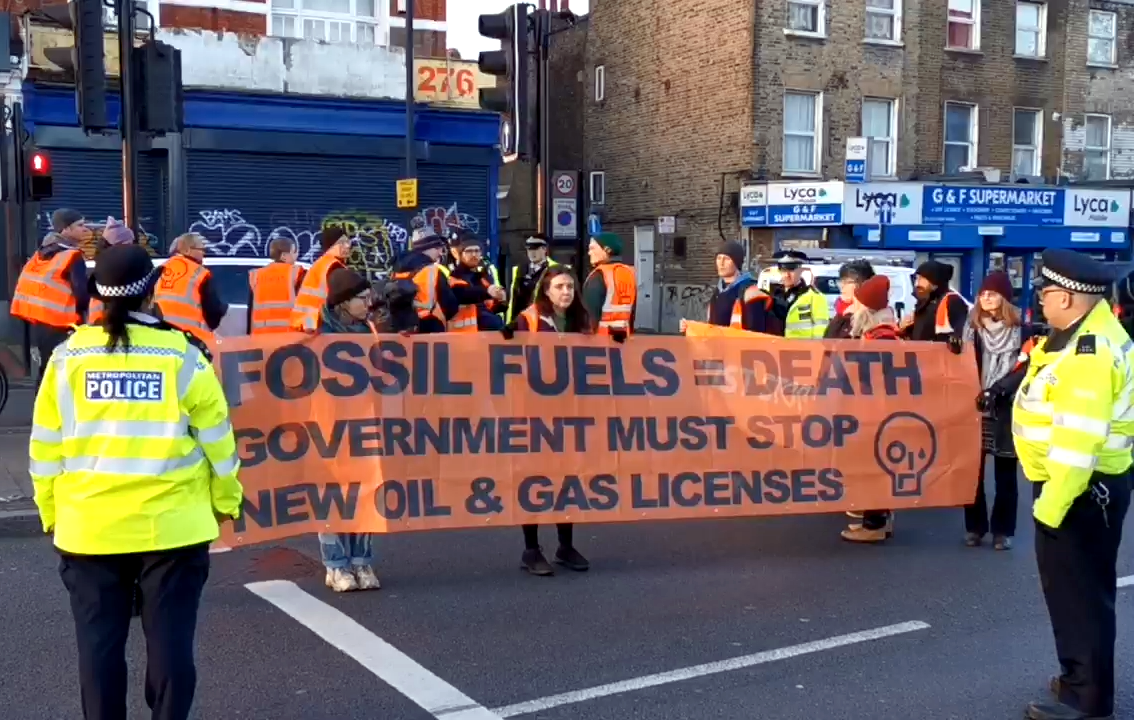
People take part in a pro-Palestine march in central London organised by the Palestine Solidarity Campaign, July 6, 2024
LABOUR Friends of Israel’s former chair Lord Walney called on ministers today probe candidate intimidation in the run-up to the general election.
The government’s so-called independent adviser on political violence alleged that a series of events before July 4 were part of a “concerted campaign by extremists.”
Aka John Woodcock, the former MP — who switched to Boris Johnson’s Tories in 2019 — has urged parliamentarians to to take a “zero-tolerance approach” with pro-Palestine groups and climate protesters, as well as accepted Israel lobby funding amid the Gaza genocide.
In a letter shared with the BBC, he has called on Yvette Cooper and Security Minister Dan Jarvis to commission a short inquiry to find out if groups in different constituencies were working together and to document what he calls the “dark underbelly” of abuse.
He wrote that evidence in the past few months suggested an intentional campaign “by extremists to create a hostile atmosphere for MPs” within their constituencies to pressure them to “cave in to political demands.”
…
It comes as pro-Israel Labour figures were accused of mischaracterising questioning by Palestine protesters in a bid to shirk political accountability for their support of the ongoing Gaza massacre.
Democracy is a precious, and essential part of our society. Our leadership must always be accountable to the people, and if they are not, we risk oppression. We are, without a doubt, lucky to live in a liberal representational democracy, and when the time comes to vote, we should. So why then, are people acting politically, with civil resistance, outside of this mechanism?
Over the last twelve months, thousands of people in the UK have engaged in peaceful resistance, and over a hundred (and counting) have been imprisoned. It’s not just in this country, in Canada ‘Save Old Growth’ are blocking motorways demanding no more felling of ancient trees. In France, Germany, Italy, Austria, Norway, the USA and Australia, ordinary people are resisting, disrupting transport and cultural activities – demanding that their states act to protect, not destroy, life.
They are ordinary people – coming together and acting out of love as much as fear and grief. Engaging in civil resistance, and defying a state, that while democratically elected, has proved deeply harmful. There’s no denying this harm – while the International Energy Agency has made it clear we can have no more new oil and gas development, the UK Government is ready to approve new oil fields and issue new exploration licenses, a death sentence for millions.
Our politicians say they are ‘committed to reaching net zero’. What they are actually committed to is kicking the can down the road and round the corner. Gambling on unproven or non-existent technology to reverse our dumping of CO2 into the atmosphere.
Instead of taking action, they’re making the problem worse for another 30 years, literally pouring fuel on the fire. The UK is the home of BP and Shell who are making eye-watering profits, and enjoying tax breaks to destroy life – because “pensions”, because “jobs”, because “economic growth”.
A stable climate is not a competing policy demand to be set against pensions, transport, or public sector funding. One provides the basis for everything else, there simply isn’t a contest. Our predicament is almost comically simple – either we stop the destruction of the global systems that enable ordered civil society to work or we lose everything we value, our traditions, our cherished landscapes and, crucially, democracy. There are no free and fair elections on a burning earth.
In 2019 the MoD published a report outlining what is coming if we don’t immediately reduce carbon emissions – “increased conflict over diminishing natural resources”. That’s code for war. War over food and water – and we know what war looks like, flattened cities, dictator warlords, child traffickers waiting on borders, tortured grandfathers – it’s being documented once again in Europe.
So what has happened in the UK to protect against this future? Traffic on the M25 has been disrupted, London bridges closed, oil terminals have been blockaded and occupied, football matches interrupted. Inept radio hosts have sparked viral memes about growing concrete and inspired themed stag nights. Just Stop Oil, Insulate Britain, XR and Stop HS2 have been painted on both the Left and Right as an eco-mob, eco-fascists, as selfish, naive and childish. But perhaps the most damaging criticism is that they are anti-democratic.
It’s as if every right and freedom we enjoy has been handed to us by a benign government. As if the Suffragettes never smashed windows, as if the race riots never happened, as if Stonewall simply wrote letters, as if those demanding disability rights didn’t chain themselves to railings and buses, as if the poll tax was scrapped due to reasonable debate and discussion or waiting politely for a chance to vote. Change requires citizens to stand up and resist harmful governments, it is part of democracy.
Resistance has nothing to do with “protest”. Protest is when you express your disapproval. You do not express disapproval when murderous governments engage in an act condemning the world to go over 1.5C in the 2030s – a death sentence for small island states and millions in the global south. Pakistan today demonstrates what we face – 33 million people impacted by floods and agriculture decimated.
We know what to do. It’s what the Suffragettes did, it’s what the Civil Rights movements did, it’s what everyone does when the inalienable right to life and a livelihood are violated. We engage in non-violent civil resistance.
What we must do now is block and disable the cogs of the machine. This is not a “tactic” – it is an act of self respect, an act of solidarity, an act of love and necessity.
We must resist now or we will look back with longing at all we have lost. The last 250 years of sacrifice and tears expended by generations to create decent societies is about to be snuffed out in the blink of an eye. The word betrayal does not cover the reality of what is going on. All our traditions, all our values, all that we claim to stand for is about to be lost.
It’s not about winning. It’s about doing what has to be done. Those who fought fascism in the 20th century, those who are fighting the oil companies across the global south, those fighting the Russians in Ukraine, they act because they know someone has to stand up.
The next generations are watching us. Can you feel the weight of billions of children yet to take their first breath? They are saying “Are you mad? Get out there, and stop this – or you condemn us forever”.
dizzy: 1. I submit that we exist in a plutocracy rather than a democracy. 2. I couldn’t find the MoD article containing the quotation “increased conflict over diminishing natural resources”. I suspect that it existed but is no longer published openly. There are plenty of official reports making similar points and it is a reasonable statement. For example the WORLD DEVELOPMENT REPORT 2011, ‘Resource Scarcity, Climate Change and the Risk of Violent Conflict’ Alex Evans, Center on International Cooperation, New York University, September 9, 2010 makes similar claims. Edit: Despite that article being a very wooly academic paper, I think that it does make that claim
Although the conflict risk posed by climate change and resource scarcity will almost always be better understood as a ‘threat multiplier’ than as a sole cause of violent conflict, a range of potential linkages between climate, scarcity and conflict risk can nonetheless be identified, whether through intensifying existing problems, or through creating new environmental problems that lead to instability.
USAID (2009). Climate Change, Adaptation and Conflict: A preliminary review of the issues. CMD Discussion Paper no. 1, October 2009
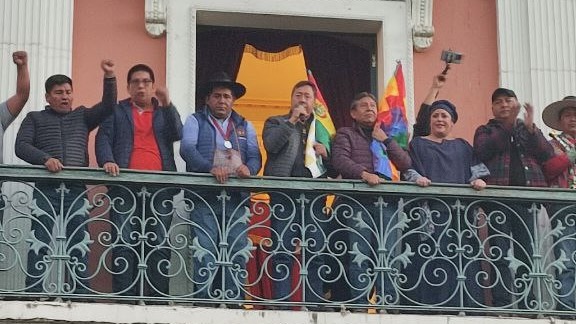
Bolivian President Luis Arce addresses the crowd in Plaza Murillo. Photo: Ivan Bellot
“No one can take away our democracy!”
Bolivian President Luis Arce addressed the people of Bolivia on the afternoon of Wednesday June 26 to declare that the attempted military coup had been defeated.
On the afternoon of June 26, hundreds of military personnel had mobilized under the order of General Juan Zúñiga in the center of La Paz and surrounded the Quemado Palace (the government palace) ahead of a ministerial meeting. They proceeded to break down the main door to the palace with a tank and attempted to enter by force.
Zúñiga then announced that the military personnel would mobilize to the prison and free Bolivia’s “political prisoners” including Jeanine Áñez and Luis Fernando Camacho who are imprisoned over their involvement in the 2019 coup against Evo Morales. Áñez later wrote on X that she rejected the attempt by the military to destroy constitutional order and that “MAS with Arce and Evo should leave through the ballot box in 2025. Bolivians will defend democracy.”
Former Bolivian president Evo Morales immediately alerted to the development and called on the Bolivian people to mobilize in defense of democracy.
Bolivia’s foreign minister Celinda Sosa said in a video message, “The Plurinational State of Bolivia denounces to the international community the irregular mobilizations of some units of the Bolivian Army that attack democracy, peace, and security of the country. We call on the international community, on the Bolivian population to make sure that democratic values are respected.”
While the army attempted to storm the palace, hundreds of Bolivian people began to mobilize to demand that democracy be respected and the army stand down. These protests with members of mass organizations, trade unions, and the general population were met with heavy repression by the military police officers who shot tear gas indiscriminately and blocked off access to the Plaza Murillo.
The Bolivian Workers’ Central (COB) representing over 2 million workers, declared an indefinite general strike and “the mobilization of all social and union organizations to the city La Paz to defend and restore the constitutional order and our legally established government in Bolivia.”
After an hour of the military encirclement of the Palace, Bolivian President Luis Arce held a press conference to name José Sánchez as the new military command to replace Zúñiga. Sánchez ordered the military personnel that had mobilized to the center to return to their stations to avoid any bloodshed of the Bolivian people and affirmed that he supported the legal and constitutional government of Luis Arce.
A video also emerged of Arce confronting Zúñiga in the palace and firmly telling him to stand down and respect democracy. Shortly after the pronouncement by Arce and Sánchez, the tanks that had initially blocked off the plaza and surrounded the palace began to withdraw, and thousands of people flooded the area to affirm their rejection of the attempted coup and support to Arce. “Arce you’re not alone! Long live democracy!” they declared.
The attempted coup in Bolivia had international repercussions. Political leaders across Latin America and the Caribbean vehemently rejected the attempt by a fraction of the Army to subvert Bolivian democracy and celebrated the swift defeat of the attempt. Many highlighted that this took place just five years after the coup d’état which took Evo Morales out of office and installed the de facto leader Jeanine Áñez. After a year of resistance and violent repression to anti-coup protests, the Bolivian people restored democracy and elected Luis Arce.
Xiomara Castro, the president of Honduras and the pro-tempore president of the Community of Latin American and Caribbean States (CELAC), called on all the presidents of CELAC member countries to “condemn the fascism that today threatens democracy in Bolivia and demand the respect of civil power and the Constitution.”
The International Peoples’ Assembly (IPA) wrote in a statement, “The heroic people of Bolivia have successfully defeated the coup! The people’s movements mobilized to defend the democratic government of President Luis Arce. We will always stand with democracy and sovereignty—today we saw the Bolivian people rise up against the Bolivian elites and their US masters’ attempts to destabilize the country.”
COB and other organizations in Bolivia have celebrated the people’s victory but also called on the Bolivian people and the international community to continue their vigil and state of alert against any further coup attempts.
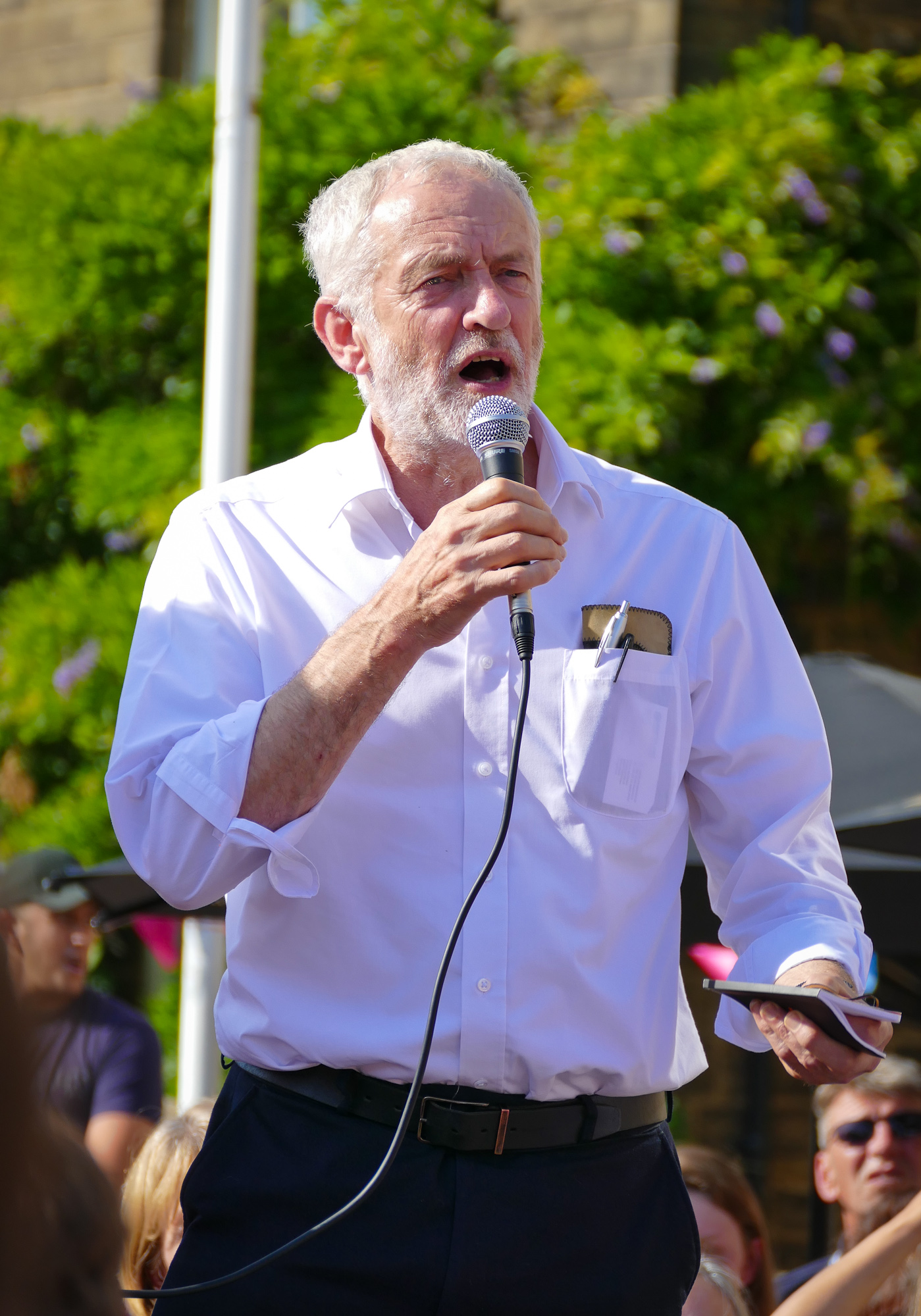
This manifesto is our manifesto – it belongs to every single person who has written to me over the last 41 years, met me at a community event or simply stopped me in the street. Meeting people, talking to people and working together to bring about a fairer society – that is what being an MP is all about.
The issues facing people in Islington are part of a much wider set of crises. There are more people living in desperate poverty than I have ever known. More rough sleepers struggling to survive. More refugees fleeing the horrors of war and climate catastrophe. We will not solve these crises unless we build a new kind of politics. Our people-powered campaign will demand a redistribution of wealth, ownership and power. For rent controls. For an end to the two-child benefits cap. For a Green New Deal. For safe routes for asylum seekers. For a fully funded, fully public NHS.
This future is no pipedream – our community is proof that a kinder world is possible. I visit community centres which are welcoming, creative places, where people can meet each other, learn, eat together, receive support when they need it, and give it when they are able to. I meet carers doing all they can to support relatives or friends, often in the most difficult circumstances. I meet members of mutual aid groups who are building a new economy, one act of solidarity at a time. If we applied these basic principles across the board, we would create a society that cares for each other and cares for all.
When I vote in Parliament, I do not vote alone. I vote with my community – and this campaign is bringing together people of all ages, faiths and backgrounds in pursuit of a better world. We are offering people something very precious: hope.
Join us at www.votecorbyn.com to prove that when we come together to fight for a better society for everyone, we can win.
CONTENTS
ACTION ON THE COST OF LIVING End the energy and water rip-off Fair pay for Islington workers Abolish the two-child benefit cap Universal basic income Wealth tax
HOUSING IS A HUMAN RIGHT Security for renters Build social housing Housing insulation Leasehold reform Cladding justice
DEFEND OUR NHS End privatisation Support our doctors and nurses Mental health A National Care Service Reproductive health
A GREENER ISLINGTON A Green New Deal Protect our parks Save our buses Walking and cycling Animal welfare
EDUCATION FOR ALL Save our schools Education is not a commodity Lifelong learning Update our curriculum
A SAFER ISLINGTON A public health approach Tackling hate crime and extremism A fairer criminal justice system
HUMAN RIGHTS ARE UNIVERSAL Peace Reparations Refugees are welcome here Migrant justice
OUR DEMOCRACY The right to protest The right to strike Decentralisation Local public ownership Media and sport
Hundreds of local Labour members have called on their party to reconsider parachuting in a candidate after the Kemptown MP was unexpectedly barred from standing.
More than 200 people have signed a petition started by the Kemptown and Peacehaven Constituency Labour Party (CLP) ahead of a meeting where new candidate Chris Ward’s selection is set to be rubber stamped.
Mr Ward was announced as the new candidate last week, just a day after the previous MP Lloyd Russell-Moyle was suspended over unspecified allegations dating from 2016.
Journalist Michael Crick, who has been chronicling all the main parties’ selections, tweeted on Thursday afternoon that he was likely to get the seat – before another potential candidate. Nancy Platts, had even been interviewed.
Ms Platts, who has previously been leader of Brighton and Hove City Council and a parliamentary candidate in the same seat, called for an investigation into the fairness of the process.