King Charles III reads the King’s Speech, as Queen Camilla sits beside him during the State Opening of Parliament in the House of Lords, London, July 17, 2024
THE SNP has vowed to “sabotage” Labour’s “watered-down” House of Lords reforms with a deluge of amendments.
Labour’s House of Lords (Hereditary Peers) Bill, aiming to exclude the last remaining 92 hereditary peers from the legislature, faces its third reading in the House of Commons today.
But SNP MP Pete Wishart has tabled amendments ranging from abolishing the institution altogether to making peers’ £342 daily allowance liable for income tax.
Pointing to the “egregious example” of £18,808 paid to private healthcare tycoon Lord Hameed of Hampstead last year, despite him playing no role and failing to vote even once, Mr Wishart argues that taxing the £20 million paid out in allowances last year could generate over £9m — enough to restore Winter Fuel Payments to more than 22,000 pensioners in Scotland.
Urging Scottish Labour MPs to “at least” back him on taxing allowances, Mr Wishart commented: “That’s the only viable option for anyone who believes in democracy.
…
“The Labour Party has repeatedly broken its promise to abolish the House of Lords for more than a century and, frankly, this embarrassingly limited Bill is 114 years too little, too late.
“The undemocratic House of Lords is an archaic institution of the kind you’d find in a banana republic and it’s second only in size to the Congress of China costing taxpayers more than £200m a year.
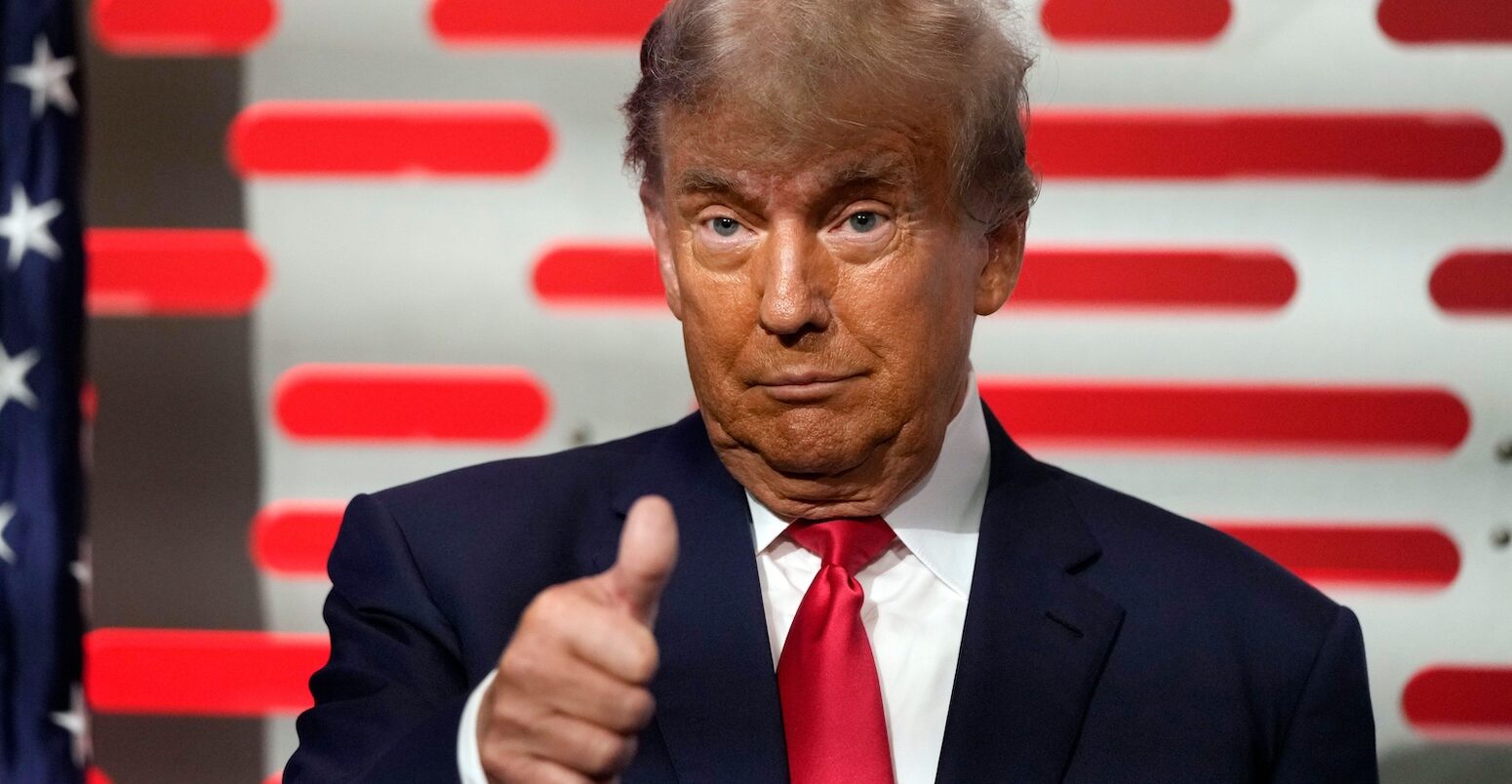
2RY8Y78 Former President Donald Trump gesture to the crowd before his speech at the California Republican Party Convention Friday, Sept. 29, 2023, in Anaheim, Calif. (AP Photo/Jae C. Hong)
BRITAIN must unite with Donald Trump in support of freedom and capitalism, Prime Minister Sir Keir Starmer said today.
Congratulating Mr Trump on his imminent return to the US presidency, Sir Keir said: “As the closest of allies, we stand shoulder to shoulder in defence of our shared values of freedom, democracy and enterprise.”
The generous interpretation of Mr Trump’s outlook appeared to be an attempt by the government to efface the record of unflattering comments made about the president-elect by Labour figures, including Foreign Secretary David Lammy.
Sir Keir was taunted by new Tory leader Kemi Badenoch in the Commons over the fact that the Republican Party is suing the Labour Party over the dispatch of hundreds of activists to the US to assist Kamala Harris’s doomed campaign.
Sir Keir submitted himself to a meal with Mr Trump during a recent visit to New York, which by most accounts went rather well, details including the president-elect personally offering Mr Lammy second helpings. [!]
…
Communist Party general secretary Robert Griffiths said: “In place of grovelling congratulations like those from Prime Minister Starmer, the so-called ‘centre-left’ should learn the lesson from recent US and EU election results: capitulating to big business market forces, racism, militarism and right-wing nationalism will end in their own defeat, sooner or later.”
UK Foreign Secretary David Lammy says that UK is suspending 30 of 350 arms licences to Israel. He also confirms the UK government’s support for Israel’s Gaza genocide and the UK government and military’s active participation in genocide.
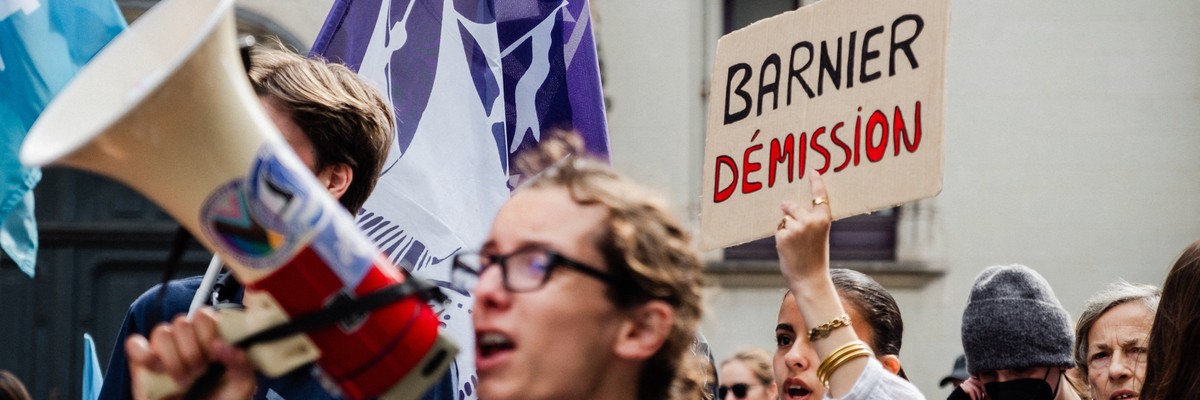
A protester carries a sign called on Michel Barnier, who was selected by French President Emmanuel Macron as the prime minister, to resign at a protest on September 7, 2024 in Nantes, France. (Photo: Maylis Rolland/Hans Lucas/AFP via Getty Images)
“Expressing one’s vote will be useless as long as Macron is in power,” said one demonstrator.
In cities and towns across France on Saturday, more than 100,000 people answered the call from the left-wing political party La France Insoumise for mass protests against President Emmanuel Macron’s selection of a right-wing prime minister.
The demonstrations came two months after the left coalition won more seats than Macron’s centrist coalition or the far-right Rassemblement National (RN) in the National Assembly and two days after the president announced that Michel Barnier, the right-wing former Brexit negotiator for the European Union, would lead the government.
The selection was made after negotiations between Macron and RN leader Marine Le Pen, leading protesters on Saturday to accuse the president of a “denial of democracy.”
“Expressing one’s vote will be useless as long as Macron is in power,” a protester named Manon Bonijol told Al Jazeera.
“Don't let democracy be humiliated.”
The Left saved France from the extreme right. Voters chose a left-wing coalition over LePen and over Macron’s corporate centrism.
A poll released on Friday by Elabe showed that 74% of French people believed Macron had disregarded the results of July’s snap parliamentary elections, and 55% said the election had been “stolen.”
Jean-Luc Mélenchon, the leader of La France Insoumise (LFI), or France Unbowed, also accused Macron of “stealing the election” in a speech at the demonstration in Paris on Saturday.
“Democracy is not just the art of accepting you have won but the humility to accept you have lost,” Mélenchon told protesters. “I call you for what will be a long battle.”
He added that “the French people are in rebellion. They have entered into revolution.”
Macron’s centrist coalition won about 160 assembly seats out of 577 in July, compared to the left coalition’s 180. The RN won about 140.
Barnier’s Les Républicains (LR) party won fewer than 50 parliamentary seats. French presidents have generally named prime ministers, who oversee domestic policy, from the party with the most seats in the National Assembly.
Barnier signaled on Friday that he would largely defend Macron’s pro-business policies and could unveil stricter anti-immigration reforms. Macron has enraged French workers and the left with policies including a retirement age hike last year.
Protests also took place in cities including Nantes, Nice, Montpellier, Marseilles, and Strasbourg.
All four left-wing parties within the Nouveau Front Populaire (NFP) coalition have announced plans to vote for a motion of no confidence against Barnier.
The RN has not committed to backing Barnier’s government yet and leaders have said they are waiting to see what policies he presents to the National Assembly before deciding how to proceed in a no confidence vote.
Until recently, Elon Musk was just a wildly successful electric car tycoon and space pioneer. Sure, he was erratic and outspoken, but his global influence was contained and seemingly under control.
But add the ownership of just one media platform, in the form of Twitter – now X – and the maverick has become a mogul, and the baton of the world’s biggest media bully has passed to a new player.
What we can gauge from watching Musk’s stewardship of X is that he’s unlike former media moguls, making him potentially even more dangerous. He operates under his own rules, often beyond the reach of regulators. He has demonstrated he has no regard for those who try to rein him in.
Under the old regime, press barons, from William Randolph Hearst to Rupert Murdoch, at least pretended they were committed to truth-telling journalism. Never mind that they were simultaneously deploying intimidation and bullying to achieve their commercial and political ends.
Musk has no need, or desire, for such pretence because he’s not required to cloak anything he says in even a wafer-thin veil of journalism. Instead, his driving rationale is free speech, which is often code for don’t dare get in my way.
This means we are in new territory, but it doesn’t mean what went before it is irrelevant.
A big bucket of the proverbial
If you want a comprehensive, up-to-date primer on the behaviour of media moguls over the past century-plus, Eric Beecher has just provided it in his book The Men Who Killed the News.
Alongside accounts of people like Hearst in the United States and Lord Northcliffe in the United Kingdom, Beecher quotes the notorious example of what happened to John Major, the UK prime minister between 1990 and 1997, who baulked at following Murdoch’s resistance to strengthening ties with the European Union.
In a conversation between Major and Kelvin MacKenzie, editor of Murdoch’s best-selling English tabloid newspaper, The Sun, the prime minister was bluntly told: “Well John, let me put it this way. I’ve got a large bucket of shit lying on my desk and tomorrow morning I’m going to pour it all over your head.”
MacKenzie might have thought he was speaking truth to power, but in reality he was doing Murdoch’s bidding, and actually using his master’s voice, as Beecher confirms by recounting an anecdote from early in Murdoch’s career in Australia.
In the 1960s, when Murdoch owned The Sunday Times in Perth, he met Lang Hancock (father of Gina Rinehart) to discuss potentially buying some mineral prospects together in Western Australia. The state government was opposed to the planned deal.
Beecher cites Hancock’s biographer, Robert Duffield, who claimed Murdoch asked the mining magnate, “If I can get a certain politician to negotiate, will you sell me a piece of the cake?” Hancock said yes. Later that night, Murdoch called again to say the deal had been done. How, asked an incredulous Hancock. Murdoch replied: “Simple […] I told him: look you can have a headline a day or a bucket of shit every day. What’s it to be?”
Between Murdoch in the 1960s and MacKenzie in the 1990s came Mario Puzo’s The Godfather with Don Corleone, aided by Luca Brasi holding a gun to a rival’s head, saying “either his brains or his signature would be on the contract”.
Former British Prime Minister John Major fell foul of Rupert Murdoch – and paid the price. Lynne Sladky/AP/AAP
Changing the rules of the game
Media moguls use metaphorical bullets. Those relatively few people who do resist them, like Major, get the proverbial poured over their government. Headlines in The Sun following the Conservatives’ win in the 1992 election included: “Pigmy PM”, “Not up to the job” and “1,001 reasons why you are such a plonker John”.
If media moguls since Hearst and Northcliffe have tap-danced between producing journalism and pursuing their commercial and political aims, they have at least done the former, and some of it has been very good.
The leaders of the social media behemoths, by contrast, don’t claim any fourth estate role. If anything, they seem to hold journalism with tongs as far from their face as possible.
They do possess enormous wealth though. Apple, Microsoft, Google and Meta, formerly known as Facebook, are in the top ten companies globally by market capitalisation. By comparison, News Corporation’s market capitalisation now ranks at 1,173 in the world.
Regulating the online environment may be difficult, as Australia discovered this year when it tried, and failed, to stop X hosting footage of the Wakeley Church stabbing attacks. But limiting transnational media platforms can be done, according to Robert Reich, a former Secretary of Labor in Bill Clinton’s government.
Despite some early wins through Australia’s News Media Bargaining Code, big tech companies habitually resist regulation. They have used their substantial influence to stymie it wherever and whenever nation-states have sought to introduce it.
Meta’s founder and chief executive, Mark Zuckerberg, has been known to go rogue, as he demonstrated in February 2021 when he protested against the bargaining code by unilaterally closing Facebook sites that carried news. Generally, though, his strategy has been to deploy standard public relations and lobbying methods.
But his rival Musk uses his social media platform, X, like a wrecking ball.
Musk is just about the first thing the average X user sees in their feed, whether they want to or not. He gives everyone the benefit of his thoughts, not to mention his thought bubbles. He proclaims himself a free-speech absolutist, but most of his pronouncements lean hard to the right, providing little space for alternative views.
Kamala wants to destroy your right to free speech under The Constitution https://t.co/oJN5T8nPLn
Some of his tweets have been inflammatory, such as him linking to an article promoting a conspiracy theory about the savage attack on Paul Pelosi, husband of the former US Speaker, Nancy Pelosi, or his tweet that “Civil war is inevitable” following riots that erupted recently in the UK.
As the BBC reported, the riots occurred after the fatal stabbing of three girls in Southport. “The subsequent unrest in towns and cities across England and in parts of Northern Ireland has been fuelled by misinformation online, the far-right and anti-immigration sentiment.”
Nor does Musk bother with niceties when people disagree with him. Late last year, advertisers considered boycotting X because they believed some of Musk’s posts were anti-Semitic. He told them during a live interview to “Go fuck yourself”.
He has welcomed Donald Trump, the Republican Party’s presidential nominee, back onto X after Trump’s account was frozen over his comments surrounding the January 6 2021 attack on the capitol. Since then both men have floated the idea of governing together if Trump wins a second term.
Is the world better off with tech bros like Musk who demand unlimited freedom and assert their influence brazenly, or old-style media moguls who spin fine-sounding rhetoric about freedom of the press and exert influence under the cover of journalism?
That’s a question for our times that we should probably begin grappling with.
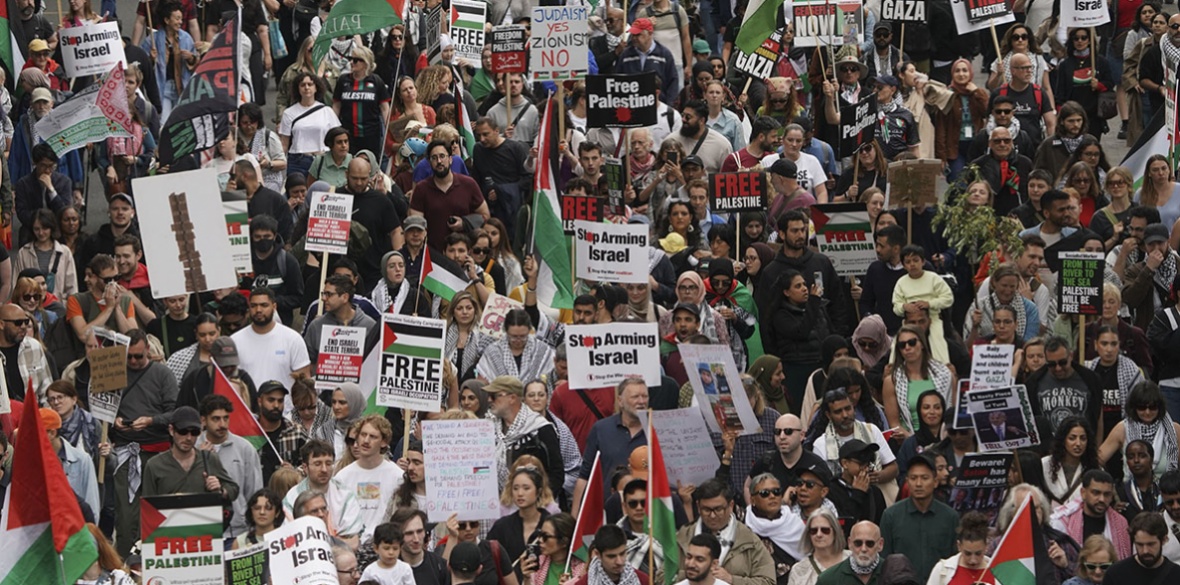
People take part in a national demonstration for Gaza from Russell Square to Whitehall in London, June 8, 2024
SCOTLAND YARD has been urged to abandon plans to impose new orders that would seriously disrupt Saturday’s March for Palestine demonstration in London.
Palestine Solidarity Campaign (PSC), union leaders, MPs, peers and coalition partners expressed concern over the force severely restricting the protest in an open letter today.
The Met was accused of employing tactics “to deter people from attending” the 18th national peaceful demonstration against the Gaza genocide since last October.
…
On Monday, the Met was accused of refusing to participate in negotiations in a “transparent and accountable” way with the march’s organisers.
Signatories of PSC’s letter raised concerns over the eleventh-hour announcement that the Met wanted the march delayed by nearly two hours “without explanation or rationale” and its refusal to allow Pall Mall as an assembly point.
They added: “We worry that these kind of delays, and late challenges and conditions to the plans of what are entirely peaceful demonstrations, are forming a pattern.”


;)