April 12, 2024 by Extinction Rebellion
- 30+ young people, scientists and supporters occupy Science Museum’s new climate gallery in protest over its sponsorship by coal-producing conglomerate Adani
- Group announce plan to remain over weekend ahead of the opening to school groups next week
- Naturalist Chris Packham says sponsorship deal is “beyond greenwash – it’s grotesque” and attends to support the protesters
- Science Museum criticised over ties to conglomerate involved in manufacturing drones for the Israeli military amidst bombardment of Gaza and destructive coal mining operations in India and Australia opposed by Indigenous groups
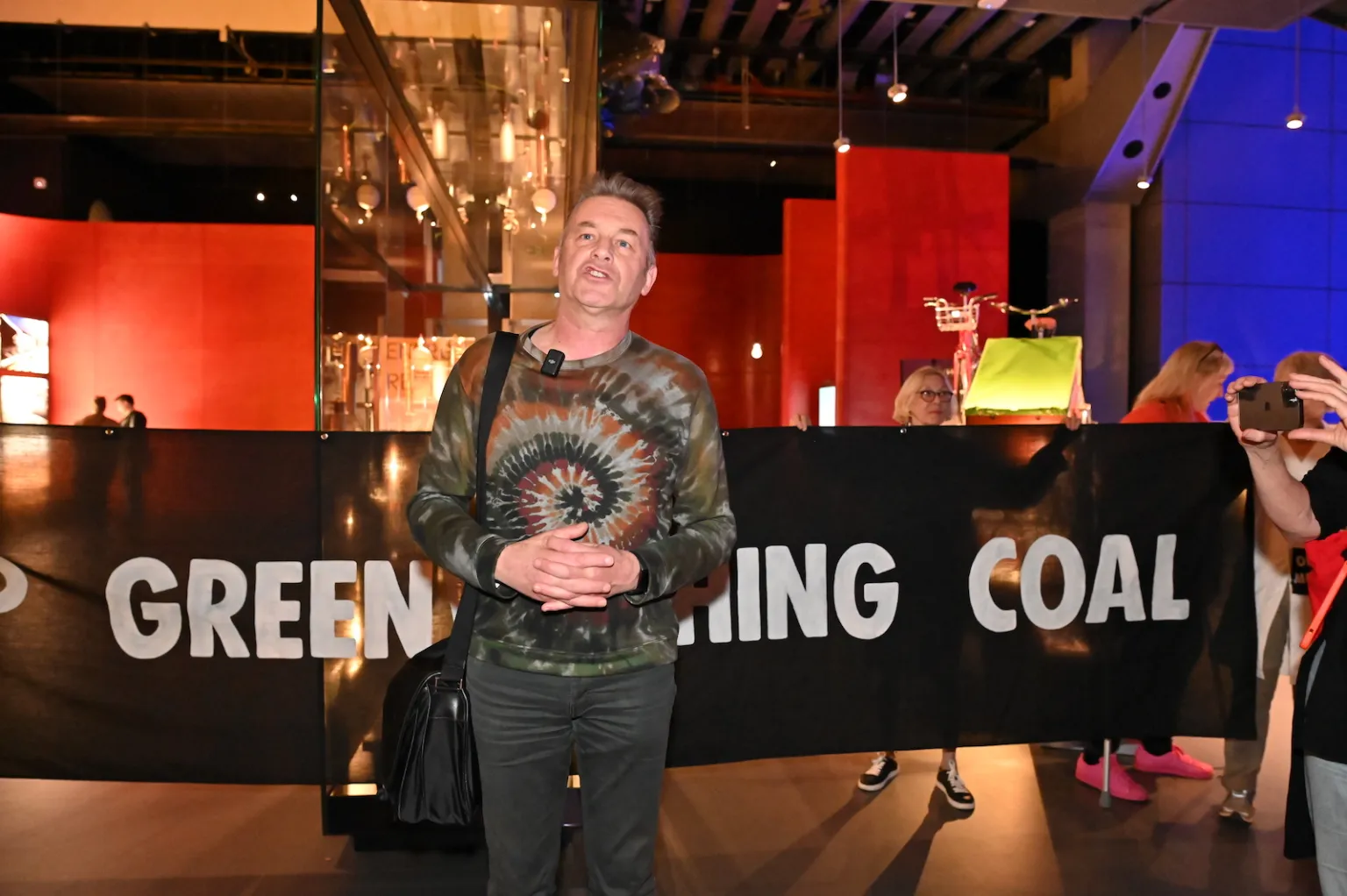
This evening, more than 30 protesters led by young people from Youth Action for Climate Justice and members of Scientists for Extinction Rebellion have occupied the Science Museum’s new climate gallery, Energy Revolution, over its sponsorship by the coal giant and arms manufacturer, Adani. Naturalist and broadcaster Chris Packham joined the group as they began their protest, with scientists and young people now intending to remain in the museum over the weekend, with the first school visits to the gallery beginning on Monday.
Chris Packham, who famously claimed that peacefully breaking the law is the ethically responsible thing to do when it comes to protecting the planet, told the protesters: “For me science is the art of understanding truth and beauty and a lot of that beauty lies in the natural world. Science tells us that the fossil fuel industry is responsible for the accelerating destruction of our natural world. The Science Museum is a place to spark imagination, to provide answers but also to encourage us to ask questions. The question I’m asking today is a big one, “why on earth are we allowing a destructive industry to sponsor an educational exhibition whilst simultaneously setting fire to young peoples futures?” This is beyond greenwash – it’s grotesque. We urgently need an ‘Energy Revolution’ to steer us away from the course of planetary destruction on which we are heading. We need a rapid, just transition to renewables – that revolution means an end to coal, and starts with the young people and scientists occupying this space this evening. Science tells us the truth, and the truth is that we must change.”
The Energy Revolution gallery opened to the public just a few weeks ago amidst protest, with over 150 people taking part in a day of creative action. A few days earlier, guests arriving for the private VIP launch were greeted by protesters as they arrived, as well as the museum throwing a lavish dinner for the Adani Group’s billionaire chairman, Gautam Adani, with the Adani Group’s logo plastered on screens around the room.
To coincide with today’s protest, activists have released a new video exposing the truth behind the misleading claims made by Gautam Adani during his speech at the opening of the gallery. While he discussed the energy transition from oil and gas, he neglected to mention coal, the industry from which the Adani Group derives 60% of its revenue. The Science Museum has attempted to defend its sponsorship deal by claiming it has only partnered with the Green Energy division, although evidence clearly shows that it is directly linked to Adani’s coal business and that the museum has maintained a relationship with the main Adani Group.
At 2pm on Saturday, the occupiers will invite members of the public to join them for an interactive assembly inside the gallery to discuss alternatives to toxic fossil fuel sponsorship at the Science Museum. The group plans to tell the public the truth about the gallery’s sponsor and the urgency of keeping fossil fuels in the ground for a liveable future. Throughout their occupation, the protesters are also constructing sculptures of fragments of coal as a poignant reminder of Adani’s core polluting business.
Since the announcement of Adani sponsorship of the gallery in 2021, the museum has faced a raft of opposition and protests, including the resignation of two trustees, and of former museum director Chris Rapley from the Advisory Board. The museum has also recently faced protests over Adani’s involvement in the ongoing genocide of Palestinians in Gaza via its partnership with Israeli arms firm Elbit Systems.
Ian McDermott, a Chemistry teacher who will no longer organise school trips to the museum, has said: “For decades I ran a couple of trips to the museum a year, but I just don’t think it’s in the students’ interests to engage with the greenwashing of the companies destroying their futures.”

Adani is the world’s largest private developer of new coal mines and coal-fired power plants, including Australia’s largest, the Carmichael Coal Mine built on Wangan and Jagalingou ancestral land. This ongoing investment in coal mining and power flies in the face of the scientific warning that most fossil fuel reserves cannot be burned and emitted if global warming increase is limited to 1.5°C, or even 2°C above pre industrial levels.
Anya, a young person occupying the gallery said: “To have a coal company sponsoring an exhibition on the future of energy is blatantly deceiving. Through this sponsorship deal, the Science Museum is helping Adani attach itself to the image of a positive and sustainable future when in reality it is a coal giant, weapons manufacturer and genocide supporter. It’s plain wrong for the Science Museum to be deceiving visitors, including young people like me, when it comes to the climate crisis.”
This is not the only instance of the museum welcoming fossil fuel companies to sponsor and influence its science education programmes and galleries. The Museum’s STEM Training Academy, which aims to support teachers in delivering science education, is sponsored by oil and gas giant BP, while the Museum’s interactive children’s gallery is named after Norwegian oil and gas company, Equinor.
Dr. Aaron Thierry, a scientist, who has researched climate impacts in the Arctic, is among those currently occupying the museum: “It’s not just Adani’s brand that the science museum is greenwashing, they’re also allowing the oil and gas giants BP and Equinor to sponsor their exhibits, disregarding the fact that these companies continue to expand fossil fuel production against the warnings of climate scientists. The latest science has shown we must leave the majority of fossil fuels unburned to prevent catastrophic changes to our climate. That an institution like the Science Museum is working with such rouge companies is a disgrace. The museum’s management needs to follow the example of Britain’s other leading cultural institutions and drop all ties to the fossil fuel industry.“
Scientists for Extinction Rebellion and Youth Action for Climate Justice (who have led this action) are members of Fossil Free Science Museum Coalition who are campaigning for the Science Museum to end its sponsorship by fossil fuel companies.
Youth Action for Climate Justice (formerly UKSCN London) is a radical youth organisation mobilising for climate justice. YACJ aims to create a new generation of young activists who are educated about society and the change we need, in order to work with other movements to change the system we live in. The group was previously part of Youth Strike for Climate Movement and coordinated the London youth climate strikes in 2019 and 2020, which brought thousands of young people to the streets of London. Instagram | Twitter
Scientists for Extinction Rebellion are scientists who agree with Extinction Rebellion that it is time to take direct action to confront catastrophic climate and ecological breakdown. Instagram | Twitter
Other groups involved are: International Solidarity for Academic Freedom in India (InSAF India), India Labour Solidarity (UK), Students for Survival; and numerous Extinction Rebellion groups.